INTERDISCIPLINARY
RESEARCH
Session 5
Definitions of Interdisciplinary Research
Discipline A
Discipline B
Discipline C
Multidisciplinary research
Interdisciplinary research
Discipline A
Discipline B
Discipline C
Issue A
Issue B
Issue C
Transdisciplinary research
Multidisciplinary research which
approaches a problem from the
perspectives of a number of different
disciplines, but where each
discipline works in a self-contained
manner and there is no integration
across disciplines)
Interdisciplinary research which
approaches a problem from the
perspectives of a number of different
disciplines and where the
contributions of the various disciplines
are formally integrated to give a
synergistic outcome where the whole
is greater than the sum of the parts).
Transdisciplinary research a-
disciplinary; ignores disciplines,
focuses on issues
Types of interdisciplinary research
Academically-oriented ID Research
• often longer-term collaborations
• discipline focused
• helps disciplines to evolve
Problem-focused ID Research
• shorter term collaborations
• directed to specific real world problems
• could be interdisciplinary or
transdisciplinary
Contribution to
development of
disciplines
Contribution to
practical
problem solving
Level of integration
Multi-
disciplinary
Research
Inter-
disciplinary
Research
Low High
Problem
focused
Academic
orientation
Motivations for ID research
• Policy issue interdisciplinary (e.g.
transport, environment)
• Knowledge transfer (lab to real world)
• Research user driven (not necessarily
commercial) and heavily applied
• Single discipline research had encountered
a bottle-neck, more than one discipline
needed to make a breakthrough
Factors that discourage ID research
• Poor career structures for academic
interdisciplinary researchers
• Low esteem of interdisciplinary research
by mono-disciplinary colleagues
• Lack of opportunities to publish research
results in high ranking refereed journals
• Discrimination by referees against
interdisciplinary research proposals and
publications
Skills needs for individual researchers
• Understanding the languages,
research methods and cultures of
different disciplines
• High tolerance of ambiguity –
personality more important than
discipline base
• Willingness to learn from other
disciplines
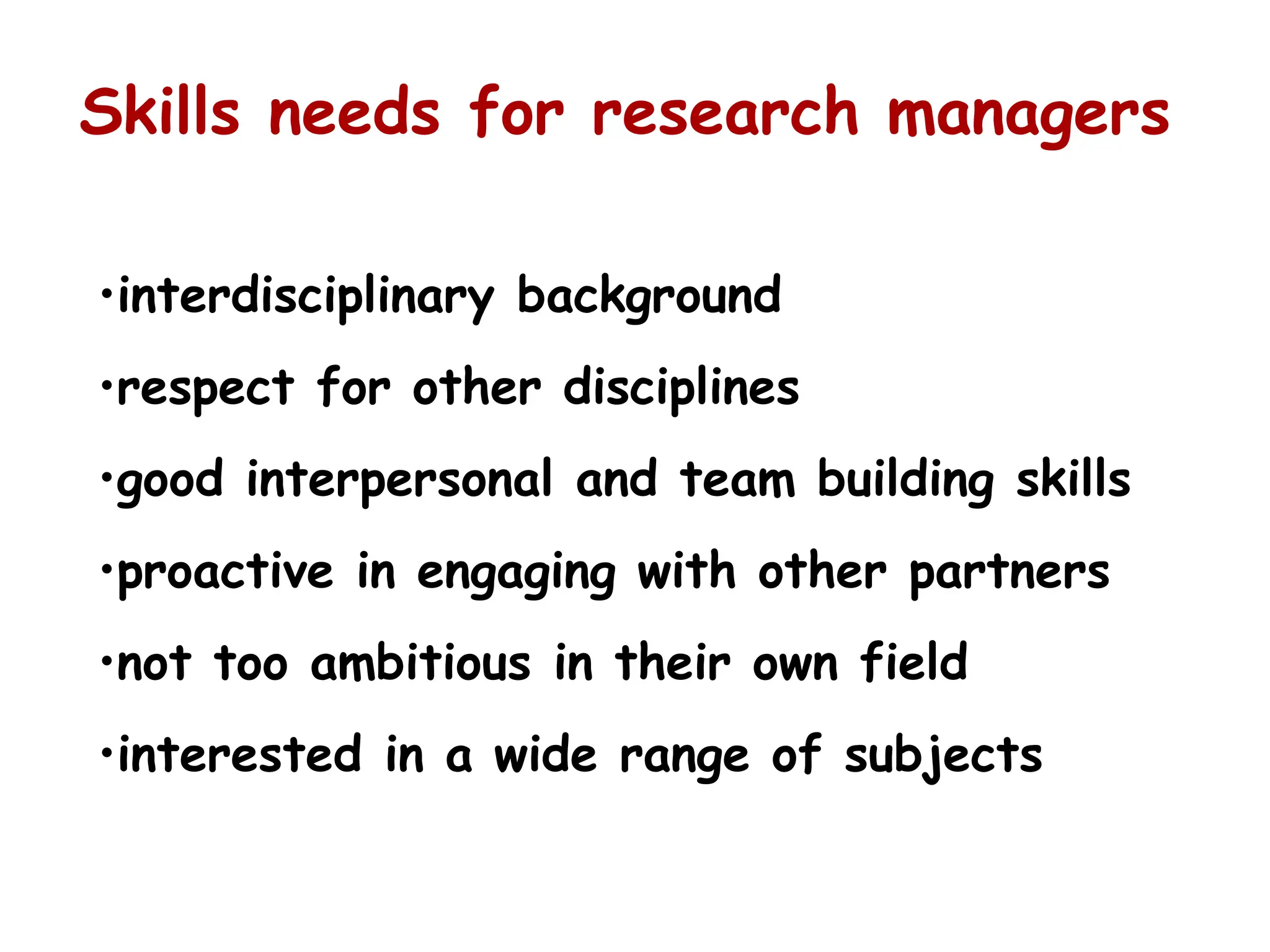
Skills needs for research managers
•interdisciplinary background
•respect for other disciplines
•good interpersonal and team building skills
•proactive in engaging with other partners
•not too ambitious in their own field
•interested in a wide range of subjects
References
Bruce, A., Lyall, C., Tait, J. and Williams, R. (2004), “Interdisciplinary
Integration in the Fifth Framework Programme”, Futures, 36/4, pp.
457-470.
Tait J. and Lyall C. (2001) “Short Term Investigation into ESRC
Funded Interdisciplinary Research”. Report to ESRC published as
SUPRA Working Paper 26.
Session 5 - Interdisciplinary Research.pdf

Session 5 - Interdisciplinary Research.pdf

  • 1.
  • 2.
    Definitions of InterdisciplinaryResearch Discipline A Discipline B Discipline C Multidisciplinary research Interdisciplinary research Discipline A Discipline B Discipline C Issue A Issue B Issue C Transdisciplinary research Multidisciplinary research which approaches a problem from the perspectives of a number of different disciplines, but where each discipline works in a self-contained manner and there is no integration across disciplines) Interdisciplinary research which approaches a problem from the perspectives of a number of different disciplines and where the contributions of the various disciplines are formally integrated to give a synergistic outcome where the whole is greater than the sum of the parts). Transdisciplinary research a- disciplinary; ignores disciplines, focuses on issues
  • 3.
    Types of interdisciplinaryresearch Academically-oriented ID Research • often longer-term collaborations • discipline focused • helps disciplines to evolve Problem-focused ID Research • shorter term collaborations • directed to specific real world problems • could be interdisciplinary or transdisciplinary
  • 4.
    Contribution to development of disciplines Contributionto practical problem solving Level of integration Multi- disciplinary Research Inter- disciplinary Research Low High Problem focused Academic orientation
  • 5.
    Motivations for IDresearch • Policy issue interdisciplinary (e.g. transport, environment) • Knowledge transfer (lab to real world) • Research user driven (not necessarily commercial) and heavily applied • Single discipline research had encountered a bottle-neck, more than one discipline needed to make a breakthrough
  • 6.
    Factors that discourageID research • Poor career structures for academic interdisciplinary researchers • Low esteem of interdisciplinary research by mono-disciplinary colleagues • Lack of opportunities to publish research results in high ranking refereed journals • Discrimination by referees against interdisciplinary research proposals and publications
  • 7.
    Skills needs forindividual researchers • Understanding the languages, research methods and cultures of different disciplines • High tolerance of ambiguity – personality more important than discipline base • Willingness to learn from other disciplines
  • 8.
    Skills needs forresearch managers •interdisciplinary background •respect for other disciplines •good interpersonal and team building skills •proactive in engaging with other partners •not too ambitious in their own field •interested in a wide range of subjects
  • 9.
    References Bruce, A., Lyall,C., Tait, J. and Williams, R. (2004), “Interdisciplinary Integration in the Fifth Framework Programme”, Futures, 36/4, pp. 457-470. Tait J. and Lyall C. (2001) “Short Term Investigation into ESRC Funded Interdisciplinary Research”. Report to ESRC published as SUPRA Working Paper 26.