Processes
   Event Management
   Incident Management
   Request Fulfillment
   Problem Management
   Access Management


Functions
   Service Desk
   Technical Management
   IT operations Management
   Application Management
Purpose

Monitoring all events that occur throughout the IT
 infrastructure to allow for normal Service
 Operation and to detect and escalate exceptions


   Basis for Operational monitoring and control
Objectives
 Detect all changes of state of CI or IT services
 Determine appropriate control action for
  events and ensure are communicated
 Provide trigger for execution of many other
  processes, activities
 Provide means to compare actual performance
  and behavior against standards and SLA’s
 Provide a basis for service assurance and
  reporting; and improvement
Scope
 Configuration Items
 Environmental Conditions (ex. Fire and smoke
  detection)
 Software license usage
 Security (ex. Firewall breach)
 Normal Activity (ex. Mainframe utilization, batch job
  completion)
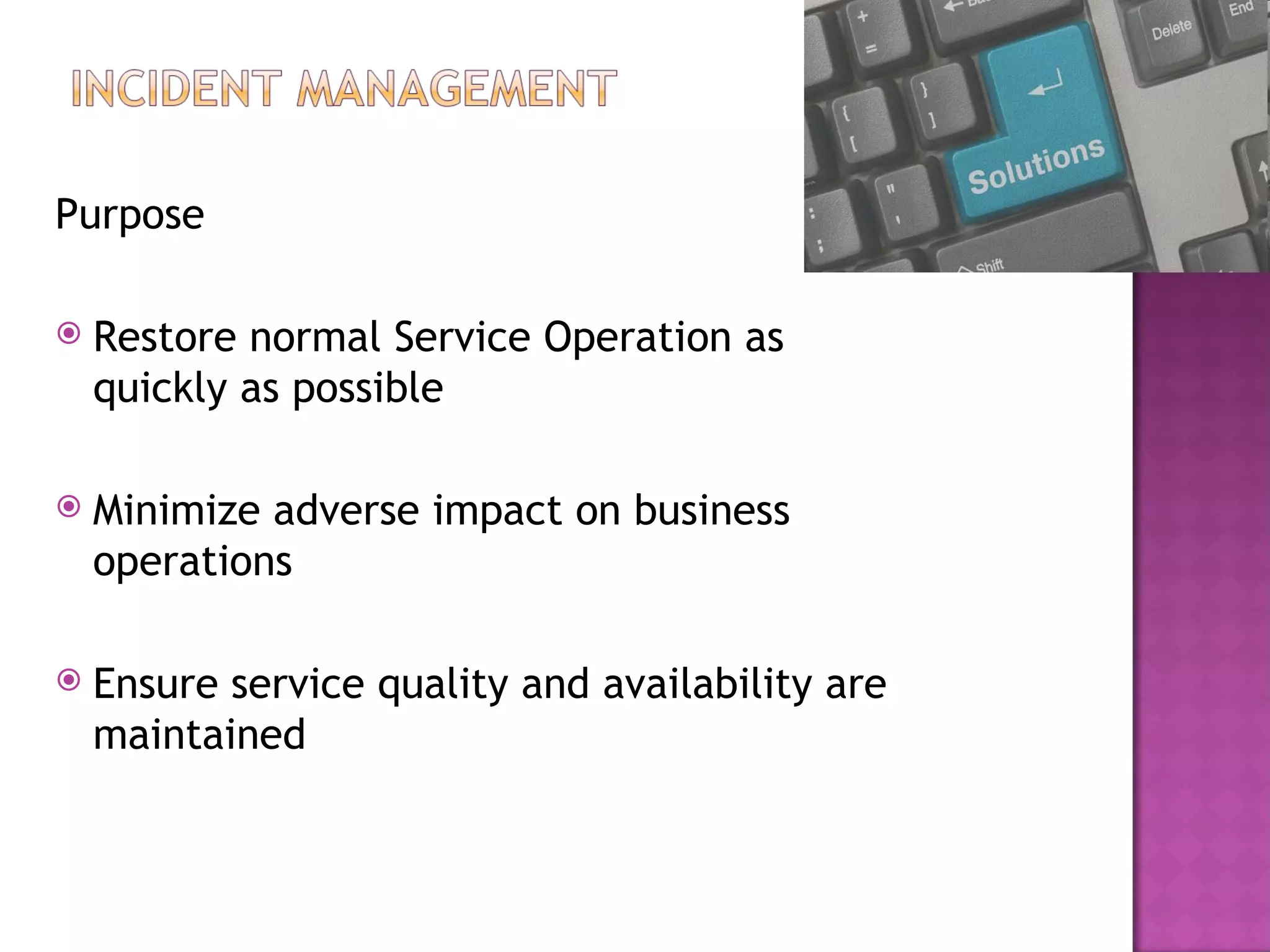
Purpose

   Restore normal Service Operation as
    quickly as possible

   Minimize adverse impact on business
    operations

   Ensure service quality and availability are
    maintained
Scope

   Includes any event which disrupts or which could
    disrupt a service.

   Includes Events which are communicated
     Users,
     Tools
     Technical Staff etc.


   All events are not incidents.
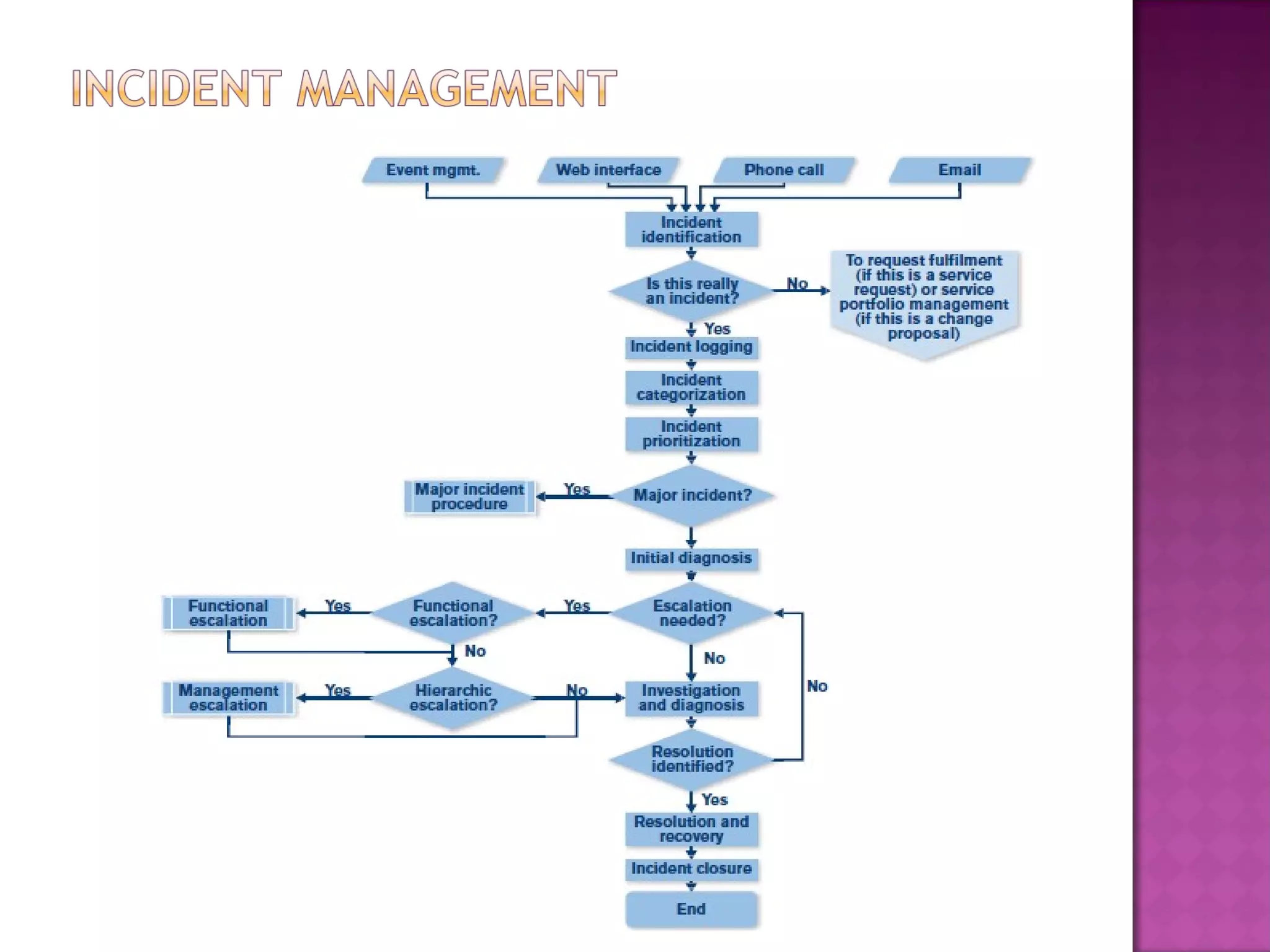
   Timeframes
       Incident response and resolution targets within SLA


   Incident Models
       “Standard” or “specialized” incidents are handled in
        predefined path and within predefined timeframes


   Prioritization
       Priority – Impact x Urgency


   Escalation
     Technical / Functional / Horizontal
     Management / Hierarchical / Vertical
Key Metrics to judge the IM process

   Total no. of incidents

   Breakdown of Incidents at each stage.

   Size of incident Backlog

   % FTR by Service Desk

   % handled within agreed resolve times

   No and % of Major incidents

   No and % of Incidents assigned correctly.
“An Incident never becomes a
          Problem”
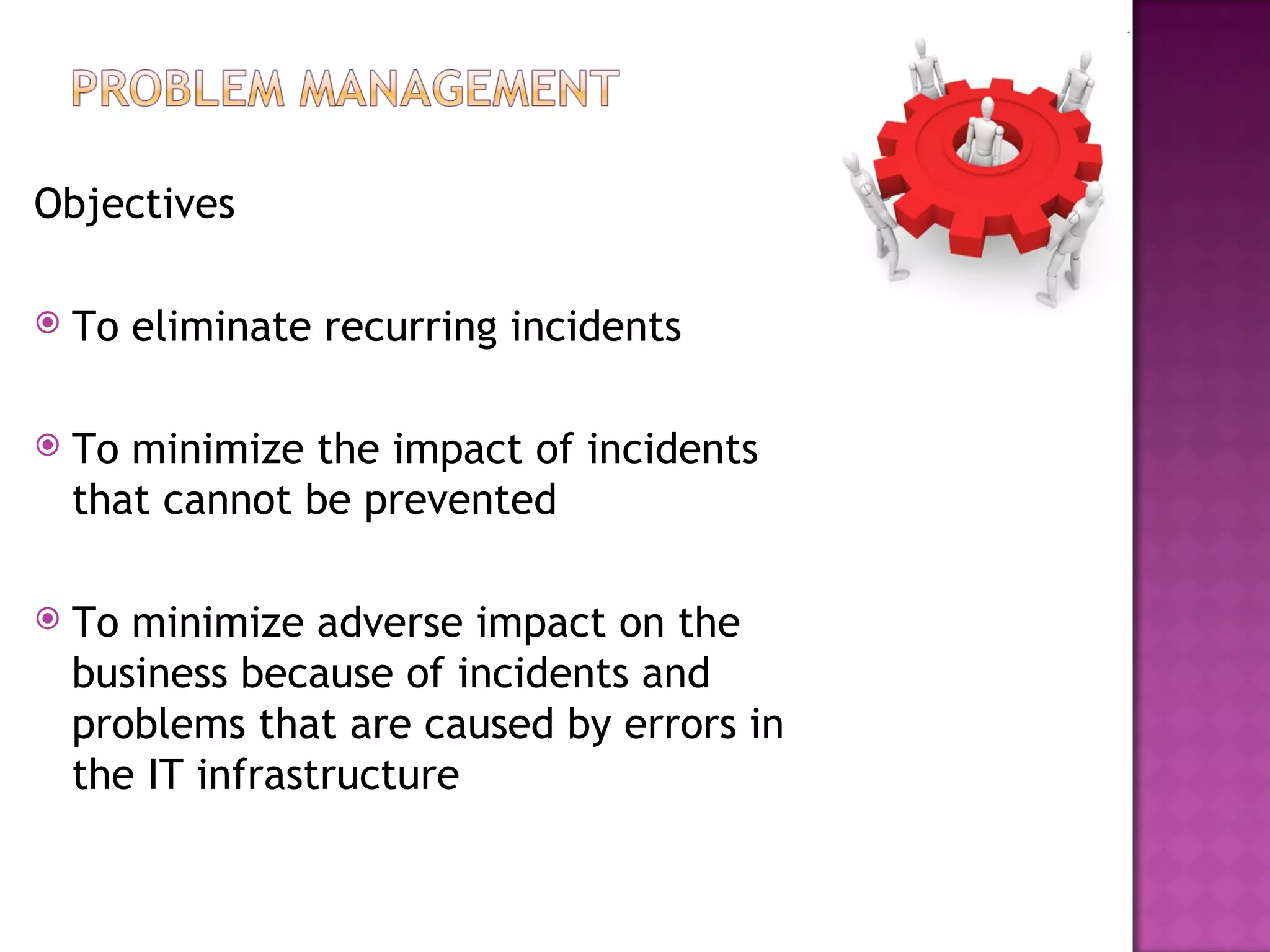
Objectives

   To eliminate recurring incidents

   To minimize the impact of incidents
    that cannot be prevented

   To minimize adverse impact on the
    business because of incidents and
    problems that are caused by errors in
    the IT infrastructure
Basic Concepts

Problem
 The unknown cause of one or more incidents


Work-Around
 A temporary way of overcoming technical failures


Known errors
 Problem that has a documented root cause and a work
  around
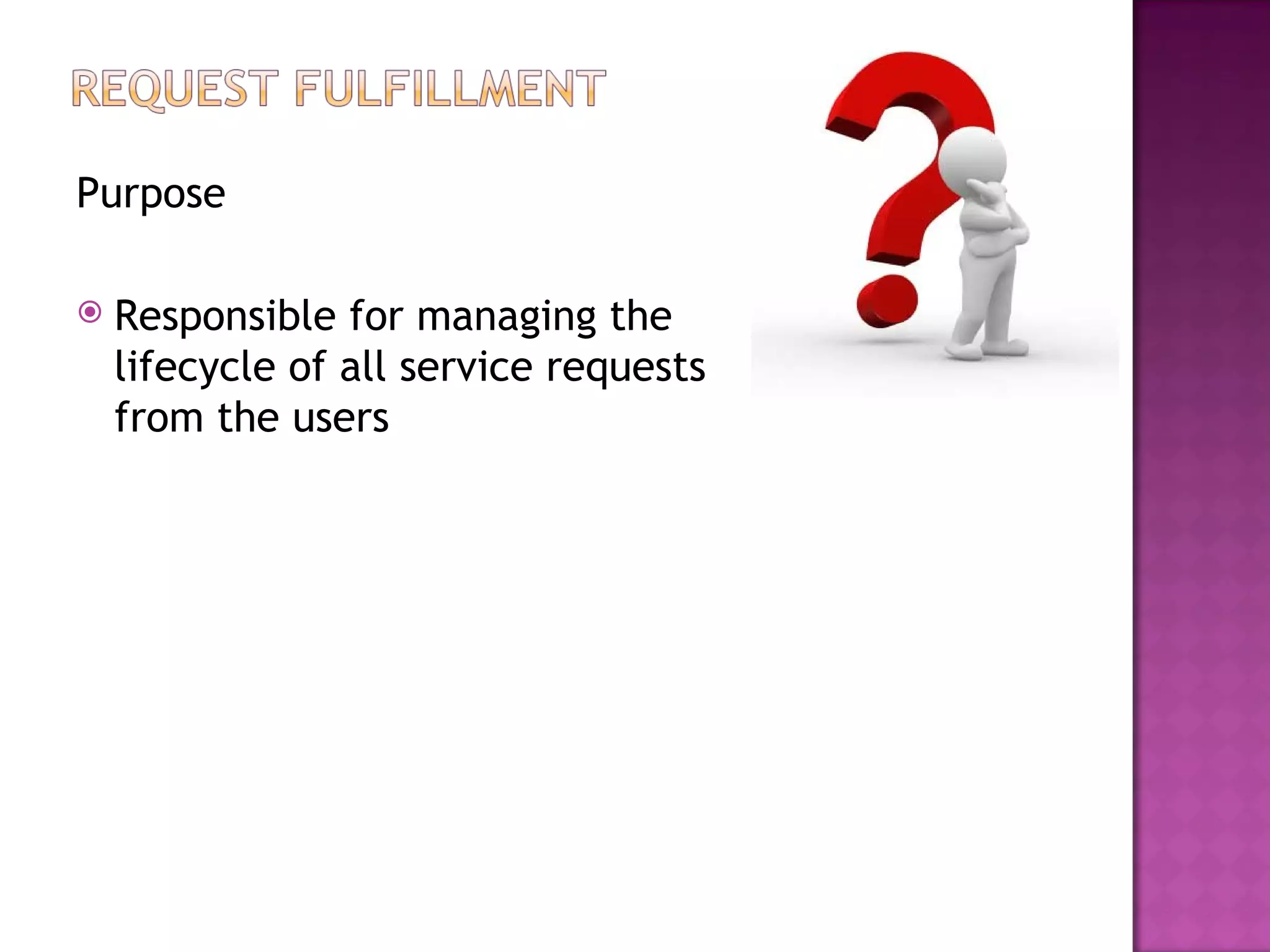
Purpose

   Responsible for managing the
    lifecycle of all service requests
    from the users
Objectives
 Provide information, address complaints
  or comments

 Standardchanges fulfillment (ex. Change
 users password)

 Responsiblefor low risk, low cost and
 frequently occurring changes
Concepts

Service Request
 A request from a user for information or advise, or
  for a standard change or for an access to IT service

Request Model
 Predefined steps to consistently handle frequent
  requests
Purpose
 Granting authorized users the right to use a service
  & preventing access by non-authorized users in
  order to protect the availability, confidentiality
  and integrity of information and infrastructure


Is therefore the execution of policies and
  actions defined in Security and Availability
  Management
Objectives

   Efficiently respond to requests for granting access
    to services, changing access rights or restricting
    access, ensuring that the rights being provided or
    changed are properly granted

   Oversee access to services and ensure rights being
    provided are not improperly used
 Access


 Identity


 Rights


 Services   or services group

 Directory   services
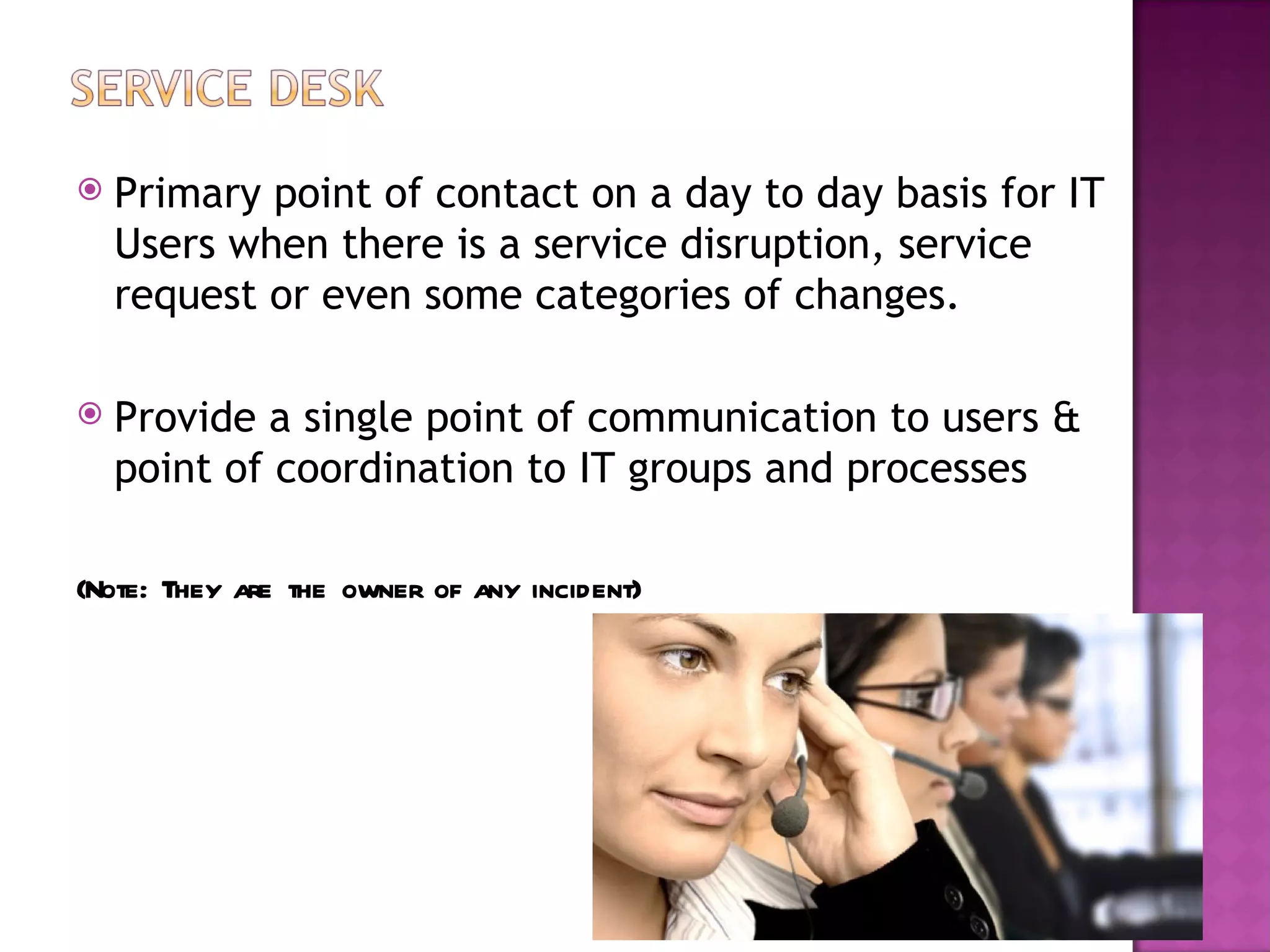
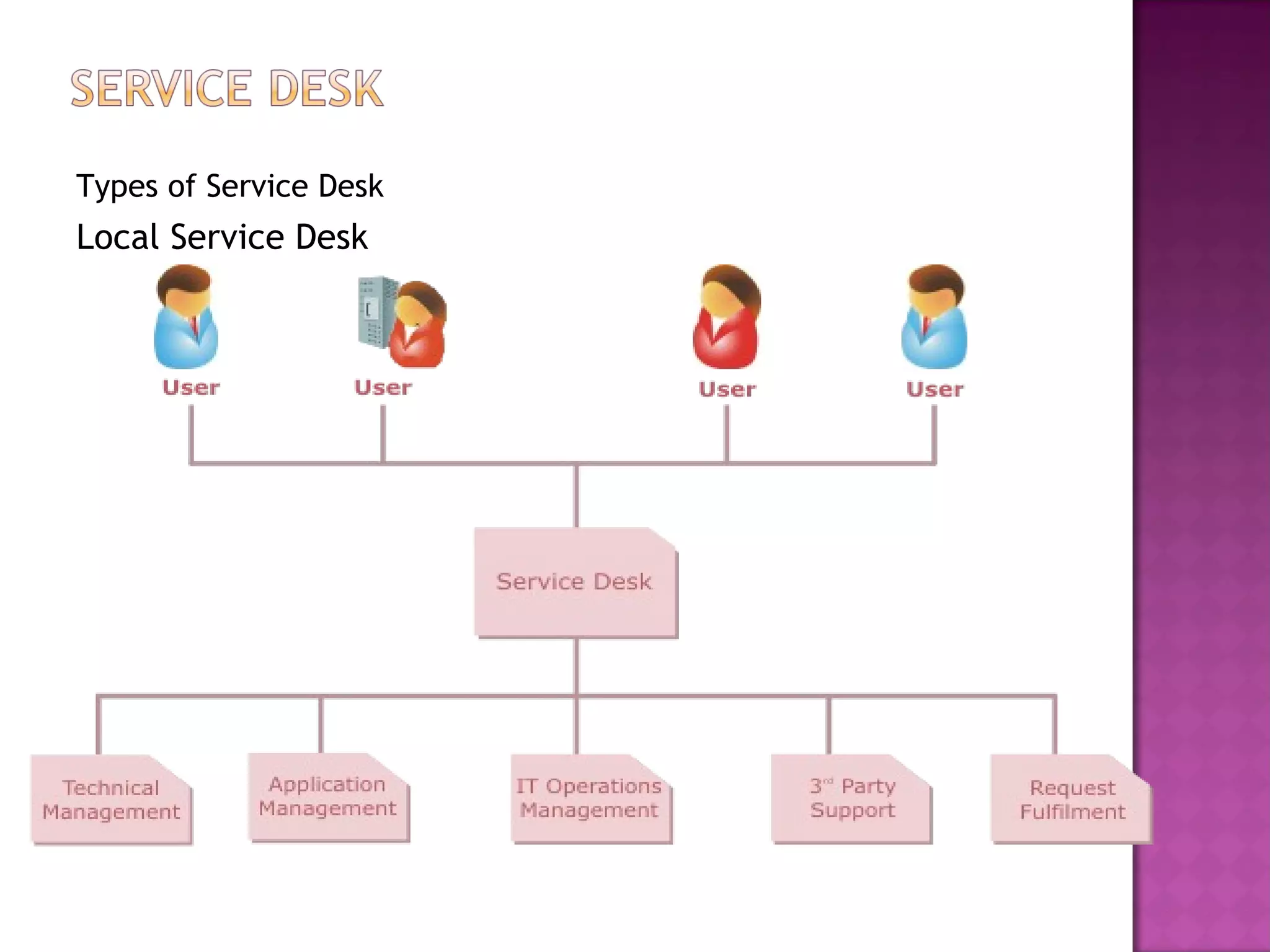
   Primary point of contact on a day to day basis for IT
    Users when there is a service disruption, service
    request or even some categories of changes.

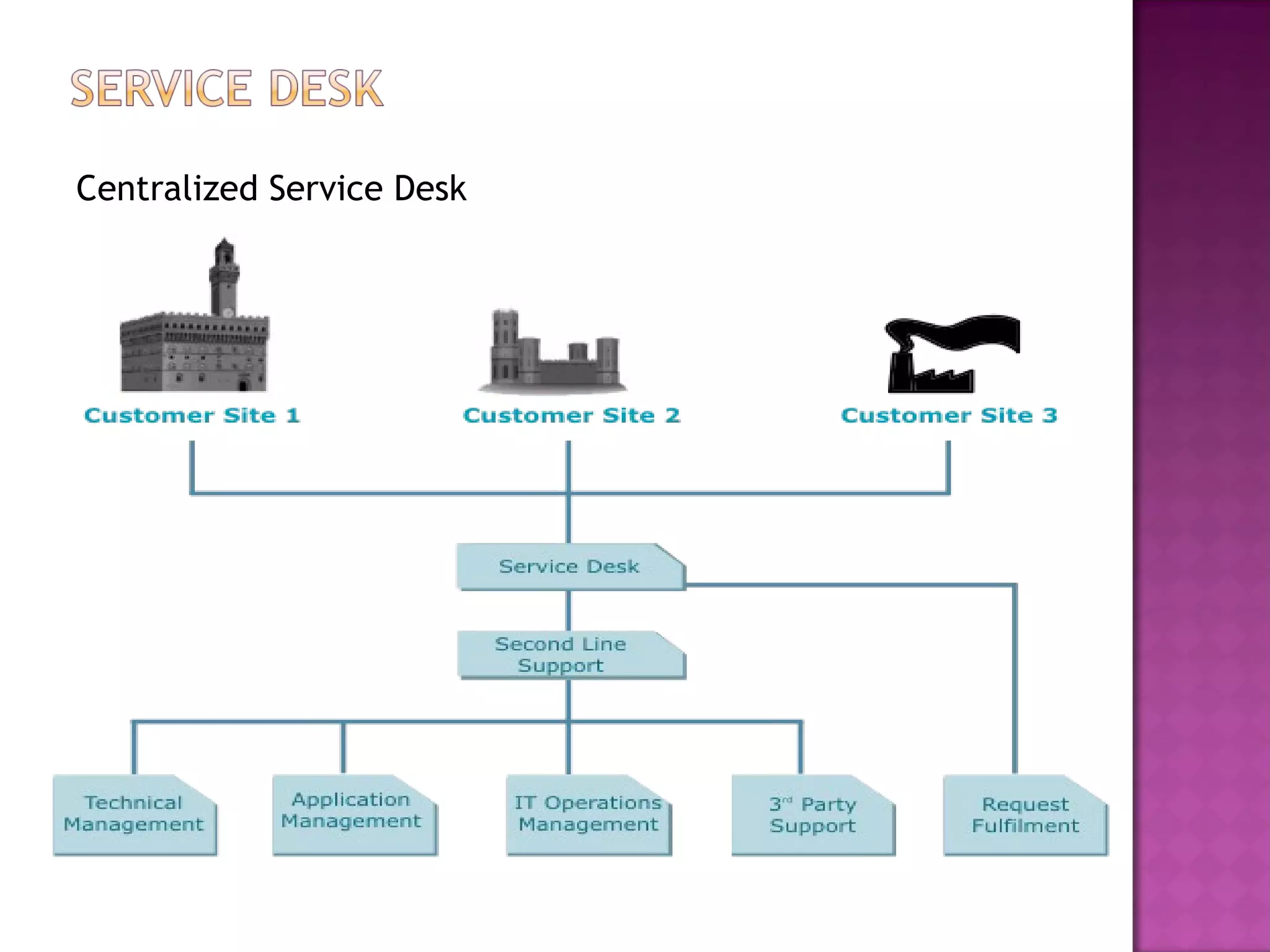
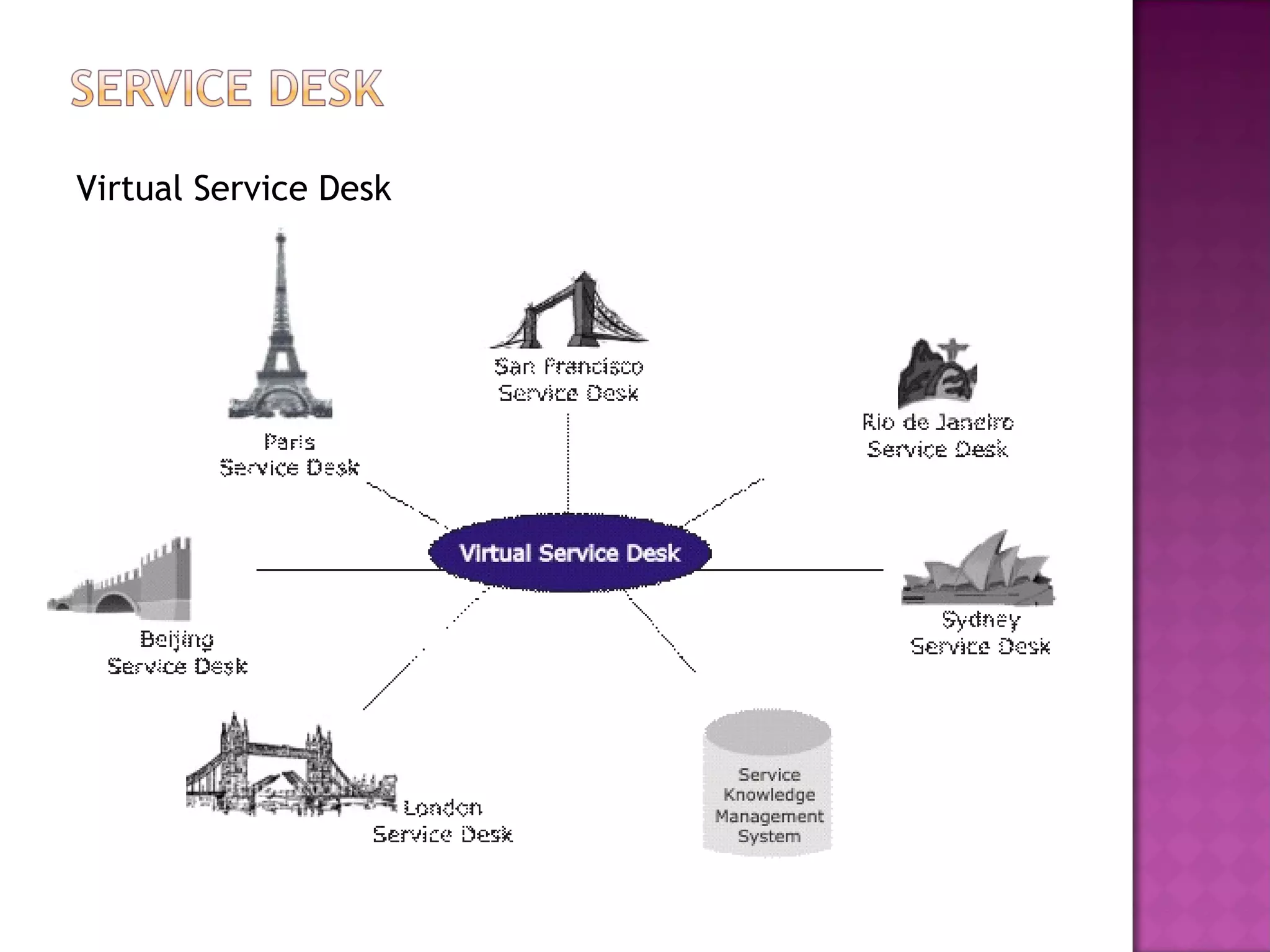
   Provide a single point of communication to users &
    point of coordination to IT groups and processes

(Note: They are the owner of any incident)
Types of Service Desk
Local Service Desk
Centralized Service Desk
Virtual Service Desk
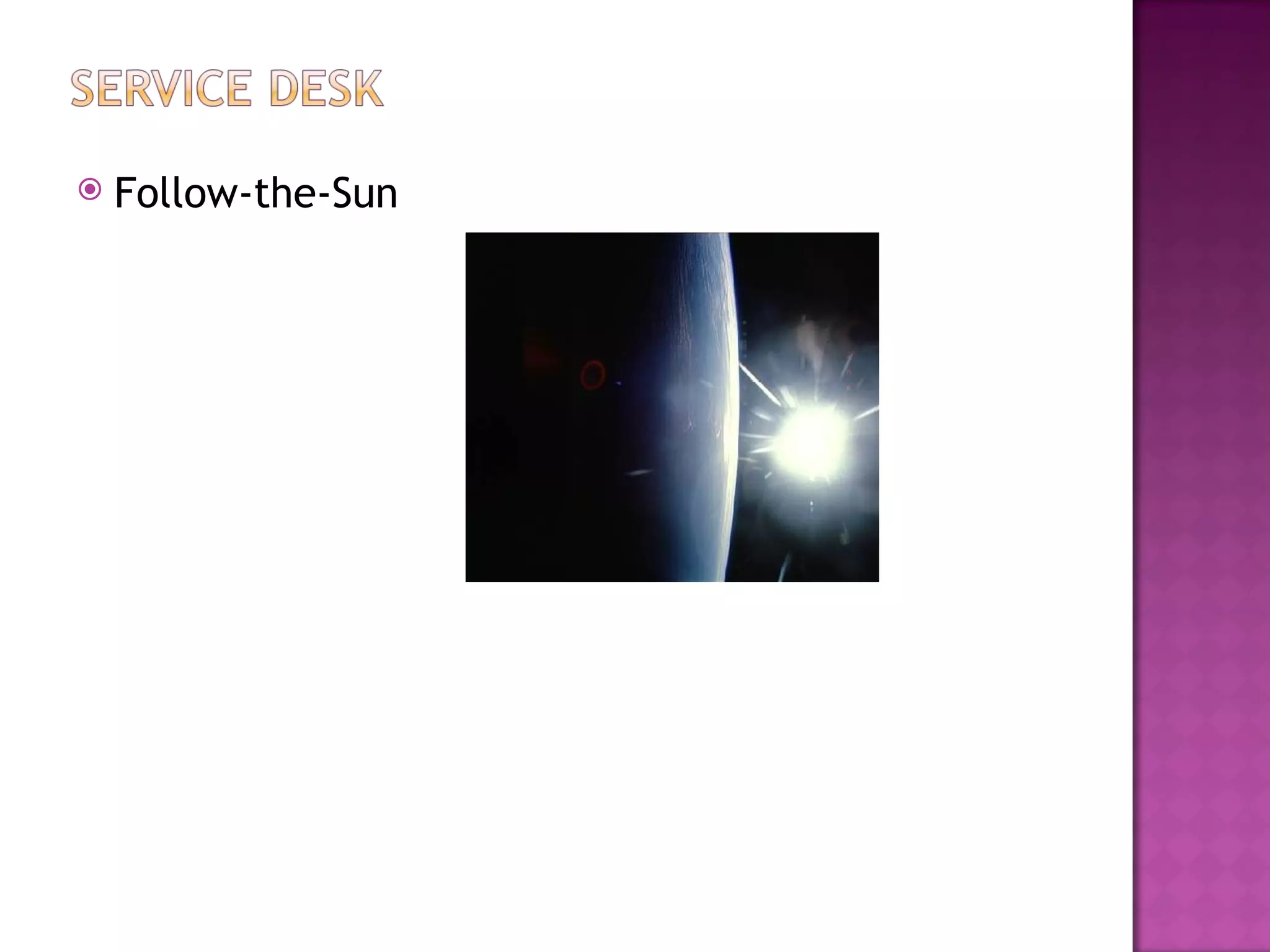
   Follow-the-Sun
Purpose

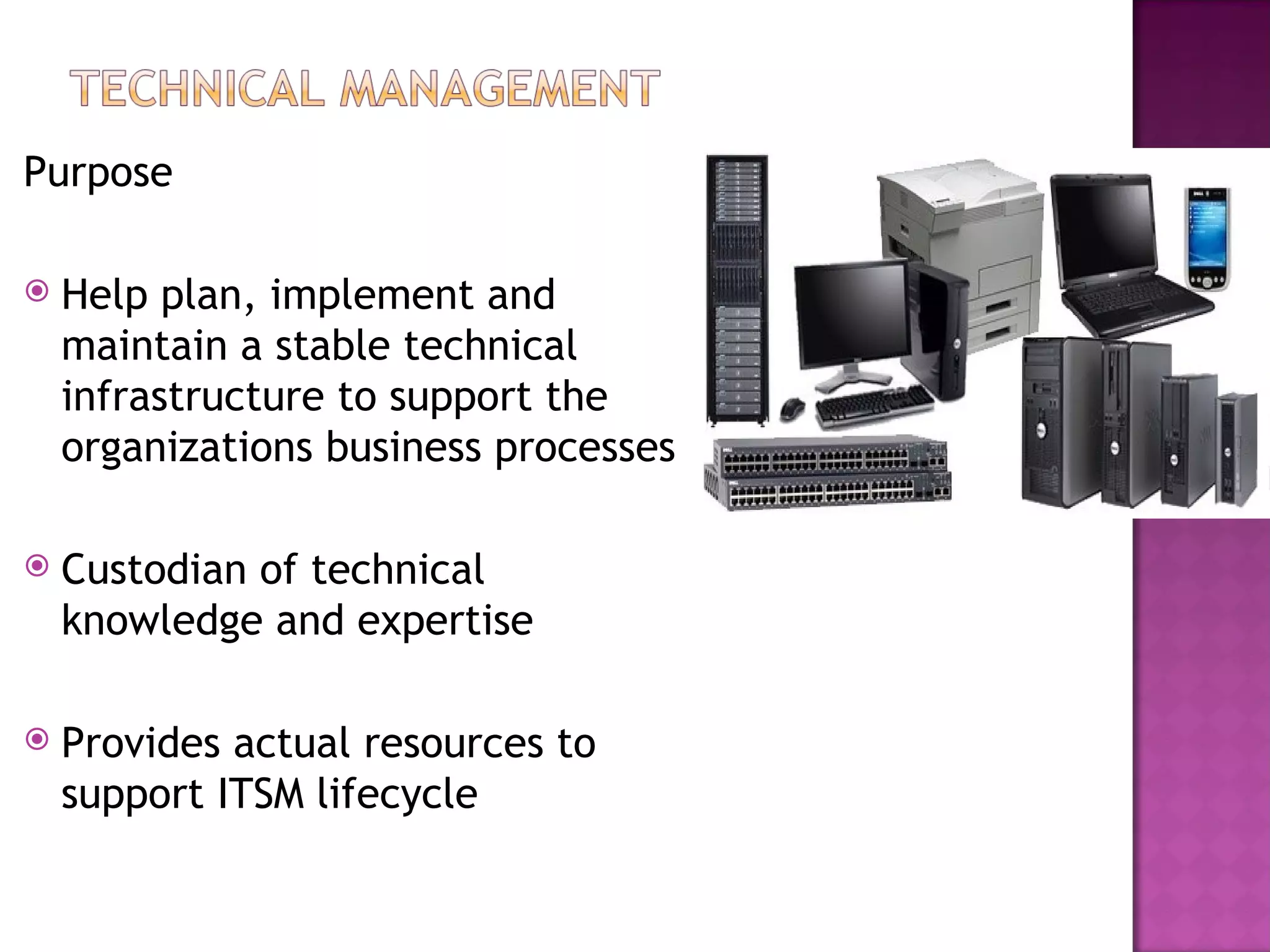
   Help plan, implement and
    maintain a stable technical
    infrastructure to support the
    organizations business processes

   Custodian of technical
    knowledge and expertise

   Provides actual resources to
    support ITSM lifecycle
Objectives

   To help plan, implement and maintain a stable
    technical infrastructure to support organizations
    business processes through..
     Well designed
     Highly resilient
     Cost effective technical topology


       Swift use of technical skills to speedily diagnose
        and resolve
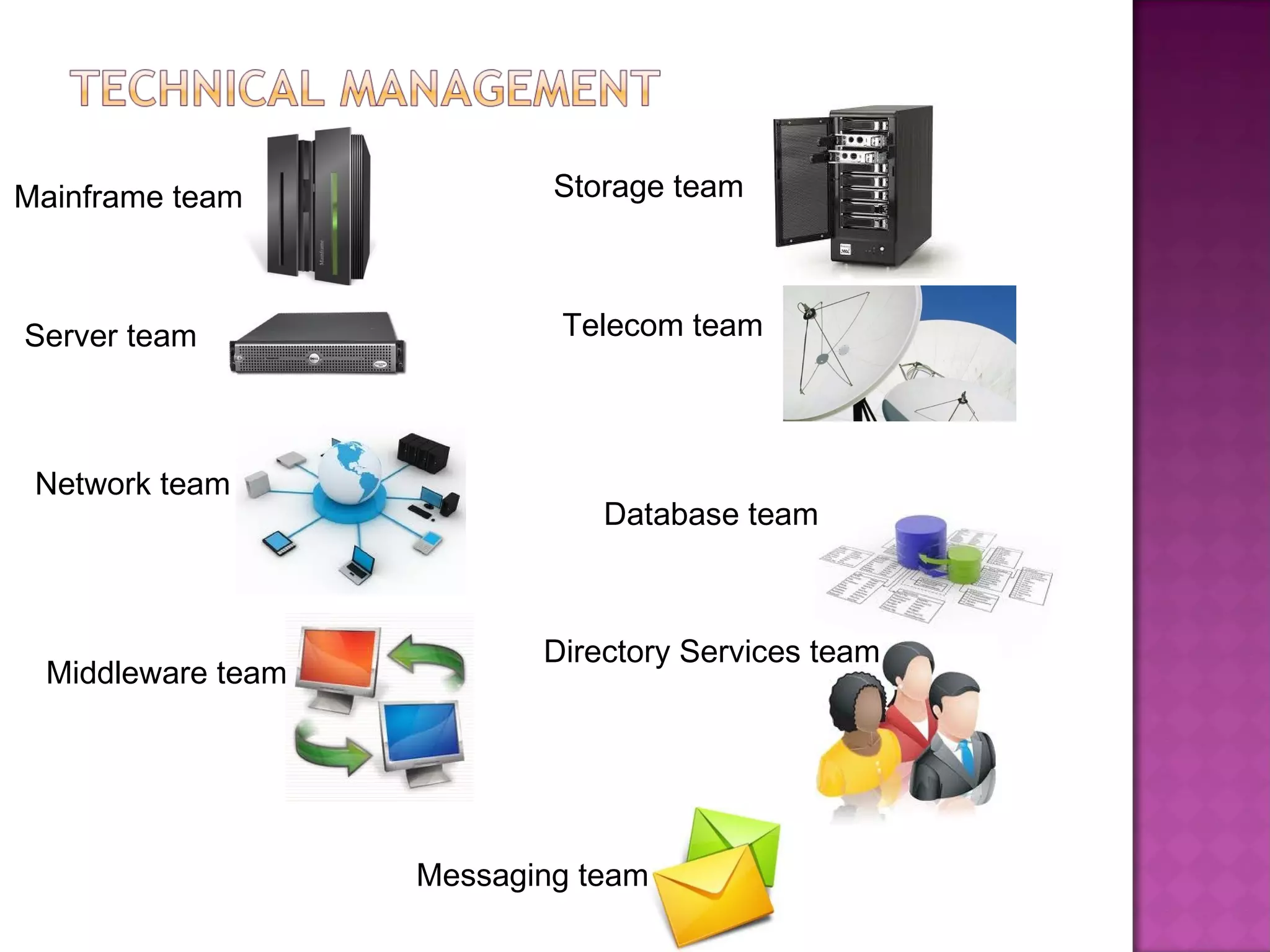
Mainframe team             Storage team


Server team                Telecom team


 Network team
                              Database team


                          Directory Services team
 Middleware team


                   Messaging team
Purpose
 To help design, implement and maintain stable
  application to support the organization’s business
  processes
 Responsible for managing applications throughout
  their lifecycle
 Supports and maintains operational application in
  good condition
 Custodian of technical knowledge and expertise
  related to application
Ensure…
 Well designed resilient and cost effective
  application
 Assuring that required functionality is available
 Apply skills to speedily diagnose an resolve
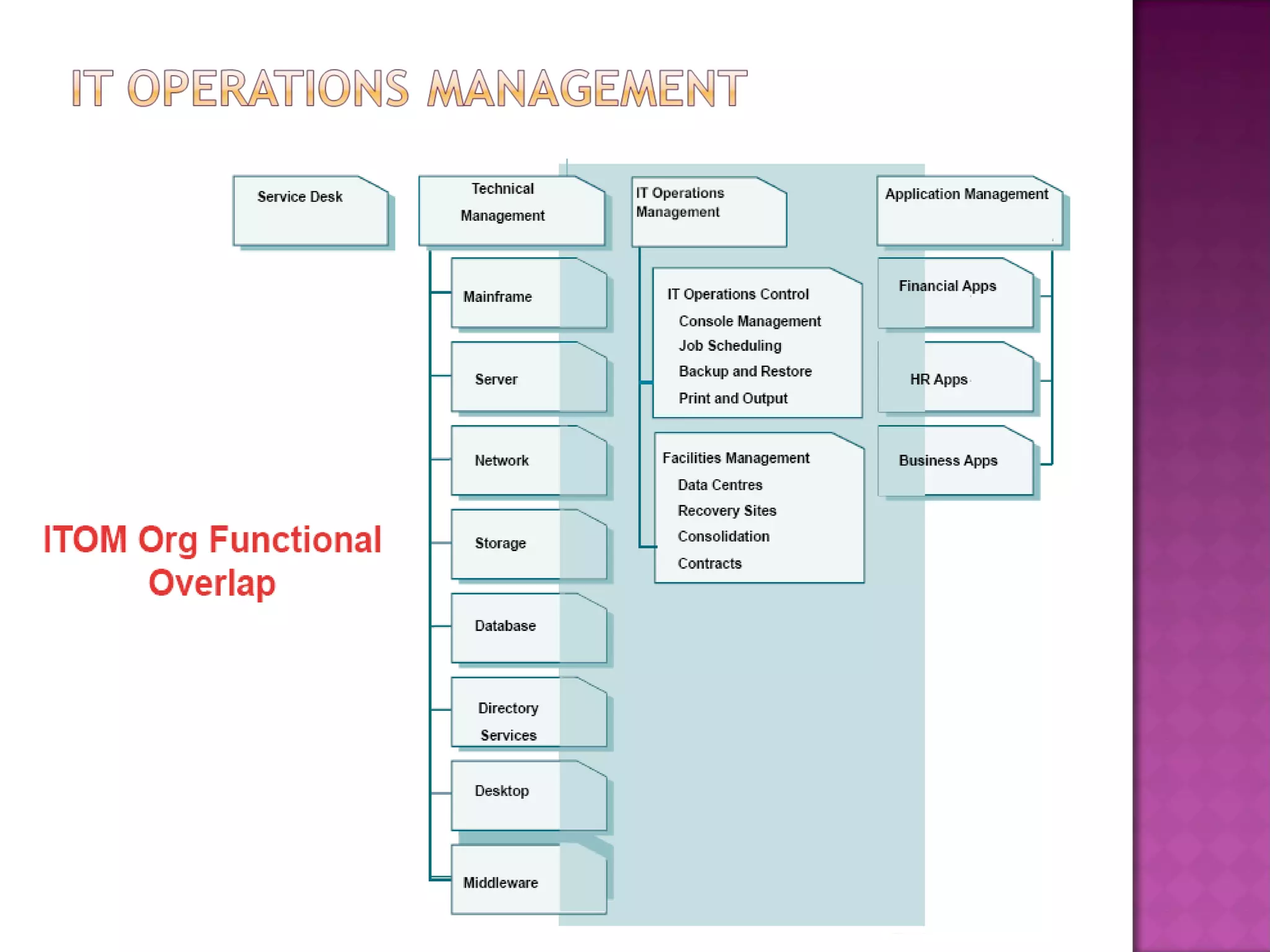
Purpose
Responsible for the daily operational activities
  needed to manage the IT infrastructure –
  according to performance standards-defined
  during service design

Subdivided as IT Ops Control and Facilities Mgt
Service operations

Service operations

  • 2.
    Processes  Event Management  Incident Management  Request Fulfillment  Problem Management  Access Management Functions  Service Desk  Technical Management  IT operations Management  Application Management
  • 3.
    Purpose Monitoring all eventsthat occur throughout the IT infrastructure to allow for normal Service Operation and to detect and escalate exceptions  Basis for Operational monitoring and control
  • 4.
    Objectives  Detect allchanges of state of CI or IT services  Determine appropriate control action for events and ensure are communicated  Provide trigger for execution of many other processes, activities  Provide means to compare actual performance and behavior against standards and SLA’s  Provide a basis for service assurance and reporting; and improvement
  • 5.
    Scope  Configuration Items Environmental Conditions (ex. Fire and smoke detection)  Software license usage  Security (ex. Firewall breach)  Normal Activity (ex. Mainframe utilization, batch job completion)
  • 6.
    Purpose  Restore normal Service Operation as quickly as possible  Minimize adverse impact on business operations  Ensure service quality and availability are maintained
  • 7.
    Scope  Includes any event which disrupts or which could disrupt a service.  Includes Events which are communicated  Users,  Tools  Technical Staff etc.  All events are not incidents.
  • 9.
    Timeframes  Incident response and resolution targets within SLA  Incident Models  “Standard” or “specialized” incidents are handled in predefined path and within predefined timeframes  Prioritization  Priority – Impact x Urgency  Escalation  Technical / Functional / Horizontal  Management / Hierarchical / Vertical
  • 10.
    Key Metrics tojudge the IM process  Total no. of incidents  Breakdown of Incidents at each stage.  Size of incident Backlog  % FTR by Service Desk  % handled within agreed resolve times  No and % of Major incidents  No and % of Incidents assigned correctly.
  • 11.
    “An Incident neverbecomes a Problem”
  • 12.
    Objectives  To eliminate recurring incidents  To minimize the impact of incidents that cannot be prevented  To minimize adverse impact on the business because of incidents and problems that are caused by errors in the IT infrastructure
  • 13.
    Basic Concepts Problem  Theunknown cause of one or more incidents Work-Around  A temporary way of overcoming technical failures Known errors  Problem that has a documented root cause and a work around
  • 14.
    Purpose  Responsible for managing the lifecycle of all service requests from the users
  • 15.
    Objectives  Provide information,address complaints or comments  Standardchanges fulfillment (ex. Change users password)  Responsiblefor low risk, low cost and frequently occurring changes
  • 16.
    Concepts Service Request  Arequest from a user for information or advise, or for a standard change or for an access to IT service Request Model  Predefined steps to consistently handle frequent requests
  • 17.
    Purpose  Granting authorizedusers the right to use a service & preventing access by non-authorized users in order to protect the availability, confidentiality and integrity of information and infrastructure Is therefore the execution of policies and actions defined in Security and Availability Management
  • 18.
    Objectives  Efficiently respond to requests for granting access to services, changing access rights or restricting access, ensuring that the rights being provided or changed are properly granted  Oversee access to services and ensure rights being provided are not improperly used
  • 19.
     Access  Identity Rights  Services or services group  Directory services
  • 20.
    Primary point of contact on a day to day basis for IT Users when there is a service disruption, service request or even some categories of changes.  Provide a single point of communication to users & point of coordination to IT groups and processes (Note: They are the owner of any incident)
  • 21.
    Types of ServiceDesk Local Service Desk
  • 22.
  • 23.
  • 24.
    Follow-the-Sun
  • 25.
    Purpose  Help plan, implement and maintain a stable technical infrastructure to support the organizations business processes  Custodian of technical knowledge and expertise  Provides actual resources to support ITSM lifecycle
  • 26.
    Objectives  To help plan, implement and maintain a stable technical infrastructure to support organizations business processes through..  Well designed  Highly resilient  Cost effective technical topology  Swift use of technical skills to speedily diagnose and resolve
  • 27.
    Mainframe team Storage team Server team Telecom team Network team Database team Directory Services team Middleware team Messaging team
  • 28.
    Purpose  To helpdesign, implement and maintain stable application to support the organization’s business processes  Responsible for managing applications throughout their lifecycle  Supports and maintains operational application in good condition  Custodian of technical knowledge and expertise related to application
  • 29.
    Ensure…  Well designedresilient and cost effective application  Assuring that required functionality is available  Apply skills to speedily diagnose an resolve
  • 30.
    Purpose Responsible for thedaily operational activities needed to manage the IT infrastructure – according to performance standards-defined during service design Subdivided as IT Ops Control and Facilities Mgt