By :- Saja Al-Rikabi
Group:-117 i-6
 CNS stimulants are drugs which increase
the muscular (motor) and the mental
(sensory) activities
 Their effects vary from the increase in the
alertness and wakefulness (as with
caffeine) TO the production of convulsion
( as with strychnine) or death due to over
stimulation
Drugs that stimulate a specific area of the
brain or spinal cord
Heart rate
Resiprotary rare
Sympathomimetic drugs
According to:
• Structural similarities
or
• Site of therapeutic action in the central
nervous system (CNS)
or
• Major therapeutic usages
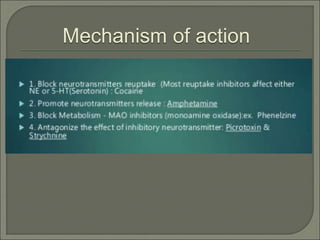
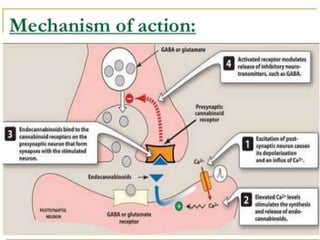
Mechanism of action
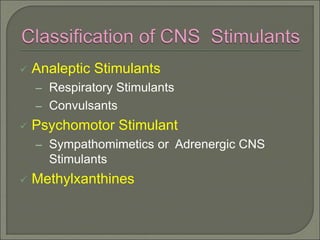
 Analeptic Stimulants
– Respiratory Stimulants
– Convulsants
 Psychomotor Stimulant
– Sympathomimetics or Adrenergic CNS
Stimulants
 Methylxanthines
 Analeptics
– Reversal of anesthesia-induced respiratory depression
 Anorexiants
– Thought to suppress the appetite control center in the brain
 ADHD
– Stimulate the areas in the brain responsible for mental
alertness and attentiveness
 Narcolepsy
– Increase mental alertness
 Migraine headaches
– Caffeine, co-administered with other drugs, used to treat
headaches
Wide range, dose related
Tend to “speed up” body systems
Common adverse effects include:
– Palpitations, tachycardia, hypertension, angina,
dysrhythmias, nervousness, restlessness, anxiety,
insomnia, nausea, vomiting, diarrhea, dry mouth,
increased urinary frequency, others
Analeptic
 An analeptic, in medicine, is a central nervous
system stimulant. The term analeptic typically
refers to respiratory analeptics (for
example, doxapram). Analeptics are central
nervous system stimulants that include a wide
variety of medications used to treat depression,
attention deficit hyperactivity disorder (ADHD),
and respiratory depression. Analeptics can also
be used as convulsants, with low doses causing
patients to experience heightened awareness,
restlessness and rapid breathing.
Medical use
• used to increase the speed of recovery
from propofol, remifentanil, and sevoflurane. In
clinical settings, analeptics such
as Doxapram have been used to help patients
recover from anesthesia better, as well as
removing some of the potential negative side
effects of potent anesthetics.
Anesthesia
recovery
• three most prevalent clinical analeptic uses of
caffeine are in the treatment of asthma, apnea
of prematurity, and bronchopulmonary
dysplasia in newborn infants.Caffeine is a
weak bronchodilator, which explains the relief
of the effects of asthma.
Respiratory
distress
management
Side effect of analeptic
 Sweating
 Nausea
 Vomiting
 Urinary retention and muscle spasticity
 Diarrhea
• Doxapram - used to counteract postanesthetic
respiratory depression and for acute
hypercapnia in chronic pulmonary disease.
– Used with caution with neonatal apnea
– Administered IV
– Onset of action: within 20-40 secs
– SE: (overdose)
 Hypertension
 Tachycardia
 Trembling
 convulsions
 Migraine headaches- characterized by a
unilateral throbbing head
 pain, accompanied by N/V and
photophobia
 Cluster headaches- characterized by
severe unilateral nonthrobbing pain
usually located around the eye. Usually
not associated with N/V
Thank you for your attention

Cns stimulants

  • 1.
    By :- SajaAl-Rikabi Group:-117 i-6
  • 2.
     CNS stimulantsare drugs which increase the muscular (motor) and the mental (sensory) activities  Their effects vary from the increase in the alertness and wakefulness (as with caffeine) TO the production of convulsion ( as with strychnine) or death due to over stimulation
  • 3.
    Drugs that stimulatea specific area of the brain or spinal cord Heart rate Resiprotary rare Sympathomimetic drugs
  • 4.
    According to: • Structuralsimilarities or • Site of therapeutic action in the central nervous system (CNS) or • Major therapeutic usages
  • 5.
  • 7.
     Analeptic Stimulants –Respiratory Stimulants – Convulsants  Psychomotor Stimulant – Sympathomimetics or Adrenergic CNS Stimulants  Methylxanthines
  • 8.
     Analeptics – Reversalof anesthesia-induced respiratory depression  Anorexiants – Thought to suppress the appetite control center in the brain  ADHD – Stimulate the areas in the brain responsible for mental alertness and attentiveness  Narcolepsy – Increase mental alertness  Migraine headaches – Caffeine, co-administered with other drugs, used to treat headaches
  • 9.
    Wide range, doserelated Tend to “speed up” body systems Common adverse effects include: – Palpitations, tachycardia, hypertension, angina, dysrhythmias, nervousness, restlessness, anxiety, insomnia, nausea, vomiting, diarrhea, dry mouth, increased urinary frequency, others
  • 10.
    Analeptic  An analeptic,in medicine, is a central nervous system stimulant. The term analeptic typically refers to respiratory analeptics (for example, doxapram). Analeptics are central nervous system stimulants that include a wide variety of medications used to treat depression, attention deficit hyperactivity disorder (ADHD), and respiratory depression. Analeptics can also be used as convulsants, with low doses causing patients to experience heightened awareness, restlessness and rapid breathing.
  • 11.
    Medical use • usedto increase the speed of recovery from propofol, remifentanil, and sevoflurane. In clinical settings, analeptics such as Doxapram have been used to help patients recover from anesthesia better, as well as removing some of the potential negative side effects of potent anesthetics. Anesthesia recovery • three most prevalent clinical analeptic uses of caffeine are in the treatment of asthma, apnea of prematurity, and bronchopulmonary dysplasia in newborn infants.Caffeine is a weak bronchodilator, which explains the relief of the effects of asthma. Respiratory distress management
  • 12.
    Side effect ofanaleptic  Sweating  Nausea  Vomiting  Urinary retention and muscle spasticity  Diarrhea
  • 13.
    • Doxapram -used to counteract postanesthetic respiratory depression and for acute hypercapnia in chronic pulmonary disease. – Used with caution with neonatal apnea – Administered IV – Onset of action: within 20-40 secs – SE: (overdose)  Hypertension  Tachycardia  Trembling  convulsions
  • 14.
     Migraine headaches-characterized by a unilateral throbbing head  pain, accompanied by N/V and photophobia  Cluster headaches- characterized by severe unilateral nonthrobbing pain usually located around the eye. Usually not associated with N/V
  • 15.
    Thank you foryour attention