Serbia 
Nikola Milosevic
Basic data 
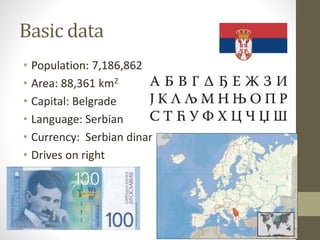
• Population: 7,186,862 
• Area: 88,361 km2 
• Capital: Belgrade 
• Language: Serbian 
• Currency: Serbian dinar 
• Drives on right
Early history 
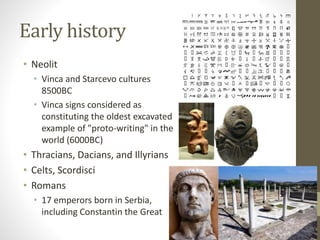
• Neolit 
• Vinca and Starcevo cultures 
8500BC 
• Vinca signs considered as 
constituting the oldest excavated 
example of "proto-writing" in the 
world (6000BC) 
• Thracians, Dacians, and Illyrians 
• Celts, Scordisci 
• Romans 
• 17 emperors born in Serbia, 
including Constantin the Great
First Serbian state 
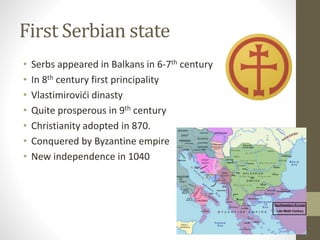
• Serbs appeared in Balkans in 6-7th century 
• In 8th century first principality 
• Vlastimirovići dinasty 
• Quite prosperous in 9th century 
• Christianity adopted in 870. 
• Conquered by Byzantine empire 
• New independence in 1040
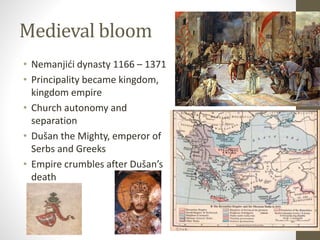
Medieval bloom 
• Nemanjići dynasty 1166 – 1371 
• Principality became kingdom, 
kingdom empire 
• Church autonomy and 
separation 
• Dušan the Mighty, emperor of 
Serbs and Greeks 
• Empire crumbles after Dušan’s 
death
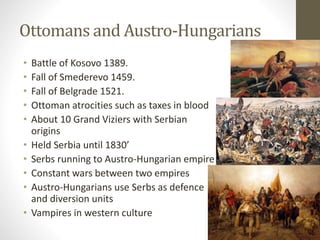
Ottomans and Austro-Hungarians 
• Battle of Kosovo 1389. 
• Fall of Smederevo 1459. 
• Fall of Belgrade 1521. 
• Ottoman atrocities such as taxes in blood 
• About 10 Grand Viziers with Serbian 
origins 
• Held Serbia until 1830’ 
• Serbs running to Austro-Hungarian empire 
• Constant wars between two empires 
• Austro-Hungarians use Serbs as defence 
and diversion units 
• Vampires in western culture
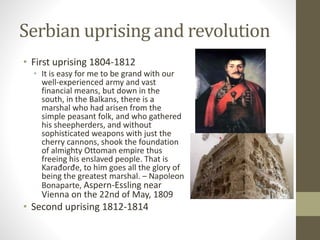
Serbian uprising and revolution 
• First uprising 1804-1812 
• It is easy for me to be grand with our 
well-experienced army and vast 
financial means, but down in the 
south, in the Balkans, there is a 
marshal who had arisen from the 
simple peasant folk, and who gathered 
his sheepherders, and without 
sophisticated weapons with just the 
cherry cannons, shook the foundation 
of almighty Ottoman empire thus 
freeing his enslaved people. That is 
Karađorđe, to him goes all the glory of 
being the greatest marshal. – Napoleon 
Bonaparte, Aspern-Essling near 
Vienna on the 22nd of May, 1809 
• Second uprising 1812-1814
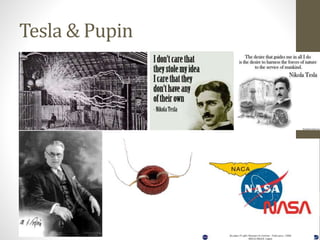
Tesla & Pupin
World War I 
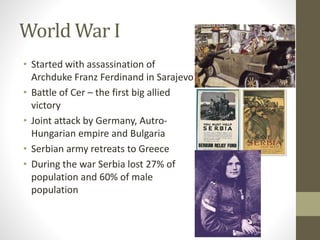
• Started with assassination of 
Archduke Franz Ferdinand in Sarajevo 
• Battle of Cer – the first big allied 
victory 
• Joint attack by Germany, Autro- 
Hungarian empire and Bulgaria 
• Serbian army retreats to Greece 
• During the war Serbia lost 27% of 
population and 60% of male 
population
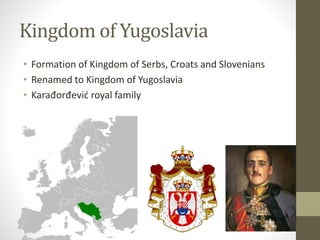
Kingdom of Yugoslavia 
• Formation of Kingdom of Serbs, Croats and Slovenians 
• Renamed to Kingdom of Yugoslavia 
• Karađorđević royal family
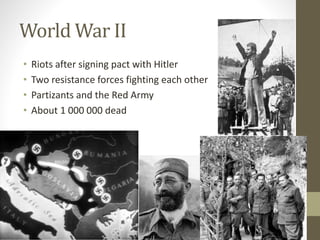
World War II 
• Riots after signing pact with Hitler 
• Two resistance forces fighting each other 
• Partizants and the Red Army 
• About 1 000 000 dead
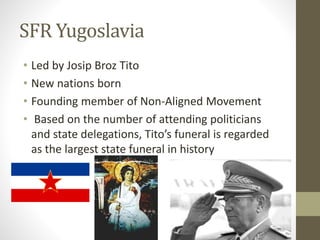
SFR Yugoslavia 
• Led by Josip Broz Tito 
• New nations born 
• Founding member of Non-Aligned Movement 
• Based on the number of attending politicians 
and state delegations, Tito’s funeral is regarded 
as the largest state funeral in history
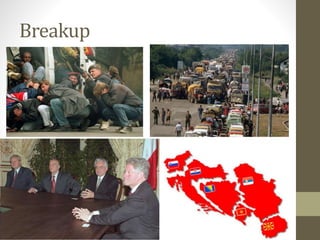
Breakup
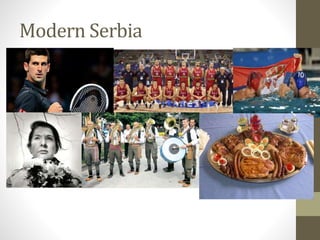
Modern Serbia
Thank you!

Serbia2

  • 1.
  • 2.
    Basic data •Population: 7,186,862 • Area: 88,361 km2 • Capital: Belgrade • Language: Serbian • Currency: Serbian dinar • Drives on right
  • 3.
    Early history •Neolit • Vinca and Starcevo cultures 8500BC • Vinca signs considered as constituting the oldest excavated example of "proto-writing" in the world (6000BC) • Thracians, Dacians, and Illyrians • Celts, Scordisci • Romans • 17 emperors born in Serbia, including Constantin the Great
  • 4.
    First Serbian state • Serbs appeared in Balkans in 6-7th century • In 8th century first principality • Vlastimirovići dinasty • Quite prosperous in 9th century • Christianity adopted in 870. • Conquered by Byzantine empire • New independence in 1040
  • 5.
    Medieval bloom •Nemanjići dynasty 1166 – 1371 • Principality became kingdom, kingdom empire • Church autonomy and separation • Dušan the Mighty, emperor of Serbs and Greeks • Empire crumbles after Dušan’s death
  • 6.
    Ottomans and Austro-Hungarians • Battle of Kosovo 1389. • Fall of Smederevo 1459. • Fall of Belgrade 1521. • Ottoman atrocities such as taxes in blood • About 10 Grand Viziers with Serbian origins • Held Serbia until 1830’ • Serbs running to Austro-Hungarian empire • Constant wars between two empires • Austro-Hungarians use Serbs as defence and diversion units • Vampires in western culture
  • 7.
    Serbian uprising andrevolution • First uprising 1804-1812 • It is easy for me to be grand with our well-experienced army and vast financial means, but down in the south, in the Balkans, there is a marshal who had arisen from the simple peasant folk, and who gathered his sheepherders, and without sophisticated weapons with just the cherry cannons, shook the foundation of almighty Ottoman empire thus freeing his enslaved people. That is Karađorđe, to him goes all the glory of being the greatest marshal. – Napoleon Bonaparte, Aspern-Essling near Vienna on the 22nd of May, 1809 • Second uprising 1812-1814
  • 8.
  • 9.
    World War I • Started with assassination of Archduke Franz Ferdinand in Sarajevo • Battle of Cer – the first big allied victory • Joint attack by Germany, Autro- Hungarian empire and Bulgaria • Serbian army retreats to Greece • During the war Serbia lost 27% of population and 60% of male population
  • 10.
    Kingdom of Yugoslavia • Formation of Kingdom of Serbs, Croats and Slovenians • Renamed to Kingdom of Yugoslavia • Karađorđević royal family
  • 11.
    World War II • Riots after signing pact with Hitler • Two resistance forces fighting each other • Partizants and the Red Army • About 1 000 000 dead
  • 12.
    SFR Yugoslavia •Led by Josip Broz Tito • New nations born • Founding member of Non-Aligned Movement • Based on the number of attending politicians and state delegations, Tito’s funeral is regarded as the largest state funeral in history
  • 13.
  • 14.
  • 15.