Separating
Mixtures
MR. TROY JOHN REI M. BAUTISTA
Separating
Mixtures
 A mixture is composed of two or more
types of matter that can be present in
varying amounts.
 It can be physically separated by using
methods that use physical properties to
separate the components of the mixture,
such as evaporation, distillation,
filtration and chromatography.
Filtration
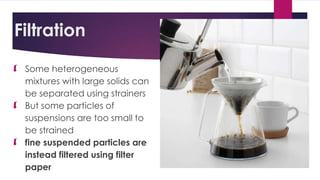
 Some heterogeneous
mixtures with large solids can
be separated using strainers
 But some particles of
suspensions are too small to
be strained
 fine suspended particles are
instead filtered using filter
paper
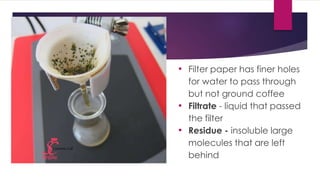
• Filter paper has finer holes
for water to pass through
but not ground coffee
• Filtrate - liquid that passed
the filter
• Residue - insoluble large
molecules that are left
behind
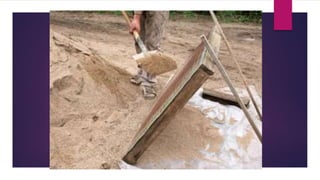
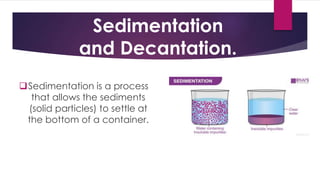
Sedimentation
and Decantation.
Sedimentation is a process
that allows the sediments
(solid particles) to settle at
the bottom of a container.
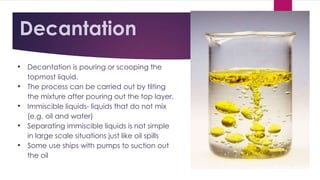
Decantation
• Decantation is pouring or scooping the
topmost liquid.
• The process can be carried out by tilting
the mixture after pouring out the top layer.
• Immiscible liquids- liquids that do not mix
(e.g. oil and water)
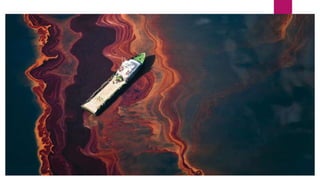
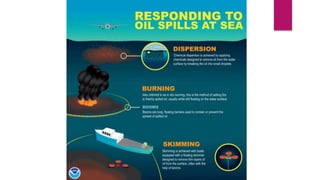
• Separating immiscible liquids is not simple
in large scale situations just like oil spills
• Some use ships with pumps to suction out
the oil
Sieving
• Separation
using strainers
• Separating
components
of a mixture by
sizes
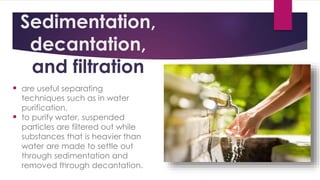
Sedimentation,
decantation,
and filtration
 are useful separating
techniques such as in water
purification.
 to purify water, suspended
particles are filtered out while
substances that is heavier than
water are made to settle out
through sedimentation and
removed through decantation.
Evaporation
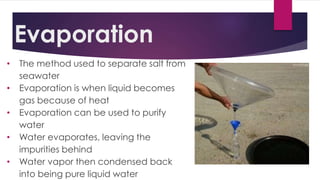
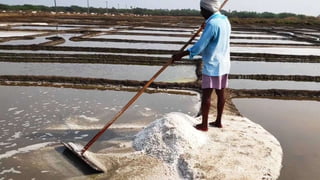
• The method used to separate salt from
seawater
• Evaporation is when liquid becomes
gas because of heat
• Evaporation can be used to purify
water
• Water evaporates, leaving the
impurities behind
• Water vapor then condensed back
into being pure liquid water
Distillation
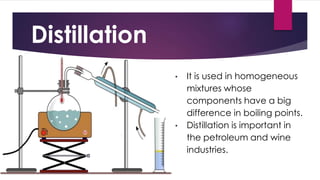
• It is used in homogeneous
mixtures whose
components have a big
difference in boiling points.
• Distillation is important in
the petroleum and wine
industries.
Crude Petroleum
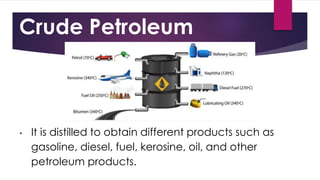
• It is distilled to obtain different products such as
gasoline, diesel, fuel, kerosine, oil, and other
petroleum products.
Alcoholic
Beverages
 Different
kinds of
alcoholic
drinks are
made from
wine through
distillation.
KINDLY BRING ON FRIDAY
AUGUST 18, 2023
 - ALLUM ( TAWAS) 1/4
 -FOOD COLOR- RED – VIEOLET – YELLOW GREEN
 - NYLON OR FISHING LINE
 -CARDBOARD
 - SCISSOR
 - FUZZY WIRE
 - WATER GLASS OR JAR – 12OZ
Separating
Mixtures
MR. TROY JOHN REI M. BAUTISTA
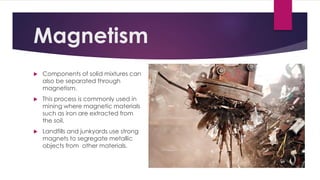
Magnetism
 Components of solid mixtures can
also be separated through
magnetism.
 This process is commonly used in
mining where magnetic materials
such as iron are extracted from
the soil.
 Landfills and junkyards use strong
magnets to segregate metallic
objects from other materials.
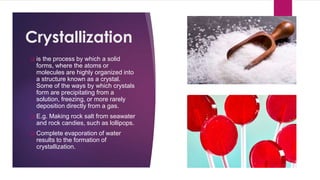
Crystallization
 is the process by which a solid
forms, where the atoms or
molecules are highly organized into
a structure known as a crystal.
Some of the ways by which crystals
form are precipitating from a
solution, freezing, or more rarely
deposition directly from a gas.
 E.g. Making rock salt from seawater
and rock candies, such as lollipops.
 Complete evaporation of water
results to the formation of
crystallization.
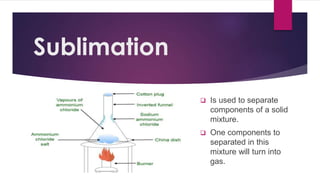
Sublimation
 Is used to separate
components of a solid
mixture.
 One components to
separated in this
mixture will turn into
gas.
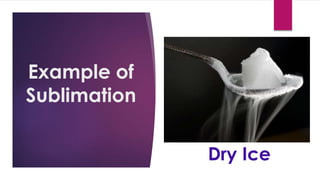
Example of
Sublimation
Dry Ice
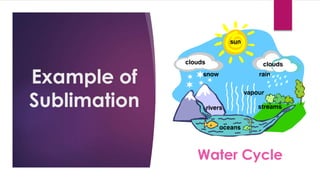
Example of
Sublimation
Water Cycle
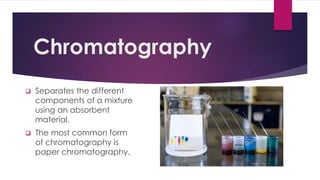
Chromatography
 Separates the different
components of a mixture
using an absorbent
material.
 The most common form
of chromatography is
paper chromatography.
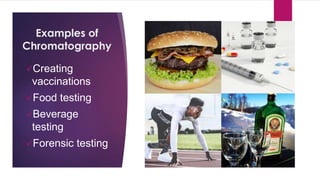
Examples of
Chromatography
Creating
vaccinations
Food testing
Beverage
testing
Forensic testing
It’s recap time!!
 Mixtures may be separated through physical means. The
common separation procedures are filtration,
sedimentation, decantation, and distillation.
 Special techniques such as magnetic separation,
crystallization, sublimation, and chromatography are
also employed in different laboratories and industries.

Separating Mixtures (Grade 6) power point

  • 1.
  • 4.
    Separating Mixtures  A mixtureis composed of two or more types of matter that can be present in varying amounts.  It can be physically separated by using methods that use physical properties to separate the components of the mixture, such as evaporation, distillation, filtration and chromatography.
  • 5.
    Filtration  Some heterogeneous mixtureswith large solids can be separated using strainers  But some particles of suspensions are too small to be strained  fine suspended particles are instead filtered using filter paper
  • 6.
    • Filter paperhas finer holes for water to pass through but not ground coffee • Filtrate - liquid that passed the filter • Residue - insoluble large molecules that are left behind
  • 9.
    Sedimentation and Decantation. Sedimentation isa process that allows the sediments (solid particles) to settle at the bottom of a container.
  • 10.
    Decantation • Decantation ispouring or scooping the topmost liquid. • The process can be carried out by tilting the mixture after pouring out the top layer. • Immiscible liquids- liquids that do not mix (e.g. oil and water) • Separating immiscible liquids is not simple in large scale situations just like oil spills • Some use ships with pumps to suction out the oil
  • 11.
    Sieving • Separation using strainers •Separating components of a mixture by sizes
  • 12.
    Sedimentation, decantation, and filtration  areuseful separating techniques such as in water purification.  to purify water, suspended particles are filtered out while substances that is heavier than water are made to settle out through sedimentation and removed through decantation.
  • 13.
    Evaporation • The methodused to separate salt from seawater • Evaporation is when liquid becomes gas because of heat • Evaporation can be used to purify water • Water evaporates, leaving the impurities behind • Water vapor then condensed back into being pure liquid water
  • 15.
    Distillation • It isused in homogeneous mixtures whose components have a big difference in boiling points. • Distillation is important in the petroleum and wine industries.
  • 16.
    Crude Petroleum • Itis distilled to obtain different products such as gasoline, diesel, fuel, kerosine, oil, and other petroleum products.
  • 17.
    Alcoholic Beverages  Different kinds of alcoholic drinksare made from wine through distillation.
  • 18.
    KINDLY BRING ONFRIDAY AUGUST 18, 2023  - ALLUM ( TAWAS) 1/4  -FOOD COLOR- RED – VIEOLET – YELLOW GREEN  - NYLON OR FISHING LINE  -CARDBOARD  - SCISSOR  - FUZZY WIRE  - WATER GLASS OR JAR – 12OZ
  • 20.
  • 21.
    Magnetism  Components ofsolid mixtures can also be separated through magnetism.  This process is commonly used in mining where magnetic materials such as iron are extracted from the soil.  Landfills and junkyards use strong magnets to segregate metallic objects from other materials.
  • 22.
    Crystallization  is theprocess by which a solid forms, where the atoms or molecules are highly organized into a structure known as a crystal. Some of the ways by which crystals form are precipitating from a solution, freezing, or more rarely deposition directly from a gas.  E.g. Making rock salt from seawater and rock candies, such as lollipops.  Complete evaporation of water results to the formation of crystallization.
  • 23.
    Sublimation  Is usedto separate components of a solid mixture.  One components to separated in this mixture will turn into gas.
  • 24.
  • 25.
  • 26.
    Chromatography  Separates thedifferent components of a mixture using an absorbent material.  The most common form of chromatography is paper chromatography.
  • 27.
  • 28.
    It’s recap time!! Mixtures may be separated through physical means. The common separation procedures are filtration, sedimentation, decantation, and distillation.  Special techniques such as magnetic separation, crystallization, sublimation, and chromatography are also employed in different laboratories and industries.