SEPARATINGSEPARATING
MIXTURESMIXTURES
PREPARED BYPREPARED BY
NEERAJ RAINEERAJ RAI
9 “A”9 “A”
What is a mixture?What is a mixture?
When two or more materials
or substances are mixed
together but do not
chemically combine.
This means they retain their
original properties.
This means they can be
separated by physical means.
What are the different ways ofWhat are the different ways of
separating mixtures?separating mixtures?
Magnetism
Hand separation
Filtration
Sifting or sieving
Extraction and evaporation
Chromatography
MagnetismMagnetism
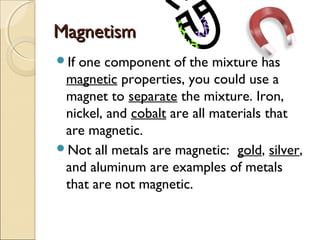
If one component of the mixture has
magnetic properties, you could use a
magnet to separate the mixture. Iron,
nickel, and cobalt are all materials that
are magnetic.
Not all metals are magnetic: gold, silver,
and aluminum are examples of metals
that are not magnetic.
Example of magnetismExample of magnetism
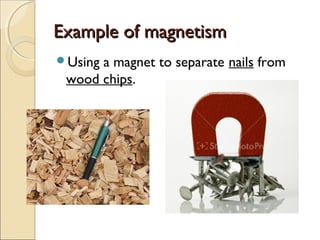
Using a magnet to separate nails from
wood chips.
FiltrationFiltration
Used when separating a solid substance
from a fluid (a liquid or a gas) by passing a
mixture through a porous material such
as a type of filter.
Works by letting the fluid pass through
but not the solid.
Examples of filters: coffee filter, cloth, oil
filter, even sand!
Example of filtration:Example of filtration:
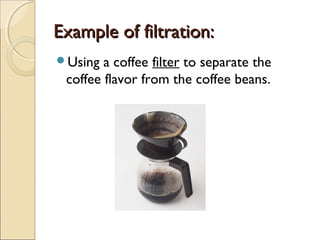
Using a coffee filter to separate the
coffee flavor from the coffee beans.
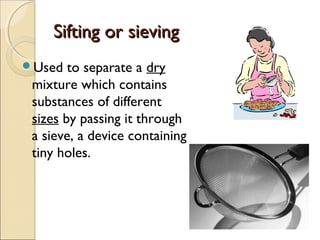
Sifting or sievingSifting or sieving
Used to separate a dry
mixture which contains
substances of different
sizes by passing it through
a sieve, a device containing
tiny holes.
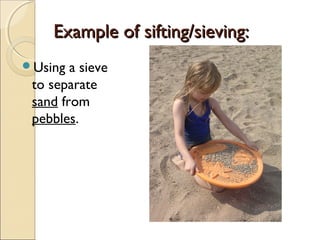
Example of sifting/sieving:Example of sifting/sieving:
Using a sieve
to separate
sand from
pebbles.
ExtractionExtraction
Used to separate an insoluble solid
(something that doesn’t dissolve in a
liquid) from a soluble solid (something
that DOES dissolve in a liquid). Done by
adding a solvent (liquid that does the
dissolving) to the mixture. Then pouring
the liquid through a filter.
Example of extractionExample of extraction
With a mixture of sugar and sand,
pouring water in the mixture which
causes the sugar to dissolve. Then
pouring the solution through a filter,
causing the sand to separate from the
sugar water.

Separating mixtures

  • 1.
  • 2.
    What is amixture?What is a mixture? When two or more materials or substances are mixed together but do not chemically combine. This means they retain their original properties. This means they can be separated by physical means.
  • 3.
    What are thedifferent ways ofWhat are the different ways of separating mixtures?separating mixtures? Magnetism Hand separation Filtration Sifting or sieving Extraction and evaporation Chromatography
  • 4.
    MagnetismMagnetism If one componentof the mixture has magnetic properties, you could use a magnet to separate the mixture. Iron, nickel, and cobalt are all materials that are magnetic. Not all metals are magnetic: gold, silver, and aluminum are examples of metals that are not magnetic.
  • 5.
    Example of magnetismExampleof magnetism Using a magnet to separate nails from wood chips.
  • 6.
    FiltrationFiltration Used when separatinga solid substance from a fluid (a liquid or a gas) by passing a mixture through a porous material such as a type of filter. Works by letting the fluid pass through but not the solid. Examples of filters: coffee filter, cloth, oil filter, even sand!
  • 7.
    Example of filtration:Exampleof filtration: Using a coffee filter to separate the coffee flavor from the coffee beans.
  • 8.
    Sifting or sievingSiftingor sieving Used to separate a dry mixture which contains substances of different sizes by passing it through a sieve, a device containing tiny holes.
  • 9.
    Example of sifting/sieving:Exampleof sifting/sieving: Using a sieve to separate sand from pebbles.
  • 10.
    ExtractionExtraction Used to separatean insoluble solid (something that doesn’t dissolve in a liquid) from a soluble solid (something that DOES dissolve in a liquid). Done by adding a solvent (liquid that does the dissolving) to the mixture. Then pouring the liquid through a filter.
  • 11.
    Example of extractionExampleof extraction With a mixture of sugar and sand, pouring water in the mixture which causes the sugar to dissolve. Then pouring the solution through a filter, causing the sand to separate from the sugar water.