1
Title: Peak level advancement of sensors and its applications
A Projectreport submitted to the Department of Chemistry
Subject: Engineering Chemistry Subject code: 18CHE12
BY
1. Jagadish M
2. Harsha A Kamble
3. Gagana M
4. Deepika P J
5. Diwan Karumbaiah M C
Semester:1
Branch: Industrial Engineering and Management
Section:G
Academic Year: 2018-19
Faculty In charge:Dr. Mahesh B
DEPARTMENT OF CHEMISTRY
JSS ACADEMY OF TECHNICAL EDUCATION,
JSS Campus, Kengeri-Uttarahalli Road, Bengaluru-60. Website: www.jssateb.ac.in
2
Learning Objectives:
Assimilate the working principleof reference
electrodesand sensors
Trace drawback of sensors and find solutionsto it
Outlookin present footing of sensors and neoteric
principleof advancement
Evolve alternatingtechnology for fabricating
simple, low cost and portablesensors
3
Learning objective 1:
Assimilate the working principleof reference electrodes
and sensors
 A reference electrode is an electrode which has a stable
and well-known electrode potential.
 The high stability of the electrode potential is usually
reached by employing a redox system with constant
(buffered or saturated) concentrations of each participant
of the redox reaction.
 There are many ways reference electrodes are used. The
simplest is when the reference electrode is used as a half
cell to build an electrochemical cell.
 This allows the potential of the other half cell to be
determined.
 And this allows to the rise of sensors.
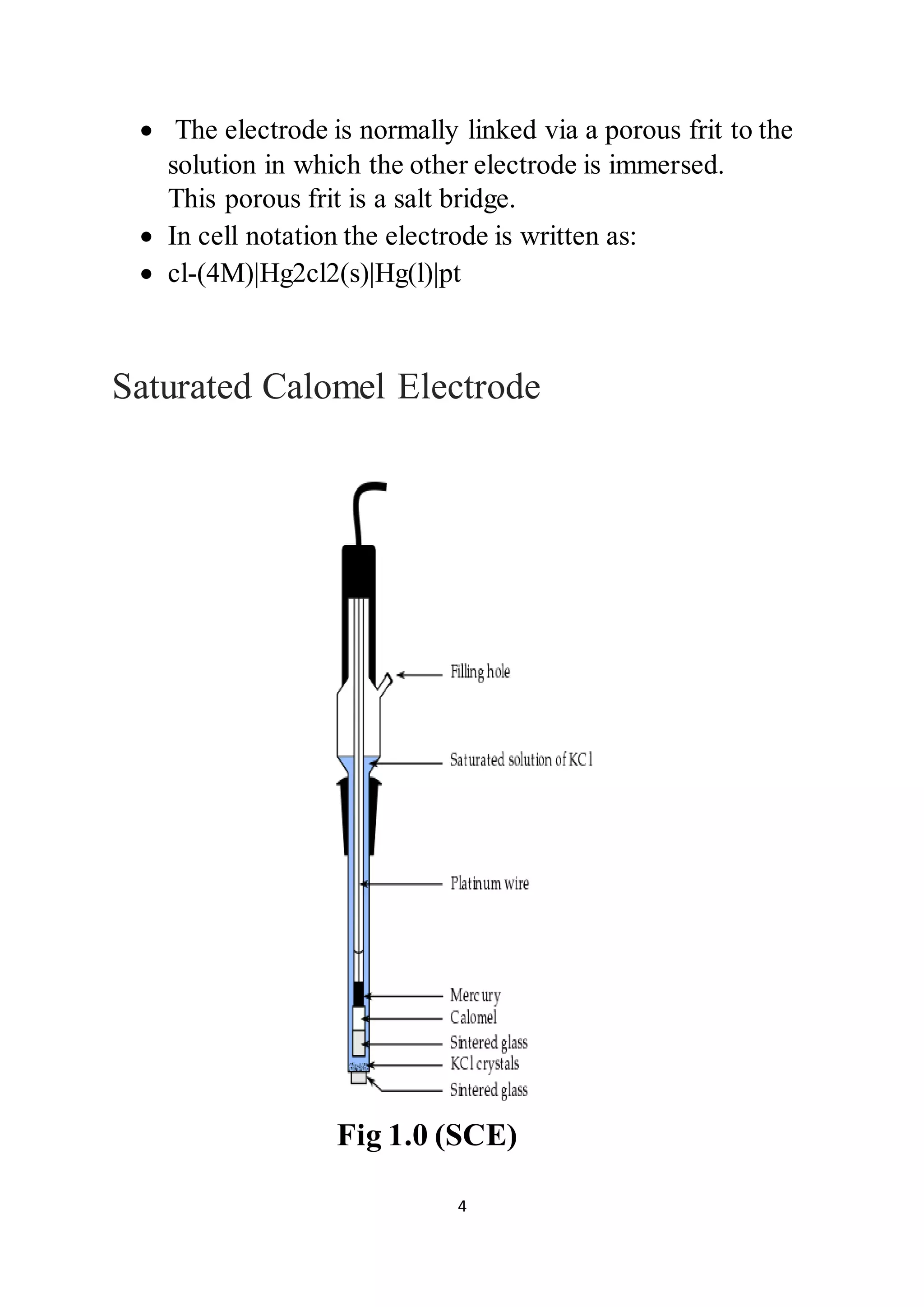
Example: Saturated Calomel electrode
 The Saturated calomel electrode (SCE) is a reference
electrode based on the reaction
element mercury and mercury chloride.
 It has been widely replaced by the silver chloride
electrode, however the calomel electrode has a reputation
of being more robust.
 The aqueous phase in contact with the mercury and the
mercury(I) chloride (Hg2Cl2, "calomel") is a saturated
solution of potassium chloride in water.
4
 The electrode is normally linked via a porous frit to the
solution in which the other electrode is immersed.
This porous frit is a salt bridge.
 In cell notation the electrode is written as:
 cl-(4M)|Hg2cl2(s)|Hg(l)|pt
Saturated Calomel Electrode
Fig 1.0 (SCE)
5
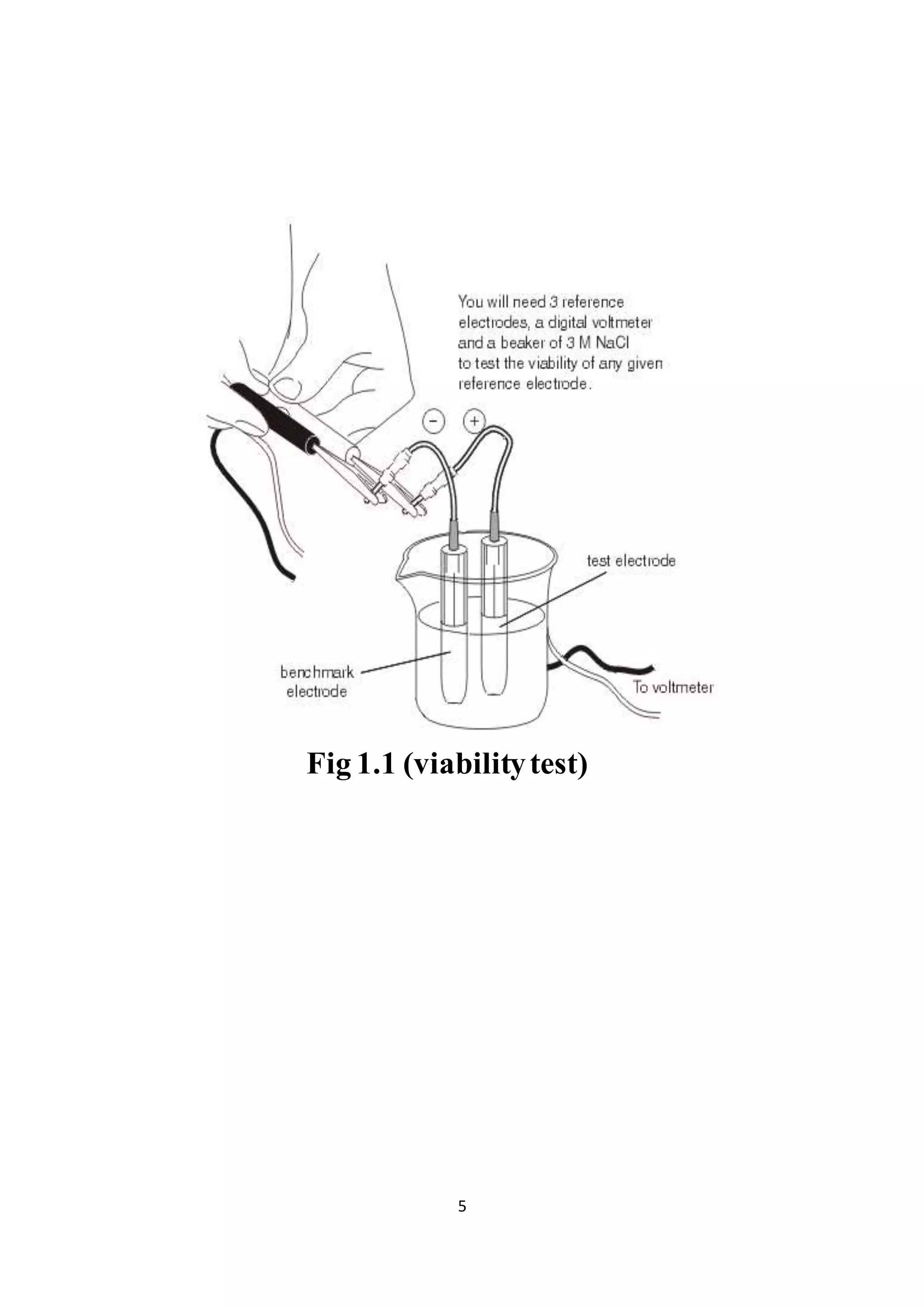
Fig 1.1 (viabilitytest)
6
Learning Objective 2:
Trace the drawback of sensors and find solutionsto it
 Saturated Calomel electrode and the silver/silver
chloride reference electrode work in the same way. In
both electrodes, the activity of the metal ion is fixed by
the solubility of the metal salt.
 The calomel electrode contains mercury, which poses
much greater health hazards than the silver metal used in
the Ag/AgCl electrode.
 Mercury can be absorbed through the skin and mucous
membranes and mercury vapors can be inhaled.
 Usage of mercury, or of compounds of mercury that may
decompose when placed in the system.
 Process should be carried out with adequate ventilation
in order to minimize exposure to mercury vapor.
 Mercury and its compounds are moderately soluble in
water. Soluble in ethanol, soluble in acetone, soluble in
methanol.
 By considering these properties we can use these
solutions in the electrode via quite modifications in its
composition.
 Which enables the use ofharmless compounds in the
electrodes in turn it reduces the risk of management.
7
Learning Objective 3:
Outlookin present footing of sensors and neoteric
principles of advancement.
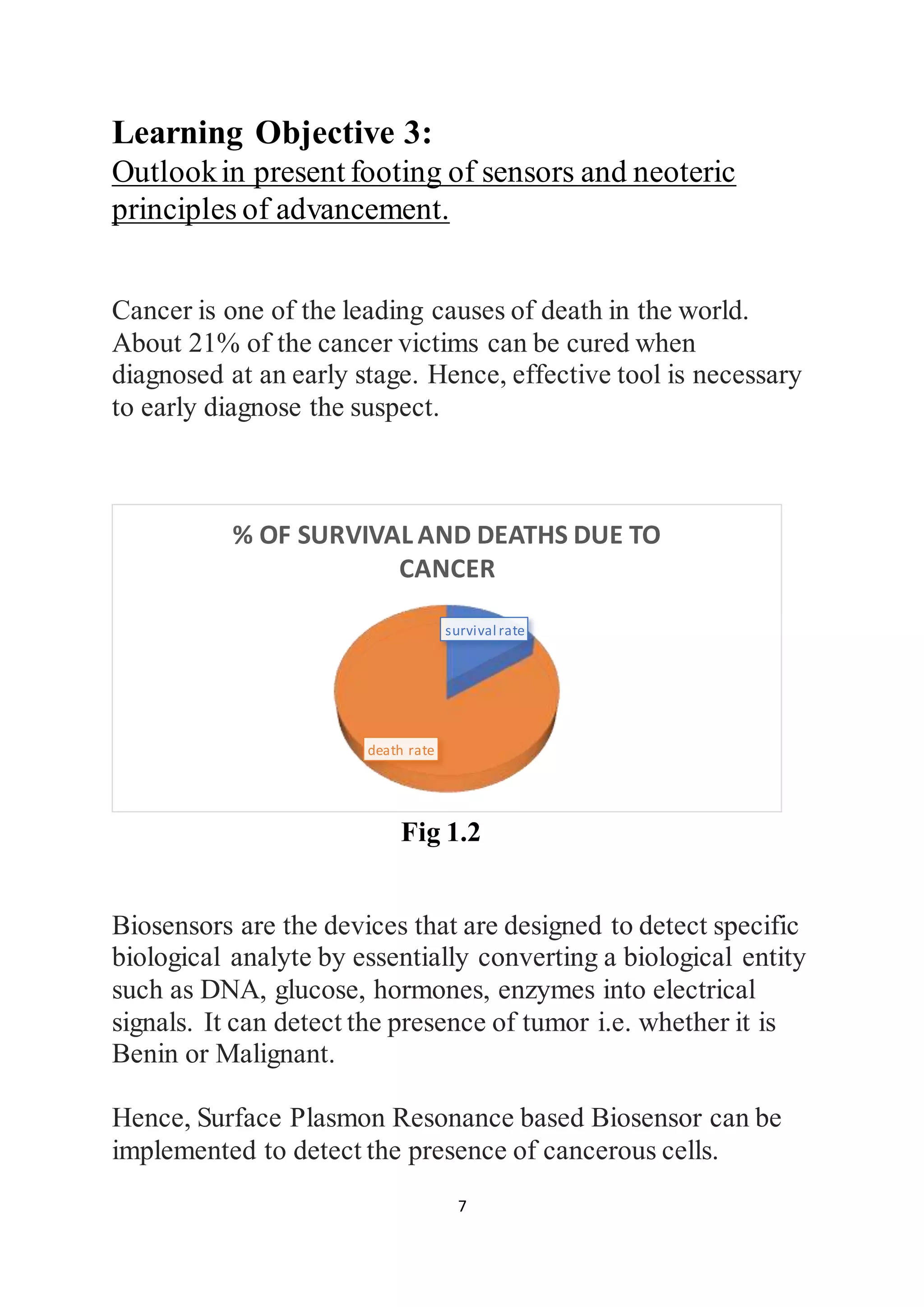
Cancer is one of the leading causes of death in the world.
About 21% of the cancer victims can be cured when
diagnosed at an early stage. Hence, effective tool is necessary
to early diagnose the suspect.
Fig 1.2
Biosensors are the devices that are designed to detect specific
biological analyte by essentially converting a biological entity
such as DNA, glucose, hormones, enzymes into electrical
signals. It can detect the presence of tumor i.e. whether it is
Benin or Malignant.
Hence, Surface Plasmon Resonance based Biosensor can be
implemented to detect the presence of cancerous cells.
survival rate
death rate
% OF SURVIVAL AND DEATHS DUE TO
CANCER
8
Principle of SPR based Biosensor
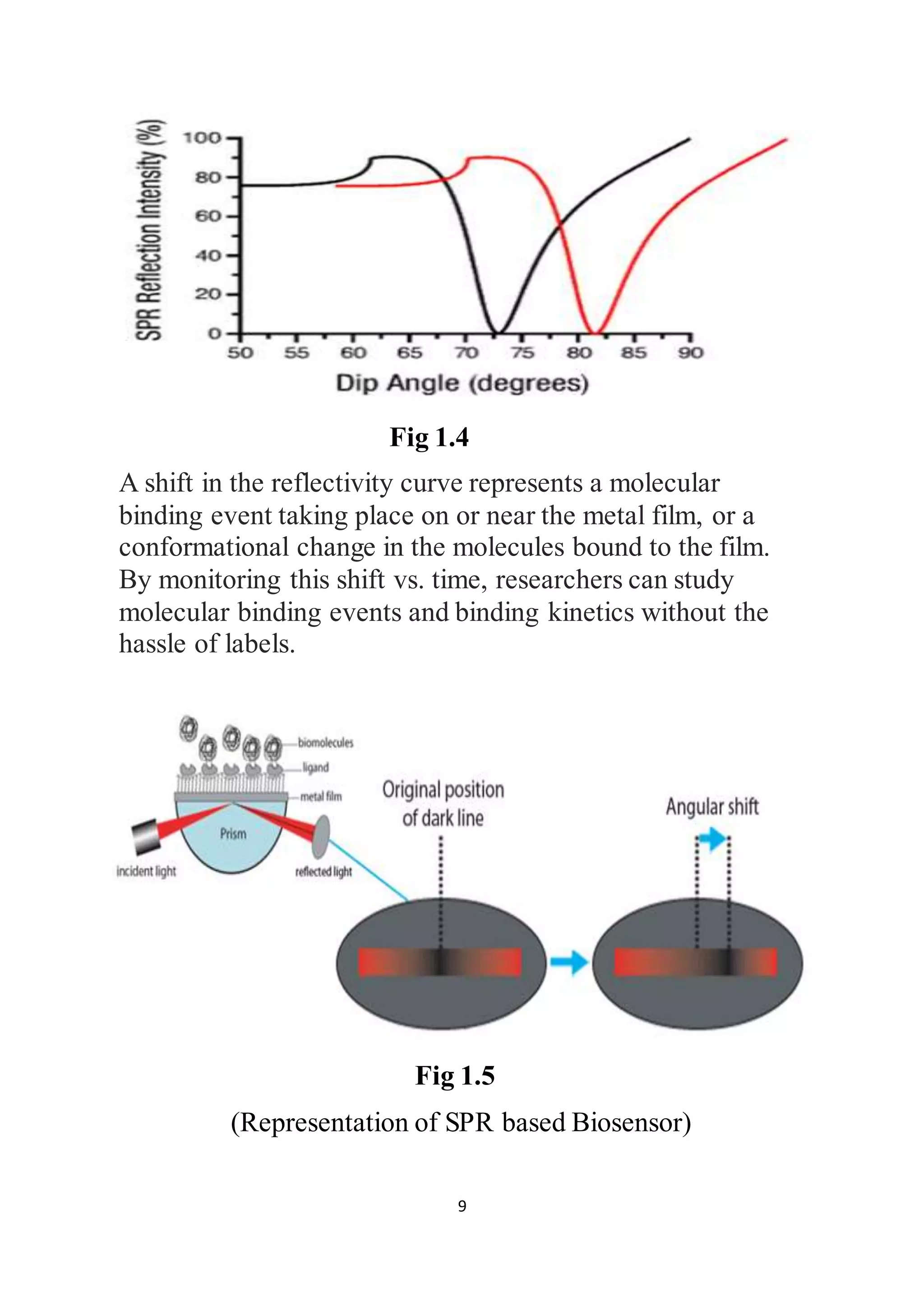
• Surface Plasmon Resonance is a phenomenon that
occurs when polarized light hits a metal film at the
interface of media with different refractive indices.
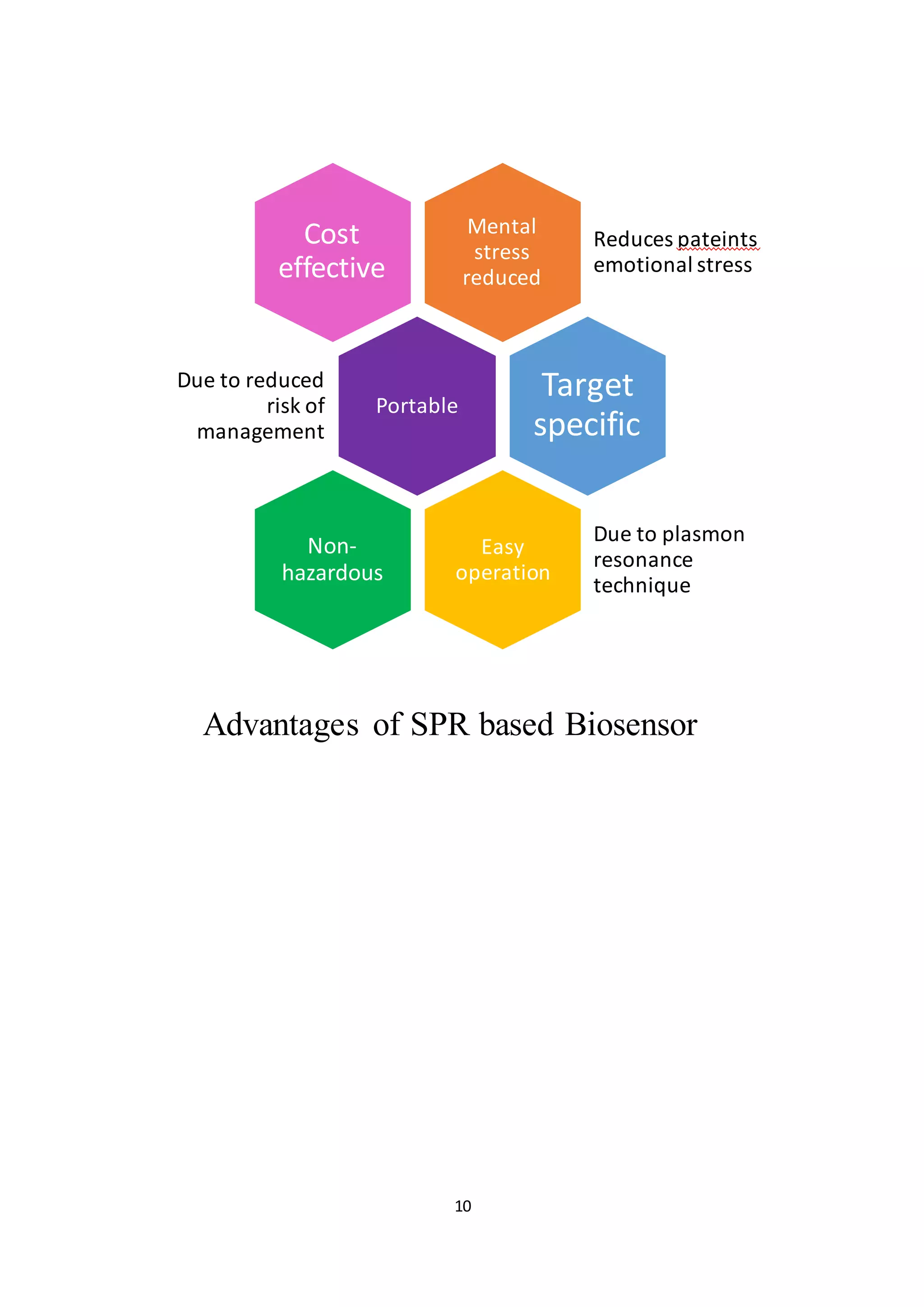
• In which light is focused onto a metal film through a
glass prism and the subsequent reflection is detected.
• At a certain incident angle (or resonance angle), the
plasmons are set to resonate with light, resulting in
absorption of light at that angle. This creates a dark
line in the reflected beam.
• That dark line containsa wealth of information. The
resonance angle can be obtainedby observing a dip
in SPR reflection intensity.
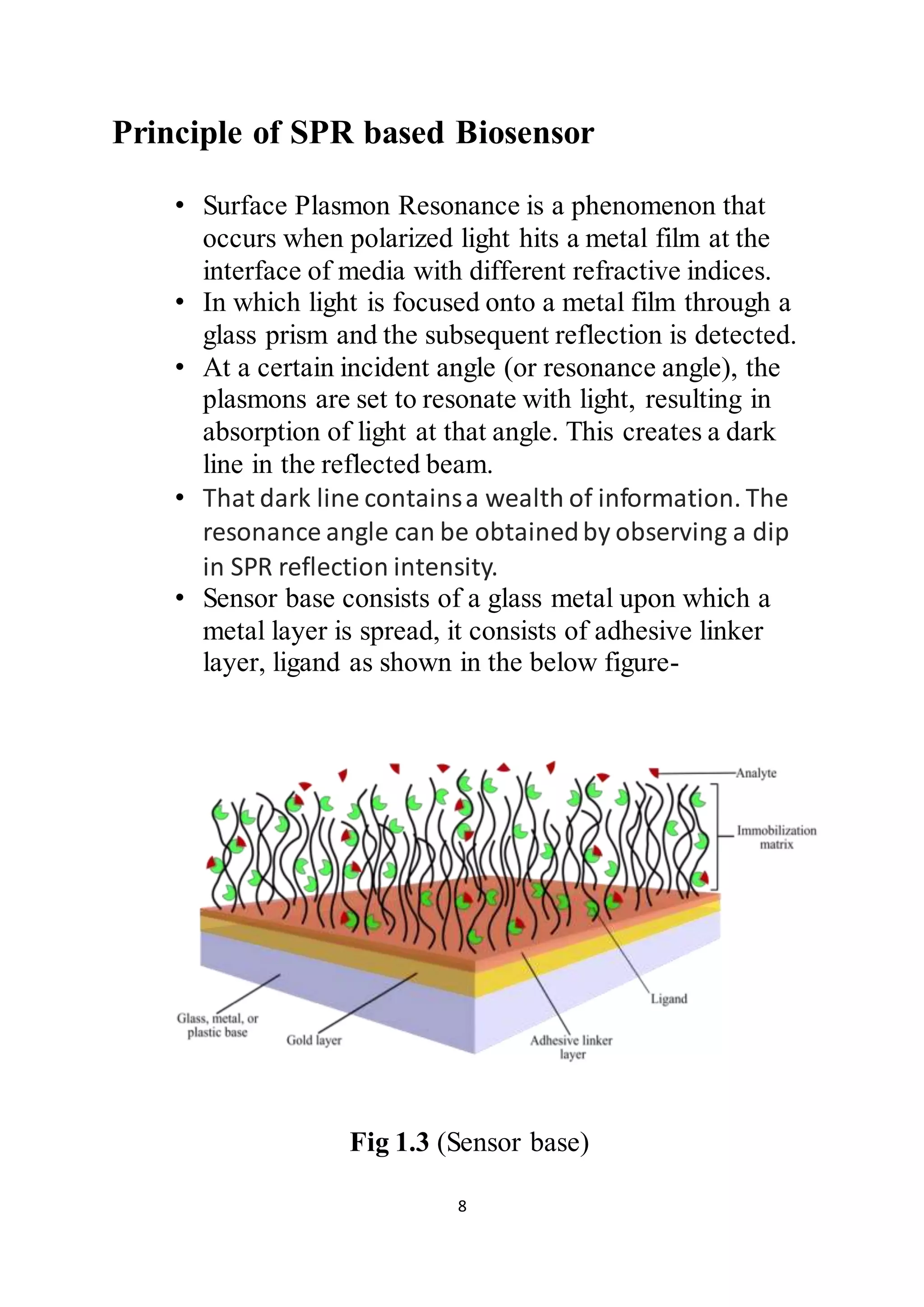
• Sensor base consists of a glass metal upon which a
metal layer is spread, it consists of adhesive linker
layer, ligand as shown in the below figure-
Fig 1.3 (Sensor base)
9
Fig 1.4
A shift in the reflectivity curve represents a molecular
binding event taking place on or near the metal film, or a
conformational change in the molecules bound to the film.
By monitoring this shift vs. time, researchers can study
molecular binding events and binding kinetics without the
hassle of labels.
Fig 1.5
(Representation of SPR based Biosensor)
10
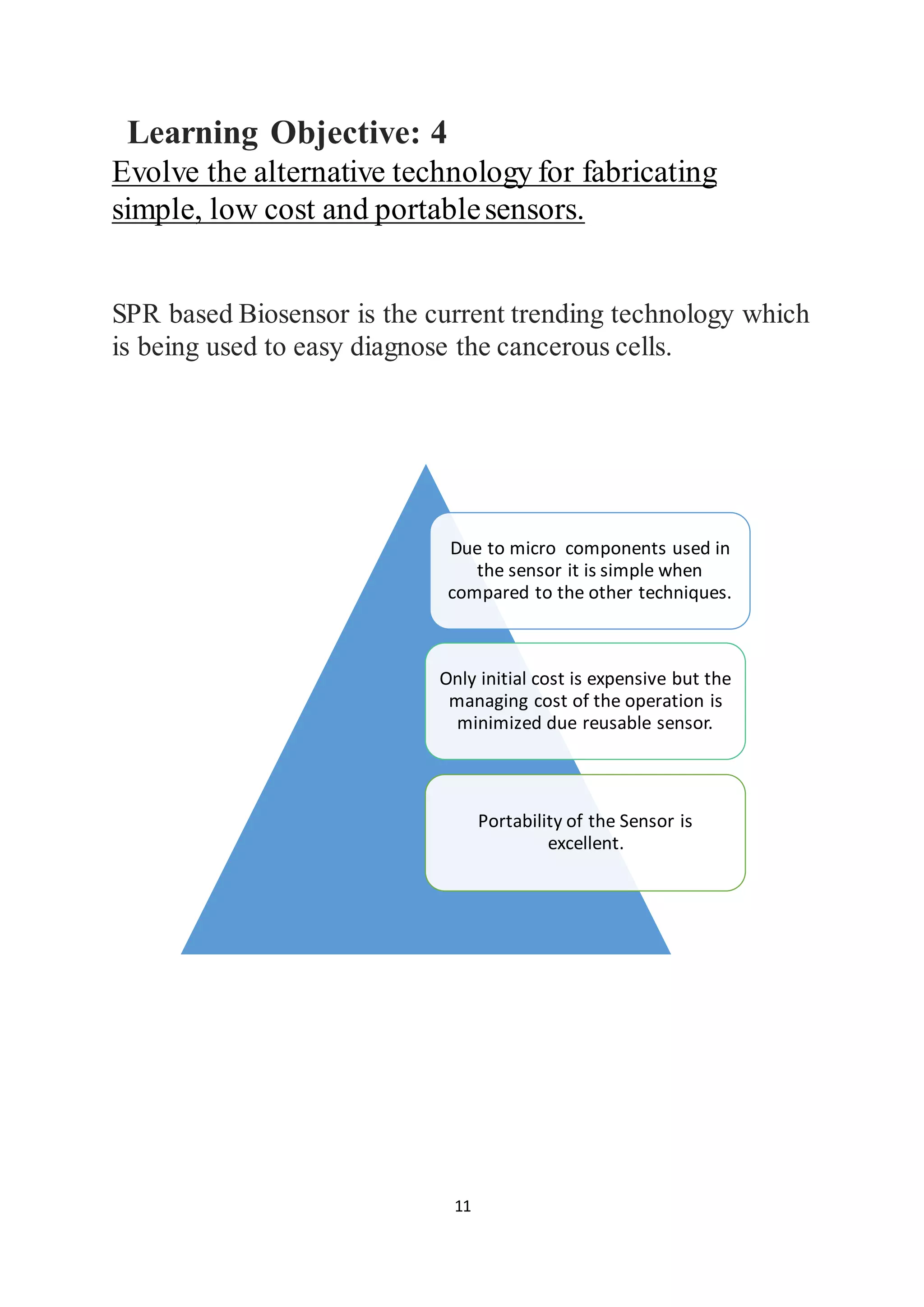
Advantages of SPR based Biosensor
Mental
stress
reduced
Reduces pateints
emotional stress
Cost
effective
Portable
Due to reduced
risk of
management
Target
specific
Easy
operation
Due to plasmon
resonance
technique
Non-
hazardous
11
Learning Objective: 4
Evolve the alternative technology for fabricating
simple, low cost and portablesensors.
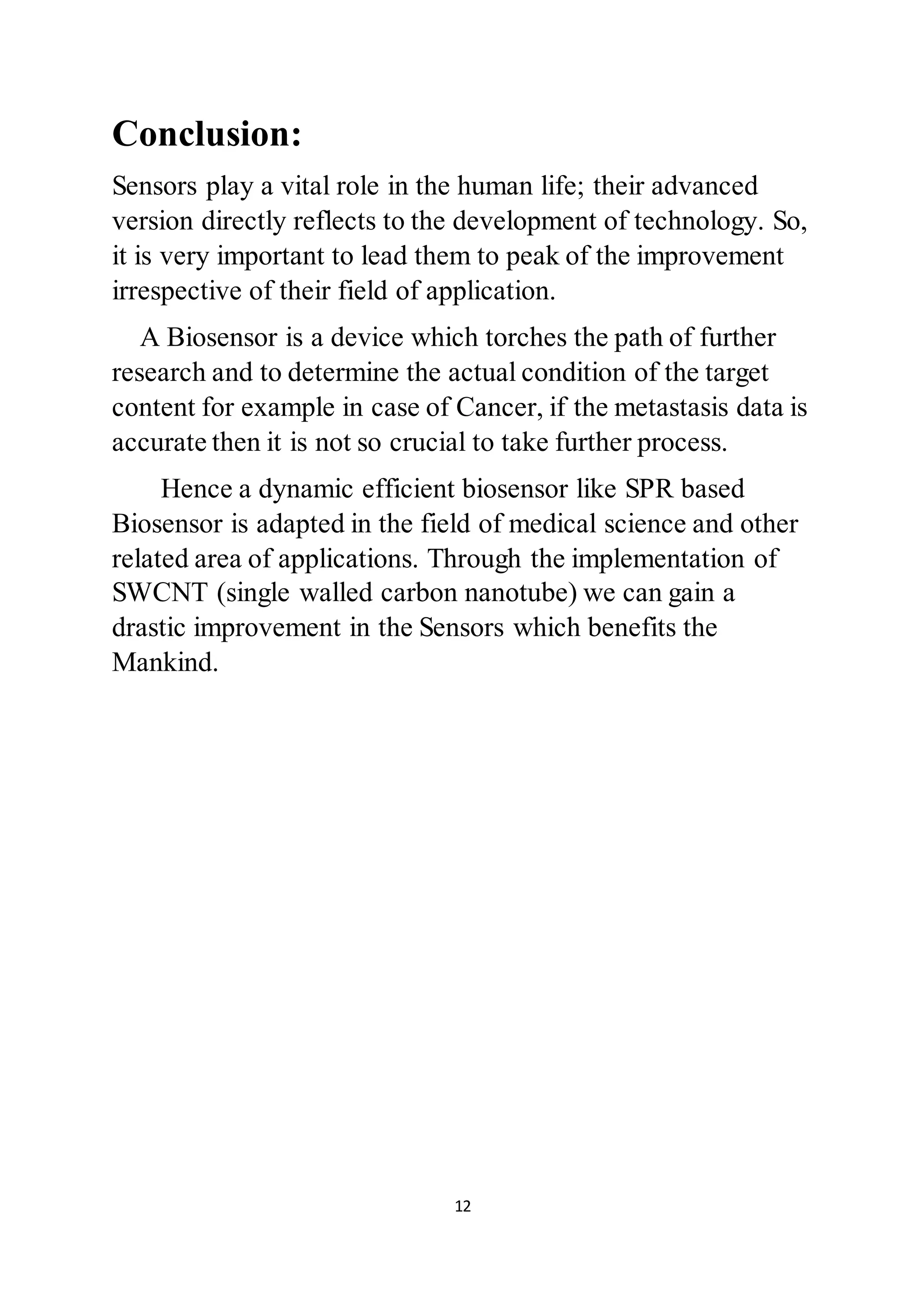
SPR based Biosensor is the current trending technology which
is being used to easy diagnose the cancerous cells.
Due to micro components used in
the sensor it is simple when
compared to the other techniques.
Only initial cost is expensive but the
managing cost of the operation is
minimized due reusable sensor.
Portability of the Sensor is
excellent.
12
Conclusion:
Sensors play a vital role in the human life; their advanced
version directly reflects to the development of technology. So,
it is very important to lead them to peak of the improvement
irrespective of their field of application.
A Biosensor is a device which torches the path of further
research and to determine the actual condition of the target
content for example in case of Cancer, if the metastasis data is
accurate then it is not so crucial to take further process.
Hence a dynamic efficient biosensor like SPR based
Biosensor is adapted in the field of medical science and other
related area of applications. Through the implementation of
SWCNT (single walled carbon nanotube) we can gain a
drastic improvement in the Sensors which benefits the
Mankind.

Peak Level Advancement of Sensors and its Applications.

  • 1.
    1 Title: Peak leveladvancement of sensors and its applications A Projectreport submitted to the Department of Chemistry Subject: Engineering Chemistry Subject code: 18CHE12 BY 1. Jagadish M 2. Harsha A Kamble 3. Gagana M 4. Deepika P J 5. Diwan Karumbaiah M C Semester:1 Branch: Industrial Engineering and Management Section:G Academic Year: 2018-19 Faculty In charge:Dr. Mahesh B DEPARTMENT OF CHEMISTRY JSS ACADEMY OF TECHNICAL EDUCATION, JSS Campus, Kengeri-Uttarahalli Road, Bengaluru-60. Website: www.jssateb.ac.in
  • 2.
    2 Learning Objectives: Assimilate theworking principleof reference electrodesand sensors Trace drawback of sensors and find solutionsto it Outlookin present footing of sensors and neoteric principleof advancement Evolve alternatingtechnology for fabricating simple, low cost and portablesensors
  • 3.
    3 Learning objective 1: Assimilatethe working principleof reference electrodes and sensors  A reference electrode is an electrode which has a stable and well-known electrode potential.  The high stability of the electrode potential is usually reached by employing a redox system with constant (buffered or saturated) concentrations of each participant of the redox reaction.  There are many ways reference electrodes are used. The simplest is when the reference electrode is used as a half cell to build an electrochemical cell.  This allows the potential of the other half cell to be determined.  And this allows to the rise of sensors. Example: Saturated Calomel electrode  The Saturated calomel electrode (SCE) is a reference electrode based on the reaction element mercury and mercury chloride.  It has been widely replaced by the silver chloride electrode, however the calomel electrode has a reputation of being more robust.  The aqueous phase in contact with the mercury and the mercury(I) chloride (Hg2Cl2, "calomel") is a saturated solution of potassium chloride in water.
  • 4.
    4  The electrodeis normally linked via a porous frit to the solution in which the other electrode is immersed. This porous frit is a salt bridge.  In cell notation the electrode is written as:  cl-(4M)|Hg2cl2(s)|Hg(l)|pt Saturated Calomel Electrode Fig 1.0 (SCE)
  • 5.
  • 6.
    6 Learning Objective 2: Tracethe drawback of sensors and find solutionsto it  Saturated Calomel electrode and the silver/silver chloride reference electrode work in the same way. In both electrodes, the activity of the metal ion is fixed by the solubility of the metal salt.  The calomel electrode contains mercury, which poses much greater health hazards than the silver metal used in the Ag/AgCl electrode.  Mercury can be absorbed through the skin and mucous membranes and mercury vapors can be inhaled.  Usage of mercury, or of compounds of mercury that may decompose when placed in the system.  Process should be carried out with adequate ventilation in order to minimize exposure to mercury vapor.  Mercury and its compounds are moderately soluble in water. Soluble in ethanol, soluble in acetone, soluble in methanol.  By considering these properties we can use these solutions in the electrode via quite modifications in its composition.  Which enables the use ofharmless compounds in the electrodes in turn it reduces the risk of management.
  • 7.
    7 Learning Objective 3: Outlookinpresent footing of sensors and neoteric principles of advancement. Cancer is one of the leading causes of death in the world. About 21% of the cancer victims can be cured when diagnosed at an early stage. Hence, effective tool is necessary to early diagnose the suspect. Fig 1.2 Biosensors are the devices that are designed to detect specific biological analyte by essentially converting a biological entity such as DNA, glucose, hormones, enzymes into electrical signals. It can detect the presence of tumor i.e. whether it is Benin or Malignant. Hence, Surface Plasmon Resonance based Biosensor can be implemented to detect the presence of cancerous cells. survival rate death rate % OF SURVIVAL AND DEATHS DUE TO CANCER
  • 8.
    8 Principle of SPRbased Biosensor • Surface Plasmon Resonance is a phenomenon that occurs when polarized light hits a metal film at the interface of media with different refractive indices. • In which light is focused onto a metal film through a glass prism and the subsequent reflection is detected. • At a certain incident angle (or resonance angle), the plasmons are set to resonate with light, resulting in absorption of light at that angle. This creates a dark line in the reflected beam. • That dark line containsa wealth of information. The resonance angle can be obtainedby observing a dip in SPR reflection intensity. • Sensor base consists of a glass metal upon which a metal layer is spread, it consists of adhesive linker layer, ligand as shown in the below figure- Fig 1.3 (Sensor base)
  • 9.
    9 Fig 1.4 A shiftin the reflectivity curve represents a molecular binding event taking place on or near the metal film, or a conformational change in the molecules bound to the film. By monitoring this shift vs. time, researchers can study molecular binding events and binding kinetics without the hassle of labels. Fig 1.5 (Representation of SPR based Biosensor)
  • 10.
    10 Advantages of SPRbased Biosensor Mental stress reduced Reduces pateints emotional stress Cost effective Portable Due to reduced risk of management Target specific Easy operation Due to plasmon resonance technique Non- hazardous
  • 11.
    11 Learning Objective: 4 Evolvethe alternative technology for fabricating simple, low cost and portablesensors. SPR based Biosensor is the current trending technology which is being used to easy diagnose the cancerous cells. Due to micro components used in the sensor it is simple when compared to the other techniques. Only initial cost is expensive but the managing cost of the operation is minimized due reusable sensor. Portability of the Sensor is excellent.
  • 12.
    12 Conclusion: Sensors play avital role in the human life; their advanced version directly reflects to the development of technology. So, it is very important to lead them to peak of the improvement irrespective of their field of application. A Biosensor is a device which torches the path of further research and to determine the actual condition of the target content for example in case of Cancer, if the metastasis data is accurate then it is not so crucial to take further process. Hence a dynamic efficient biosensor like SPR based Biosensor is adapted in the field of medical science and other related area of applications. Through the implementation of SWCNT (single walled carbon nanotube) we can gain a drastic improvement in the Sensors which benefits the Mankind.