Downloaded 93 times
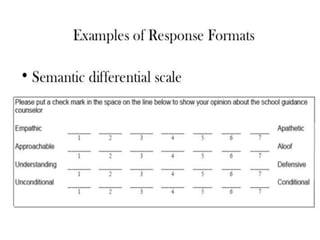
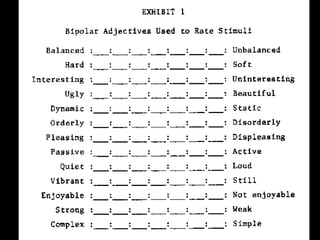
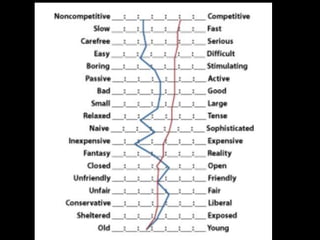
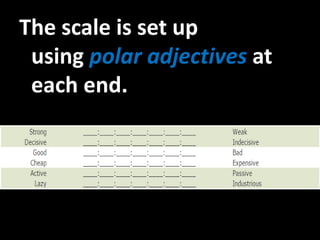
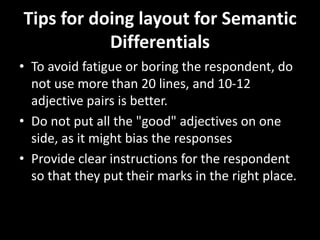

The semantic differential is a rating scale that measures attitudes by having respondents rate concepts, ideas, or things on polar adjective scales. It uses bipolar adjective pairs with opposing meanings, like good-bad, at each end of the scale to gauge a respondent's feelings toward the subject being studied. Effective use of semantic differentials involves keeping the number of items rated below 20 and between 10-12 adjective pairs to avoid fatigue, randomizing the placement of positive and negative adjectives, and providing clear instructions for respondents.


