Understanding Semantic and
    Syntactic in genres.
                 By Shaun Taylor
Semantic
 Genre is reliant on an atmosphere created by lots of different factors, these are all
 built up to create a stereotypical horror element to the film, this consists of:

 •The actors – who they are and what relevance they are in the story, whether we
 sympathise with them or not make the tension stronger.
 •Position and Shots
 •Composition
 •Mise-en-scene – Props, Clothing.
 •Colours
 •Lighting
 •Editing – Transition, Speed/Pace
 •Body Language
 •Sound

Semantic Forms and Conventions.

The different forms and conventions of Horror films in terms of the semantic style, it would
concentrate on the stereotypical horror effects to scare the audience. For example:
sound, and lighting because the sudden shock of loud sounds or dark areas can shock the
audience, it would also consist of dark and scary colours for example a dark green hue to the
lighting can make it very effective.
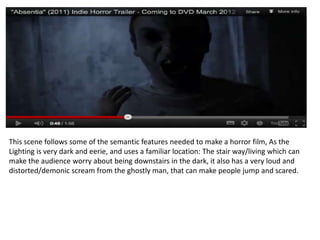
This scene follows some of the semantic features needed to make a horror film, As the
Lighting is very dark and eerie, and uses a familiar location: The stair way/living which can
make the audience worry about being downstairs in the dark, it also has a very loud and
distorted/demonic scream from the ghostly man, that can make people jump and scared.
Syntactic
Syntactic looks at the narrative of a story, and how it effects the movie. To whether
the movie has generic events throughout the film: ideas and storylines that are
familiar to the previous storyline that have been used before, but the film company
often adds different twists and turns to keep the audience on their feet.

It also focuses on the chronology of the films story line, and how stories are planned
out.

Syntactic Forms and Conventions.
The Syntactic forms and conventions tend to follow a very basic storylines but often
incorporated new and interesting twists that keep the audience excited and entertained.

It normally starts of with an Equilibrium, where we start to learn who the characters are,
and their normal live, (sometimes we see a death scene before this). Then the characters
are face with a problem, a disequilibrium occurs and the characters try to fix it,
stereotypically if it is a killer the characters get picked off one by one, and this causes the
film to gain in tension, and eventually wraps the film up with a happy ending, or leaves it
open for a sequel.

Genre - Research into Semantic and Syntactic.

  • 1.
    Understanding Semantic and Syntactic in genres. By Shaun Taylor
  • 2.
    Semantic Genre isreliant on an atmosphere created by lots of different factors, these are all built up to create a stereotypical horror element to the film, this consists of: •The actors – who they are and what relevance they are in the story, whether we sympathise with them or not make the tension stronger. •Position and Shots •Composition •Mise-en-scene – Props, Clothing. •Colours •Lighting •Editing – Transition, Speed/Pace •Body Language •Sound Semantic Forms and Conventions. The different forms and conventions of Horror films in terms of the semantic style, it would concentrate on the stereotypical horror effects to scare the audience. For example: sound, and lighting because the sudden shock of loud sounds or dark areas can shock the audience, it would also consist of dark and scary colours for example a dark green hue to the lighting can make it very effective.
  • 3.
    This scene followssome of the semantic features needed to make a horror film, As the Lighting is very dark and eerie, and uses a familiar location: The stair way/living which can make the audience worry about being downstairs in the dark, it also has a very loud and distorted/demonic scream from the ghostly man, that can make people jump and scared.
  • 4.
    Syntactic Syntactic looks atthe narrative of a story, and how it effects the movie. To whether the movie has generic events throughout the film: ideas and storylines that are familiar to the previous storyline that have been used before, but the film company often adds different twists and turns to keep the audience on their feet. It also focuses on the chronology of the films story line, and how stories are planned out. Syntactic Forms and Conventions. The Syntactic forms and conventions tend to follow a very basic storylines but often incorporated new and interesting twists that keep the audience excited and entertained. It normally starts of with an Equilibrium, where we start to learn who the characters are, and their normal live, (sometimes we see a death scene before this). Then the characters are face with a problem, a disequilibrium occurs and the characters try to fix it, stereotypically if it is a killer the characters get picked off one by one, and this causes the film to gain in tension, and eventually wraps the film up with a happy ending, or leaves it open for a sequel.