The conventions of Science Fiction

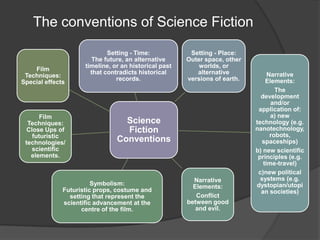
Film
Techniques:
Special effects

Film
Techniques:
Close Ups of
futuristic
technologies/
scientific
elements.

Setting - Time:
The future, an alternative
timeline, or an historical past
that contradicts historical
records.

Setting - Place:
Outer space, other
worlds, or
alternative
versions of earth.

Science
Fiction
Conventions

Symbolism:
Futuristic props, costume and
setting that represent the
scientific advancement at the
centre of the film.

Narrative
Elements:
Conflict
between good
and evil.

Narrative
Elements:
The
development
and/or
application of:
a) new
technology (e.g.
nanotechnology,
robots,
spaceships)
b) new scientific
principles (e.g.
time-travel)
c)new political
systems (e.g.
dystopian/utopi
an societies)
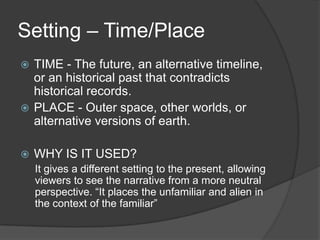
Setting – Time/Place
TIME - The future, an alternative timeline,
or an historical past that contradicts
historical records.
 PLACE - Outer space, other worlds, or
alternative versions of earth.




WHY IS IT USED?
It gives a different setting to the present, allowing
viewers to see the narrative from a more neutral
perspective. “It places the unfamiliar and alien in
the context of the familiar”
Narrative Content


The development and/or application of:
 a) new technology (e.g. nanotechnology, robots,

spaceships)
 b) new scientific principles (e.g. time-travel)
 c) new political systems (e.g. dystopian/utopian
societies)


WHY IS IT USED?
It is used to create a dialogue between these new
ideas (technology, scientific principles, and
political systems) and the technological/scientific
imagination of the viewers.
Narrative Content


Conflict between good and evil.



WHY IS IT USED?
This is a technique that is often used to
comment on conflicts within society, in
particular to comment on the relationships
either between different countries or cultures
within a nation.
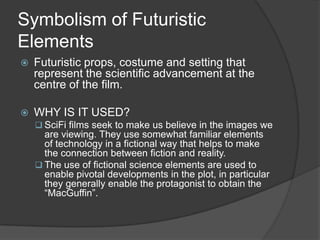
Symbolism of Futuristic
Elements


Futuristic props, costume and setting that
represent the scientific advancement at the
centre of the film.



WHY IS IT USED?
 SciFi films seek to make us believe in the images we

are viewing. They use somewhat familiar elements
of technology in a fictional way that helps to make
the connection between fiction and reality.
 The use of fictional science elements are used to
enable pivotal developments in the plot, in particular
they generally enable the protagonist to obtain the
“MacGuffin”.
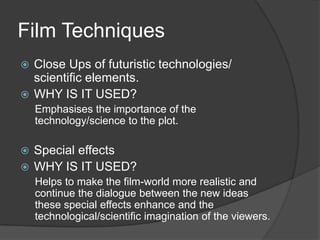
Film Techniques
Close Ups of futuristic technologies/
scientific elements.
 WHY IS IT USED?


Emphasises the importance of the
technology/science to the plot.

Special effects
 WHY IS IT USED?


Helps to make the film-world more realistic and
continue the dialogue between the new ideas
these special effects enhance and the
technological/scientific imagination of the viewers.
Compare these
conventions…


You will be creating a chart that compares how
each of these conventions are used in the
following films:
 2001: A Space Odyssey
 Star Wars: A New Hope
 Terminator 2: Judgement Day
 In Time
 another science fiction film of your choice
Analysing your
conventions data
 For

each convention, answer the
following questions:
 Compare how the conventions are

used in each film.
 Does its use change over time?
How? Give examples.

Science fiction conventions

  • 2.
    The conventions ofScience Fiction Film Techniques: Special effects Film Techniques: Close Ups of futuristic technologies/ scientific elements. Setting - Time: The future, an alternative timeline, or an historical past that contradicts historical records. Setting - Place: Outer space, other worlds, or alternative versions of earth. Science Fiction Conventions Symbolism: Futuristic props, costume and setting that represent the scientific advancement at the centre of the film. Narrative Elements: Conflict between good and evil. Narrative Elements: The development and/or application of: a) new technology (e.g. nanotechnology, robots, spaceships) b) new scientific principles (e.g. time-travel) c)new political systems (e.g. dystopian/utopi an societies)
  • 3.
    Setting – Time/Place TIME- The future, an alternative timeline, or an historical past that contradicts historical records.  PLACE - Outer space, other worlds, or alternative versions of earth.   WHY IS IT USED? It gives a different setting to the present, allowing viewers to see the narrative from a more neutral perspective. “It places the unfamiliar and alien in the context of the familiar”
  • 4.
    Narrative Content  The developmentand/or application of:  a) new technology (e.g. nanotechnology, robots, spaceships)  b) new scientific principles (e.g. time-travel)  c) new political systems (e.g. dystopian/utopian societies)  WHY IS IT USED? It is used to create a dialogue between these new ideas (technology, scientific principles, and political systems) and the technological/scientific imagination of the viewers.
  • 5.
    Narrative Content  Conflict betweengood and evil.  WHY IS IT USED? This is a technique that is often used to comment on conflicts within society, in particular to comment on the relationships either between different countries or cultures within a nation.
  • 6.
    Symbolism of Futuristic Elements  Futuristicprops, costume and setting that represent the scientific advancement at the centre of the film.  WHY IS IT USED?  SciFi films seek to make us believe in the images we are viewing. They use somewhat familiar elements of technology in a fictional way that helps to make the connection between fiction and reality.  The use of fictional science elements are used to enable pivotal developments in the plot, in particular they generally enable the protagonist to obtain the “MacGuffin”.
  • 7.
    Film Techniques Close Upsof futuristic technologies/ scientific elements.  WHY IS IT USED?  Emphasises the importance of the technology/science to the plot. Special effects  WHY IS IT USED?  Helps to make the film-world more realistic and continue the dialogue between the new ideas these special effects enhance and the technological/scientific imagination of the viewers.
  • 8.
    Compare these conventions…  You willbe creating a chart that compares how each of these conventions are used in the following films:  2001: A Space Odyssey  Star Wars: A New Hope  Terminator 2: Judgement Day  In Time  another science fiction film of your choice
  • 9.
    Analysing your conventions data For each convention, answer the following questions:  Compare how the conventions are used in each film.  Does its use change over time? How? Give examples.