Generic conventions of a Thriller

        Semantics & Syntactics
          By Rashedul Bari
When viewing a thriller, audiences should
 develop a certain understanding of what to
 expect if they decide to view the film in
 cinemas. There has to be iconography of that
 from a typical thriller film such as the location
 being a dark, dull city. Trailers should also
 create an enigma for the viewers, especially
 thriller trailers as they normally contain
 mysteries. The narrative of the trailer should
 be easily understandable for the audience to
 fully comprehend the trailer and immerse
 themselves in it.
Semantics of Thrillers
        Characters: often in thrillers, the main character/s will be
        mysterious people that the audience can’t seem to figure out
        and might have a dark history to them that makes them
        reclusive. They will have to overcome obstacles set by the
        antagonist which is a key element of a thriller.
        Locations: In thriller, locations will be often cities. They will be
        dark and murky and might be set in the winter to add darkness
        to the narrative. E.g. thrillers will not be set in the countryside
        as it is not mysterious enough, where as cities are vast and dark,
        which will make it more suited to thriller films.
        Props: Thrillers mostly include death and guns as props. A
        thriller might begin with a murder where the viewer will see a
        body and blood, enter the detective charged with solving the
        case and finding the killer, who will use his gun as a weapon.
        Music: Thrillers are all about setting the atmosphere, therefore
        music is key to setting the right atmosphere for a thriller. A
        mysterious and dark soundtrack/score will help the thriller.
        Shooting style: Thrillers will mostly involve a mix of both fast
        and slow camerawork to reflect a popular thriller. E.g. when the
        protagonist is chasing the antagonist the camerawork will have
        to be fast to raise the pace, where as when the protagonist is
        searching through a dark warehouse, the camerawork will have
        to slow down to build up the tension.
Syntactics of Thrillers
   Syntactics is how all the semantics come together to make a thriller. For
   example, all the semantics will culminate with a murder occurring at the
   beginning of the movie, then that’s where the protagonist will come in, a
   detective and he will spend the rest of the movie trying to find the killer, a
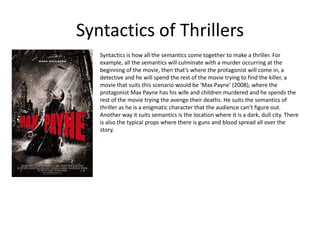
   movie that suits this scenario would be ‘Max Payne’ (2008), where the
   protagonist Max Payne has his wife and children murdered and he spends the
   rest of the movie trying the avenge their deaths. He suits the semantics of
   thriller as he is a enigmatic character that the audience can’t figure out.
   Another way it suits semantics is the location where it is a dark, dull city. There
   is also the typical props where there is guns and blood spread all over the
   story.
Conclusion
In conclusion, these semantics and syntactics
  will have to be present in our trailer to be fully
  affective and for the audience to comprehend
  it to be a thriller.

Semantics and syntactics

  • 1.
    Generic conventions ofa Thriller Semantics & Syntactics By Rashedul Bari
  • 2.
    When viewing athriller, audiences should develop a certain understanding of what to expect if they decide to view the film in cinemas. There has to be iconography of that from a typical thriller film such as the location being a dark, dull city. Trailers should also create an enigma for the viewers, especially thriller trailers as they normally contain mysteries. The narrative of the trailer should be easily understandable for the audience to fully comprehend the trailer and immerse themselves in it.
  • 3.
    Semantics of Thrillers Characters: often in thrillers, the main character/s will be mysterious people that the audience can’t seem to figure out and might have a dark history to them that makes them reclusive. They will have to overcome obstacles set by the antagonist which is a key element of a thriller. Locations: In thriller, locations will be often cities. They will be dark and murky and might be set in the winter to add darkness to the narrative. E.g. thrillers will not be set in the countryside as it is not mysterious enough, where as cities are vast and dark, which will make it more suited to thriller films. Props: Thrillers mostly include death and guns as props. A thriller might begin with a murder where the viewer will see a body and blood, enter the detective charged with solving the case and finding the killer, who will use his gun as a weapon. Music: Thrillers are all about setting the atmosphere, therefore music is key to setting the right atmosphere for a thriller. A mysterious and dark soundtrack/score will help the thriller. Shooting style: Thrillers will mostly involve a mix of both fast and slow camerawork to reflect a popular thriller. E.g. when the protagonist is chasing the antagonist the camerawork will have to be fast to raise the pace, where as when the protagonist is searching through a dark warehouse, the camerawork will have to slow down to build up the tension.
  • 4.
    Syntactics of Thrillers Syntactics is how all the semantics come together to make a thriller. For example, all the semantics will culminate with a murder occurring at the beginning of the movie, then that’s where the protagonist will come in, a detective and he will spend the rest of the movie trying to find the killer, a movie that suits this scenario would be ‘Max Payne’ (2008), where the protagonist Max Payne has his wife and children murdered and he spends the rest of the movie trying the avenge their deaths. He suits the semantics of thriller as he is a enigmatic character that the audience can’t figure out. Another way it suits semantics is the location where it is a dark, dull city. There is also the typical props where there is guns and blood spread all over the story.
  • 5.
    Conclusion In conclusion, thesesemantics and syntactics will have to be present in our trailer to be fully affective and for the audience to comprehend it to be a thriller.