What does a horror film aim to do?
Essentially, a horror film’s main aim is to worry the audience
 and feel the emotion of fear whilst watching the movie. To
 be a successful horror film it should contain at least one
 element of fear. The fear could be triggered by the
 unknown, terror, torture or surrealism.

If the viewer is scared or unnerved by the film’s
  content, plot or characters then the film is more likely to be
  a success. It is very important for the film to be a success so
  you generate a higher income, through people watching the
  film at the cinema or buying it on DVD.
General codes and conventions
There are many common codes and conventions used in
  horror films. Lighting and music is key to promote a scary
  atmosphere to frighten the audience. For example, a dark
  scene partnered with high pitched eerie music is almost
  guaranteed to unsettle the audience.
In horror films that feature a killer or murder, it is typical to
  have a group of roughly 4 to 5 people who get killed off one
  by one. Also, the killer usually has a signature killing
  method such as hanging, stabbing or torturing.
There is almost always one survivor who eventually beats
  the bad guy. Good over evil is more often than not is the
  general ending of a horror film.
Specific codes and conventions
 Eerie/high pitched music – teamed with characters walking
 around slowly or looking for something makes the audience
 think there is something that might make them jump. This
 heightens tension and anticipation.
Dark lighting – this intensifies the fear of the unknown because
 the audience cannot see all of the characters surroundings and
 therefore cannot guess what might happen next.
Slow pace of editing/long takes – this builds tension within the
 audience.
Vulnerable characters – normally women of teenagers, because
 they are more vulnerable than a strong man in his mid twenties.
 This makes the audience fear for the protagonist.
Threat – this can be either a supernatural threat, monster, serial
 killer or something else that is stronger intellectually or
 physically than the victims in the film.
Different genres within horror films
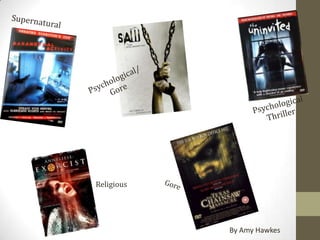
 The horror genre frequently overlaps with many other genre’s of film some
   examples of this is:


 • Supernatural Horrors
 • Psychological Thrillers
 • Science Fiction Horrors

 Nearly every horror film uses common fears to make sure that the viewer is
   unnerved or startled by the content of the film. This could be the fear of the
   unknown – usually linked with supernatural films for example Paranormal
   Activity and ‘Insidious’.
 Psychological thrillers such as ‘The Uninvited’ play tricks on the readers mind
   and you usually have top try and figure out how the ‘bad guy’ is. Having the
   element of not knowing who the killer is for example makes the film more
   intense to watch and the viewer is less likely to get bored.
Religious


            By Amy Hawkes

Horror conventions

  • 1.
    What does ahorror film aim to do? Essentially, a horror film’s main aim is to worry the audience and feel the emotion of fear whilst watching the movie. To be a successful horror film it should contain at least one element of fear. The fear could be triggered by the unknown, terror, torture or surrealism. If the viewer is scared or unnerved by the film’s content, plot or characters then the film is more likely to be a success. It is very important for the film to be a success so you generate a higher income, through people watching the film at the cinema or buying it on DVD.
  • 2.
    General codes andconventions There are many common codes and conventions used in horror films. Lighting and music is key to promote a scary atmosphere to frighten the audience. For example, a dark scene partnered with high pitched eerie music is almost guaranteed to unsettle the audience. In horror films that feature a killer or murder, it is typical to have a group of roughly 4 to 5 people who get killed off one by one. Also, the killer usually has a signature killing method such as hanging, stabbing or torturing. There is almost always one survivor who eventually beats the bad guy. Good over evil is more often than not is the general ending of a horror film.
  • 3.
    Specific codes andconventions  Eerie/high pitched music – teamed with characters walking around slowly or looking for something makes the audience think there is something that might make them jump. This heightens tension and anticipation. Dark lighting – this intensifies the fear of the unknown because the audience cannot see all of the characters surroundings and therefore cannot guess what might happen next. Slow pace of editing/long takes – this builds tension within the audience. Vulnerable characters – normally women of teenagers, because they are more vulnerable than a strong man in his mid twenties. This makes the audience fear for the protagonist. Threat – this can be either a supernatural threat, monster, serial killer or something else that is stronger intellectually or physically than the victims in the film.
  • 4.
    Different genres withinhorror films The horror genre frequently overlaps with many other genre’s of film some examples of this is: • Supernatural Horrors • Psychological Thrillers • Science Fiction Horrors Nearly every horror film uses common fears to make sure that the viewer is unnerved or startled by the content of the film. This could be the fear of the unknown – usually linked with supernatural films for example Paranormal Activity and ‘Insidious’. Psychological thrillers such as ‘The Uninvited’ play tricks on the readers mind and you usually have top try and figure out how the ‘bad guy’ is. Having the element of not knowing who the killer is for example makes the film more intense to watch and the viewer is less likely to get bored.
  • 5.
    Religious By Amy Hawkes