THE VICTORIAN ERA
ocial Structure
eforms
ourtship
Social Structure
Social Classes
orking Class – physical labor
iddle Class – performed clean work
pper Class – did not have to work
Working Class
oor living and working conditions
id not follow rules of courtship
id not participate in social entertainment
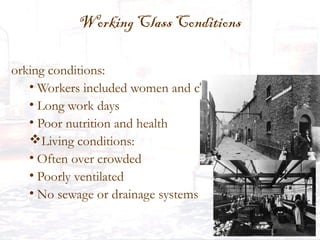
Working Class Conditions
orking conditions:
• Workers included women and children
• Long work days
• Poor nutrition and health
Living conditions:
• Often over crowded
• Poorly ventilated
• No sewage or drainage systems
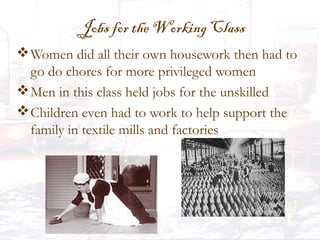
Jobs for the Working Class
Women did all their own housework then had to
go do chores for more privileged women
Men in this class held jobs for the unskilled
Children even had to work to help support the
family in textile mills and factories
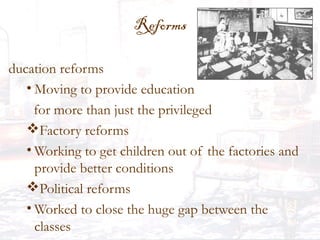
Reforms
ducation reforms
• Moving to provide education
for more than just the privileged
Factory reforms
• Working to get children out of the factories and
provide better conditions
Political reforms
• Worked to close the huge gap between the
classes
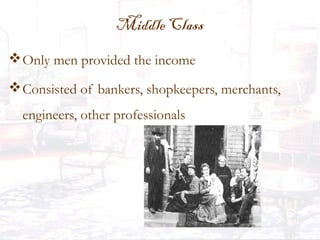
Middle Class
Only men provided the income
Consisted of bankers, shopkeepers, merchants,
engineers, other professionals
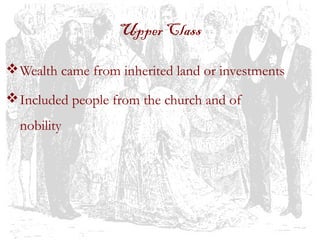
Upper Class
Wealth came from inherited land or investments
Included people from the church and of
nobility
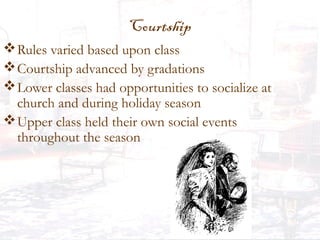
Courtship
Rules varied based upon class
Courtship advanced by gradations
Lower classes had opportunities to socialize at
church and during holiday season
Upper class held their own social events
throughout the season
Courtship
Gentility
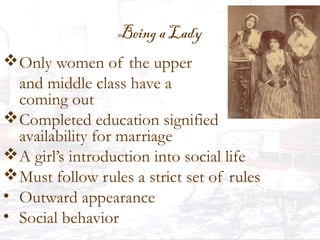
Being a Lady
Only women of the upper
and middle class have a
coming out
Completed education signified
availability for marriage
A girl’s introduction into social life
Must follow rules a strict set of rules
• Outward appearance
• Social behavior
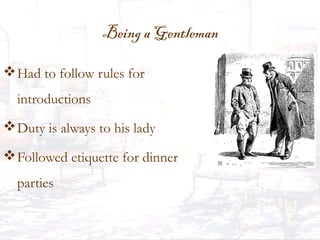
Being a Gentleman
Had to follow rules for
introductions
Duty is always to his lady
Followed etiquette for dinner
parties
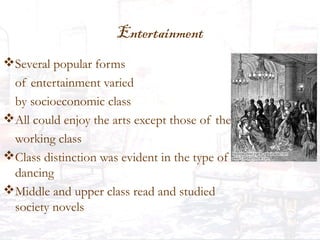
Entertainment
Several popular forms
of entertainment varied
by socioeconomic class
All could enjoy the arts except those of the
working class
Class distinction was evident in the type of
dancing
Middle and upper class read and studied
society novels
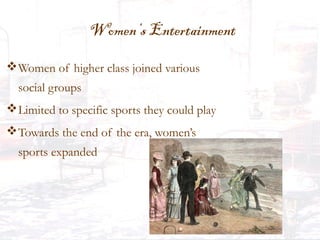
Women’s Entertainment
Women of higher class joined various
social groups
Limited to specific sports they could play
Towards the end of the era, women’s
sports expanded
Men’s Entertainment
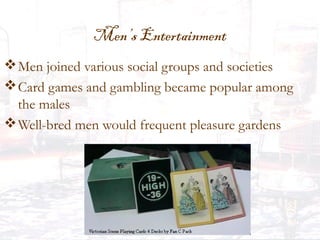
Men joined various social groups and societies
Card games and gambling became popular among
the males
Well-bred men would frequent pleasure gardens

Victorian era social structure

  • 1.
    THE VICTORIAN ERA ocialStructure eforms ourtship
  • 2.
  • 3.
    Social Classes orking Class– physical labor iddle Class – performed clean work pper Class – did not have to work
  • 4.
    Working Class oor livingand working conditions id not follow rules of courtship id not participate in social entertainment
  • 5.
    Working Class Conditions orkingconditions: • Workers included women and children • Long work days • Poor nutrition and health Living conditions: • Often over crowded • Poorly ventilated • No sewage or drainage systems
  • 6.
    Jobs for theWorking Class Women did all their own housework then had to go do chores for more privileged women Men in this class held jobs for the unskilled Children even had to work to help support the family in textile mills and factories
  • 7.
    Reforms ducation reforms • Movingto provide education for more than just the privileged Factory reforms • Working to get children out of the factories and provide better conditions Political reforms • Worked to close the huge gap between the classes
  • 8.
    Middle Class Only menprovided the income Consisted of bankers, shopkeepers, merchants, engineers, other professionals
  • 9.
    Upper Class Wealth camefrom inherited land or investments Included people from the church and of nobility
  • 10.
    Courtship Rules varied basedupon class Courtship advanced by gradations Lower classes had opportunities to socialize at church and during holiday season Upper class held their own social events throughout the season
  • 11.
  • 12.
    Being a Lady Onlywomen of the upper and middle class have a coming out Completed education signified availability for marriage A girl’s introduction into social life Must follow rules a strict set of rules • Outward appearance • Social behavior
  • 13.
    Being a Gentleman Hadto follow rules for introductions Duty is always to his lady Followed etiquette for dinner parties
  • 14.
    Entertainment Several popular forms ofentertainment varied by socioeconomic class All could enjoy the arts except those of the working class Class distinction was evident in the type of dancing Middle and upper class read and studied society novels
  • 15.
    Women’s Entertainment Women ofhigher class joined various social groups Limited to specific sports they could play Towards the end of the era, women’s sports expanded
  • 16.
    Men’s Entertainment Men joinedvarious social groups and societies Card games and gambling became popular among the males Well-bred men would frequent pleasure gardens