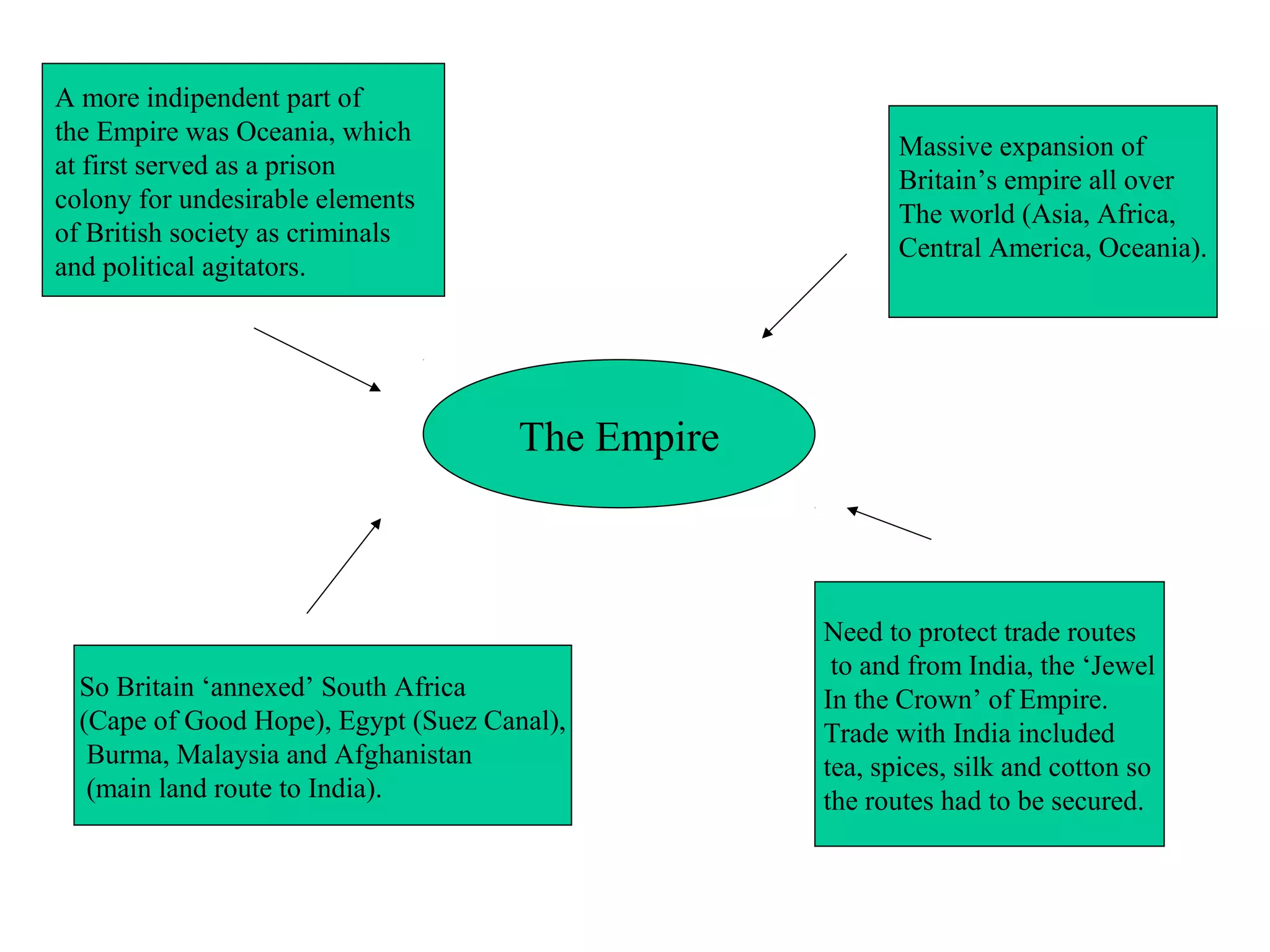
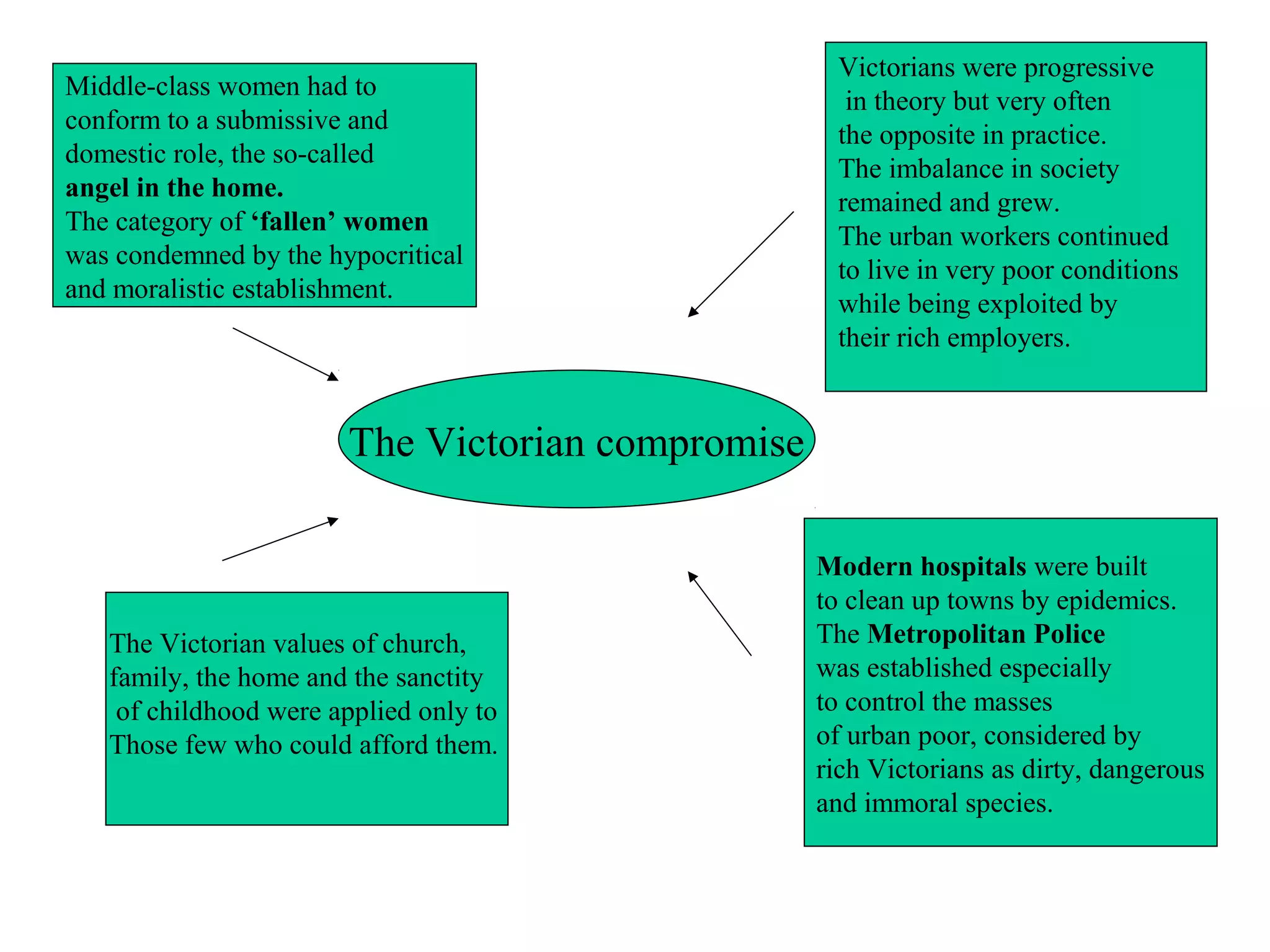
The Victorian Age saw the rapid expansion of the British Empire to its largest extent through colonization of Asia, Africa and Oceania. Britain's economy grew through industrialization and international trade, making it the wealthiest nation. However, many workers lived in poverty and squalor. The Chartist movement advocated for political reforms like universal male suffrage, but its demands took decades to be implemented. Technological innovations like railroads and factories symbolized Britain's power but brought different realities for workers, who faced low wages, high costs of living, and poor living conditions. The Empire continued growing to protect trade routes, though colonies were often exploited for resources with little consideration for local populations.