Social Structures in the Victorian Era Mugisha Niyibizi, Rachel Lengerich, Hanah Ho, and Morgan Golin
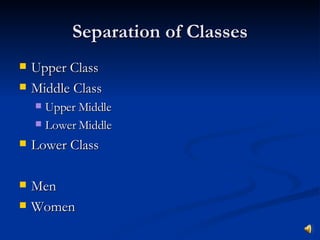
Separation of Classes Upper Class Middle Class Upper Middle  Lower Middle Lower Class Men Women
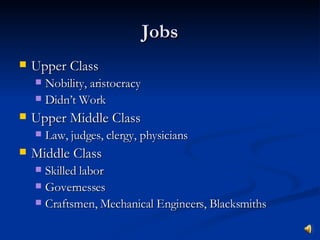
Jobs Upper Class Nobility, aristocracy Didn’t Work Upper Middle Class Law, judges, clergy, physicians Middle Class Skilled labor Governesses  Craftsmen, Mechanical Engineers, Blacksmiths
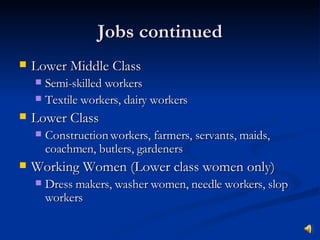
Jobs continued Lower Middle Class Semi-skilled workers Textile workers, dairy workers Lower Class Construction workers, farmers, servants, maids, coachmen, butlers, gardeners Working Women (Lower class women only) Dress makers, washer women, needle workers, slop workers
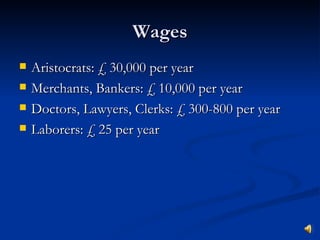
Wages Aristocrats: £ 30,000 per year Merchants, Bankers: £ 10,000 per year Doctors, Lawyers, Clerks: £ 300-800 per year Laborers: £ 25 per year
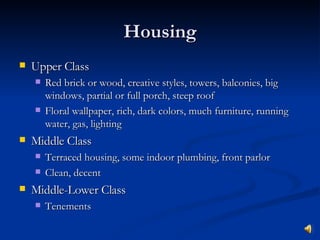
Housing Upper Class Red brick or wood, creative styles, towers, balconies, big windows, partial or full porch, steep roof Floral wallpaper, rich, dark colors, much furniture, running water, gas, lighting Middle Class Terraced housing, some indoor plumbing, front parlor Clean, decent Middle-Lower Class Tenements
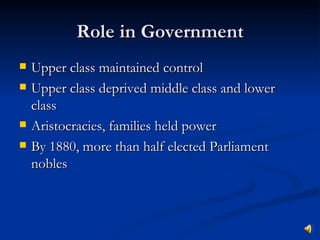
Role in Government Upper class maintained control Upper class deprived middle class and lower class Aristocracies, families held power By 1880, more than half elected Parliament nobles
Events that influenced government People’s Charter April 10, 1948 Universal Suffrage Reform Act 1867 Household suffrage Doubled number of voters Ideas of Karl Marx
Women in government Did not have suffrage rights John Stuart Mill’s attempt to gain suffrage for women failed
Authors and Scientists Mostly upper class Charlotte, Anne, and Emily Bronte, Jane Austen Sir Walter Scott, Charles Dickens, Lewis Carroll, Rudyard Kipling, Oscar Wilde  Darwin (educated and traveled)
Entertainment Sunday was often only day of leisure for all except upper class Religious families partook in activities such as attending church and quiet reflection Church social activities and dances Interest in theater and the arts Music, drama, opera widely attended Upper class: holidays by train to seaside areas and towns
Entertainment for Men Card tables for games such as poker, roulette, faro, monte, etc. Gambling very popular Played or watched rugby, football (soccer), cricket Unsavory types participated in cock fighting, rat pits, burlesque, drinking, gambling, billiards, and prostitution
Entertainment for Women Charitable causes Women’s lives revolved around church and social reform Quilting bees Embroidery
A Doll’s House Men and women’s rights Legal rights Upper Middle Class (Torvald and Nora and Dr. Rank) Middle Class (Krogstad) Lower Middle (Mrs. Linde) Entertainment Fancy Dress Ball £ 250 debt: almost doctor’s annual salary
A Doll’s House Housing: upper middle class Porch, ball upstairs Lack of social freedoms of lower classes lessened “honor” in class standing Ibsen unlike authors of time Holidays by train
Sources www.Victorianweb.org www.aboutbritain.com/articles/victorian-houses.asp http://www.ancestry.com/learn/library/article.aspx?article=6963 http://www.erasofelegance.com/history/victorianarts.html http://www.victorianweb.org/history/work/index.html http:// www.victorianweb.org/history/Class.html http:// www.english.uwosh.edu/roth/VictorianEngland.org www.Channel4.com/history/microsites/H/history/guide19/part04.html www.Channel4.com/history/microsites/H/history/guide19/part05.html

hhsaplit5rlhhmgmn

  • 1.
    Social Structures inthe Victorian Era Mugisha Niyibizi, Rachel Lengerich, Hanah Ho, and Morgan Golin
  • 2.
    Separation of ClassesUpper Class Middle Class Upper Middle Lower Middle Lower Class Men Women
  • 3.
    Jobs Upper ClassNobility, aristocracy Didn’t Work Upper Middle Class Law, judges, clergy, physicians Middle Class Skilled labor Governesses Craftsmen, Mechanical Engineers, Blacksmiths
  • 4.
    Jobs continued LowerMiddle Class Semi-skilled workers Textile workers, dairy workers Lower Class Construction workers, farmers, servants, maids, coachmen, butlers, gardeners Working Women (Lower class women only) Dress makers, washer women, needle workers, slop workers
  • 5.
    Wages Aristocrats: £30,000 per year Merchants, Bankers: £ 10,000 per year Doctors, Lawyers, Clerks: £ 300-800 per year Laborers: £ 25 per year
  • 6.
    Housing Upper ClassRed brick or wood, creative styles, towers, balconies, big windows, partial or full porch, steep roof Floral wallpaper, rich, dark colors, much furniture, running water, gas, lighting Middle Class Terraced housing, some indoor plumbing, front parlor Clean, decent Middle-Lower Class Tenements
  • 7.
    Role in GovernmentUpper class maintained control Upper class deprived middle class and lower class Aristocracies, families held power By 1880, more than half elected Parliament nobles
  • 8.
    Events that influencedgovernment People’s Charter April 10, 1948 Universal Suffrage Reform Act 1867 Household suffrage Doubled number of voters Ideas of Karl Marx
  • 9.
    Women in governmentDid not have suffrage rights John Stuart Mill’s attempt to gain suffrage for women failed
  • 10.
    Authors and ScientistsMostly upper class Charlotte, Anne, and Emily Bronte, Jane Austen Sir Walter Scott, Charles Dickens, Lewis Carroll, Rudyard Kipling, Oscar Wilde Darwin (educated and traveled)
  • 11.
    Entertainment Sunday wasoften only day of leisure for all except upper class Religious families partook in activities such as attending church and quiet reflection Church social activities and dances Interest in theater and the arts Music, drama, opera widely attended Upper class: holidays by train to seaside areas and towns
  • 12.
    Entertainment for MenCard tables for games such as poker, roulette, faro, monte, etc. Gambling very popular Played or watched rugby, football (soccer), cricket Unsavory types participated in cock fighting, rat pits, burlesque, drinking, gambling, billiards, and prostitution
  • 13.
    Entertainment for WomenCharitable causes Women’s lives revolved around church and social reform Quilting bees Embroidery
  • 14.
    A Doll’s HouseMen and women’s rights Legal rights Upper Middle Class (Torvald and Nora and Dr. Rank) Middle Class (Krogstad) Lower Middle (Mrs. Linde) Entertainment Fancy Dress Ball £ 250 debt: almost doctor’s annual salary
  • 15.
    A Doll’s HouseHousing: upper middle class Porch, ball upstairs Lack of social freedoms of lower classes lessened “honor” in class standing Ibsen unlike authors of time Holidays by train
  • 16.
    Sources www.Victorianweb.org www.aboutbritain.com/articles/victorian-houses.asphttp://www.ancestry.com/learn/library/article.aspx?article=6963 http://www.erasofelegance.com/history/victorianarts.html http://www.victorianweb.org/history/work/index.html http:// www.victorianweb.org/history/Class.html http:// www.english.uwosh.edu/roth/VictorianEngland.org www.Channel4.com/history/microsites/H/history/guide19/part04.html www.Channel4.com/history/microsites/H/history/guide19/part05.html