Shape Up
Skills Builder - September 4th, 2020
Confidential
Self Service Cloud Operations
Safely Delegate the Management of your
Cloud Operations with Rundeck.
Before we begin...
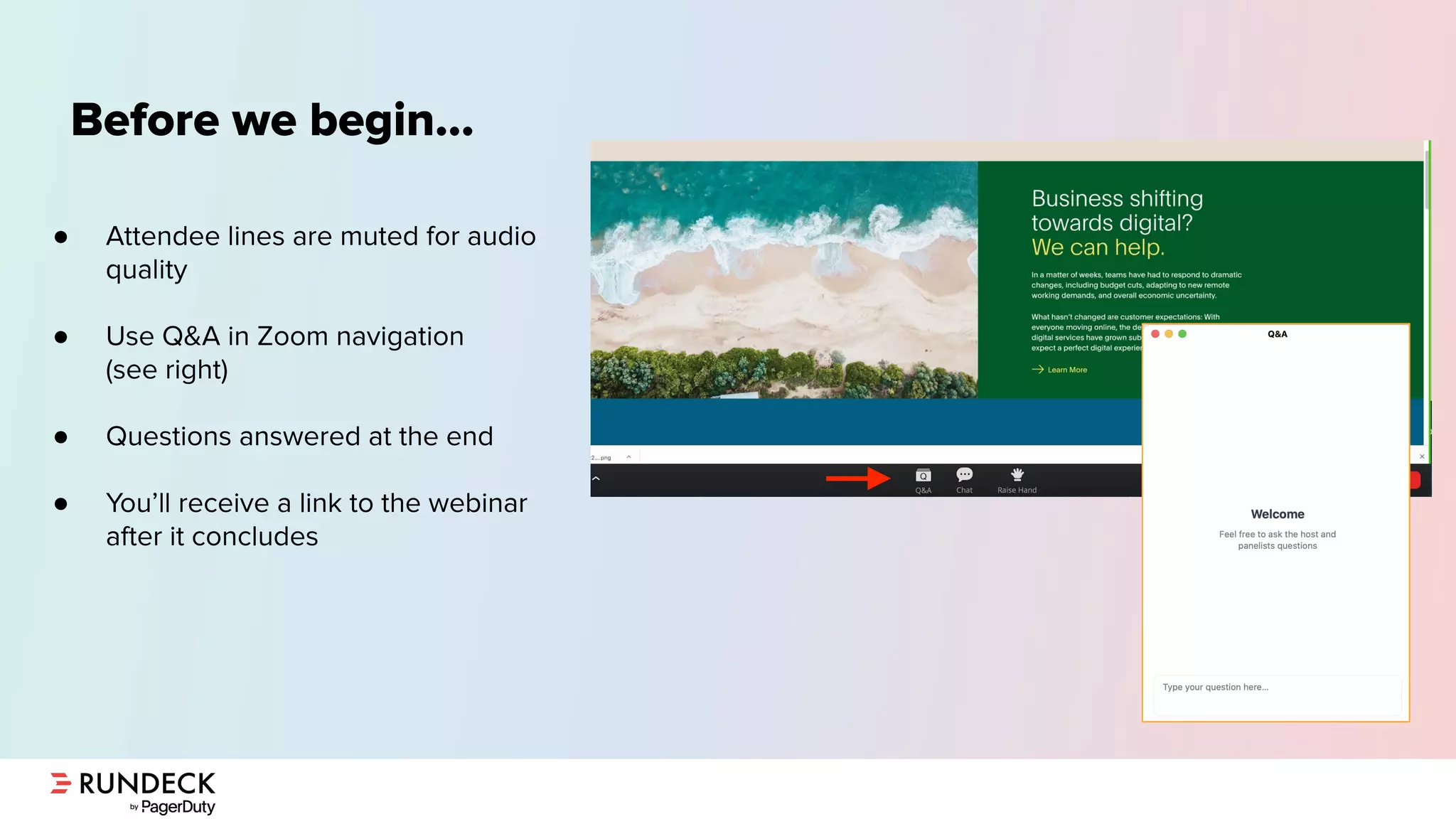
● Attendee lines are muted for audio
quality
● Use Q&A in Zoom navigation
(see right)
● Questions answered at the end
● You’ll receive a link to the webinar
after it concludes
Speakers
Jesse Houldsworth
Sr. Solutions Consultant,
PagerDuty
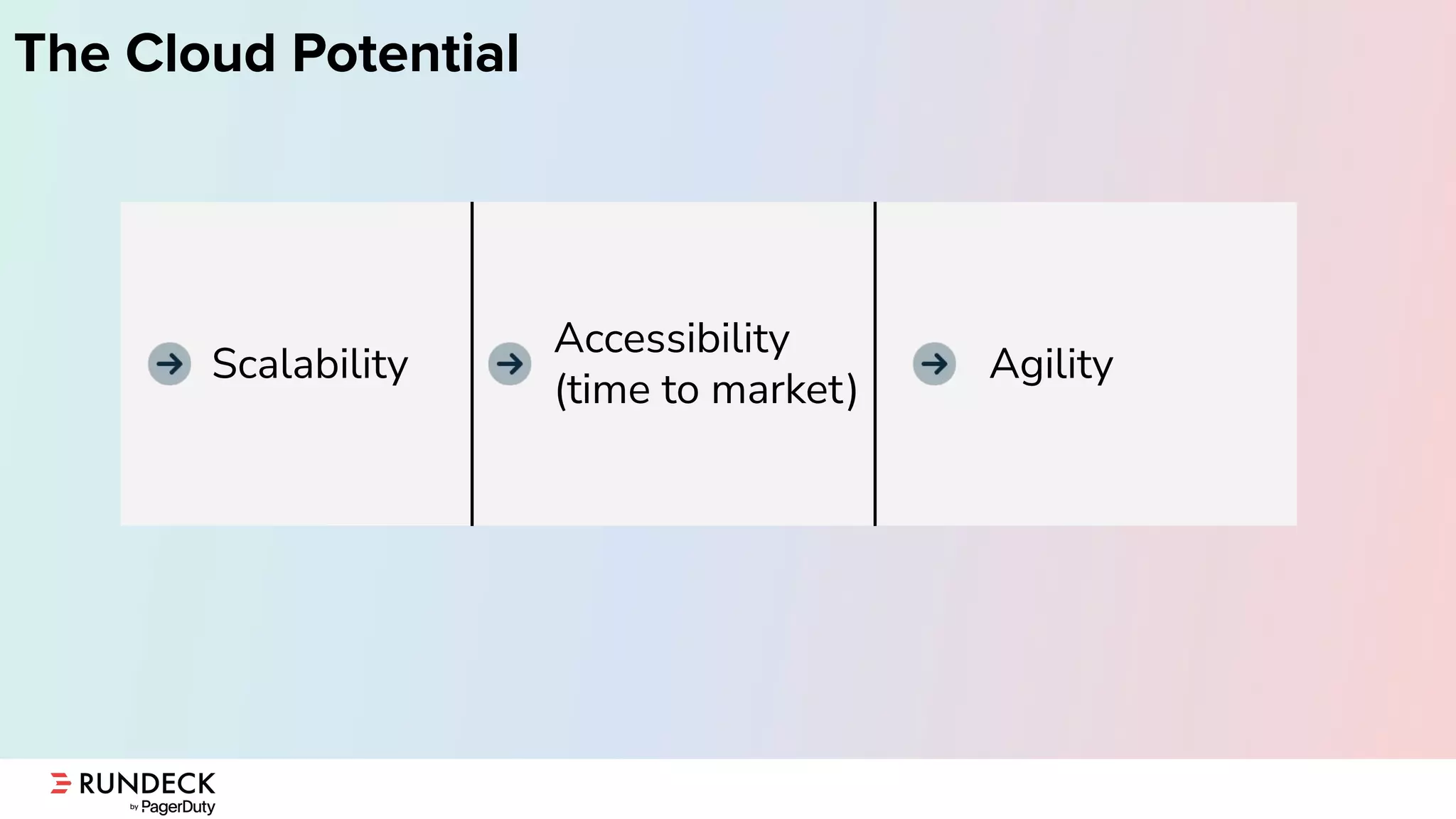
The Cloud Potential
Scalability
Accessibility
(time to market)
Agility
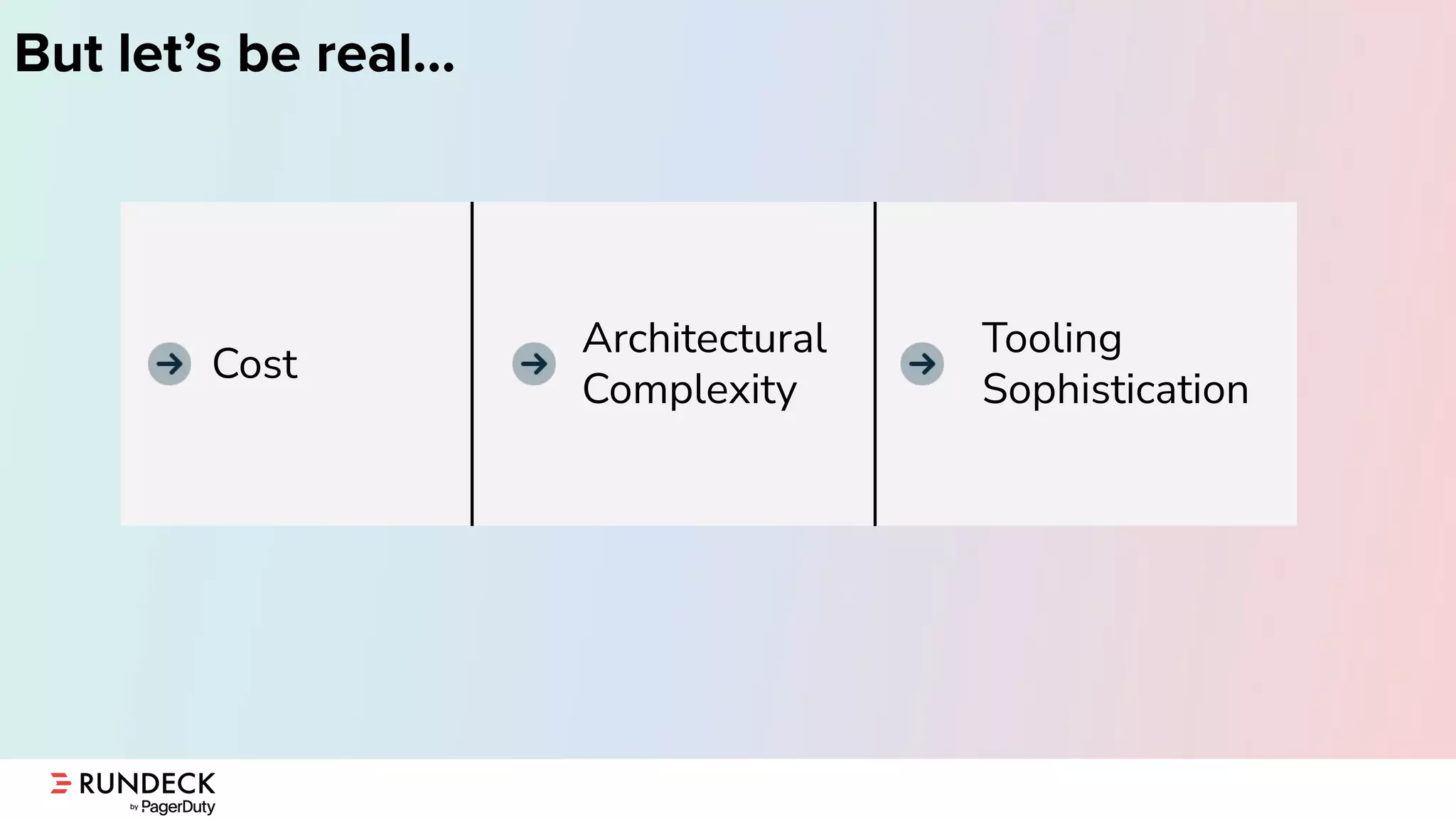
But let’s be real...
Cost
Architectural
Complexity
Tooling
Sophistication
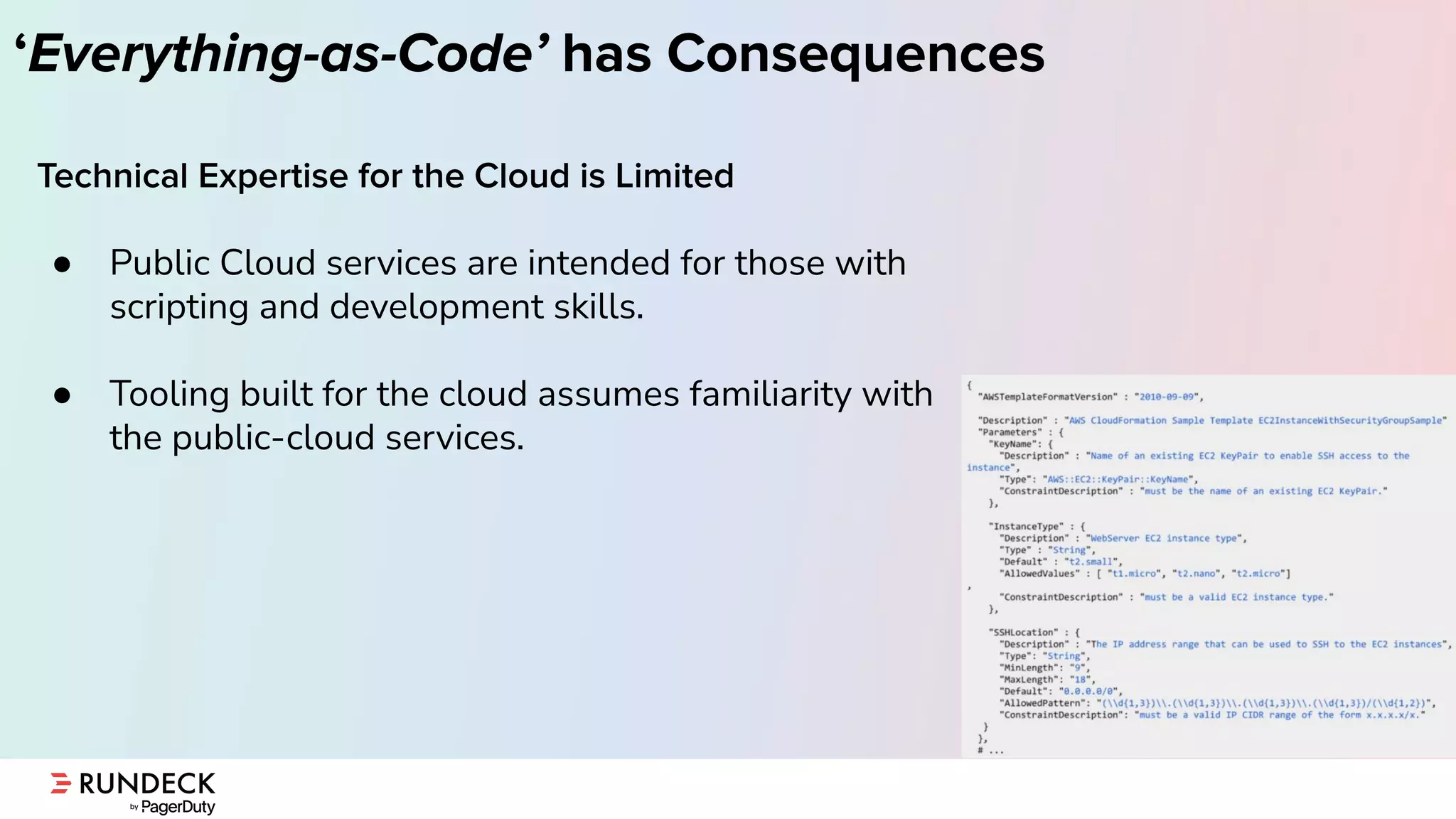
‘Everything-as-Code’ has Consequences
Technical Expertise for the Cloud is Limited
● Public Cloud services are intended for those with
scripting and development skills.
● Tooling built for the cloud assumes familiarity with
the public-cloud services.
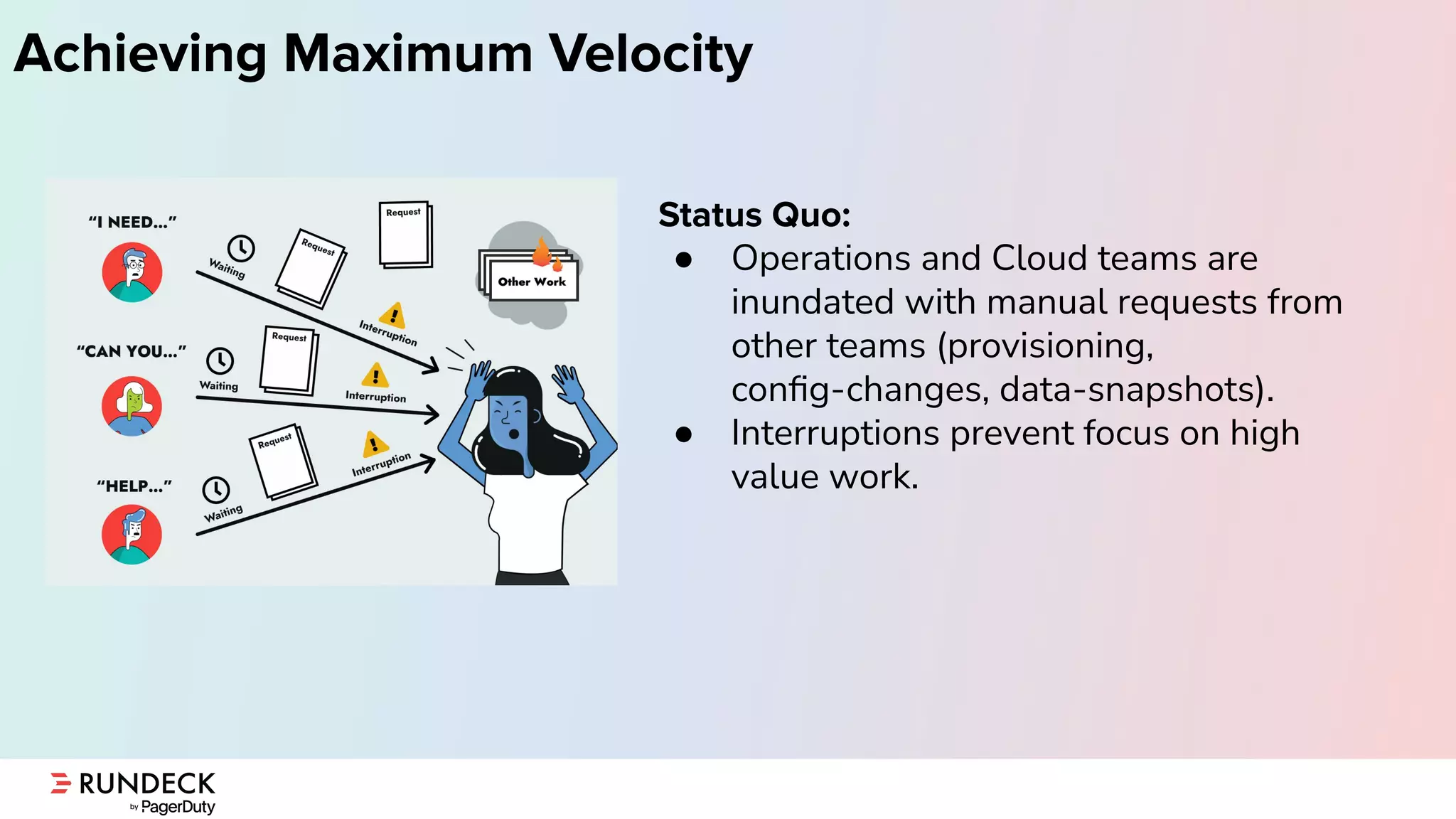
Status Quo:
● Operations and Cloud teams are
inundated with manual requests from
other teams (provisioning,
config-changes, data-snapshots).
● Interruptions prevent focus on high
value work.
Achieving Maximum Velocity
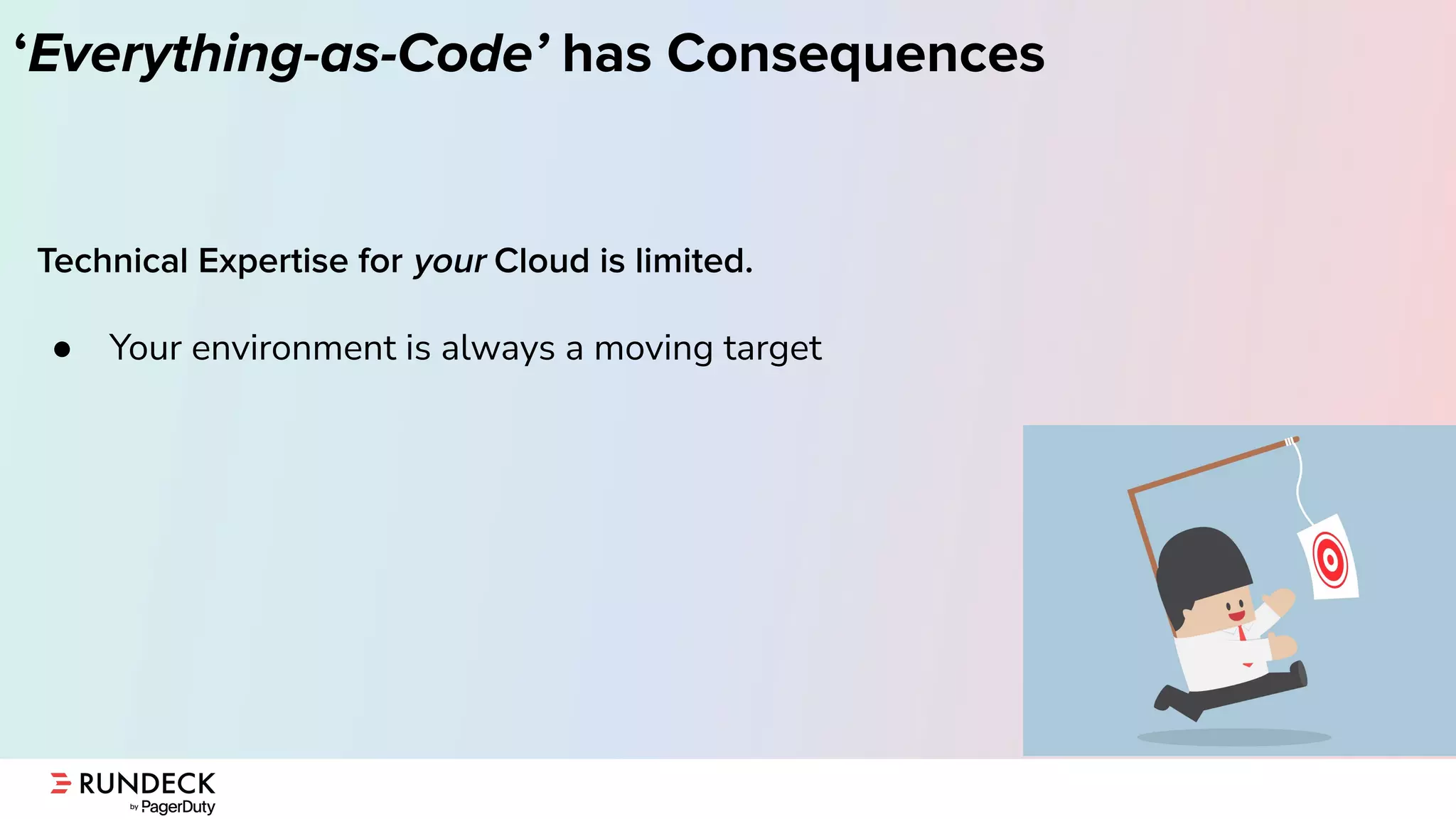
‘Everything-as-Code’ has Consequences
Technical Expertise for your Cloud is limited.
● Your environment is always a moving target
Achieving Maximum Velocity
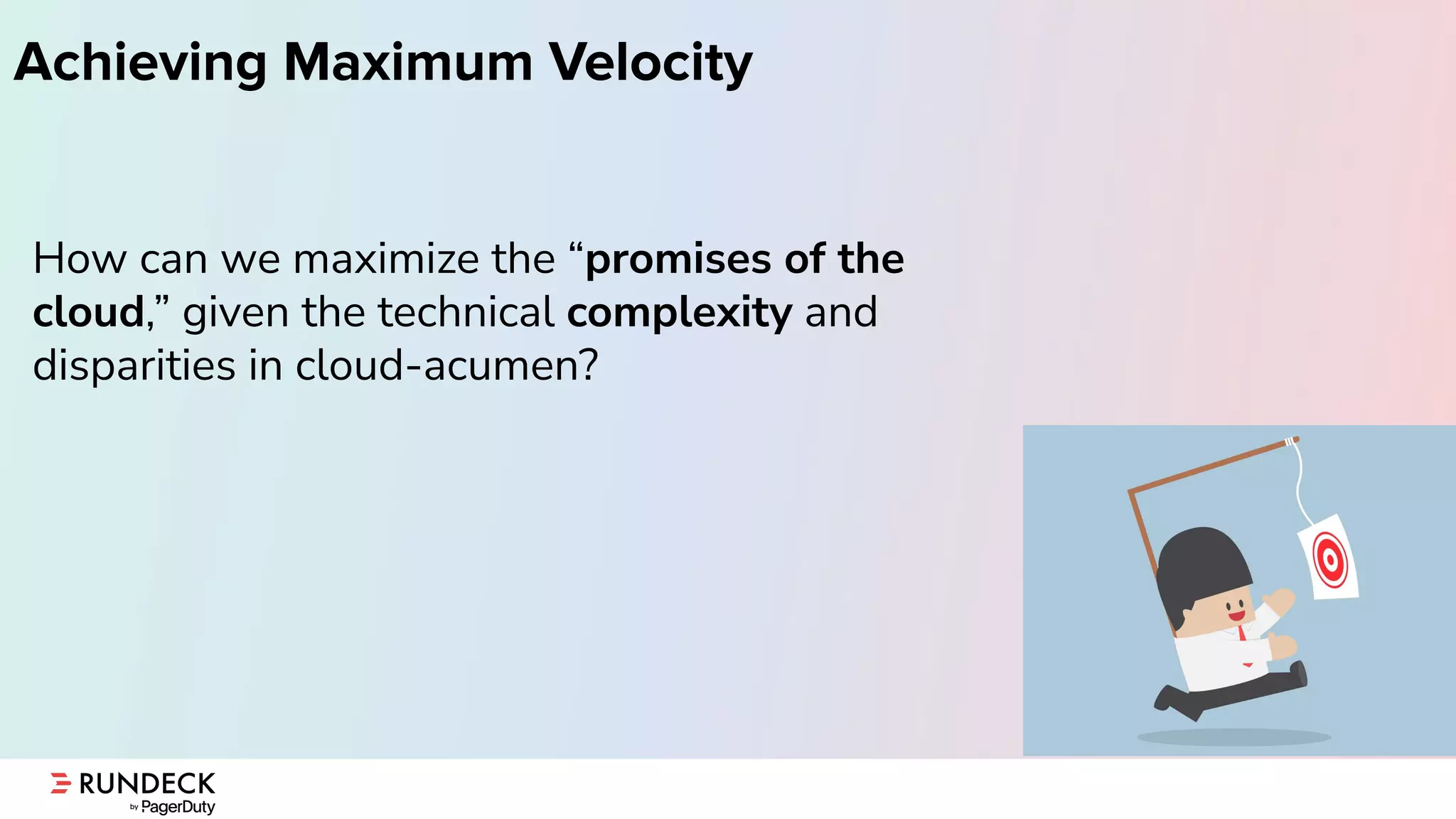
How can we maximize the “promises of the
cloud,” given the technical complexity and
disparities in cloud-acumen?
Case for Self-Service
How can we reduce the burden on Cloud experts
and empower developers, business-users and
other engineers?
Simplify and delegate!
Case for Self-Service
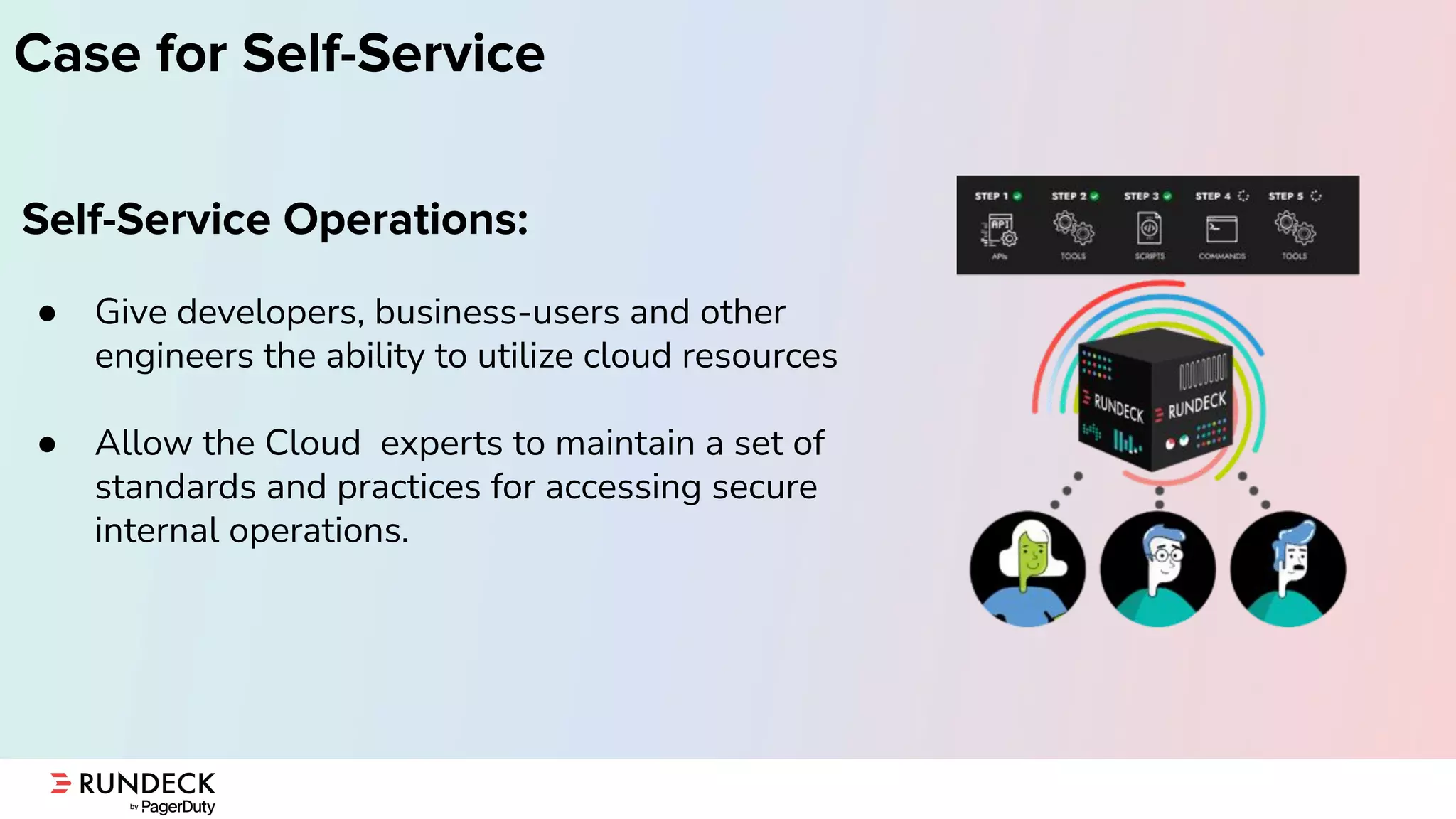
Self-Service Operations:
● Give developers, business-users and other
engineers the ability to utilize cloud resources
● Allow the Cloud experts to maintain a set of
standards and practices for accessing secure
internal operations.
Self-Service Runbook Automation
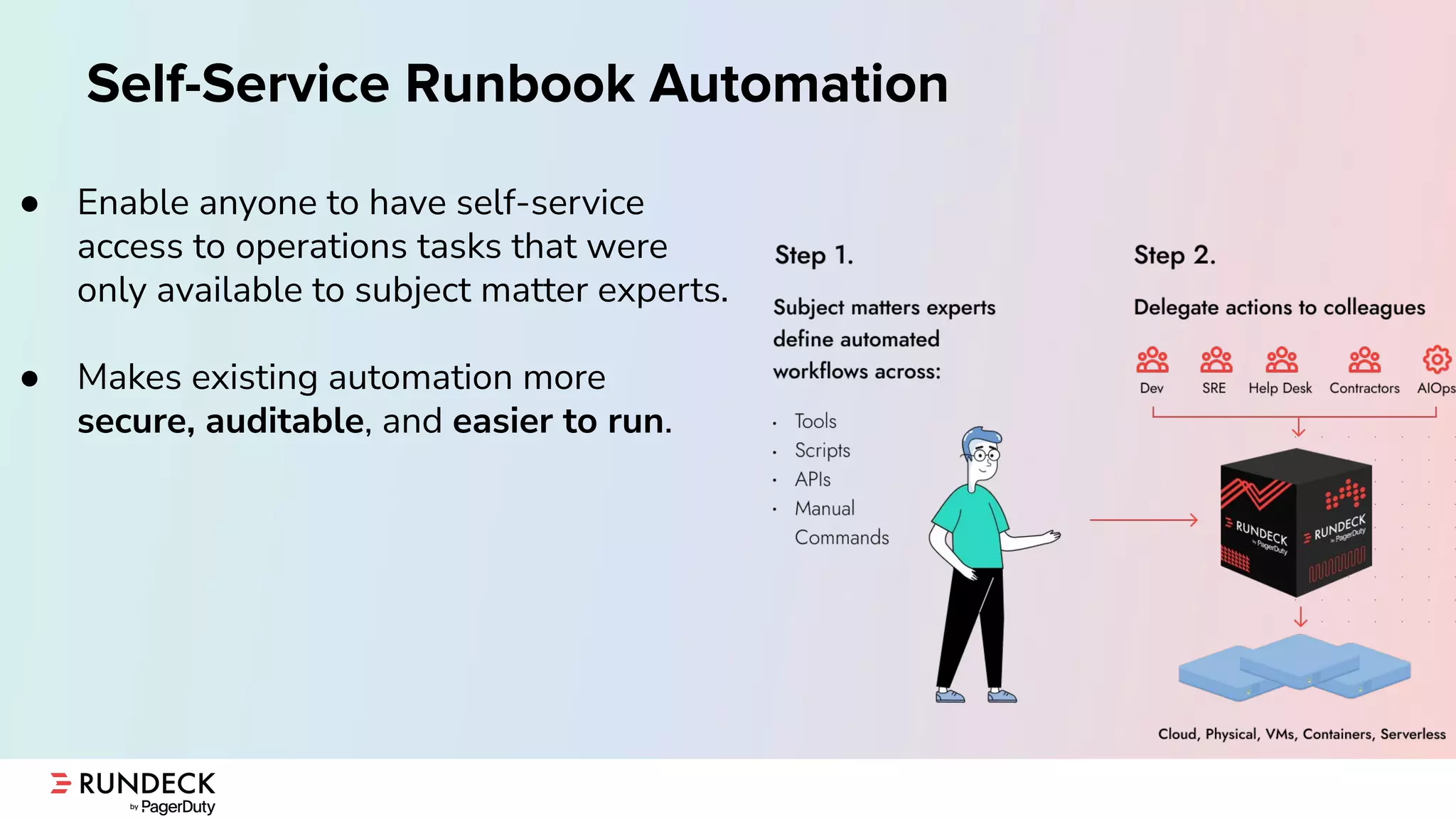
● Enable anyone to have self-service
access to operations tasks that were
only available to subject matter experts.
● Makes existing automation more
secure, auditable, and easier to run.
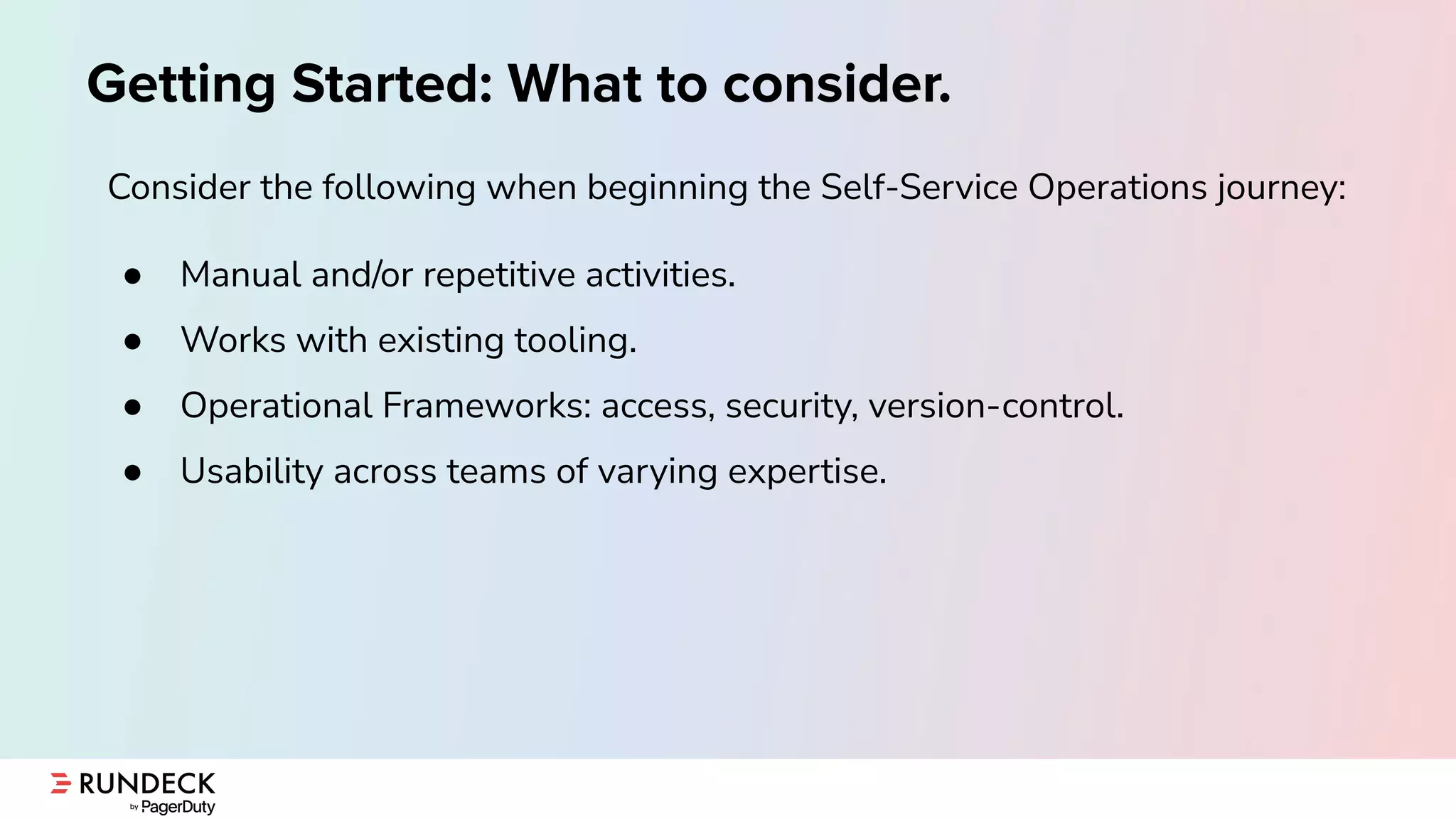
Getting Started: What to consider.
Consider the following when beginning the Self-Service Operations journey:
● Manual and/or repetitive activities.
● Works with existing tooling.
● Operational Frameworks: access, security, version-control.
● Usability across teams of varying expertise.
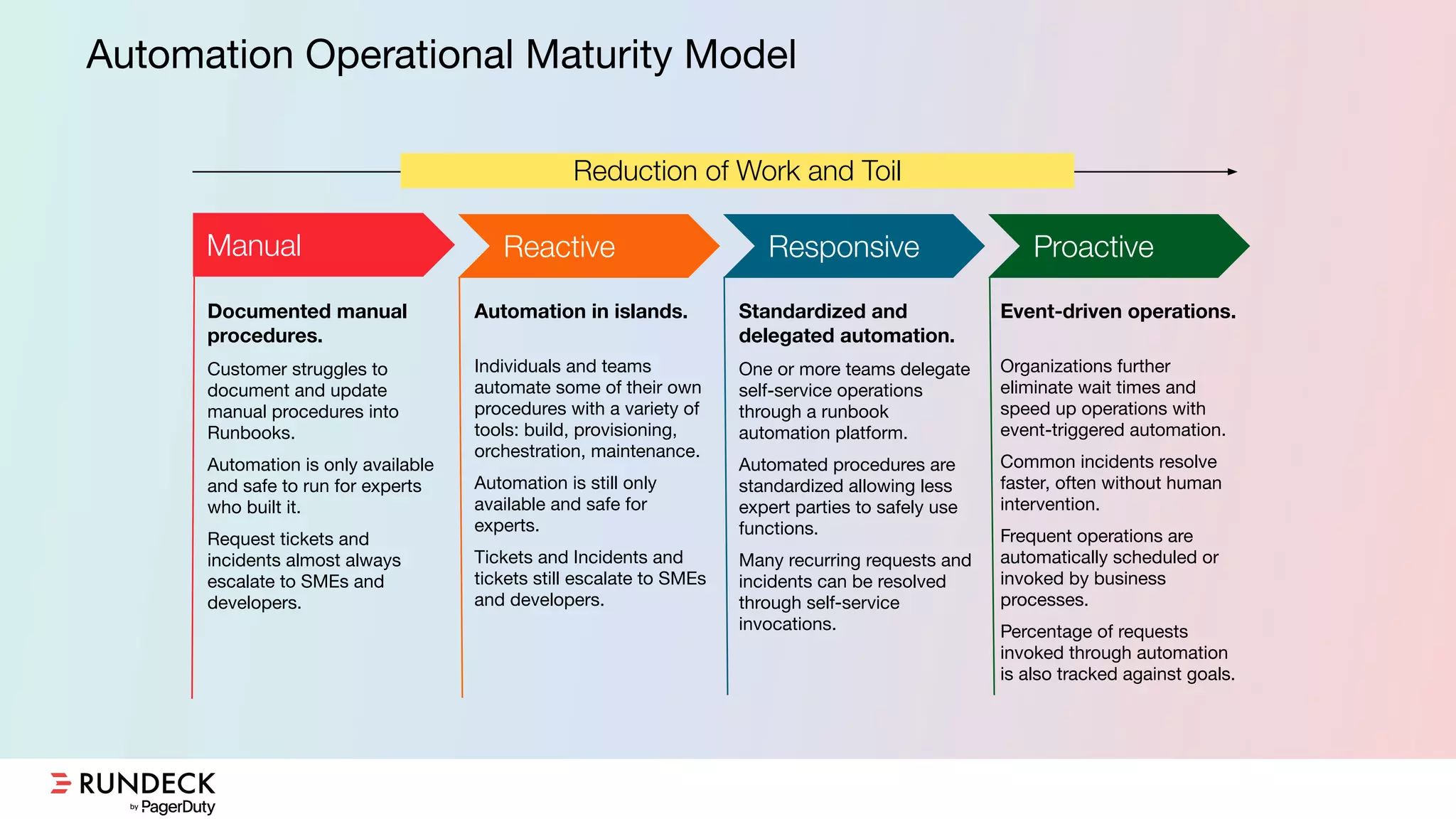
Automation Operational Maturity Model
Documented manual
procedures.
Customer struggles to
document and update
manual procedures into
Runbooks.
Automation is only available
and safe to run for experts
who built it.
Request tickets and
incidents almost always
escalate to SMEs and
developers.
Automation in islands.
Individuals and teams
automate some of their own
procedures with a variety of
tools: build, provisioning,
orchestration, maintenance.
Automation is still only
available and safe for
experts.
Tickets and Incidents and
tickets still escalate to SMEs
and developers.
Standardized and
delegated automation.
One or more teams delegate
self-service operations
through a runbook
automation platform.
Automated procedures are
standardized allowing less
expert parties to safely use
functions.
Many recurring requests and
incidents can be resolved
through self-service
invocations.
Event-driven operations.
Organizations further
eliminate wait times and
speed up operations with
event-triggered automation.
Common incidents resolve
faster, often without human
intervention.
Frequent operations are
automatically scheduled or
invoked by business
processes.
Percentage of requests
invoked through automation
is also tracked against goals.
Manual Reactive Responsive Proactive
Reduction of Work and Toil
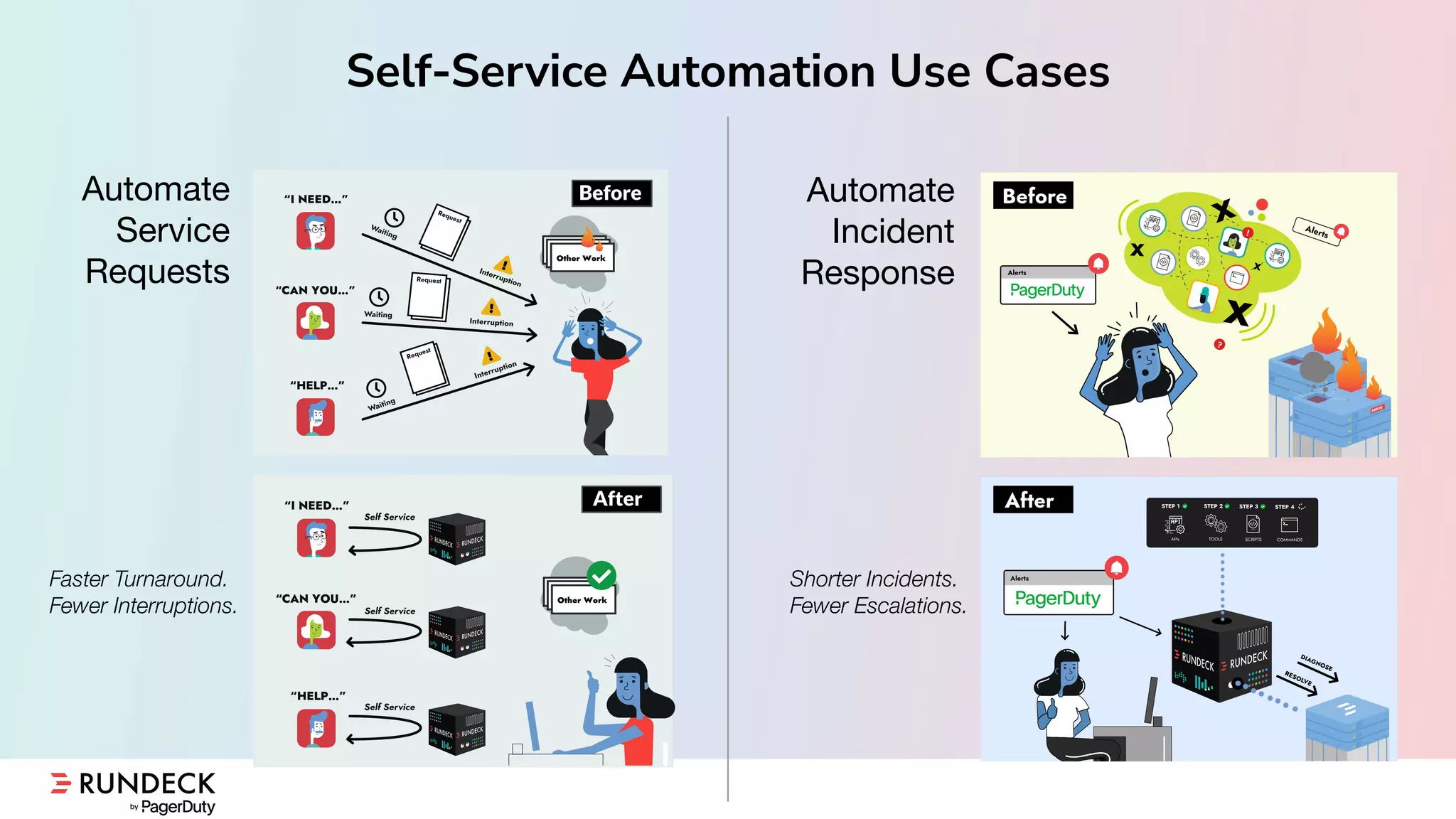
Automate
Incident
Response
Before
Automate
Service
Requests
Self-Service Automation Use Cases
Shorter Incidents.
Fewer Escalations.
After
Faster Turnaround.
Fewer Interruptions.
Demo
Thank You!
See a demo of Rundeck
Enterprise at
rundeck.com/see-demo
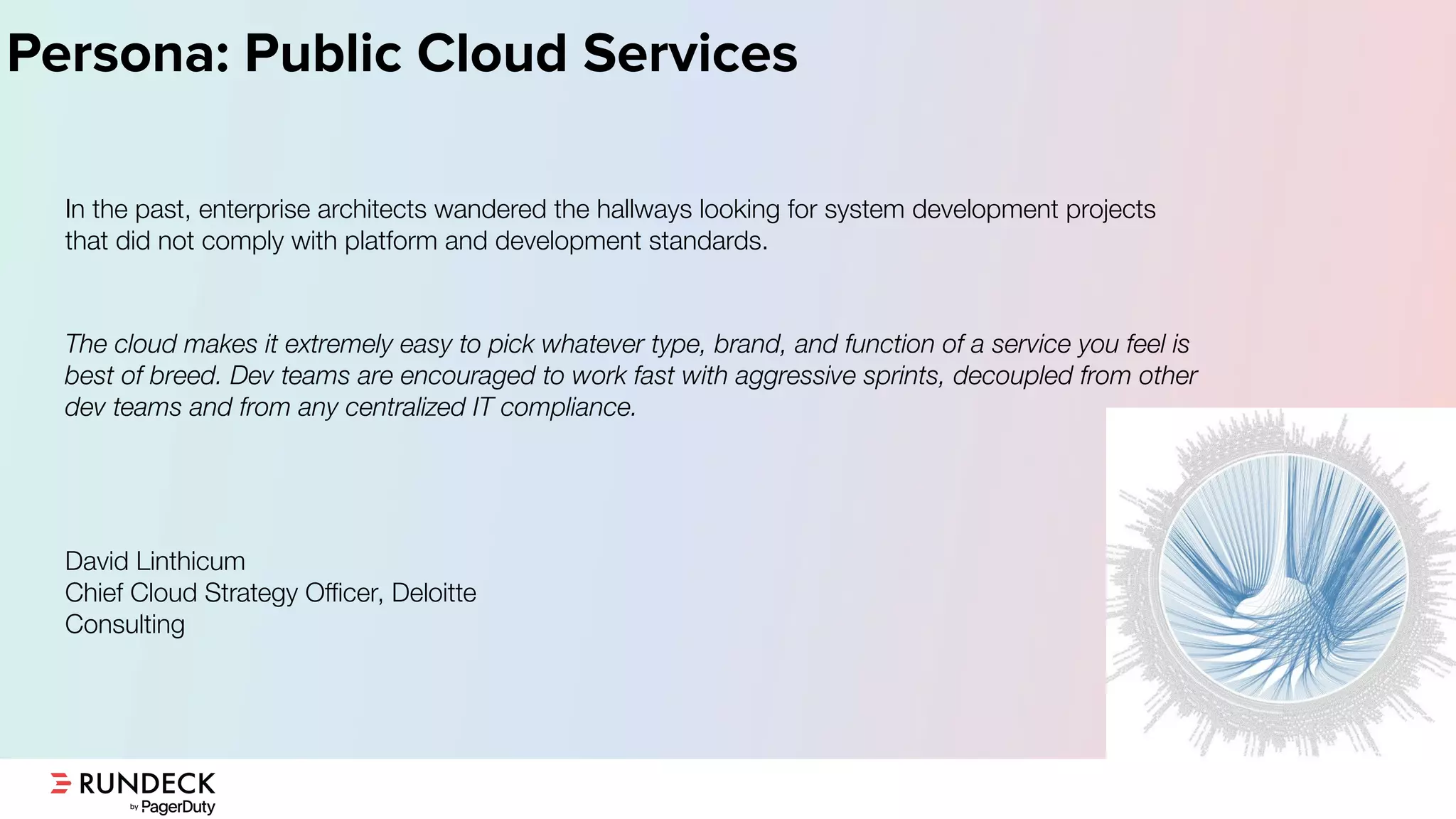
Persona: Public Cloud Services
In the past, enterprise architects wandered the hallways looking for system development projects
that did not comply with platform and development standards.
The cloud makes it extremely easy to pick whatever type, brand, and function of a service you feel is
best of breed. Dev teams are encouraged to work fast with aggressive sprints, decoupled from other
dev teams and from any centralized IT compliance.
David Linthicum
Chief Cloud Strategy Officer, Deloitte
Consulting
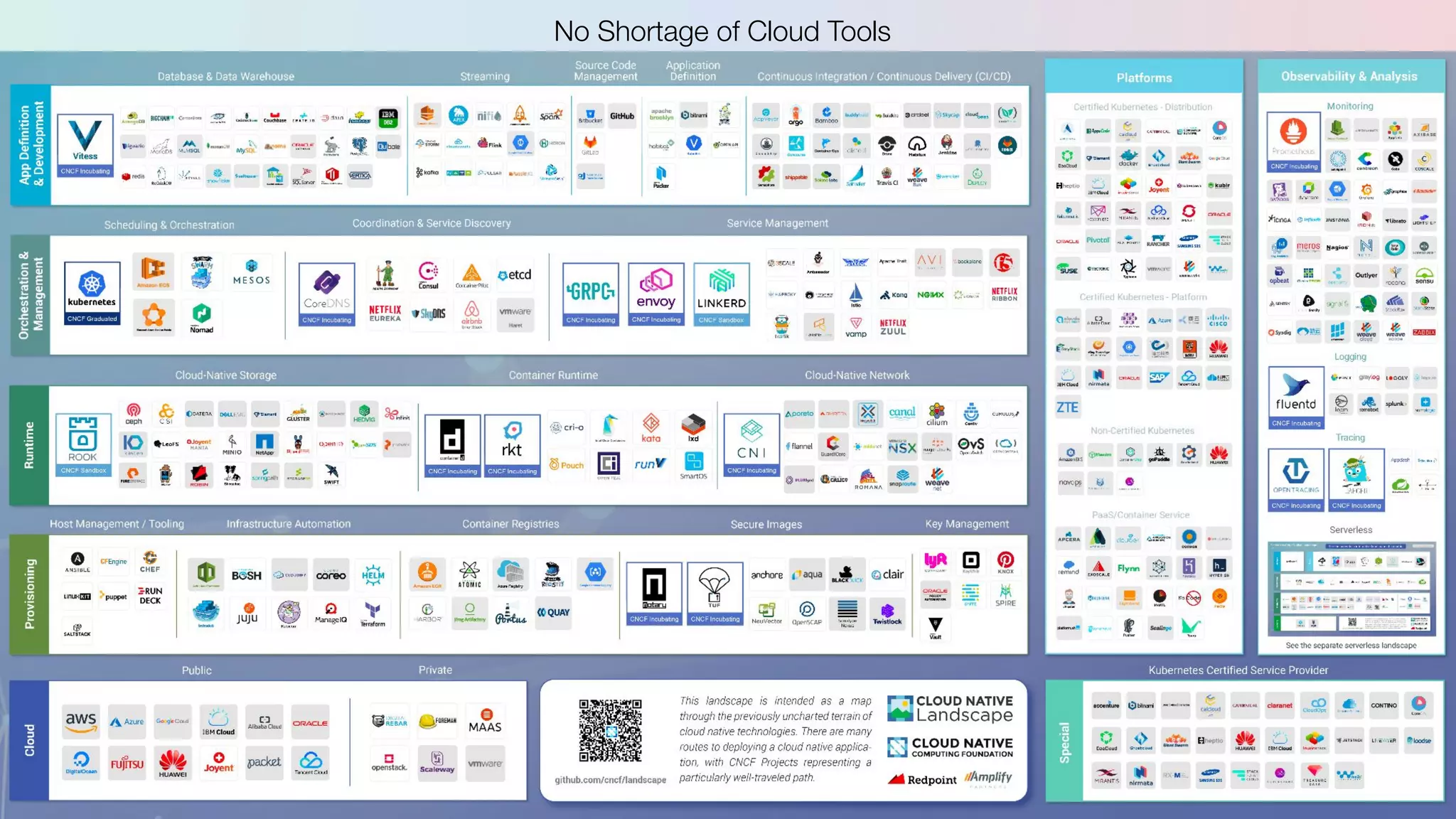
No Shortage of Cloud Tools
2021 Prediction for the Cloud:
“Worldwide end-user spending on
public cloud services is forecast to
grow 18.4%”
- Gartner Predictions for 2021
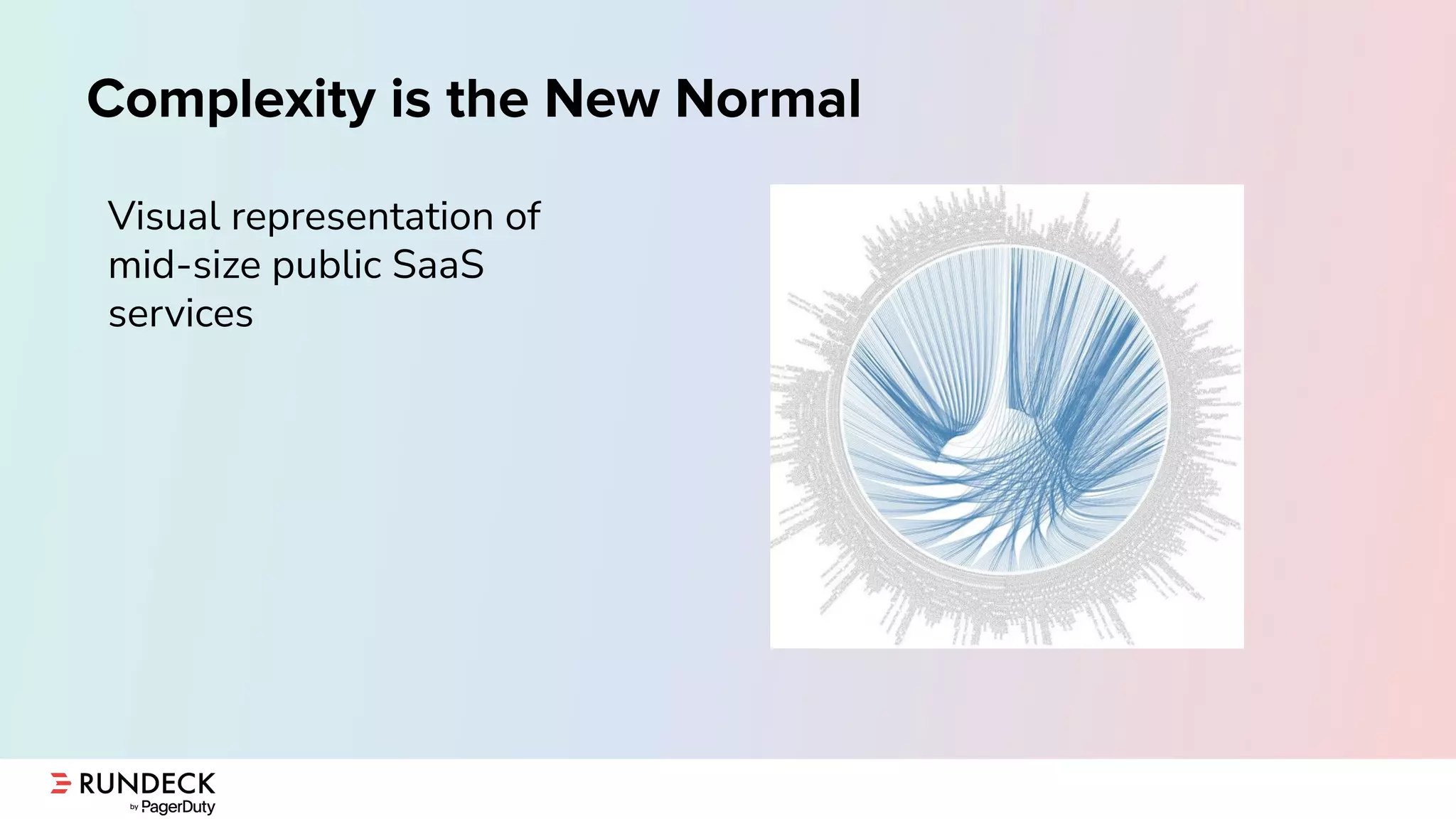
Complexity is the New Normal
Visual representation of
mid-size public SaaS
services
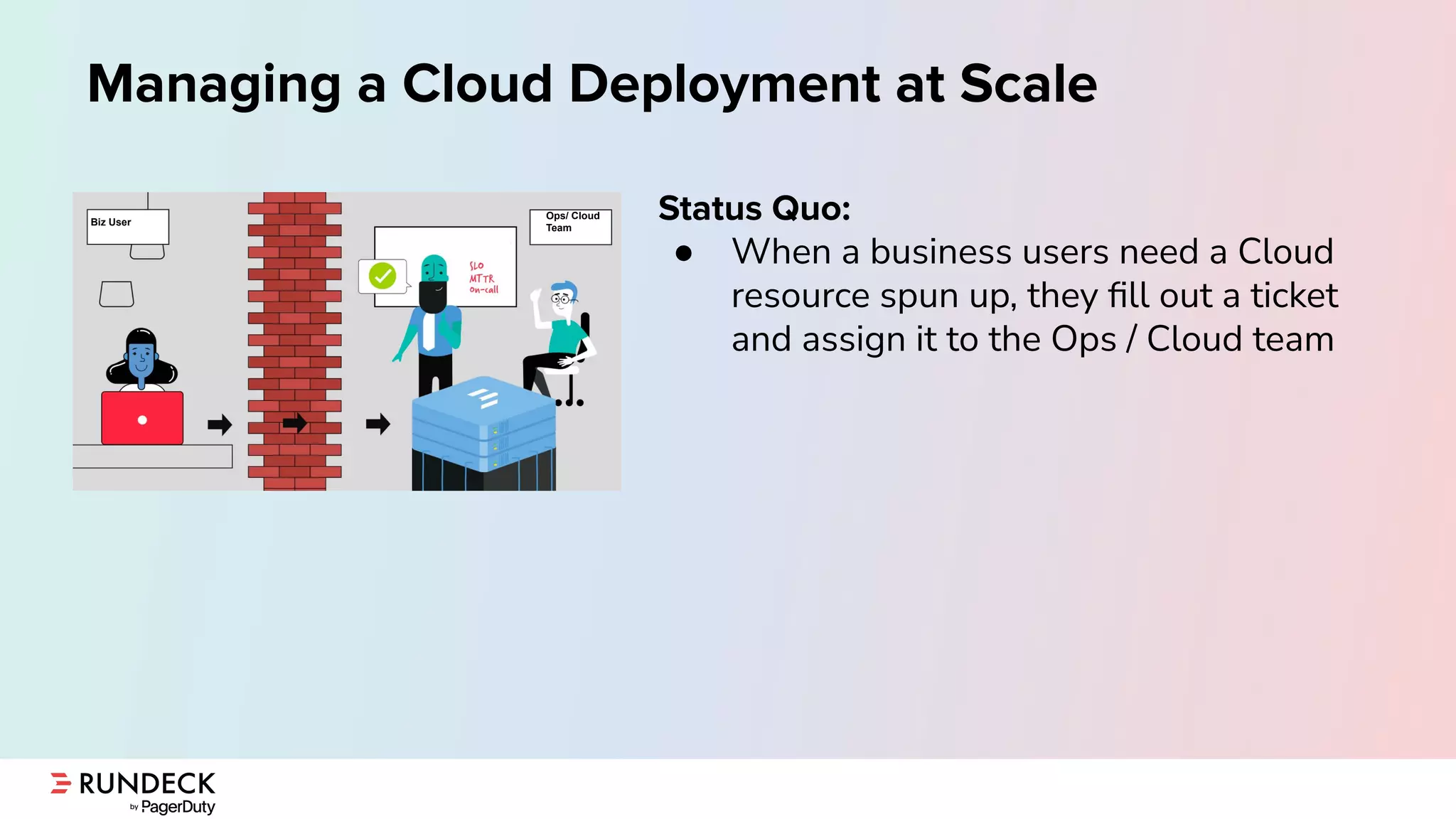
Status Quo:
● When a business users need a Cloud
resource spun up, they fill out a ticket
and assign it to the Ops / Cloud team
Managing a Cloud Deployment at Scale
Biz User
Ops/ Cloud
Team
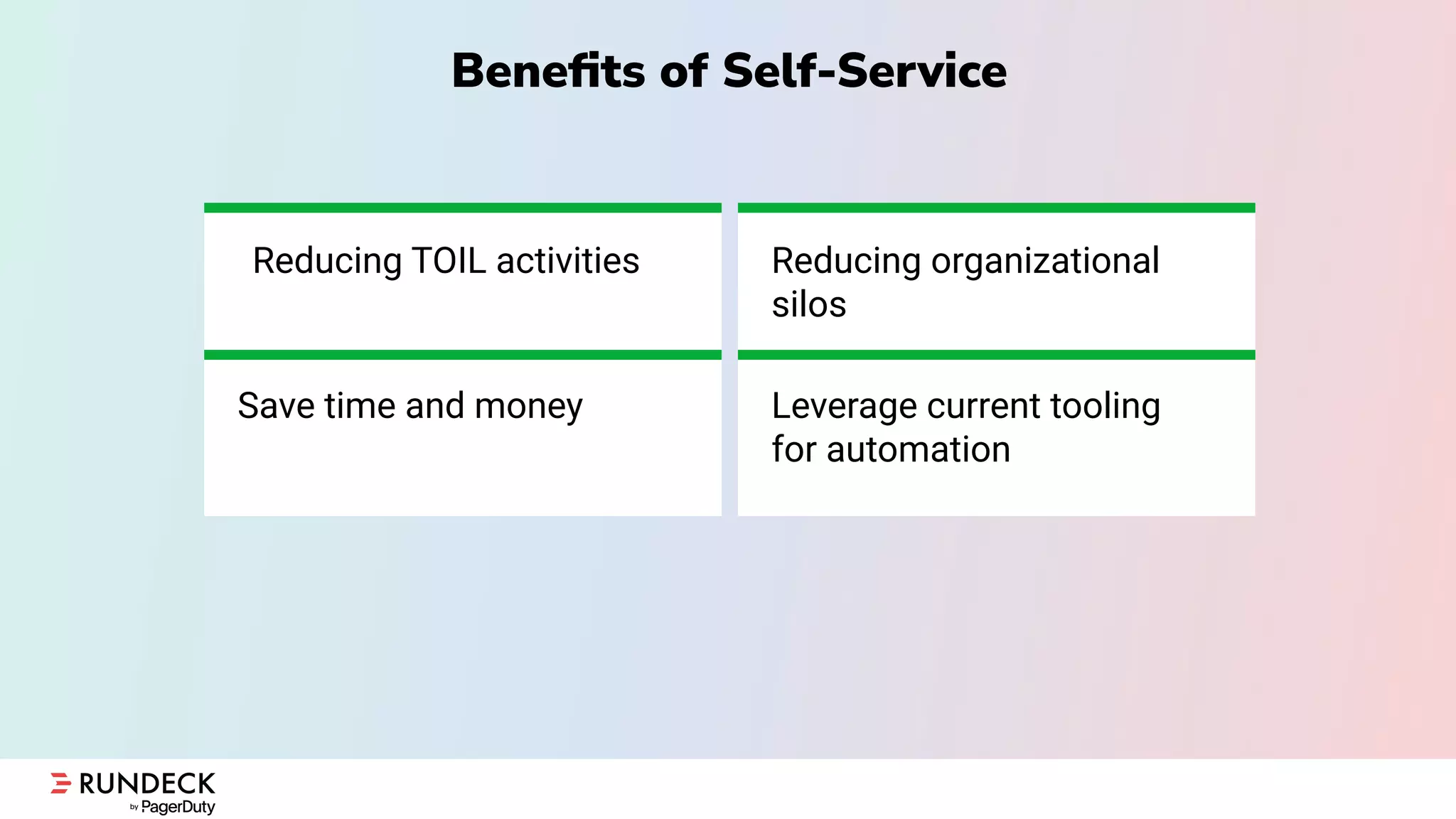
Benefits of Self-Service
Reducing TOIL activities
Save time and money
Reducing organizational
silos
Leverage current tooling
for automation
Reducing organizational
silos
Leverage current tooling
for automation
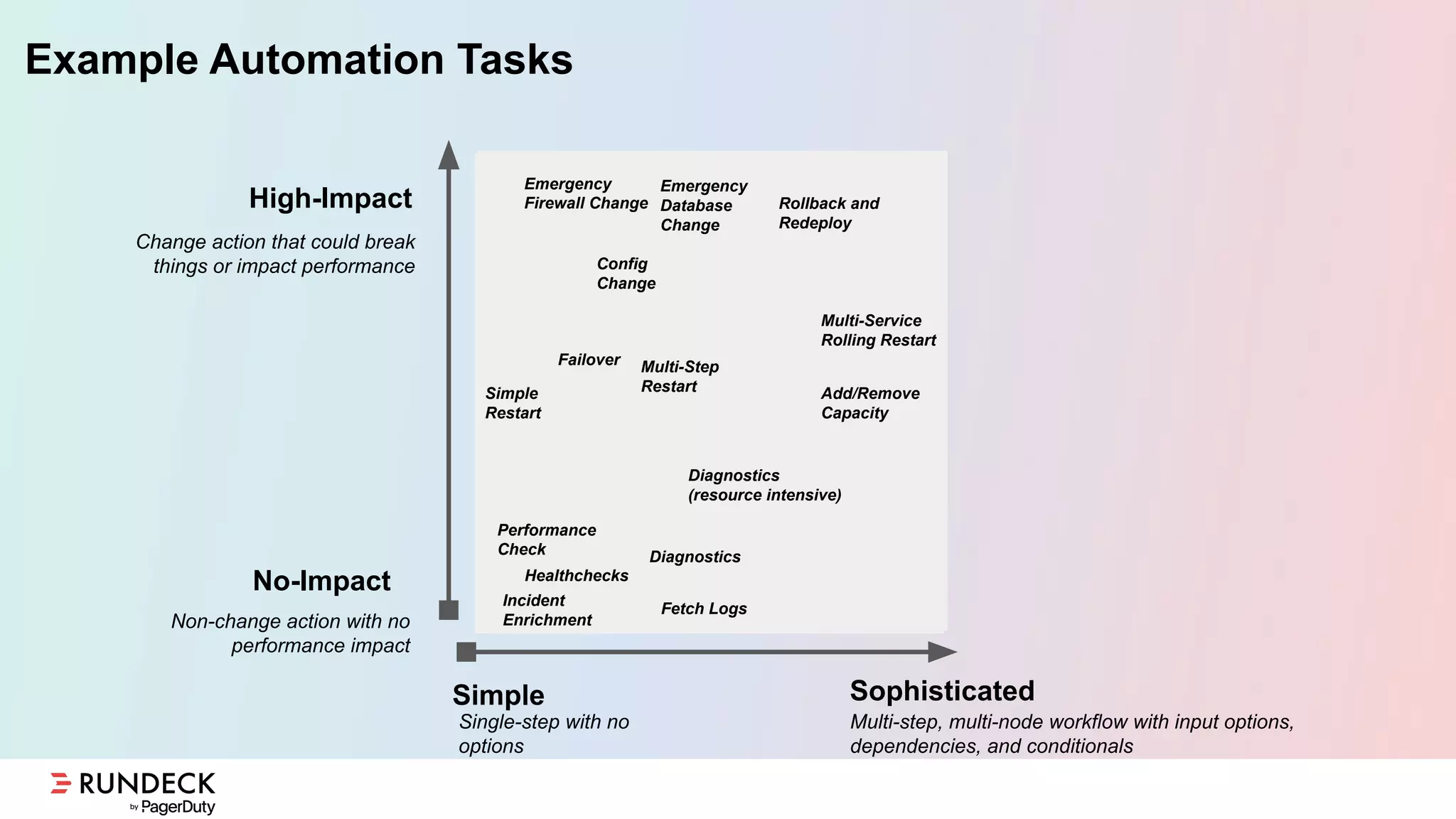
Example Automation Tasks
No-Impact
High-Impact
Simple Sophisticated
Change action that could break
things or impact performance
Non-change action with no
performance impact
Single-step with no
options
Multi-step, multi-node workflow with input options,
dependencies, and conditionals
Healthchecks
Incident
Enrichment
Diagnostics
Diagnostics
(resource intensive)
Simple
Restart
Multi-Service
Rolling Restart
Rollback and
Redeploy
Failover
Fetch Logs
Performance
Check
Emergency
Firewall Change
Config
Change
Emergency
Database
Change
Add/Remove
Capacity
Multi-Step
Restart
Healthchecks
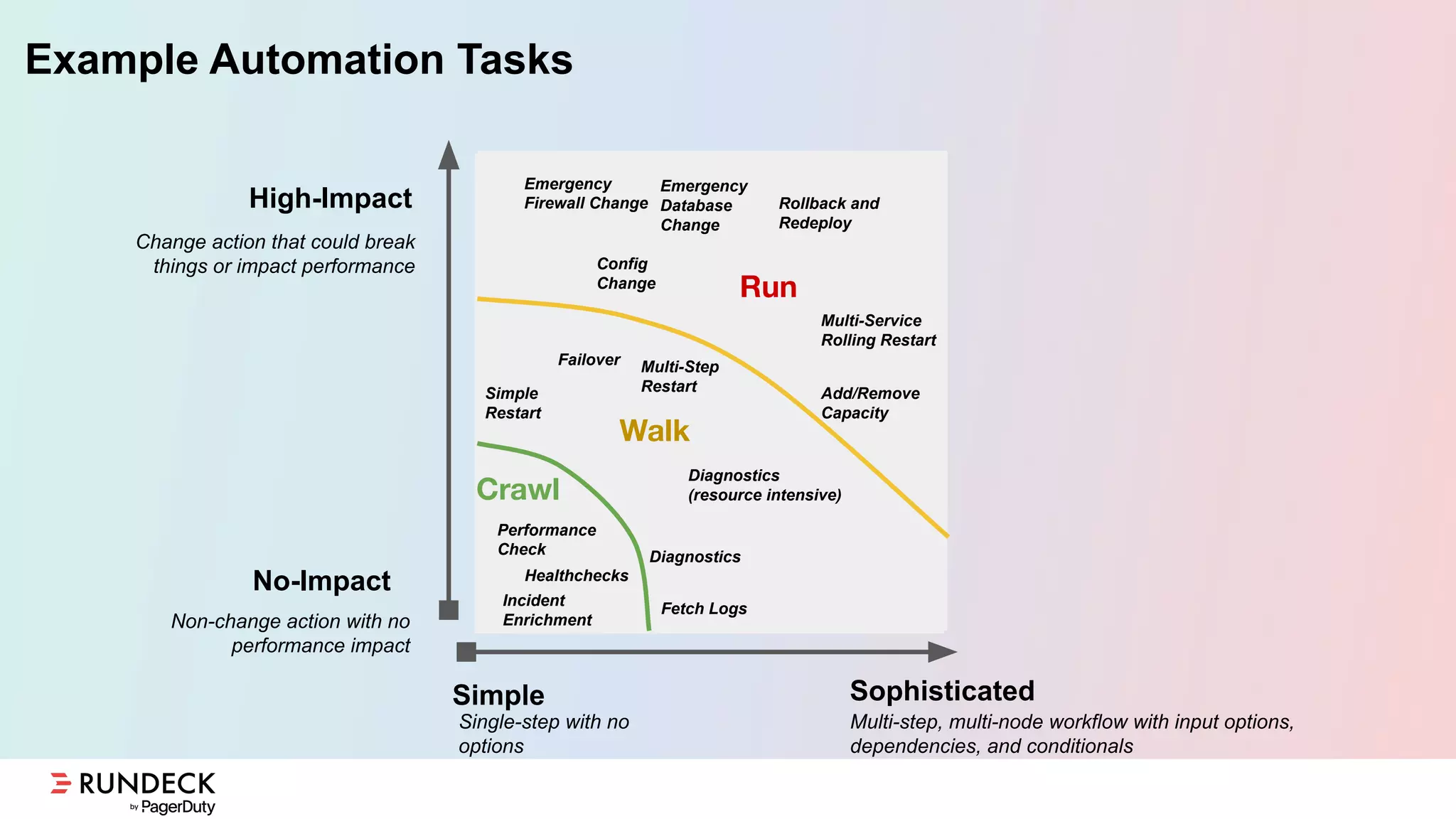
Example Automation Tasks
No-Impact
High-Impact
Simple Sophisticated
Change action that could break
things or impact performance
Non-change action with no
performance impact
Single-step with no
options
Multi-step, multi-node workflow with input options,
dependencies, and conditionals
Crawl
Walk
Run
Incident
Enrichment
Diagnostics
Diagnostics
(resource intensive)
Simple
Restart
Multi-Service
Rolling Restart
Rollback and
Redeploy
Failover
Fetch Logs
Multi-Step
Restart
Performance
Check
Emergency
Firewall Change
Config
Change
Emergency
Database
Change
Add/Remove
Capacity
Healthchecks
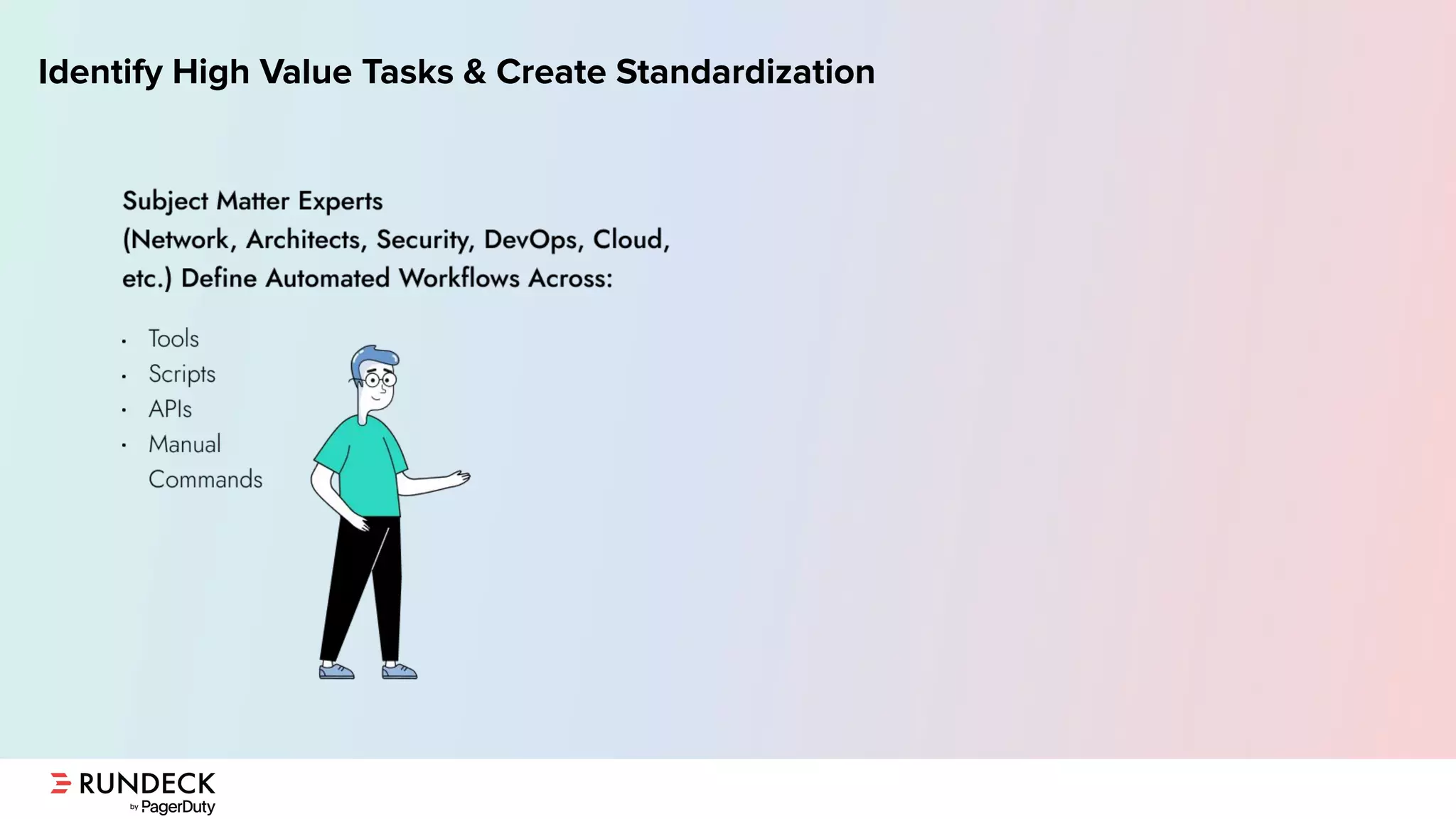
Identify High Value Tasks & Create Standardization
Agenda
1 Status Quo for Operations
2 Case for Self-Service Operations
3 How to create runbooks that leverage existing scripting languages
4 Strategies for getting started
5 Demo

Self Service Cloud Operations: Safely Delegate the Management of your Cloud Operations with Rundeck

  • 1.
    Shape Up Skills Builder- September 4th, 2020 Confidential Self Service Cloud Operations Safely Delegate the Management of your Cloud Operations with Rundeck.
  • 2.
    Before we begin... ●Attendee lines are muted for audio quality ● Use Q&A in Zoom navigation (see right) ● Questions answered at the end ● You’ll receive a link to the webinar after it concludes
  • 3.
  • 4.
  • 5.
    But let’s bereal... Cost Architectural Complexity Tooling Sophistication
  • 6.
    ‘Everything-as-Code’ has Consequences TechnicalExpertise for the Cloud is Limited ● Public Cloud services are intended for those with scripting and development skills. ● Tooling built for the cloud assumes familiarity with the public-cloud services.
  • 7.
    Status Quo: ● Operationsand Cloud teams are inundated with manual requests from other teams (provisioning, config-changes, data-snapshots). ● Interruptions prevent focus on high value work. Achieving Maximum Velocity
  • 8.
    ‘Everything-as-Code’ has Consequences TechnicalExpertise for your Cloud is limited. ● Your environment is always a moving target
  • 9.
    Achieving Maximum Velocity Howcan we maximize the “promises of the cloud,” given the technical complexity and disparities in cloud-acumen?
  • 10.
    Case for Self-Service Howcan we reduce the burden on Cloud experts and empower developers, business-users and other engineers? Simplify and delegate!
  • 11.
    Case for Self-Service Self-ServiceOperations: ● Give developers, business-users and other engineers the ability to utilize cloud resources ● Allow the Cloud experts to maintain a set of standards and practices for accessing secure internal operations.
  • 12.
    Self-Service Runbook Automation ●Enable anyone to have self-service access to operations tasks that were only available to subject matter experts. ● Makes existing automation more secure, auditable, and easier to run.
  • 13.
    Getting Started: Whatto consider. Consider the following when beginning the Self-Service Operations journey: ● Manual and/or repetitive activities. ● Works with existing tooling. ● Operational Frameworks: access, security, version-control. ● Usability across teams of varying expertise.
  • 14.
    Automation Operational MaturityModel Documented manual procedures. Customer struggles to document and update manual procedures into Runbooks. Automation is only available and safe to run for experts who built it. Request tickets and incidents almost always escalate to SMEs and developers. Automation in islands. Individuals and teams automate some of their own procedures with a variety of tools: build, provisioning, orchestration, maintenance. Automation is still only available and safe for experts. Tickets and Incidents and tickets still escalate to SMEs and developers. Standardized and delegated automation. One or more teams delegate self-service operations through a runbook automation platform. Automated procedures are standardized allowing less expert parties to safely use functions. Many recurring requests and incidents can be resolved through self-service invocations. Event-driven operations. Organizations further eliminate wait times and speed up operations with event-triggered automation. Common incidents resolve faster, often without human intervention. Frequent operations are automatically scheduled or invoked by business processes. Percentage of requests invoked through automation is also tracked against goals. Manual Reactive Responsive Proactive Reduction of Work and Toil
  • 15.
    Automate Incident Response Before Automate Service Requests Self-Service Automation UseCases Shorter Incidents. Fewer Escalations. After Faster Turnaround. Fewer Interruptions.
  • 16.
  • 17.
    Thank You! See ademo of Rundeck Enterprise at rundeck.com/see-demo
  • 18.
    Persona: Public CloudServices In the past, enterprise architects wandered the hallways looking for system development projects that did not comply with platform and development standards. The cloud makes it extremely easy to pick whatever type, brand, and function of a service you feel is best of breed. Dev teams are encouraged to work fast with aggressive sprints, decoupled from other dev teams and from any centralized IT compliance. David Linthicum Chief Cloud Strategy Officer, Deloitte Consulting
  • 19.
    No Shortage ofCloud Tools
  • 20.
    2021 Prediction forthe Cloud: “Worldwide end-user spending on public cloud services is forecast to grow 18.4%” - Gartner Predictions for 2021
  • 21.
    Complexity is theNew Normal Visual representation of mid-size public SaaS services
  • 22.
    Status Quo: ● Whena business users need a Cloud resource spun up, they fill out a ticket and assign it to the Ops / Cloud team Managing a Cloud Deployment at Scale Biz User Ops/ Cloud Team
  • 23.
    Benefits of Self-Service ReducingTOIL activities Save time and money Reducing organizational silos Leverage current tooling for automation Reducing organizational silos Leverage current tooling for automation
  • 24.
    Example Automation Tasks No-Impact High-Impact SimpleSophisticated Change action that could break things or impact performance Non-change action with no performance impact Single-step with no options Multi-step, multi-node workflow with input options, dependencies, and conditionals Healthchecks Incident Enrichment Diagnostics Diagnostics (resource intensive) Simple Restart Multi-Service Rolling Restart Rollback and Redeploy Failover Fetch Logs Performance Check Emergency Firewall Change Config Change Emergency Database Change Add/Remove Capacity Multi-Step Restart Healthchecks
  • 25.
    Example Automation Tasks No-Impact High-Impact SimpleSophisticated Change action that could break things or impact performance Non-change action with no performance impact Single-step with no options Multi-step, multi-node workflow with input options, dependencies, and conditionals Crawl Walk Run Incident Enrichment Diagnostics Diagnostics (resource intensive) Simple Restart Multi-Service Rolling Restart Rollback and Redeploy Failover Fetch Logs Multi-Step Restart Performance Check Emergency Firewall Change Config Change Emergency Database Change Add/Remove Capacity Healthchecks
  • 26.
    Identify High ValueTasks & Create Standardization
  • 27.
    Agenda 1 Status Quofor Operations 2 Case for Self-Service Operations 3 How to create runbooks that leverage existing scripting languages 4 Strategies for getting started 5 Demo