Shape Up
Skills Builder - September 4th, 2020
Confidential
Automate Yourself Out of Job:
Safely Delegate the Management of your
Azure Deployment
April 27, 2021
Speaker: Jesse Houldsworth
Jesse is a Senior Solutions Consultant at PagerDuty
where he helps customers save money by automating
runbooks. Jesse has over 10 years experience working
with both large and small enterprises on software
development and information security initiatives.
Twitter: @jhoulds
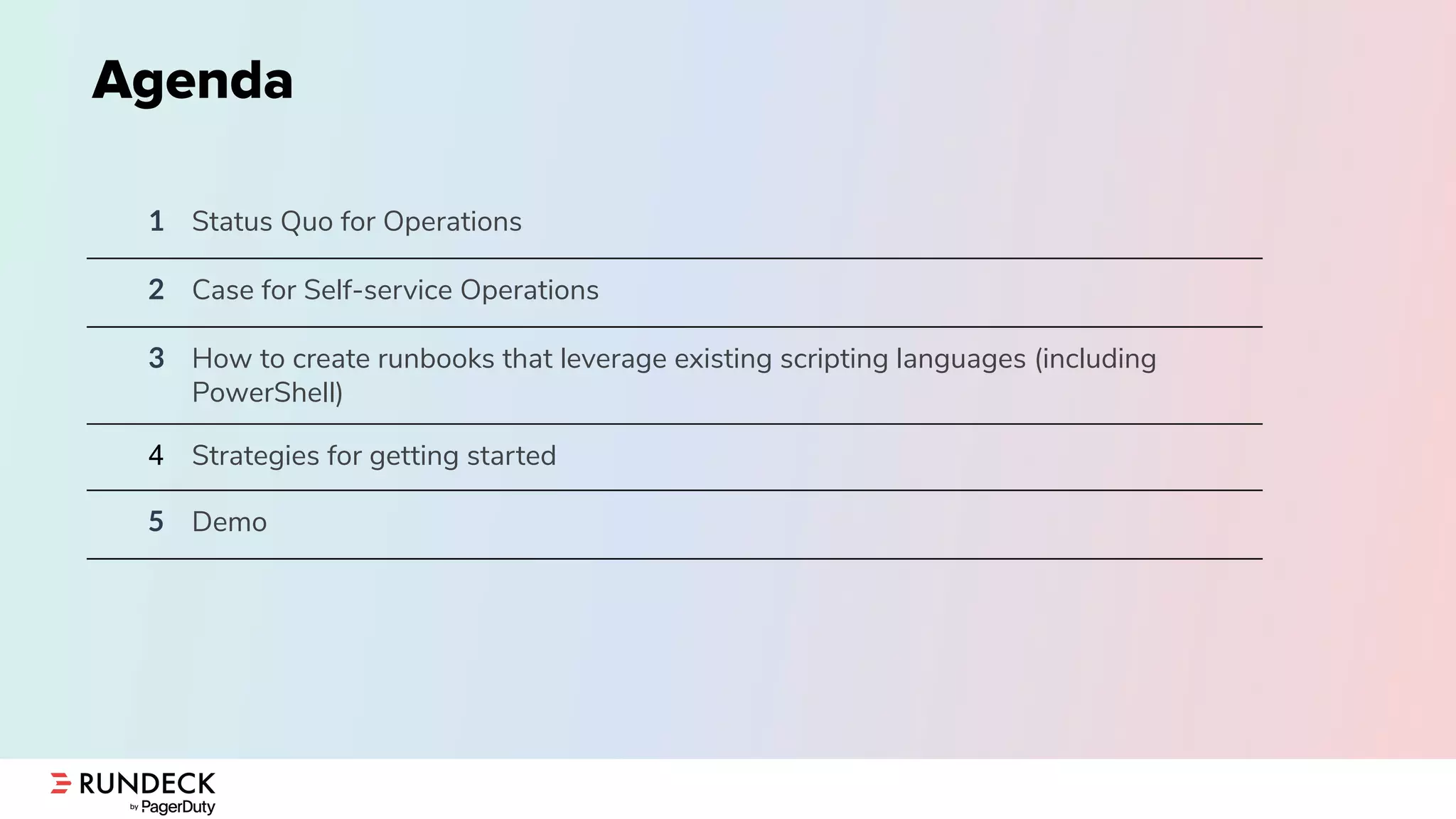
Agenda
1 Status Quo for Operations
2 Case for Self-service Operations
3 How to create runbooks that leverage existing scripting languages (including
PowerShell)
4 Strategies for getting started
5 Demo
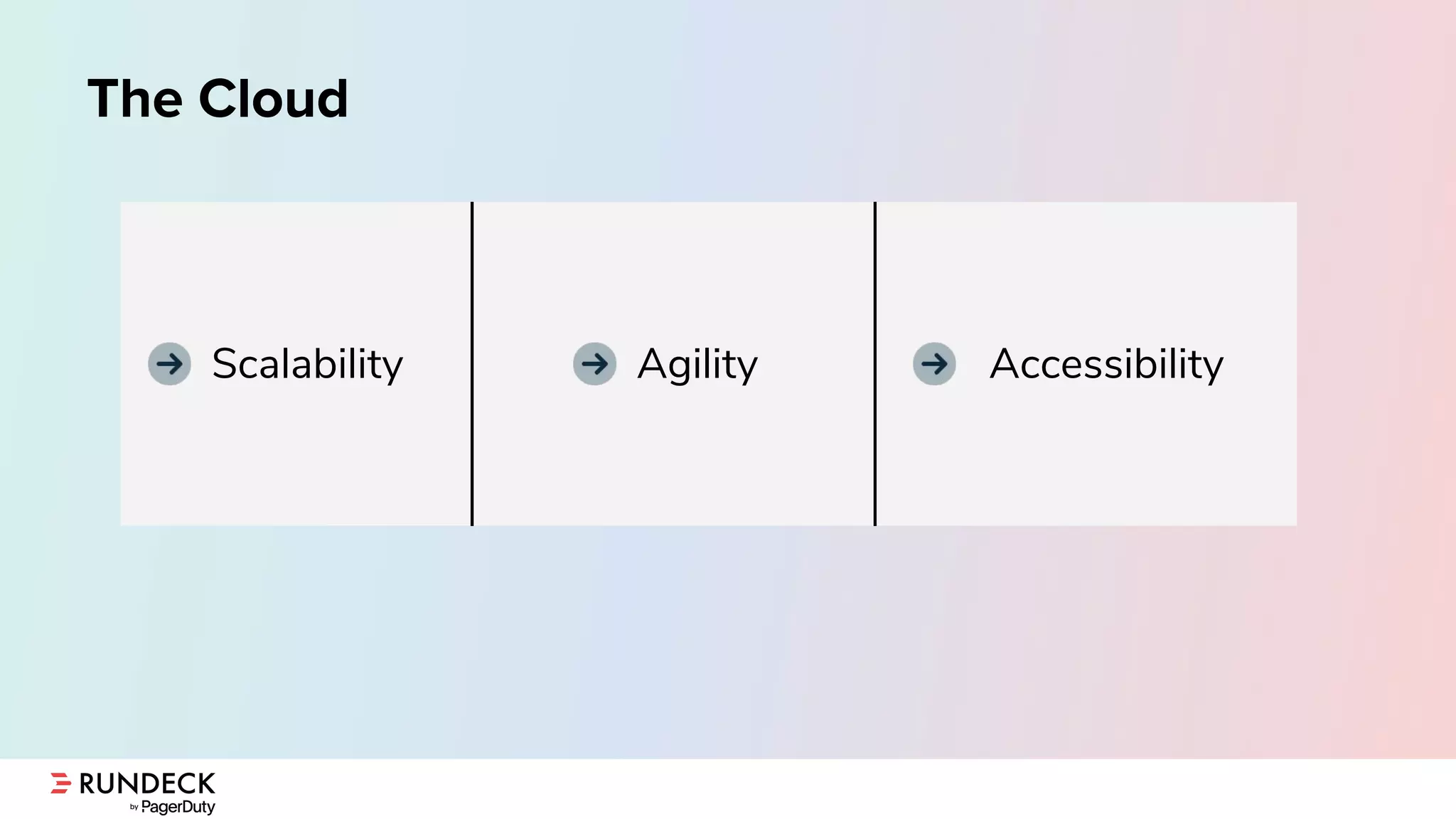
The Cloud
Scalability Agility Accessibility
2021 Prediction for the Cloud:
“Worldwide end-user spending on
public cloud services is forecast to
grow 18.4%”
- Gartner Predictions for 2021
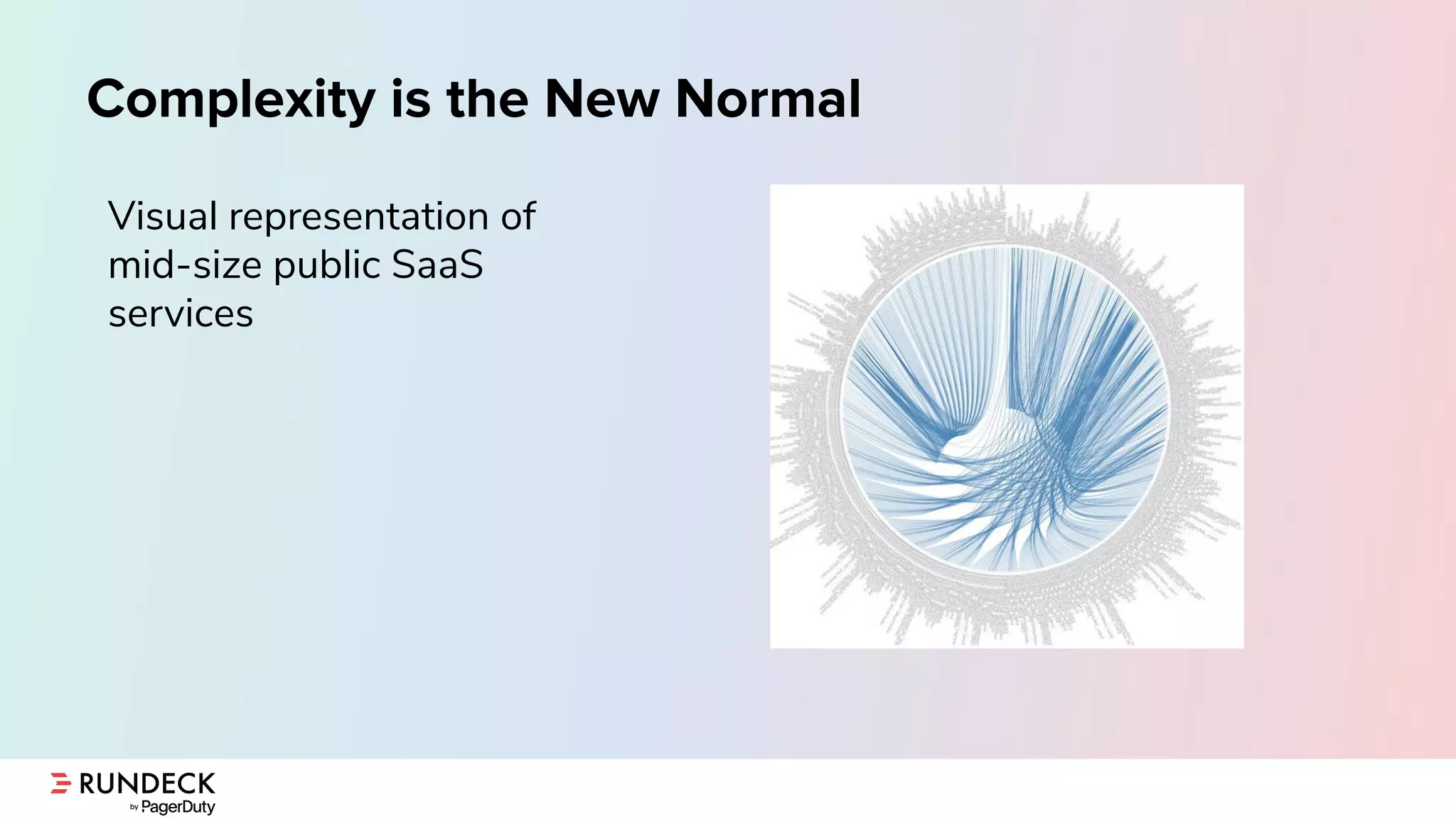
Complexity is the New Normal
Visual representation of
mid-size public SaaS
services
Managing an Azure Deployment at Scale
Status Quo:
● Business users can’t access to the Azure
management console
Status Quo:
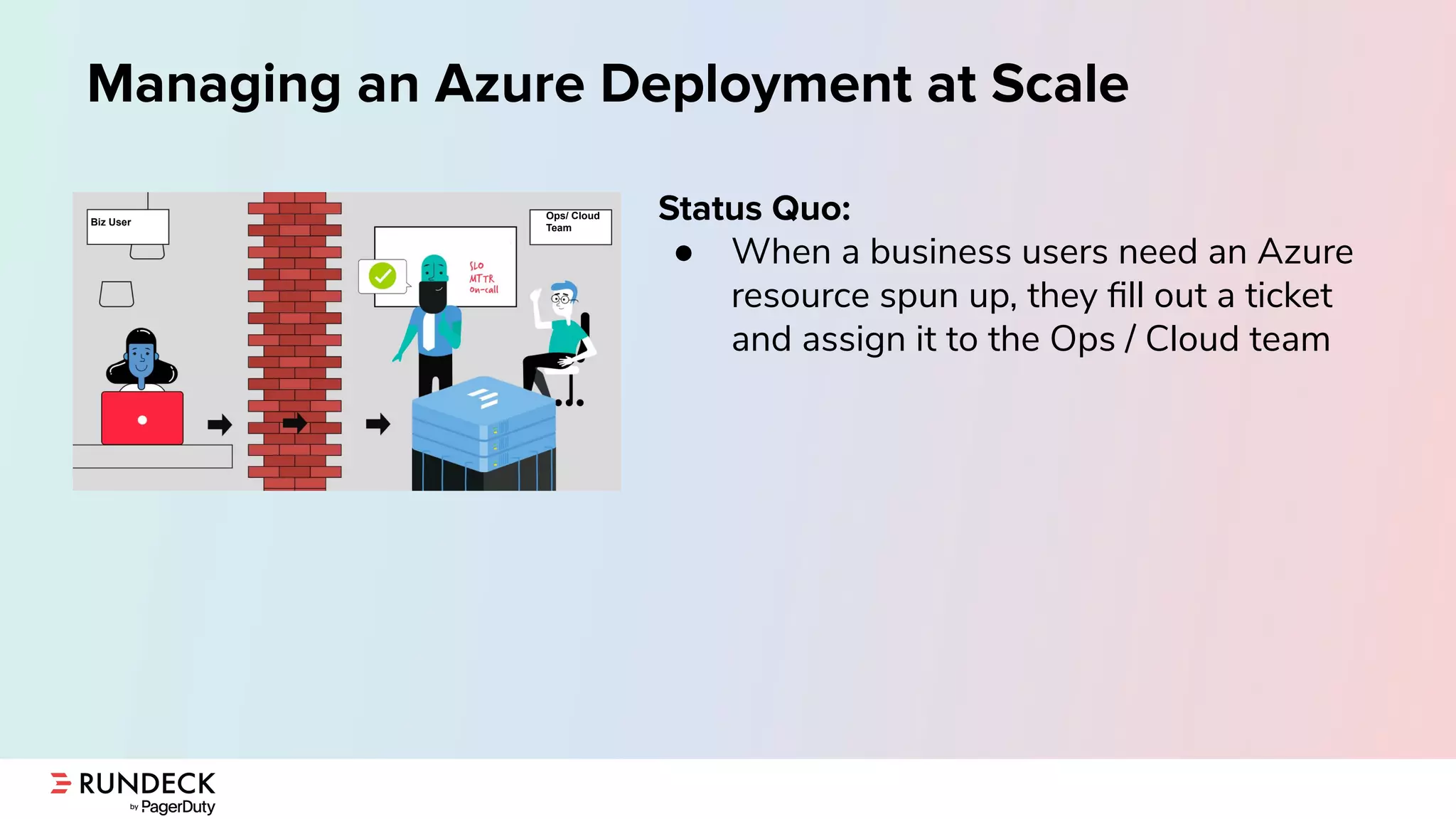
● When a business users need an Azure
resource spun up, they fill out a ticket
and assign it to the Ops / Cloud team
Managing an Azure Deployment at Scale
Biz User
Ops/ Cloud
Team
Status Quo:
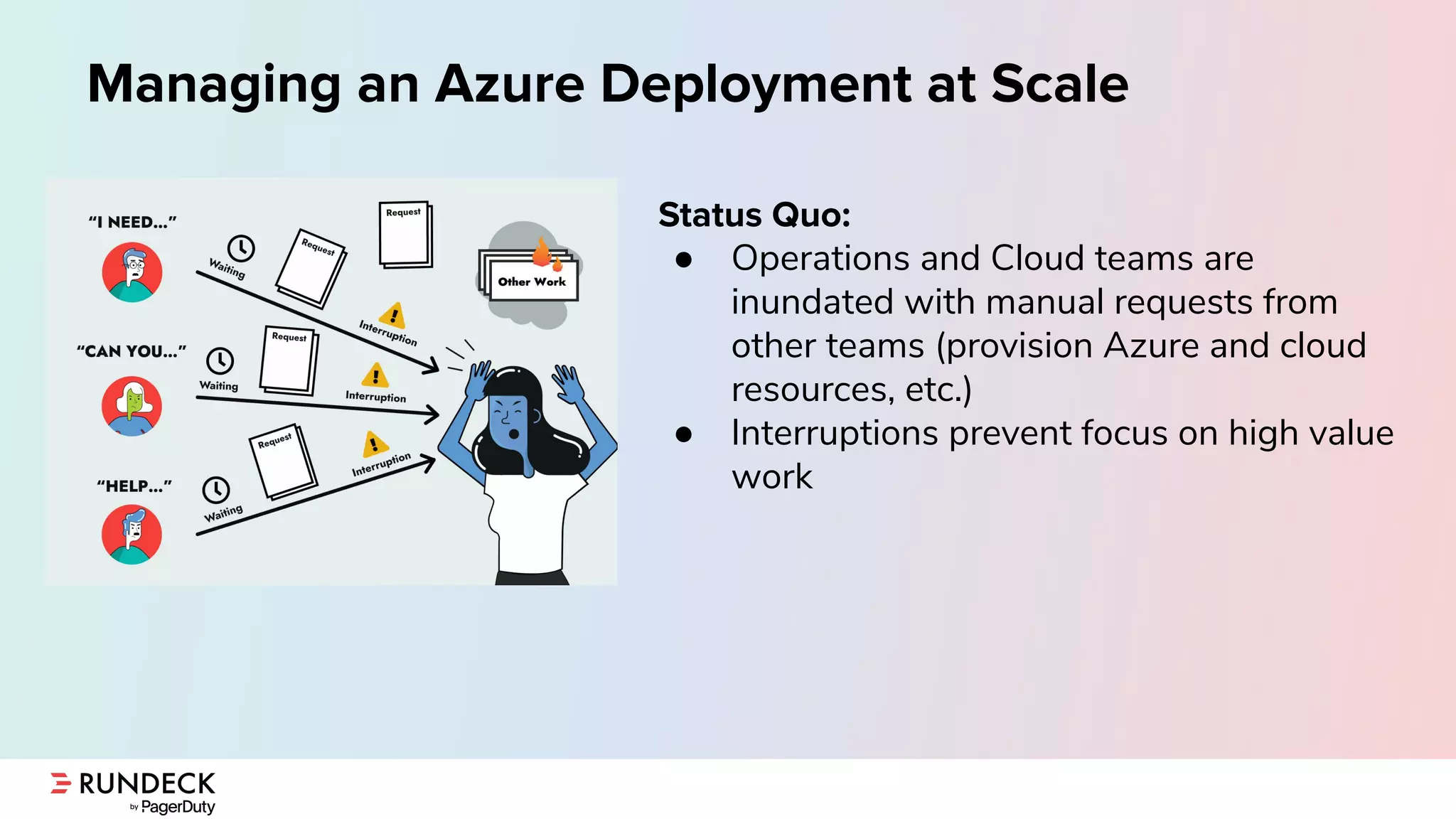
● Operations and Cloud teams are
inundated with manual requests from
other teams (provision Azure and cloud
resources, etc.)
● Interruptions prevent focus on high value
work
Managing an Azure Deployment at Scale
Case for Self-Service
How can we reduce the burden on
Operations and Cloud teams and empower
developers?
Case for Self-Service
How can we reduce the burden on
Operations and Cloud teams and empower
developers?
Make this information available
at the click of a button!
Case for Self-Service
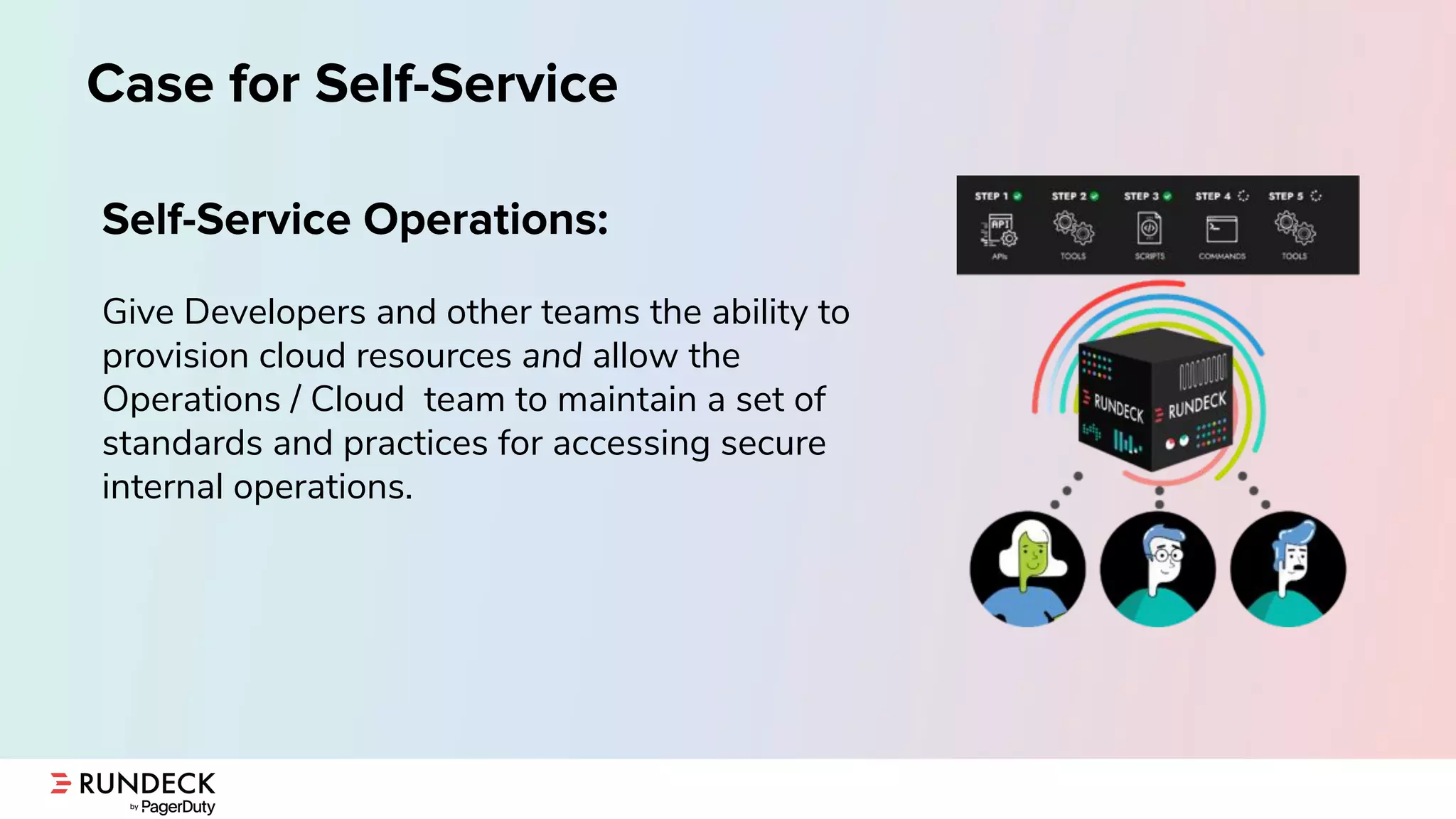
Self-Service Operations:
Give Developers and other teams the ability to
provision cloud resources and allow the
Operations / Cloud team to maintain a set of
standards and practices for accessing secure
internal operations.
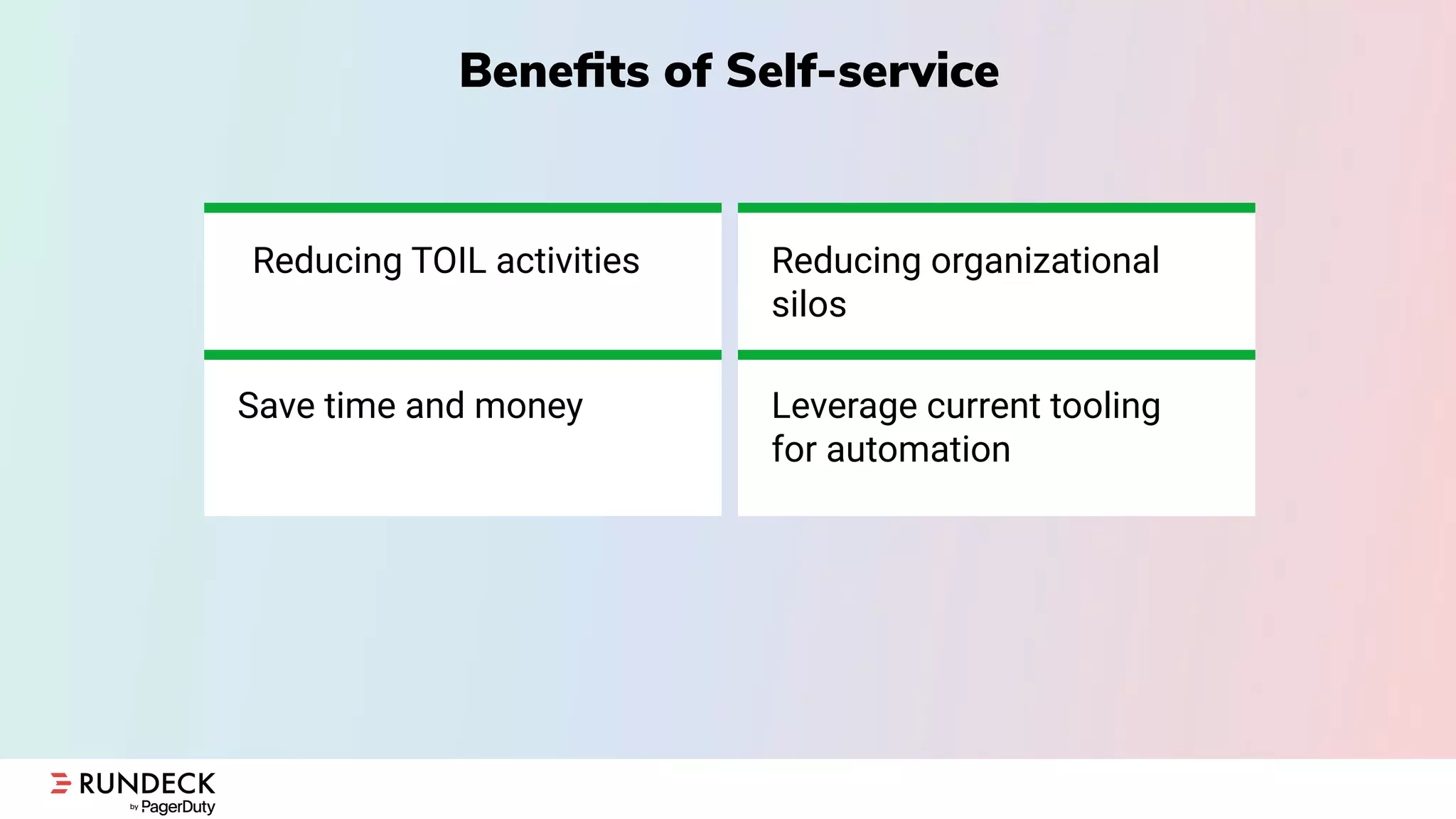
Benefits of Self-service
Reducing TOIL activities
Save time and money
Reducing organizational
silos
Leverage current tooling
for automation
Reducing organizational
silos
Leverage current tooling
for automation
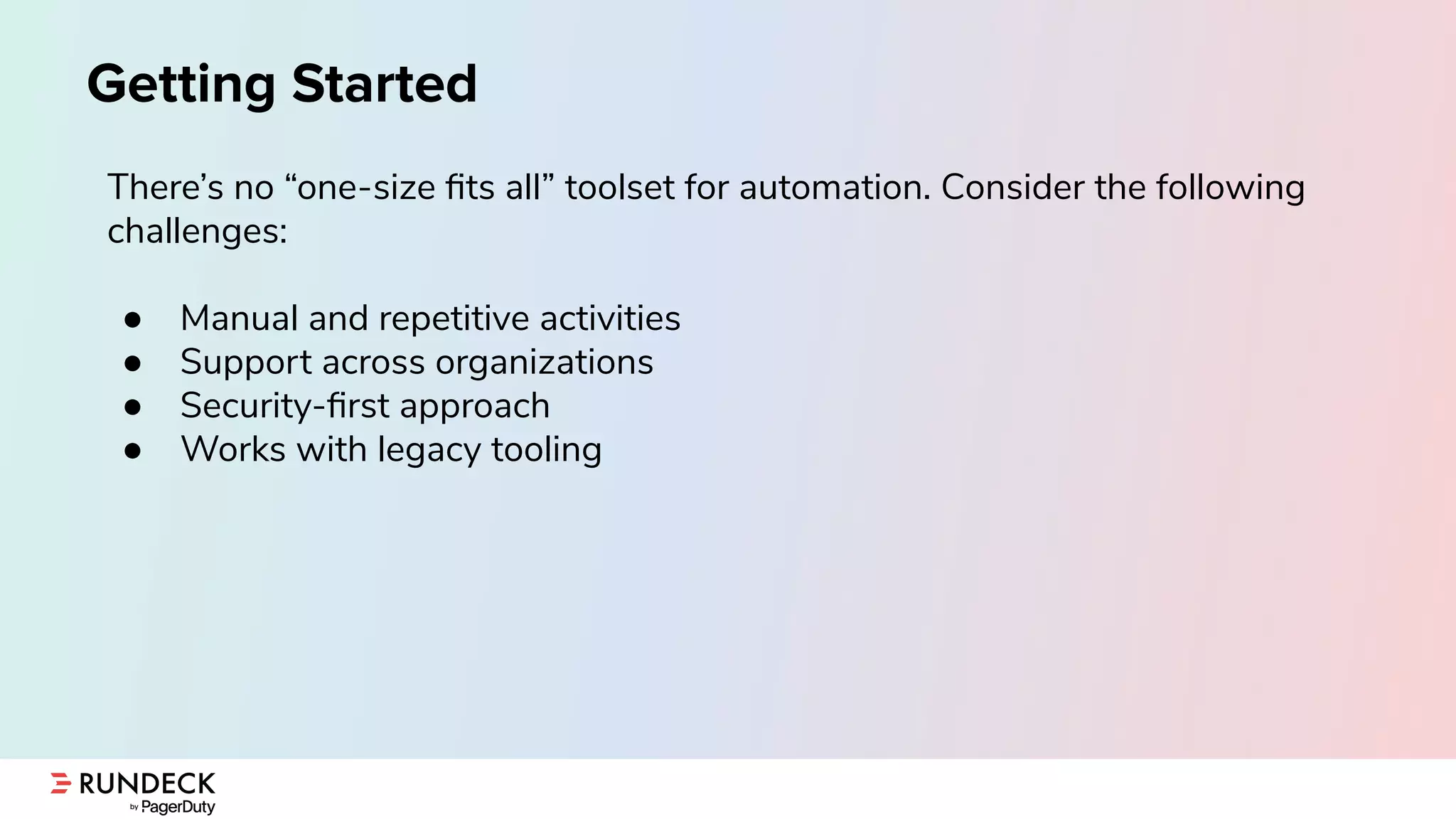
Getting Started
There’s no “one-size fits all” toolset for automation. Consider the following
challenges:
● Manual and repetitive activities
● Support across organizations
● Security-first approach
● Works with legacy tooling
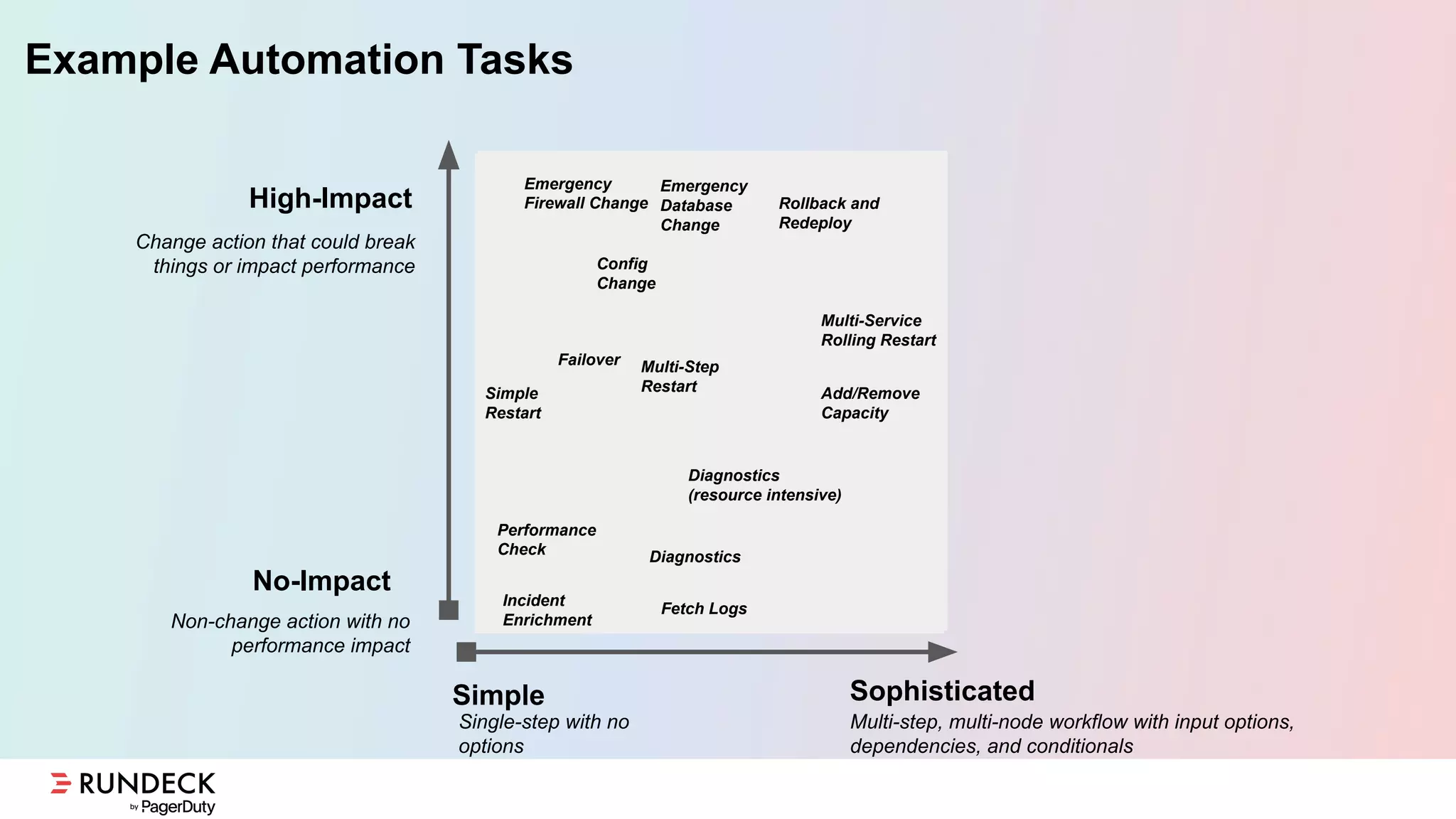
Example Automation Tasks
No-Impact
High-Impact
Simple Sophisticated
Change action that could break
things or impact performance
Non-change action with no
performance impact
Single-step with no
options
Multi-step, multi-node workflow with input options,
dependencies, and conditionals
Healthchecks
Incident
Enrichment
Diagnostics
Diagnostics
(resource intensive)
Simple
Restart
Multi-Service
Rolling Restart
Rollback and
Redeploy
Failover
Fetch Logs
Performance
Check
Emergency
Firewall Change
Config
Change
Emergency
Database
Change
Add/Remove
Capacity
Multi-Step
Restart
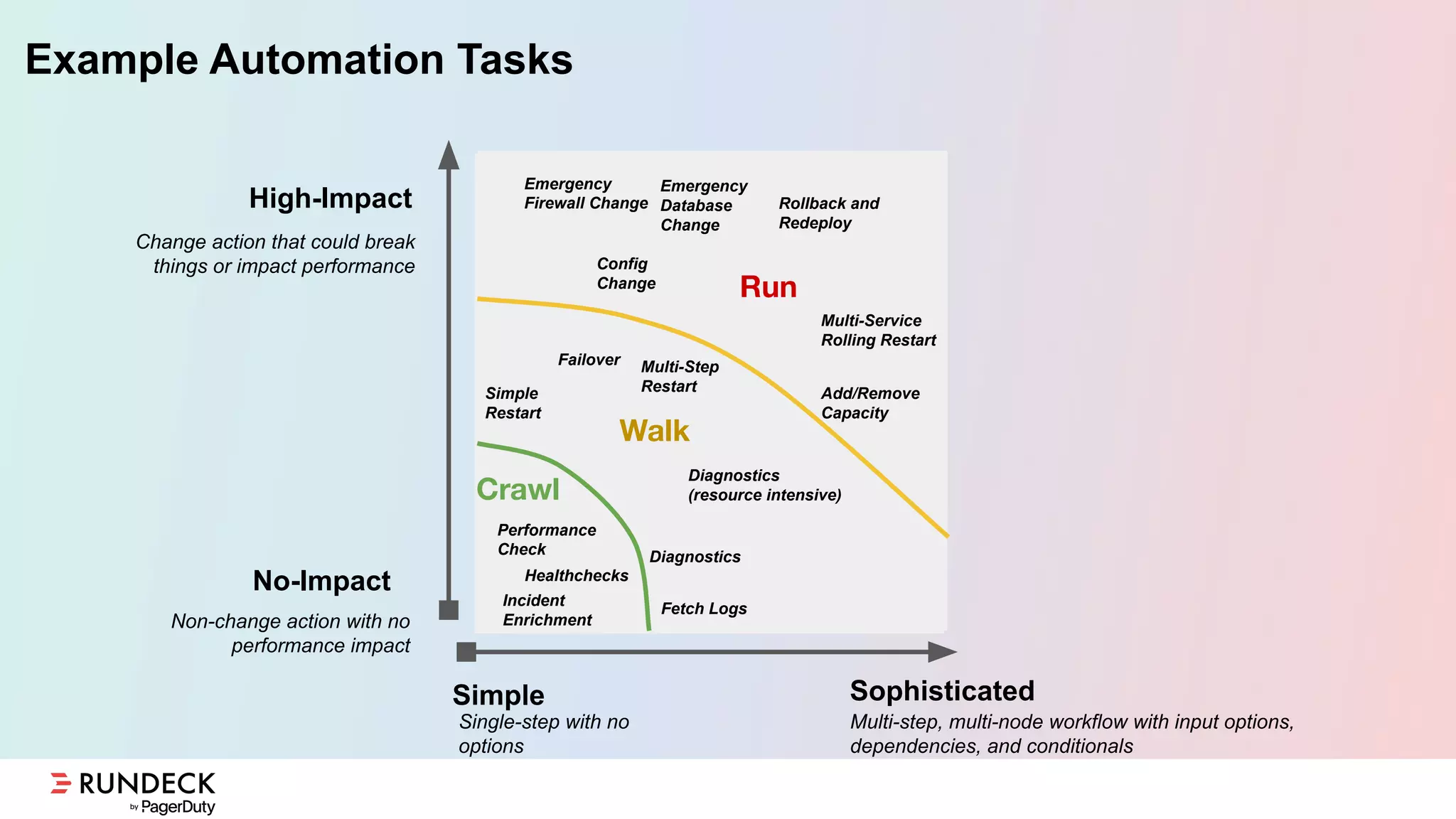
Example Automation Tasks
No-Impact
High-Impact
Simple Sophisticated
Change action that could break
things or impact performance
Non-change action with no
performance impact
Single-step with no
options
Multi-step, multi-node workflow with input options,
dependencies, and conditionals
Crawl
Walk
Run
Incident
Enrichment
Diagnostics
Diagnostics
(resource intensive)
Simple
Restart
Multi-Service
Rolling Restart
Rollback and
Redeploy
Failover
Fetch Logs
Multi-Step
Restart
Performance
Check
Emergency
Firewall Change
Config
Change
Emergency
Database
Change
Add/Remove
Capacity
Healthchecks
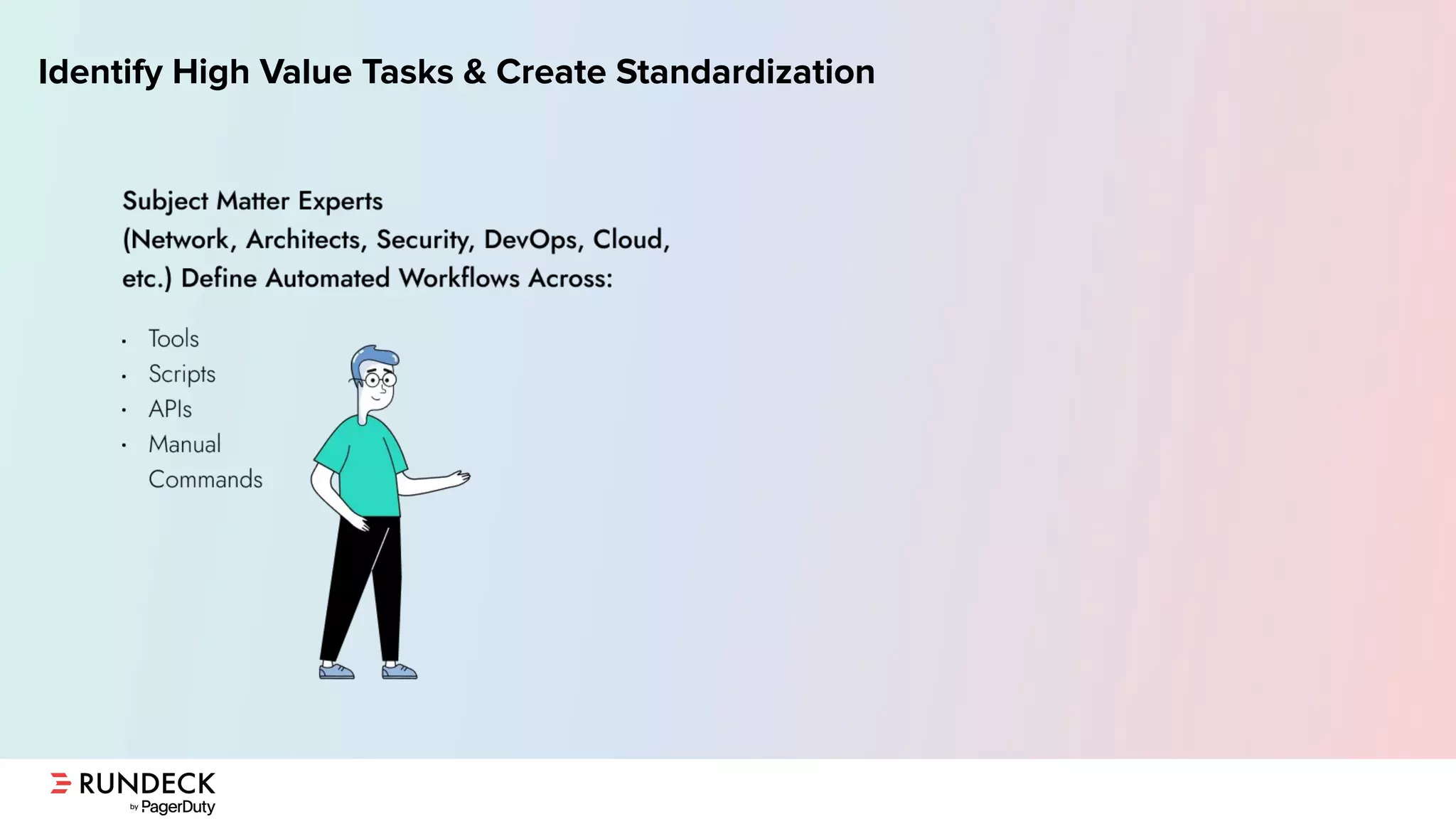
Identify High Value Tasks & Create Standardization
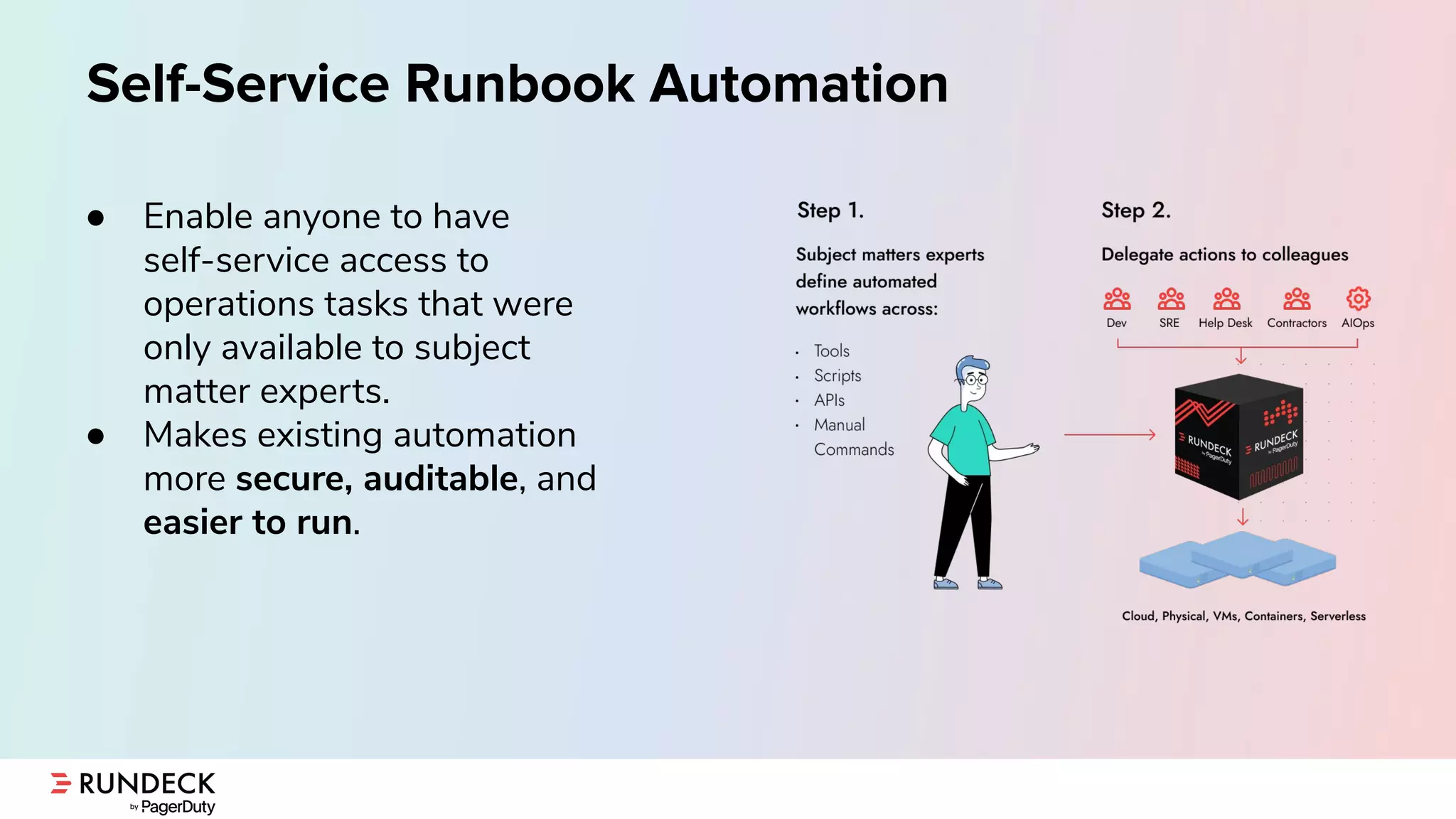
Self-Service Runbook Automation
● Enable anyone to have
self-service access to
operations tasks that were
only available to subject
matter experts.
● Makes existing automation
more secure, auditable, and
easier to run.
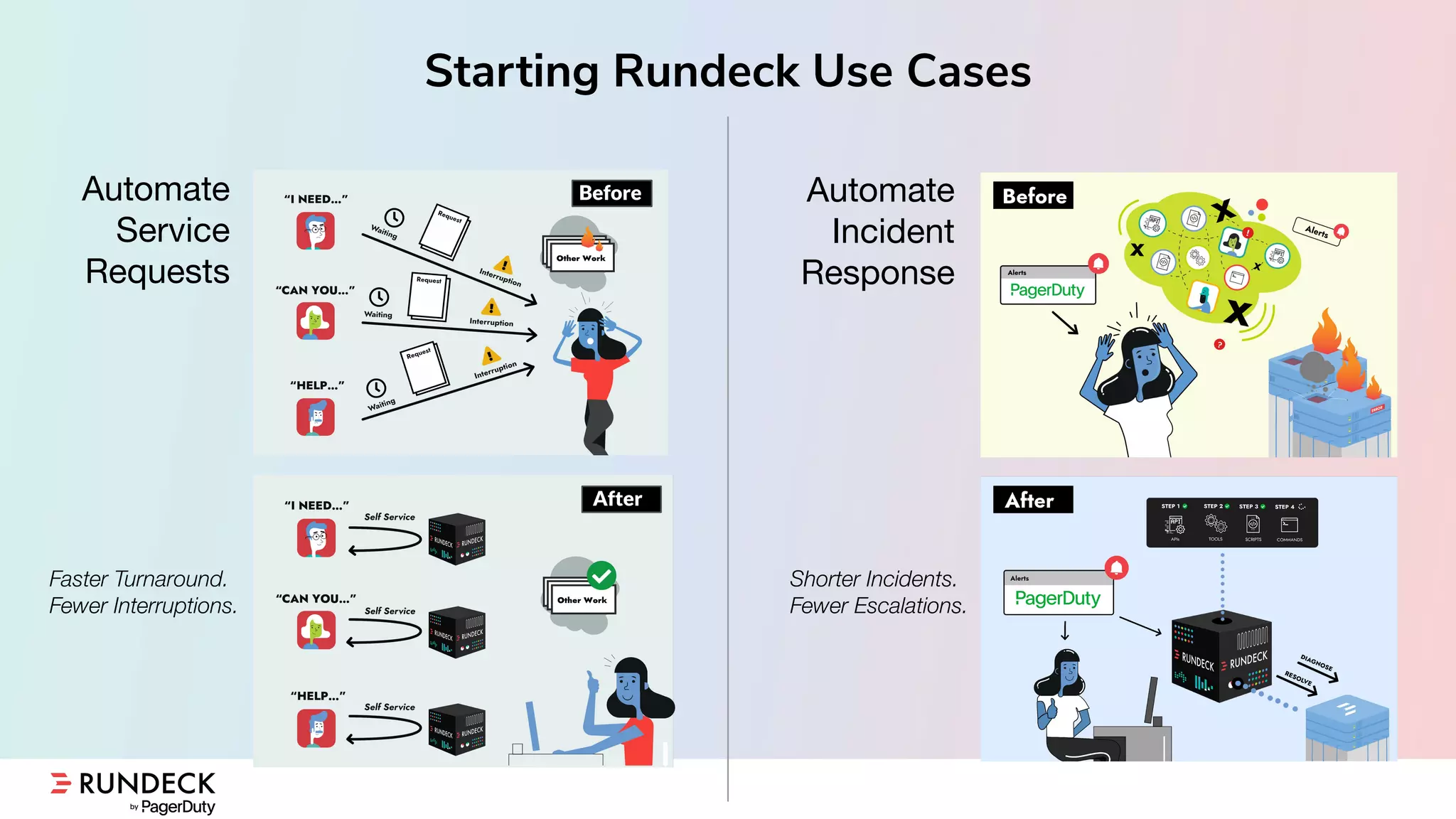
Automate
Incident
Response
Before
Automate
Service
Requests
Starting Rundeck Use Cases
Shorter Incidents.
Fewer Escalations.
After
Faster Turnaround.
Fewer Interruptions.
Demo
Thank You!
See a demo of Rundeck
Enterprise at
rundeck.com/see-demo

Automate Yourself Out of a Job: Safely Delegate the Management of your Azure Deployment

  • 1.
    Shape Up Skills Builder- September 4th, 2020 Confidential Automate Yourself Out of Job: Safely Delegate the Management of your Azure Deployment April 27, 2021
  • 2.
    Speaker: Jesse Houldsworth Jesseis a Senior Solutions Consultant at PagerDuty where he helps customers save money by automating runbooks. Jesse has over 10 years experience working with both large and small enterprises on software development and information security initiatives. Twitter: @jhoulds
  • 3.
    Agenda 1 Status Quofor Operations 2 Case for Self-service Operations 3 How to create runbooks that leverage existing scripting languages (including PowerShell) 4 Strategies for getting started 5 Demo
  • 4.
  • 5.
    2021 Prediction forthe Cloud: “Worldwide end-user spending on public cloud services is forecast to grow 18.4%” - Gartner Predictions for 2021
  • 6.
    Complexity is theNew Normal Visual representation of mid-size public SaaS services
  • 7.
    Managing an AzureDeployment at Scale Status Quo: ● Business users can’t access to the Azure management console
  • 8.
    Status Quo: ● Whena business users need an Azure resource spun up, they fill out a ticket and assign it to the Ops / Cloud team Managing an Azure Deployment at Scale Biz User Ops/ Cloud Team
  • 9.
    Status Quo: ● Operationsand Cloud teams are inundated with manual requests from other teams (provision Azure and cloud resources, etc.) ● Interruptions prevent focus on high value work Managing an Azure Deployment at Scale
  • 10.
    Case for Self-Service Howcan we reduce the burden on Operations and Cloud teams and empower developers?
  • 11.
    Case for Self-Service Howcan we reduce the burden on Operations and Cloud teams and empower developers? Make this information available at the click of a button!
  • 12.
    Case for Self-Service Self-ServiceOperations: Give Developers and other teams the ability to provision cloud resources and allow the Operations / Cloud team to maintain a set of standards and practices for accessing secure internal operations.
  • 13.
    Benefits of Self-service ReducingTOIL activities Save time and money Reducing organizational silos Leverage current tooling for automation Reducing organizational silos Leverage current tooling for automation
  • 14.
    Getting Started There’s no“one-size fits all” toolset for automation. Consider the following challenges: ● Manual and repetitive activities ● Support across organizations ● Security-first approach ● Works with legacy tooling
  • 15.
    Example Automation Tasks No-Impact High-Impact SimpleSophisticated Change action that could break things or impact performance Non-change action with no performance impact Single-step with no options Multi-step, multi-node workflow with input options, dependencies, and conditionals Healthchecks Incident Enrichment Diagnostics Diagnostics (resource intensive) Simple Restart Multi-Service Rolling Restart Rollback and Redeploy Failover Fetch Logs Performance Check Emergency Firewall Change Config Change Emergency Database Change Add/Remove Capacity Multi-Step Restart
  • 16.
    Example Automation Tasks No-Impact High-Impact SimpleSophisticated Change action that could break things or impact performance Non-change action with no performance impact Single-step with no options Multi-step, multi-node workflow with input options, dependencies, and conditionals Crawl Walk Run Incident Enrichment Diagnostics Diagnostics (resource intensive) Simple Restart Multi-Service Rolling Restart Rollback and Redeploy Failover Fetch Logs Multi-Step Restart Performance Check Emergency Firewall Change Config Change Emergency Database Change Add/Remove Capacity Healthchecks
  • 17.
    Identify High ValueTasks & Create Standardization
  • 18.
    Self-Service Runbook Automation ●Enable anyone to have self-service access to operations tasks that were only available to subject matter experts. ● Makes existing automation more secure, auditable, and easier to run.
  • 19.
    Automate Incident Response Before Automate Service Requests Starting Rundeck UseCases Shorter Incidents. Fewer Escalations. After Faster Turnaround. Fewer Interruptions.
  • 20.
  • 21.
    Thank You! See ademo of Rundeck Enterprise at rundeck.com/see-demo