





Central University of Rajasthan
Presented By:
Jagrati Mehra
2020IMSBMT015
Department of Mathematics
Presented To:
Dr. T. Sangeetha
Assistant Professor
Department of Education
SELF LEARNING
COOPRATIVE LEARNING
COLLABORATIVE LEARNING
CIA-II ED202 Learner and Learning Assignment 2021
 SELF LEARNING
 BENEFITS OF SELF LEARNING
 LIMITATIONS OF SELF LEARNING
 COOPRATIVE LEARNING
 COLLABORATIVE LEARNING
 BENEFIT AND LIMITATIONS OF COOPERATIVE
& COLLABORATIVE LEARNING
 COOPERATIVE VS COLLABORATIVE LEARNING
 REFERENCES
CONTENT
Acharyat Padmadatte Paadam Shishya Swayamedhaya |
Sarahmcharihaya Paadam Paadam Kalkramn cha ||
It Means, Learning take Place
25% by Help of Acharya (Teacher),
25% by Talent & Self-Attempts,
25% from Peers and
25% by situation as it emerges on time.
आचार्ाात् पादमादत्ते पादं शिष्र्ः स्वमेधर्ा ।
सब्रह्मचारिभ्र्ः पादं पादं कालक्रमेण च ॥
SELF
LEARNING
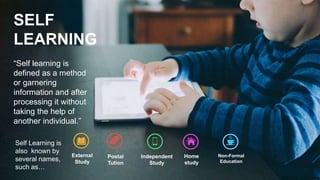
Self Learning is
also known by
several names,
such as…
“Self learning is
defined as a method
or garnering
information and after
processing it without
taking the help of
another individual.”
Home
study
Non-Formal
Education
Postal
Tution
Independent
Study
External
Study
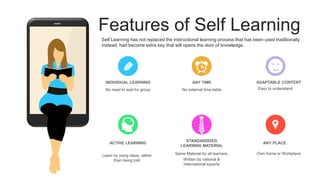
INDIVIDUAL LEARNING
No need to wait for group
ANY TIME
No external time-table
ACTIVE LEARNING
Learn by using ideas, rather
than being told
STANDARDIZED
LEARNING MATERIAL
Same Material for all learners,
Written by national &
international experts
ANY PLACE
Own home or Workplace
ADAPTABLE CONTENT
Easy to understand
Features of Self Learning
Self Learning has not replaced the instructional learning process that has been used traditionally
instead, had become extra key that will opens the door of knowledge.
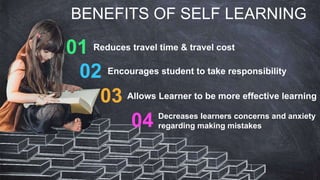
Reduces travel time & travel cost
01
Encourages student to take responsibility
02
Allows Learner to be more effective learning
03
Decreases learners concerns and anxiety
regarding making mistakes
04
BENEFITS OF SELF LEARNING
LIMITATIONS OF SELF LEARNING
o Working with other help in brain-storming in group is
not possible in Self Learning
o Teamwork encourages open & oral communication
but it is not seen in Self Learning
o Unmotivated learners or those with poor study habit
may fail in Self Learning
o Lack of interaction between learner and instructor
o Self Learning is not suitable method for those learners
who prefer social interaction & group learning
Cooperation is working together to accomplish shared goals
A Learning Method of John Dewey
“Cooperative Learning is a
Learning method of
combining classroom based
education with practical
work experiences.”
OOPRATIVE
L E A R N I N G
C
The act of working
with another person
or persons on a joint
project in the act or
process of acquiring
knowledge or skills.
“
- Collins English Dictionary
COLLABORATIVE LEARNING
DEFINITION
Collaborative Learning is an
approach that involves two or more
individuals coming together to
understand a common learning
concept and complete a common
task.
COLLABORATIVE
LEARNING
BENEFITS OF COOPRATIVE & COLLABORATIVE LEARNING
11
1 3 5
6
4
2
Student Share
their ideas,
Resources &
Reference
Diminished fear
of Public
speaking
Increases
Retention, self-
esteem &
Responsibility
Interpersonal Skills
• Problem solving
• Accountability
• Critical thinking
• Active Listening
• Confidence
More Caring,
Supportive and
Commited
Relationship
Greater Productivity
and higher
Acheivement
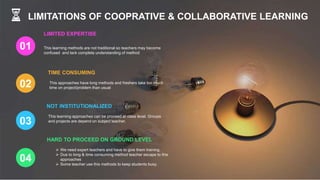
LIMITATIONS OF COOPRATIVE & COLLABORATIVE LEARNING
01
LIMITED EXPERTISE
This learning methods are not traditional so teachers may become
confused and lack complete understanding of method
02
TIME CONSUMING
This approaches have long methods and freshers take too much
time on project/problem than usual
03
NOT INSTITUTIONALIZED
This learning approaches can be proceed at class level. Groups
and projects are depend on subject teacher.
04
HARD TO PROCEED ON GROUND LEVEL
 We need expert teachers and have to give them training.
 Due to long & time consuming method teacher escape to this
approaches
 Some teacher use this methods to keep students busy.
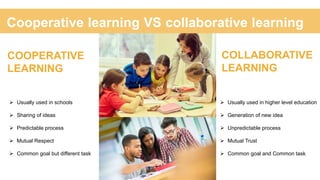
 Usually used in schools
 Sharing of ideas
 Predictable process
 Mutual Respect
 Common goal but different task
COOPERATIVE
LEARNING
Cooperative learning VS collaborative learning
COLLABORATIVE
LEARNING
 Usually used in higher level education
 Generation of new idea
 Unpredictable process
 Mutual Trust
 Common goal and Common task
RESEARCH PAPERS
• “Self directed Learning” by David Cottrel.
• “Student’s Self Education: Learning to Learn Across the Lifespan” by Rimma Sagitova.
• “Self Learning is The Future: A New Paradigm for the 21st Century” by A .H. Sequeira.
• “Cooperative Learning: Theory, Principle & Techniques” by James Cook.
• “collaborative Learning for Educational Achievement” by Ritu Chandra.
WEBSITES VISITED
• www.wikipedia.org
• www.researchgate.com
• www.academia.edu
• www.sciencedirect.com
• www.atlantis-press.com
SEARCH ENGINE
• www.google.com
• www.ecosia.org
• www.bing.com
• www.duckduckgo.com
REFERENCES
THANK
YOU
15

Self Learning, Cooperative and Collaborative Learning

  • 1.
    Central University ofRajasthan Presented By: Jagrati Mehra 2020IMSBMT015 Department of Mathematics Presented To: Dr. T. Sangeetha Assistant Professor Department of Education SELF LEARNING COOPRATIVE LEARNING COLLABORATIVE LEARNING CIA-II ED202 Learner and Learning Assignment 2021
  • 2.
     SELF LEARNING BENEFITS OF SELF LEARNING  LIMITATIONS OF SELF LEARNING  COOPRATIVE LEARNING  COLLABORATIVE LEARNING  BENEFIT AND LIMITATIONS OF COOPERATIVE & COLLABORATIVE LEARNING  COOPERATIVE VS COLLABORATIVE LEARNING  REFERENCES CONTENT
  • 3.
    Acharyat Padmadatte PaadamShishya Swayamedhaya | Sarahmcharihaya Paadam Paadam Kalkramn cha || It Means, Learning take Place 25% by Help of Acharya (Teacher), 25% by Talent & Self-Attempts, 25% from Peers and 25% by situation as it emerges on time. आचार्ाात् पादमादत्ते पादं शिष्र्ः स्वमेधर्ा । सब्रह्मचारिभ्र्ः पादं पादं कालक्रमेण च ॥
  • 4.
    SELF LEARNING Self Learning is alsoknown by several names, such as… “Self learning is defined as a method or garnering information and after processing it without taking the help of another individual.” Home study Non-Formal Education Postal Tution Independent Study External Study
  • 5.
    INDIVIDUAL LEARNING No needto wait for group ANY TIME No external time-table ACTIVE LEARNING Learn by using ideas, rather than being told STANDARDIZED LEARNING MATERIAL Same Material for all learners, Written by national & international experts ANY PLACE Own home or Workplace ADAPTABLE CONTENT Easy to understand Features of Self Learning Self Learning has not replaced the instructional learning process that has been used traditionally instead, had become extra key that will opens the door of knowledge.
  • 6.
    Reduces travel time& travel cost 01 Encourages student to take responsibility 02 Allows Learner to be more effective learning 03 Decreases learners concerns and anxiety regarding making mistakes 04 BENEFITS OF SELF LEARNING
  • 7.
    LIMITATIONS OF SELFLEARNING o Working with other help in brain-storming in group is not possible in Self Learning o Teamwork encourages open & oral communication but it is not seen in Self Learning o Unmotivated learners or those with poor study habit may fail in Self Learning o Lack of interaction between learner and instructor o Self Learning is not suitable method for those learners who prefer social interaction & group learning
  • 8.
    Cooperation is workingtogether to accomplish shared goals A Learning Method of John Dewey “Cooperative Learning is a Learning method of combining classroom based education with practical work experiences.” OOPRATIVE L E A R N I N G C
  • 9.
    The act ofworking with another person or persons on a joint project in the act or process of acquiring knowledge or skills. “ - Collins English Dictionary COLLABORATIVE LEARNING DEFINITION
  • 10.
    Collaborative Learning isan approach that involves two or more individuals coming together to understand a common learning concept and complete a common task. COLLABORATIVE LEARNING
  • 11.
    BENEFITS OF COOPRATIVE& COLLABORATIVE LEARNING 11 1 3 5 6 4 2 Student Share their ideas, Resources & Reference Diminished fear of Public speaking Increases Retention, self- esteem & Responsibility Interpersonal Skills • Problem solving • Accountability • Critical thinking • Active Listening • Confidence More Caring, Supportive and Commited Relationship Greater Productivity and higher Acheivement
  • 12.
    LIMITATIONS OF COOPRATIVE& COLLABORATIVE LEARNING 01 LIMITED EXPERTISE This learning methods are not traditional so teachers may become confused and lack complete understanding of method 02 TIME CONSUMING This approaches have long methods and freshers take too much time on project/problem than usual 03 NOT INSTITUTIONALIZED This learning approaches can be proceed at class level. Groups and projects are depend on subject teacher. 04 HARD TO PROCEED ON GROUND LEVEL  We need expert teachers and have to give them training.  Due to long & time consuming method teacher escape to this approaches  Some teacher use this methods to keep students busy.
  • 13.
     Usually usedin schools  Sharing of ideas  Predictable process  Mutual Respect  Common goal but different task COOPERATIVE LEARNING Cooperative learning VS collaborative learning COLLABORATIVE LEARNING  Usually used in higher level education  Generation of new idea  Unpredictable process  Mutual Trust  Common goal and Common task
  • 14.
    RESEARCH PAPERS • “Selfdirected Learning” by David Cottrel. • “Student’s Self Education: Learning to Learn Across the Lifespan” by Rimma Sagitova. • “Self Learning is The Future: A New Paradigm for the 21st Century” by A .H. Sequeira. • “Cooperative Learning: Theory, Principle & Techniques” by James Cook. • “collaborative Learning for Educational Achievement” by Ritu Chandra. WEBSITES VISITED • www.wikipedia.org • www.researchgate.com • www.academia.edu • www.sciencedirect.com • www.atlantis-press.com SEARCH ENGINE • www.google.com • www.ecosia.org • www.bing.com • www.duckduckgo.com REFERENCES
  • 15.