Market Segmentation And
Positioning
This presentation will explore the concepts of market segmentation and
positioning, providing examples of how to implement them in a business
strategy.
by K V DARSHAN
What is Market Segmentation?
Dividing a Market
Dividing a large market into smaller groups of consumers
with similar needs, characteristics, and behaviors.
Targeted Approach
It allows businesses to tailor their marketing efforts to
specific segments, increasing efficiency and effectiveness.
Benefits of Effective Market
Segmentation
1 Increased Sales
By focusing on specific needs and
desires, businesses can create
products and marketing
messages that resonate with
their target audience.
2 Stronger Brand Positioning
Clearer understanding of target
customer allows businesses to
craft a unique brand identity and
position their products
accordingly.
3 Improved Customer
Satisfaction
By catering to specific needs,
businesses can deliver a more
satisfying customer experience,
leading to loyalty and repeat
purchases.
4 Effective Resource
Allocation
Efficiently allocate resources to
segments with the highest
potential, maximizing return on
investment.
Key Factors for Segmenting Markets
1
Needs and Wants
Identifying the specific needs and desires that drive customer behavior within a segment.
2
Demographics
Age, gender, income, location, ethnicity, education, and other measurable
characteristics.
3
Psychographics
Lifestyle, values, attitudes, interests, and personality traits.
4
Behavioral Segmentation
Customer behavior, purchase history, loyalty, usage rate, and
engagement with products or services.
Demographic Segmentation
Age
Dividing the market based on age
groups, such as millennials, Gen X,
or baby boomers.
Gender
Targeting specific genders with
products and marketing messages
tailored to their preferences.
Location
Focusing on specific geographical
regions, cities, or neighborhoods to
reach local markets.
Income
Targeting different income levels
with products and pricing
strategies that align with their
purchasing power.
Psychographic Segmentation
Lifestyle
Dividing the market based on
consumers' lifestyles, such as
active, health-conscious, or
luxury-seeking.
Values
Targeting customers who share
similar values, such as
sustainability, social
responsibility, or innovation.
Attitudes
Understanding customer
attitudes toward products,
brands, or social issues to tailor
marketing messages.
Interests
Targeting consumers based on
their interests, such as hobbies,
entertainment, or cultural
events.
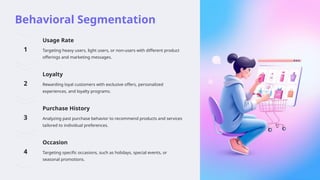
Behavioral Segmentation
Usage Rate
Targeting heavy users, light users, or non-users with different product
offerings and marketing messages.
Loyalty
Rewarding loyal customers with exclusive offers, personalized
experiences, and loyalty programs.
Purchase History
Analyzing past purchase behavior to recommend products and services
tailored to individual preferences.
Occasion
Targeting specific occasions, such as holidays, special events, or
seasonal promotions.
Positioning Your Product or Service
1
Define Target Audience
Clearly identify the specific segment you want to target with your product or service.
2
Value Proposition
Communicate the unique benefits and value your product offers to the target audience.
3
Competitive Advantage
Highlight what makes your product or service different and better than competitors.
4
Consistent Messaging
Maintain a consistent brand message across all marketing channels,
ensuring clarity and resonance with your target audience.

Market-Segmentation-And-Positioning.pptx

  • 1.
    Market Segmentation And Positioning Thispresentation will explore the concepts of market segmentation and positioning, providing examples of how to implement them in a business strategy. by K V DARSHAN
  • 2.
    What is MarketSegmentation? Dividing a Market Dividing a large market into smaller groups of consumers with similar needs, characteristics, and behaviors. Targeted Approach It allows businesses to tailor their marketing efforts to specific segments, increasing efficiency and effectiveness.
  • 3.
    Benefits of EffectiveMarket Segmentation 1 Increased Sales By focusing on specific needs and desires, businesses can create products and marketing messages that resonate with their target audience. 2 Stronger Brand Positioning Clearer understanding of target customer allows businesses to craft a unique brand identity and position their products accordingly. 3 Improved Customer Satisfaction By catering to specific needs, businesses can deliver a more satisfying customer experience, leading to loyalty and repeat purchases. 4 Effective Resource Allocation Efficiently allocate resources to segments with the highest potential, maximizing return on investment.
  • 4.
    Key Factors forSegmenting Markets 1 Needs and Wants Identifying the specific needs and desires that drive customer behavior within a segment. 2 Demographics Age, gender, income, location, ethnicity, education, and other measurable characteristics. 3 Psychographics Lifestyle, values, attitudes, interests, and personality traits. 4 Behavioral Segmentation Customer behavior, purchase history, loyalty, usage rate, and engagement with products or services.
  • 5.
    Demographic Segmentation Age Dividing themarket based on age groups, such as millennials, Gen X, or baby boomers. Gender Targeting specific genders with products and marketing messages tailored to their preferences. Location Focusing on specific geographical regions, cities, or neighborhoods to reach local markets. Income Targeting different income levels with products and pricing strategies that align with their purchasing power.
  • 6.
    Psychographic Segmentation Lifestyle Dividing themarket based on consumers' lifestyles, such as active, health-conscious, or luxury-seeking. Values Targeting customers who share similar values, such as sustainability, social responsibility, or innovation. Attitudes Understanding customer attitudes toward products, brands, or social issues to tailor marketing messages. Interests Targeting consumers based on their interests, such as hobbies, entertainment, or cultural events.
  • 7.
    Behavioral Segmentation Usage Rate Targetingheavy users, light users, or non-users with different product offerings and marketing messages. Loyalty Rewarding loyal customers with exclusive offers, personalized experiences, and loyalty programs. Purchase History Analyzing past purchase behavior to recommend products and services tailored to individual preferences. Occasion Targeting specific occasions, such as holidays, special events, or seasonal promotions.
  • 8.
    Positioning Your Productor Service 1 Define Target Audience Clearly identify the specific segment you want to target with your product or service. 2 Value Proposition Communicate the unique benefits and value your product offers to the target audience. 3 Competitive Advantage Highlight what makes your product or service different and better than competitors. 4 Consistent Messaging Maintain a consistent brand message across all marketing channels, ensuring clarity and resonance with your target audience.