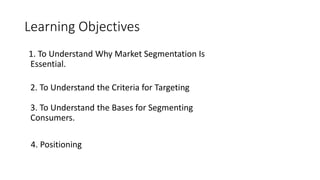
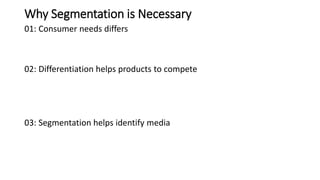
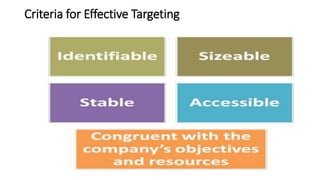
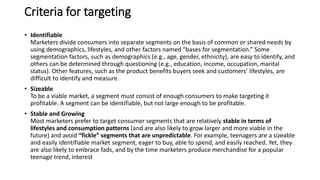
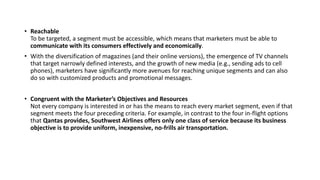
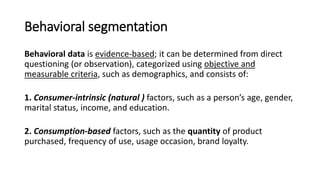
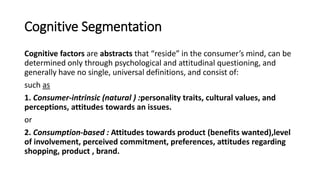
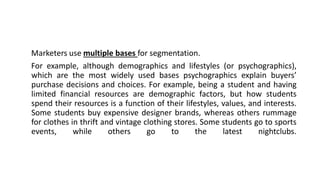
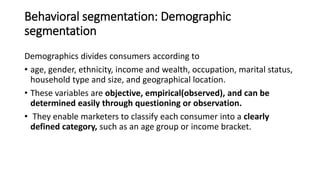
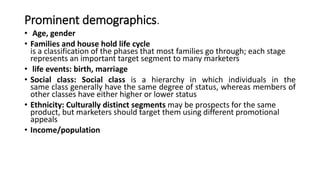
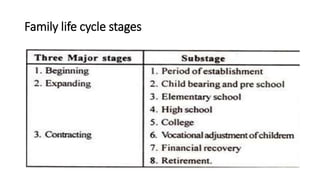
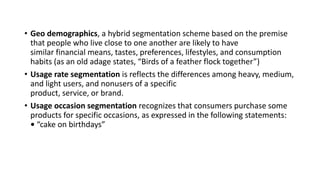
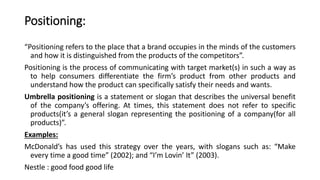
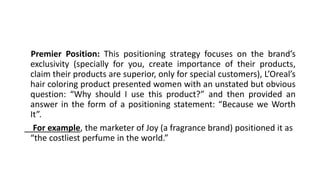
This document discusses market segmentation, targeting, and positioning. It defines segmentation as dividing the market into groups based on common characteristics. There are two types of segmentation bases: behavioral and cognitive. Behavioral bases include demographic factors that can be easily measured, like age or income. Cognitive bases involve psychological attributes that are more abstract, like attitudes or perceptions. The document also lists criteria for effective targeting, such as segments being identifiable, sizable, stable, and reachable. It provides examples of behavioral segmentation bases like demographics, family lifecycle stage, and usage patterns. Finally, it defines positioning as differentiating a brand in consumers' minds and discusses umbrella, premier, and repositioning strategies.



![[rokonz.com] Glossary of Semantic SEO Part-3.pdf](https://cdn.slidesharecdn.com/ss_thumbnails/rokonz-260123200835-55123e1e-thumbnail.jpg?width=640&height=640&fit=bounds)

![[rokonz.com] Glossary of Semantic SEO Part-1.pdf](https://cdn.slidesharecdn.com/ss_thumbnails/rokonz-260123200456-440e4060-thumbnail.jpg?width=640&height=640&fit=bounds)


