☻
1
LEARNING OBJECTIVES
2
Describe seed dormancy
State the cause of seed dormancy.
Mention the advantages of seed
dormancy.
INTRODUCTION
DORMANCY
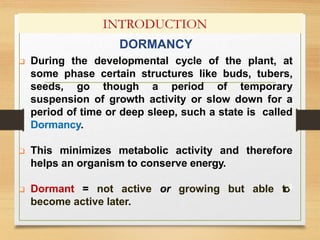
 During the developmental cycle of the plant, at
some phase certain structures like buds, tubers,
seeds, go though a period of temporary
suspension of growth activity or slow down for a
period of time or deep sleep, such a state is called
Dormancy.
 This minimizes metabolic activity and therefore
helps an organism to conserve energy.
 Dormant = not active or growing but able to3
become active later.
Seed Dormancy
 It is the incapacity of fully
developed, mature, viable seed to
germinate even under favourable
conditions.
 In such cases, the completely dry
ripe seed is physiologically inactive
and is said to be in a resting stage.
 The seed is called dormant and the
phenomenon is termed Dormancy
4
 The main reason behind this condition is
that they require a period of rest before
being capable of germination.
 This Conditions may vary from days to
months and even years.
5
5
TYPES OF DORMANCY
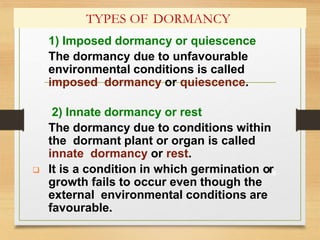
1) Imposed dormancy or quiescence
The dormancy due to unfavourable
environmental conditions is called
imposed dormancy or quiescence.
2) Innate dormancy or rest
The dormancy due to conditions within
the dormant plant or organ is called
innate dormancy or rest.
 It is a condition in which germination or6
growth fails to occur even though the
external environmental conditions are
favourable.
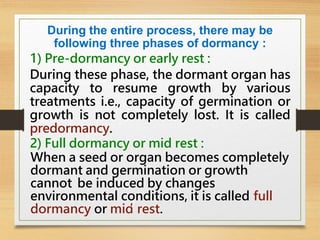
During the entire process, there may be
following three phases of dormancy :
1) Pre-dormancy or early rest :
During these phase, the dormant organ has
capacity to resume growth by various
treatments i.e., capacity of germination or
growth is not completely lost. It is called
predormancy.
2) Full dormancy or mid rest :
When a seed or organ becomes completely
dormant and germination or growth
cannot be induced by changes
environmental conditions, it is called full
dormancy or mid
7
rest.
3) Post dormancy or after rest :
When a or organ gradually
emerges
dormant seed
from full
germination or growth can be induced
dormancy and in it the
by
changing enviornmental conditions, it is called
post-dormancy or after rest.
Causes of Seed Dormancy
1. Seed coat: The seed coat is hard and
impermeable and prevents the entry of water
and oxygen.
2. Growth inhibitors: Some seeds may
contain chemical growth inhibitors like
abscisic acid (ABA), coumarin, phenolic
acids and short chain fatty acids in the
embryo. Endosperm or other tissues may
also prevent germination.
3. Specific light requirement: In certain seeds,
dormancy can be broken by exposing them to
optimum light (after seeds have been soaked)
while in some others, seeds remain dormant as
long as they are exposed to light.
4. Optimum temperature: Generally the seeds
require a low temperature before germination. It
brings about an increase in the gibberellin level.
5. Immaturity of the embryo: At the time of
dispersal, some seeds are structurally immature
and the embryo is unable to synthesize
gibberellic
acid.
METHOD TO BREAK SEED DORMANCY
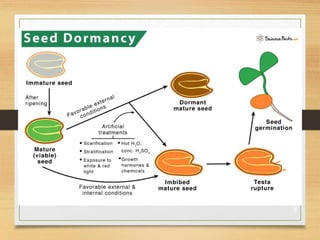
Seed coat dormancy can be overcome by
weakening the seed coat in a number of ways in
various seeds:
1. In some seeds, the seed coat is softened by
soaking in water.
2. Hard seed coat can also be softened by certain
enzymes present in the digestive tract of birds
and animals
3. At times scratching of seed coat called
scarification or artificial removal of testa or
pricking it with a pin also helps to break the seed
dormancy.
4. Certain seed coats can be broken down by soil
microorganisms also.
METHOD TO BREAK SEED DORMANCY
To break seed dormancy by chemical growth
inhibitors, their concentration has to be
lowered.
It can be achieved by:
1. Exposing the seeds to alternating
temperature, chilling, light, placement in
running water, treatment of hydrated seeds
with oxygen, nitrates, nitrites and thiourea.
2. Treatment with certain hormones or
chemicals
like gibberellins, cytokinins and ethylene
ADVANTAGES OF SEED DORMANCY
1. It enables the seed to germinate only under
favorable conditions, e.g. if the seeds
dispersed
in summer germinate immediately the
seedlings
cannot survive the following cold season.
2. It allows seeds to survive through
unfavorable conditions and germinate at the
onset of favorable season.
3. The dormant seeds can be stored for a long
time and the seed dormancy can be broken by
giving artificial conditions
ASSIGNMENT
1. Define Seed Dormancy?
2. Mention five (5) causes of Seed
Dormancy?
3. Discuss three (3) advantages of
Seed Dormancy?
4. Discuss four (4) ways to break
seed dormancy?

SEED DORMANCY.pptx

  • 1.
  • 2.
    LEARNING OBJECTIVES 2 Describe seeddormancy State the cause of seed dormancy. Mention the advantages of seed dormancy.
  • 3.
    INTRODUCTION DORMANCY  During thedevelopmental cycle of the plant, at some phase certain structures like buds, tubers, seeds, go though a period of temporary suspension of growth activity or slow down for a period of time or deep sleep, such a state is called Dormancy.  This minimizes metabolic activity and therefore helps an organism to conserve energy.  Dormant = not active or growing but able to3 become active later.
  • 4.
    Seed Dormancy  Itis the incapacity of fully developed, mature, viable seed to germinate even under favourable conditions.  In such cases, the completely dry ripe seed is physiologically inactive and is said to be in a resting stage.  The seed is called dormant and the phenomenon is termed Dormancy 4
  • 5.
     The mainreason behind this condition is that they require a period of rest before being capable of germination.  This Conditions may vary from days to months and even years. 5
  • 6.
  • 7.
    TYPES OF DORMANCY 1)Imposed dormancy or quiescence The dormancy due to unfavourable environmental conditions is called imposed dormancy or quiescence. 2) Innate dormancy or rest The dormancy due to conditions within the dormant plant or organ is called innate dormancy or rest.  It is a condition in which germination or6 growth fails to occur even though the external environmental conditions are favourable.
  • 8.
    During the entireprocess, there may be following three phases of dormancy : 1) Pre-dormancy or early rest : During these phase, the dormant organ has capacity to resume growth by various treatments i.e., capacity of germination or growth is not completely lost. It is called predormancy. 2) Full dormancy or mid rest : When a seed or organ becomes completely dormant and germination or growth cannot be induced by changes environmental conditions, it is called full dormancy or mid 7 rest.
  • 9.
    3) Post dormancyor after rest : When a or organ gradually emerges dormant seed from full germination or growth can be induced dormancy and in it the by changing enviornmental conditions, it is called post-dormancy or after rest.
  • 10.
    Causes of SeedDormancy 1. Seed coat: The seed coat is hard and impermeable and prevents the entry of water and oxygen. 2. Growth inhibitors: Some seeds may contain chemical growth inhibitors like abscisic acid (ABA), coumarin, phenolic acids and short chain fatty acids in the embryo. Endosperm or other tissues may also prevent germination.
  • 11.
    3. Specific lightrequirement: In certain seeds, dormancy can be broken by exposing them to optimum light (after seeds have been soaked) while in some others, seeds remain dormant as long as they are exposed to light. 4. Optimum temperature: Generally the seeds require a low temperature before germination. It brings about an increase in the gibberellin level. 5. Immaturity of the embryo: At the time of dispersal, some seeds are structurally immature and the embryo is unable to synthesize gibberellic acid.
  • 12.
    METHOD TO BREAKSEED DORMANCY Seed coat dormancy can be overcome by weakening the seed coat in a number of ways in various seeds: 1. In some seeds, the seed coat is softened by soaking in water. 2. Hard seed coat can also be softened by certain enzymes present in the digestive tract of birds and animals 3. At times scratching of seed coat called scarification or artificial removal of testa or pricking it with a pin also helps to break the seed dormancy. 4. Certain seed coats can be broken down by soil microorganisms also.
  • 13.
    METHOD TO BREAKSEED DORMANCY To break seed dormancy by chemical growth inhibitors, their concentration has to be lowered. It can be achieved by: 1. Exposing the seeds to alternating temperature, chilling, light, placement in running water, treatment of hydrated seeds with oxygen, nitrates, nitrites and thiourea. 2. Treatment with certain hormones or chemicals like gibberellins, cytokinins and ethylene
  • 14.
    ADVANTAGES OF SEEDDORMANCY 1. It enables the seed to germinate only under favorable conditions, e.g. if the seeds dispersed in summer germinate immediately the seedlings cannot survive the following cold season. 2. It allows seeds to survive through unfavorable conditions and germinate at the onset of favorable season. 3. The dormant seeds can be stored for a long time and the seed dormancy can be broken by giving artificial conditions
  • 15.
    ASSIGNMENT 1. Define SeedDormancy? 2. Mention five (5) causes of Seed Dormancy? 3. Discuss three (3) advantages of Seed Dormancy? 4. Discuss four (4) ways to break seed dormancy?