Male Attire 
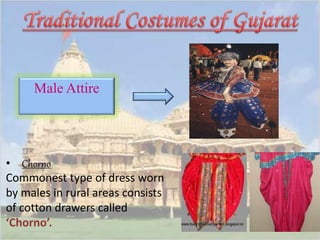
• Chorno 
Commonest type of dress worn 
by males in rural areas consists 
of cotton drawers called 
‘Chorno’.
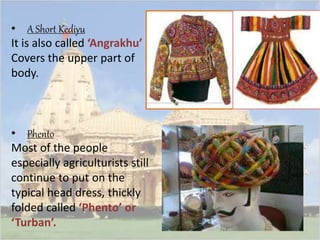
• A Short Kediyu 
It is also called ‘Angrakhu’ 
Covers the upper part of 
body. 
• Phento 
Most of the people 
especially agriculturists still 
continue to put on the 
typical head dress, thickly 
folded called ‘Phento’ or 
‘Turban’.
Female Attire 
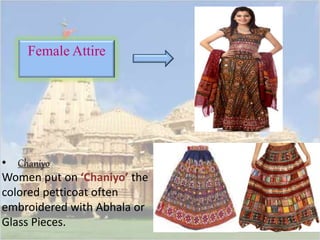
• Chaniyo 
Women put on ‘Chaniyo’ the 
colored petticoat often 
embroidered with Abhala or 
Glass Pieces.
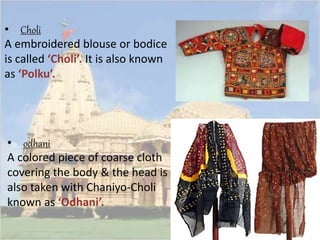
• Choli 
A embroidered blouse or bodice 
is called ‘Choli’. It is also known 
as ‘Polku’. 
• odhani 
A colored piece of coarse cloth 
covering the body & the head is 
also taken with Chaniyo-Choli 
known as ‘Odhani’.
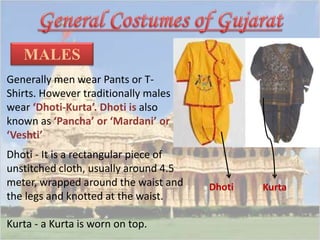
MALES 
Generally men wear Pants or T-Shirts. 
However traditionally males 
wear ‘Dhoti-Kurta’. Dhoti is also 
known as ‘Pancha’ or ‘Mardani’ or 
‘Veshti’ 
Dhoti - It is a rectangular piece of 
unstitched cloth, usually around 4.5 
meter, wrapped around the waist and 
the legs and knotted at the waist. 
Kurta - a Kurta is worn on top. 
Dhoti Kurta
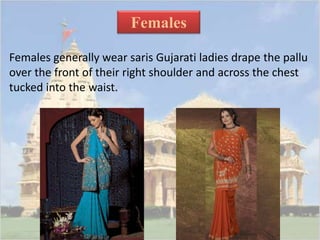
Females 
Females generally wear saris Gujarati ladies drape the pallu 
over the front of their right shoulder and across the chest 
tucked into the waist.
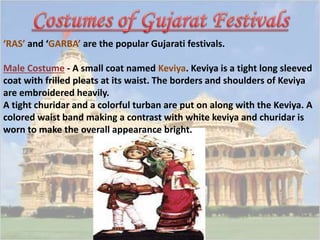
‘RAS’ and ‘GARBA’ are the popular Gujarati festivals. 
Male Costume - A small coat named Keviya. Keviya is a tight long sleeved 
coat with frilled pleats at its waist. The borders and shoulders of Keviya 
are embroidered heavily. 
A tight churidar and a colorful turban are put on along with the Keviya. A 
colored waist band making a contrast with white keviya and churidar is 
worn to make the overall appearance bright.
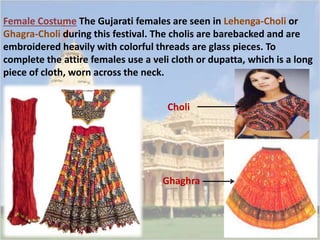
Female Costume The Gujarati females are seen in Lehenga-Choli or 
Ghagra-Choli during this festival. The cholis are barebacked and are 
embroidered heavily with colorful threads are glass pieces. To 
complete the attire females use a veli cloth or dupatta, which is a long 
piece of cloth, worn across the neck. 
Choli 
Ghaghra
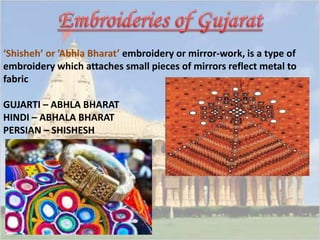
‘Shisheh’ or ’Abhla Bharat’ embroidery or mirror-work, is a type of 
embroidery which attaches small pieces of mirrors reflect metal to 
fabric 
GUJARTI – ABHLA BHARAT 
HINDI – ABHALA BHARAT 
PERSIAN – SHISHESH
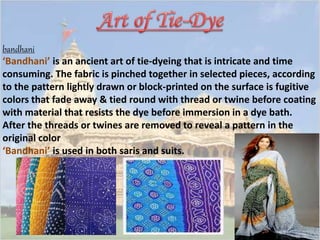
bandhani 
‘Bandhani’ is an ancient art of tie-dyeing that is intricate and time 
consuming. The fabric is pinched together in selected pieces, according 
to the pattern lightly drawn or block-printed on the surface is fugitive 
colors that fade away & tied round with thread or twine before coating 
with material that resists the dye before immersion in a dye bath. 
After the threads or twines are removed to reveal a pattern in the 
original color 
‘Bandhani’ is used in both saris and suits.
Gujarat state presentation

Gujarat state presentation

  • 2.
    Male Attire •Chorno Commonest type of dress worn by males in rural areas consists of cotton drawers called ‘Chorno’.
  • 3.
    • A ShortKediyu It is also called ‘Angrakhu’ Covers the upper part of body. • Phento Most of the people especially agriculturists still continue to put on the typical head dress, thickly folded called ‘Phento’ or ‘Turban’.
  • 4.
    Female Attire •Chaniyo Women put on ‘Chaniyo’ the colored petticoat often embroidered with Abhala or Glass Pieces.
  • 5.
    • Choli Aembroidered blouse or bodice is called ‘Choli’. It is also known as ‘Polku’. • odhani A colored piece of coarse cloth covering the body & the head is also taken with Chaniyo-Choli known as ‘Odhani’.
  • 6.
    MALES Generally menwear Pants or T-Shirts. However traditionally males wear ‘Dhoti-Kurta’. Dhoti is also known as ‘Pancha’ or ‘Mardani’ or ‘Veshti’ Dhoti - It is a rectangular piece of unstitched cloth, usually around 4.5 meter, wrapped around the waist and the legs and knotted at the waist. Kurta - a Kurta is worn on top. Dhoti Kurta
  • 7.
    Females Females generallywear saris Gujarati ladies drape the pallu over the front of their right shoulder and across the chest tucked into the waist.
  • 8.
    ‘RAS’ and ‘GARBA’are the popular Gujarati festivals. Male Costume - A small coat named Keviya. Keviya is a tight long sleeved coat with frilled pleats at its waist. The borders and shoulders of Keviya are embroidered heavily. A tight churidar and a colorful turban are put on along with the Keviya. A colored waist band making a contrast with white keviya and churidar is worn to make the overall appearance bright.
  • 9.
    Female Costume TheGujarati females are seen in Lehenga-Choli or Ghagra-Choli during this festival. The cholis are barebacked and are embroidered heavily with colorful threads are glass pieces. To complete the attire females use a veli cloth or dupatta, which is a long piece of cloth, worn across the neck. Choli Ghaghra
  • 10.
    ‘Shisheh’ or ’AbhlaBharat’ embroidery or mirror-work, is a type of embroidery which attaches small pieces of mirrors reflect metal to fabric GUJARTI – ABHLA BHARAT HINDI – ABHALA BHARAT PERSIAN – SHISHESH
  • 11.
    bandhani ‘Bandhani’ isan ancient art of tie-dyeing that is intricate and time consuming. The fabric is pinched together in selected pieces, according to the pattern lightly drawn or block-printed on the surface is fugitive colors that fade away & tied round with thread or twine before coating with material that resists the dye before immersion in a dye bath. After the threads or twines are removed to reveal a pattern in the original color ‘Bandhani’ is used in both saris and suits.