ATROPHY
Presented by:
TALHA SHAHID
Third proff pharm D
SBBU PHARMACY DEPARTMENT
DEFINITION
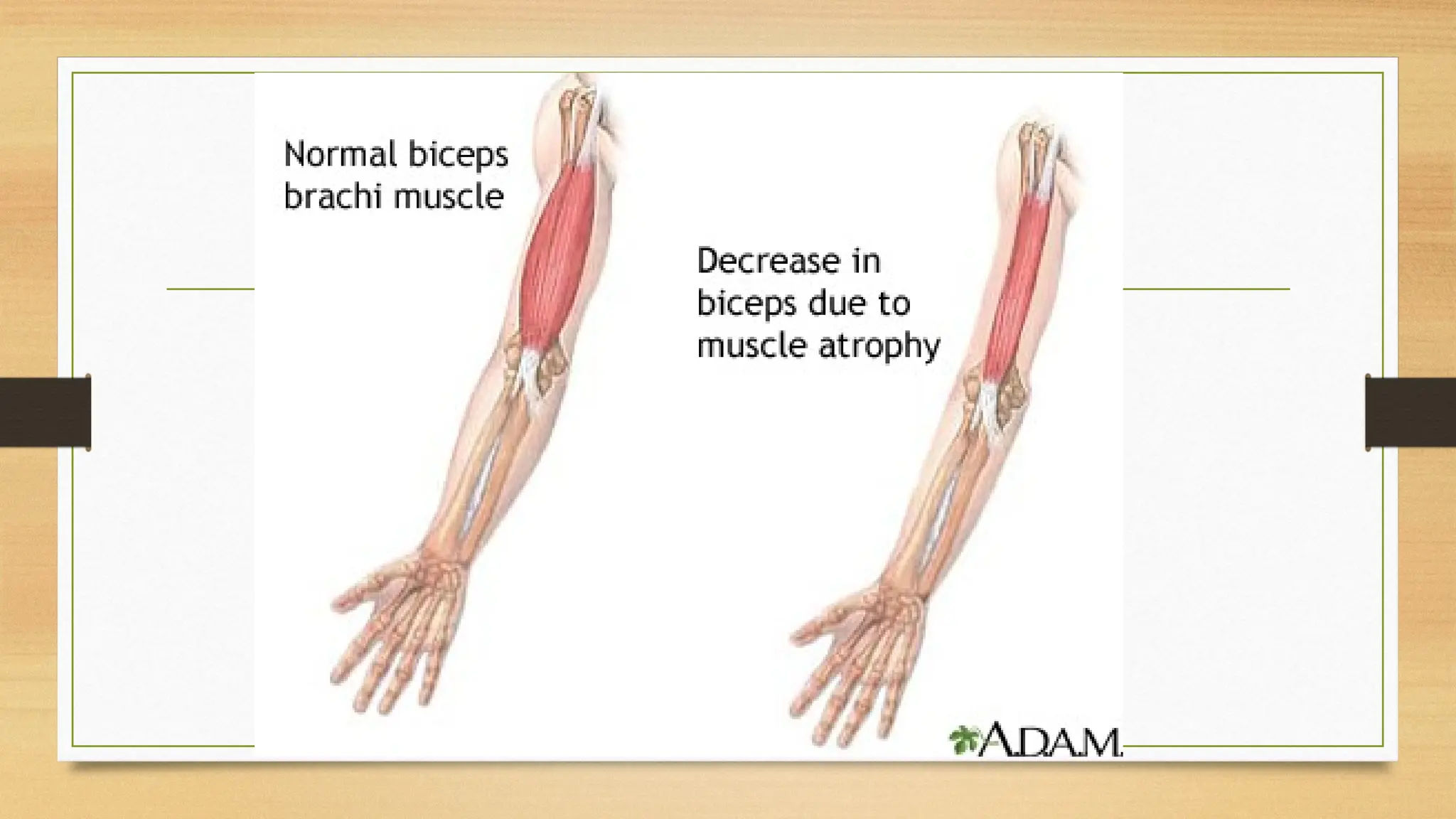
• Atrophy is shrinkage in the size of cells by the loss of cell
substance.
• When a sufficient number of cells are involved, the entire tissue
or organ is reduced in size, or atrophic .
• Although atrophic cells may have diminished function, they are
not dead.
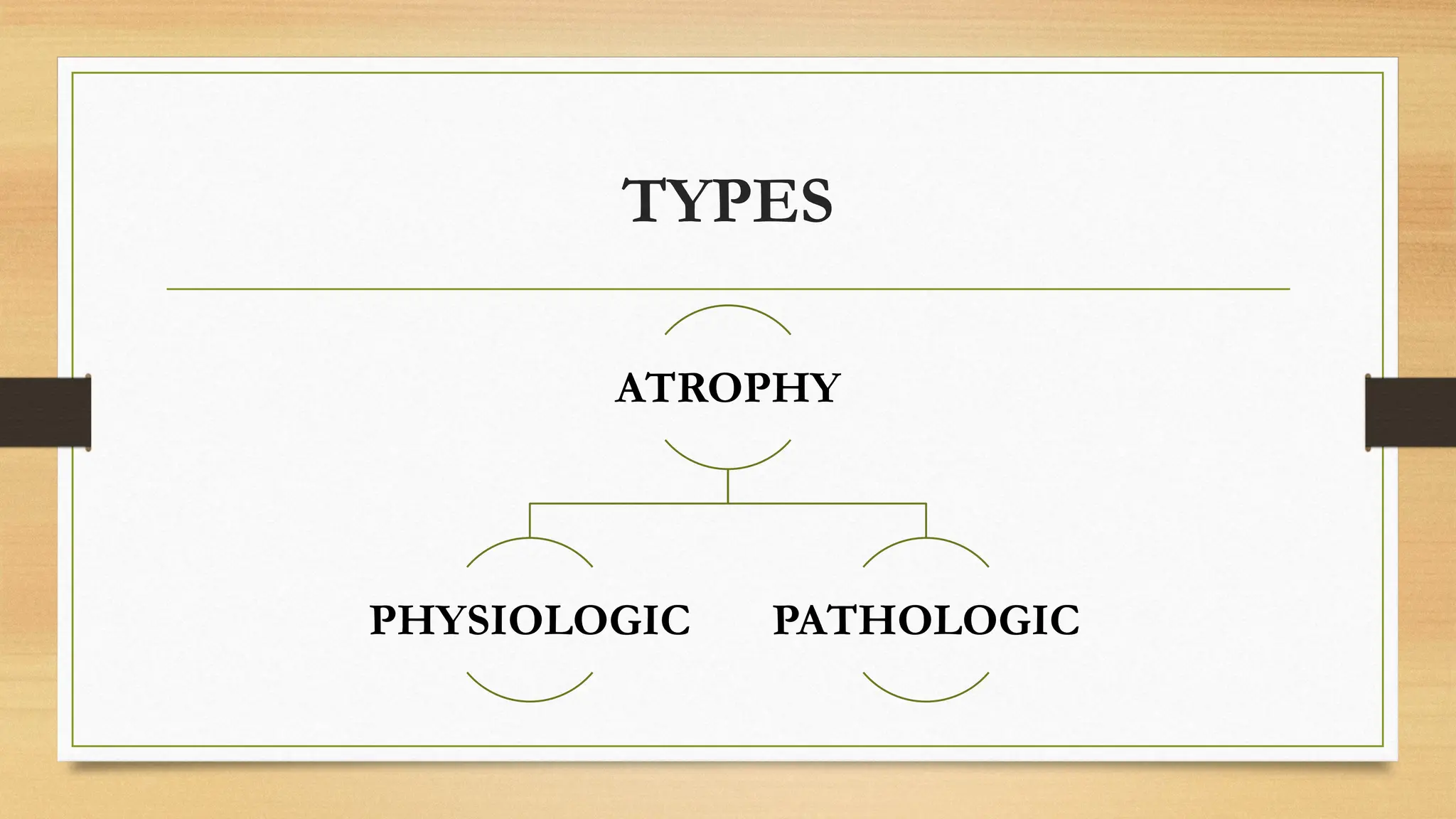
TYPES
ATROPHY
PHYSIOLOGIC PATHOLOGIC
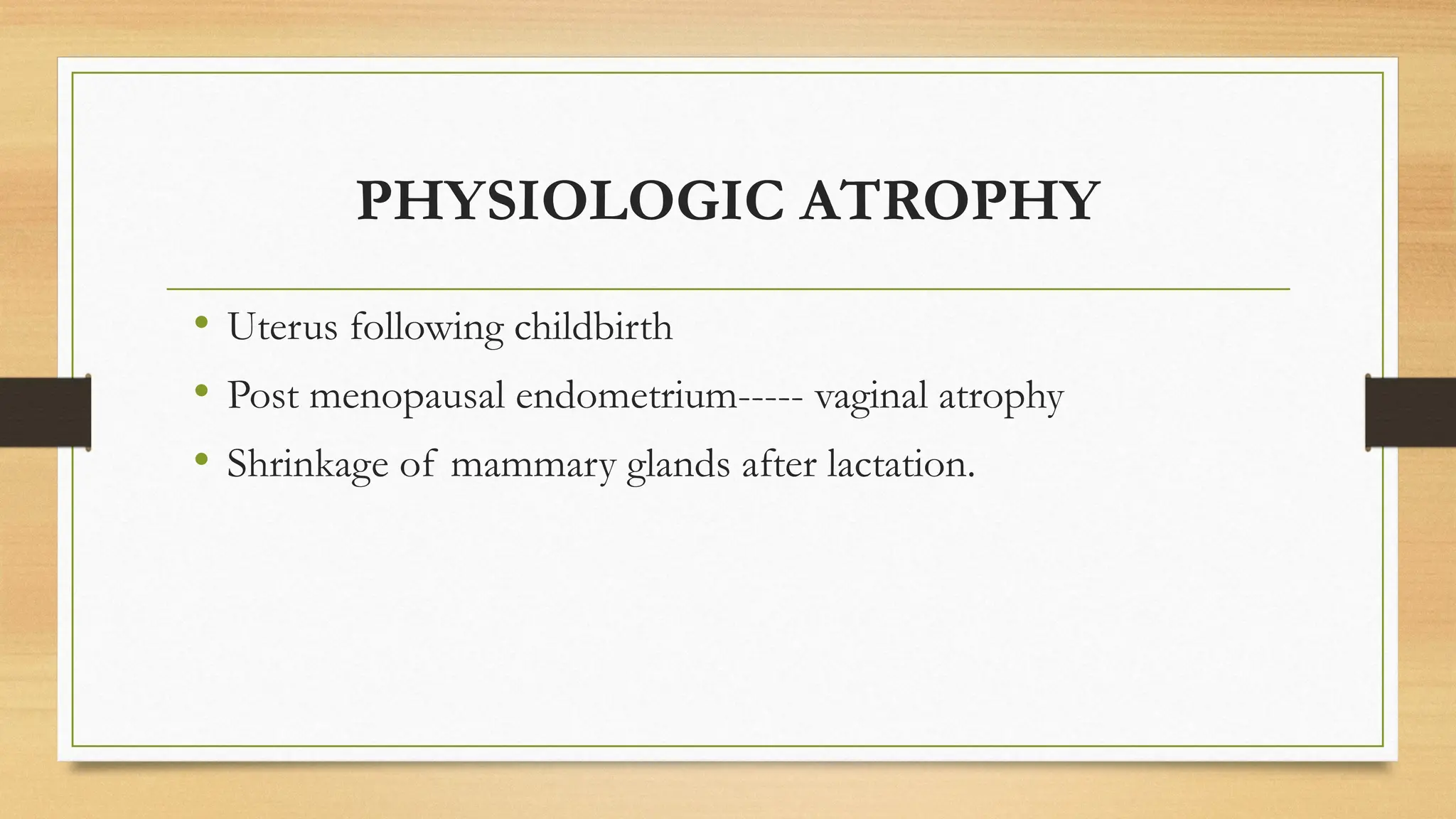
PHYSIOLOGIC ATROPHY
• Uterus following childbirth
• Post menopausal endometrium----- vaginal atrophy
• Shrinkage of mammary glands after lactation.
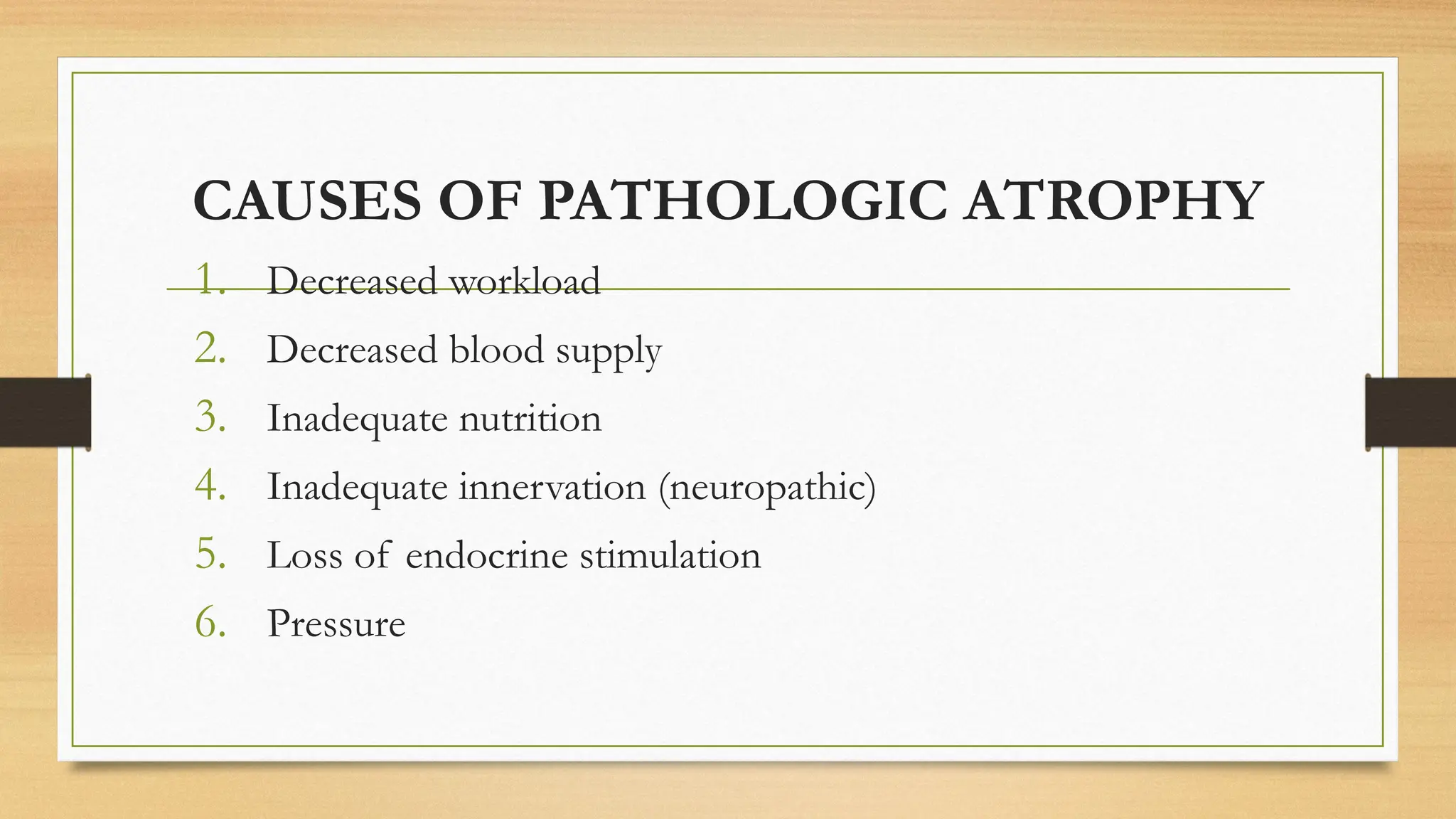
CAUSES OF PATHOLOGIC ATROPHY
1. Decreased workload
2. Decreased blood supply
3. Inadequate nutrition
4. Inadequate innervation (neuropathic)
5. Loss of endocrine stimulation
6. Pressure
• Both types of causes lead to the smaller cell size at which
survival is still possible; a new equilibrium is achieved between cell
size and diminished blood supply and nutrition.
Atrophic Brain Normal Brain
UNDERLYING MECHANISM
• Cellular atrophy results from a combination of decreased
protein synthesis and increased protein degradation.
1. Protein synthesis decreases because of reduced metabolic
activity.
2-PROTEOSOME PATHWAY
• The degradation of cellular proteins occurs mainly by the
ubiquitin-proteasome pathway.
• Nutrient deficiency may activate ubiquitin ligases, which attach
multiple copies of the small peptide ubiquitin to cellular proteins
and target them for degradation in proteasomes----- increased
proteolysis.
3- AUTOPHAGY
• Atrophy also is associated with autophagy, with resulting increases
in the number of autophagic vacuoles.
• Autophagy is the process in which the starved cell eats its own
organelles in an attempt to survive.
• Atrophy can be reversible
atrophy65856475646543643643543543643654.pptx

atrophy65856475646543643643543543643654.pptx

  • 1.
    ATROPHY Presented by: TALHA SHAHID Thirdproff pharm D SBBU PHARMACY DEPARTMENT
  • 2.
    DEFINITION • Atrophy isshrinkage in the size of cells by the loss of cell substance.
  • 3.
    • When asufficient number of cells are involved, the entire tissue or organ is reduced in size, or atrophic . • Although atrophic cells may have diminished function, they are not dead.
  • 4.
  • 5.
    PHYSIOLOGIC ATROPHY • Uterusfollowing childbirth • Post menopausal endometrium----- vaginal atrophy • Shrinkage of mammary glands after lactation.
  • 7.
    CAUSES OF PATHOLOGICATROPHY 1. Decreased workload 2. Decreased blood supply 3. Inadequate nutrition 4. Inadequate innervation (neuropathic) 5. Loss of endocrine stimulation 6. Pressure
  • 8.
    • Both typesof causes lead to the smaller cell size at which survival is still possible; a new equilibrium is achieved between cell size and diminished blood supply and nutrition.
  • 11.
  • 13.
    UNDERLYING MECHANISM • Cellularatrophy results from a combination of decreased protein synthesis and increased protein degradation. 1. Protein synthesis decreases because of reduced metabolic activity.
  • 14.
    2-PROTEOSOME PATHWAY • Thedegradation of cellular proteins occurs mainly by the ubiquitin-proteasome pathway. • Nutrient deficiency may activate ubiquitin ligases, which attach multiple copies of the small peptide ubiquitin to cellular proteins and target them for degradation in proteasomes----- increased proteolysis.
  • 15.
    3- AUTOPHAGY • Atrophyalso is associated with autophagy, with resulting increases in the number of autophagic vacuoles. • Autophagy is the process in which the starved cell eats its own organelles in an attempt to survive. • Atrophy can be reversible

Editor's Notes

  • #14 Proteasomes are protein complexes which degrade unneeded or damaged proteins by proteolysis, a chemical reaction that breaks peptide bonds