



Security insights 
and issues 
for poll workers 
Whitney Quesenbery 
Dana Chisnell 
Center for Civic Design 
civicdesign.org 
Project workshop September 26, 2014 
Humphrey School of Public Affairs, UMN
Opening remarks 
ο‚§ Larry Jacobs 
Professor, Walter F. and Joan 
Mondale Chair for Political Studies 
ο‚§ Doug Chapin 
Director, Program for Excellence in 
Election Administration 
ο‚§ Jeremy Epstein 
Program Director, NSF
Who is here 
ο‚§ Election officials from 12 jurisdictions 
ο‚§ Researchers who contributed to the 
project (8 of 17) 
ο‚§ Friends of the project
About the project 
What we wanted to learn
Background 
First research to look at security from 
point of view of poll workers interacting 
with systems
Coverage 
ο‚§ 19 elections in 12 states 
ο‚§ November 2012 – November 2013 
ο‚§ 17 researchers 
ο‚§ Purposeful but convenient sample 
ο‚§ Types of elections 
ο‚§ Range of systems 
ο‚§ Geographical range 
ο‚§ Range of sizes of jurisdiction 
ο‚§ Different approaches to administration and process
What we expected: 
ο‚§ Security would be a distinct part of 
procedures & training 
ο‚§ Issues would occur in the interaction 
with voting systems 
ο‚§ Issues caused by mistakes, not 
purposeful attacks 
Was not exactly what we found!
Highlights from the 
research
Security is baked in 
ο‚§ Poll workers have and use 
procedures designed for security 
ο‚§ Procedures are designed to support 
trust in elections 
ο‚§ Security is not treated separately
Nobody is doing it flawlessly 
ο‚§ Even great jurisdictions see 
imperfect completeness, accuracy, 
or clarity 
ο‚§ Empowered poll workers cope well, 
generally
Security vulnerabilities are distributed 
ο‚§ People 
ο‚§ Processes 
ο‚§ Paper 
ο‚§ Procedures and training
Reconciling and closing 
ο‚§ "Controlled chaos" 
ο‚§ Team work helped
Poll worker attitudinal factors 
ο‚§ Personal history 
ο‚§ Election culture 
ο‚§ Voting equipment 
ο‚§ Who manages the team 
ο‚§ Local policies 
ο‚§ Leadership of clerk or election 
director 
ο‚§ Changes in laws
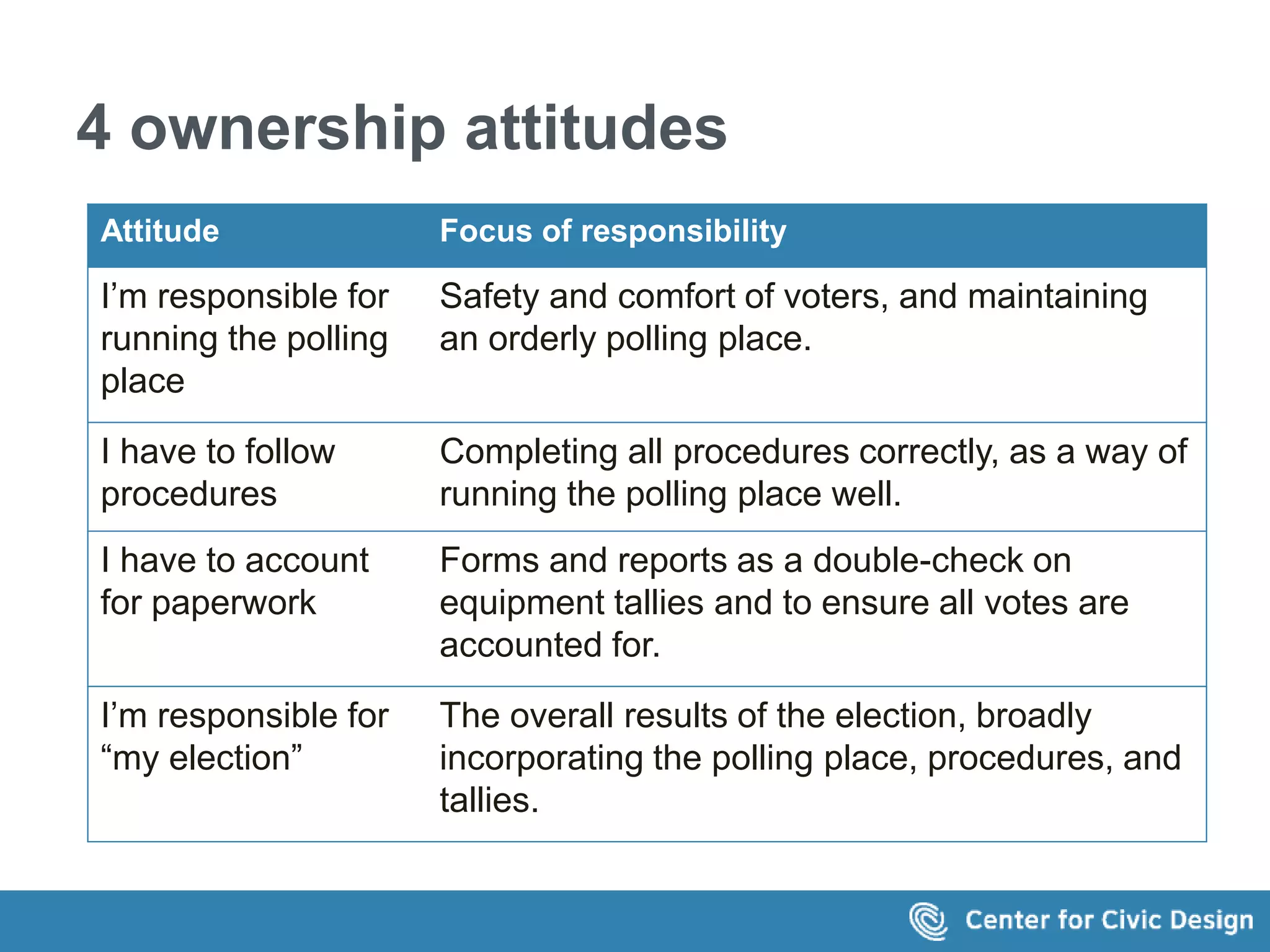
4 ownership attitudes 
Attitude Focus of responsibility 
I’m responsible for 
running the polling 
place 
Safety and comfort of voters, and maintaining 
an orderly polling place. 
I have to follow 
procedures 
Completing all procedures correctly, as a way of 
running the polling place well. 
I have to account 
for paperwork 
Forms and reports as a double-check on 
equipment tallies and to ensure all votes are 
accounted for. 
I’m responsible for 
β€œmy election” 
The overall results of the election, broadly 
incorporating the polling place, procedures, and 
tallies.
Big insights 
Security and 
the Goldilocks Problem
Security in elections 
The processes, procedures, 
tools, and people put in place to 
ensure that elections run freely, 
fairly, and efficiently.
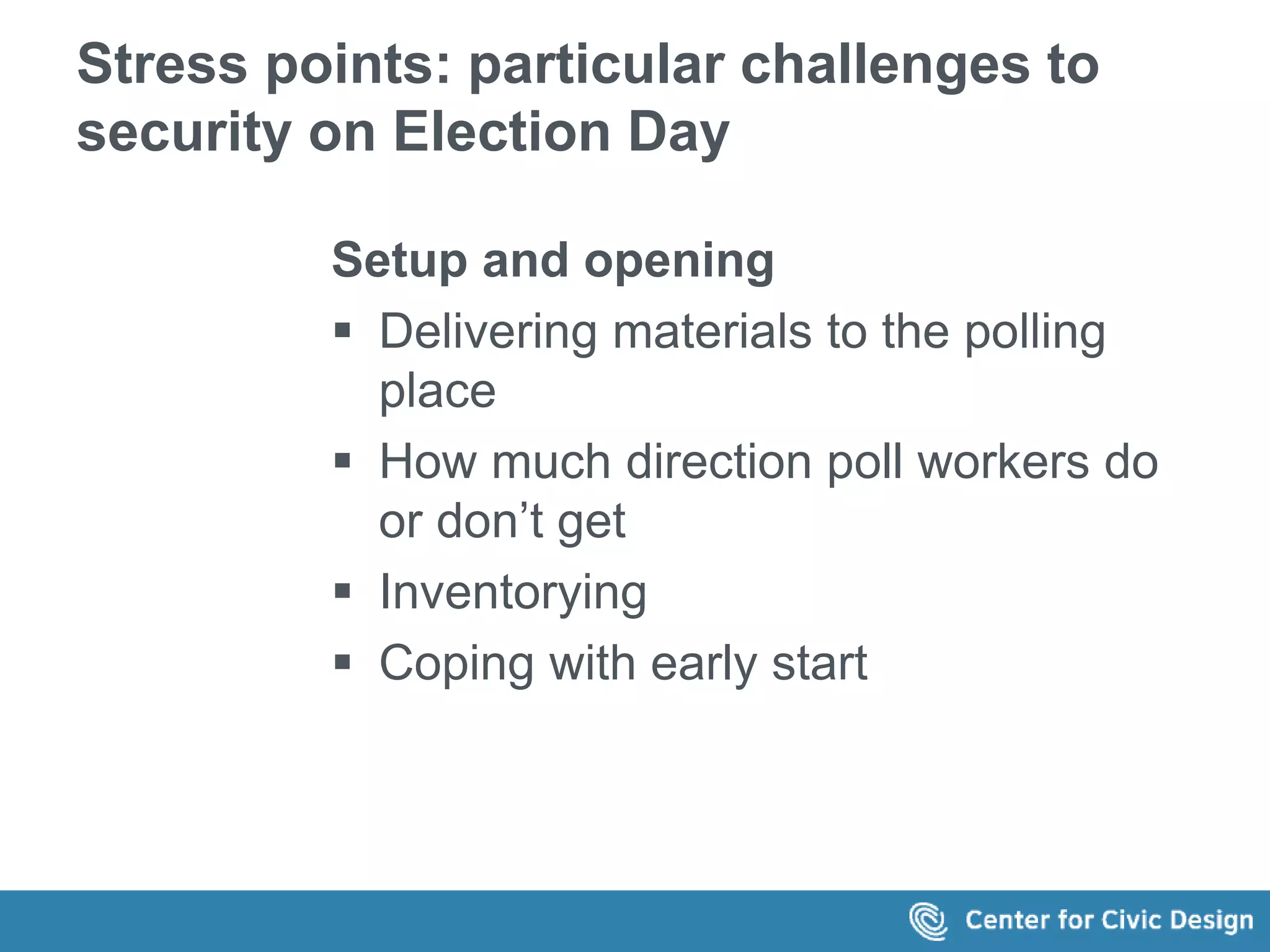
Stress points: particular challenges to 
security on Election Day 
Setup and opening 
ο‚§ Delivering materials to the polling 
place 
ο‚§ How much direction poll workers do 
or don’t get 
ο‚§ Inventorying 
ο‚§ Coping with early start
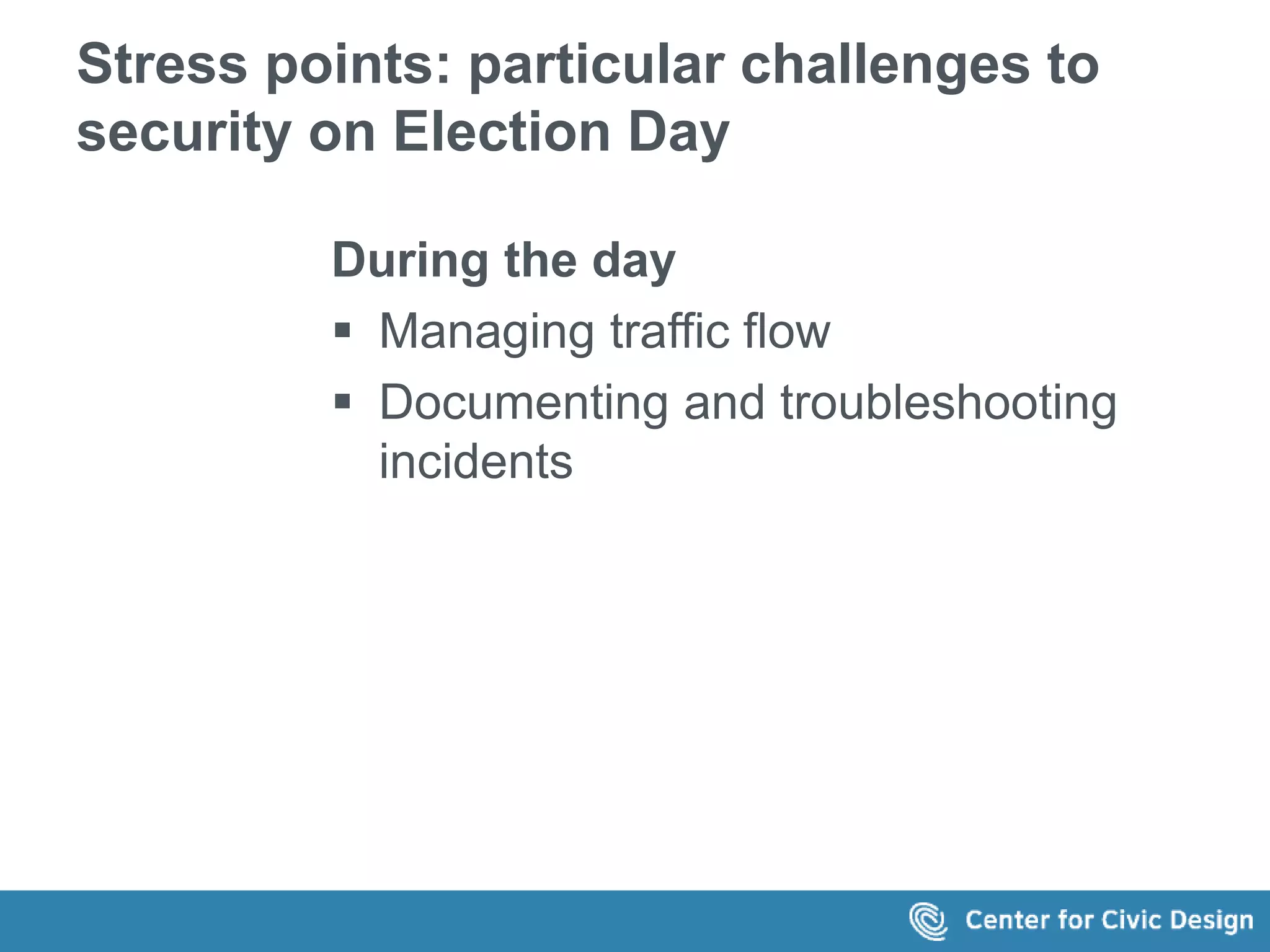
Stress points: particular challenges to 
security on Election Day 
During the day 
ο‚§ Managing traffic flow 
ο‚§ Documenting and troubleshooting 
incidents
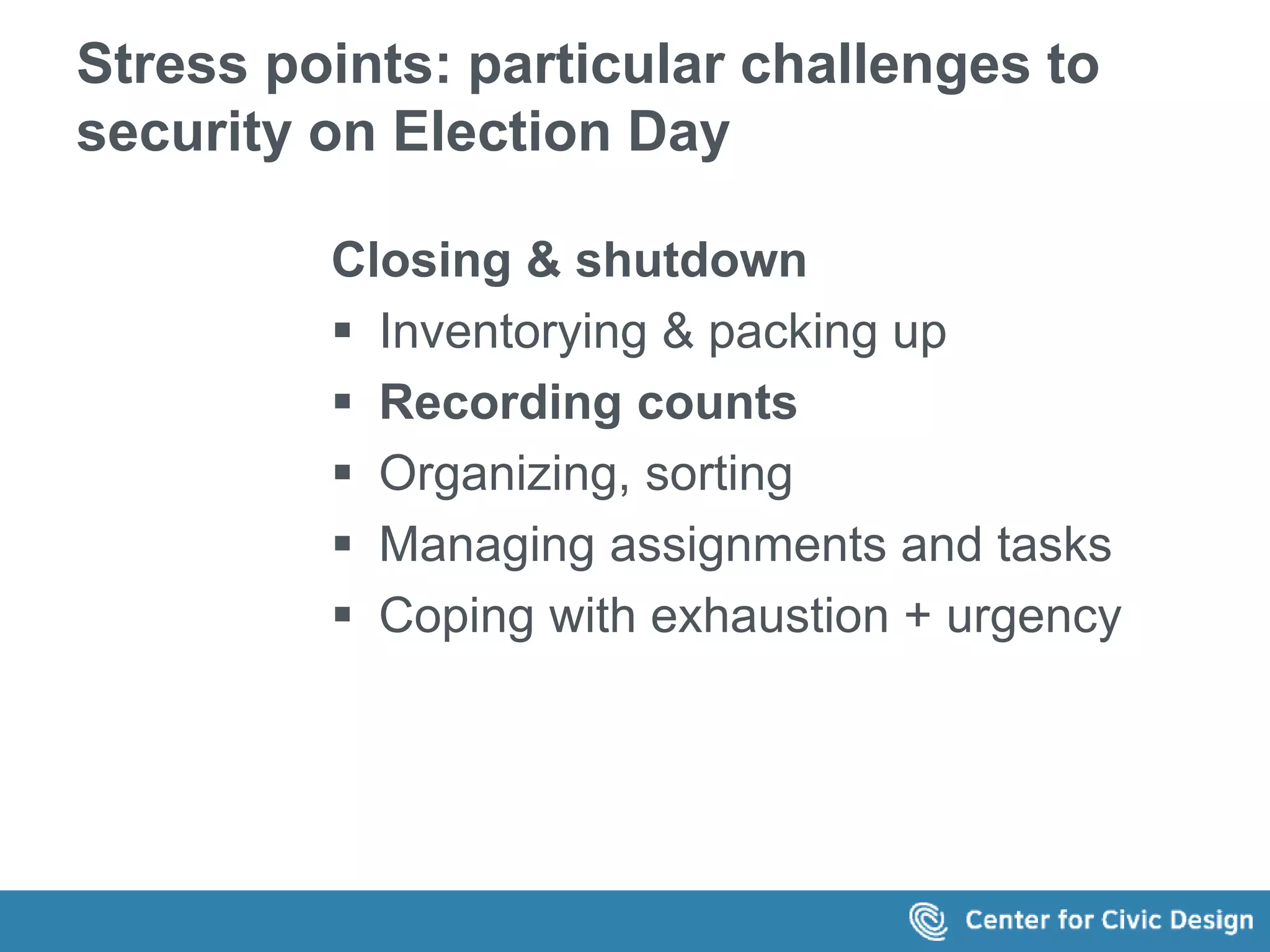
Stress points: particular challenges to 
security on Election Day 
Closing & shutdown 
ο‚§ Inventorying & packing up 
ο‚§ Recording counts 
ο‚§ Organizing, sorting 
ο‚§ Managing assignments and tasks 
ο‚§ Coping with exhaustion + urgency
Stress points 
Reconciling was, by far, the biggest 
and most persistent problem
Stress points 
Elections appear to be optimized 
for opening the polls
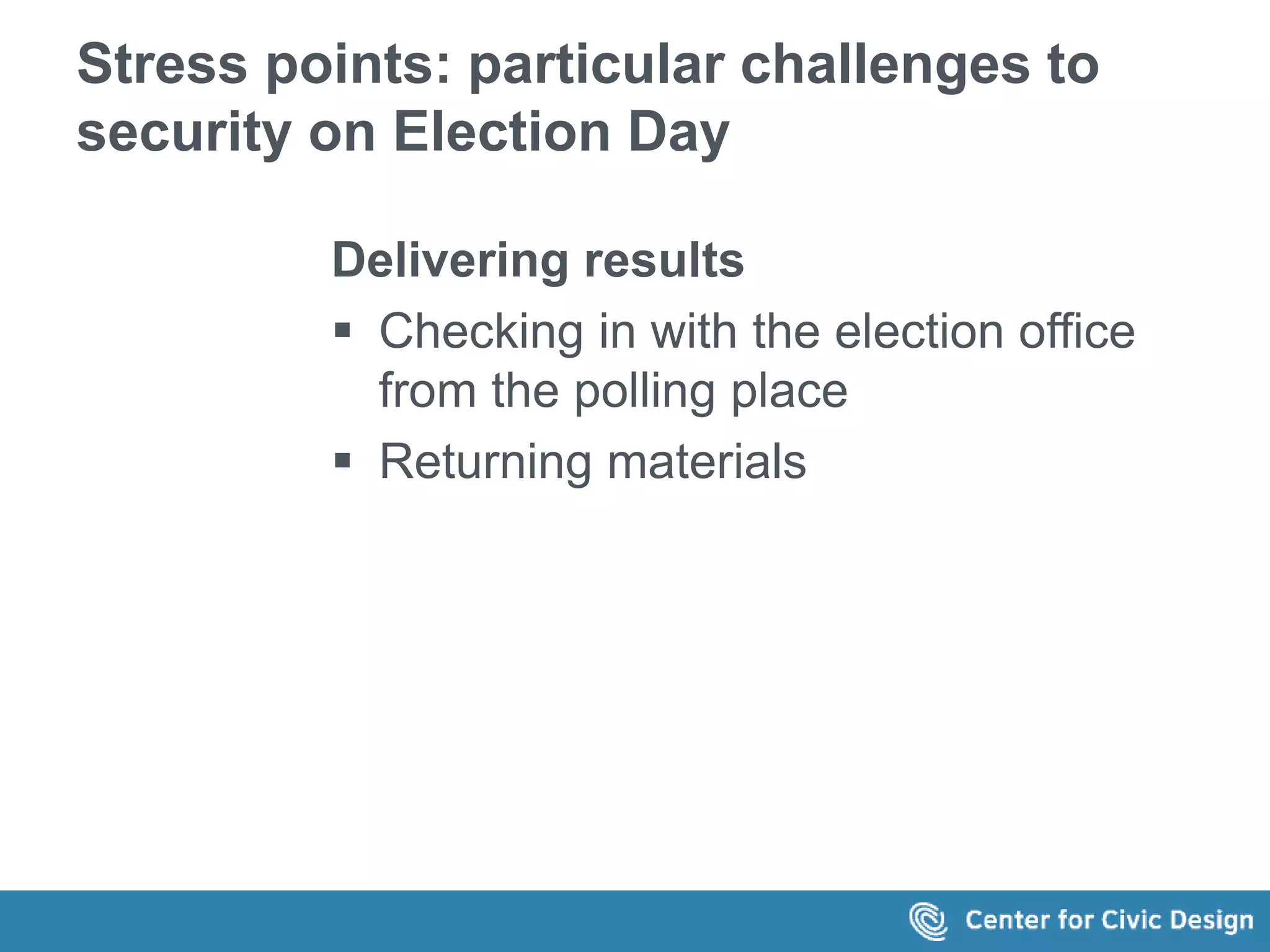
Stress points: particular challenges to 
security on Election Day 
Delivering results 
ο‚§ Checking in with the election office 
from the polling place 
ο‚§ Returning materials
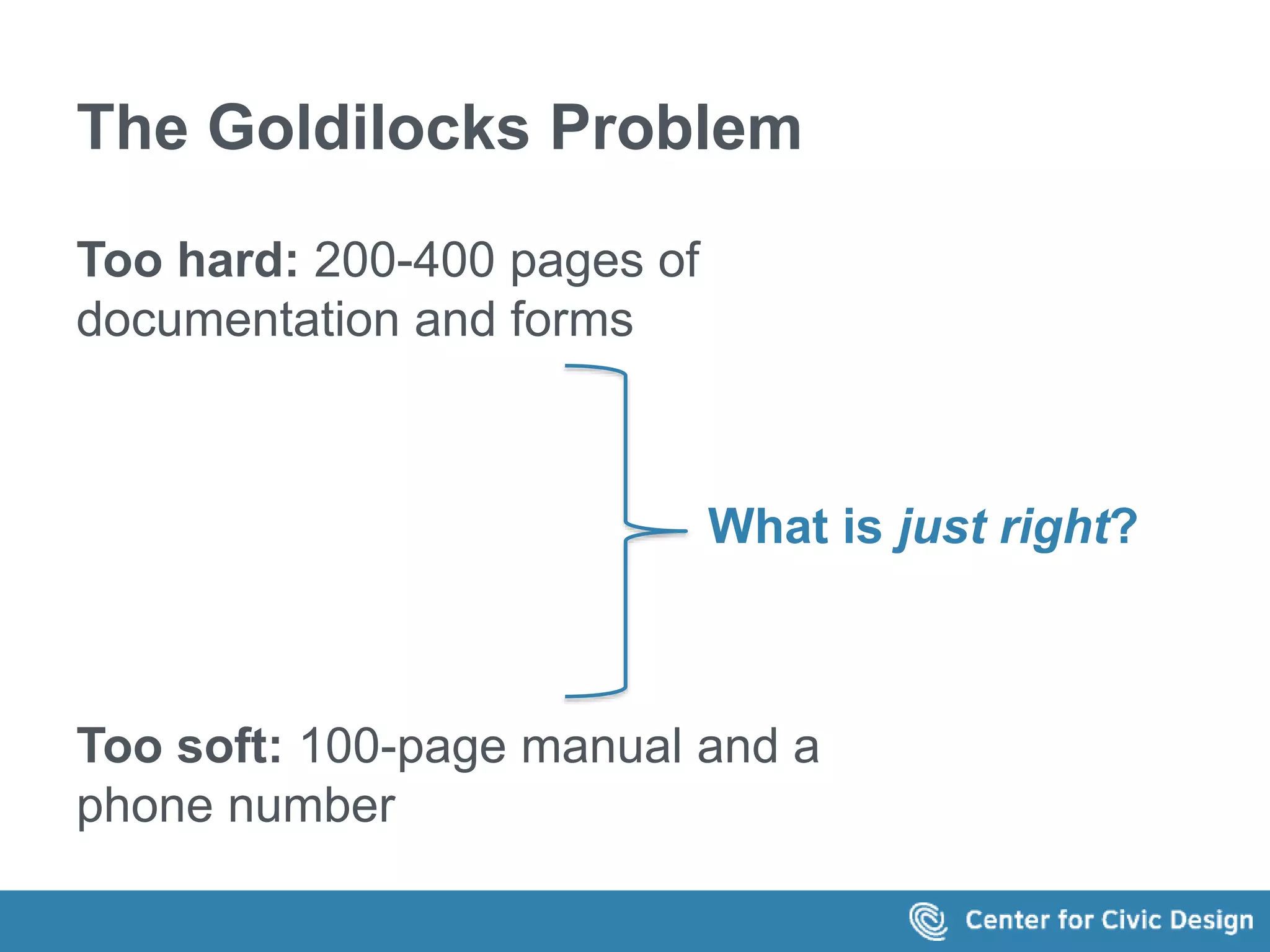
The Goldilocks Problem 
Too hard: 200-400 pages of 
documentation and forms 
What is just right? 
Too soft: 100-page manual and a 
phone number
Best practice 
Empower through training and trust 
ο‚§ Teams had ways to resolve disputes 
ο‚§ Leads took strong responsibility 
ο‚§ Forms and checklists helped catch 
mistakes before they became big 
problems
Helping poll workers do the best possible 
job 
ο‚§ Use scenarios and role-playing to 
practice anticipating problems 
ο‚§ Trust them and leave them alone 
ο‚§ Use appropriate constraints such as 
checklists 
ο‚§ Give responsibility 
ο‚§ Have strong expectations and 
equivalent consequences for not 
meeting them
Show-and-tell 
progression 
Sharing polling place materials 
and training manuals
Guidelines 
If jurisdictions could do just a few 
things, what should they do?
Thank you.
With support from the 
National Science 
Foundation 
EAGER grant CNS-1301887
And special help from 
Doug Chapin, UMN 
Lea Chittenden, UMN 
Laura Pointon, CCD
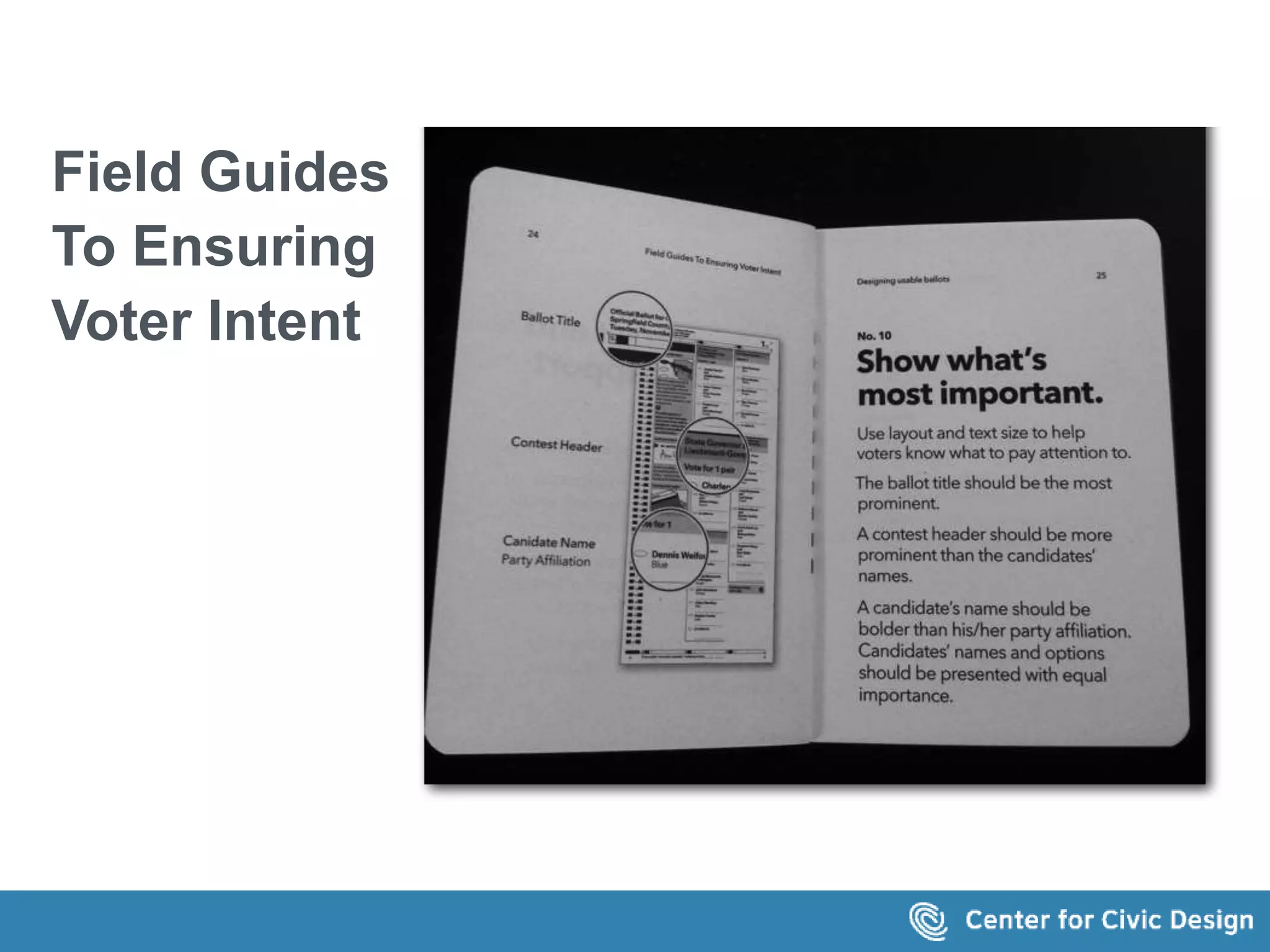
Field Guides 
To Ensuring 
Voter Intent
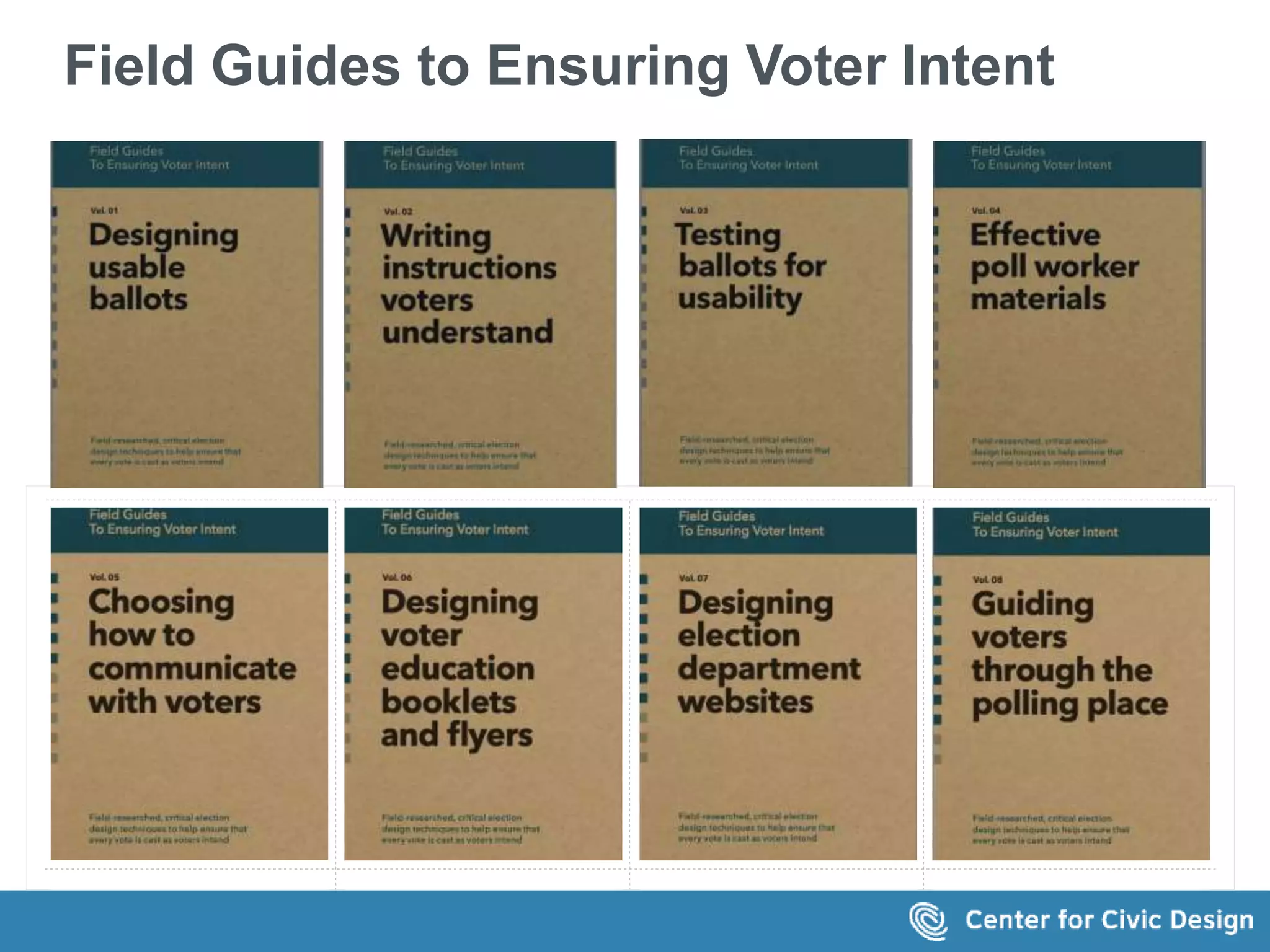
Field Guides to Ensuring Voter Intent
Get in touch! 
Whitney Quesenbery 
whitneyq@civicdesign.org 
@whitneyq 
Dana Chisnell 
dana@civicdesign.org 
@danachis 
civicdesign.org 
@civicdesign

Security insights & issues for poll workers

  • 1.
    Security insights andissues for poll workers Whitney Quesenbery Dana Chisnell Center for Civic Design civicdesign.org Project workshop September 26, 2014 Humphrey School of Public Affairs, UMN
  • 2.
    Opening remarks ο‚§Larry Jacobs Professor, Walter F. and Joan Mondale Chair for Political Studies ο‚§ Doug Chapin Director, Program for Excellence in Election Administration ο‚§ Jeremy Epstein Program Director, NSF
  • 3.
    Who is here ο‚§ Election officials from 12 jurisdictions ο‚§ Researchers who contributed to the project (8 of 17) ο‚§ Friends of the project
  • 4.
    About the project What we wanted to learn
  • 5.
    Background First researchto look at security from point of view of poll workers interacting with systems
  • 6.
    Coverage ο‚§ 19elections in 12 states ο‚§ November 2012 – November 2013 ο‚§ 17 researchers ο‚§ Purposeful but convenient sample ο‚§ Types of elections ο‚§ Range of systems ο‚§ Geographical range ο‚§ Range of sizes of jurisdiction ο‚§ Different approaches to administration and process
  • 7.
    What we expected: ο‚§ Security would be a distinct part of procedures & training ο‚§ Issues would occur in the interaction with voting systems ο‚§ Issues caused by mistakes, not purposeful attacks Was not exactly what we found!
  • 8.
  • 9.
    Security is bakedin ο‚§ Poll workers have and use procedures designed for security ο‚§ Procedures are designed to support trust in elections ο‚§ Security is not treated separately
  • 10.
    Nobody is doingit flawlessly ο‚§ Even great jurisdictions see imperfect completeness, accuracy, or clarity ο‚§ Empowered poll workers cope well, generally
  • 11.
    Security vulnerabilities aredistributed ο‚§ People ο‚§ Processes ο‚§ Paper ο‚§ Procedures and training
  • 12.
    Reconciling and closing ο‚§ "Controlled chaos" ο‚§ Team work helped
  • 13.
    Poll worker attitudinalfactors ο‚§ Personal history ο‚§ Election culture ο‚§ Voting equipment ο‚§ Who manages the team ο‚§ Local policies ο‚§ Leadership of clerk or election director ο‚§ Changes in laws
  • 14.
    4 ownership attitudes Attitude Focus of responsibility I’m responsible for running the polling place Safety and comfort of voters, and maintaining an orderly polling place. I have to follow procedures Completing all procedures correctly, as a way of running the polling place well. I have to account for paperwork Forms and reports as a double-check on equipment tallies and to ensure all votes are accounted for. I’m responsible for β€œmy election” The overall results of the election, broadly incorporating the polling place, procedures, and tallies.
  • 15.
    Big insights Securityand the Goldilocks Problem
  • 16.
    Security in elections The processes, procedures, tools, and people put in place to ensure that elections run freely, fairly, and efficiently.
  • 17.
    Stress points: particularchallenges to security on Election Day Setup and opening ο‚§ Delivering materials to the polling place ο‚§ How much direction poll workers do or don’t get ο‚§ Inventorying ο‚§ Coping with early start
  • 18.
    Stress points: particularchallenges to security on Election Day During the day ο‚§ Managing traffic flow ο‚§ Documenting and troubleshooting incidents
  • 19.
    Stress points: particularchallenges to security on Election Day Closing & shutdown ο‚§ Inventorying & packing up ο‚§ Recording counts ο‚§ Organizing, sorting ο‚§ Managing assignments and tasks ο‚§ Coping with exhaustion + urgency
  • 20.
    Stress points Reconcilingwas, by far, the biggest and most persistent problem
  • 21.
    Stress points Electionsappear to be optimized for opening the polls
  • 22.
    Stress points: particularchallenges to security on Election Day Delivering results ο‚§ Checking in with the election office from the polling place ο‚§ Returning materials
  • 23.
    The Goldilocks Problem Too hard: 200-400 pages of documentation and forms What is just right? Too soft: 100-page manual and a phone number
  • 24.
    Best practice Empowerthrough training and trust ο‚§ Teams had ways to resolve disputes ο‚§ Leads took strong responsibility ο‚§ Forms and checklists helped catch mistakes before they became big problems
  • 25.
    Helping poll workersdo the best possible job ο‚§ Use scenarios and role-playing to practice anticipating problems ο‚§ Trust them and leave them alone ο‚§ Use appropriate constraints such as checklists ο‚§ Give responsibility ο‚§ Have strong expectations and equivalent consequences for not meeting them
  • 26.
    Show-and-tell progression Sharingpolling place materials and training manuals
  • 27.
    Guidelines If jurisdictionscould do just a few things, what should they do?
  • 28.
  • 29.
    With support fromthe National Science Foundation EAGER grant CNS-1301887
  • 30.
    And special helpfrom Doug Chapin, UMN Lea Chittenden, UMN Laura Pointon, CCD
  • 31.
    Field Guides ToEnsuring Voter Intent
  • 32.
    Field Guides toEnsuring Voter Intent
  • 33.
    Get in touch! Whitney Quesenbery whitneyq@civicdesign.org @whitneyq Dana Chisnell dana@civicdesign.org @danachis civicdesign.org @civicdesign

Editor's Notes

  • #3Β 12:10-ish for Larry 1pm for Doug and Jeremy
  • #4Β 1:15 Go around the room to do introductions now
  • #5Β 1:30 Whitney starts
  • #6Β This is the first research we know of that focused on the human aspect of the voting system rather than purely on the technology and how it could be hacked.
  • #7Β 4 presidential elections (2012) 1 primary 2 consolidated municipal 12 municipal
  • #16Β 1:45 Dana takes over here
  • #17Β Security goes beyond chain of custody
  • #24Β This transitions us to the progressions / idea markets
  • #27Β 2:!5 – 4pm Dana introduces the progressions and gets everyone started
  • #28Β 4:!5 – 5pm Whitney facilitates this discussion
  • #29Β 5:20 – 5:30 And now a word from our sponsor
  • #33Β DC Each guide covers a different topic. If you would like more sets, let us know. We’ll send them to you for free, thanks to the generous support of the MacArthur Foundation. Or, you can download PDFs from civicdesigning.org/fieldguides