Challenges of balancing
usability and security
in future voting systems
Dana Chisnell
@danachis
@ChadButterfly
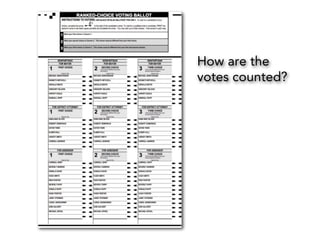
How are the
votes counted?
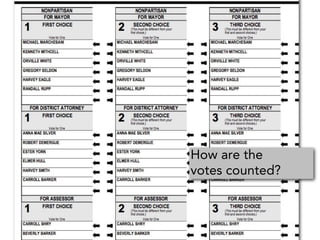
How are the
votes counted?
If it’s not usable, it’s
not secure.
Now
Current design
demands much
of voters
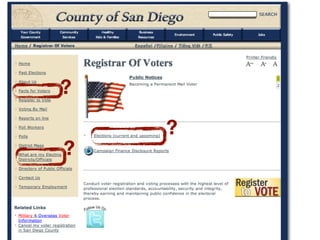
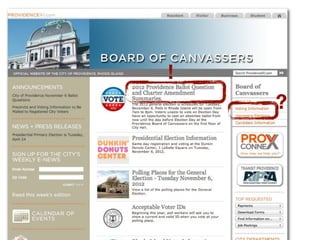
Study 1: Websites
Cataloged 147 election websites
Conducted 41 remote moderated
usability tests
What happened?
Voters are
ballot-centric
they’re focused on that act,
not conscious of the overall process
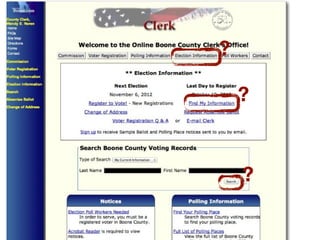
What’s on the ballot?
?
?

?
?
?

?
!
?
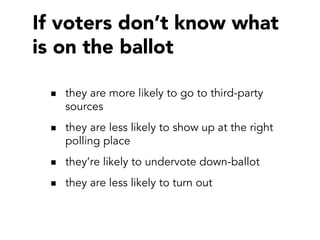
If voters don’t know what
is on the ballot
they are more likely to go to third-party
sources
they are less likely to show up at the right
polling place
they’re likely to undervote down-ballot
they are less likely to turn out
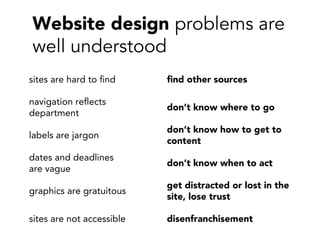
Website design problems are
well understood
sites are hard to find

find other sources

navigation reflects
department

don’t know where to go

labels are jargon

don’t know how to get to
content

dates and deadlines
are vague

don’t know when to act

graphics are gratuitous

get distracted or lost in the
site, lose trust

sites are not accessible

disenfranchisement
Study 2:
Alternative counting
methods
San Francisco and Oakland,
December 2011
EVN, March 2012
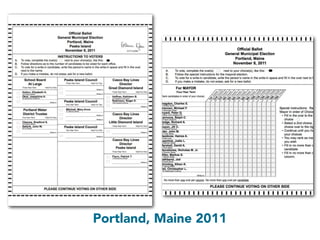
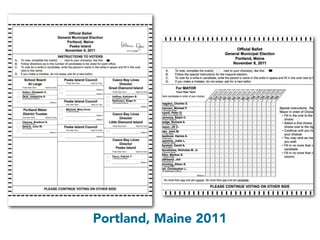
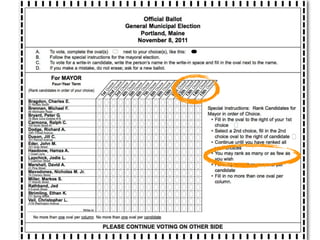
Portland, Maine 2011
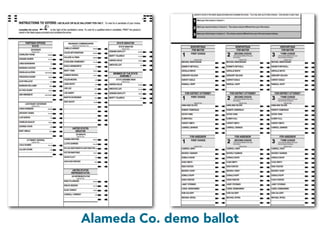
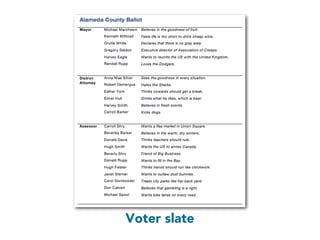
Alameda Co. demo ballot
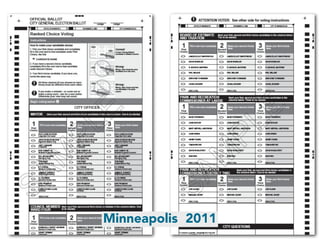
Minneapolis 2011
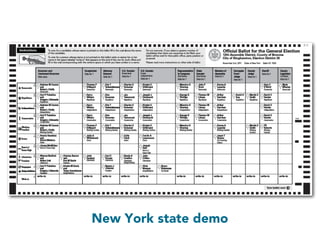
New York state demo
Voter slate
How is my vote counted?
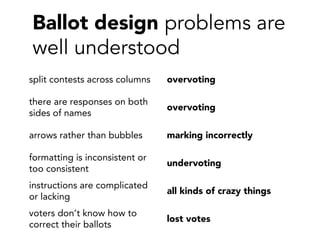
Ballot design problems are
well understood
split contests across columns

overvoting

there are responses on both
sides of names

overvoting

arrows rather than bubbles

marking incorrectly

formatting is inconsistent or
too consistent

undervoting

instructions are complicated
or lacking

all kinds of crazy things

voters don’t know how to
correct their ballots

lost votes
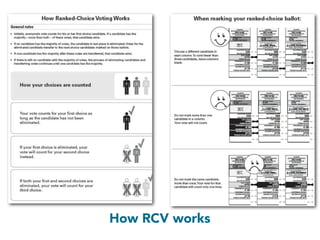
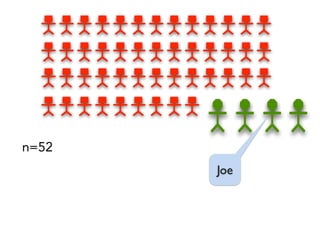
How RCV works
n=52
Joe
What does it mean?
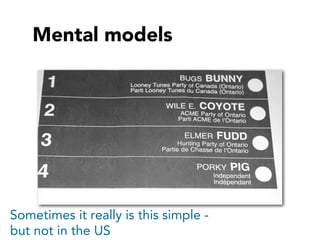
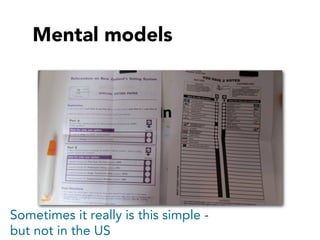
Mental models

People make inferences about how
things work based on available
information and context
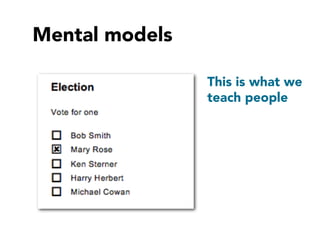
Mental models
This is what we
teach people
Mental models

Sometimes it really is this simple but not in the US
Mental models

Sometimes it really is this simple but not in the US
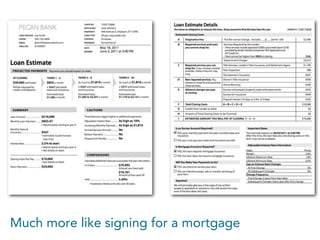
Much more like signing for a mortgage
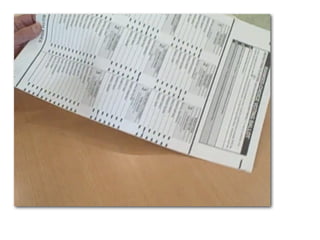
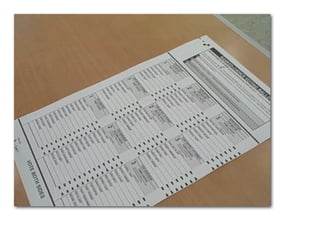
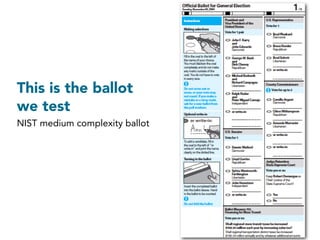
This is the ballot
we test
NIST medium complexity ballot
Mental models

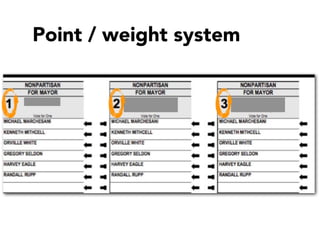
Point system
Weighted
Reversed
Point / weight system
Intent is loaded
Preparing to vote
Knowing what to
expect
Interacting with the
ballot
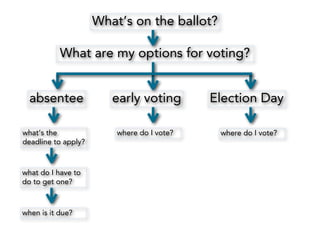
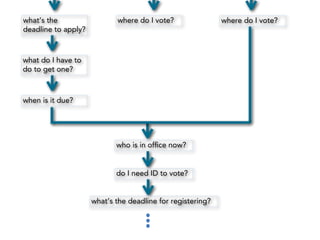
What’s on the ballot?
What are my options for voting?
absentee
what’s the
deadline to apply?
what do I have to
do to get one?

when is it due?

early voting

Election Day

where do I vote?

where do I vote?
what’s the
deadline to apply?
where do I vote?

what do I have to
do to get one?

when is it due?

who is in office now?

do I need ID to vote?

what’s the deadline for registering?
where do I vote?
1. Voters develop faulty
mental models
2. Voters don’t understand the
consequences of their actions
3. Voters vote counter to their
intentions
Portland, Maine 2011
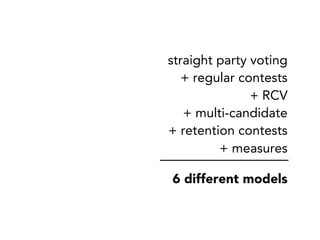
straight party voting
+ regular contests
+ RCV
+ multi-candidate
+ retention contests
+ measures
6 different models
We’re pretty sure there’s a problem
Future
Combinations add
complexity.
Complexity compromises
security.
Voters
bear a cognitive burden
that design can relieve.
Poor design and instructions
on ballots make
understanding, marking, and casting
difficult, time-consuming, and
complicated
Poor design and instructions
on ballots make
counting, verifying, and audits
difficult, time-consuming, and
complicated
Raises questions about what is being
secured.
complex ballots = lost votes
complex ballots
+ vote-by-mail
= lost votes
complex ballots
+ multi-language
= lost votes
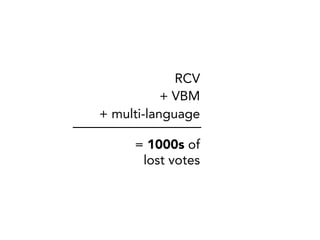
RCV
+ VBM
+ multi-language
= 1000s of
lost votes
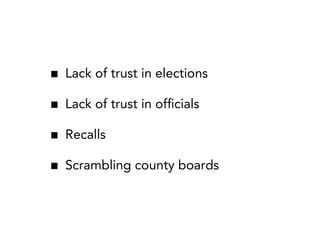
Lack of trust in elections
Lack of trust in officials
Recalls
Scrambling county boards
Security may add to the
cognitive burden
without thoughtful design.
Security = Counted as cast
Security = Cast as intended +
counted as cast
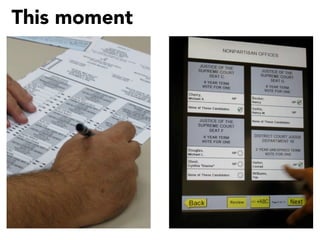
This moment
Voter ed is not the answer.
If it’s not usable, it’s not valid.
If it’s not usable, it’s not countable.
If it’s not usable, it’s not verifiable.
If it’s not usable, it’s not auditable.
If it’s not usable, it’s not secure.
Thank you
Rick Bond

Jared Spool

Cyd Harrell

David Cary

Ethan Newby

Rebecca Sherrill

Callie Wheeler

Frank Castro

Chelsey Glasson

Sandy Olson

Sara Cambridge

Nancy Frishberg

Laura Paajanen

Yelena Nakhimovsky

Beth Lingard

Whitney Quesenbery

Beth Pickard
And...
Andrea Moed

Doug Hanke

Kristen Johansen

Karen McGrane

Boaz Gurdin

Krysta Chauncey

Ashley Pearlman

Karen Bachmann

Donald A. Cox

Rosa Moran

Kamaria Campbell

Josie Scott

Paul Schreiber

Rachel Goddard

Jenn Downs

Samantha LeVan

Jacqui Adams

Kate Aurigemma

Michelle Milla

Erin Liman

Josh Keyes

Alessandra Brophy

Josh Bright

Andrea Fineman
New tools.
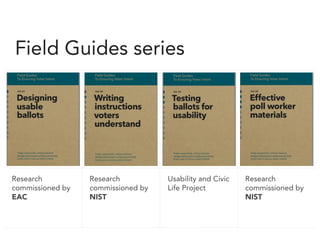
Field Guides series

Research
commissioned by
EAC

Research
commissioned by
NIST

Usability and Civic
Life Project

Research
commissioned by
NIST
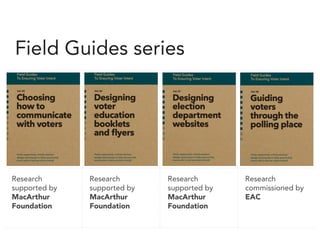
Field Guides series

Research
supported by
MacArthur
Foundation

Research
supported by
MacArthur
Foundation

Research
supported by
MacArthur
Foundation

Research
commissioned by
EAC
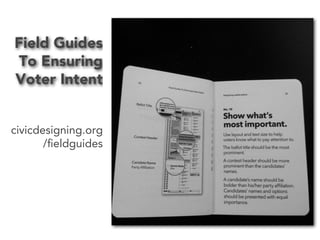
Field Guides
To Ensuring
Voter Intent

civicdesigning.org
/fieldguides
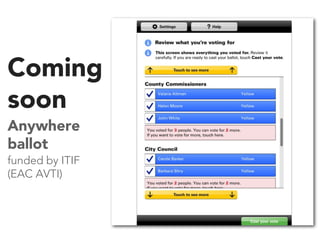
Coming
soon
Anywhere
ballot
funded by ITIF
(EAC AVTI)
If it’s not usable,
it’s not secure.
Thank you.
Dana Chisnell
dana@usabilityworks.net
civicdesign@usabilityworks.net
civicdesigning.org
@danachis
@ChadButterfly

Usability and security in future voting systems