Disaster Management
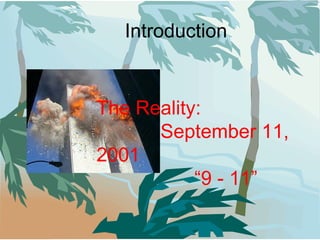
Introduction The Reality: September 11, 2001 “ 9 - 11”
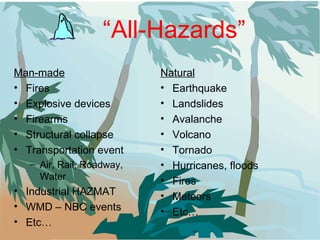
“ All-Hazards” Man-made Fires Explosive devices Firearms Structural collapse Transportation event Air, Rail, Roadway, Water Industrial HAZMAT WMD – NBC events Etc… Natural Earthquake Landslides Avalanche Volcano Tornado Hurricanes, floods Fires Meteors Etc…
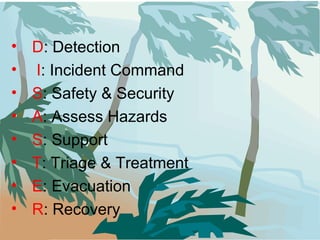
D : Detection I : Incident Command S : Safety & Security A : Assess Hazards S : Support T : Triage & Treatment E : Evacuation R : Recovery
ARE WE READY ???? What if a earthquake strikes our school? What if a terror strikes our school? What if a tsunami strikes our home? Just ask yourself one question::: ARE YOU READY??
Helpline If any disaster occurs first thing you should do is to call the helpline number so that they come to help. AND ALWAYS REMEMBER DO NOT GO IN THE DISASTER STRUCK AREA ALONE……
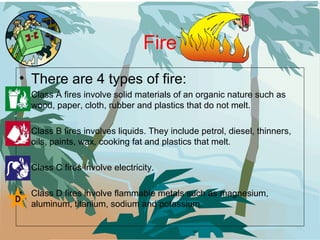
Fire There are 4 types of fire: Class A fires involve solid materials of an organic nature such as wood, paper, cloth, rubber and plastics that do not melt.  Class B fires involves liquids. They include petrol, diesel, thinners, oils, paints, wax, cooking fat and plastics that melt.  Class C fires involve electricity.  Class D fires involve flammable metals such as magnesium, aluminum, titanium, sodium and potassium.
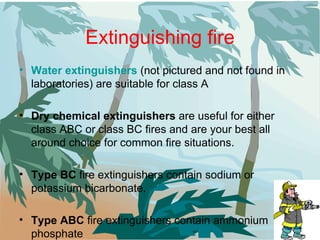
Extinguishing fire Water extinguishers  (not pictured and not found in laboratories) are suitable for class A  Dry chemical extinguishers  are useful for either class ABC or class BC fires and are your best all around choice for common fire situations.  Type BC  fire extinguishers contain sodium or potassium bicarbonate. Type ABC  fire extinguishers contain ammonium phosphate
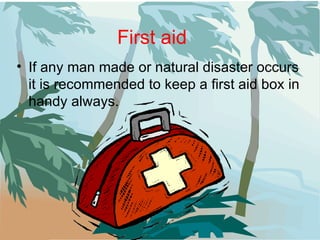
First aid If any man made or natural disaster occurs it is recommended to keep a first aid box in handy always.
Search, rescue and evacuation When an earthquake struck always remember to evacuate everyone to a open field. Don’t go on a rescue operation alone. In flood everyone should go to a high rise area. In fire take everyone away from it. And always follow a line don’t rush. Evacuate through fire exit.
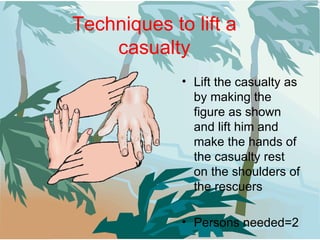
Lift the casualty as by making the figure as shown and lift him and make the hands of the casualty rest on the shoulders of the rescuers Persons needed=2 Techniques to lift a casualty
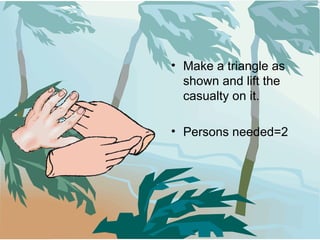
Make a triangle as shown and lift the casualty on it. Persons needed=2
Remember DO NOT PANIC . After rescuing the casualty immediately provide him with first aid and take him to the hospital. If you see its too risky to save the casualty then its better to leave them there and wait for the rescuers to come.
Thanks Presentation by Imon.B

Disaster management

  • 1.
  • 2.
    Introduction The Reality:September 11, 2001 “ 9 - 11”
  • 3.
    “ All-Hazards” Man-madeFires Explosive devices Firearms Structural collapse Transportation event Air, Rail, Roadway, Water Industrial HAZMAT WMD – NBC events Etc… Natural Earthquake Landslides Avalanche Volcano Tornado Hurricanes, floods Fires Meteors Etc…
  • 4.
    D : DetectionI : Incident Command S : Safety & Security A : Assess Hazards S : Support T : Triage & Treatment E : Evacuation R : Recovery
  • 5.
    ARE WE READY???? What if a earthquake strikes our school? What if a terror strikes our school? What if a tsunami strikes our home? Just ask yourself one question::: ARE YOU READY??
  • 6.
    Helpline If anydisaster occurs first thing you should do is to call the helpline number so that they come to help. AND ALWAYS REMEMBER DO NOT GO IN THE DISASTER STRUCK AREA ALONE……
  • 7.
    Fire There are4 types of fire: Class A fires involve solid materials of an organic nature such as wood, paper, cloth, rubber and plastics that do not melt. Class B fires involves liquids. They include petrol, diesel, thinners, oils, paints, wax, cooking fat and plastics that melt. Class C fires involve electricity. Class D fires involve flammable metals such as magnesium, aluminum, titanium, sodium and potassium.
  • 8.
    Extinguishing fire Waterextinguishers  (not pictured and not found in laboratories) are suitable for class A Dry chemical extinguishers  are useful for either class ABC or class BC fires and are your best all around choice for common fire situations.  Type BC  fire extinguishers contain sodium or potassium bicarbonate. Type ABC  fire extinguishers contain ammonium phosphate
  • 9.
    First aid Ifany man made or natural disaster occurs it is recommended to keep a first aid box in handy always.
  • 10.
    Search, rescue andevacuation When an earthquake struck always remember to evacuate everyone to a open field. Don’t go on a rescue operation alone. In flood everyone should go to a high rise area. In fire take everyone away from it. And always follow a line don’t rush. Evacuate through fire exit.
  • 11.
    Lift the casualtyas by making the figure as shown and lift him and make the hands of the casualty rest on the shoulders of the rescuers Persons needed=2 Techniques to lift a casualty
  • 12.
    Make a triangleas shown and lift the casualty on it. Persons needed=2
  • 13.
    Remember DO NOTPANIC . After rescuing the casualty immediately provide him with first aid and take him to the hospital. If you see its too risky to save the casualty then its better to leave them there and wait for the rescuers to come.
  • 14.