SAFETY (SECURITY)
TRAINING COURSE
Safety, comfort & welfare
• Fire Alarm/exits
• Toilets
• Smoking
• Drinks
• Breaks
• Questions
• Examinations
As a courtesy to others
please TURN OFF your
mobile phone
COURSE OUTLINES:
 Private Security Industry
 Communication and Customer Care
 Health & Safety
 Fire Safety
 Emergency Procedures
Security
“astate or feeling of being
safe and secure”
The Private Security Industry
“provides manned and technical
protection to premises, people and
their property”
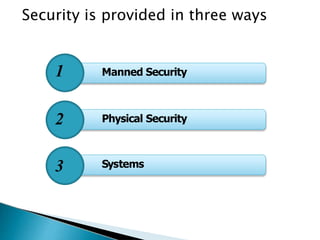
Security is provided in three ways
Manned Security
Physical Security
Systems
1
2
3
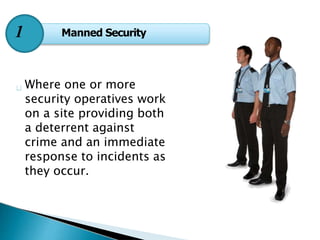
Where one or more
security operatives work
on a site providing both
a deterrent against
crime and an immediate
response to incidents as
they occur.
Manned Security
1
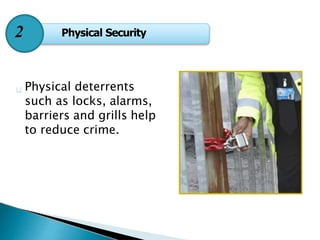
Physical deterrents
such as locks, alarms,
barriers and grills help
to reduce crime.
Physical Security
2
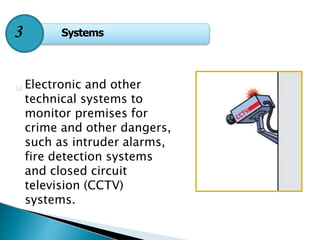
Electronic and other
technical systems to
monitor premises for
crime and other dangers,
such as intruder alarms,
fire detection systems
and closed circuit
television (CCTV)
systems.
Systems
3
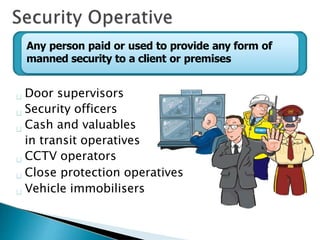
Any person paid or used to provide any form of
manned security to a client or premises
Door supervisors
Security officers
Cash and valuables
in transit operatives
CCTV operators
Close protection operatives
Vehicle immobilisers
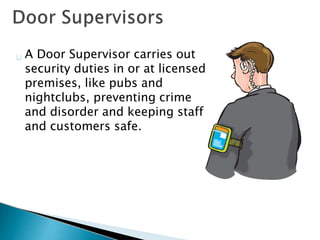
A Door Supervisor carries out
security duties in or at licensed
premises, like pubs and
nightclubs, preventing crime
and disorder and keeping staff
and customers safe.
A Security Officer guards premises against
unauthorised access or occupation, or against
outbreaks of disorder or against damage.
They also guard property against being stolen,
against damage or against otherwise being
dishonestly taken or obtained
They may also guard one or more individuals
against assault or against injuries that might be
suffered in consequence of the unlawful
conduct of others
This includes providing a physical presence, or
carrying out a form of patrol or surveillance to
deter crime.
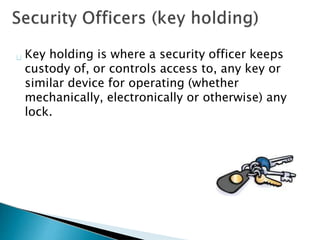
Key holding is where a security officer keeps
custody of, or controls access to, any key or
similar device for operating (whether
mechanically, electronically or otherwise) any
lock.
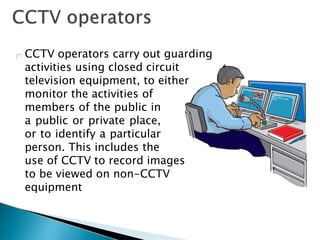
CCTV operators carry out guarding
activities using closed circuit
television equipment, to either
monitor the activities of
members of the public in
a public or private place,
or to identify a particular
person. This includes the
use of CCTV to record images
to be viewed on non-CCTV
equipment
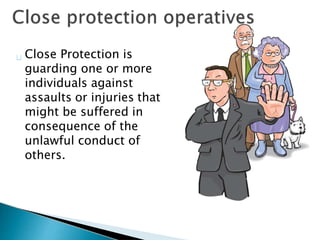
Close Protection is
guarding one or more
individuals against
assaults or injuries that
might be suffered in
consequence of the
unlawful conduct of
others.
It is very important that security operatives
appear professional at all times
Clients and members of the public expect
security staff to act in a certain way.
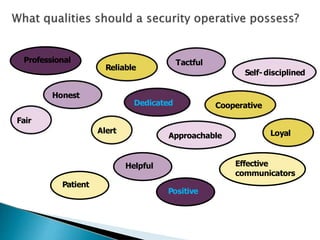
Professional
Honest
Fair
Reliable
Dedicated
Alert
Helpful
Approachable
Tactful
Self-disciplined
Cooperative
Patient
Loyal
Positive
Effective
communicators
UNIT 2
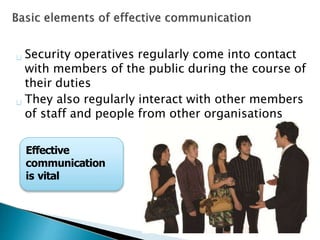
Security operatives regularly come into contact
with members of the public during the course of
their duties
They also regularly interact with other members
of staff and people from other organisations
Effective
communication
is vital
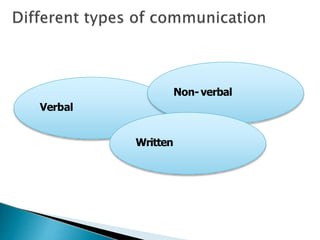
Verbal
Non-verbal
Written
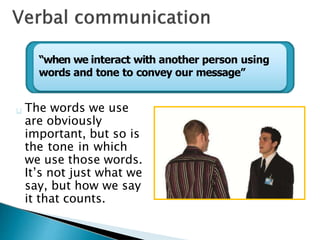
The words we use
are obviously
important, but so is
the tone in which
we use those words.
It’s not just what we
say, but how we say
it that counts.
“when we interact with another person using
words and tone to convey our message”
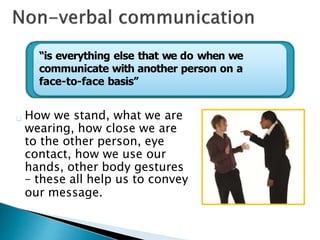
“is everything else that we do when we
communicate with another person on a
face-to-face basis”
How we stand, what we are
wearing, how close we are
to the other person, eye
contact, how we use our
hands, other body gestures
– these all help us to convey
our message.
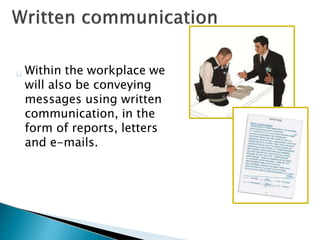
Within the workplace we
will also be conveying
messages using written
communication, in the
form of reports, letters
and e-mails.
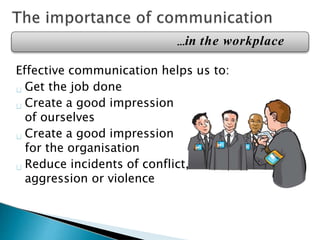
Effective communication helps us to:
Get the job done
Create a good impression
of ourselves
Create a good impression
for the organisation
Reduce incidents of conflict,
aggression or violence
…in the workplace
Communication skills play an important role in
how we interact with our colleagues,
supervisors and managers
Treat all members of staff with courtesy and
respect, and expect to be treated in the same
way
Good communication with our
colleagues is essential
…in a team
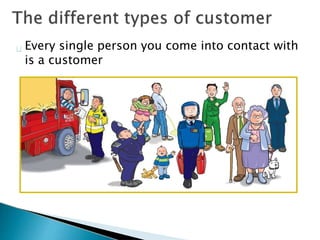
Every single person you come into contact with
is a customer
These include:
Work colleagues
Supervisors
Managers
Plus anyone working for any
other company or organisation
on the site
These include:
Visitors to the site
Workmen
Delivery drivers
The emergency services
Neighbours
Members of the public.
Keep in mind that all customers:
are individuals
are affected by:
Birthplace
Where you live
Upbringing
have differing needs and expectations
may be from different culture, religions & age
groups
Personal values are fo
‣
rmed as you grow up and
Friends
‣ Family
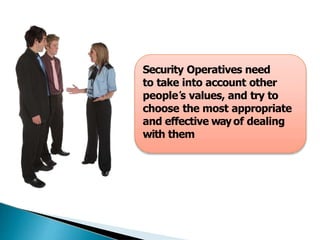
Security Operatives need
to take into account other
people’s values, and try to
choose the most appropriate
and effective way of dealing
with them
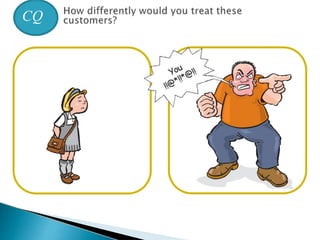
CQ
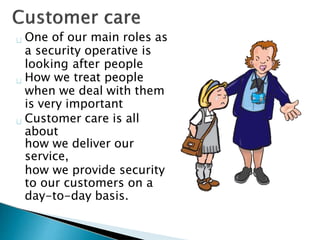
One of our main roles as
a security operative is
looking after people
How we treat people
when we deal with them
is very important
Customer care is all
about
how we deliver our
service,
how we provide security
to our customers on a
day-to-day basis.
Be professional with every customer
Be approachable
Concern yourself with the customer’s
needs
Treat customers as you would wish to be
treated yourself
Go out of your way to help customers
Leave customers pleased with how you
have dealt with them
Using poor communication skills
Showing a lack of commitment
Expressing a lack of concern
Not listening to the customer
Making jokes or being rude
Ignoring or failing to
acknowledge the customer
Appearing bored or impatient
Failing to do what you have
promised.
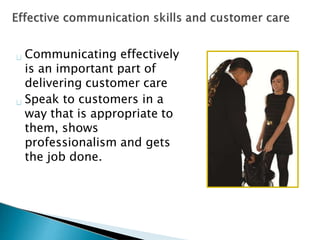
Communicating effectively
is an important part of
delivering customer care
Speak to customers in a
way that is appropriate to
them, shows
professionalism and gets
the job done.
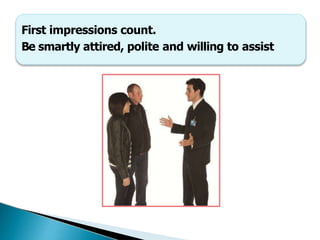
First impressions count.
Be smartly attired, polite and willing to assist
Make a good first impression
Acknowledge them straight away
Be polite
Show that you want to help them
Find out how you can assist them
Decide on the best course of action
Use their name if you know it
Make appropriate eye contact
Use clear speech.
UNIT 3
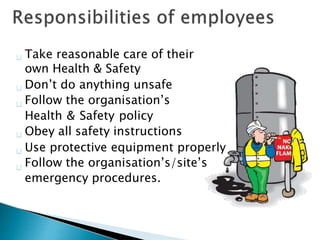
Take reasonable care of their
own Health & Safety
Don’t do anything unsafe
Follow the organisation’s
Health & Safety policy
Obey all safety instructions
Use protective equipment properly
Follow the organisation’s/site’s
emergency procedures.
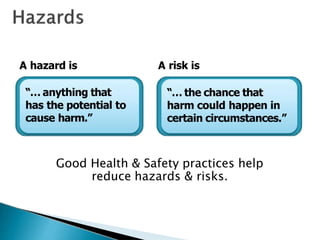
Good Health & Safety practices help
reduce hazards & risks.
“… anything that
has the potential to
cause harm.”
A risk is
“… the chance that
harm could happen in
certain circumstances.”
A hazard is
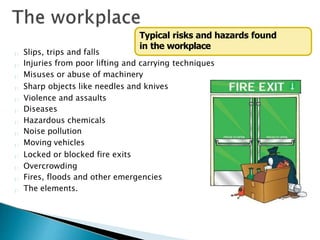
Slips, trips and falls
Injuries from poor lifting and carrying techniques
Misuses or abuse of machinery
Sharp objects like needles and knives
Violence and assaults
Diseases
Hazardous chemicals
Noise pollution
Moving vehicles
Locked or blocked fire exits
Overcrowding
Fires, floods and other emergencies
The elements.
Typical risks and hazards found
in the workplace
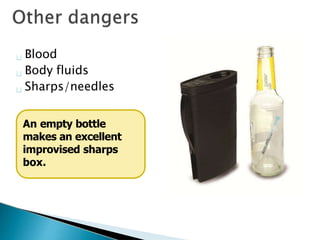
Blood
Body fluids
Sharps/needles
An empty bottle
makes an excellent
improvised sharps
box.
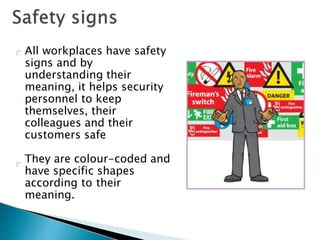
All workplaces have safety
signs and by
understanding their
meaning, it helps security
personnel to keep
themselves, their
colleagues and their
customers safe
They are colour-coded and
have specific shapes
according to their
meaning.
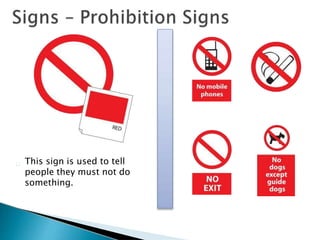
This sign is used to tell
people they must not do
something.
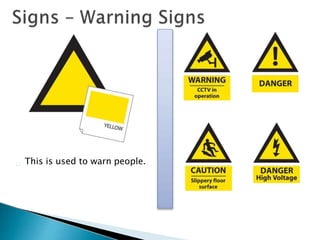
This is used to warn people.
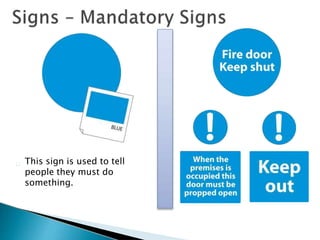
This sign is used to tell
people they must do
something.
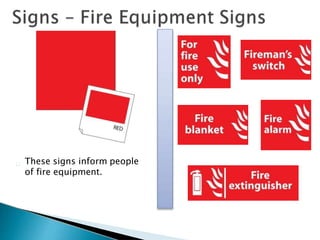
These signs inform people
of fire equipment.
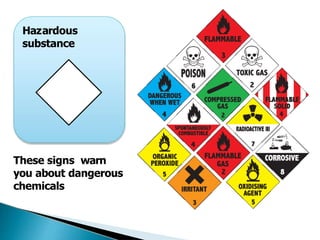
Hazardous
substance
These signs warn
you about dangerous
chemicals
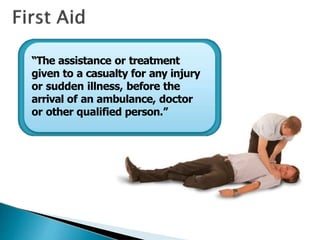
“The assistance or treatment
given to a casualty for any injury
or sudden illness, before the
arrival of an ambulance, doctor
or other qualified person.”
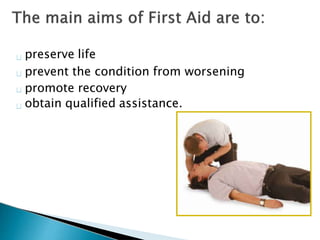
preserve life
prevent the condition from worsening
promote recovery
obtain qualified assistance.
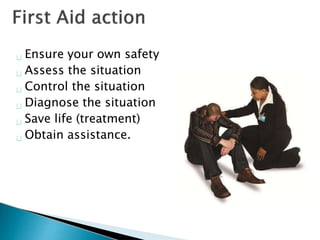
Ensure your own safety
Assess the situation
Control the situation
Diagnose the situation
Save life (treatment)
Obtain assistance.
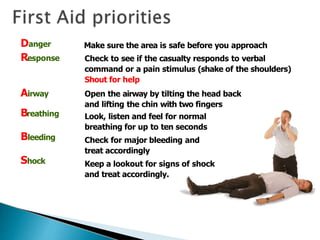
Danger
Response
Make sure the area is safe before you approach
Check to see if the casualty responds to verbal
command or a pain stimulus (shake of the shoulders)
Shout for help
Open the airway by tilting the head back
and lifting the chin with two fingers
Look, listen and feel for normal
breathing for up to ten seconds
Check for major bleeding and
treat accordingly
Keep a lookout for signs of shock
and treat accordingly.
Airway
Breathing
Bleeding
Shock
Know your workplace’s policy for providing first
aid
Know what you are expected to do in a medical
emergency
Know who the qualified first aider is
Know where the first aid
equipment/room is
You may be required to undergo
training.
‘to speak to the emergency
services operator
Which service you require
Your exact location
(address)
Type of incident
Number of casualties
Extent of the injuries
Any other dangers or hazards
Report to emergency response team
Following an incident (medical or otherwise):
record details of the incident
use the accident book
may be required for insurance/investigations
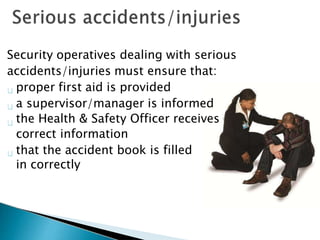
Security operatives dealing with serious
accidents/injuries must ensure that:
proper first aid is provided
a supervisor/manager is informed
the Health & Safety Officer receives
correct information
that the accident book is filled
in correctly
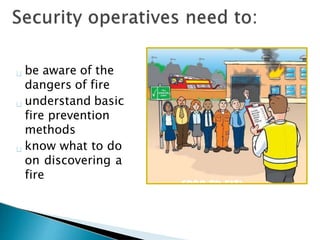
be aware of the
dangers of fire
understand basic
fire prevention
methods
know what to do
on discovering a
fire
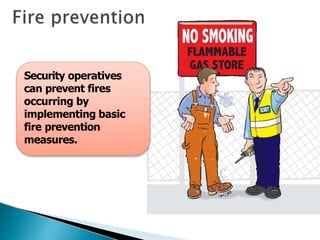
Security operatives
can prevent fires
occurring by
implementing basic
fire prevention
measures.
CQ
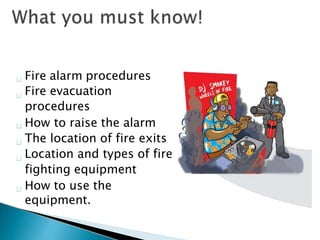
Fire alarm procedures
Fire evacuation
procedures
How to raise the alarm
The location of fire exits
Location and types of fire
fighting equipment
How to use the
equipment.
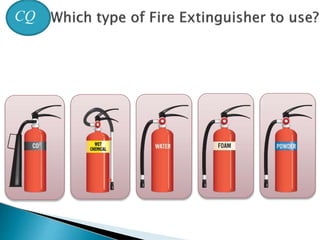
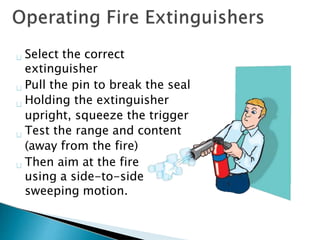
Select the correct
extinguisher
Pull the pin to break the seal
Holding the extinguisher
upright, squeeze the trigger
Test the range and content
(away from the fire)
Then aim at the fire
using a side-to-side
sweeping motion.
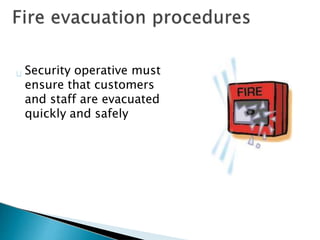
Security operative must
ensure that customers
and staff are evacuated
quickly and safely
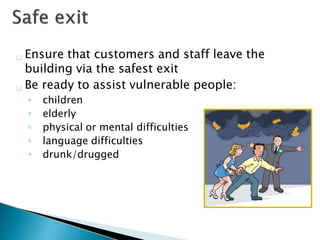
Ensure that customers and staff leave the
building via the safest exit
Be ready to assist vulnerable people:
◦ children
◦ elderly
◦ physical or mental difficulties
◦ language difficulties
◦ drunk/drugged
Discover emergency
Inform staff
Inform customers
Direct customers to nearest/safest exit
Check premises are empty
Ensure clear access for emergency services
Assist emergency services as required.
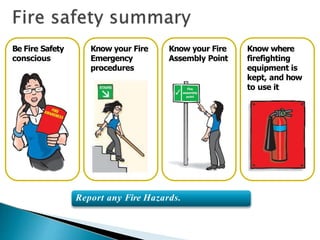
Be Fire Safety
conscious
Know your Fire
Emergency
procedures
Know your Fire
Assembly Point
Know where
firefighting
equipment is
kept, and how
to use it
Report any Fire Hazards.
UNIT 5
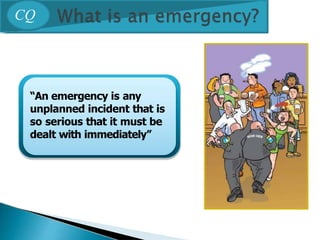
“An emergency is any
unplanned incident that is
so serious that it must be
dealt with immediately”
CQ
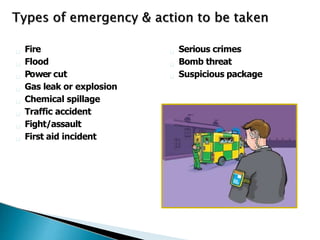
Fire
Flood
Power cut
Gas leak or explosion
Chemical spillage
Traffic accident
Fight/assault
First aid incident
Serious crimes
Bomb threat
Suspicious package
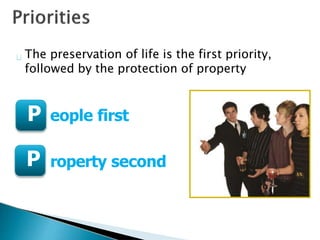
P eople first
P roperty second
The preservation of life is the first priority,
followed by the protection of property
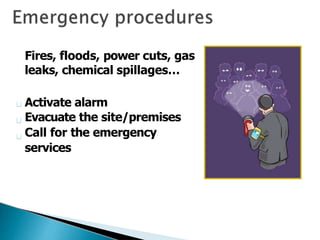
Fires, floods, power cuts, gas
leaks, chemical spillages…
Activate alarm
Evacuate the site/premises
Call for the emergency
services
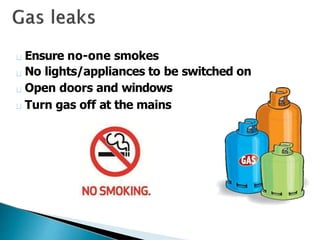
Ensure no-one smokes
No lights/appliances to be switched on
Open doors and windows
Turn gas off at the mains
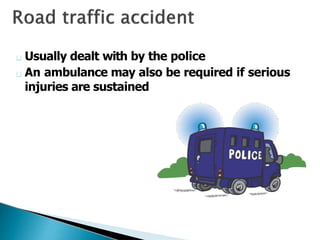
Usually dealt with by the police
An ambulance may also be required if serious
injuries are sustained
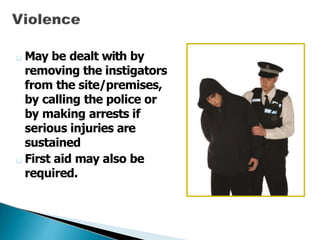
May be dealt with by
removing the instigators
from the site/premises,
by calling the police or
by making arrests if
serious injuries are
sustained
First aid may also be
required.
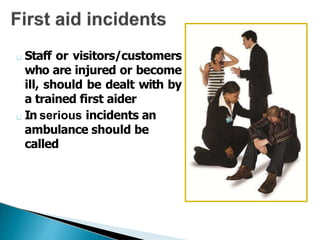
Staff or visitors/customers
who are injured or become
ill, should be dealt with by
a trained first aider
In serious incidents an
ambulance should be
called
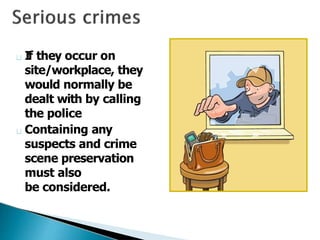
If they occur on
site/workplace, they
would normally be
dealt with by calling
the police
Containing any
suspects and crime
scene preservation
must also
be considered.
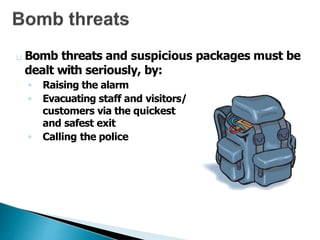
Bomb threats and suspicious packages must be
dealt with seriously, by:
◦ Raising the alarm
◦ Evacuating staff and visitors/
customers via the quickest
and safest exit
◦ Calling the police
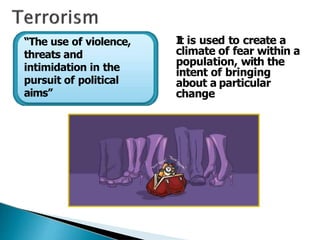
“The use of violence,
threats and
intimidation in the
pursuit of political
aims”
It is used to create a
climate of fear within a
population, with the
intent of bringing
about a particular
change
They may target
one particular organisation/nation/people
for a specific reason
or
may be more indiscriminate
in their targeting
International Domestic
or
what is currently happening around the world
and in your particular area
any recent terrorist attacks or threats
the location of your own site/premises in
relation to other possible targets nearby
whether the site/premises itself is famous or
important in its own right
the vulnerability of the site/premises to attack
the current level of threat nationally.
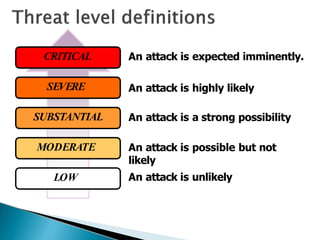
LOW
MODERATE
SUBSTANTIAL
SEVERE
CRITICAL
An attack is possible but not
likely
An attack is unlikely
An attack is highly likely
An attack is a strong possibility
An attack is expected imminently.
Terrorism information
Appropriate authorities should be contacted
immediately
Reduce the chances of a site/premises becoming a
target
Be vigilant at all times
Maintain good housekeeping
Use suitable physical security measures
Regular, obvious patrols of the site/premises
Strict access control procedures
Effective search procedures
Visible use of CCTV systems
Report suspicions to managers immediately
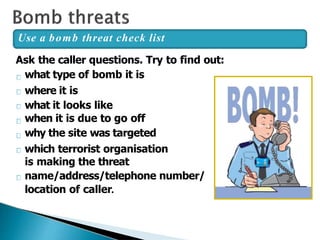
Ask the caller questions. Try to find out:
what type of bomb it is
where it is
what it looks like
when it is due to go off
why the site was targeted
which terrorist organisation
is making the threat
name/address/telephone number/
location of caller.
Use a bomb threat check list
High explosive devices
(bombs left in packages or luggage)
Car bombs (explosives in vehicles)
Incendiary devices (fire bombs)
Postal bombs (envelopes and parcels through the
post)
Person-borne devices (suicide bombers)
Chemical, biological and radiological devices (dirty
bombs).
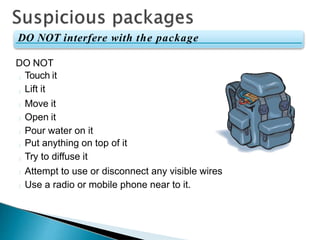
DO NOT
Touch it
Lift it
Move it
Open it
Pour water on it
Put anything on top of it
Try to diffuse it
Attempt to use or disconnect any visible wires
Use a radio or mobile phone near to it.
DO NOT interfere with the package
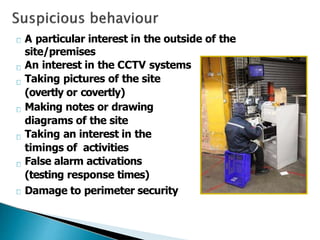
A particular interest in the outside of the
site/premises
An interest in the CCTV systems
Taking pictures of the site
(overtly or covertly)
Making notes or drawing
diagrams of the site
Taking an interest in the
timings of activities
False alarm activations
(testing response times)
Damage to perimeter security
Attempts to disguise identity
(hats, hoods, etc)
Trespassing with no good reason
Asking unusual questions about
the site/premises or security
arrangements
Nervousness
Reluctance to be noticed or seen
Report suspicious behaviour to a site
supervisor or manager. The police may
need to be called to investigate

Security Training slide for all - PPT.pptx

  • 1.
  • 2.
    Safety, comfort &welfare • Fire Alarm/exits • Toilets • Smoking • Drinks • Breaks • Questions • Examinations As a courtesy to others please TURN OFF your mobile phone
  • 3.
    COURSE OUTLINES:  PrivateSecurity Industry  Communication and Customer Care  Health & Safety  Fire Safety  Emergency Procedures
  • 4.
    Security “astate or feelingof being safe and secure” The Private Security Industry “provides manned and technical protection to premises, people and their property”
  • 5.
    Security is providedin three ways Manned Security Physical Security Systems 1 2 3
  • 6.
    Where one ormore security operatives work on a site providing both a deterrent against crime and an immediate response to incidents as they occur. Manned Security 1
  • 7.
    Physical deterrents such aslocks, alarms, barriers and grills help to reduce crime. Physical Security 2
  • 8.
    Electronic and other technicalsystems to monitor premises for crime and other dangers, such as intruder alarms, fire detection systems and closed circuit television (CCTV) systems. Systems 3
  • 9.
    Any person paidor used to provide any form of manned security to a client or premises Door supervisors Security officers Cash and valuables in transit operatives CCTV operators Close protection operatives Vehicle immobilisers
  • 10.
    A Door Supervisorcarries out security duties in or at licensed premises, like pubs and nightclubs, preventing crime and disorder and keeping staff and customers safe.
  • 11.
    A Security Officerguards premises against unauthorised access or occupation, or against outbreaks of disorder or against damage. They also guard property against being stolen, against damage or against otherwise being dishonestly taken or obtained They may also guard one or more individuals against assault or against injuries that might be suffered in consequence of the unlawful conduct of others This includes providing a physical presence, or carrying out a form of patrol or surveillance to deter crime.
  • 12.
    Key holding iswhere a security officer keeps custody of, or controls access to, any key or similar device for operating (whether mechanically, electronically or otherwise) any lock.
  • 13.
    CCTV operators carryout guarding activities using closed circuit television equipment, to either monitor the activities of members of the public in a public or private place, or to identify a particular person. This includes the use of CCTV to record images to be viewed on non-CCTV equipment
  • 14.
    Close Protection is guardingone or more individuals against assaults or injuries that might be suffered in consequence of the unlawful conduct of others.
  • 15.
    It is veryimportant that security operatives appear professional at all times Clients and members of the public expect security staff to act in a certain way.
  • 16.
  • 17.
  • 18.
    Security operatives regularlycome into contact with members of the public during the course of their duties They also regularly interact with other members of staff and people from other organisations Effective communication is vital
  • 19.
  • 20.
    The words weuse are obviously important, but so is the tone in which we use those words. It’s not just what we say, but how we say it that counts. “when we interact with another person using words and tone to convey our message”
  • 21.
    “is everything elsethat we do when we communicate with another person on a face-to-face basis” How we stand, what we are wearing, how close we are to the other person, eye contact, how we use our hands, other body gestures – these all help us to convey our message.
  • 22.
    Within the workplacewe will also be conveying messages using written communication, in the form of reports, letters and e-mails.
  • 23.
    Effective communication helpsus to: Get the job done Create a good impression of ourselves Create a good impression for the organisation Reduce incidents of conflict, aggression or violence …in the workplace
  • 24.
    Communication skills playan important role in how we interact with our colleagues, supervisors and managers Treat all members of staff with courtesy and respect, and expect to be treated in the same way Good communication with our colleagues is essential …in a team
  • 25.
    Every single personyou come into contact with is a customer
  • 26.
    These include: Work colleagues Supervisors Managers Plusanyone working for any other company or organisation on the site
  • 27.
    These include: Visitors tothe site Workmen Delivery drivers The emergency services Neighbours Members of the public.
  • 28.
    Keep in mindthat all customers: are individuals are affected by: Birthplace Where you live Upbringing have differing needs and expectations may be from different culture, religions & age groups Personal values are fo ‣ rmed as you grow up and Friends ‣ Family
  • 29.
    Security Operatives need totake into account other people’s values, and try to choose the most appropriate and effective way of dealing with them
  • 30.
  • 31.
    One of ourmain roles as a security operative is looking after people How we treat people when we deal with them is very important Customer care is all about how we deliver our service, how we provide security to our customers on a day-to-day basis.
  • 32.
    Be professional withevery customer Be approachable Concern yourself with the customer’s needs Treat customers as you would wish to be treated yourself Go out of your way to help customers Leave customers pleased with how you have dealt with them
  • 33.
    Using poor communicationskills Showing a lack of commitment Expressing a lack of concern Not listening to the customer Making jokes or being rude Ignoring or failing to acknowledge the customer Appearing bored or impatient Failing to do what you have promised.
  • 34.
    Communicating effectively is animportant part of delivering customer care Speak to customers in a way that is appropriate to them, shows professionalism and gets the job done.
  • 35.
    First impressions count. Besmartly attired, polite and willing to assist
  • 36.
    Make a goodfirst impression Acknowledge them straight away Be polite Show that you want to help them Find out how you can assist them Decide on the best course of action Use their name if you know it Make appropriate eye contact Use clear speech.
  • 37.
  • 38.
    Take reasonable careof their own Health & Safety Don’t do anything unsafe Follow the organisation’s Health & Safety policy Obey all safety instructions Use protective equipment properly Follow the organisation’s/site’s emergency procedures.
  • 39.
    Good Health &Safety practices help reduce hazards & risks. “… anything that has the potential to cause harm.” A risk is “… the chance that harm could happen in certain circumstances.” A hazard is
  • 40.
    Slips, trips andfalls Injuries from poor lifting and carrying techniques Misuses or abuse of machinery Sharp objects like needles and knives Violence and assaults Diseases Hazardous chemicals Noise pollution Moving vehicles Locked or blocked fire exits Overcrowding Fires, floods and other emergencies The elements. Typical risks and hazards found in the workplace
  • 41.
    Blood Body fluids Sharps/needles An emptybottle makes an excellent improvised sharps box.
  • 42.
    All workplaces havesafety signs and by understanding their meaning, it helps security personnel to keep themselves, their colleagues and their customers safe They are colour-coded and have specific shapes according to their meaning.
  • 43.
    This sign isused to tell people they must not do something.
  • 44.
    This is usedto warn people.
  • 45.
    This sign isused to tell people they must do something.
  • 46.
    These signs informpeople of fire equipment.
  • 47.
  • 48.
    “The assistance ortreatment given to a casualty for any injury or sudden illness, before the arrival of an ambulance, doctor or other qualified person.”
  • 49.
    preserve life prevent thecondition from worsening promote recovery obtain qualified assistance.
  • 50.
    Ensure your ownsafety Assess the situation Control the situation Diagnose the situation Save life (treatment) Obtain assistance.
  • 51.
    Danger Response Make sure thearea is safe before you approach Check to see if the casualty responds to verbal command or a pain stimulus (shake of the shoulders) Shout for help Open the airway by tilting the head back and lifting the chin with two fingers Look, listen and feel for normal breathing for up to ten seconds Check for major bleeding and treat accordingly Keep a lookout for signs of shock and treat accordingly. Airway Breathing Bleeding Shock
  • 52.
    Know your workplace’spolicy for providing first aid Know what you are expected to do in a medical emergency Know who the qualified first aider is Know where the first aid equipment/room is You may be required to undergo training.
  • 53.
    ‘to speak tothe emergency services operator
  • 54.
    Which service yourequire Your exact location (address) Type of incident Number of casualties Extent of the injuries Any other dangers or hazards Report to emergency response team
  • 55.
    Following an incident(medical or otherwise): record details of the incident use the accident book may be required for insurance/investigations
  • 56.
    Security operatives dealingwith serious accidents/injuries must ensure that: proper first aid is provided a supervisor/manager is informed the Health & Safety Officer receives correct information that the accident book is filled in correctly
  • 57.
    be aware ofthe dangers of fire understand basic fire prevention methods know what to do on discovering a fire
  • 58.
    Security operatives can preventfires occurring by implementing basic fire prevention measures.
  • 59.
  • 60.
    Fire alarm procedures Fireevacuation procedures How to raise the alarm The location of fire exits Location and types of fire fighting equipment How to use the equipment.
  • 61.
    Select the correct extinguisher Pullthe pin to break the seal Holding the extinguisher upright, squeeze the trigger Test the range and content (away from the fire) Then aim at the fire using a side-to-side sweeping motion.
  • 62.
    Security operative must ensurethat customers and staff are evacuated quickly and safely
  • 63.
    Ensure that customersand staff leave the building via the safest exit Be ready to assist vulnerable people: ◦ children ◦ elderly ◦ physical or mental difficulties ◦ language difficulties ◦ drunk/drugged
  • 64.
    Discover emergency Inform staff Informcustomers Direct customers to nearest/safest exit Check premises are empty Ensure clear access for emergency services Assist emergency services as required.
  • 65.
    Be Fire Safety conscious Knowyour Fire Emergency procedures Know your Fire Assembly Point Know where firefighting equipment is kept, and how to use it Report any Fire Hazards.
  • 66.
  • 67.
    “An emergency isany unplanned incident that is so serious that it must be dealt with immediately” CQ
  • 68.
    Fire Flood Power cut Gas leakor explosion Chemical spillage Traffic accident Fight/assault First aid incident Serious crimes Bomb threat Suspicious package
  • 69.
    P eople first Property second The preservation of life is the first priority, followed by the protection of property
  • 70.
    Fires, floods, powercuts, gas leaks, chemical spillages… Activate alarm Evacuate the site/premises Call for the emergency services
  • 71.
    Ensure no-one smokes Nolights/appliances to be switched on Open doors and windows Turn gas off at the mains
  • 72.
    Usually dealt withby the police An ambulance may also be required if serious injuries are sustained
  • 73.
    May be dealtwith by removing the instigators from the site/premises, by calling the police or by making arrests if serious injuries are sustained First aid may also be required.
  • 74.
    Staff or visitors/customers whoare injured or become ill, should be dealt with by a trained first aider In serious incidents an ambulance should be called
  • 75.
    If they occuron site/workplace, they would normally be dealt with by calling the police Containing any suspects and crime scene preservation must also be considered.
  • 76.
    Bomb threats andsuspicious packages must be dealt with seriously, by: ◦ Raising the alarm ◦ Evacuating staff and visitors/ customers via the quickest and safest exit ◦ Calling the police
  • 77.
    “The use ofviolence, threats and intimidation in the pursuit of political aims” It is used to create a climate of fear within a population, with the intent of bringing about a particular change
  • 78.
    They may target oneparticular organisation/nation/people for a specific reason or may be more indiscriminate in their targeting International Domestic or
  • 79.
    what is currentlyhappening around the world and in your particular area any recent terrorist attacks or threats the location of your own site/premises in relation to other possible targets nearby whether the site/premises itself is famous or important in its own right the vulnerability of the site/premises to attack the current level of threat nationally.
  • 80.
    LOW MODERATE SUBSTANTIAL SEVERE CRITICAL An attack ispossible but not likely An attack is unlikely An attack is highly likely An attack is a strong possibility An attack is expected imminently.
  • 81.
    Terrorism information Appropriate authoritiesshould be contacted immediately
  • 82.
    Reduce the chancesof a site/premises becoming a target Be vigilant at all times Maintain good housekeeping Use suitable physical security measures Regular, obvious patrols of the site/premises Strict access control procedures Effective search procedures Visible use of CCTV systems Report suspicions to managers immediately
  • 83.
    Ask the callerquestions. Try to find out: what type of bomb it is where it is what it looks like when it is due to go off why the site was targeted which terrorist organisation is making the threat name/address/telephone number/ location of caller. Use a bomb threat check list
  • 84.
    High explosive devices (bombsleft in packages or luggage) Car bombs (explosives in vehicles) Incendiary devices (fire bombs) Postal bombs (envelopes and parcels through the post) Person-borne devices (suicide bombers) Chemical, biological and radiological devices (dirty bombs).
  • 85.
    DO NOT Touch it Liftit Move it Open it Pour water on it Put anything on top of it Try to diffuse it Attempt to use or disconnect any visible wires Use a radio or mobile phone near to it. DO NOT interfere with the package
  • 86.
    A particular interestin the outside of the site/premises An interest in the CCTV systems Taking pictures of the site (overtly or covertly) Making notes or drawing diagrams of the site Taking an interest in the timings of activities False alarm activations (testing response times) Damage to perimeter security
  • 87.
    Attempts to disguiseidentity (hats, hoods, etc) Trespassing with no good reason Asking unusual questions about the site/premises or security arrangements Nervousness Reluctance to be noticed or seen Report suspicious behaviour to a site supervisor or manager. The police may need to be called to investigate