High Assurance Software Symposium


Directions in Secure
Software Development

                                    Rod Chapman
Contents
• Some observations
• Experiences with secure systems…
• Trends and Concerns
• A future?
Some observations
• The safety-critical industry has been building
  remarkably reliable and high-quality systems for
  years…
  • Can we apply the same approach for secure
      systems?
  • At Altran Praxis, we first tested this hypothesis in
      1999 with the MULTOS CA system.
  •   It seems the answer is “Yes…but with a few key
      assumptions changed…”
Some observations
• In the last ten years or so, we have seen a huge rise
  in interest in “security vulnerabilities” in
  • operating systems,
  • embedded systems,
  • SCADA systems etc.


• What changed?
What changed?
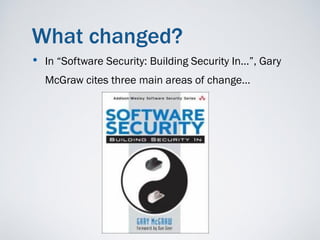
• In “Software Security: Building Security In…”, Gary
  McGraw cites three main areas of change…
What changed?
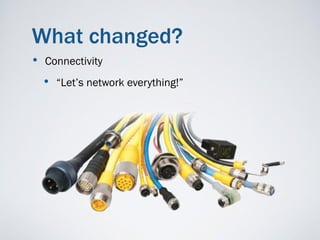
• Connectivity
  • “Let’s network everything!”
What changed?
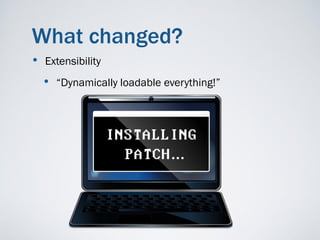
• Extensibility
  • “Dynamically loadable everything!”
What changed?
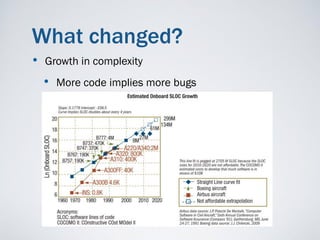
• Growth in complexity
  • More code implies more bugs
Safety and security…
 the difference?
•   Possibly the most notable difference is in the
    environment itself.
    • Safety-related systems – mostly operate in a benign
      environment that we can control to some extent.

    • Security-critical systems operate in a openly malicious
      environment where we might have no control over inputs,
      access, and so on
      •   ..and…attackers are arbitrarily intelligent, well-funded and
          motivated.
      •   “Programming Satan’s Computer” [Needham and Anderson]
Experiences with Security
•   In the worst-case, we must assume systems will be
    attacked in a way that we haven’t even thought of (let
    alone tested)…

• Therefore any sole claim of “we’ve tested it lots”, or
    “we’ve tested it more…” offer limited confidence for
    security properties

• So – why not use formal methods and sound static
    verification – i.e. Correctness-by-Construction?
    • Examples: MULTOS CA, Tokeneer, SPARKSkein, and other
      SPARK users.
Experiences with Security
•   At a technical level, strong static verification offers
    confidence in a number of basic areas:
    • Absence of “dumb bugs”…
    • Verification of specific program properties of
       interest.

• But...no silver bullet. There is still a need for solid
    requirements engineering, security engineering,
    architecture and so on.
Trends and Concerns
•   Trend: massive resurgence in interest in static
    analysis in general. (How many companies selling
    “security vulnerability finder” tools???)

    • Good! Raises awareness and average maturity.

    • Concern: Almost all effort aimed at “low hanging
      fruit” of retrospective analysis of legacy code-
      bases. Gives the impression that this is the only
      thing you can do…
Trends and Concerns
•   Trend: lots of effort in “enumeration” of defects,
    vulnerabilities, etc.
    • Examples: SANS “Top 25” list, CVE, CWE, ISO OWGV
      effort etc.
    • Good! Provides a starting point..
    • Concern: Encourages “box ticking” mentality.
    • Concern: Application-specific security requirements
      (i.e. the interesting stuff) is an infinite set. Trying to
      enumerate it is unlikely to terminate!
A Future?
•   We have shown that the CbyC/SPARK approach can
    yield strong results, particularly for the highest-grade
    secure systems.

• But…many systems incorporate:
  • Legacy code, COTS, “SOUP”, many languages,
      developed by many teams…

• The boundary between “safety” and “security” is
    becoming blurred – many systems exhibit “both”…
A Future?
•   Can we use architecture to isolate (sub-)systems of
    differing security requirements?

• Can we combine verification evidence from multiple
    sources to gain confidence where it’s most needed?
    • Formal methods for the most critical components?
    • Test, isolate, and contain for the less critical?

• What can we do to contractualize and enforce the
    boundary between such components?
Altran Praxis Limited
          22 St. Lawrence Street, Southgate,

          Bath BA1 1AN

          United Kingdom

Telephone +44 (0) 1225 466991

Facsimile +44 (0) 1225 469006

 Website www.altran-praxis.com

   Email rod.chapman@altran-praxis.com

Secure software chapman

  • 1.
    High Assurance SoftwareSymposium Directions in Secure Software Development Rod Chapman
  • 2.
    Contents • Some observations •Experiences with secure systems… • Trends and Concerns • A future?
  • 3.
    Some observations • Thesafety-critical industry has been building remarkably reliable and high-quality systems for years… • Can we apply the same approach for secure systems? • At Altran Praxis, we first tested this hypothesis in 1999 with the MULTOS CA system. • It seems the answer is “Yes…but with a few key assumptions changed…”
  • 4.
    Some observations • Inthe last ten years or so, we have seen a huge rise in interest in “security vulnerabilities” in • operating systems, • embedded systems, • SCADA systems etc. • What changed?
  • 5.
    What changed? • In“Software Security: Building Security In…”, Gary McGraw cites three main areas of change…
  • 6.
    What changed? • Connectivity • “Let’s network everything!”
  • 7.
    What changed? • Extensibility • “Dynamically loadable everything!”
  • 8.
    What changed? • Growthin complexity • More code implies more bugs
  • 9.
    Safety and security… the difference? • Possibly the most notable difference is in the environment itself. • Safety-related systems – mostly operate in a benign environment that we can control to some extent. • Security-critical systems operate in a openly malicious environment where we might have no control over inputs, access, and so on • ..and…attackers are arbitrarily intelligent, well-funded and motivated. • “Programming Satan’s Computer” [Needham and Anderson]
  • 10.
    Experiences with Security • In the worst-case, we must assume systems will be attacked in a way that we haven’t even thought of (let alone tested)… • Therefore any sole claim of “we’ve tested it lots”, or “we’ve tested it more…” offer limited confidence for security properties • So – why not use formal methods and sound static verification – i.e. Correctness-by-Construction? • Examples: MULTOS CA, Tokeneer, SPARKSkein, and other SPARK users.
  • 11.
    Experiences with Security • At a technical level, strong static verification offers confidence in a number of basic areas: • Absence of “dumb bugs”… • Verification of specific program properties of interest. • But...no silver bullet. There is still a need for solid requirements engineering, security engineering, architecture and so on.
  • 12.
    Trends and Concerns • Trend: massive resurgence in interest in static analysis in general. (How many companies selling “security vulnerability finder” tools???) • Good! Raises awareness and average maturity. • Concern: Almost all effort aimed at “low hanging fruit” of retrospective analysis of legacy code- bases. Gives the impression that this is the only thing you can do…
  • 13.
    Trends and Concerns • Trend: lots of effort in “enumeration” of defects, vulnerabilities, etc. • Examples: SANS “Top 25” list, CVE, CWE, ISO OWGV effort etc. • Good! Provides a starting point.. • Concern: Encourages “box ticking” mentality. • Concern: Application-specific security requirements (i.e. the interesting stuff) is an infinite set. Trying to enumerate it is unlikely to terminate!
  • 14.
    A Future? • We have shown that the CbyC/SPARK approach can yield strong results, particularly for the highest-grade secure systems. • But…many systems incorporate: • Legacy code, COTS, “SOUP”, many languages, developed by many teams… • The boundary between “safety” and “security” is becoming blurred – many systems exhibit “both”…
  • 15.
    A Future? • Can we use architecture to isolate (sub-)systems of differing security requirements? • Can we combine verification evidence from multiple sources to gain confidence where it’s most needed? • Formal methods for the most critical components? • Test, isolate, and contain for the less critical? • What can we do to contractualize and enforce the boundary between such components?
  • 16.
    Altran Praxis Limited 22 St. Lawrence Street, Southgate, Bath BA1 1AN United Kingdom Telephone +44 (0) 1225 466991 Facsimile +44 (0) 1225 469006 Website www.altran-praxis.com Email rod.chapman@altran-praxis.com