Topic: Secondary nutrients(S, Ca & Mg)
Name: Mohammad Abu bakar
Section: B
Roll#:17301514-065
Department: Zoology
Ma’am Summera Jahan
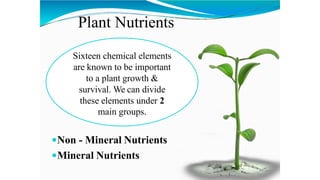
Plant Nutrients
Sixteen chemical elements
are known to be important
to a plant growth &
survival. We can divide
these elements under 2
main groups.
Non - Mineral Nutrients
Mineral Nutrients
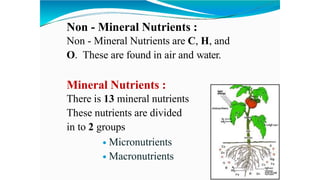
Non - Mineral Nutrients :
Non - Mineral Nutrients are C, H, and
O. These are found in air and water.
Mineral Nutrients :
There is 13 mineral nutrients
These nutrients are divided
in to 2 groups
 Micronutrients
 Macronutrients
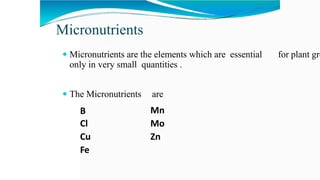
Micronutrients
 Micronutrients are the elements which are essential for plant gro
only in very small quantities .
 The Micronutrients are
Mn
Mo
Zn
B
Cl
Cu
Fe
Macronutrients
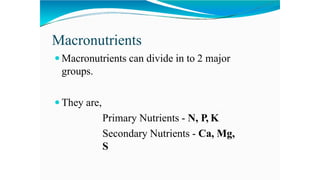
 Macronutrients can divide in to 2 major
groups.
 They are,
Primary Nutrients - N, P, K
Secondary Nutrients - Ca, Mg,
S
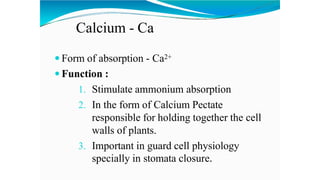
Calcium - Ca
 Form of absorption - Ca2+
 Function :
1. Stimulate ammonium absorption
2. In the form of Calcium Pectate
responsible for holding together the cell
walls of plants.
3. Important in guard cell physiology
specially in stomata closure.
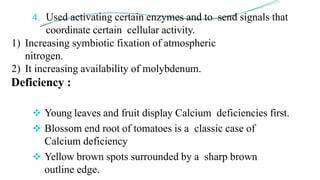
4. Used activating certain enzymes and to send signals that
coordinate certain cellular activity.
1) Increasing symbiotic fixation of atmospheric
nitrogen.
2) It increasing availability of molybdenum.
Deficiency :
 Young leaves and fruit display Calcium deficiencies first.
 Blossom end root of tomatoes is a classic case of
Calcium deficiency
 Yellow brown spots surrounded by a sharp brown
outline edge.
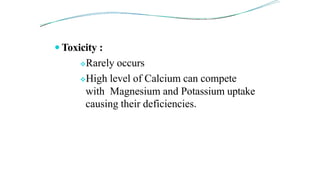
 Toxicity :
Rarely occurs
High level of Calcium can compete
with Magnesium and Potassium uptake
causing their deficiencies.
Magnesium - Mg
 Form of absorption - Mg2+
 High Mobility
 Function :
1. Chlorophyll Formation
2. Synthesis of amino acids and
cell proteins
3. Resistance to unfavorable factors
 Deficiency :
Deficiency are not common
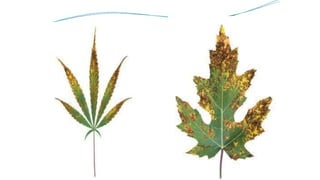
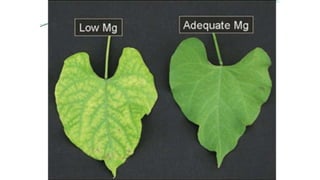
1. Yellowing between leaf veins,
sometimes with reddish brown tints
2. Early leaf fall.
3. Also affects chlorophyll formation
 Toxicity :
Magnesium toxicity are rare and not
generally exhibited visibly.
Sulfur - S
 Essential for the growth and development of
all crops
 Absorbed through the roots in the form of
Sulphate
 Immobile nutrient
 Function :
1. Formation of chlorophyll
2. Production of proteins
3. Synthesis of oils in oilseeds
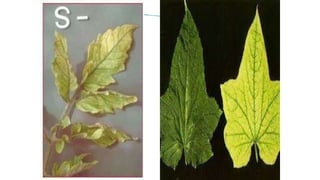
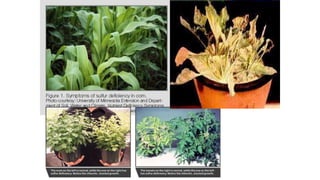
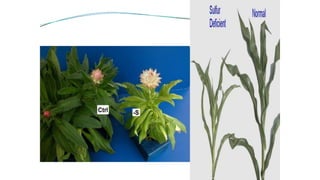
 Deficiency :
1. Yellowing of the entire leaf including
veins ,usually starting with the younger
leaves
2. Leaf tips may yellow and curl
downward
 Toxicity :
1. Leaf size will be reduce
2. Overall growth will be stunted
3. Leaves yellowing or scorched at edges
secondary nutrients
secondary nutrients
secondary nutrients
secondary nutrients

secondary nutrients

  • 1.
    Topic: Secondary nutrients(S,Ca & Mg) Name: Mohammad Abu bakar Section: B Roll#:17301514-065 Department: Zoology Ma’am Summera Jahan
  • 2.
    Plant Nutrients Sixteen chemicalelements are known to be important to a plant growth & survival. We can divide these elements under 2 main groups. Non - Mineral Nutrients Mineral Nutrients
  • 3.
    Non - MineralNutrients : Non - Mineral Nutrients are C, H, and O. These are found in air and water. Mineral Nutrients : There is 13 mineral nutrients These nutrients are divided in to 2 groups  Micronutrients  Macronutrients
  • 4.
    Micronutrients  Micronutrients arethe elements which are essential for plant gro only in very small quantities .  The Micronutrients are Mn Mo Zn B Cl Cu Fe
  • 5.
    Macronutrients  Macronutrients candivide in to 2 major groups.  They are, Primary Nutrients - N, P, K Secondary Nutrients - Ca, Mg, S
  • 6.
    Calcium - Ca Form of absorption - Ca2+  Function : 1. Stimulate ammonium absorption 2. In the form of Calcium Pectate responsible for holding together the cell walls of plants. 3. Important in guard cell physiology specially in stomata closure.
  • 7.
    4. Used activatingcertain enzymes and to send signals that coordinate certain cellular activity. 1) Increasing symbiotic fixation of atmospheric nitrogen. 2) It increasing availability of molybdenum. Deficiency :  Young leaves and fruit display Calcium deficiencies first.  Blossom end root of tomatoes is a classic case of Calcium deficiency  Yellow brown spots surrounded by a sharp brown outline edge.
  • 8.
     Toxicity : Rarelyoccurs High level of Calcium can compete with Magnesium and Potassium uptake causing their deficiencies.
  • 11.
    Magnesium - Mg Form of absorption - Mg2+  High Mobility  Function : 1. Chlorophyll Formation 2. Synthesis of amino acids and cell proteins 3. Resistance to unfavorable factors
  • 12.
     Deficiency : Deficiencyare not common 1. Yellowing between leaf veins, sometimes with reddish brown tints 2. Early leaf fall. 3. Also affects chlorophyll formation  Toxicity : Magnesium toxicity are rare and not generally exhibited visibly.
  • 14.
    Sulfur - S Essential for the growth and development of all crops  Absorbed through the roots in the form of Sulphate  Immobile nutrient  Function : 1. Formation of chlorophyll 2. Production of proteins 3. Synthesis of oils in oilseeds
  • 15.
     Deficiency : 1.Yellowing of the entire leaf including veins ,usually starting with the younger leaves 2. Leaf tips may yellow and curl downward  Toxicity : 1. Leaf size will be reduce 2. Overall growth will be stunted 3. Leaves yellowing or scorched at edges