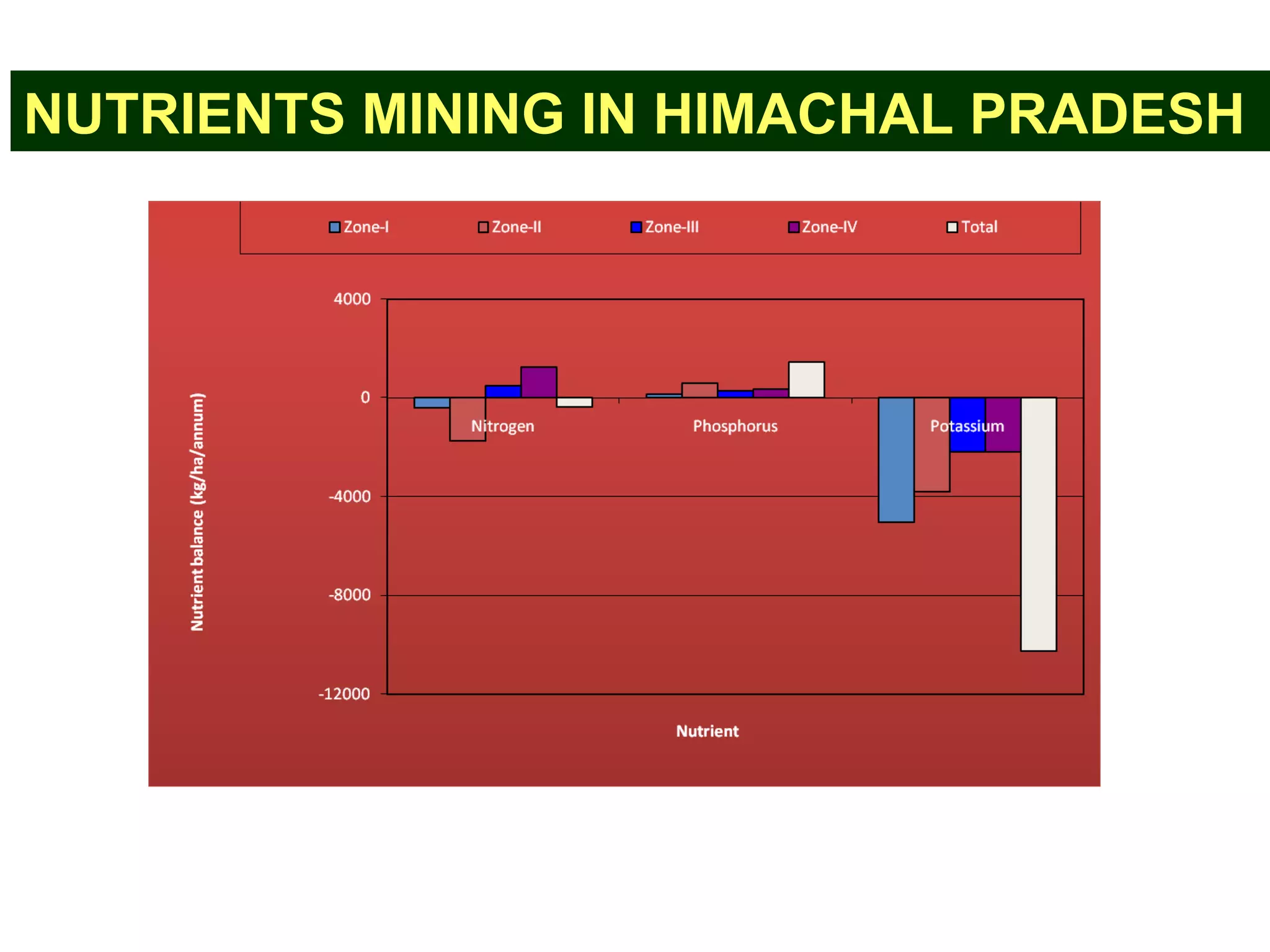
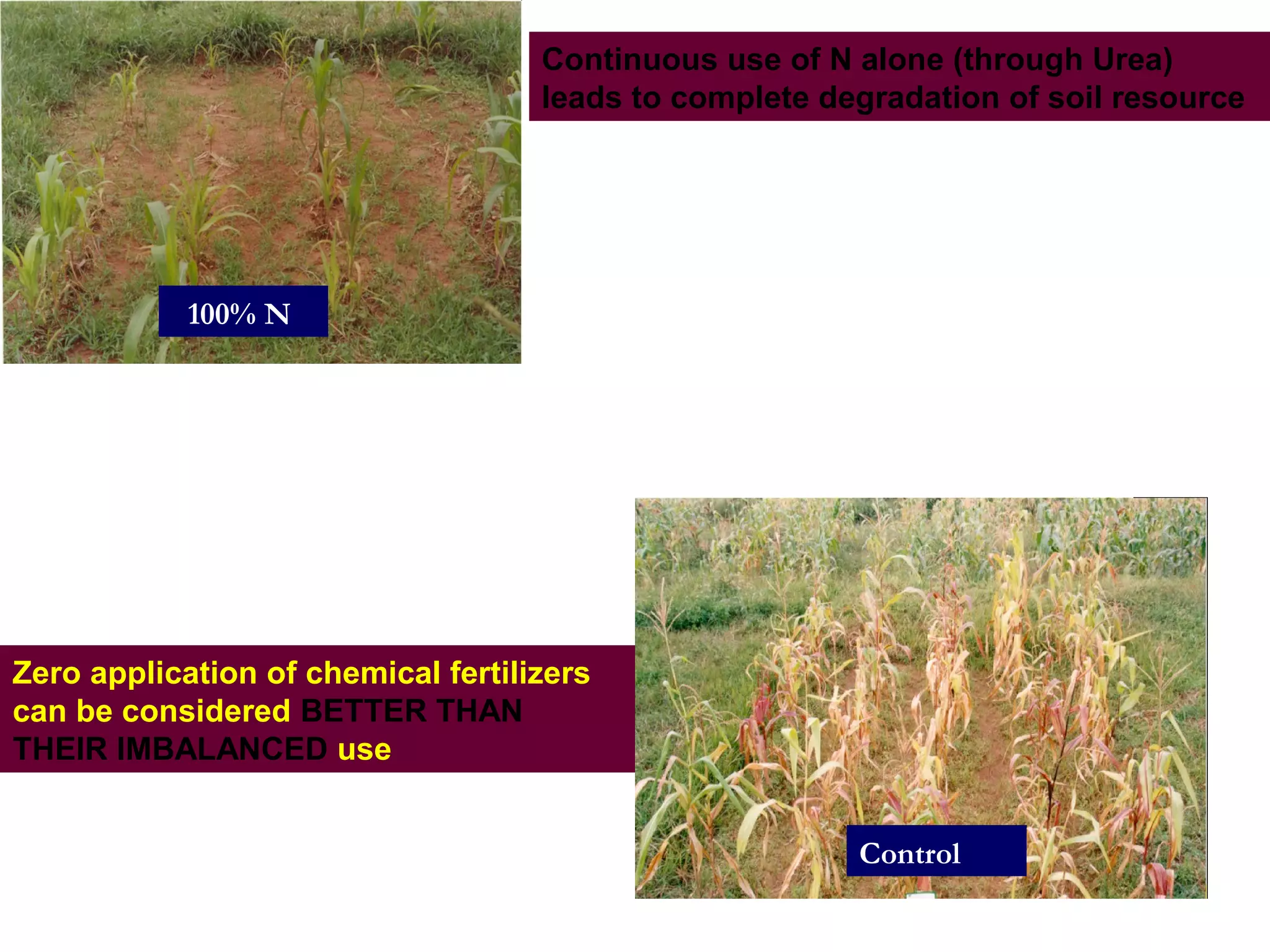
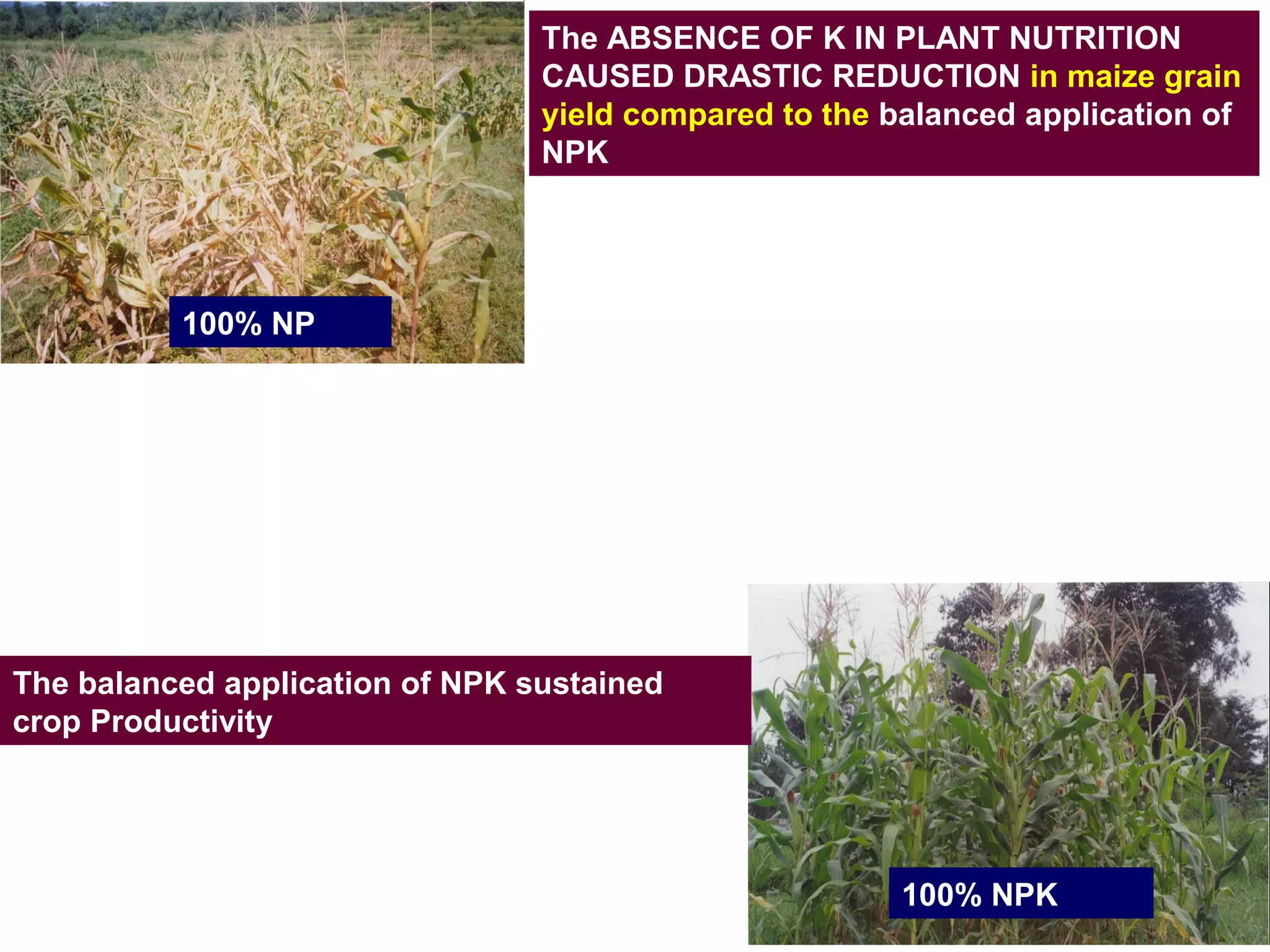
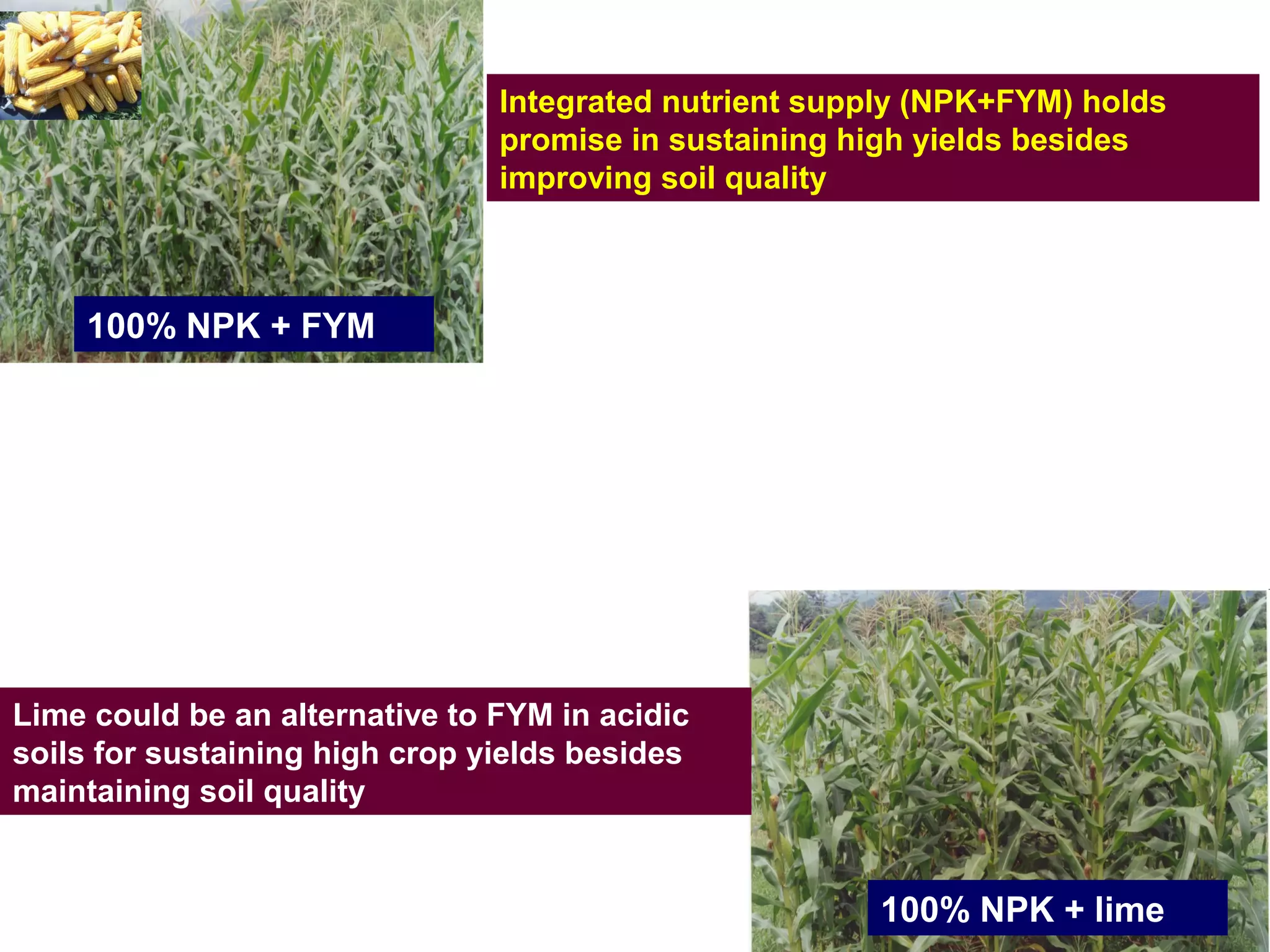
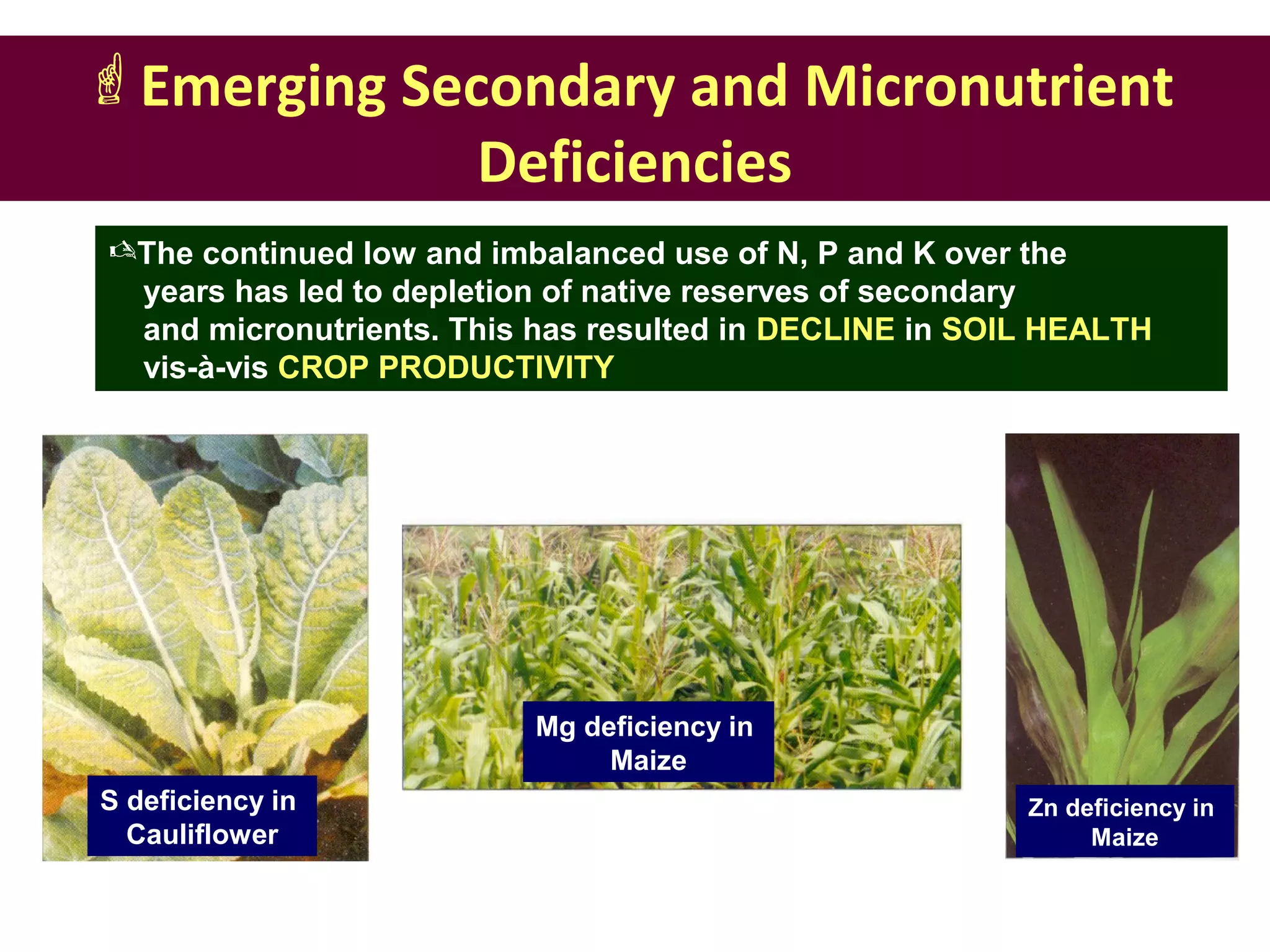
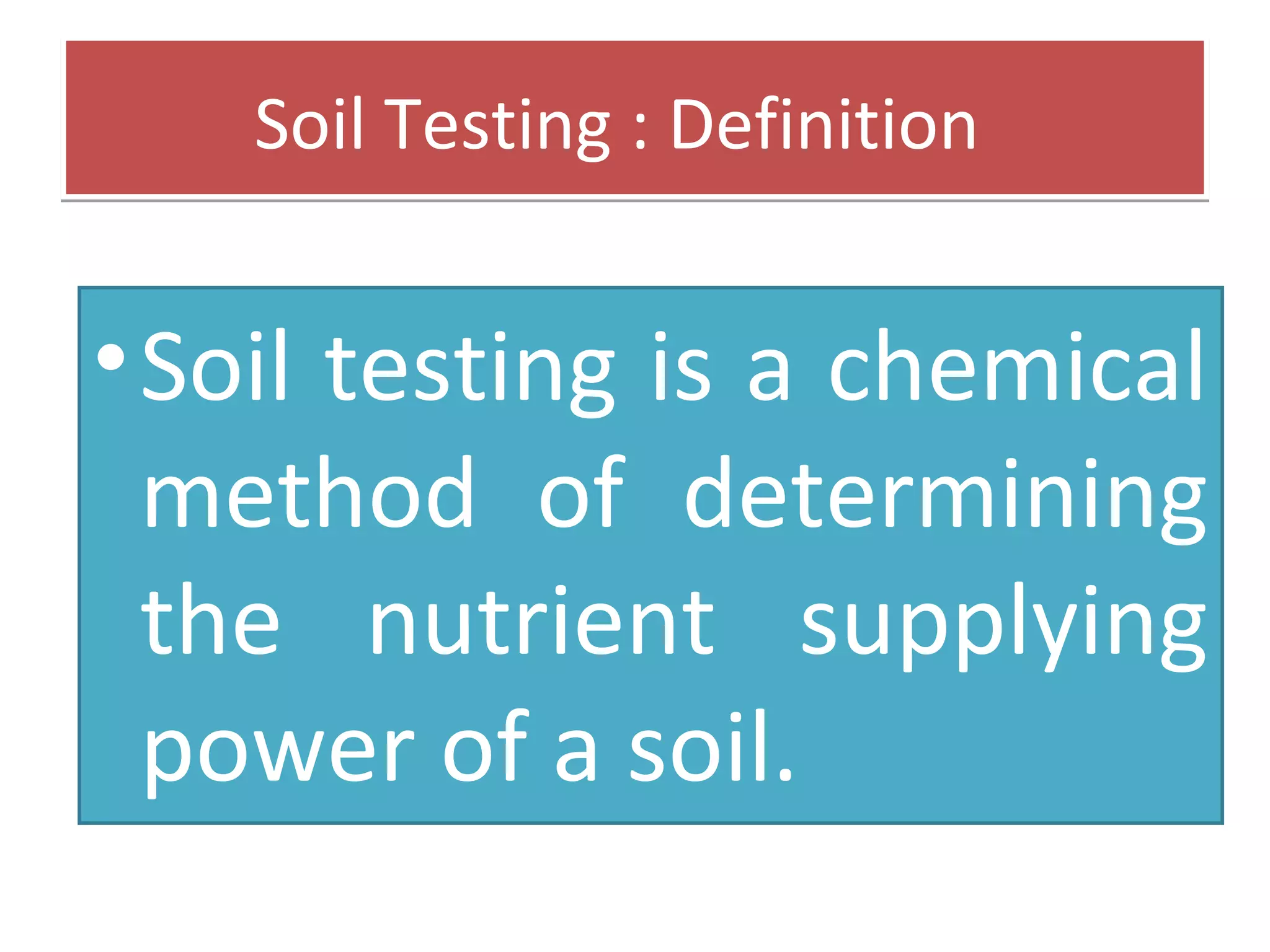
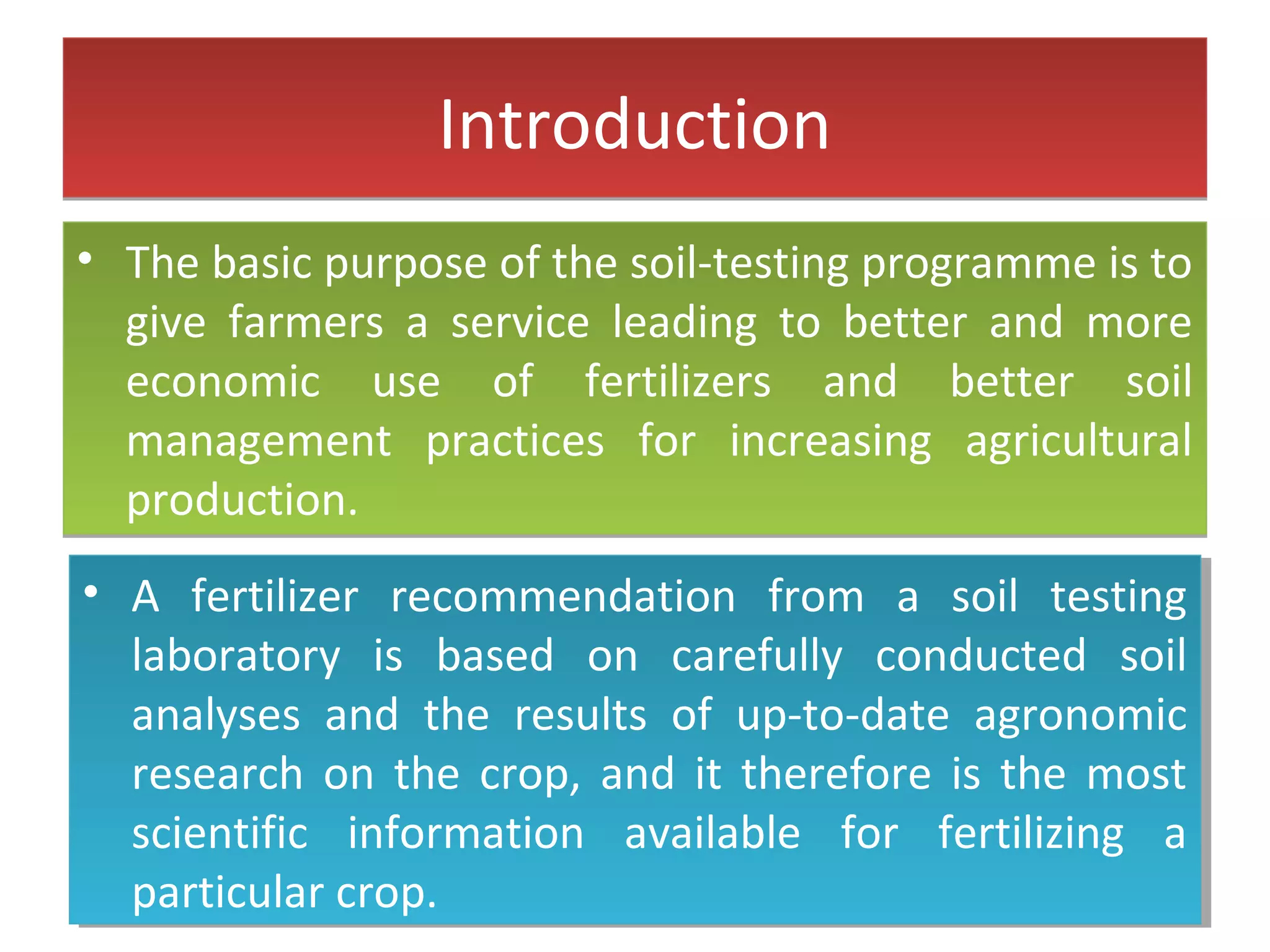
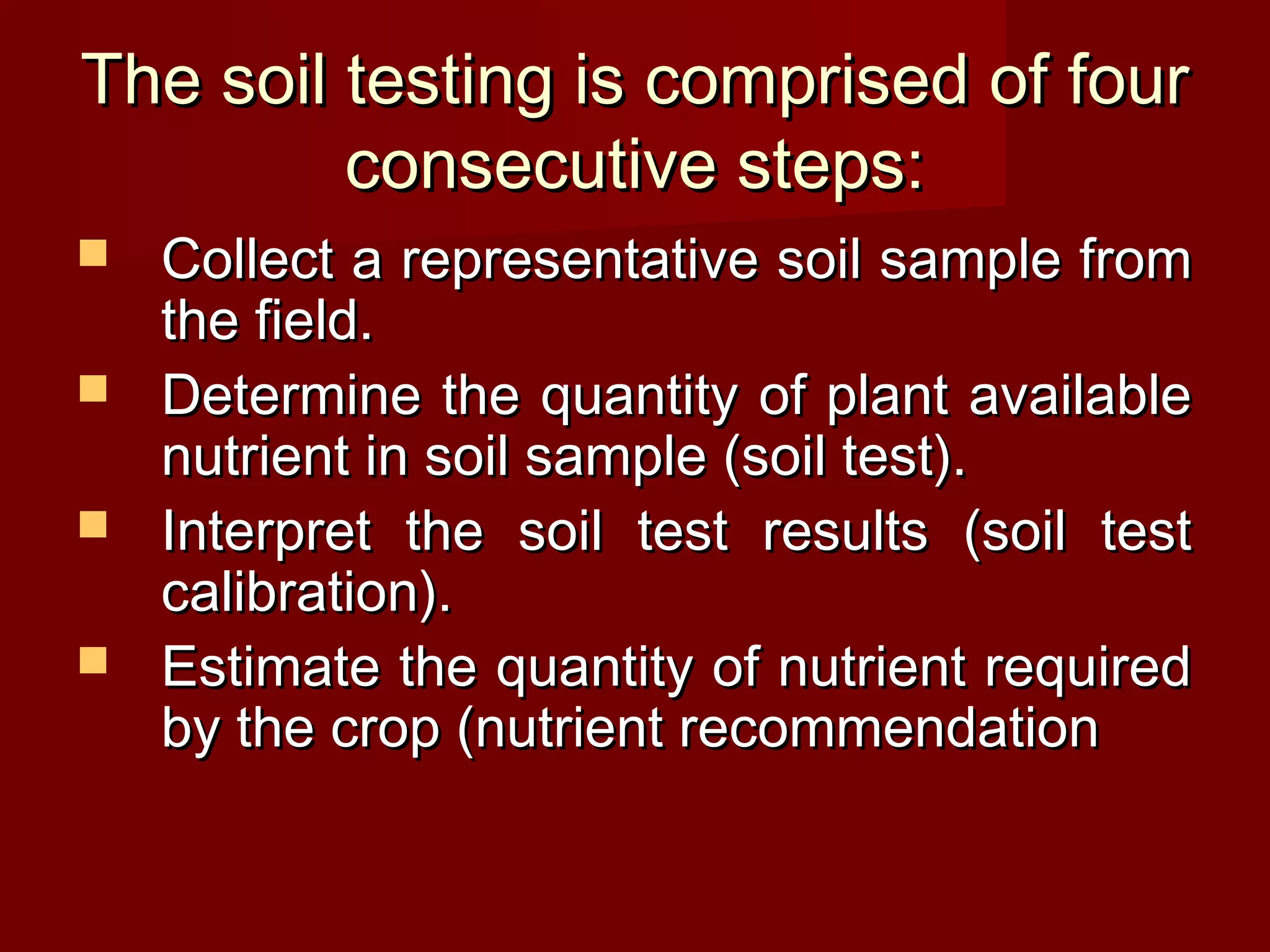
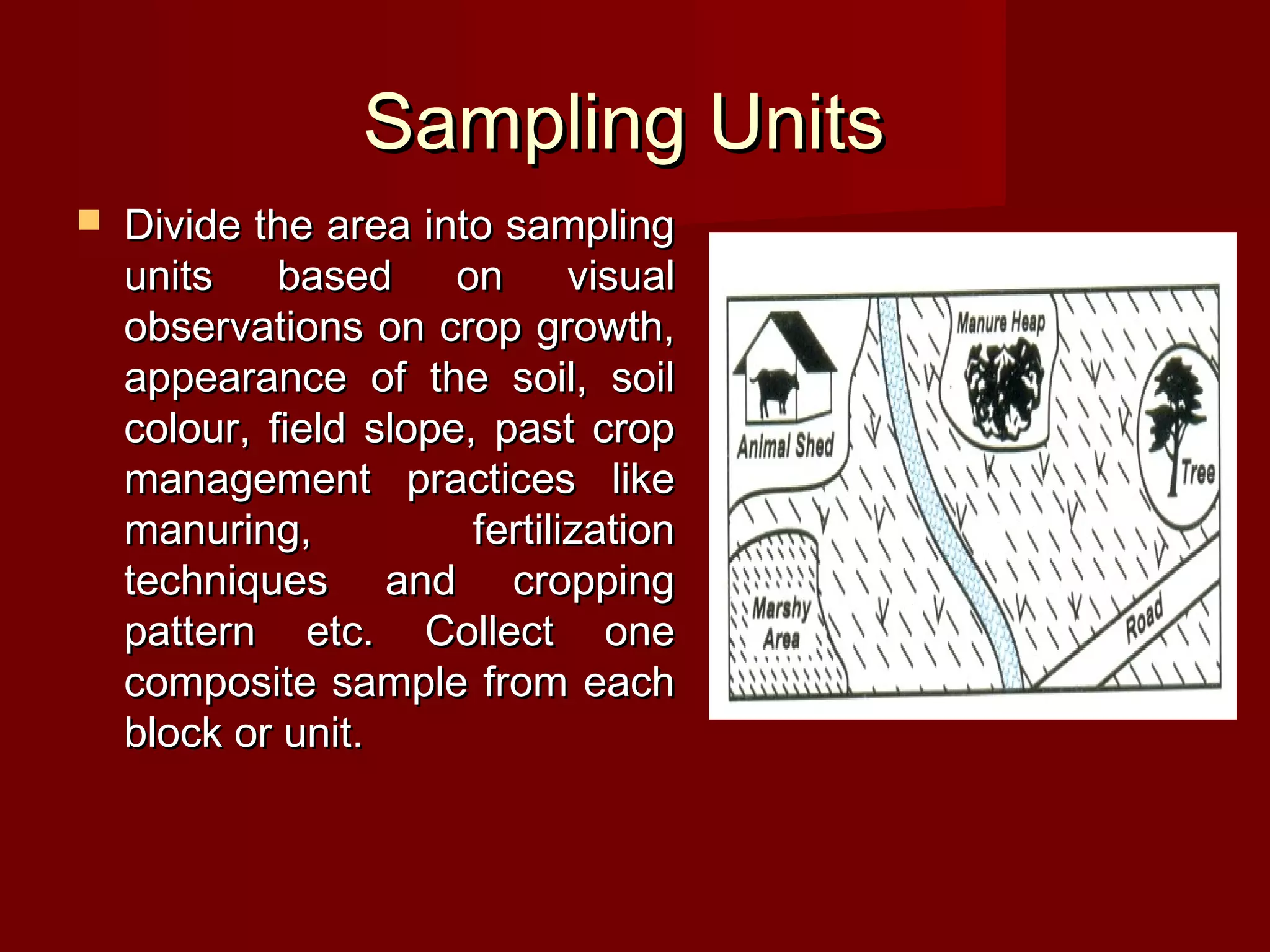
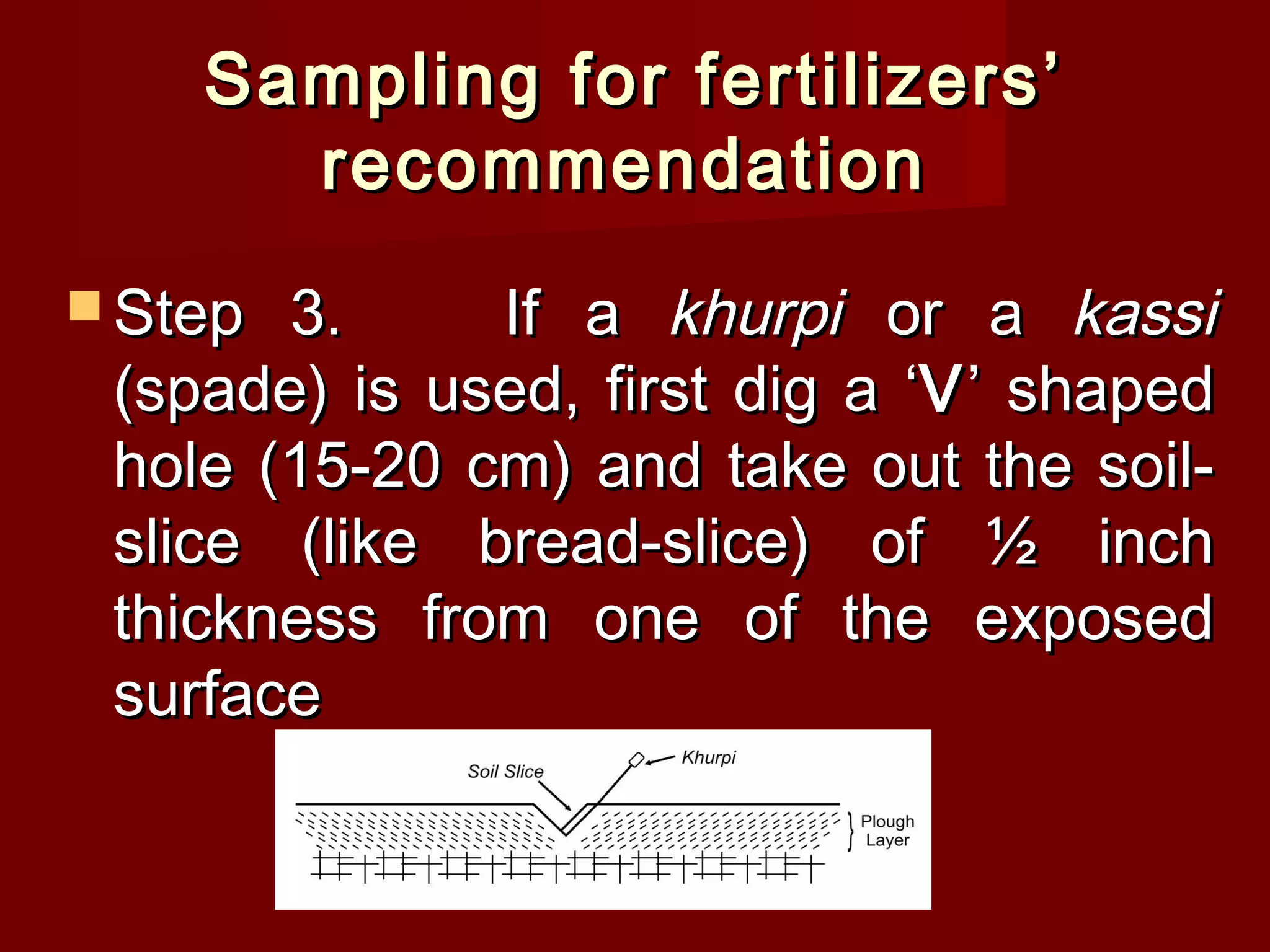
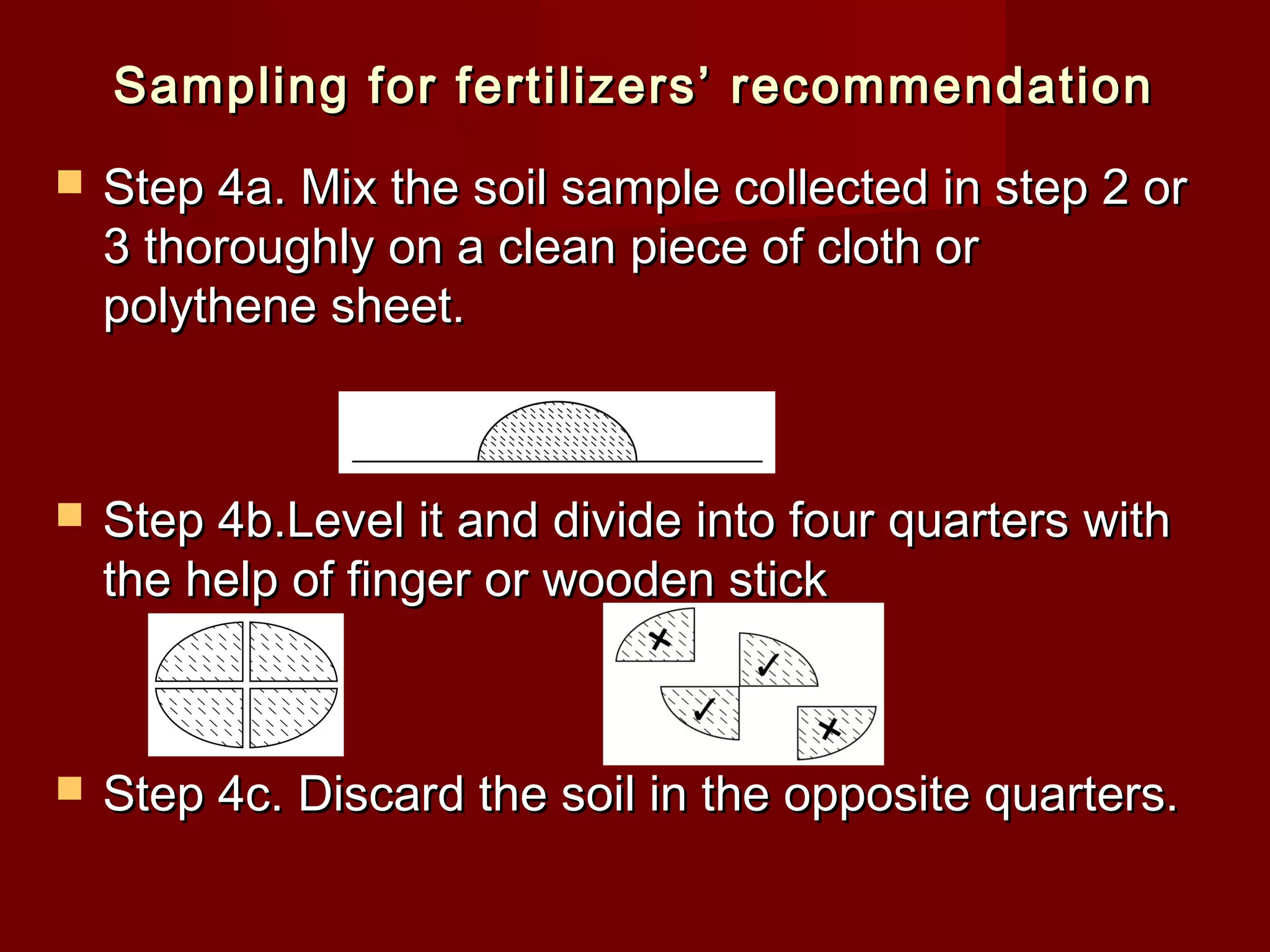
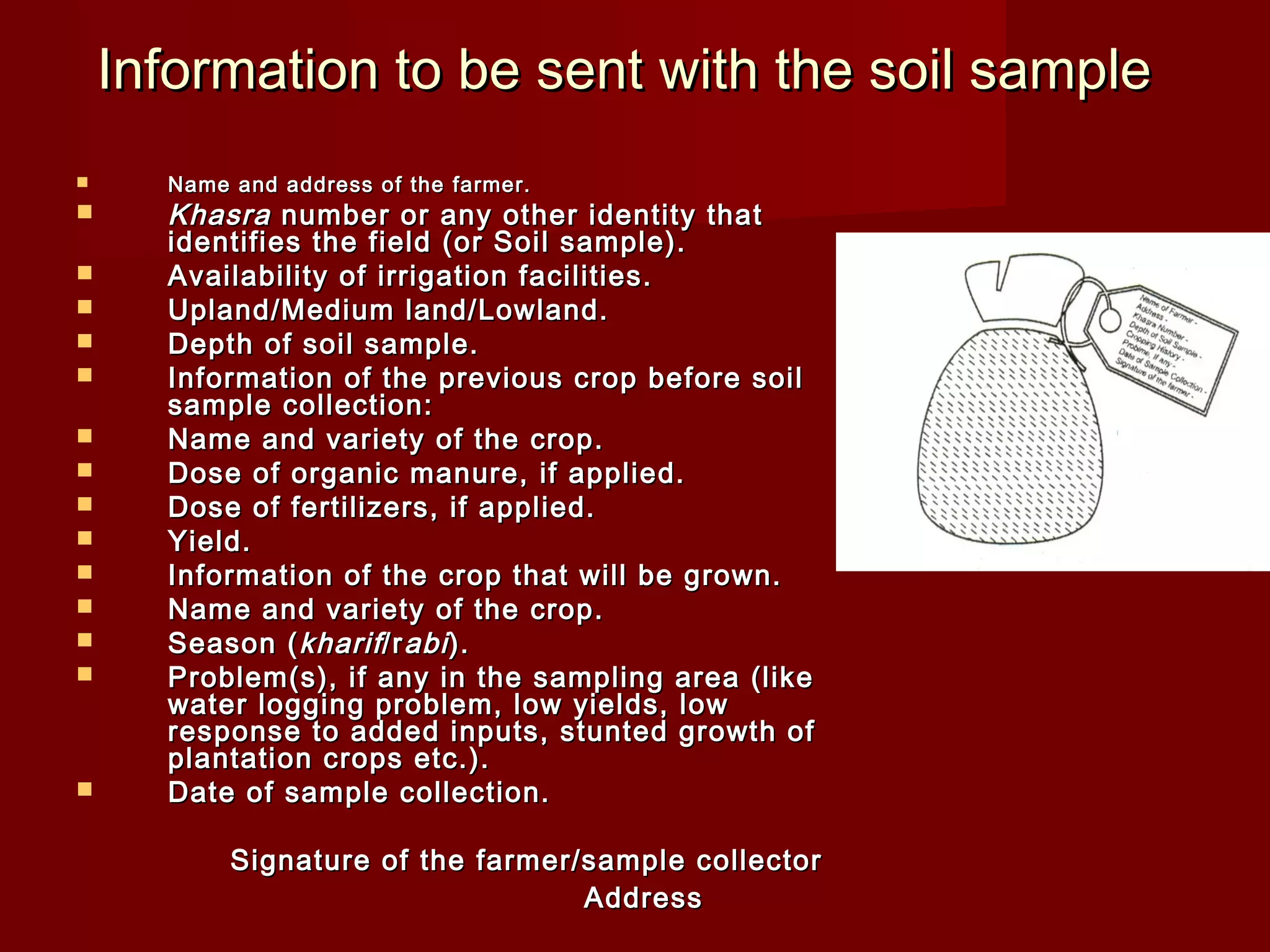
This document discusses the importance of soil testing for agriculture. It notes that soil testing provides the most scientific basis for fertilizer recommendations by analyzing soil samples and considering crop needs and management practices. The key steps in soil testing are collecting a representative soil sample from the field, analyzing it to determine nutrient availability, interpreting the results, and making fertilizer recommendations. Proper sampling involves dividing fields into units, removing surface litter, and taking a composite sample from each unit before sowing crops. Soil testing helps farmers apply the right amounts of nutrients needed by their crops.