1955-1959
Marshall’s government Hock Lee Bus Riots 1 st  Merdeka talks Lim’s government 1956 Students’ Riots 2 nd  Merdeka talks 1959 Elections New political structure  Importance
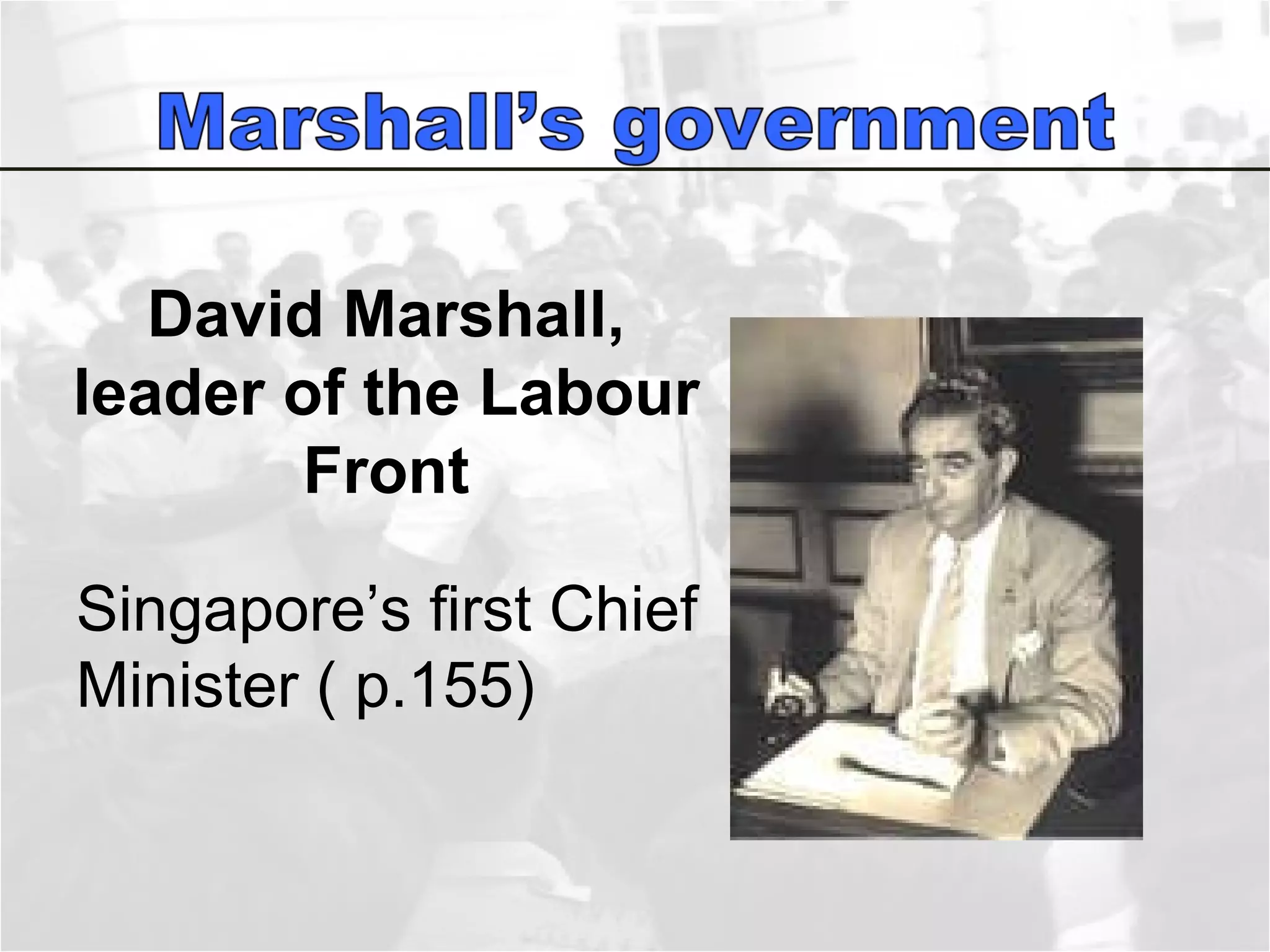
David Marshall, leader of the Labour Front Singapore’s first Chief Minister ( p.155)
Formed a coalition government with the Alliance Party  Marshall as Chief Minister (still had to report to the British Governor) British Governor and the British officials did not treat him with respect Figurehead: a leader who has little authority or influence British did not support Marshall’s government because it was not the party that the British hoped would win.
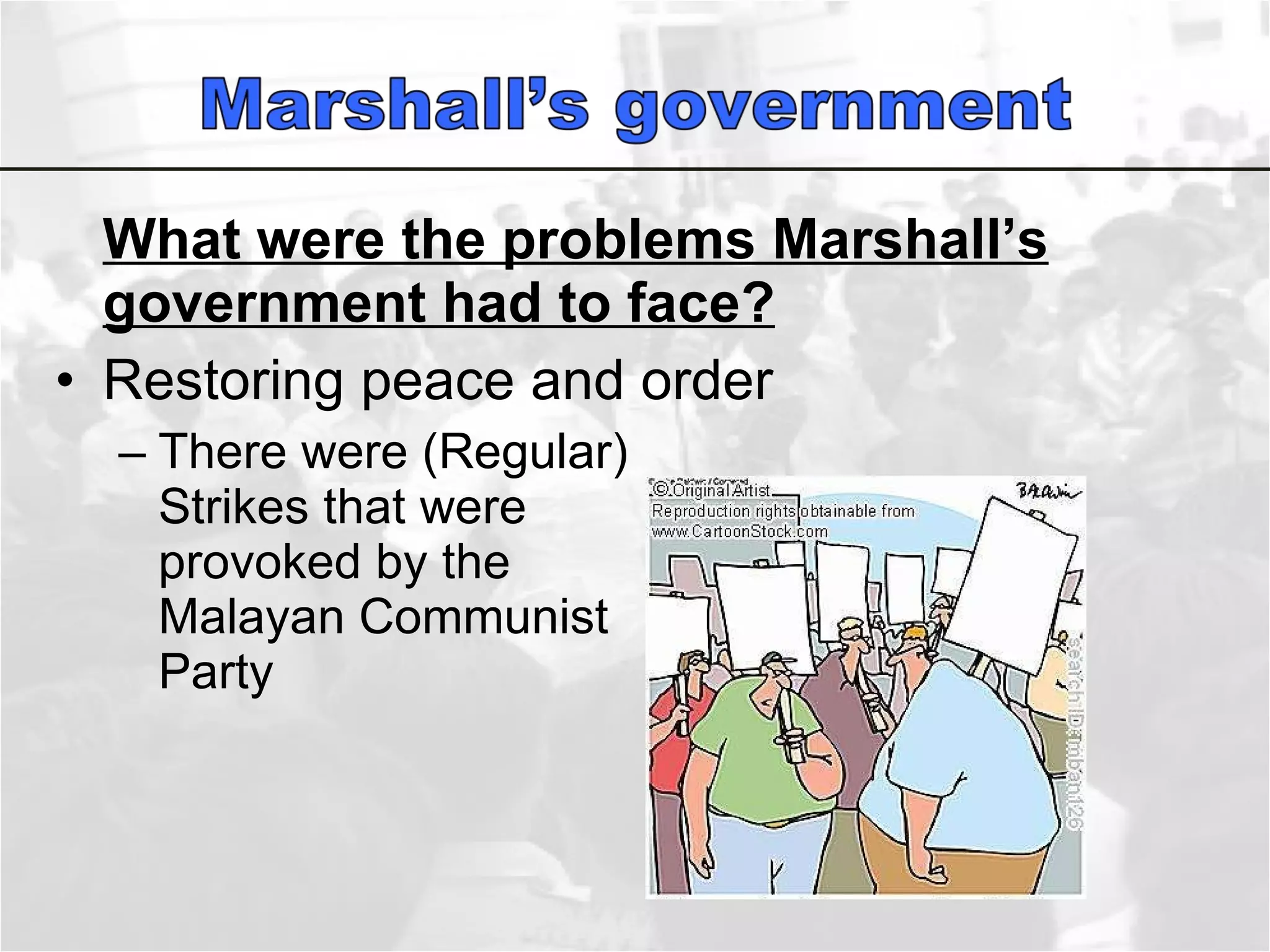
What were the problems Marshall’s government had to face? Restoring peace and order There were (Regular)  Strikes that were  provoked by the  Malayan Communist  Party
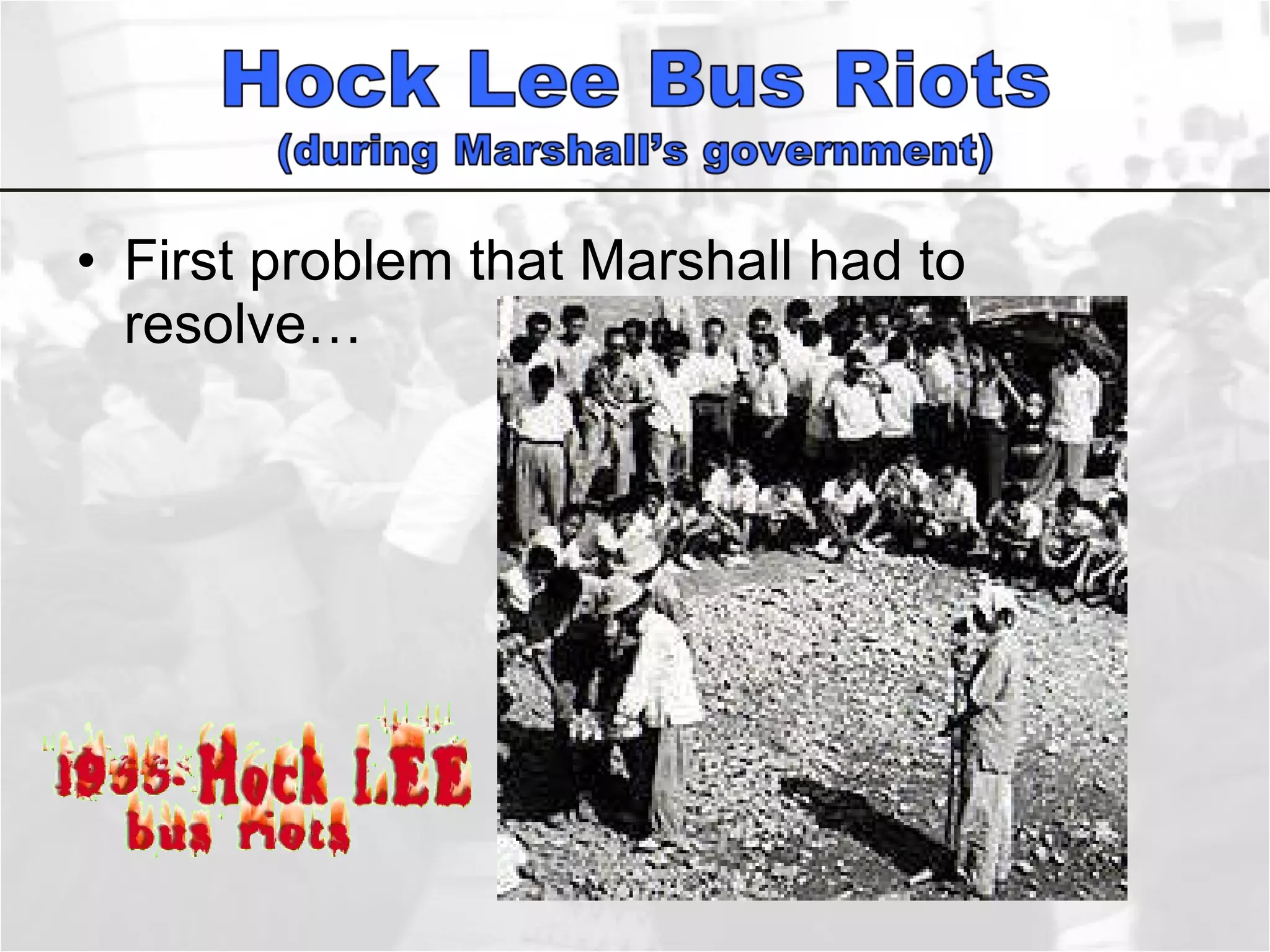
First problem that Marshall had to resolve…
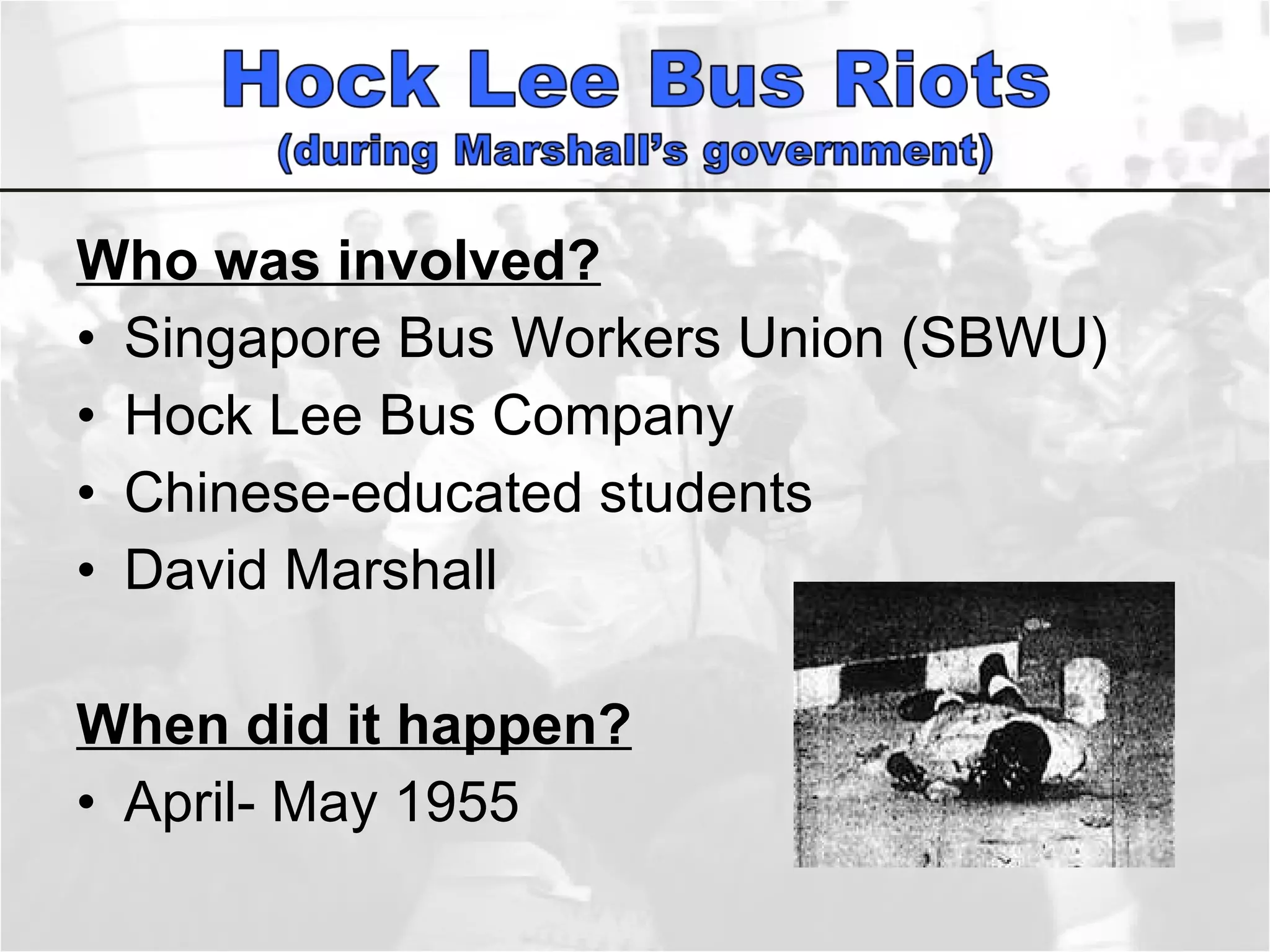
Who was involved? Singapore Bus Workers Union (SBWU) Hock Lee Bus Company Chinese-educated students  David Marshall  When did it happen? April- May 1955
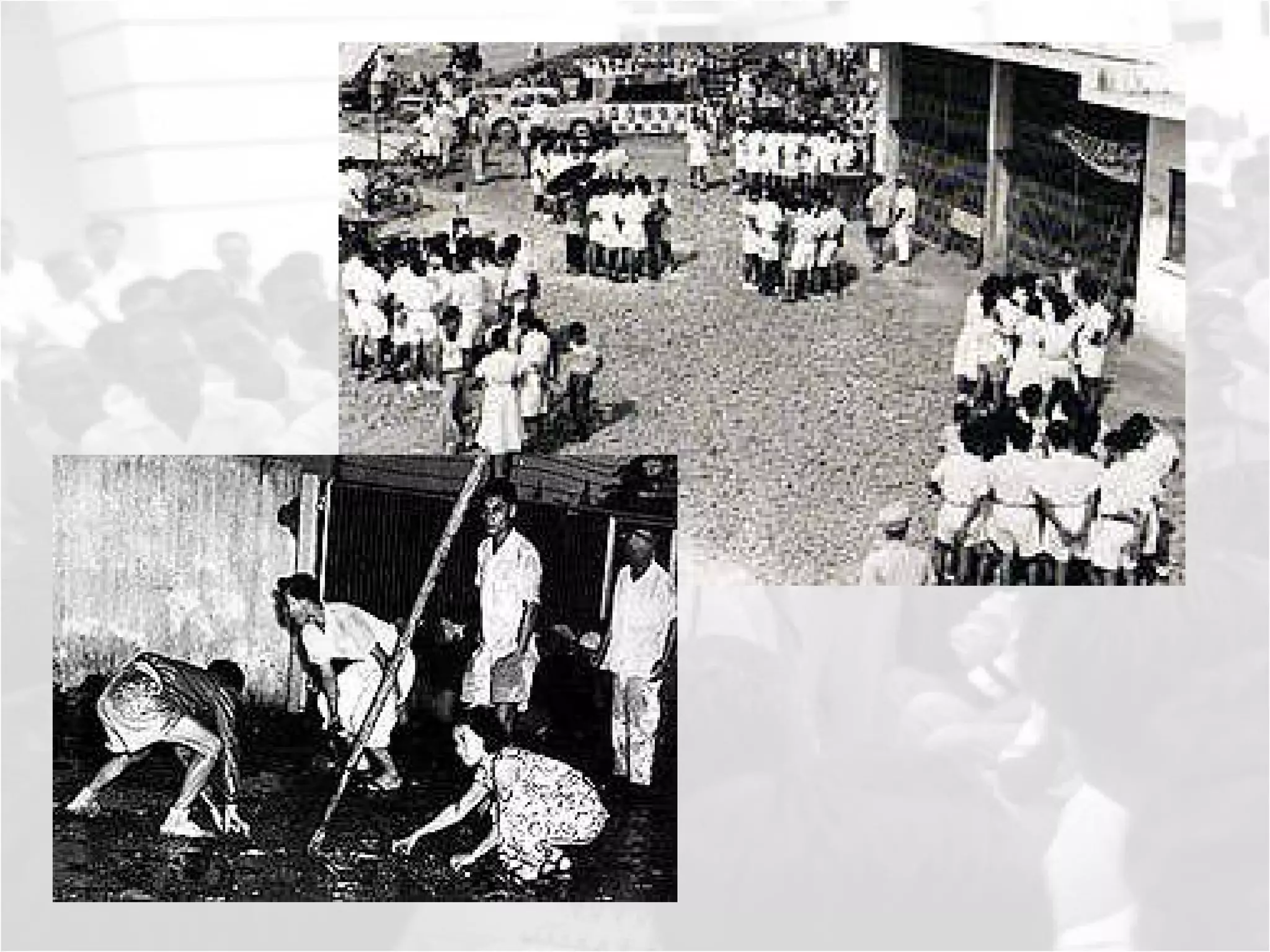
What happened? (pp.157-159) Workers from SBWU went on strike – wanted better pay and working conditions Hock Lee Bus Company responded by firing 229 workers Chinese students came to support the strikers.  Marshall tried to act as the mediator to settle the problem BUT both parties failed to reach an agreement. Strikes began to grow and eventually became a riot.  Riots ended on 14 th  May 1955, with the workers getting their jobs back.
In short…a strike that turned violent!  Workers from SBWU went on strike, but got fired instead by the bus company.  Chinese students came to support the strikers.  Marshall tried to help but failed.  Strikes became a riot, and ended on 14 th  May after the strikers were re-hired again.
 
Why did it happen? Strikers wanted better pay and working conditions (probably influenced by MCP) Chinese students were probably influenced by the Communists (MCP) to support the strikers
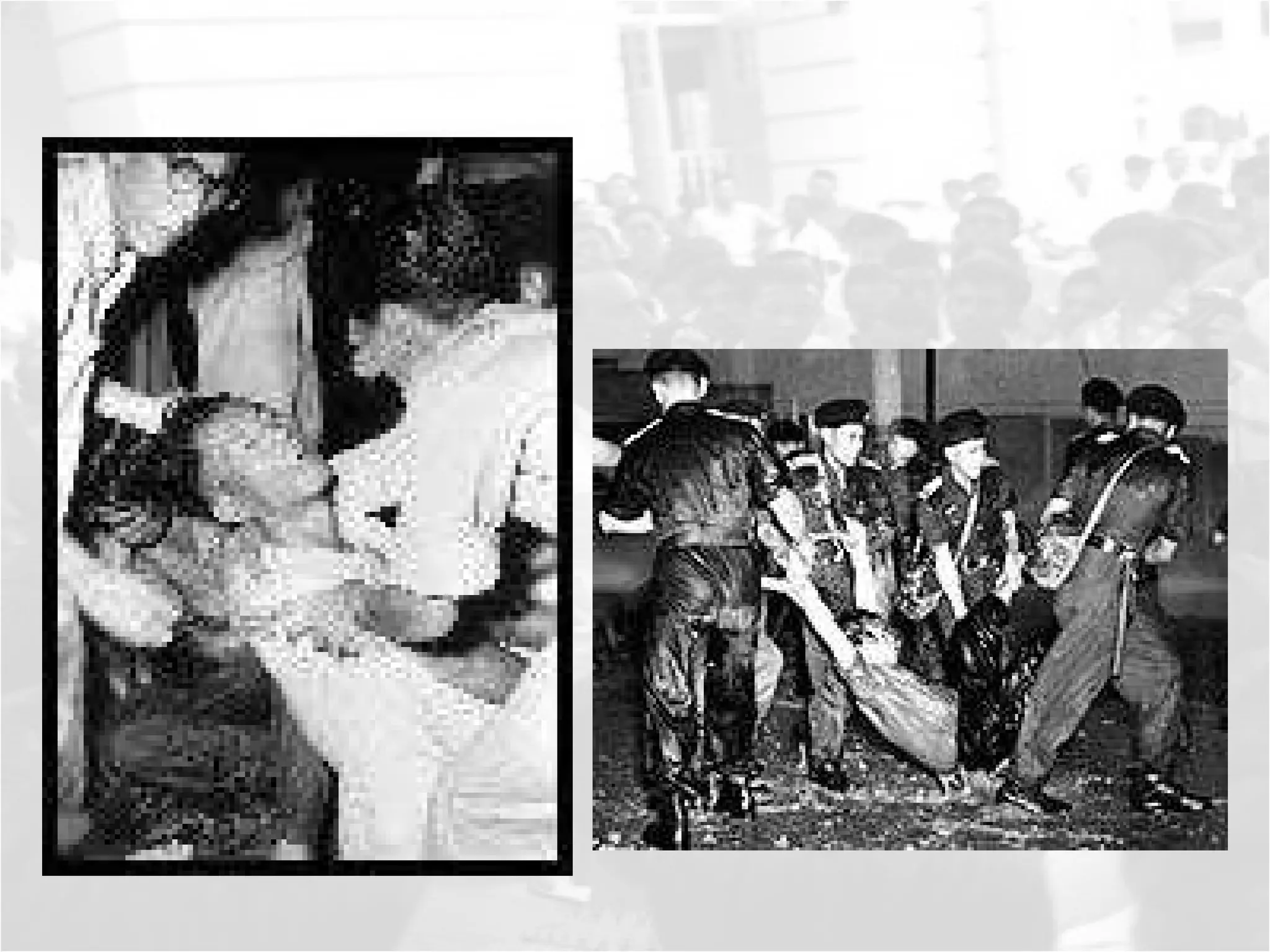
What were the consequences? 12 th  May 1955: ‘Black Thursday’ because of the violence 4 death, 31 injured.  British felt that Marshall was incapable of handling the riots and the Communist problem.  British did not think that Marshall’s government would be able to rule Singapore well
 
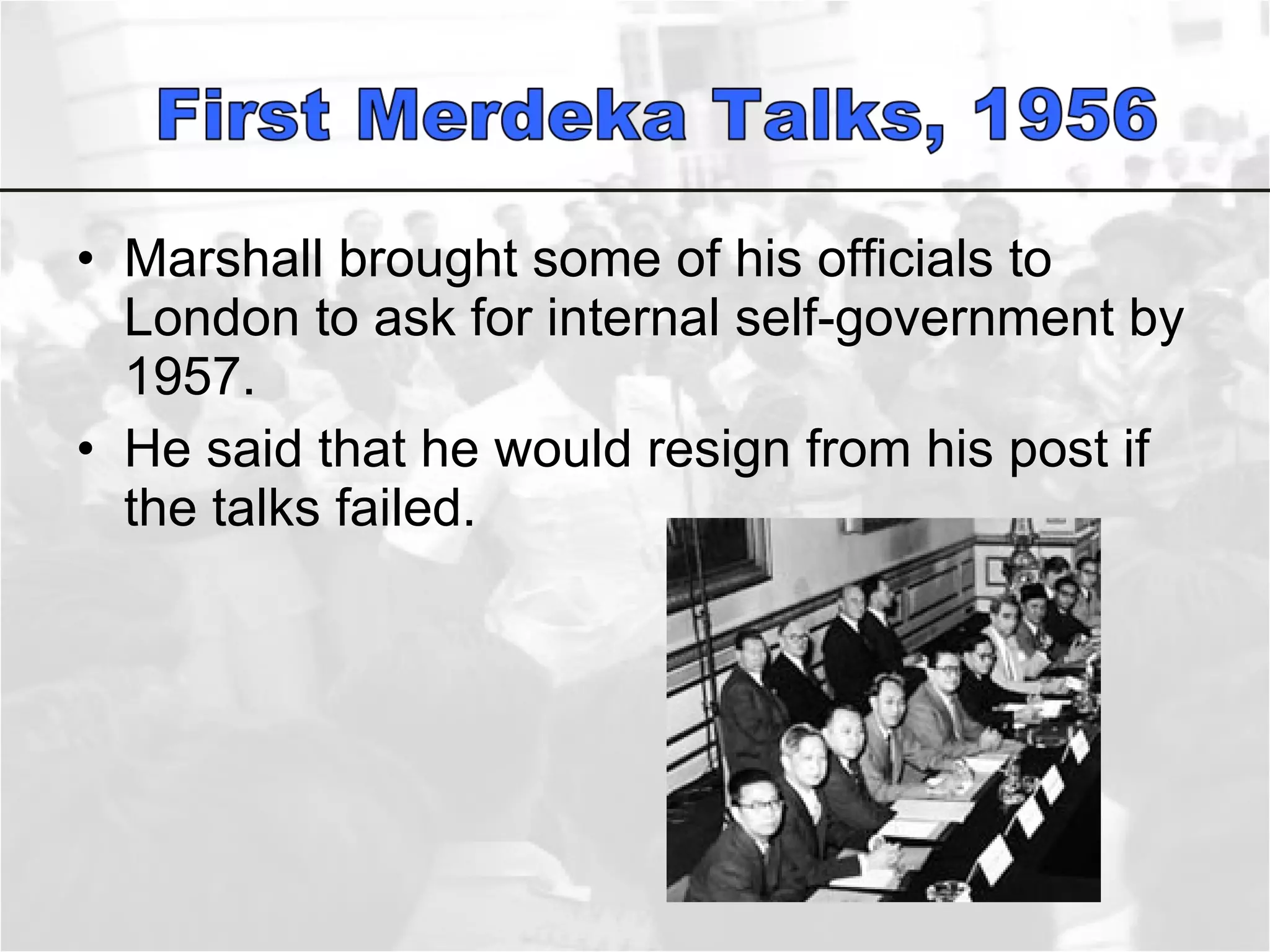
Marshall brought some of his officials to London to ask for internal self-government by 1957.  He said that he would resign from his post if the talks failed.
How did the talks go? It failed! The British felt that Marshall’s government was not capable enough to stop the Communist threats, so they refused to give Singapore internal self-government.  David Marshall was also unwilling to compromise with the British about full internal self-government  so Marshall resigned and Lim Yew Hock took over…
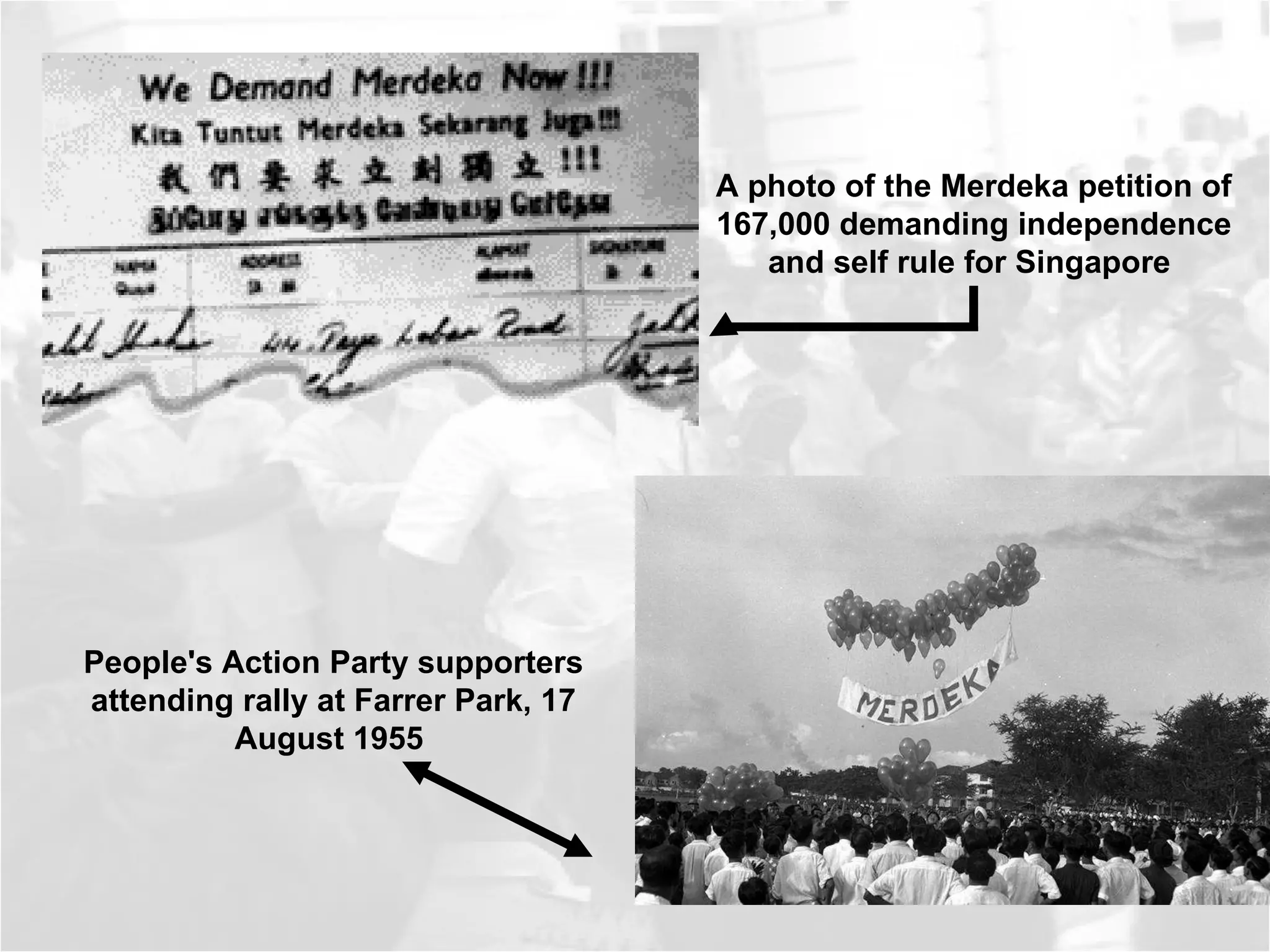
A photo of the Merdeka petition of 167,000 demanding independence and self rule for Singapore  People's Action Party supporters attending rally at Farrer Park, 17 August 1955
Cooperative towards the British government: did not believe in threatening the British to offer more concessions
Tough stance towards Communist Believed that cooperating with the British to control the Communist, to gain the confidence of the British government was the best way to achieve full internal self-government
Who was involved?  Singapore Chinese Middle School Students’ Union Students and workers  Lim Yew Hock and his government  When did it happen?  October 1956
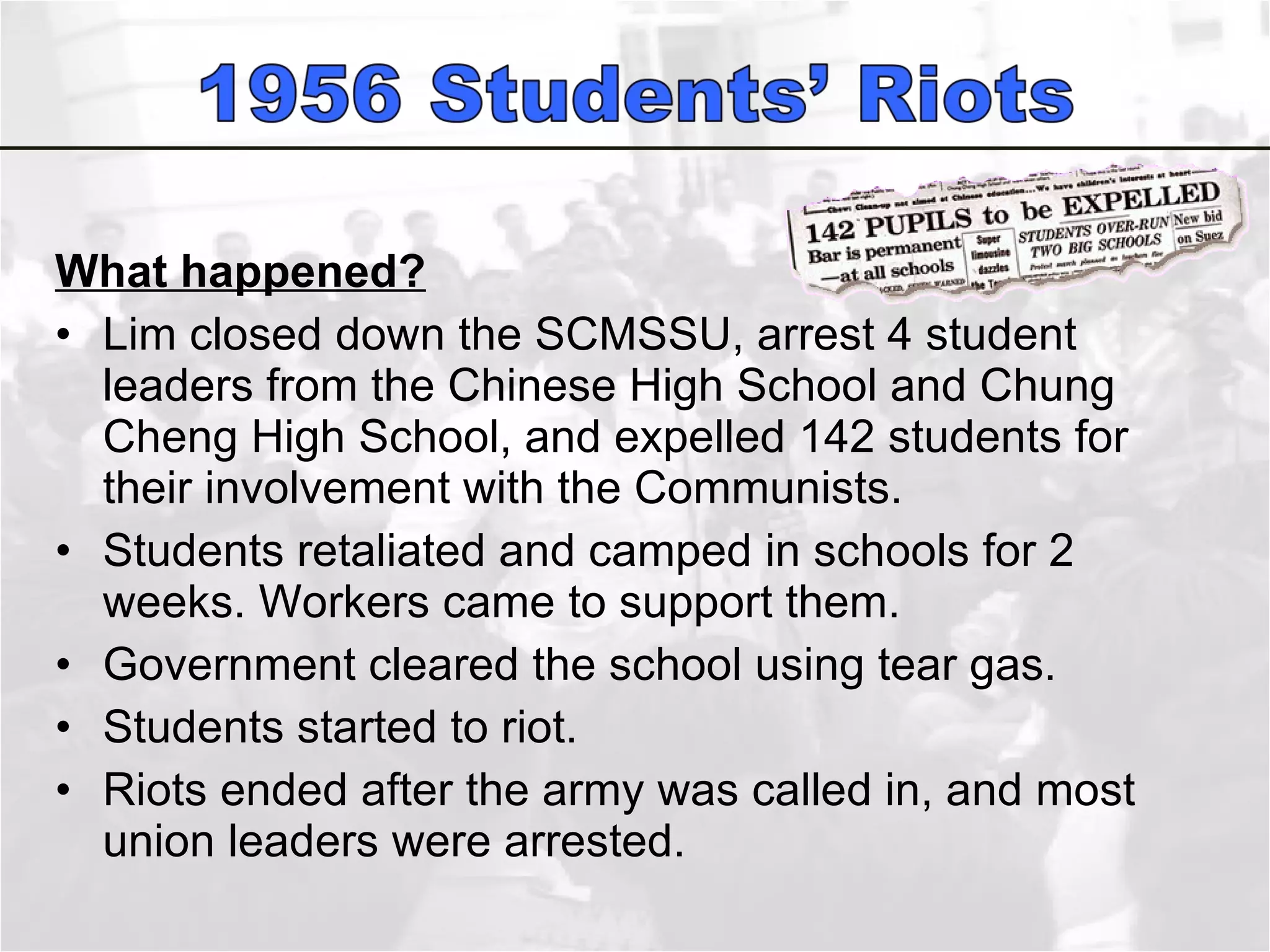
What happened? Lim closed down the SCMSSU, arrest 4 student leaders from the Chinese High School and Chung Cheng High School, and expelled 142 students for their involvement with the Communists.  Students retaliated and camped in schools for 2 weeks. Workers came to support them.  Government cleared the school using tear gas.  Students started to riot. Riots ended after the army was called in, and most union leaders were arrested.
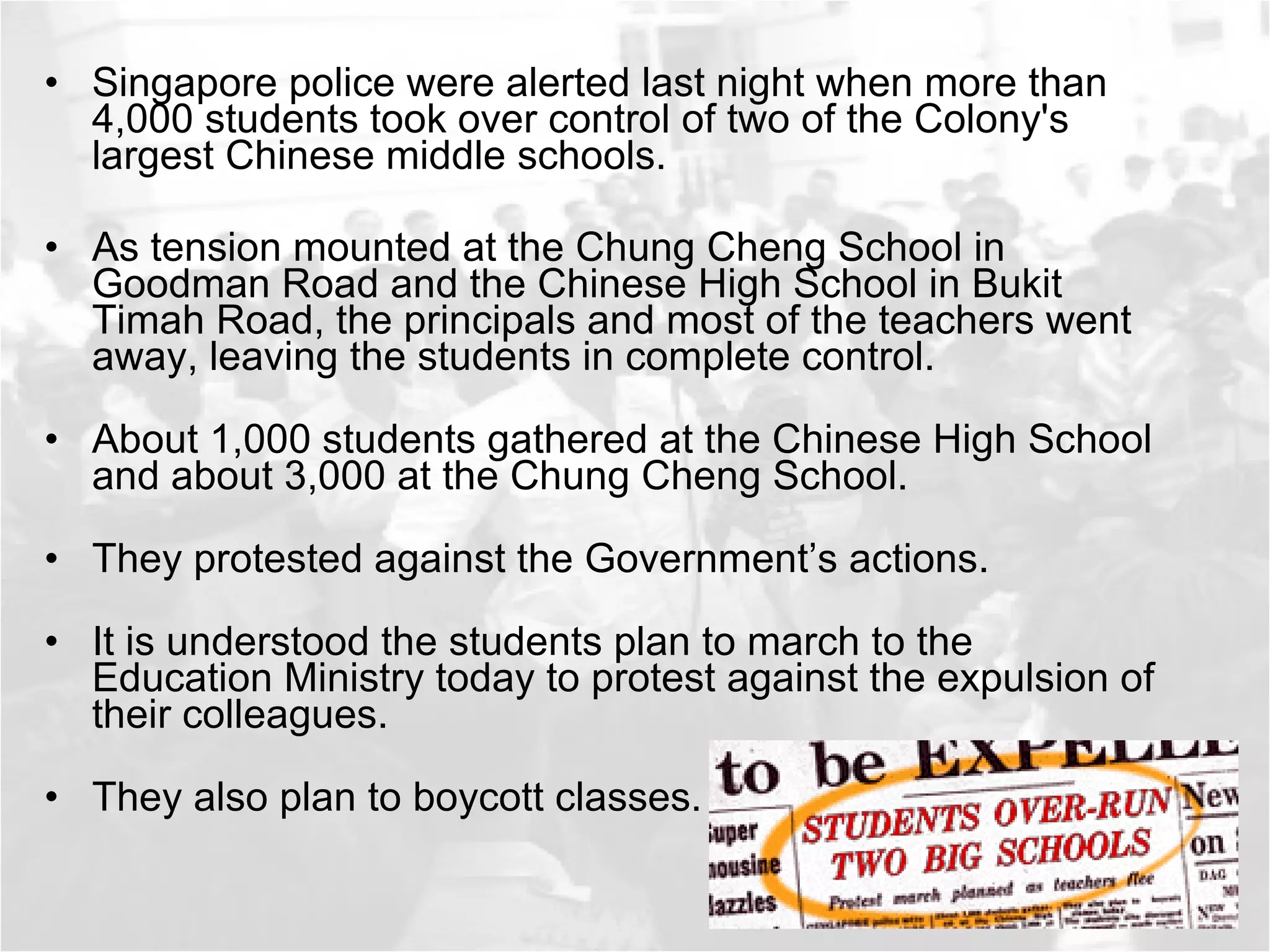
Singapore police were alerted last night when more than 4,000 students took over control of two of the Colony's largest Chinese middle schools. As tension mounted at the Chung Cheng School in Goodman Road and the Chinese High School in Bukit Timah Road, the principals and most of the teachers went away, leaving the students in complete control. About 1,000 students gathered at the Chinese High School and about 3,000 at the Chung Cheng School. They protested against the Government’s actions.  It is understood the students plan to march to the Education Ministry today to protest against the expulsion of their colleagues. They also plan to boycott classes.
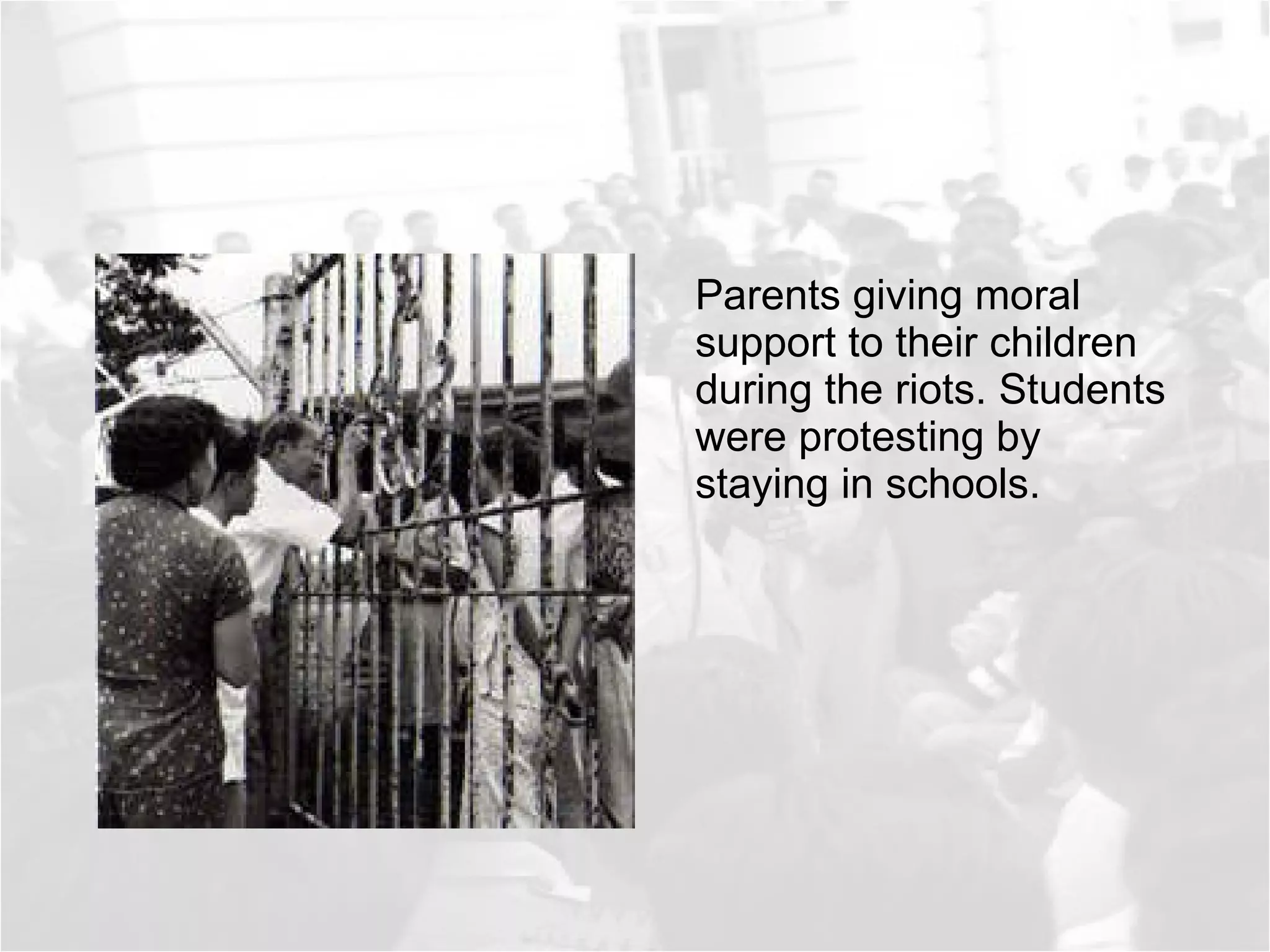
Parents giving moral support to their children during the riots. Students were protesting by staying in schools.
Why did it happen? Lim wanted to control communist activities and this was not welcomed by the communist supporters
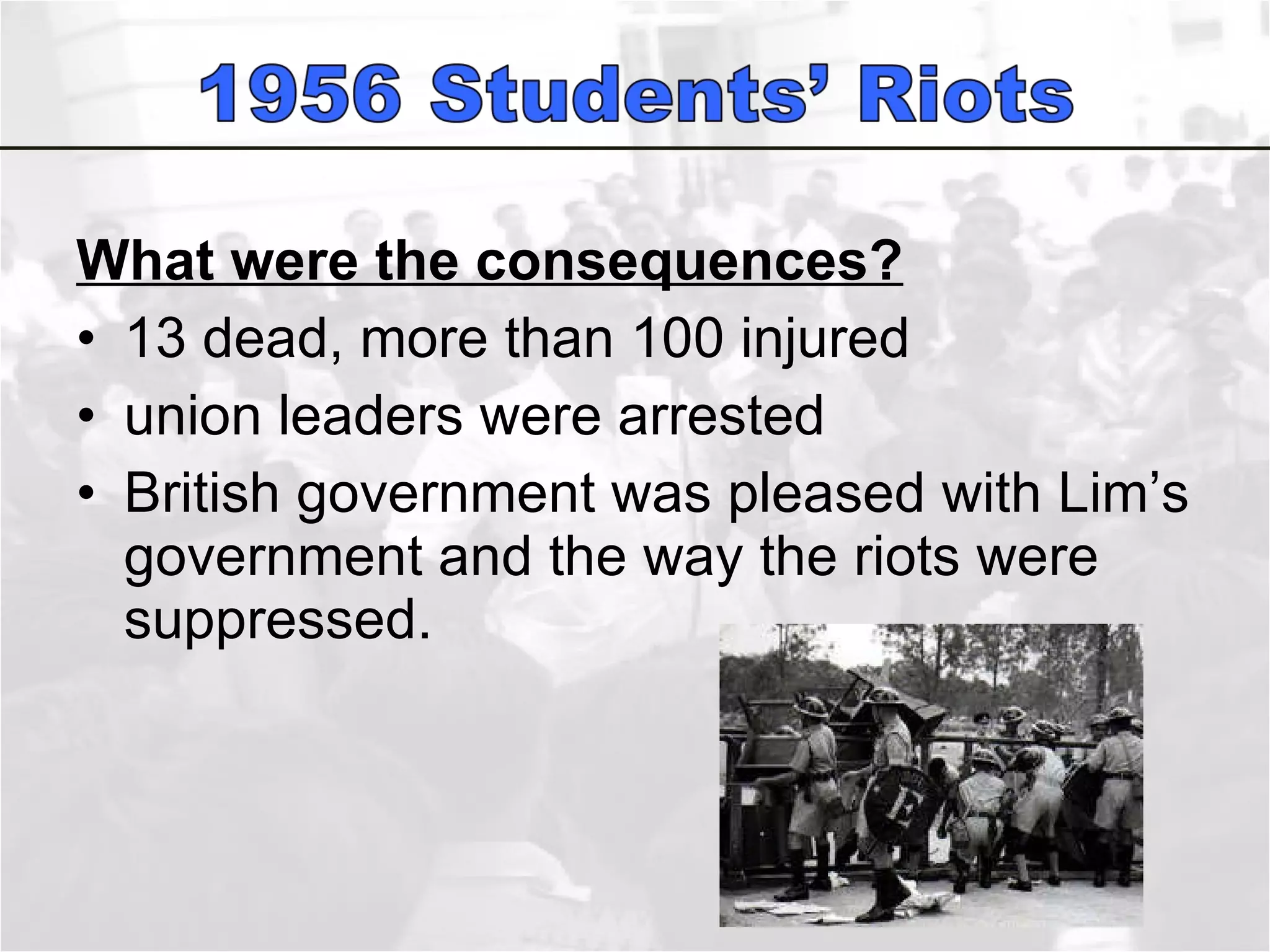
What were the consequences? 13 dead, more than 100 injured union leaders were arrested British government was pleased with Lim’s government and the way the riots were suppressed.
Successful! Why was it successful? British was confident in Lim’s government and the way he dealt with Communist threats. Lim was also willing to compromise on the issue of internal security as he was aware that the British was still concerned about the Communists.  Political structure – pg.165
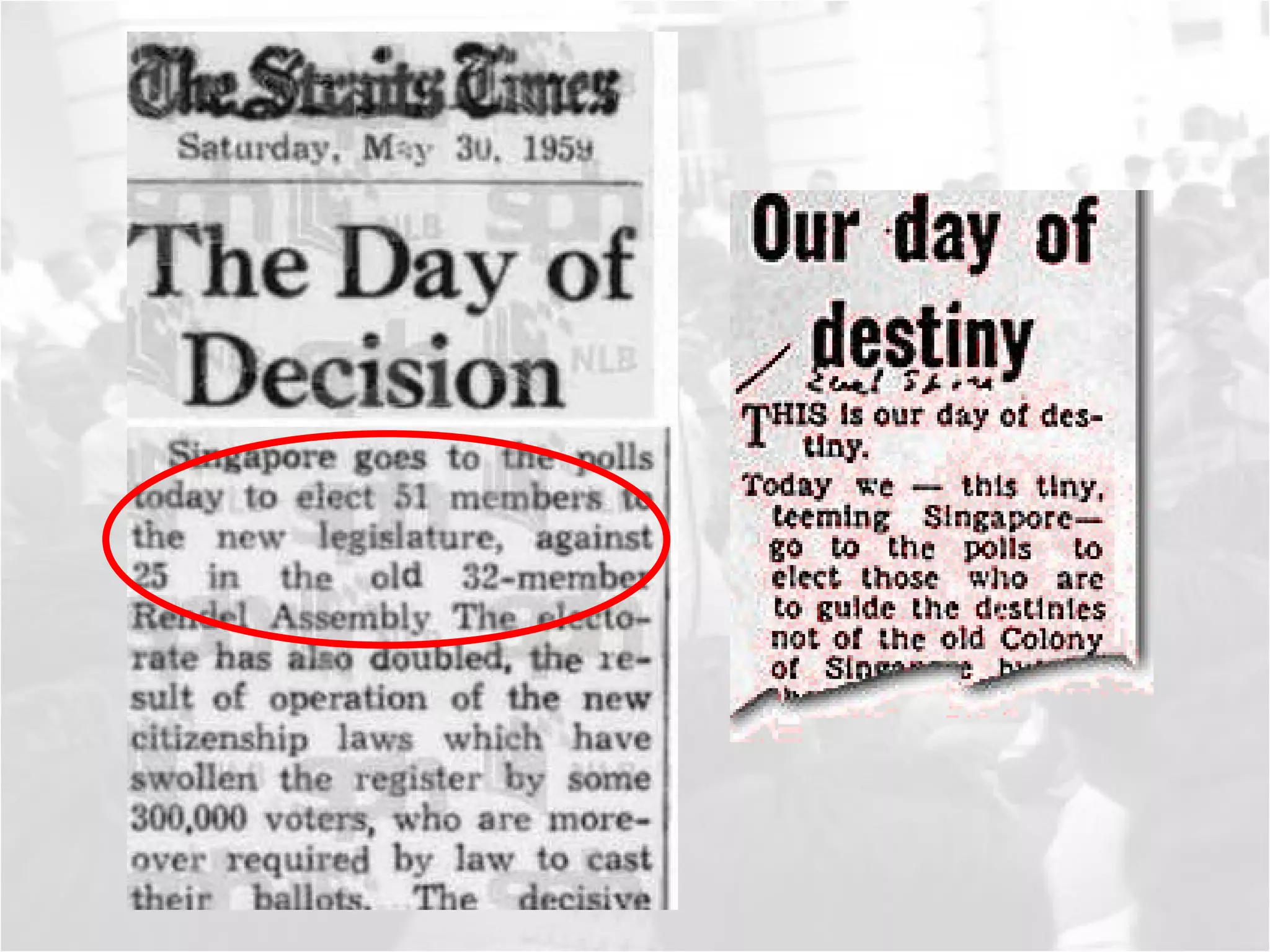
Why was it important and significant? first fully democratic election more political parties took part greater number of voters introduction of compulsory voting
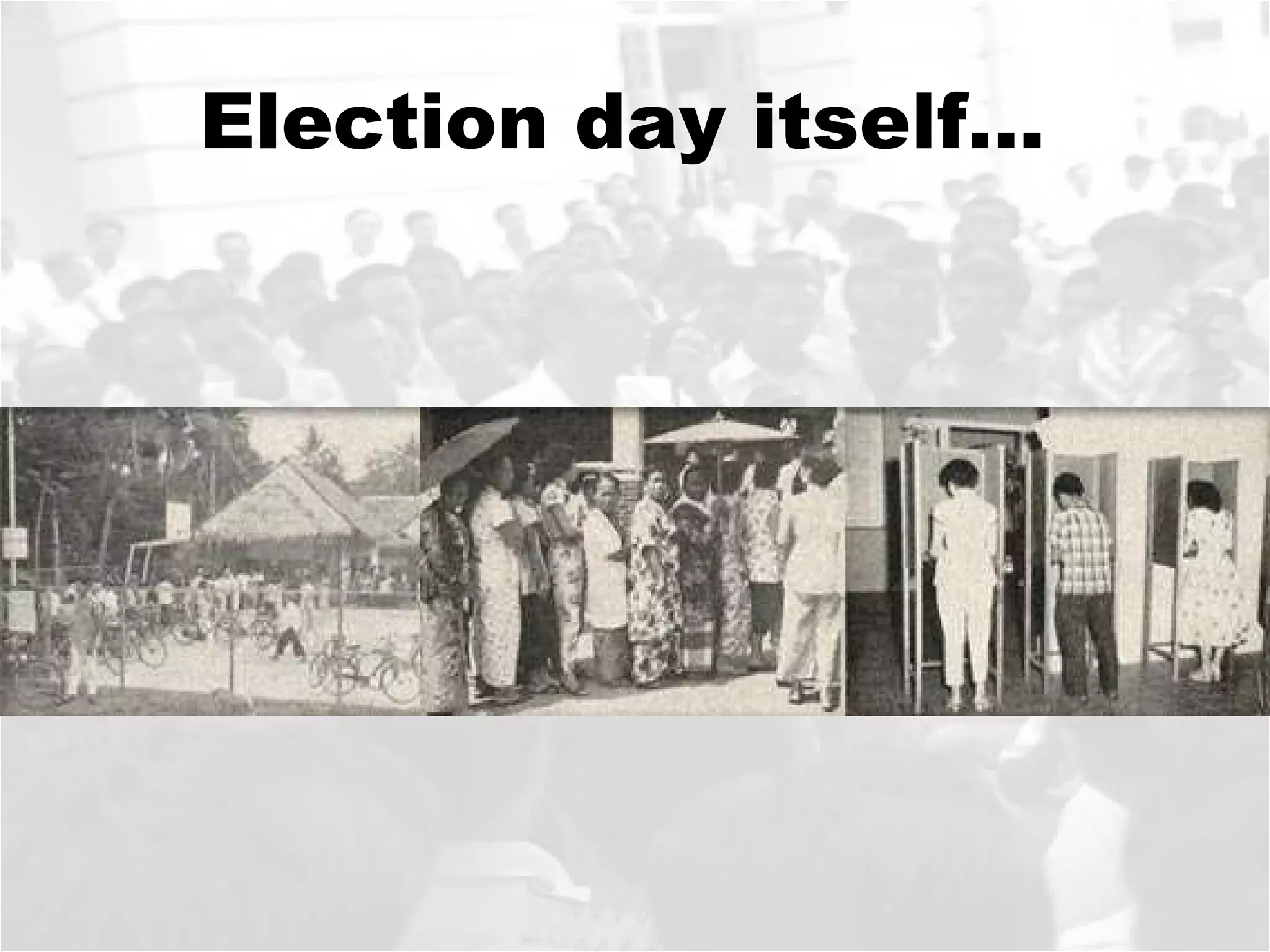
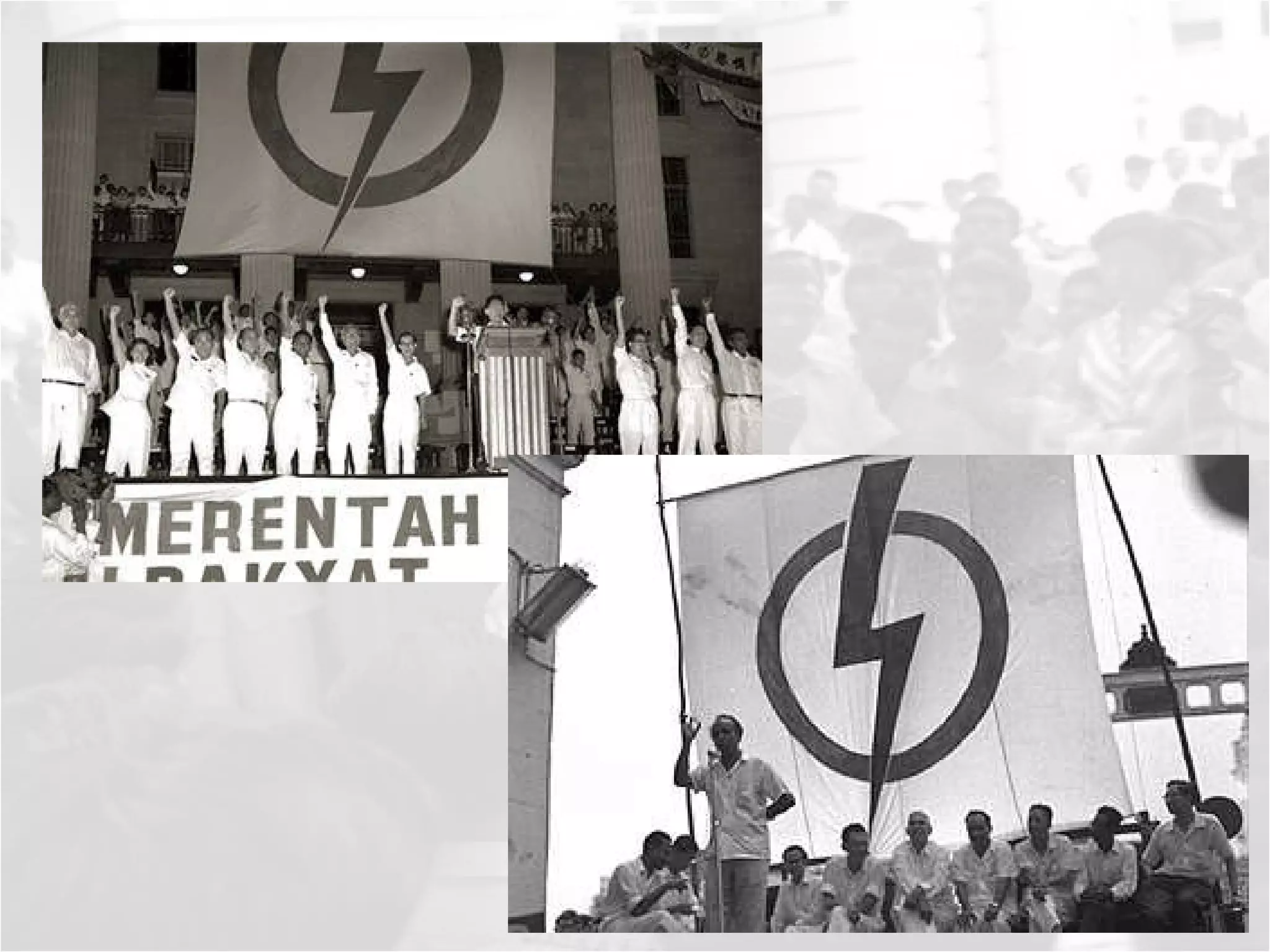
Election day itself…
 
PAP won 43 out of the 51 seats The party appeared well-organized and united It had a large group of supporters from the trade unions and Chinese schools They had a comprehensive plan for Singapore People trusted PAP to be an honest party
 
Summary  1. Marshall’s government Hock Lee’s Bus Riots First Merdeka Talks 2. Lim’s government Students’ Riots Second Merdeka Talks 3. 1959 Elections

Sec 2 hist_chapter_8

  • 1.
  • 2.
    Marshall’s government HockLee Bus Riots 1 st Merdeka talks Lim’s government 1956 Students’ Riots 2 nd Merdeka talks 1959 Elections New political structure Importance
  • 3.
    David Marshall, leaderof the Labour Front Singapore’s first Chief Minister ( p.155)
  • 4.
    Formed a coalitiongovernment with the Alliance Party Marshall as Chief Minister (still had to report to the British Governor) British Governor and the British officials did not treat him with respect Figurehead: a leader who has little authority or influence British did not support Marshall’s government because it was not the party that the British hoped would win.
  • 5.
    What were theproblems Marshall’s government had to face? Restoring peace and order There were (Regular) Strikes that were provoked by the Malayan Communist Party
  • 6.
    First problem thatMarshall had to resolve…
  • 7.
    Who was involved?Singapore Bus Workers Union (SBWU) Hock Lee Bus Company Chinese-educated students David Marshall When did it happen? April- May 1955
  • 8.
    What happened? (pp.157-159)Workers from SBWU went on strike – wanted better pay and working conditions Hock Lee Bus Company responded by firing 229 workers Chinese students came to support the strikers. Marshall tried to act as the mediator to settle the problem BUT both parties failed to reach an agreement. Strikes began to grow and eventually became a riot. Riots ended on 14 th May 1955, with the workers getting their jobs back.
  • 9.
    In short…a strikethat turned violent! Workers from SBWU went on strike, but got fired instead by the bus company. Chinese students came to support the strikers. Marshall tried to help but failed. Strikes became a riot, and ended on 14 th May after the strikers were re-hired again.
  • 10.
  • 11.
    Why did ithappen? Strikers wanted better pay and working conditions (probably influenced by MCP) Chinese students were probably influenced by the Communists (MCP) to support the strikers
  • 12.
    What were theconsequences? 12 th May 1955: ‘Black Thursday’ because of the violence 4 death, 31 injured. British felt that Marshall was incapable of handling the riots and the Communist problem. British did not think that Marshall’s government would be able to rule Singapore well
  • 13.
  • 14.
    Marshall brought someof his officials to London to ask for internal self-government by 1957. He said that he would resign from his post if the talks failed.
  • 15.
    How did thetalks go? It failed! The British felt that Marshall’s government was not capable enough to stop the Communist threats, so they refused to give Singapore internal self-government. David Marshall was also unwilling to compromise with the British about full internal self-government so Marshall resigned and Lim Yew Hock took over…
  • 16.
    A photo ofthe Merdeka petition of 167,000 demanding independence and self rule for Singapore People's Action Party supporters attending rally at Farrer Park, 17 August 1955
  • 17.
    Cooperative towards theBritish government: did not believe in threatening the British to offer more concessions
  • 18.
    Tough stance towardsCommunist Believed that cooperating with the British to control the Communist, to gain the confidence of the British government was the best way to achieve full internal self-government
  • 19.
    Who was involved? Singapore Chinese Middle School Students’ Union Students and workers Lim Yew Hock and his government When did it happen? October 1956
  • 20.
    What happened? Limclosed down the SCMSSU, arrest 4 student leaders from the Chinese High School and Chung Cheng High School, and expelled 142 students for their involvement with the Communists. Students retaliated and camped in schools for 2 weeks. Workers came to support them. Government cleared the school using tear gas. Students started to riot. Riots ended after the army was called in, and most union leaders were arrested.
  • 21.
    Singapore police werealerted last night when more than 4,000 students took over control of two of the Colony's largest Chinese middle schools. As tension mounted at the Chung Cheng School in Goodman Road and the Chinese High School in Bukit Timah Road, the principals and most of the teachers went away, leaving the students in complete control. About 1,000 students gathered at the Chinese High School and about 3,000 at the Chung Cheng School. They protested against the Government’s actions. It is understood the students plan to march to the Education Ministry today to protest against the expulsion of their colleagues. They also plan to boycott classes.
  • 22.
    Parents giving moralsupport to their children during the riots. Students were protesting by staying in schools.
  • 23.
    Why did ithappen? Lim wanted to control communist activities and this was not welcomed by the communist supporters
  • 24.
    What were theconsequences? 13 dead, more than 100 injured union leaders were arrested British government was pleased with Lim’s government and the way the riots were suppressed.
  • 25.
    Successful! Why wasit successful? British was confident in Lim’s government and the way he dealt with Communist threats. Lim was also willing to compromise on the issue of internal security as he was aware that the British was still concerned about the Communists. Political structure – pg.165
  • 26.
    Why was itimportant and significant? first fully democratic election more political parties took part greater number of voters introduction of compulsory voting
  • 27.
  • 28.
  • 29.
    PAP won 43out of the 51 seats The party appeared well-organized and united It had a large group of supporters from the trade unions and Chinese schools They had a comprehensive plan for Singapore People trusted PAP to be an honest party
  • 30.
  • 31.
    Summary 1.Marshall’s government Hock Lee’s Bus Riots First Merdeka Talks 2. Lim’s government Students’ Riots Second Merdeka Talks 3. 1959 Elections