SERCHING
FOR
INFORMATION
“The New Literacy Set” Project
The Big 6 is one of the most
important process of searching
information.
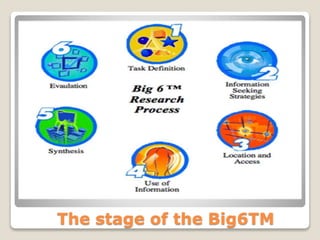
The stage of the Big6TM
SAMPLE
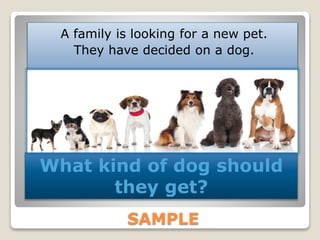
A family is looking for a new pet.
They have decided on a dog.
What kind of dog should
they get?
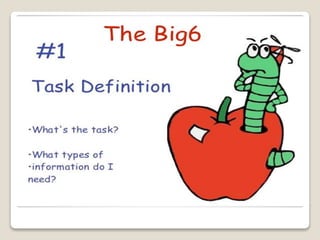
Task Definition
Family asks: “What do we need to do?”
 Define the information problem.
 Identify the information needed to solve the
problem.
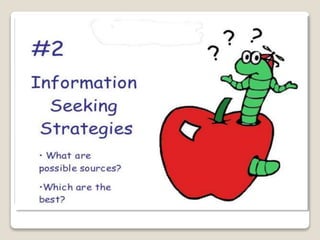
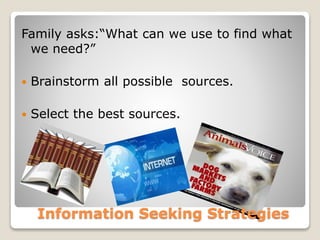
Information Seeking Strategies
Family asks:“What can we use to find what
we need?”
 Brainstorm all possible sources.
 Select the best sources.
Location and Access
Family asks:“Where can we find what we
need?”
 Locate sources.
 Find information within sources.
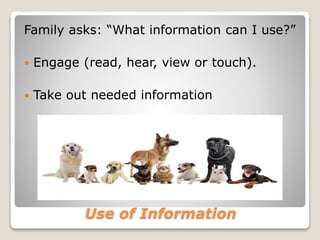
Use of Information
Family asks: “What information can I use?”
 Engage (read, hear, view or touch).
 Take out needed information
Synthesis
Family asks: “How can we put our
information together?”
 Organize information from all sources.
 Make a decision.
Create a product or performance.)
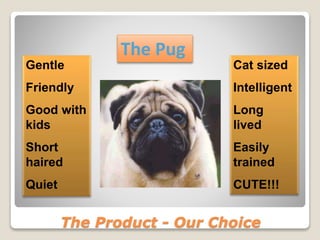
The Product - Our Choice
The Pug
Gentle
Friendly
Good with
kids
Short
haired
Quiet
Cat sized
Intelligent
Long
lived
Easily
trained
CUTE!!!
Evaluation
Family asks: “How will we know if we did
well?”
 Judge the product (are we happy with our
new pet?).
 Judge the process
(efficiency).
General tips
 Avoid getting lost in the search
 Know what is the starting point
 Focus on what we are looking for
 Realizing a search plan
 Selecting the most important information
◦ Relevance
◦ Audience
◦ Rigour, credibility and reliability
 Knowing how to store and retrieve
information
Search skills
 Knowing where to find information.
 Knowing what information you need -
understanding your topic and knowing the
key concepts you should research.
 Knowing how to search the sources.
 Recording your searches, so that you
have an "audit trail".
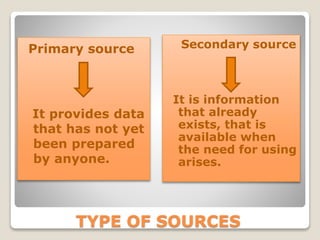
TYPE OF SOURCES
Primary source
It provides data
that has not yet
been prepared
by anyone.
Secondary source
It is information
that already
exists, that is
available when
the need for using
arises.
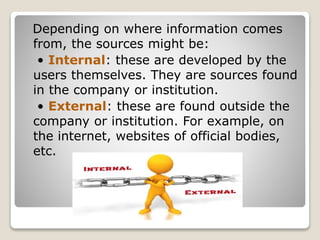
Depending on where information comes
from, the sources might be:
• Internal: these are developed by the
users themselves. They are sources found
in the company or institution.
• External: these are found outside the
company or institution. For example, on
the internet, websites of official bodies,
etc.
Depending on the physical register of the
information, these sources might be:
• Textual: reference works, specialised
magazines, journals, etc.
• Graphic: images, photographs,
audiovisuals, etc., and they supplement
written information.
• Electronic: websites and databases.
How do we search the information?
 We can define the parameters of our search: we
can do a keyword searches.
 Keywords are a way of searching through
subject/topic. Most library catalogues and
databases will include an option to search by
keyword and an alternative to author and title.
 Searching by keyword can be very effective, it
provides of selecting terms that accurately
describe what we are looking for.
 The title of our assignment/project, and our
conceptual analysis of it , will give you your
initial list of keywords.
How can we record our searches?
Recording our searches is a different activity
from making notes on what you read, which
we will do as well. Recording our searches
enables you to have an audit trail of what
you have done, and see what worked and
what didn’t. You should make a note of:
• The main points of your search – its
concepts and remit.
• The search tools you used.
• The search words, including synonyms,
alternative words etc.
• Search strings.
• Results, including which were the most
relevant.
Searching for information

Searching for information

  • 1.
  • 2.
    The Big 6is one of the most important process of searching information.
  • 3.
    The stage ofthe Big6TM
  • 10.
    SAMPLE A family islooking for a new pet. They have decided on a dog. What kind of dog should they get?
  • 11.
    Task Definition Family asks:“What do we need to do?”  Define the information problem.  Identify the information needed to solve the problem.
  • 12.
    Information Seeking Strategies Familyasks:“What can we use to find what we need?”  Brainstorm all possible sources.  Select the best sources.
  • 13.
    Location and Access Familyasks:“Where can we find what we need?”  Locate sources.  Find information within sources.
  • 14.
    Use of Information Familyasks: “What information can I use?”  Engage (read, hear, view or touch).  Take out needed information
  • 15.
    Synthesis Family asks: “Howcan we put our information together?”  Organize information from all sources.  Make a decision. Create a product or performance.)
  • 16.
    The Product -Our Choice The Pug Gentle Friendly Good with kids Short haired Quiet Cat sized Intelligent Long lived Easily trained CUTE!!!
  • 17.
    Evaluation Family asks: “Howwill we know if we did well?”  Judge the product (are we happy with our new pet?).  Judge the process (efficiency).
  • 18.
    General tips  Avoidgetting lost in the search  Know what is the starting point  Focus on what we are looking for  Realizing a search plan  Selecting the most important information ◦ Relevance ◦ Audience ◦ Rigour, credibility and reliability  Knowing how to store and retrieve information
  • 19.
    Search skills  Knowingwhere to find information.  Knowing what information you need - understanding your topic and knowing the key concepts you should research.  Knowing how to search the sources.  Recording your searches, so that you have an "audit trail".
  • 20.
    TYPE OF SOURCES Primarysource It provides data that has not yet been prepared by anyone. Secondary source It is information that already exists, that is available when the need for using arises.
  • 21.
    Depending on whereinformation comes from, the sources might be: • Internal: these are developed by the users themselves. They are sources found in the company or institution. • External: these are found outside the company or institution. For example, on the internet, websites of official bodies, etc.
  • 22.
    Depending on thephysical register of the information, these sources might be: • Textual: reference works, specialised magazines, journals, etc. • Graphic: images, photographs, audiovisuals, etc., and they supplement written information. • Electronic: websites and databases.
  • 23.
    How do wesearch the information?  We can define the parameters of our search: we can do a keyword searches.  Keywords are a way of searching through subject/topic. Most library catalogues and databases will include an option to search by keyword and an alternative to author and title.  Searching by keyword can be very effective, it provides of selecting terms that accurately describe what we are looking for.  The title of our assignment/project, and our conceptual analysis of it , will give you your initial list of keywords.
  • 24.
    How can werecord our searches? Recording our searches is a different activity from making notes on what you read, which we will do as well. Recording our searches enables you to have an audit trail of what you have done, and see what worked and what didn’t. You should make a note of: • The main points of your search – its concepts and remit. • The search tools you used. • The search words, including synonyms, alternative words etc. • Search strings. • Results, including which were the most relevant.