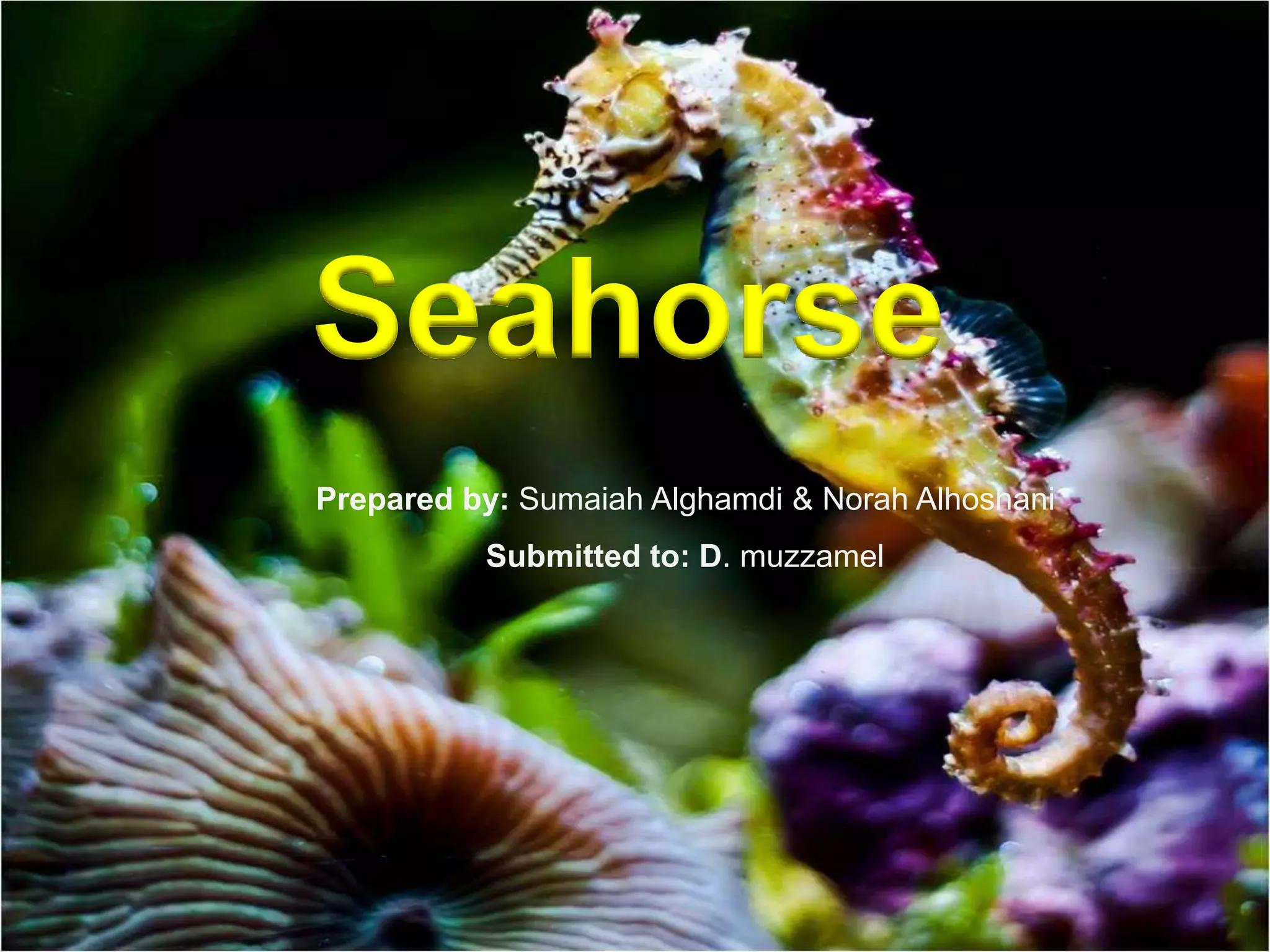
Seahorse
Prepared by: Sumaiah Alghamdi & Norah Alhoshani
Submitted to: D. muzzamel
Content
• Introduction
• Seahorse classification
• History
• Appearance.
• Habita.
• Diate.
• Movement.
• Camouflage &Types.
• Life cycle & predators.
• Reproduction
Introduction
_
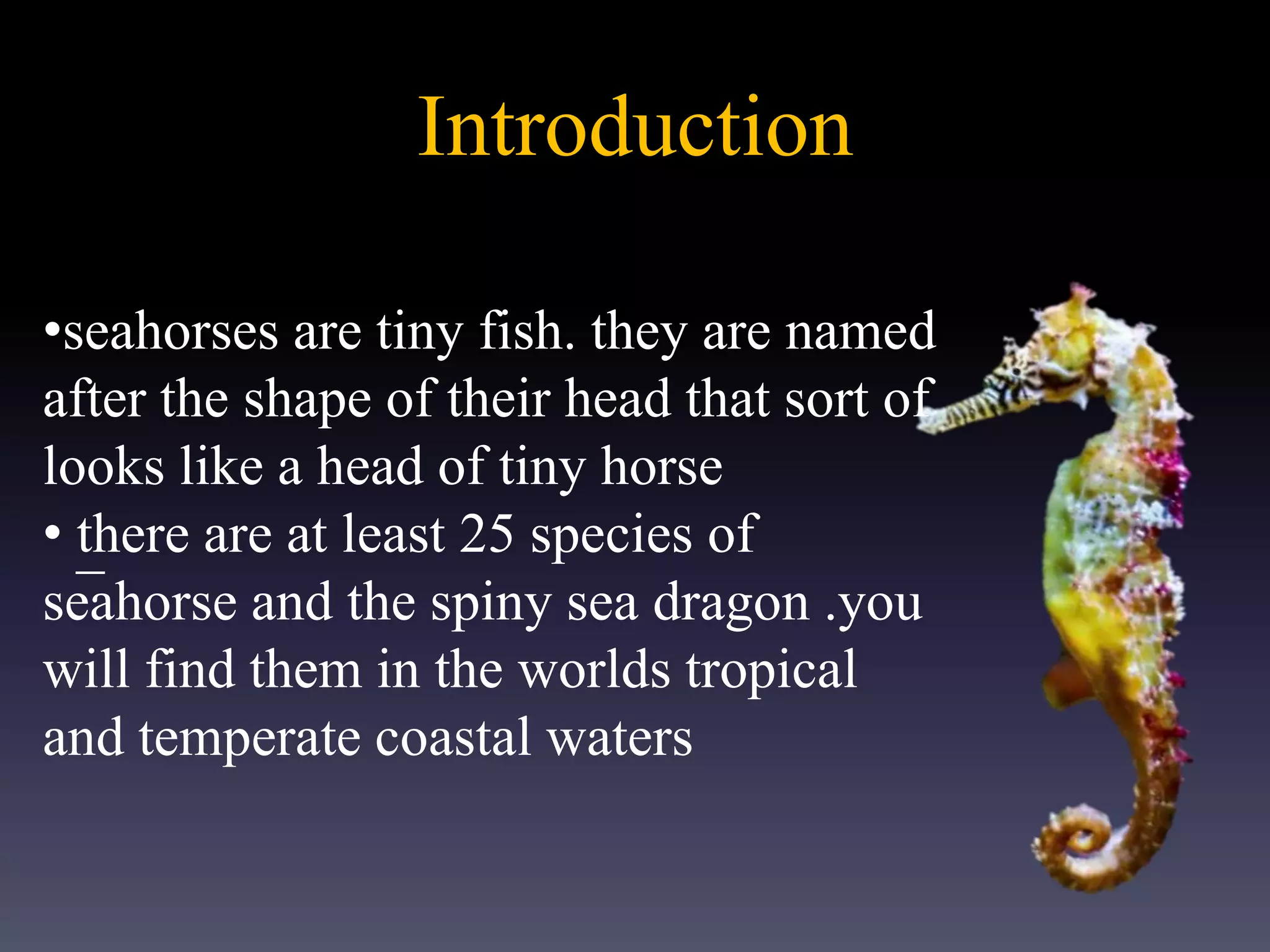
•seahorses are tiny fish. they are named
after the shape of their head that sort of
looks like a head of tiny horse
• there are at least 25 species of
seahorse and the spiny sea dragon .you
will find them in the worlds tropical
and temperate coastal waters
Classification
_
Kingdom: Animalia
Phylum: Chordata
Class: Actinopterygii
Order: Syngnathiformes
Family: Syngnathidae
Genus: Hippocampus
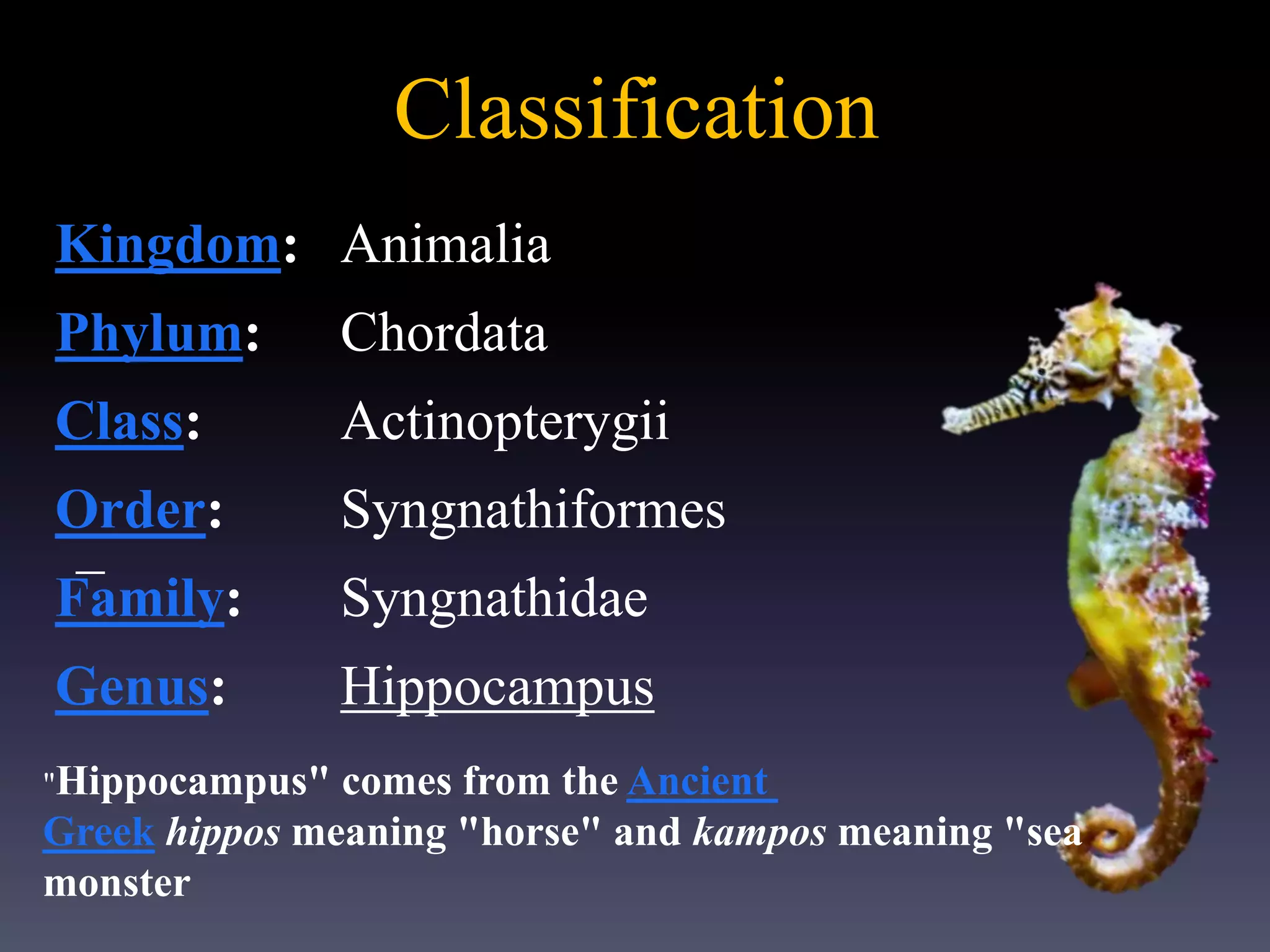
"Hippocampus" comes from the Ancient
Greek hippos meaning "horse" and kampos meaning "sea
monster
History
_
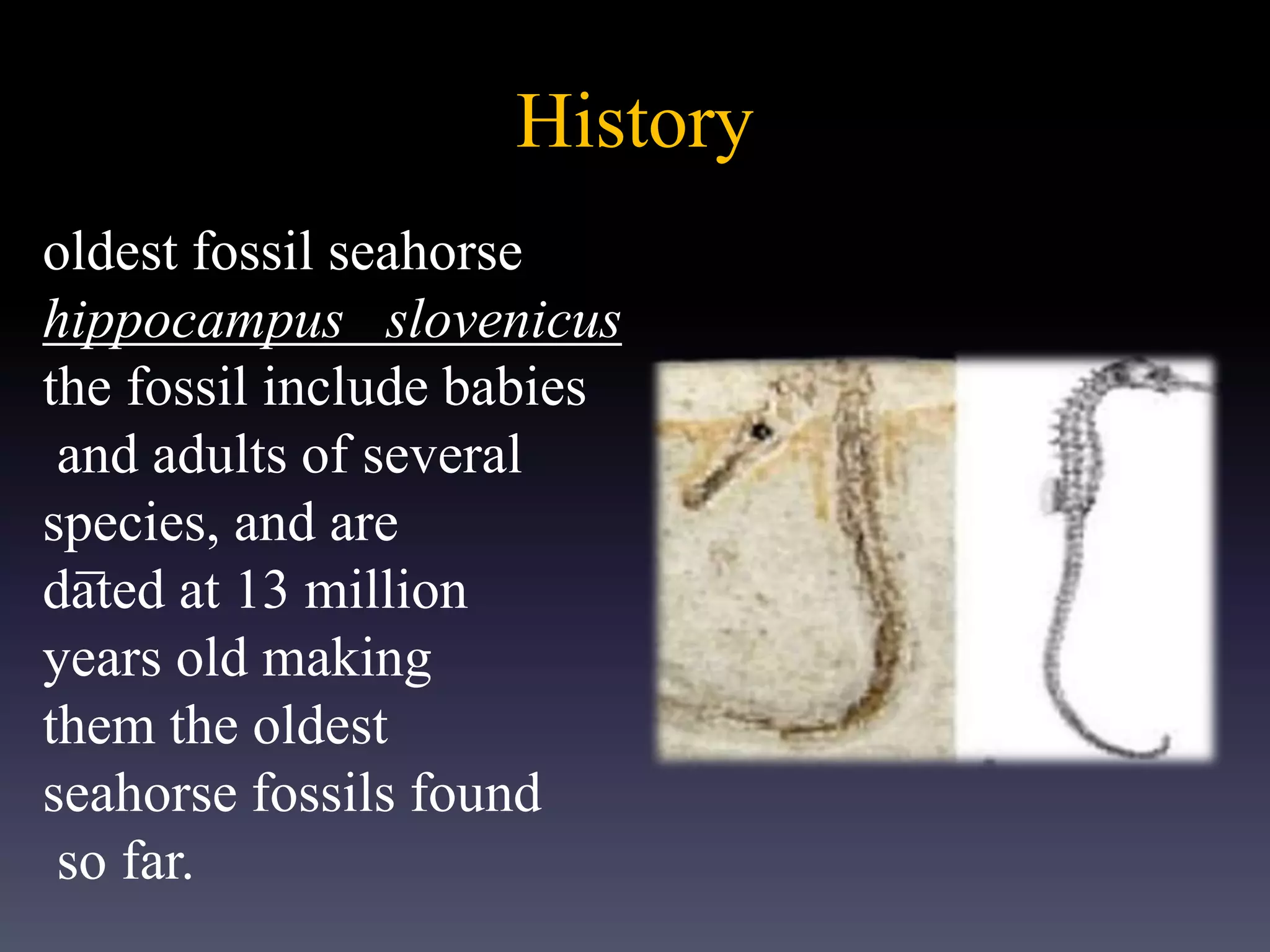
oldest fossil seahorse
hippocampus slovenicus
the fossil include babies
and adults of several
species, and are
dated at 13 million
years old making
them the oldest
seahorse fossils found
so far.
Appearance
_
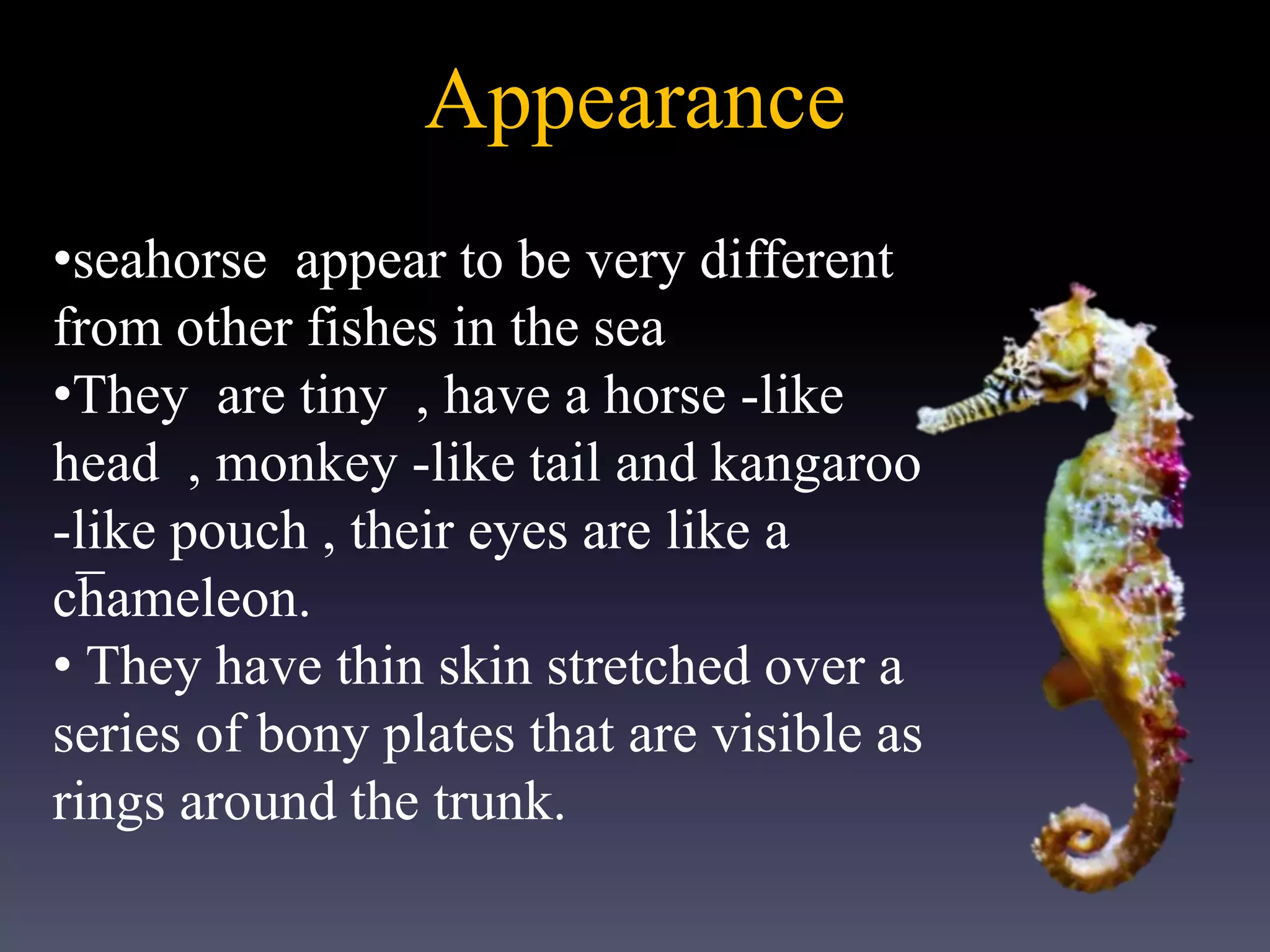
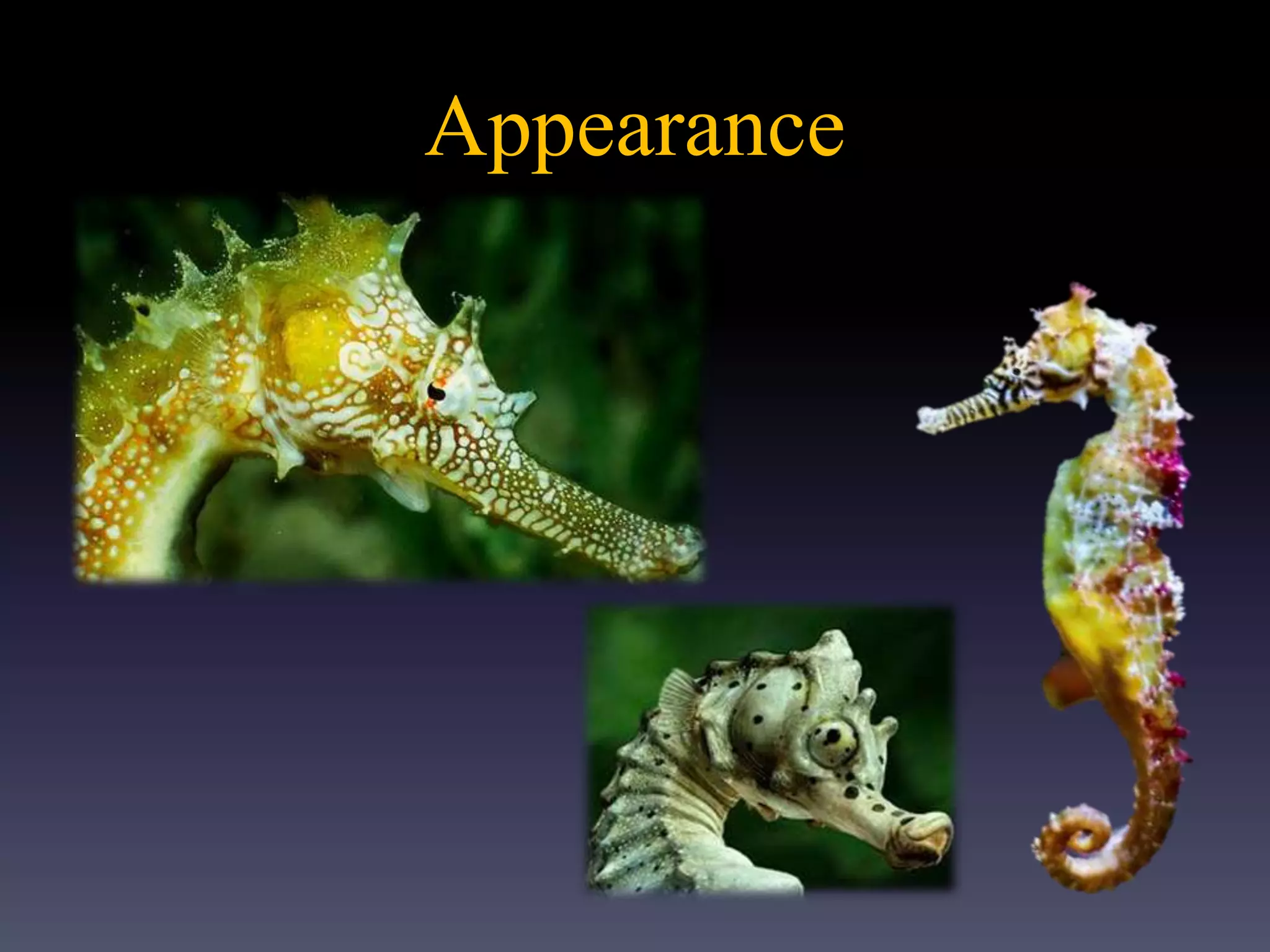
•seahorse appear to be very different
from other fishes in the sea
•They are tiny , have a horse -like
head , monkey -like tail and kangaroo
-like pouch , their eyes are like a
chameleon.
• They have thin skin stretched over a
series of bony plates that are visible as
rings around the trunk.
Appearance
_
Appearance
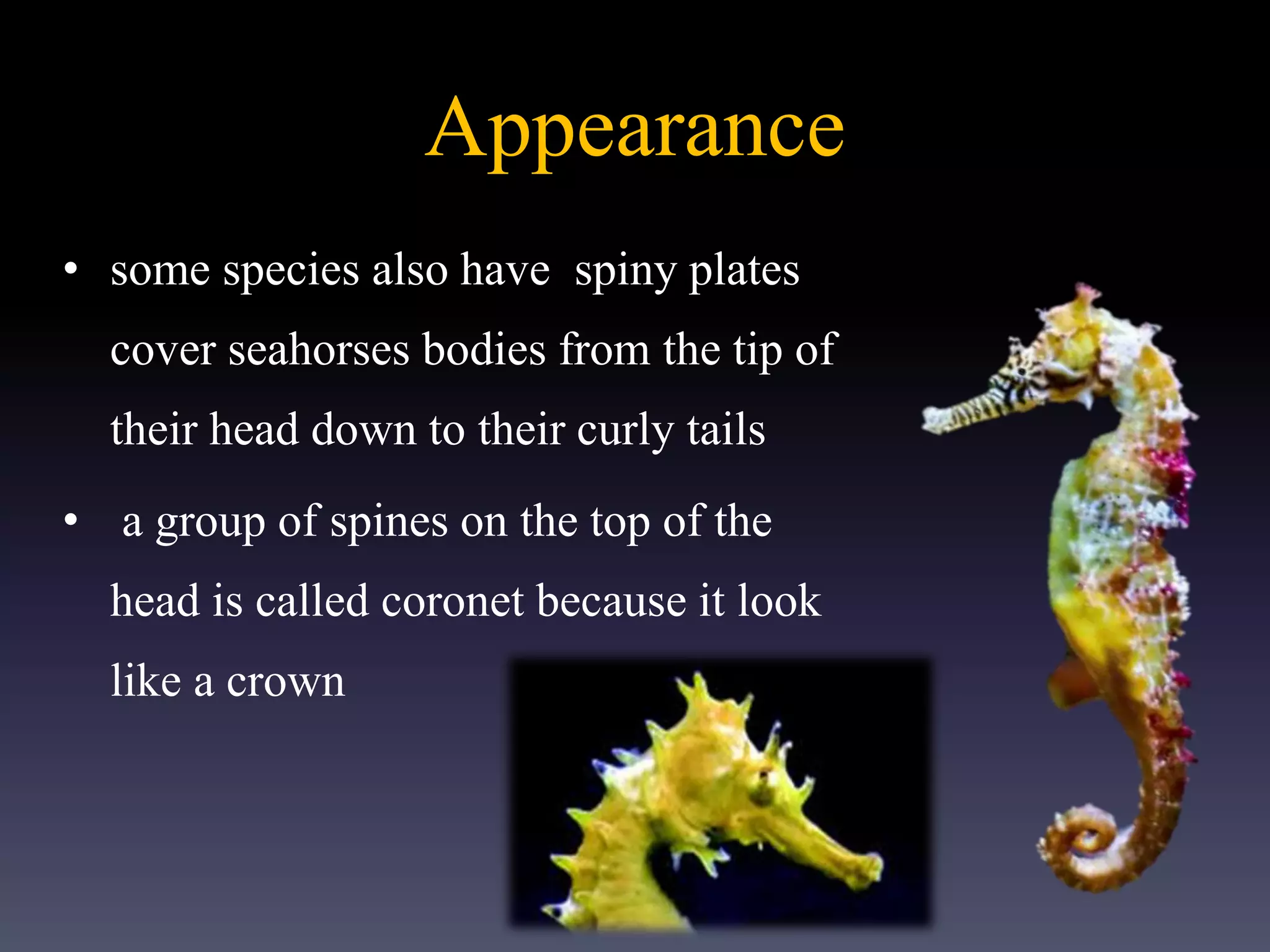
• some species also have spiny plates
cover seahorses bodies from the tip of
their head down to their curly tails
• a group of spines on the top of the
head is called coronet because it look
like a crown
Appearance
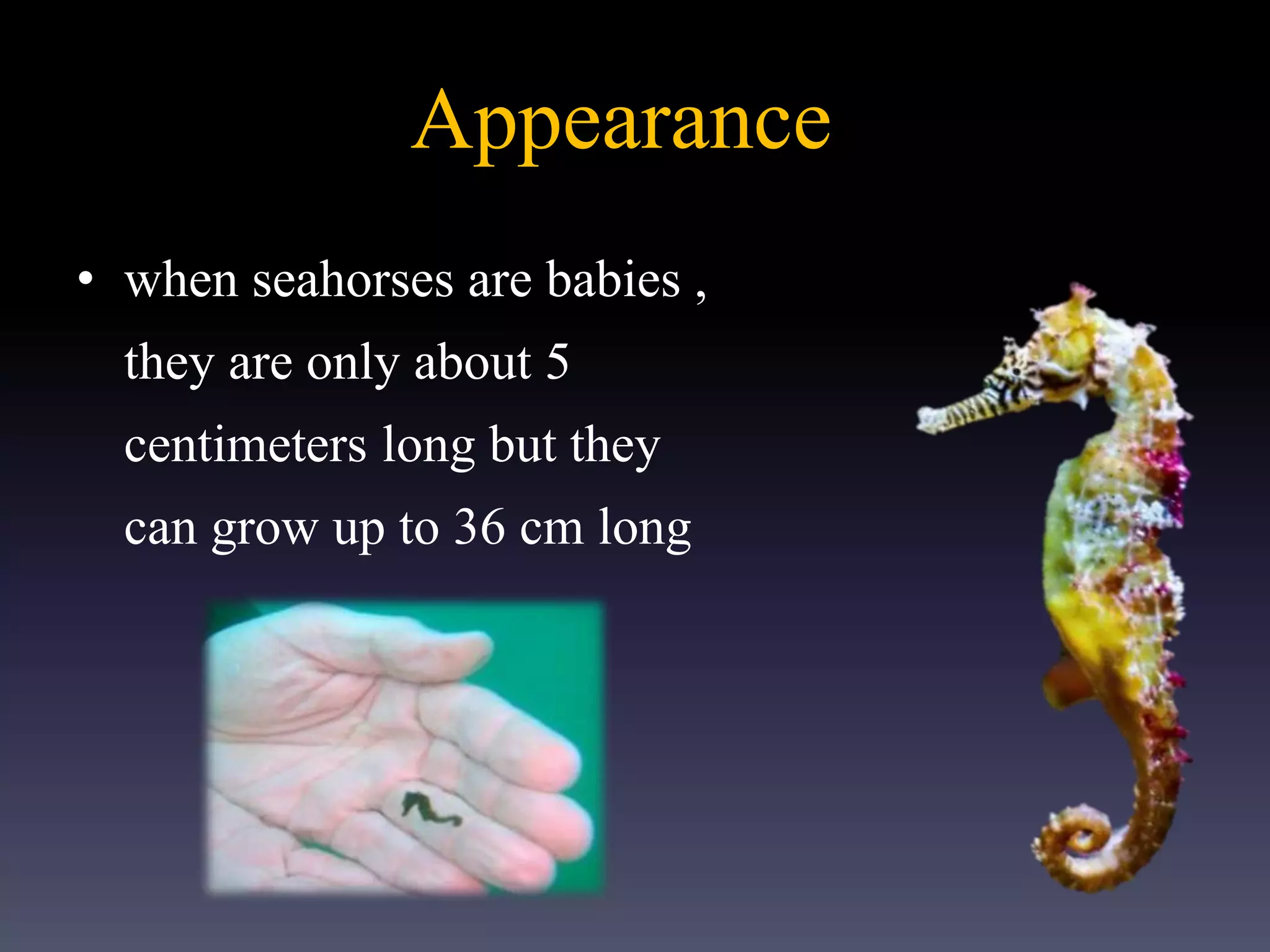
• when seahorses are babies ,
they are only about 5
centimeters long but they
can grow up to 36 cm long
Habitat
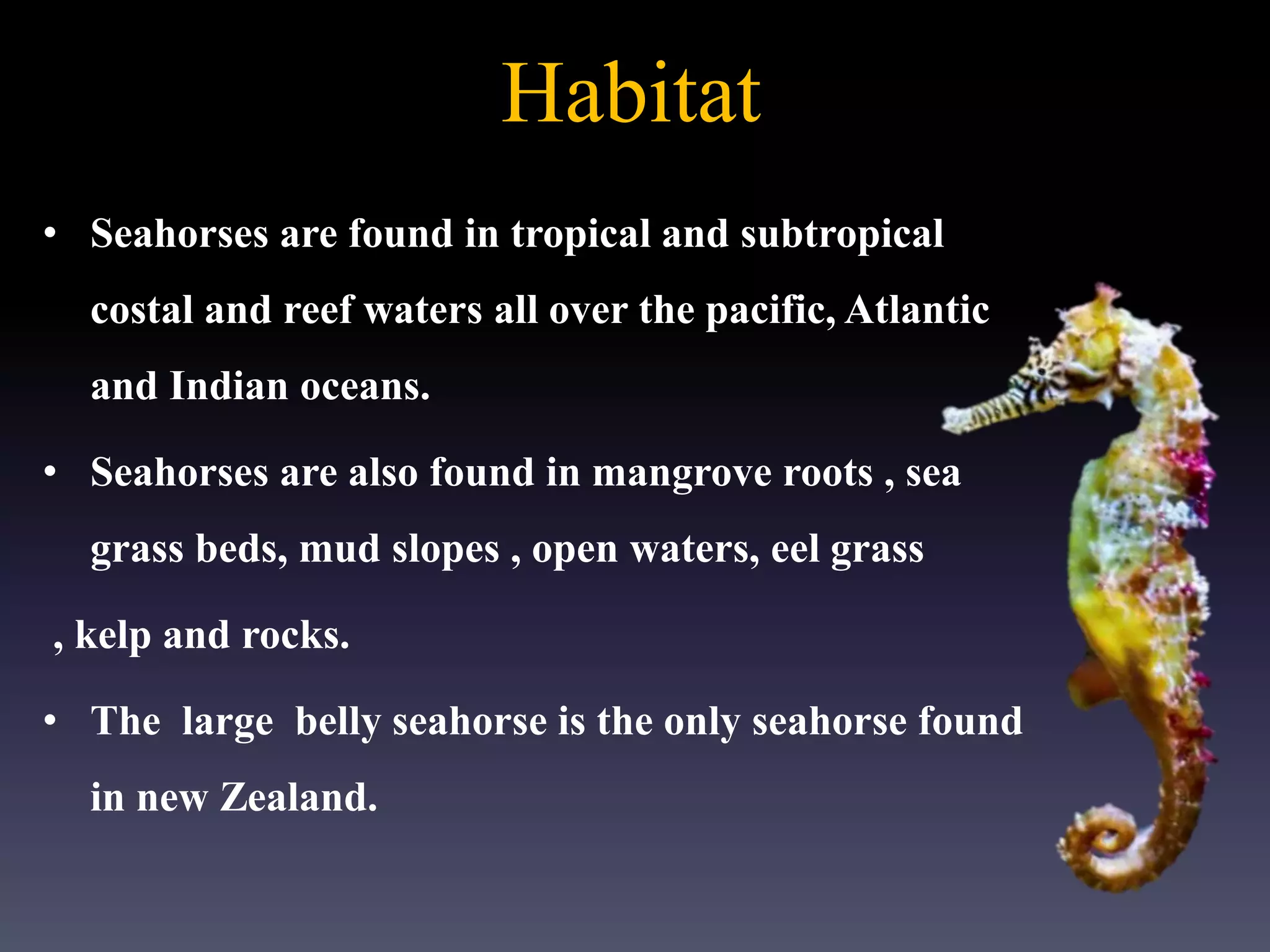
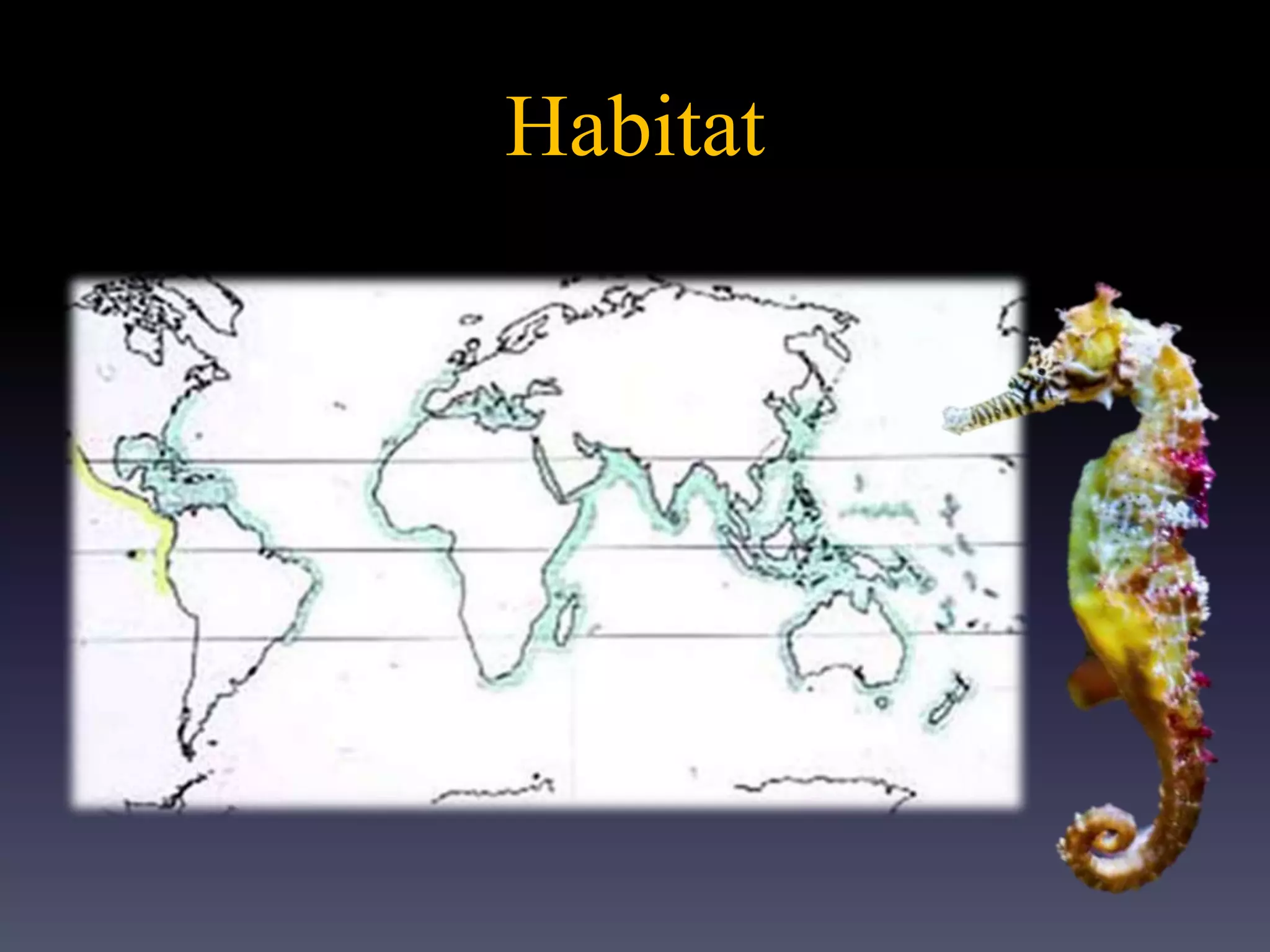
• Seahorses are found in tropical and subtropical
costal and reef waters all over the pacific, Atlantic
and Indian oceans.
• Seahorses are also found in mangrove roots , sea
grass beds, mud slopes , open waters, eel grass
, kelp and rocks.
• The large belly seahorse is the only seahorse found
in new Zealand.
Habitat
Eating
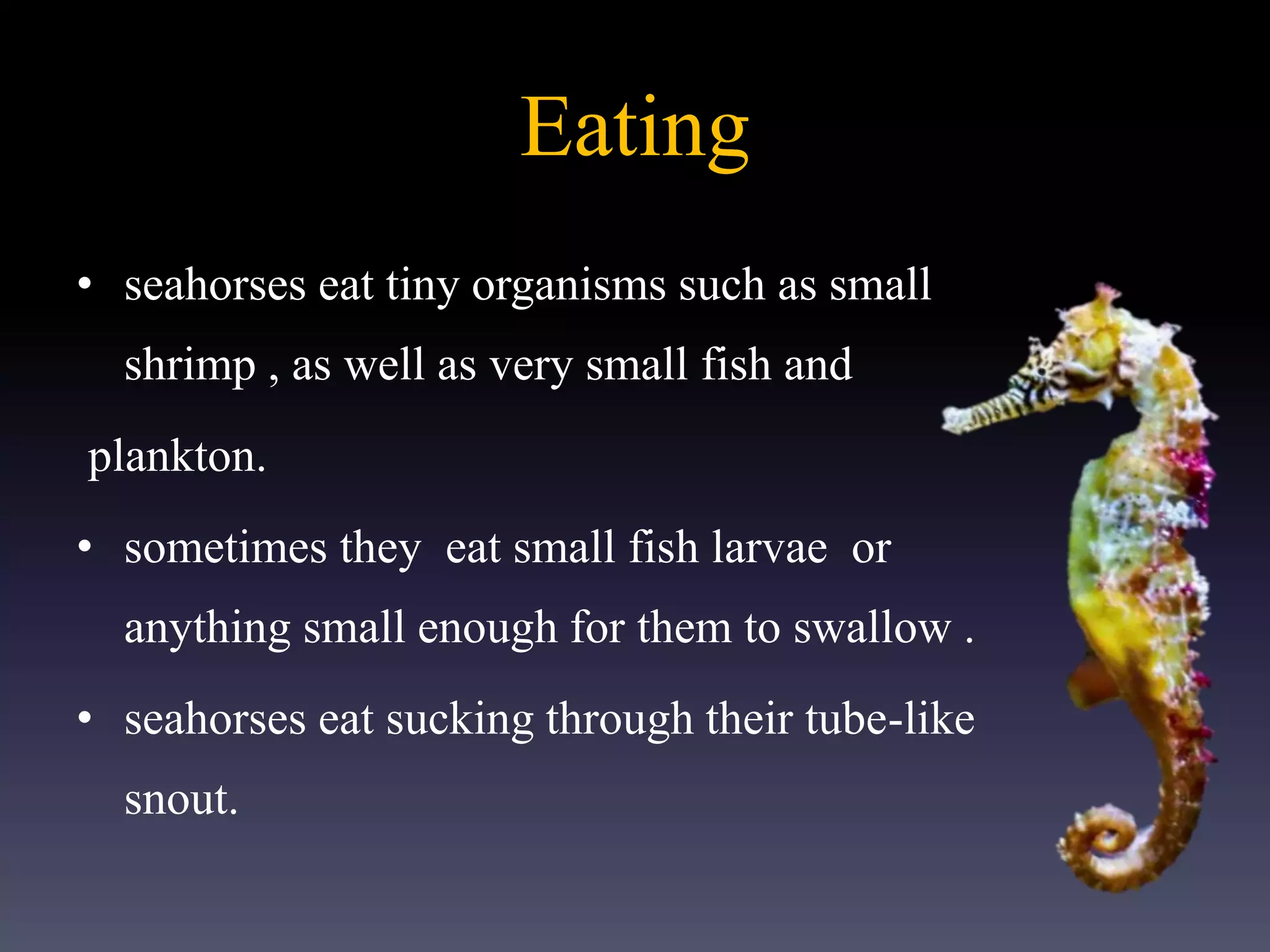
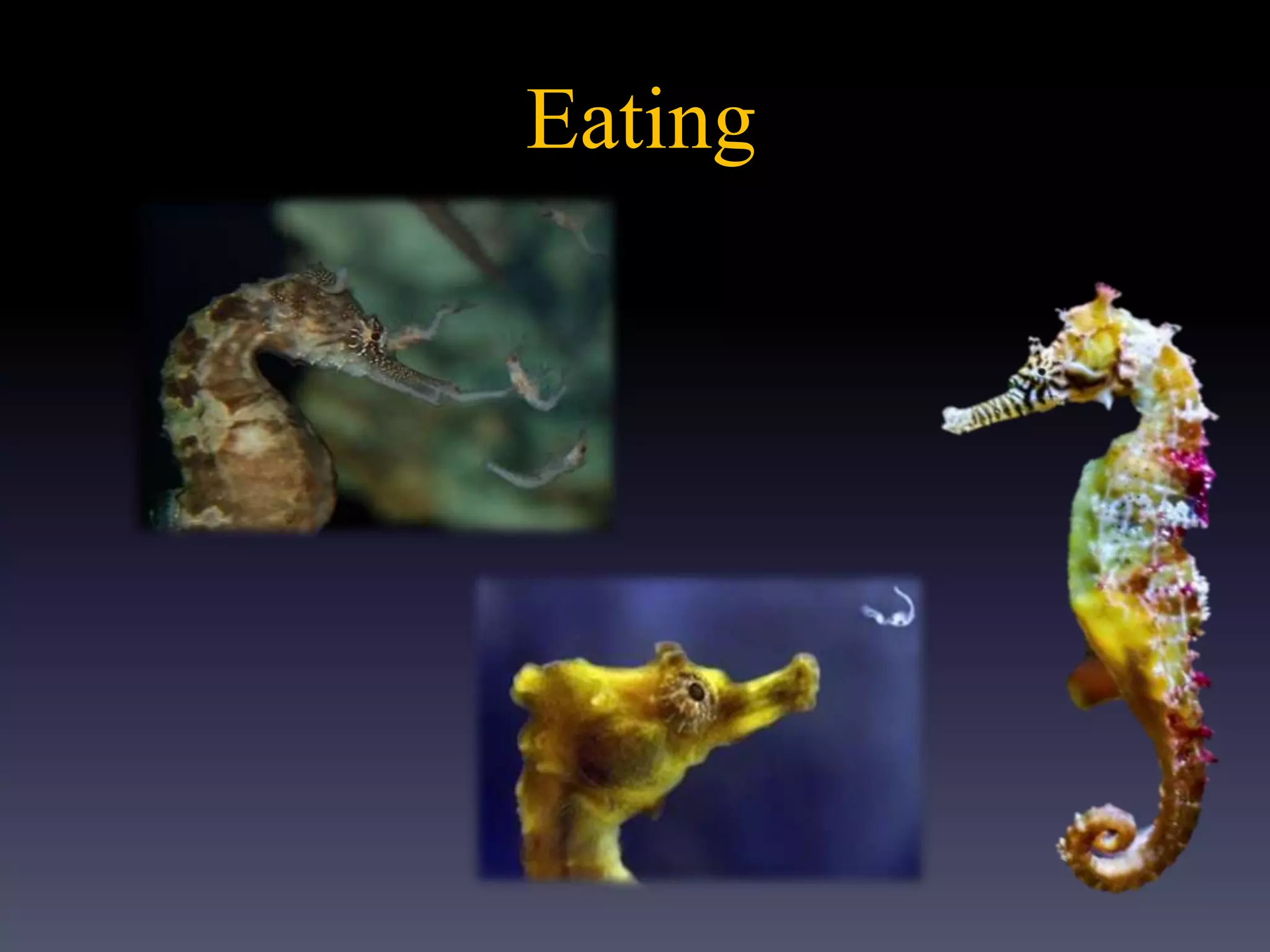
• seahorses eat tiny organisms such as small
shrimp , as well as very small fish and
plankton.
• sometimes they eat small fish larvae or
anything small enough for them to swallow .
• seahorses eat sucking through their tube-like
snout.
Eating
Movement
• They move independently of each other and in
all directions
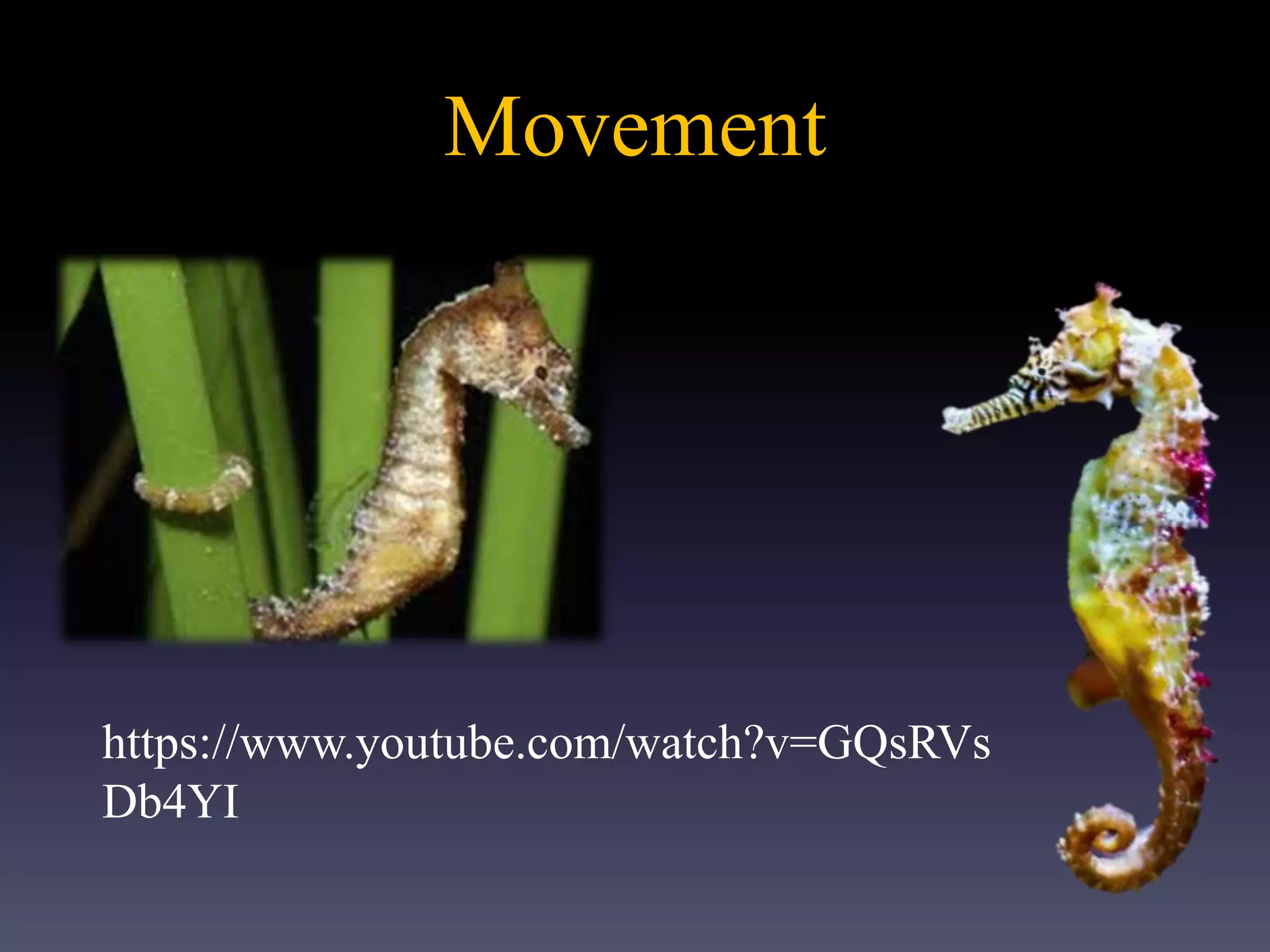
• When there are storms, seahorses clim to pieces
of seaweed with their tails .
• The storms toss them off and washes them
ashore, so they cannot get back to the sea
until the tide comes in.
Movement
https://www.youtube.com/watch?v=GQsRVs
Db4YI
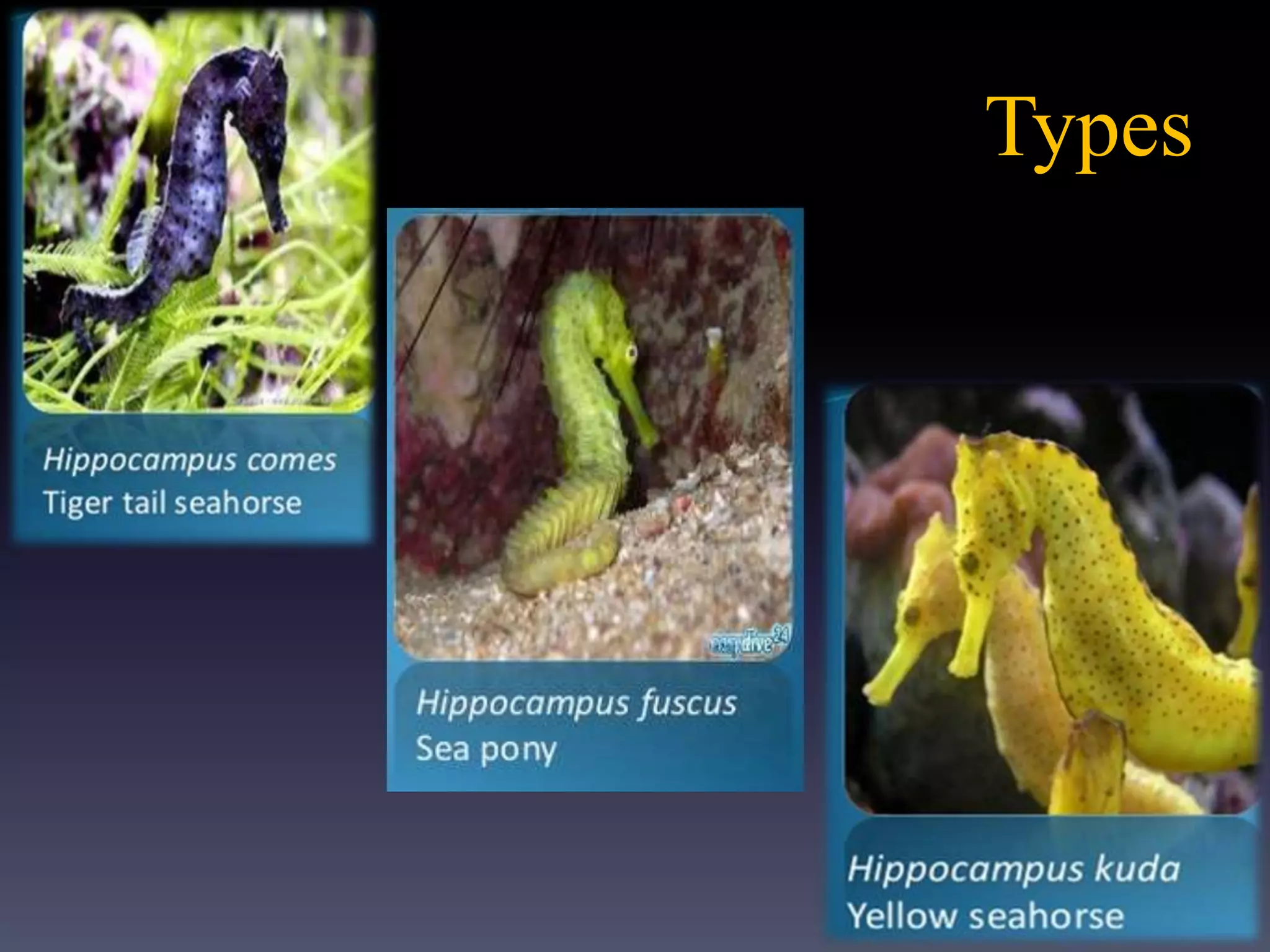
Camouflage & Types
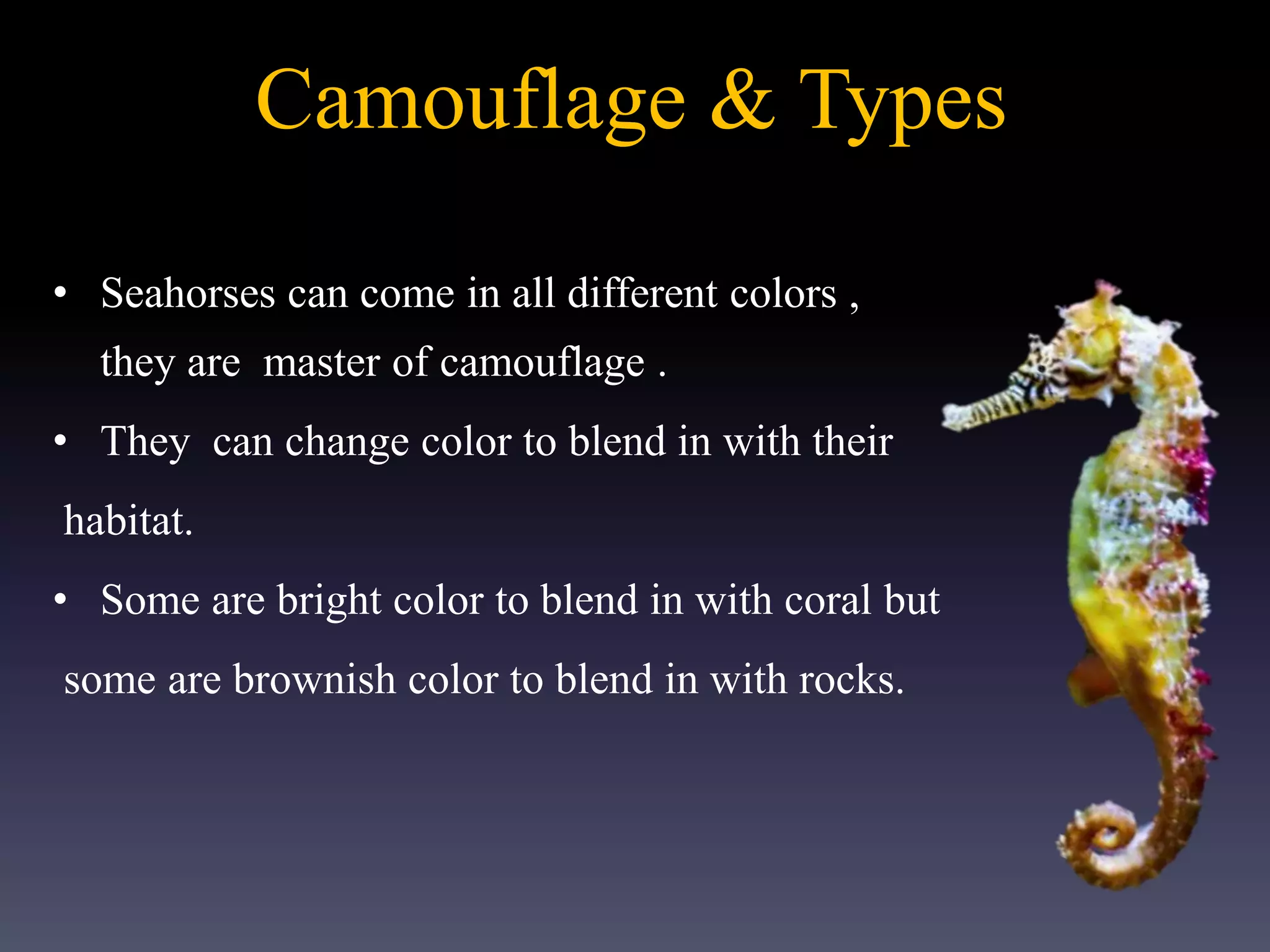
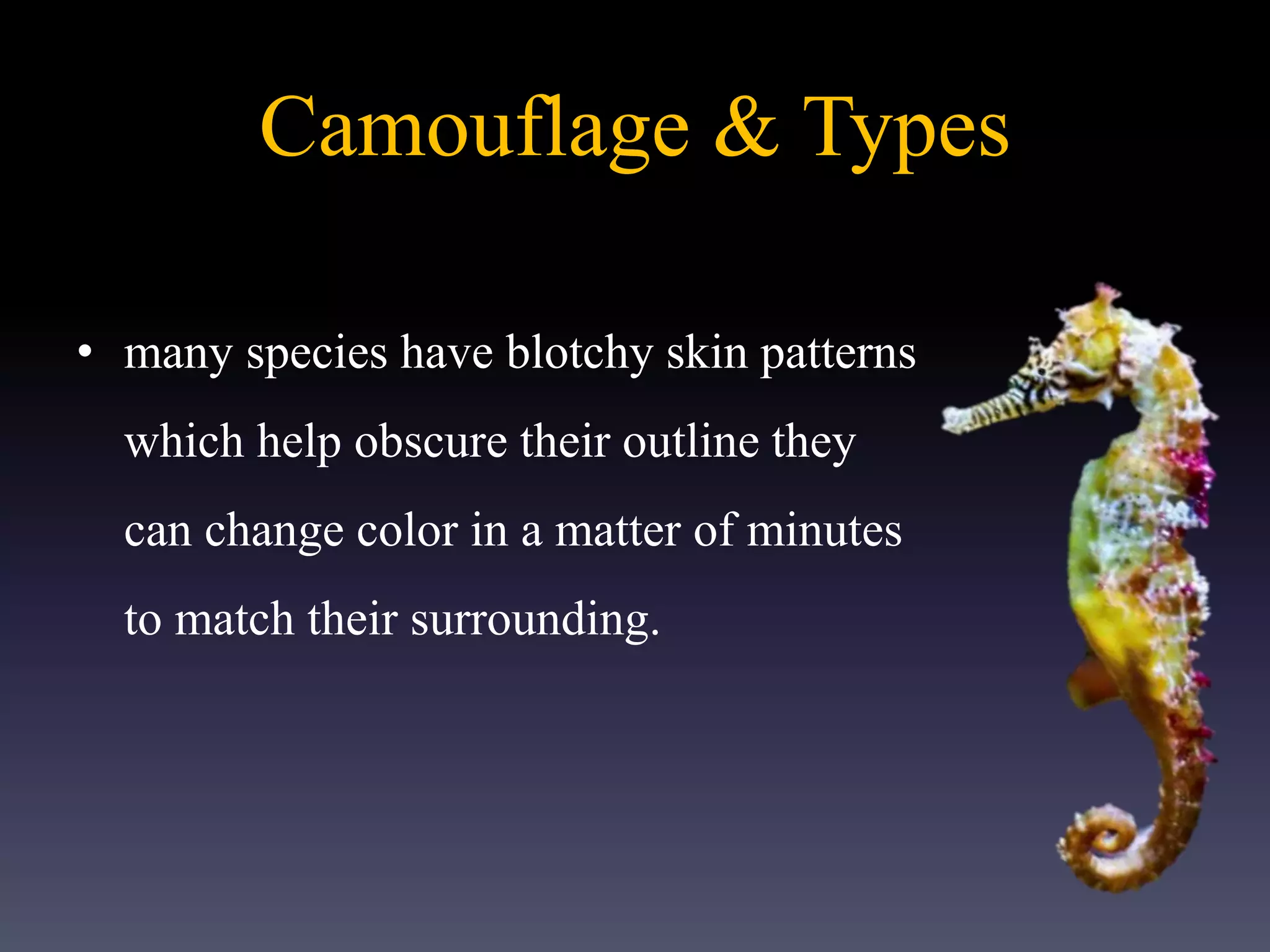
• Seahorses can come in all different colors ,
they are master of camouflage .
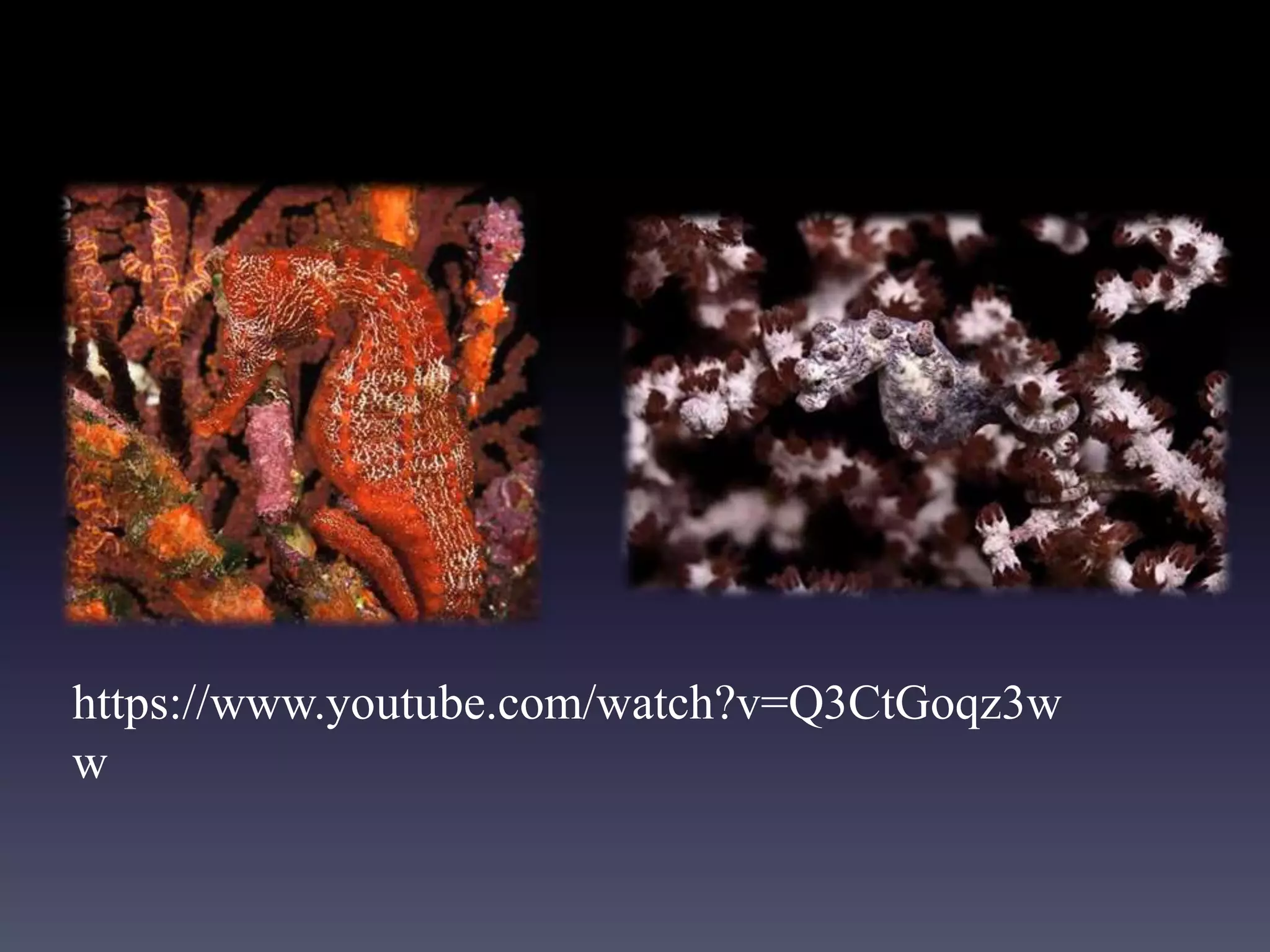
• They can change color to blend in with their
habitat.
• Some are bright color to blend in with coral but
some are brownish color to blend in with rocks.
Camouflage & Types
• many species have blotchy skin patterns
which help obscure their outline they
can change color in a matter of minutes
to match their surrounding.
https://www.youtube.com/watch?v=Q3CtGoqz3w
w
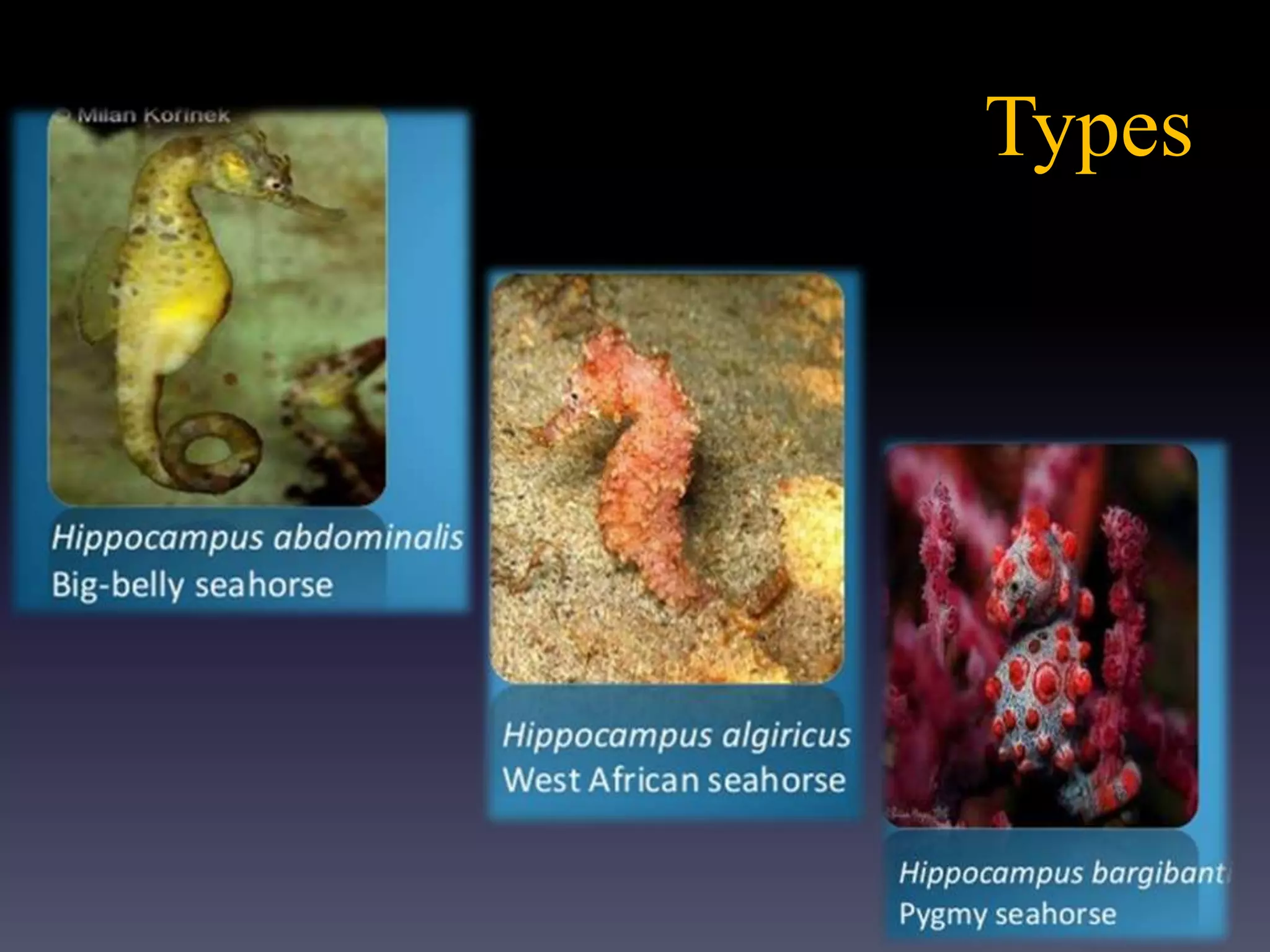
Types
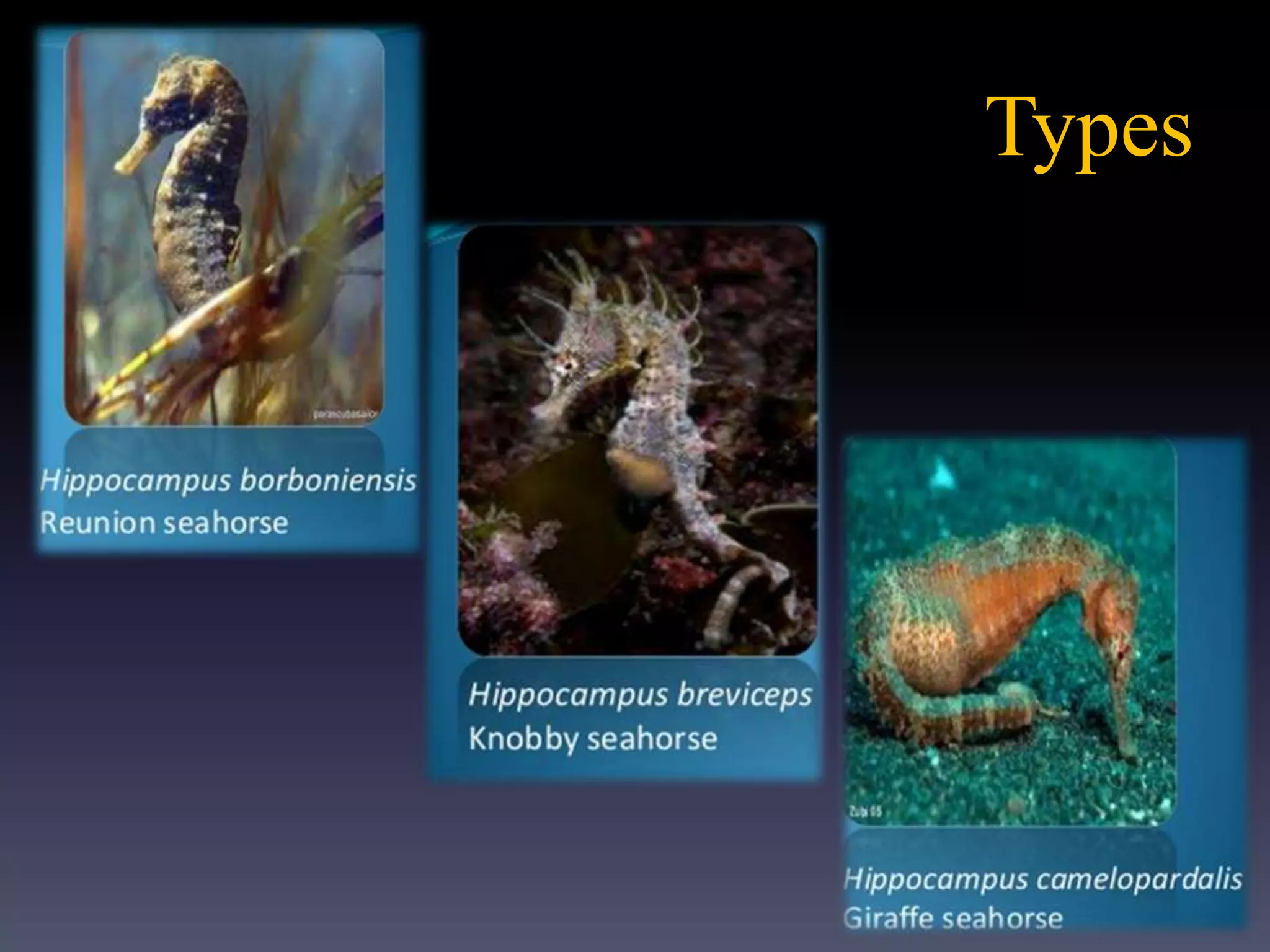
Types
Types
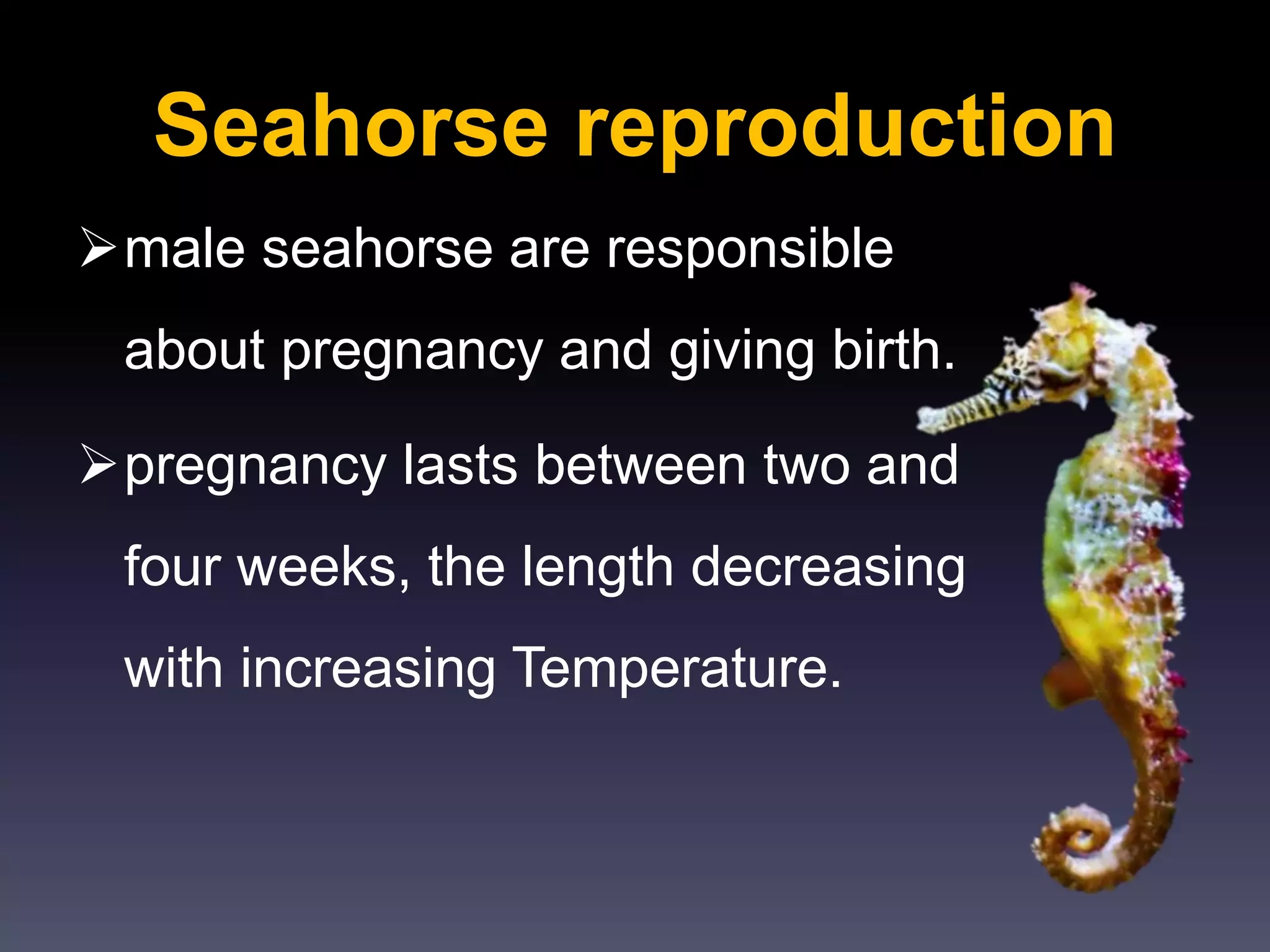
Seahorse reproduction
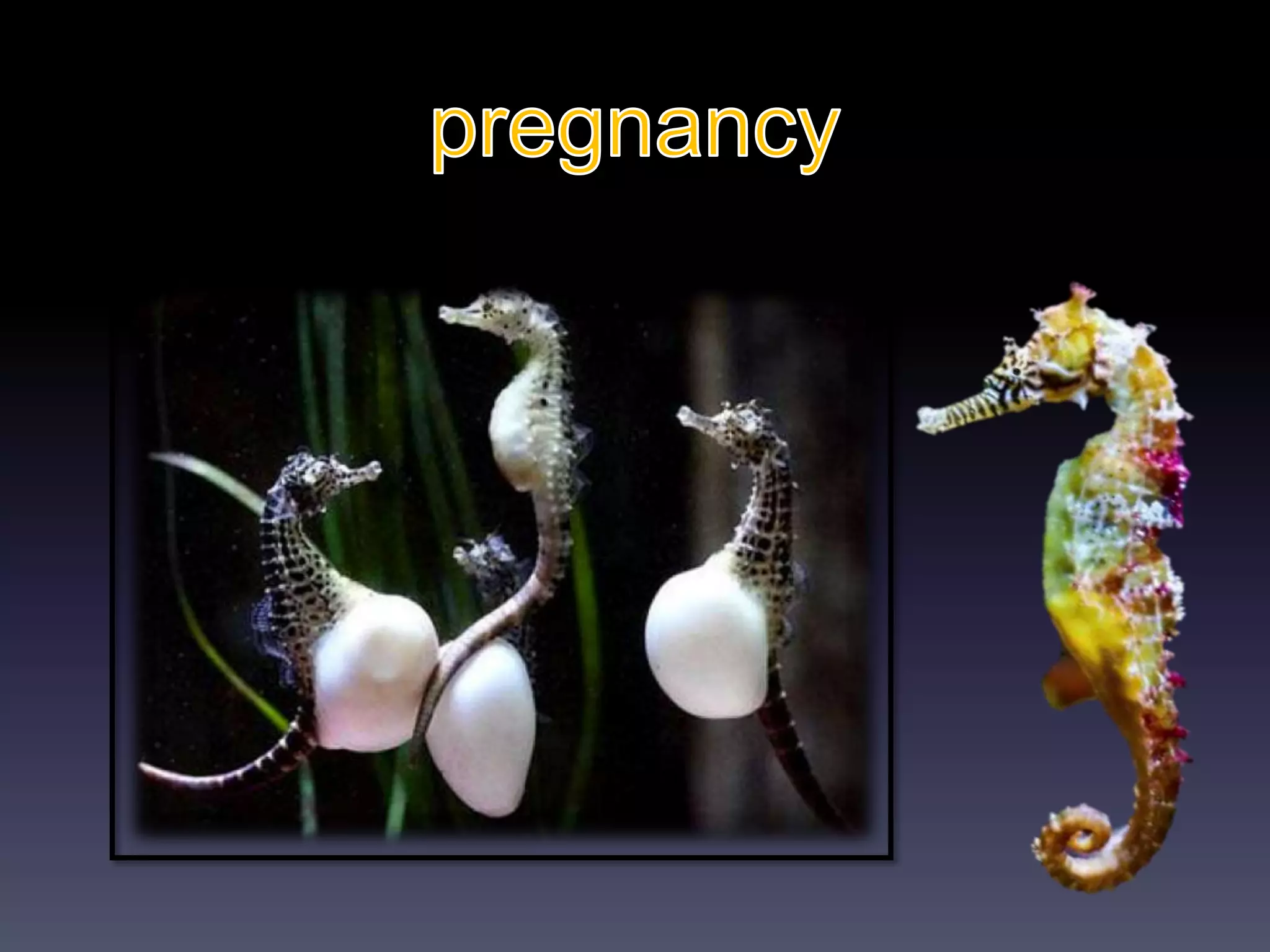
male seahorse are responsible
about pregnancy and giving birth.
pregnancy lasts between two and
four weeks, the length decreasing
with increasing Temperature.
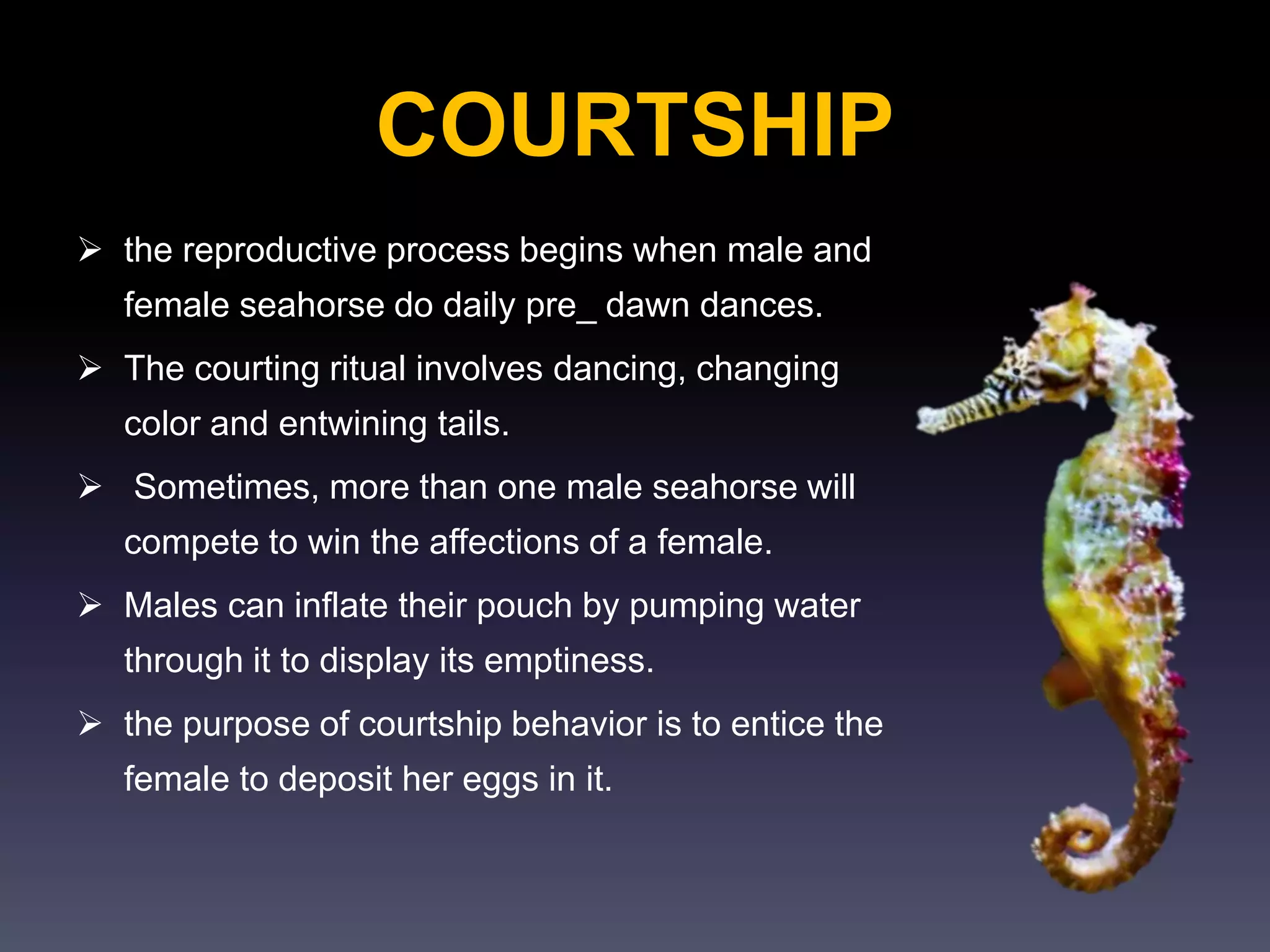
COURTSHIP
 the reproductive process begins when male and
female seahorse do daily pre_ dawn dances.
 The courting ritual involves dancing, changing
color and entwining tails.
 Sometimes, more than one male seahorse will
compete to win the affections of a female.
 Males can inflate their pouch by pumping water
through it to display its emptiness.
 the purpose of courtship behavior is to entice the
female to deposit her eggs in it.
COURTSHIP
https://www.youtube.com/watc
h?v=zvGRVWGpdNg&feature=
related
Egg transfer
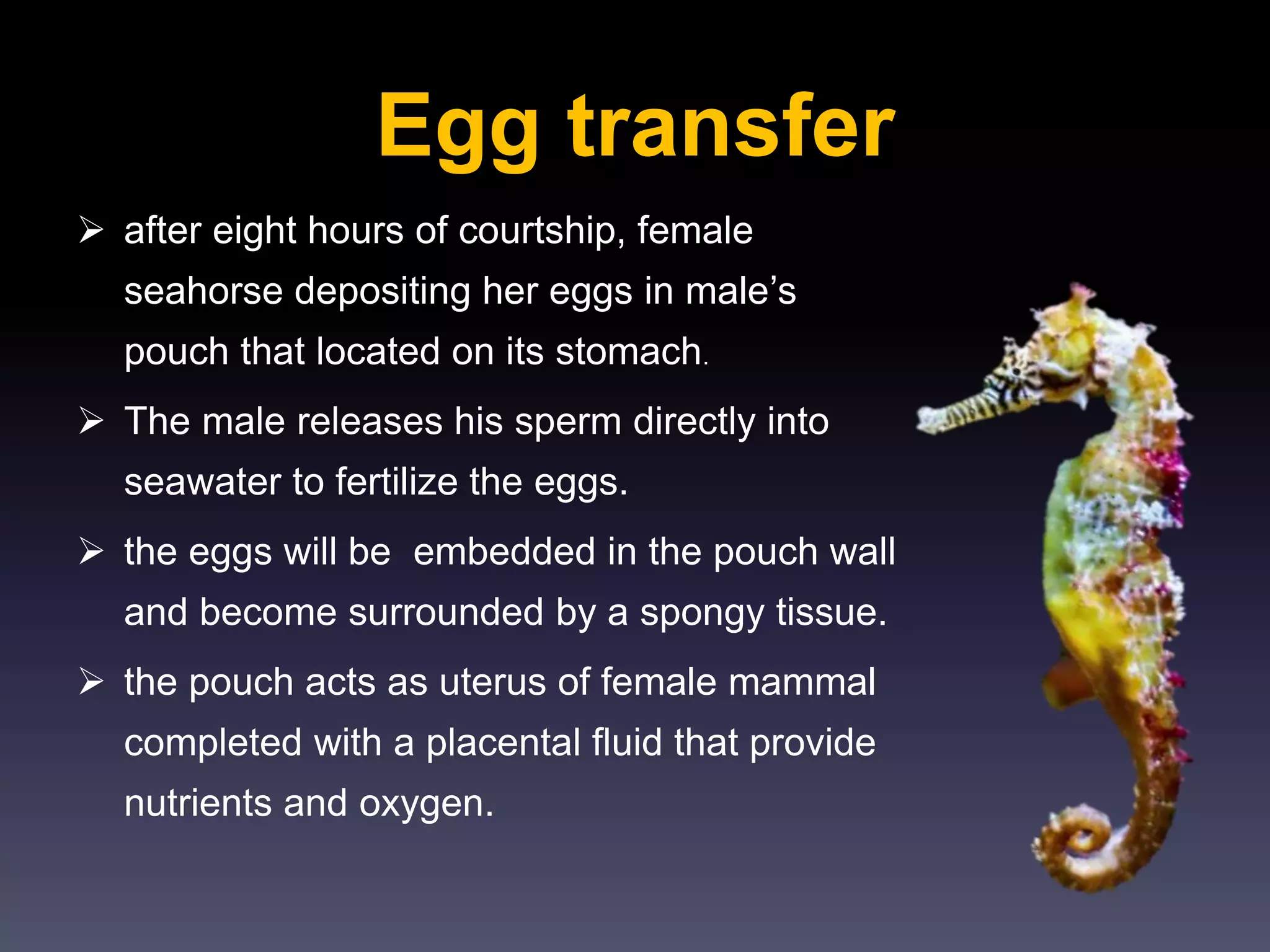
 after eight hours of courtship, female
seahorse depositing her eggs in male’s
pouch that located on its stomach.
 The male releases his sperm directly into
seawater to fertilize the eggs.
 the eggs will be embedded in the pouch wall
and become surrounded by a spongy tissue.
 the pouch acts as uterus of female mammal
completed with a placental fluid that provide
nutrients and oxygen.
pregnancy
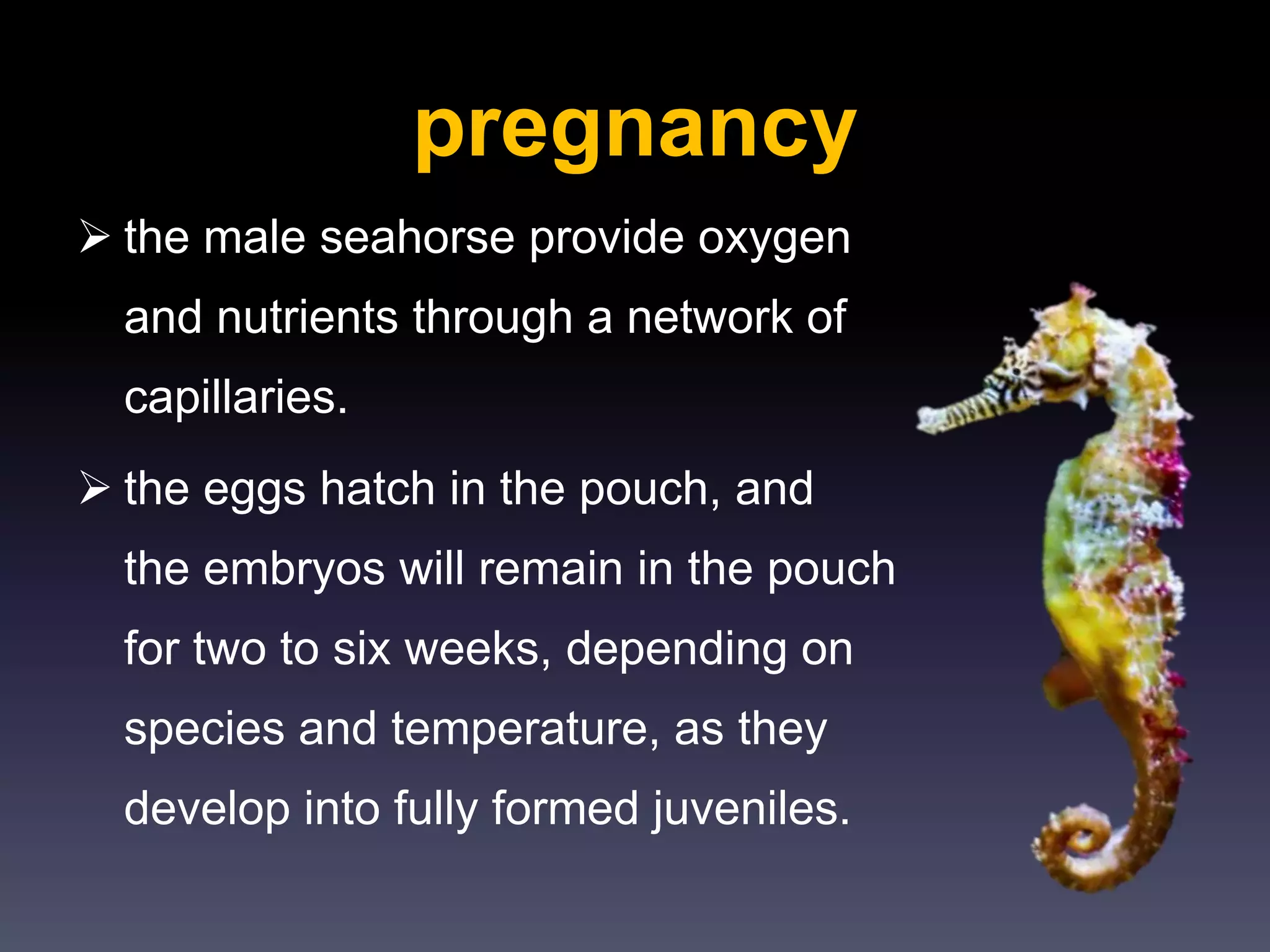
 the male seahorse provide oxygen
and nutrients through a network of
capillaries.
 the eggs hatch in the pouch, and
the embryos will remain in the pouch
for two to six weeks, depending on
species and temperature, as they
develop into fully formed juveniles.
Giving Birth
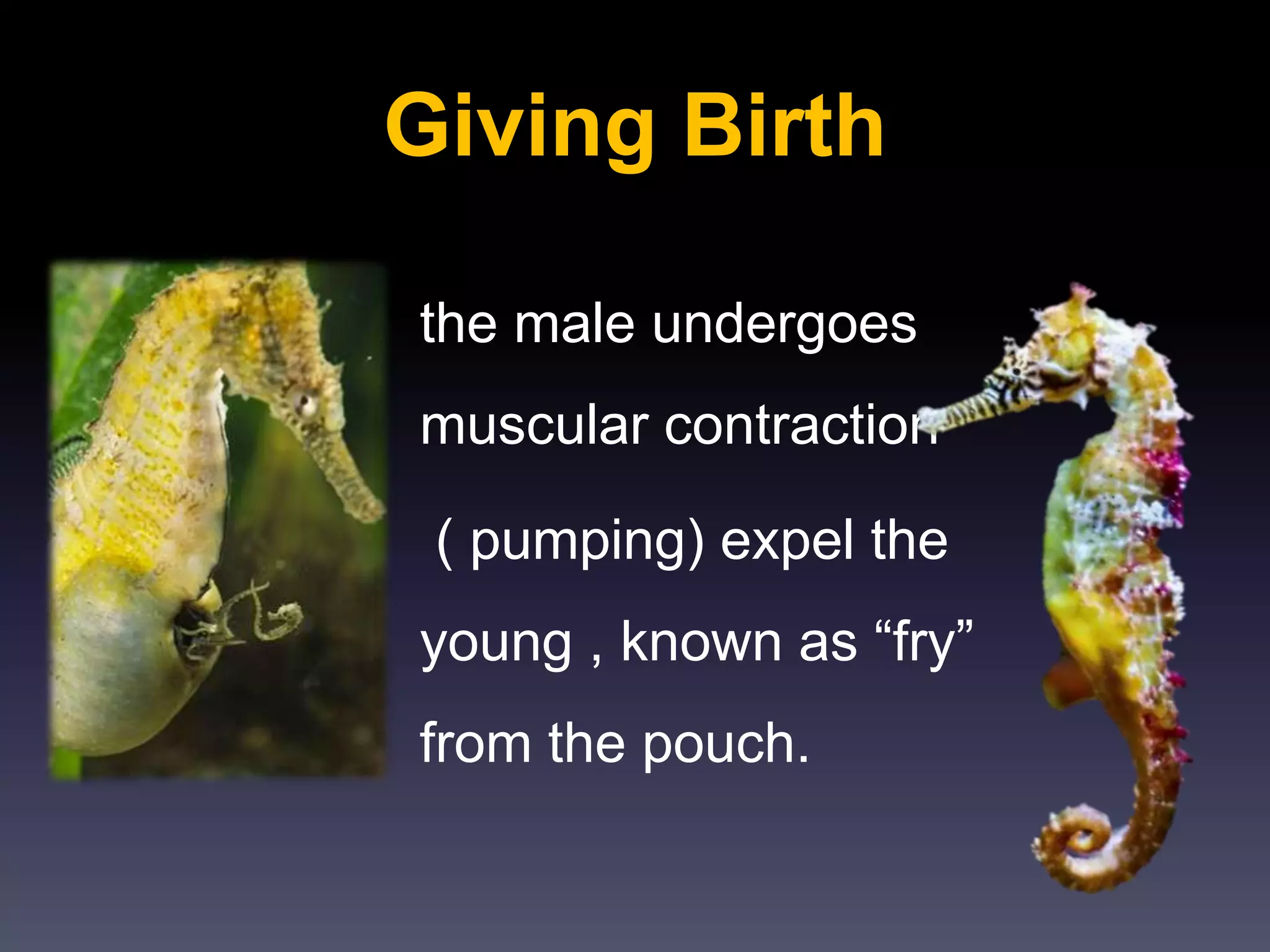
the male undergoes
muscular contraction
( pumping) expel the
young , known as “fry”
from the pouch.
Young
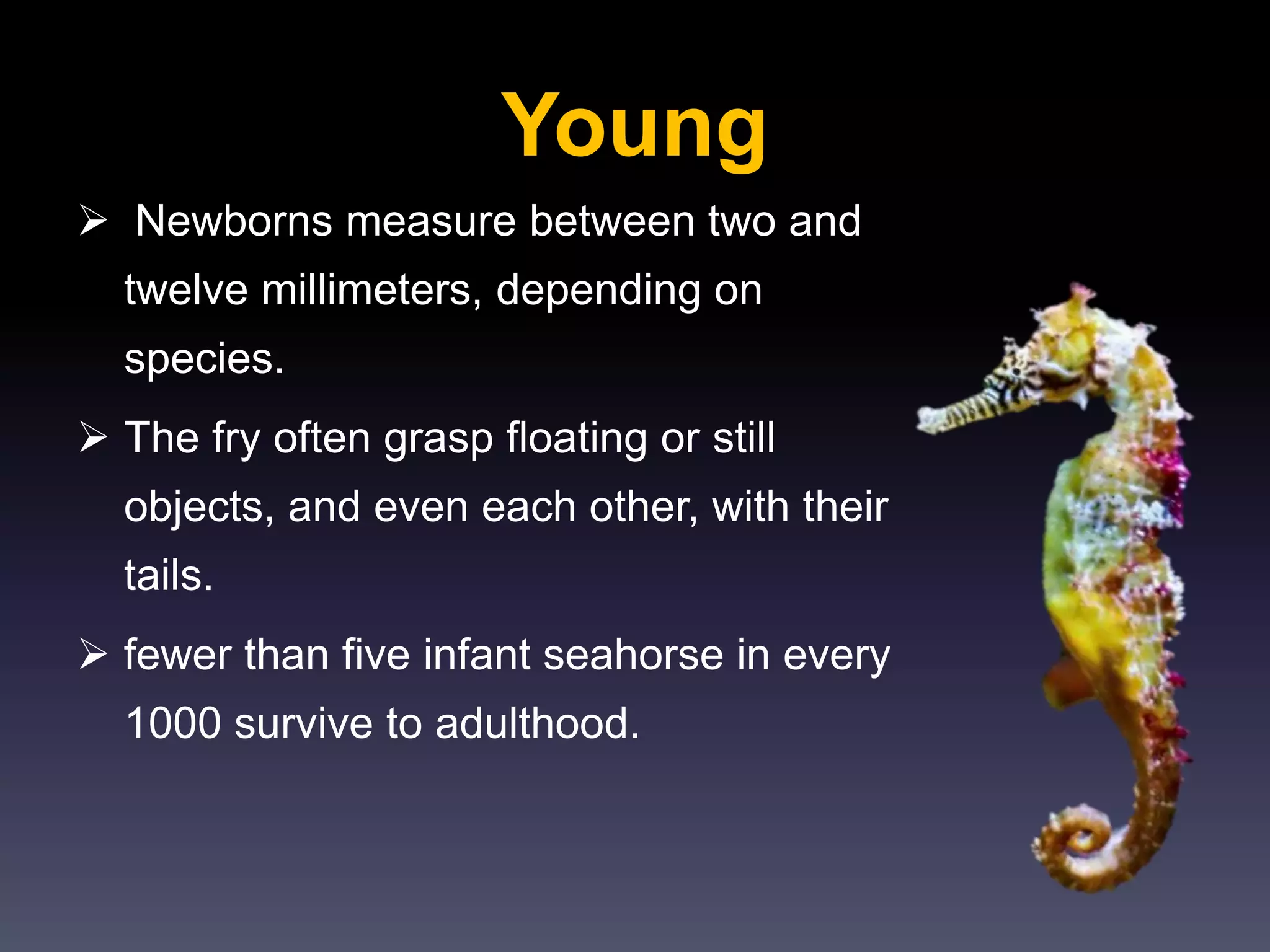
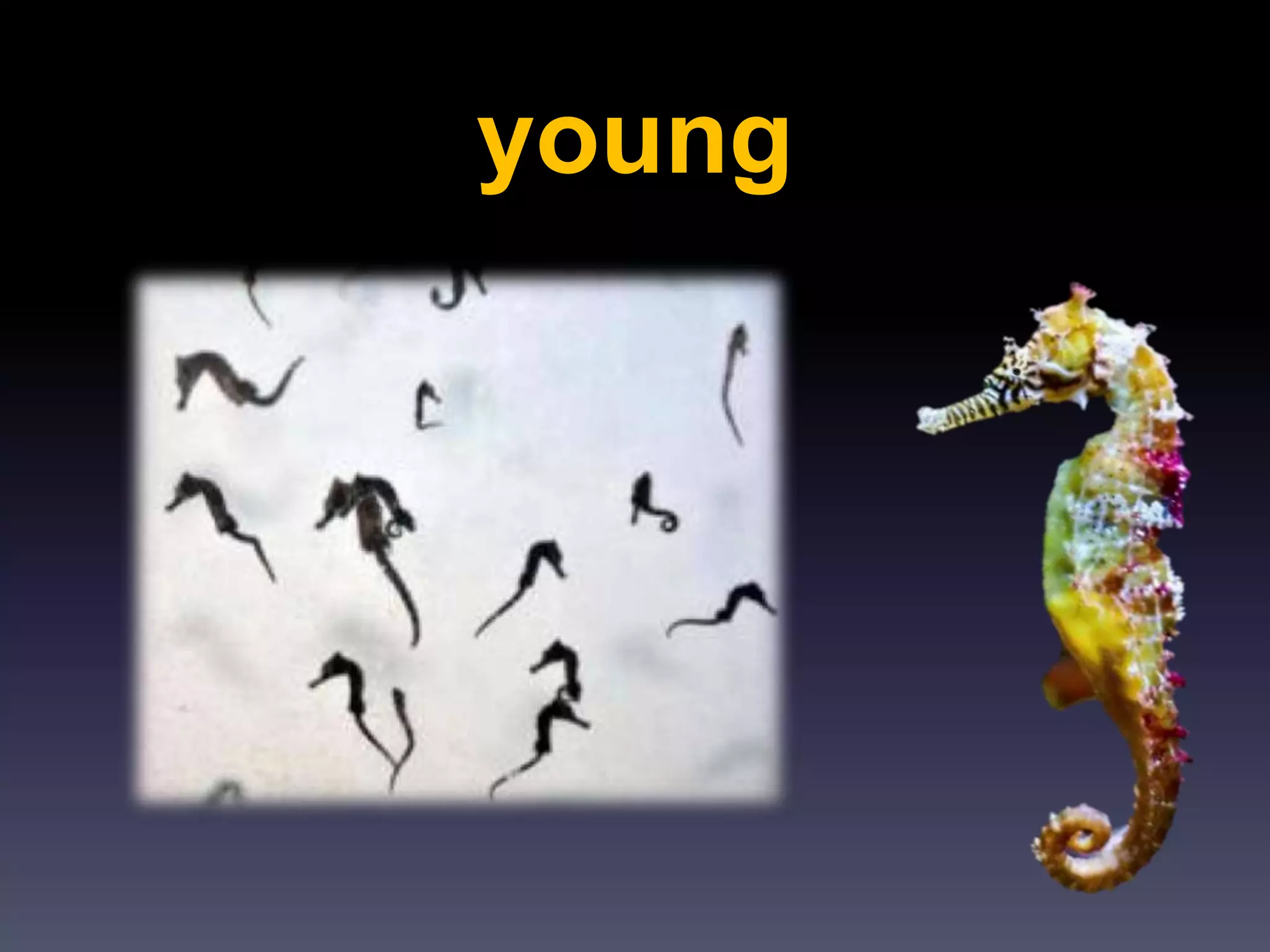
 Newborns measure between two and
twelve millimeters, depending on
species.
 The fry often grasp floating or still
objects, and even each other, with their
tails.
 fewer than five infant seahorse in every
1000 survive to adulthood.
young
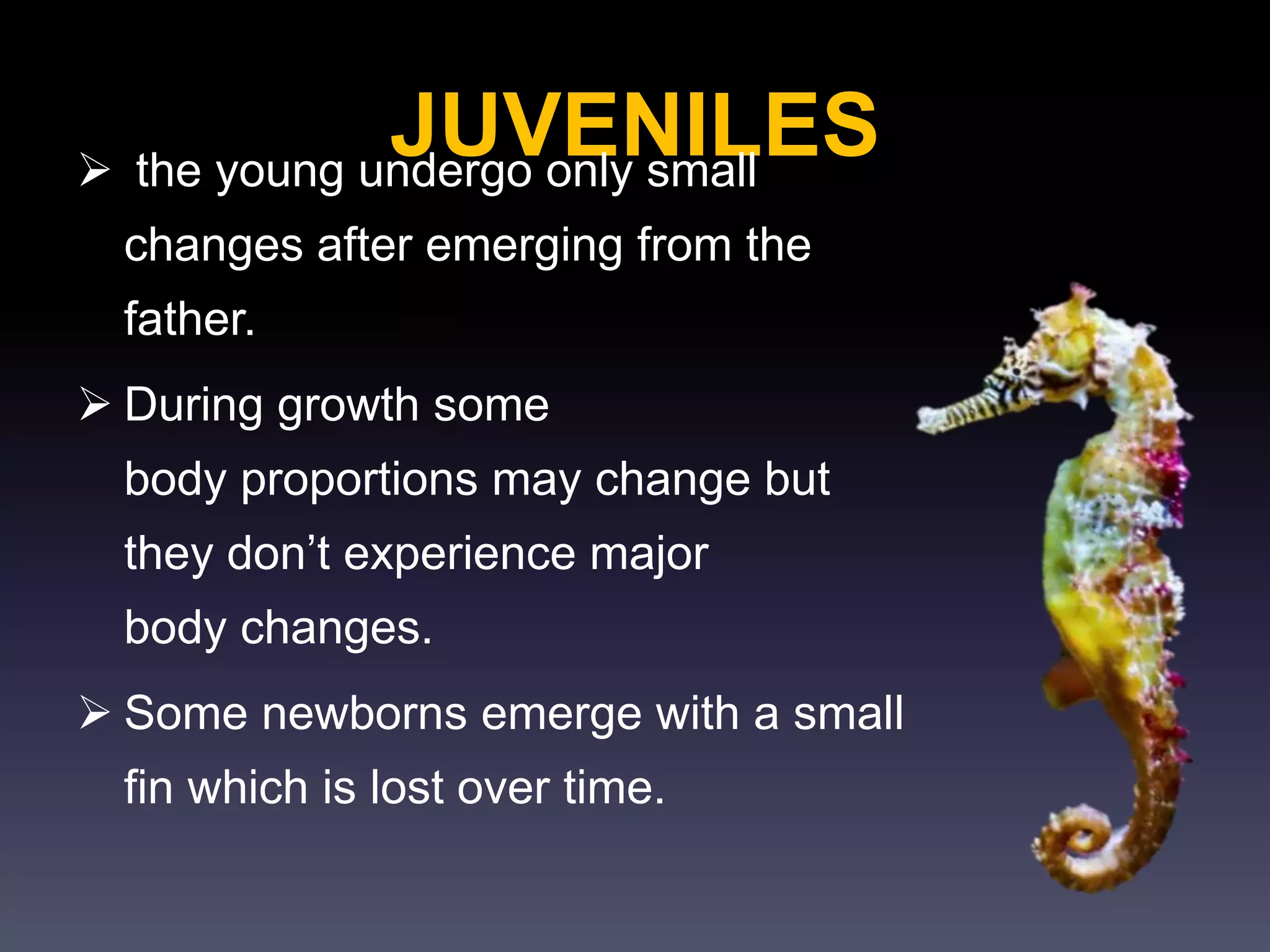
JUVENILES the young undergo only small
changes after emerging from the
father.
 During growth some
body proportions may change but
they don’t experience major
body changes.
 Some newborns emerge with a small
fin which is lost over time.
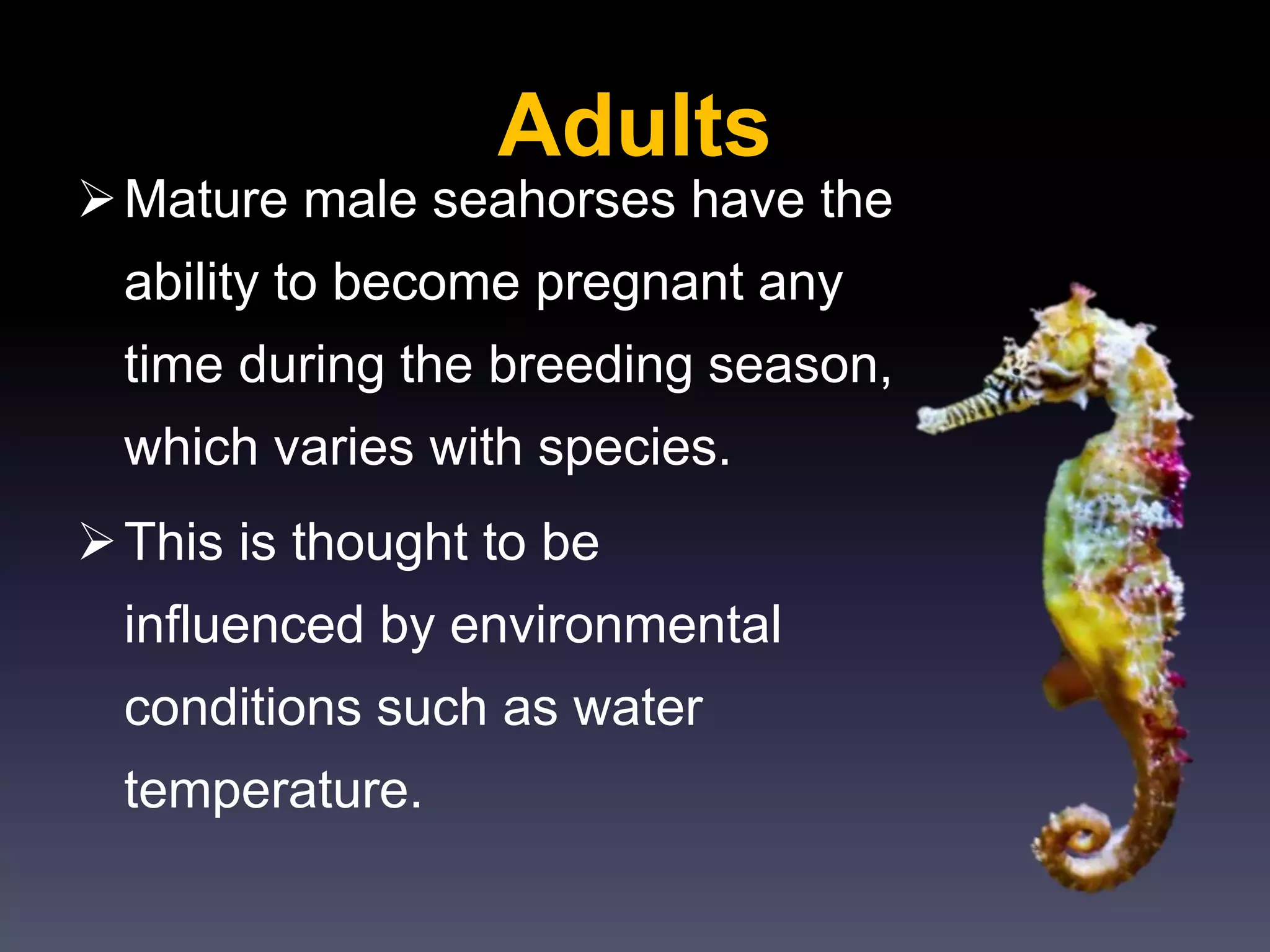
Adults
Mature male seahorses have the
ability to become pregnant any
time during the breeding season,
which varies with species.
This is thought to be
influenced by environmental
conditions such as water
temperature.
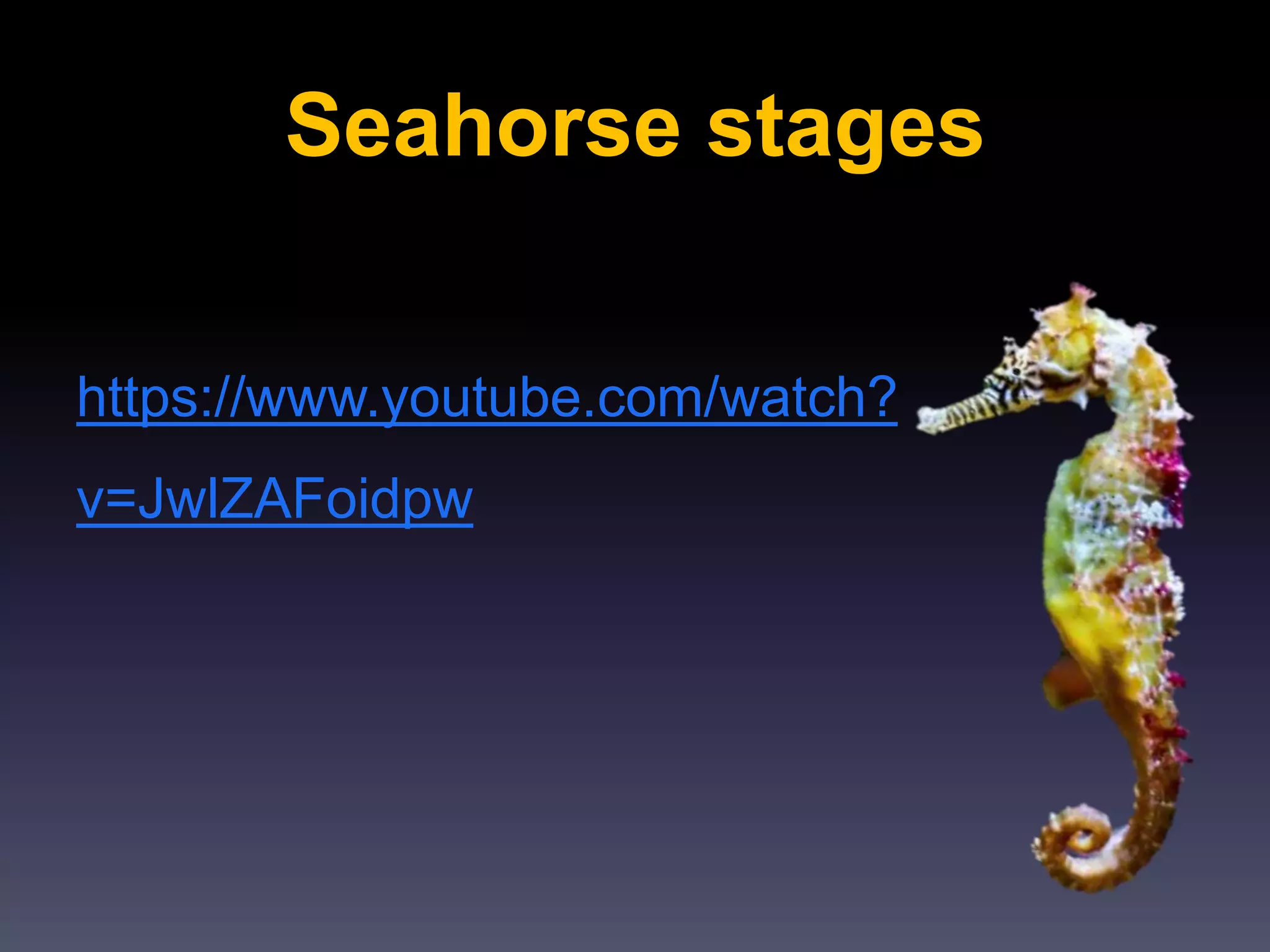
Seahorse stages
https://www.youtube.com/watch?
v=JwlZAFoidpw
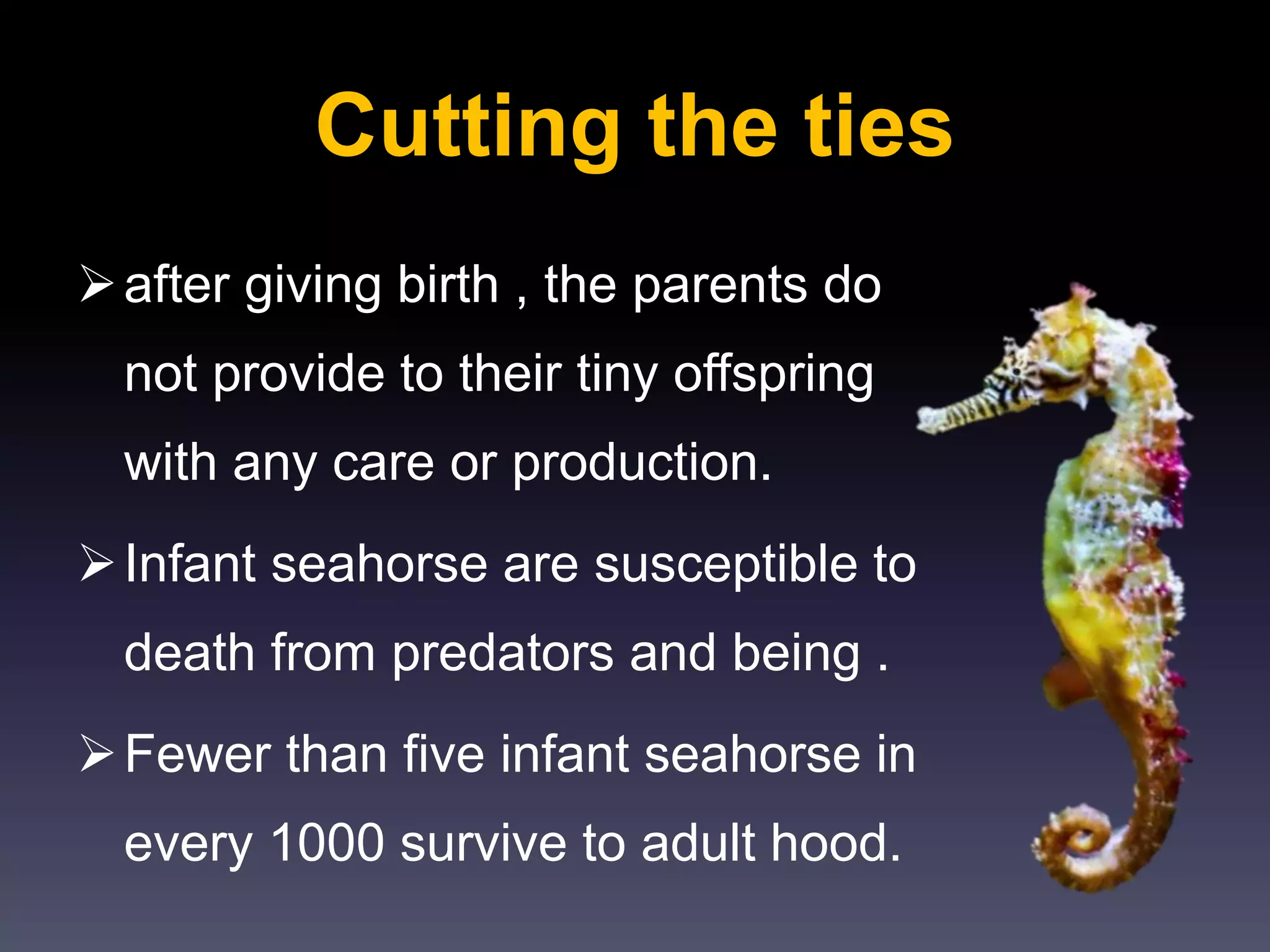
Cutting the ties
after giving birth , the parents do
not provide to their tiny offspring
with any care or production.
Infant seahorse are susceptible to
death from predators and being .
Fewer than five infant seahorse in
every 1000 survive to adult hood.
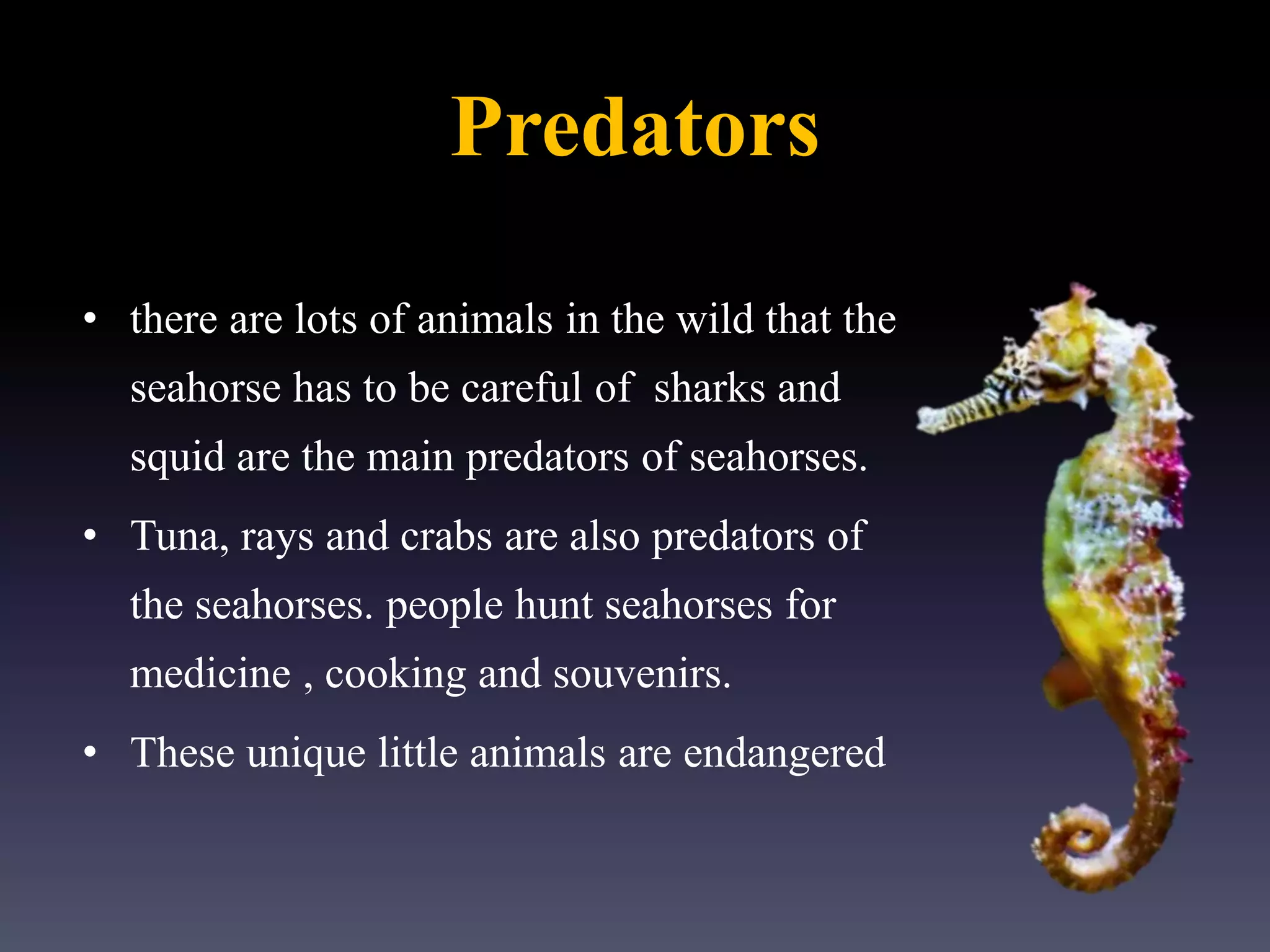
Predators
• there are lots of animals in the wild that the
seahorse has to be careful of sharks and
squid are the main predators of seahorses.
• Tuna, rays and crabs are also predators of
the seahorses. people hunt seahorses for
medicine , cooking and souvenirs.
• These unique little animals are endangered
References
http://news.nationalgeographic.com/
news/2002/06/0614_seahorse_recov.
html
Thanks

Seahorse presentation

  • 1.
    Seahorse Prepared by: SumaiahAlghamdi & Norah Alhoshani Submitted to: D. muzzamel
  • 2.
    Content • Introduction • Seahorseclassification • History • Appearance. • Habita. • Diate. • Movement. • Camouflage &Types. • Life cycle & predators. • Reproduction
  • 3.
    Introduction _ •seahorses are tinyfish. they are named after the shape of their head that sort of looks like a head of tiny horse • there are at least 25 species of seahorse and the spiny sea dragon .you will find them in the worlds tropical and temperate coastal waters
  • 4.
    Classification _ Kingdom: Animalia Phylum: Chordata Class:Actinopterygii Order: Syngnathiformes Family: Syngnathidae Genus: Hippocampus "Hippocampus" comes from the Ancient Greek hippos meaning "horse" and kampos meaning "sea monster
  • 5.
    History _ oldest fossil seahorse hippocampusslovenicus the fossil include babies and adults of several species, and are dated at 13 million years old making them the oldest seahorse fossils found so far.
  • 6.
    Appearance _ •seahorse appear tobe very different from other fishes in the sea •They are tiny , have a horse -like head , monkey -like tail and kangaroo -like pouch , their eyes are like a chameleon. • They have thin skin stretched over a series of bony plates that are visible as rings around the trunk.
  • 7.
  • 8.
    Appearance • some speciesalso have spiny plates cover seahorses bodies from the tip of their head down to their curly tails • a group of spines on the top of the head is called coronet because it look like a crown
  • 9.
    Appearance • when seahorsesare babies , they are only about 5 centimeters long but they can grow up to 36 cm long
  • 10.
    Habitat • Seahorses arefound in tropical and subtropical costal and reef waters all over the pacific, Atlantic and Indian oceans. • Seahorses are also found in mangrove roots , sea grass beds, mud slopes , open waters, eel grass , kelp and rocks. • The large belly seahorse is the only seahorse found in new Zealand.
  • 11.
  • 12.
    Eating • seahorses eattiny organisms such as small shrimp , as well as very small fish and plankton. • sometimes they eat small fish larvae or anything small enough for them to swallow . • seahorses eat sucking through their tube-like snout.
  • 13.
  • 14.
    Movement • They moveindependently of each other and in all directions • When there are storms, seahorses clim to pieces of seaweed with their tails . • The storms toss them off and washes them ashore, so they cannot get back to the sea until the tide comes in.
  • 15.
  • 16.
    Camouflage & Types •Seahorses can come in all different colors , they are master of camouflage . • They can change color to blend in with their habitat. • Some are bright color to blend in with coral but some are brownish color to blend in with rocks.
  • 17.
    Camouflage & Types •many species have blotchy skin patterns which help obscure their outline they can change color in a matter of minutes to match their surrounding.
  • 18.
  • 19.
  • 20.
  • 21.
  • 22.
    Seahorse reproduction male seahorseare responsible about pregnancy and giving birth. pregnancy lasts between two and four weeks, the length decreasing with increasing Temperature.
  • 23.
    COURTSHIP  the reproductiveprocess begins when male and female seahorse do daily pre_ dawn dances.  The courting ritual involves dancing, changing color and entwining tails.  Sometimes, more than one male seahorse will compete to win the affections of a female.  Males can inflate their pouch by pumping water through it to display its emptiness.  the purpose of courtship behavior is to entice the female to deposit her eggs in it.
  • 24.
  • 25.
    Egg transfer  aftereight hours of courtship, female seahorse depositing her eggs in male’s pouch that located on its stomach.  The male releases his sperm directly into seawater to fertilize the eggs.  the eggs will be embedded in the pouch wall and become surrounded by a spongy tissue.  the pouch acts as uterus of female mammal completed with a placental fluid that provide nutrients and oxygen.
  • 26.
    pregnancy  the maleseahorse provide oxygen and nutrients through a network of capillaries.  the eggs hatch in the pouch, and the embryos will remain in the pouch for two to six weeks, depending on species and temperature, as they develop into fully formed juveniles.
  • 28.
    Giving Birth the maleundergoes muscular contraction ( pumping) expel the young , known as “fry” from the pouch.
  • 29.
    Young  Newborns measurebetween two and twelve millimeters, depending on species.  The fry often grasp floating or still objects, and even each other, with their tails.  fewer than five infant seahorse in every 1000 survive to adulthood.
  • 30.
  • 31.
    JUVENILES the youngundergo only small changes after emerging from the father.  During growth some body proportions may change but they don’t experience major body changes.  Some newborns emerge with a small fin which is lost over time.
  • 32.
    Adults Mature male seahorseshave the ability to become pregnant any time during the breeding season, which varies with species. This is thought to be influenced by environmental conditions such as water temperature.
  • 33.
  • 34.
    Cutting the ties aftergiving birth , the parents do not provide to their tiny offspring with any care or production. Infant seahorse are susceptible to death from predators and being . Fewer than five infant seahorse in every 1000 survive to adult hood.
  • 35.
    Predators • there arelots of animals in the wild that the seahorse has to be careful of sharks and squid are the main predators of seahorses. • Tuna, rays and crabs are also predators of the seahorses. people hunt seahorses for medicine , cooking and souvenirs. • These unique little animals are endangered
  • 36.
  • 37.