
PHYSIOTHERAPY IN
OPD
DR. MOHABBAT ALI
What is Physiotherapy?
 A health care profession involving role of physiotherapists,
conducting patients examination, evaluation, diagnosis
and physical intervention skills which works on healing of
impairments and disabilities..
 It helps in promoting the ambulation, functional abilities,
quality of life and movement.
Physiotherapist ?
A Physiotherapist is an autonomous health care professional
who assesses, diagnoses, plans, treats and evaluates
clients/patients and is responsible for his/her own actions.
ROLE OF PHYSICAL THERAPISTS IN HEALTH
CARE
 Diagnose and manage movement dysfunction and
enhance physical and functional abilities.
 Restore, maintain, and promote optimal
physical function,
wellness and fitness, and
quality of life as it relates to movement and health.
 Prevent the onset, symptoms, and progression of
impairments, functional limitations, and disabilities that may
result from diseases, disorders, conditions, or injuries.
AIM of physiotherapy
 Prevent muscle shortening & joint contractures
 Influence pain control
 Educate in all aspects of physical function
 Education and participation of the carer
 Treat the patient with dignity – allowing them to “live
until they die”
 Build a relationship of confidence and trust
AIM of Physiotherapy
 Assess and optimise the patient’s level of physical
function
 Take into consideration the interplay between the physical,
psychological, social and vocational aspects of function
 Understand the patients underlying emotional,
pathological and psychological condition,
 Focus is the physical and functional consequences of the
disease and/or its treatment, on the patient.
AIM of Physiotherapy
 Restore the patient’s sense of self
 Facilitate and optimise the patient's ability to function with
safety and independence in the face of diminishing
resources.
 Maintain optimum respiratory & circulatory function
 Listen to patient
 Set realistic goals with the patient
STAGES OF PHYSIOTHERAPY
 Preventive
 Restorative
 Supportive
 Palliative
Patients who need
Physiotherapy in OPD
Which patients groups
benefit from physiotherapy ?
 Cardiac patients
 Orthopaedic patients
 Amputees
 General surgical
 Neurological
 Elderly
 Learning disabilities
 Psychiatric
 Palliative care
 Respiratory
 Paediatric
 Rheumatology
 Musculo-skeletal
 Occupational
 Spinal injuries
 Obstetrics
 Gynaecological
 Burns and plastics
EXAMPLES OF CONDITIONS TREATED BY
PHYSICAL THERAPISTS
 Arthritis
 Back Pain
 Balance
 Burns
 CTS
 Developmental Delays
 COPD
 Dislocations
 Fractures
 Hand Injuries
 Headaches
 Incontinence
 Lymphedema
 Osteoporosis
 Pelvic Pain
 Sports Injuries
 Stroke
 Traumatic Brain Injury (TBI)
PAIN MANAGEMENT IN
OPD
Pain conditions in which physiotherapy
recommended
 Cervical region pain
 Back pain
 Shoulder pain
 Knee pain
 Ankle pain
 Muscular pain
 Neurogenic pain
 Soft tissue injury pain
 Soft tissue inflammation pain
 Headache
 PID pain
 Fibromyalgia
 sprain/strain
 Sports injury
ELECTROTHERAPY
 Pain management
 Treatment of neuromuscular dysfunction
 Improvement of strength
 Improvement of motor control
 Retards muscle atrophy
 Improvement of local blood flow
 Improves range of joint mobility
 Tissue repair
 Acute and chronic edema
Therapeutic Ultrasound
 Recommended at scar
 Lymphatic drainage
 Reduce inflammation
 Reduce the pain
 Help in healing of wounds
 Peripheral blood flow
TRACTION THERAPY
 Distraction to increase the intervertebral space
 Tensing of the posterior longitudinal vertebral ligament
 Suction to draw the disc protrusion towards the center of
the joint
 Spinal traction helps in relieving back pain by
stretching the tight muscles of the spine which result
from spasm.
 Spinal traction also helps widen the inter vertebral
foramen so that the nerve root impingement is relieved
Hot pack and cold pack
 In chronic condition we
use hot pack
 In acute condition we
use cold pack
 Reduces the swelling
 Reduce the pain
 Increase ROM
BURN PATIENTS IN
OPD
Physiotherapy in Burns
 Respiratory Care
 Prevention of Contractures and Deformities
 Positioning
 Head and Neck
 Lower limbs
 Splinting (Splints may be static or dynamic)
Cont’d
 Exercises
 Muscles strength
 Flexibility (stretching)
 Regaining maximum function
 Out-patient physiotherapy
 Graft PT if grafted
Immuno-compromised patients
 Immunocompromised people like
 undergoing treatment for cancer
 leukemia
 lymphoma
 HIV
 patients on immunosuppressive drugs are at an increased
risk of developing chest infection
Cont’d
 Decrease mobility
 Swelling,
 Joint pain.
 Transplant patients
 Fever
GERIATRIC PATIENTS
IN OPD
GERIARTRIC PATIENTS
 Muscles weakness
 Low immunity
 Low bone density
 Cardiopulmonary weakness
 Poor Balancing
 Risk of fall
 These all increased during hospital stay
Indications for geriatric PT referral
 Recent fall or history of falls
 Deficits in strength or range of
motion
 Loss of mobility or ambulation
requiring an assistive device
 Musculoskeletal pain
 Difficulty with transfers
 Orthotic or prosthetic needs
 Open wound
 Neurological disorder
 Balance deficits
 Decreased endurance for
ADLs
 Bed bound status
 Need for adaptive
equipment to enhance
safety and function
Kidney disease and physiotherapy
Kidney diseases are associated with an
increased risk of functional impairment,
independent of age, gender, and co-
morbidities. Clinicians should counsel patients
with CKD including frail elder people to
increase physical activity levels and target that
regular physical activity including aerobic or
endurance exercises training benefits health
INTERMITTENT PNEUMATIC COMPRESSION
 Intermittent pneumatic compression is a
therapeutic technique used in medical devices that
include an air pump and inflatable auxiliary
sleeves, gloves or boots in a system designed to
improve venous circulation in the limbs of patients
who suffer edema or the risk of deep vein
thrombosis (DVT) or pulmonary embolism
BENEFITS OF IPC
 Peripheral artery disease/arterial insufficiency
 Restless leg syndrome
 Management of edema following femoro-popliteal bypass surgery
 Fracture and soft tissue healing
 Treatment of sensory impairment in the upper limb following a stroke
 Treatment of upper extremity vascular ulcers
 Edema related to obesity
GYN & OBS PATIENTS
IN OPD
Physiotherapy in Gyn.&Obs.
 During the whole period of pregnancy
women’s body undergoes various physical
and physiological changes. Due to the
change during and after pregnancy
common problems faced by the women’s
are low back pain, stress urinary
incontinence, pelvic pain. Physiotherapy
can help in this through postural
reeducation, strengthening of pelvic floor
muscles and through some modalities
Suggested sequence of exercise
 General rhythmic activities to warm-up.
 Gentle selective stretching
 Aerobic activities for CVS conditioning
 UL &LL strengthening ex.
 Abdominal ex
 Pelvic floor ex.
 Relaxation /cool down activities
 Educational information [if any] & postpartum ex. Education.
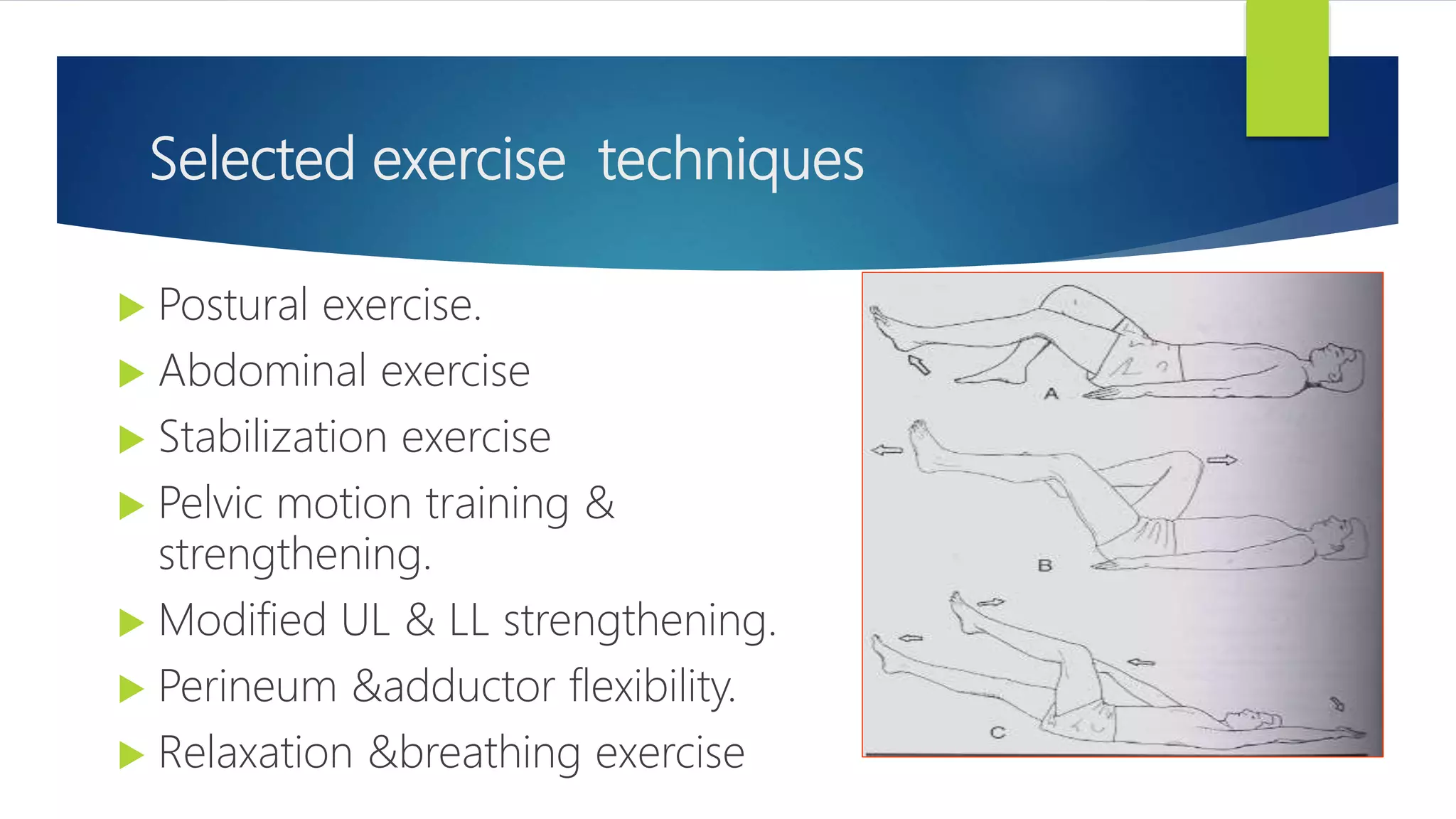
Selected exercise techniques
 Postural exercise.
 Abdominal exercise
 Stabilization exercise
 Pelvic motion training &
strengthening.
 Modified UL & LL strengthening.
 Perineum &adductor flexibility.
 Relaxation &breathing exercise
PEDIATRIC REHABILITATION
IN OPD
The Goal of
Pediatric Physical Therapy
Help children reach their maximal
functional level of independence
Pediatric Physical Therapy
 Promotes independence
 Increases participation
 Facilitates motor development & function
 Improves strength
 Enhances learning opportunities
 Eases caregiving
 Promotes health & wellness
Increased Participation
 Pediatric Physical Therapists and Assistants
promote increased participation in daily
activities & routines in the:
Home
School
Community
CARDIOLOGY PATIENTS
IN OPD
Cardiac Rehabilitation
 To restore self reliance in daily active life.
 To restore formal work activities
 To prepare for another full time employment
compatible with his working capacities.
Cardiac Rehabilitation
 Cardiac rehabilitation phase 2
with close telemetry monitoring.
 Cardiac rehabilitation phase 3
 Motivate for normal activity
 Teaching for daily life activity
 Teach for job related activity.
Cardiac Rehabilitation
 Endurance exercises up to 60 minutes
 Stretching exercises
 Strengthening exercises
 Teach ADLs
 Cardiac pulmonary care
IPD PATIENTS PHYSIOTHERAPY
IN OPD
IPD patients physiotherapy in OPD
 Confidence level increase
 Motivation
 Endurance/cardiac exercise
 Postural stability
 Strengthening exercises
 Pressure sure risk reduced
 Social activity
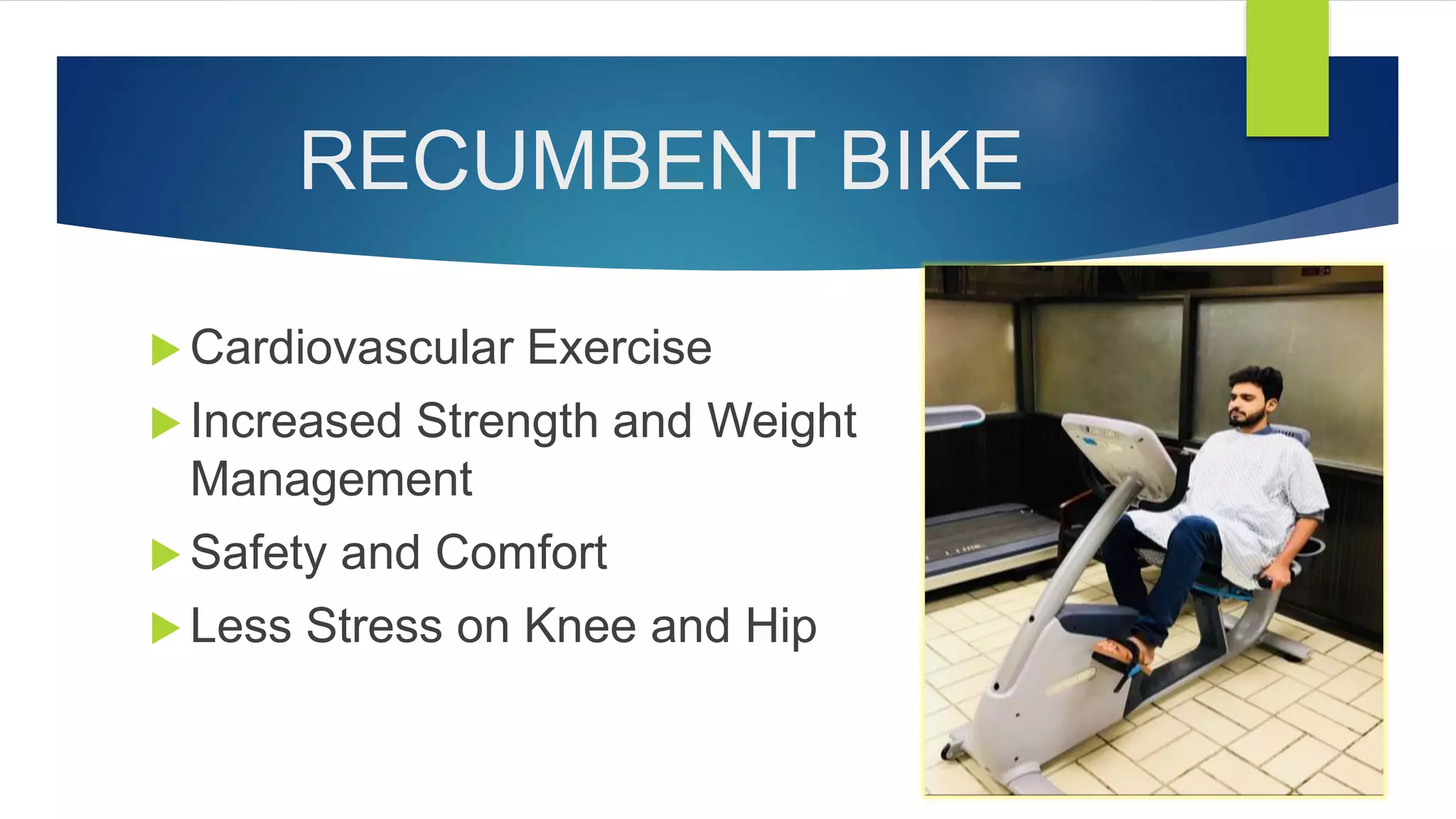
RECUMBENT BIKE
 Cardiovascular Exercise
 Increased Strength and Weight
Management
 Safety and Comfort
 Less Stress on Knee and Hip
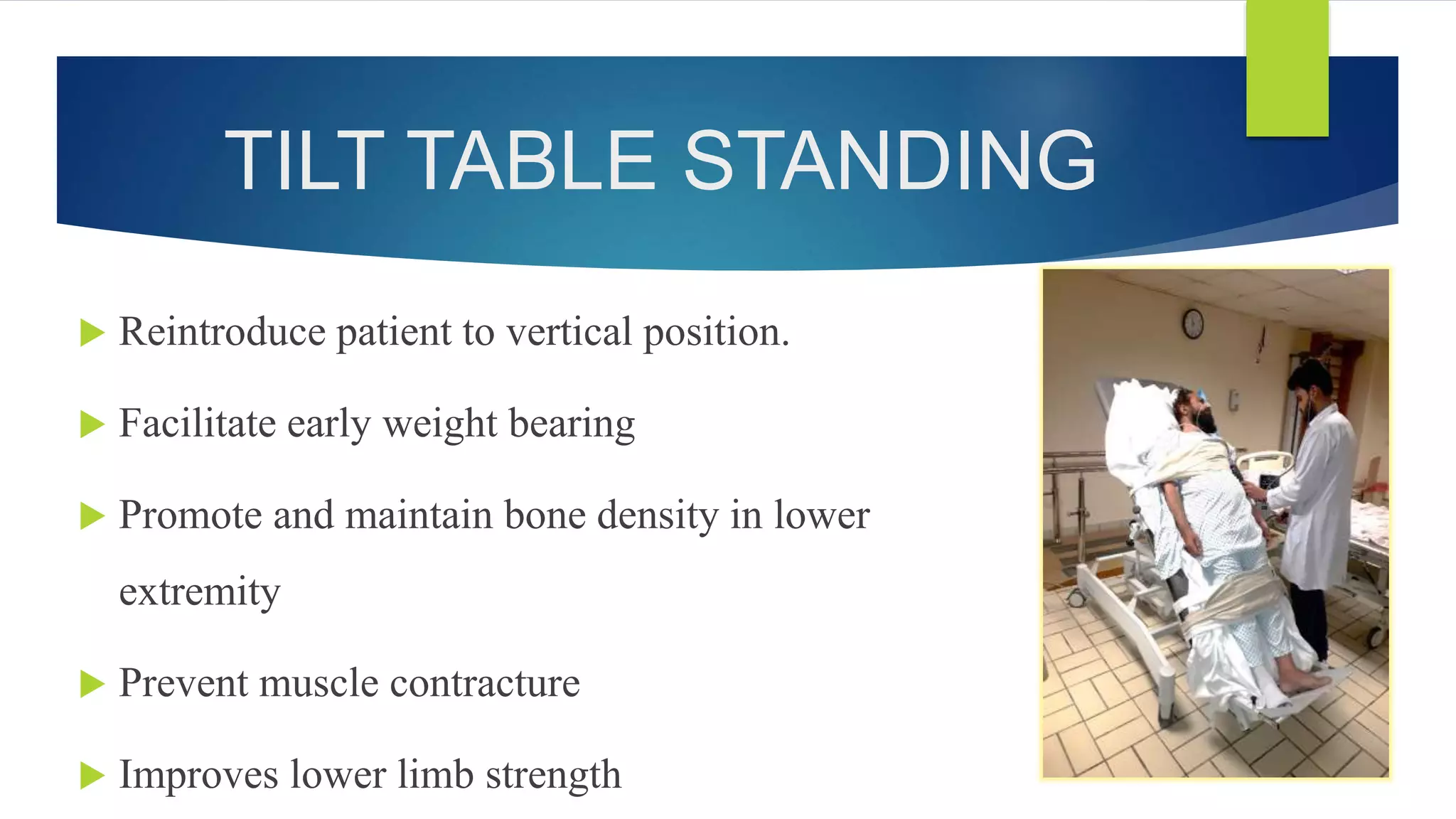
TILT TABLE STANDING
 Reintroduce patient to vertical position.
 Facilitate early weight bearing
 Promote and maintain bone density in lower
extremity
 Prevent muscle contracture
 Improves lower limb strength
TILT TABLE STANDING
 Increase arousal
 Improves cardiovascular conditions
 Allow to become acclimated to an upright
position without rapid change in blood pressure
 Decrease spasticity
Cont’d
 Prevention of osteoporosis and pathological fractures.
 Postural improvements
 Enhance bladder and bowl function
 Provide early weight bearing experiences.
 Decrease prolong bed rest complications
 Improves psychological out look and also motivates
 Patient to participate ambulation program
SHOULDER PULLEY
Decrease pain in the shoulder and arm
Improve shoulder strength
Improve range of motion (ROM)
Maintain proper posture
Regain normal function of your arm
TREADMILL EXERCISE
 The treadmill is a relatively easy piece of exercise
equipment to use
 The treadmill has a predictable surface that is much
easier to negotiate than sidewalks, curbs or trails and
the risk of tripping is reduced
 All aspects of the workout can be controlled by the
user: speed, incline, warm up period, cool down period,
and energy spend
 Generally, users can design custom programs to fit the
time they have to exercise
TREADMILL EXERCISE
 Multiple users can use the same equipment without
adjusting the structure
 Some treadmills have special features such as step
counters and heart rate monitors so fitness progress
can be tracked
 Running on a treadmill generally burns calories faster
than most other forms of in-home exercise, such as
biking
Shoulder pulley & wheel
 Improve the ROM
 Improve the Power of
muscles
 Postural stability
 Improve the flexibility
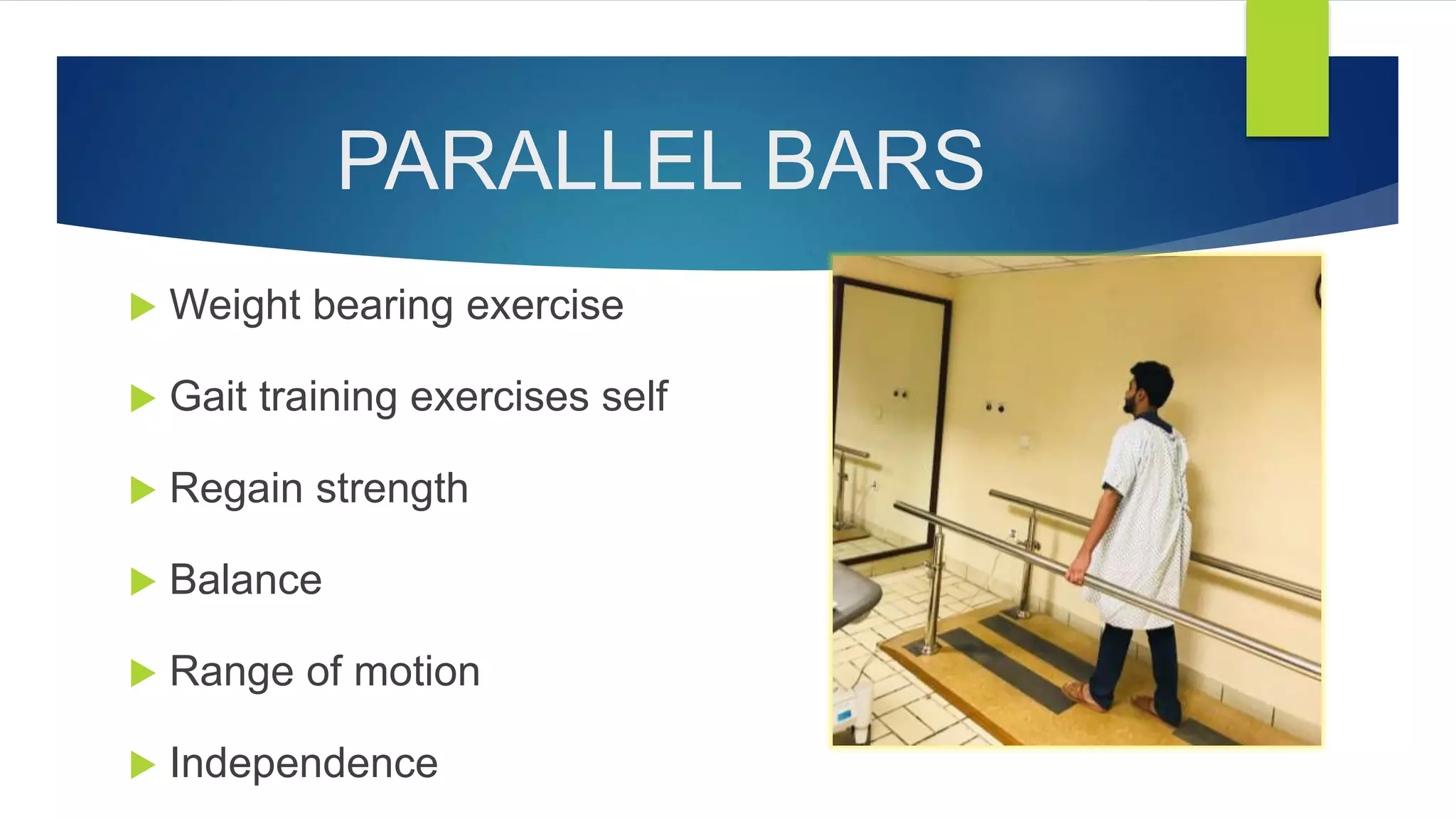
PARALLEL BARS
 Weight bearing exercise
 Gait training exercises self
 Regain strength
 Balance
 Range of motion
 Independence
PARALLEL BARS
 Coordination exercises,
 Improves patients ability to walk
independently or with assistance.
 Gait training with assistance
THERA TRAINER
 The THERA-Trainer enables people
with individual requirements to
exercise their legs or upper body with
or without motorized assistance -
from their chair or wheelchair. It
gently encourages mobility and has a
positive effect on many other aspects
of health.
Thank you!!!

Scope of physiotherapy ipd and opd

  • 1.
  • 2.
    What is Physiotherapy? A health care profession involving role of physiotherapists, conducting patients examination, evaluation, diagnosis and physical intervention skills which works on healing of impairments and disabilities..  It helps in promoting the ambulation, functional abilities, quality of life and movement.
  • 3.
    Physiotherapist ? A Physiotherapistis an autonomous health care professional who assesses, diagnoses, plans, treats and evaluates clients/patients and is responsible for his/her own actions.
  • 4.
    ROLE OF PHYSICALTHERAPISTS IN HEALTH CARE  Diagnose and manage movement dysfunction and enhance physical and functional abilities.  Restore, maintain, and promote optimal physical function, wellness and fitness, and quality of life as it relates to movement and health.  Prevent the onset, symptoms, and progression of impairments, functional limitations, and disabilities that may result from diseases, disorders, conditions, or injuries.
  • 5.
    AIM of physiotherapy Prevent muscle shortening & joint contractures  Influence pain control  Educate in all aspects of physical function  Education and participation of the carer  Treat the patient with dignity – allowing them to “live until they die”  Build a relationship of confidence and trust
  • 6.
    AIM of Physiotherapy Assess and optimise the patient’s level of physical function  Take into consideration the interplay between the physical, psychological, social and vocational aspects of function  Understand the patients underlying emotional, pathological and psychological condition,  Focus is the physical and functional consequences of the disease and/or its treatment, on the patient.
  • 7.
    AIM of Physiotherapy Restore the patient’s sense of self  Facilitate and optimise the patient's ability to function with safety and independence in the face of diminishing resources.  Maintain optimum respiratory & circulatory function  Listen to patient  Set realistic goals with the patient
  • 8.
    STAGES OF PHYSIOTHERAPY Preventive  Restorative  Supportive  Palliative
  • 9.
  • 10.
    Which patients groups benefitfrom physiotherapy ?  Cardiac patients  Orthopaedic patients  Amputees  General surgical  Neurological  Elderly  Learning disabilities  Psychiatric  Palliative care  Respiratory  Paediatric  Rheumatology  Musculo-skeletal  Occupational  Spinal injuries  Obstetrics  Gynaecological  Burns and plastics
  • 11.
    EXAMPLES OF CONDITIONSTREATED BY PHYSICAL THERAPISTS  Arthritis  Back Pain  Balance  Burns  CTS  Developmental Delays  COPD  Dislocations  Fractures  Hand Injuries  Headaches  Incontinence  Lymphedema  Osteoporosis  Pelvic Pain  Sports Injuries  Stroke  Traumatic Brain Injury (TBI)
  • 12.
  • 13.
    Pain conditions inwhich physiotherapy recommended  Cervical region pain  Back pain  Shoulder pain  Knee pain  Ankle pain  Muscular pain  Neurogenic pain  Soft tissue injury pain  Soft tissue inflammation pain  Headache  PID pain  Fibromyalgia  sprain/strain  Sports injury
  • 14.
    ELECTROTHERAPY  Pain management Treatment of neuromuscular dysfunction  Improvement of strength  Improvement of motor control  Retards muscle atrophy  Improvement of local blood flow  Improves range of joint mobility  Tissue repair  Acute and chronic edema
  • 15.
    Therapeutic Ultrasound  Recommendedat scar  Lymphatic drainage  Reduce inflammation  Reduce the pain  Help in healing of wounds  Peripheral blood flow
  • 16.
    TRACTION THERAPY  Distractionto increase the intervertebral space  Tensing of the posterior longitudinal vertebral ligament  Suction to draw the disc protrusion towards the center of the joint  Spinal traction helps in relieving back pain by stretching the tight muscles of the spine which result from spasm.  Spinal traction also helps widen the inter vertebral foramen so that the nerve root impingement is relieved
  • 17.
    Hot pack andcold pack  In chronic condition we use hot pack  In acute condition we use cold pack  Reduces the swelling  Reduce the pain  Increase ROM
  • 18.
  • 19.
    Physiotherapy in Burns Respiratory Care  Prevention of Contractures and Deformities  Positioning  Head and Neck  Lower limbs  Splinting (Splints may be static or dynamic)
  • 20.
    Cont’d  Exercises  Musclesstrength  Flexibility (stretching)  Regaining maximum function  Out-patient physiotherapy  Graft PT if grafted
  • 21.
    Immuno-compromised patients  Immunocompromisedpeople like  undergoing treatment for cancer  leukemia  lymphoma  HIV  patients on immunosuppressive drugs are at an increased risk of developing chest infection
  • 22.
    Cont’d  Decrease mobility Swelling,  Joint pain.  Transplant patients  Fever
  • 23.
  • 24.
    GERIARTRIC PATIENTS  Musclesweakness  Low immunity  Low bone density  Cardiopulmonary weakness  Poor Balancing  Risk of fall  These all increased during hospital stay
  • 26.
    Indications for geriatricPT referral  Recent fall or history of falls  Deficits in strength or range of motion  Loss of mobility or ambulation requiring an assistive device  Musculoskeletal pain  Difficulty with transfers  Orthotic or prosthetic needs  Open wound  Neurological disorder  Balance deficits  Decreased endurance for ADLs  Bed bound status  Need for adaptive equipment to enhance safety and function
  • 27.
    Kidney disease andphysiotherapy Kidney diseases are associated with an increased risk of functional impairment, independent of age, gender, and co- morbidities. Clinicians should counsel patients with CKD including frail elder people to increase physical activity levels and target that regular physical activity including aerobic or endurance exercises training benefits health
  • 28.
    INTERMITTENT PNEUMATIC COMPRESSION Intermittent pneumatic compression is a therapeutic technique used in medical devices that include an air pump and inflatable auxiliary sleeves, gloves or boots in a system designed to improve venous circulation in the limbs of patients who suffer edema or the risk of deep vein thrombosis (DVT) or pulmonary embolism
  • 29.
    BENEFITS OF IPC Peripheral artery disease/arterial insufficiency  Restless leg syndrome  Management of edema following femoro-popliteal bypass surgery  Fracture and soft tissue healing  Treatment of sensory impairment in the upper limb following a stroke  Treatment of upper extremity vascular ulcers  Edema related to obesity
  • 30.
    GYN & OBSPATIENTS IN OPD
  • 31.
    Physiotherapy in Gyn.&Obs. During the whole period of pregnancy women’s body undergoes various physical and physiological changes. Due to the change during and after pregnancy common problems faced by the women’s are low back pain, stress urinary incontinence, pelvic pain. Physiotherapy can help in this through postural reeducation, strengthening of pelvic floor muscles and through some modalities
  • 32.
    Suggested sequence ofexercise  General rhythmic activities to warm-up.  Gentle selective stretching  Aerobic activities for CVS conditioning  UL &LL strengthening ex.  Abdominal ex  Pelvic floor ex.  Relaxation /cool down activities  Educational information [if any] & postpartum ex. Education.
  • 33.
    Selected exercise techniques Postural exercise.  Abdominal exercise  Stabilization exercise  Pelvic motion training & strengthening.  Modified UL & LL strengthening.  Perineum &adductor flexibility.  Relaxation &breathing exercise
  • 34.
  • 35.
    The Goal of PediatricPhysical Therapy Help children reach their maximal functional level of independence
  • 36.
    Pediatric Physical Therapy Promotes independence  Increases participation  Facilitates motor development & function  Improves strength  Enhances learning opportunities  Eases caregiving  Promotes health & wellness
  • 37.
    Increased Participation  PediatricPhysical Therapists and Assistants promote increased participation in daily activities & routines in the: Home School Community
  • 38.
  • 39.
    Cardiac Rehabilitation  Torestore self reliance in daily active life.  To restore formal work activities  To prepare for another full time employment compatible with his working capacities.
  • 40.
    Cardiac Rehabilitation  Cardiacrehabilitation phase 2 with close telemetry monitoring.  Cardiac rehabilitation phase 3  Motivate for normal activity  Teaching for daily life activity  Teach for job related activity.
  • 41.
    Cardiac Rehabilitation  Enduranceexercises up to 60 minutes  Stretching exercises  Strengthening exercises  Teach ADLs  Cardiac pulmonary care
  • 42.
  • 43.
    IPD patients physiotherapyin OPD  Confidence level increase  Motivation  Endurance/cardiac exercise  Postural stability  Strengthening exercises  Pressure sure risk reduced  Social activity
  • 44.
    RECUMBENT BIKE  CardiovascularExercise  Increased Strength and Weight Management  Safety and Comfort  Less Stress on Knee and Hip
  • 45.
    TILT TABLE STANDING Reintroduce patient to vertical position.  Facilitate early weight bearing  Promote and maintain bone density in lower extremity  Prevent muscle contracture  Improves lower limb strength
  • 46.
    TILT TABLE STANDING Increase arousal  Improves cardiovascular conditions  Allow to become acclimated to an upright position without rapid change in blood pressure  Decrease spasticity
  • 47.
    Cont’d  Prevention ofosteoporosis and pathological fractures.  Postural improvements  Enhance bladder and bowl function  Provide early weight bearing experiences.  Decrease prolong bed rest complications  Improves psychological out look and also motivates  Patient to participate ambulation program
  • 48.
    SHOULDER PULLEY Decrease painin the shoulder and arm Improve shoulder strength Improve range of motion (ROM) Maintain proper posture Regain normal function of your arm
  • 49.
    TREADMILL EXERCISE  Thetreadmill is a relatively easy piece of exercise equipment to use  The treadmill has a predictable surface that is much easier to negotiate than sidewalks, curbs or trails and the risk of tripping is reduced  All aspects of the workout can be controlled by the user: speed, incline, warm up period, cool down period, and energy spend  Generally, users can design custom programs to fit the time they have to exercise
  • 50.
    TREADMILL EXERCISE  Multipleusers can use the same equipment without adjusting the structure  Some treadmills have special features such as step counters and heart rate monitors so fitness progress can be tracked  Running on a treadmill generally burns calories faster than most other forms of in-home exercise, such as biking
  • 51.
    Shoulder pulley &wheel  Improve the ROM  Improve the Power of muscles  Postural stability  Improve the flexibility
  • 52.
    PARALLEL BARS  Weightbearing exercise  Gait training exercises self  Regain strength  Balance  Range of motion  Independence
  • 53.
    PARALLEL BARS  Coordinationexercises,  Improves patients ability to walk independently or with assistance.  Gait training with assistance
  • 54.
    THERA TRAINER  TheTHERA-Trainer enables people with individual requirements to exercise their legs or upper body with or without motorized assistance - from their chair or wheelchair. It gently encourages mobility and has a positive effect on many other aspects of health.
  • 55.

Editor's Notes

  • #5 As essential participants in the health care delivery system, PTs assume leadership roles in rehabilitation prevention, health maintenance, and programs that promote health, wellness, and fitness Physical therapists also play important roles both in developing standards for physical therapist practice and in developing health care policy to ensure availability, accessibility, and optimal delivery of health care services. As clinicians, physical therapists engage in an examination process that includes: taking the patient/client history, conducting a systems review, and performing tests and measures to identify potential and existing problems. To establish diagnoses, prognoses, and plans of care, physical therapists perform evaluations, synthesizing the examination data and determining whether the problems to be addressed are within the scope of PT practice. Based on their judgments about diagnoses and prognoses and based on patient/client goals, physical therapists: provide interventions (the interactions and procedures used in managing and instructing patients/clients), conduct re-examinations, modify interventions as necessary to achieve goals and expected outcomes, and develop and implement discharge plans.