ORGANISM 
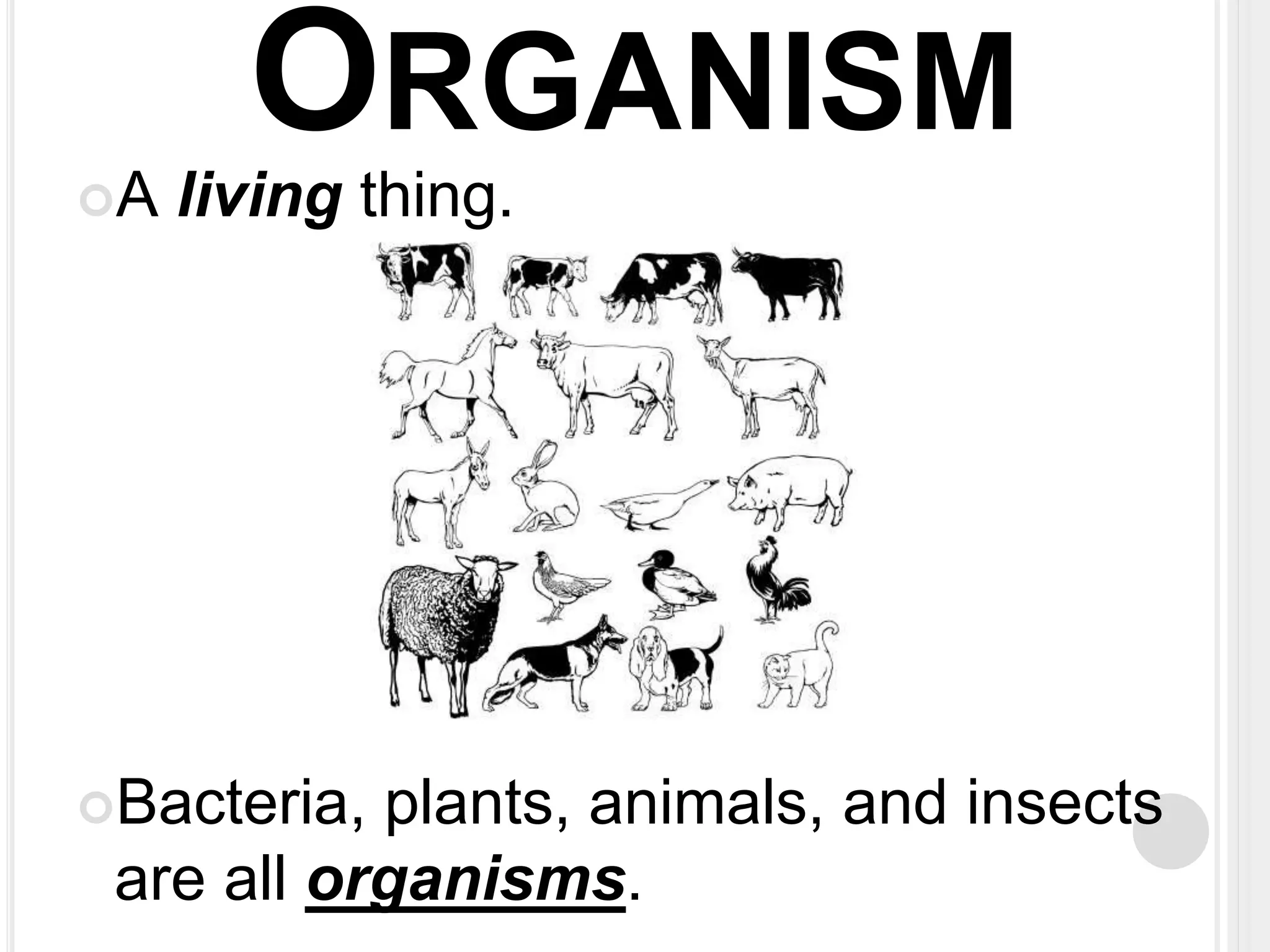
A living thing. 
Bacteria, plants, animals, and insects 
are all organisms.
PRODUCER 
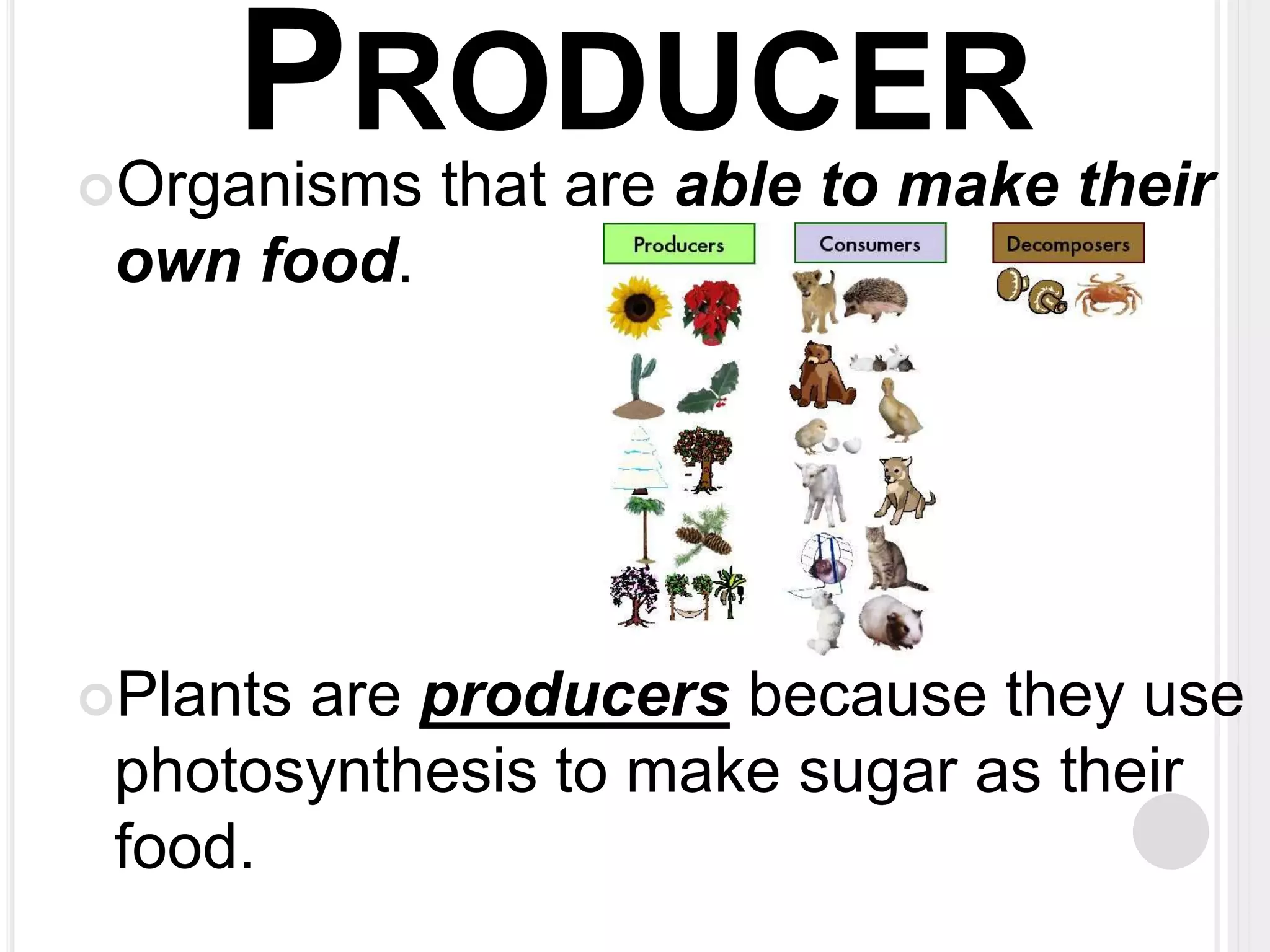
Organisms that are able to make their 
own food. 
Plants are producers because they use 
photosynthesis to make sugar as their 
food.
DECOMPOSER 
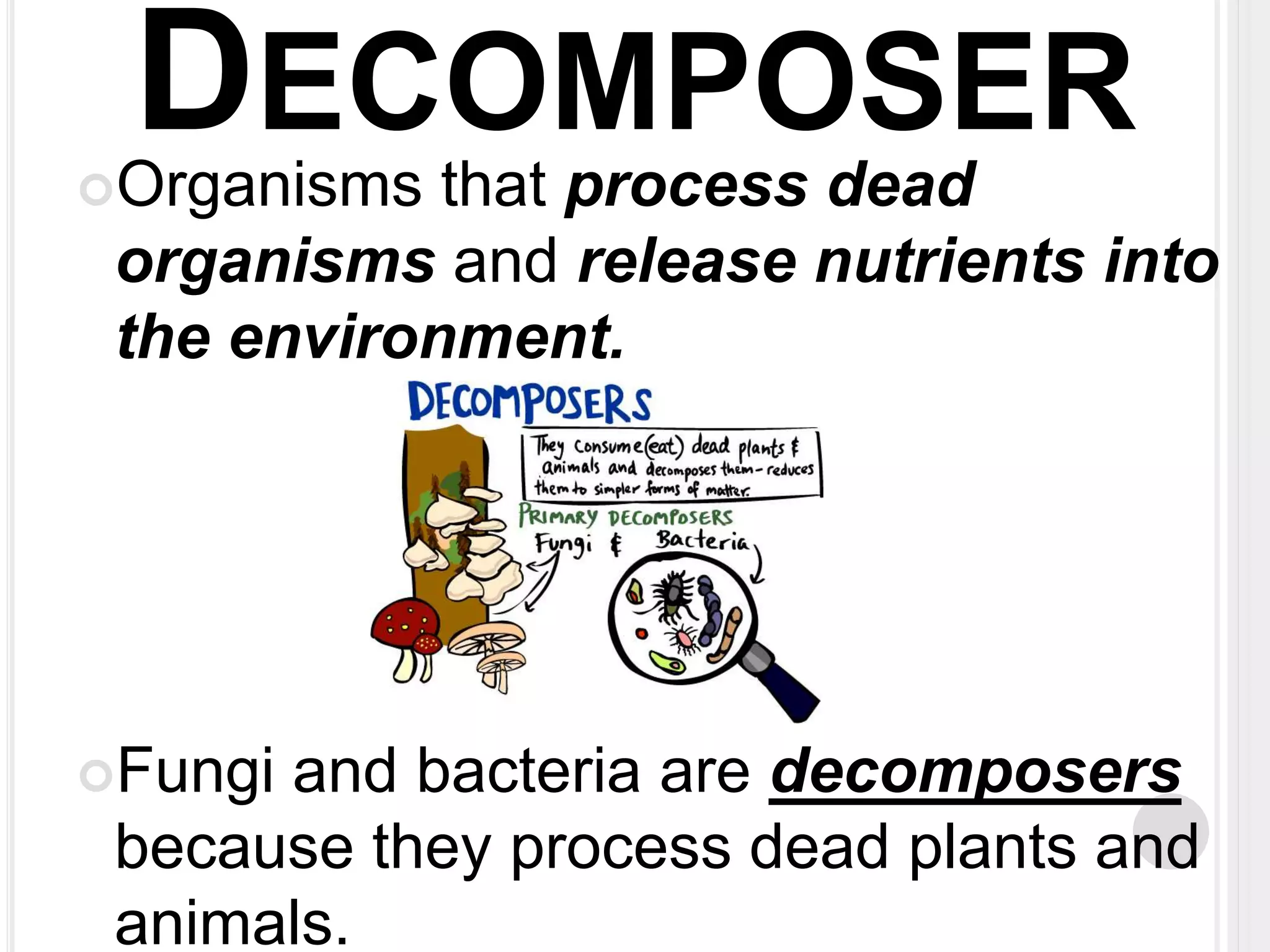
Organisms that process dead 
organisms and release nutrients into 
the environment. 
Fungi and bacteria are decomposers 
because they process dead plants and 
animals.
CONSUMER 
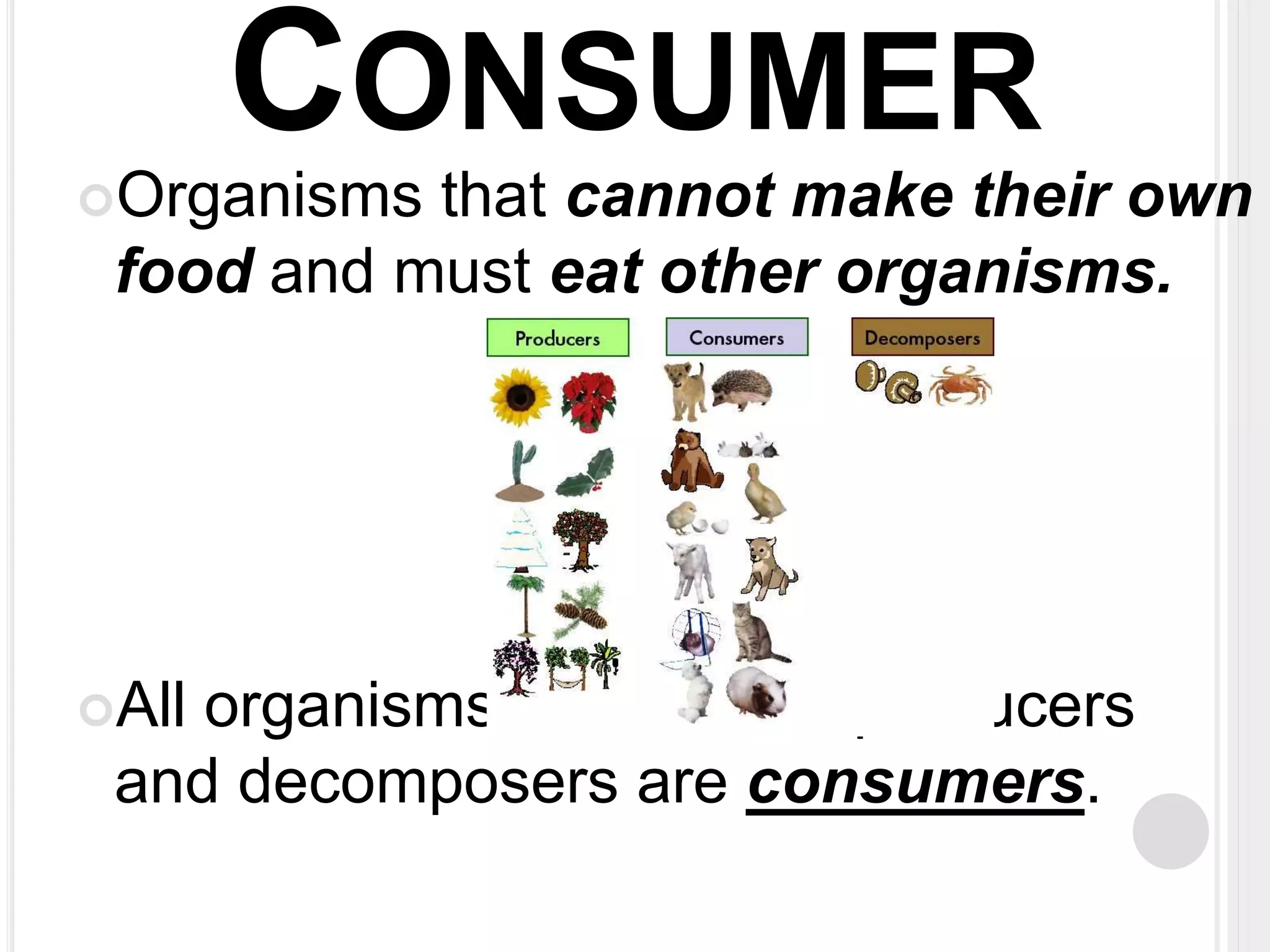
Organisms that cannot make their own 
food and must eat other organisms. 
All organisms that are not producers 
and decomposers are consumers.
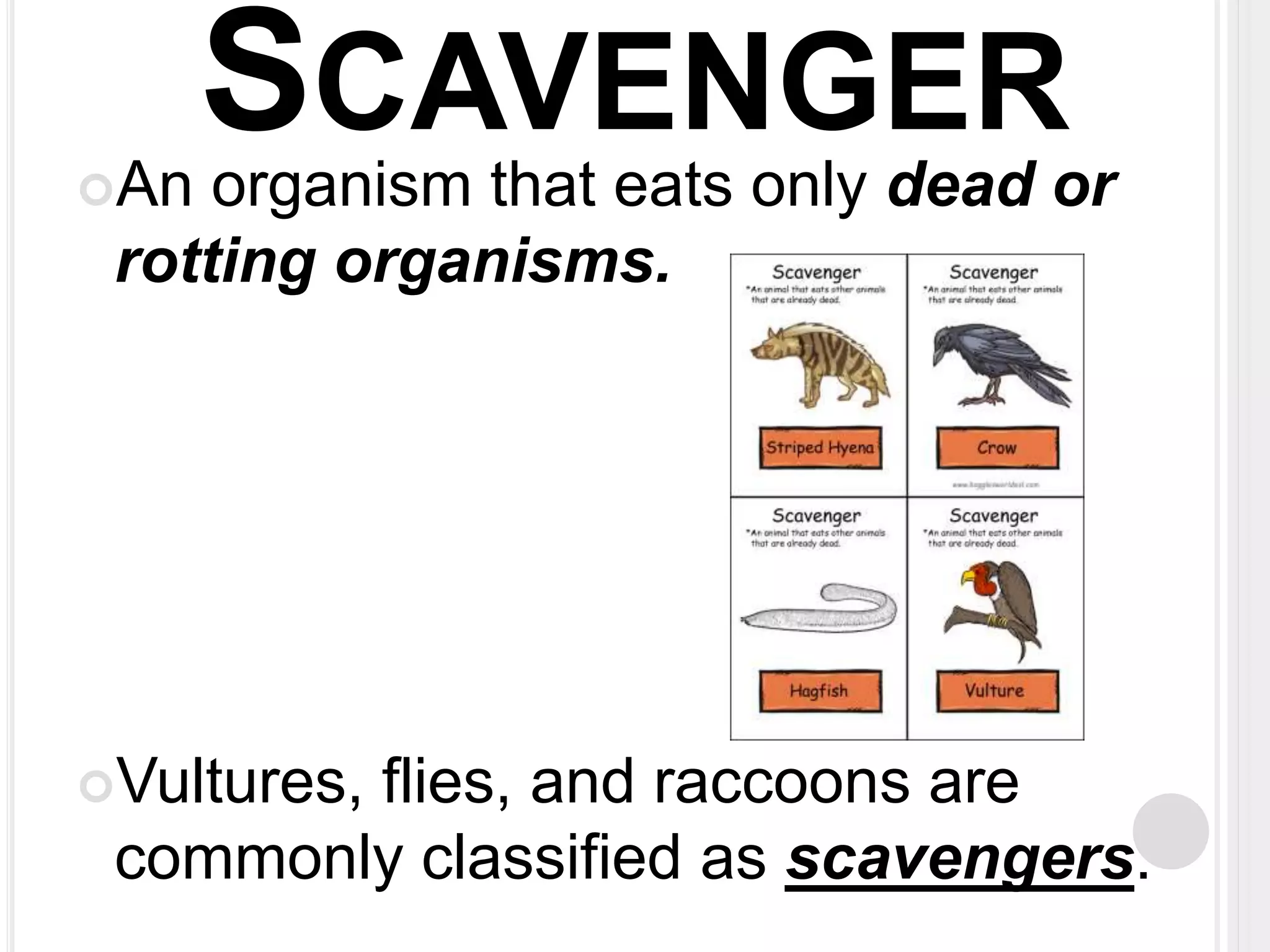
SCAVENGER 
An organism that eats only dead or 
rotting organisms. 
Vultures, flies, and raccoons are 
commonly classified as scavengers.
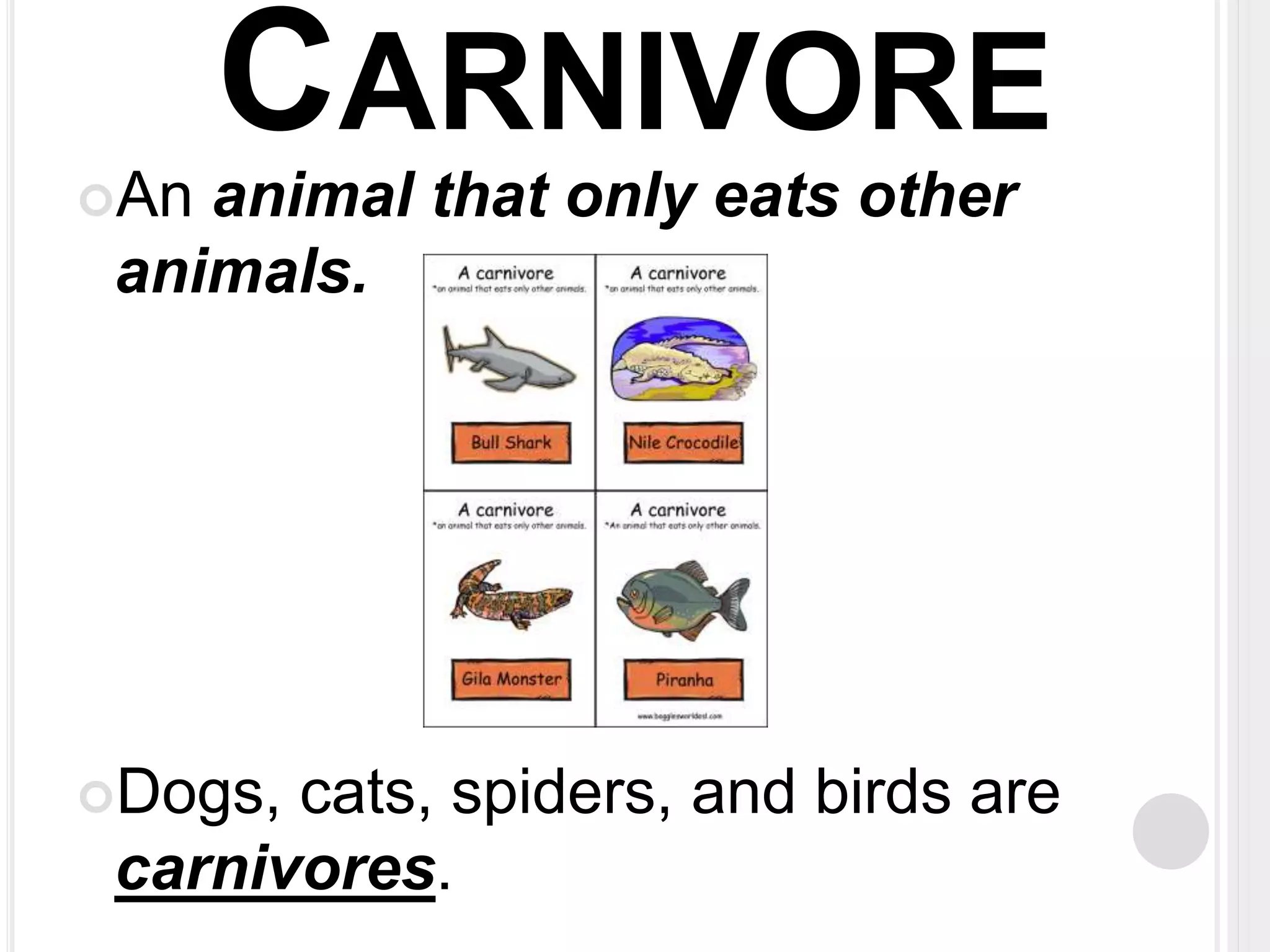
CARNIVORE 
An animal that only eats other 
animals. 
Dogs, cats, spiders, and birds are 
carnivores.
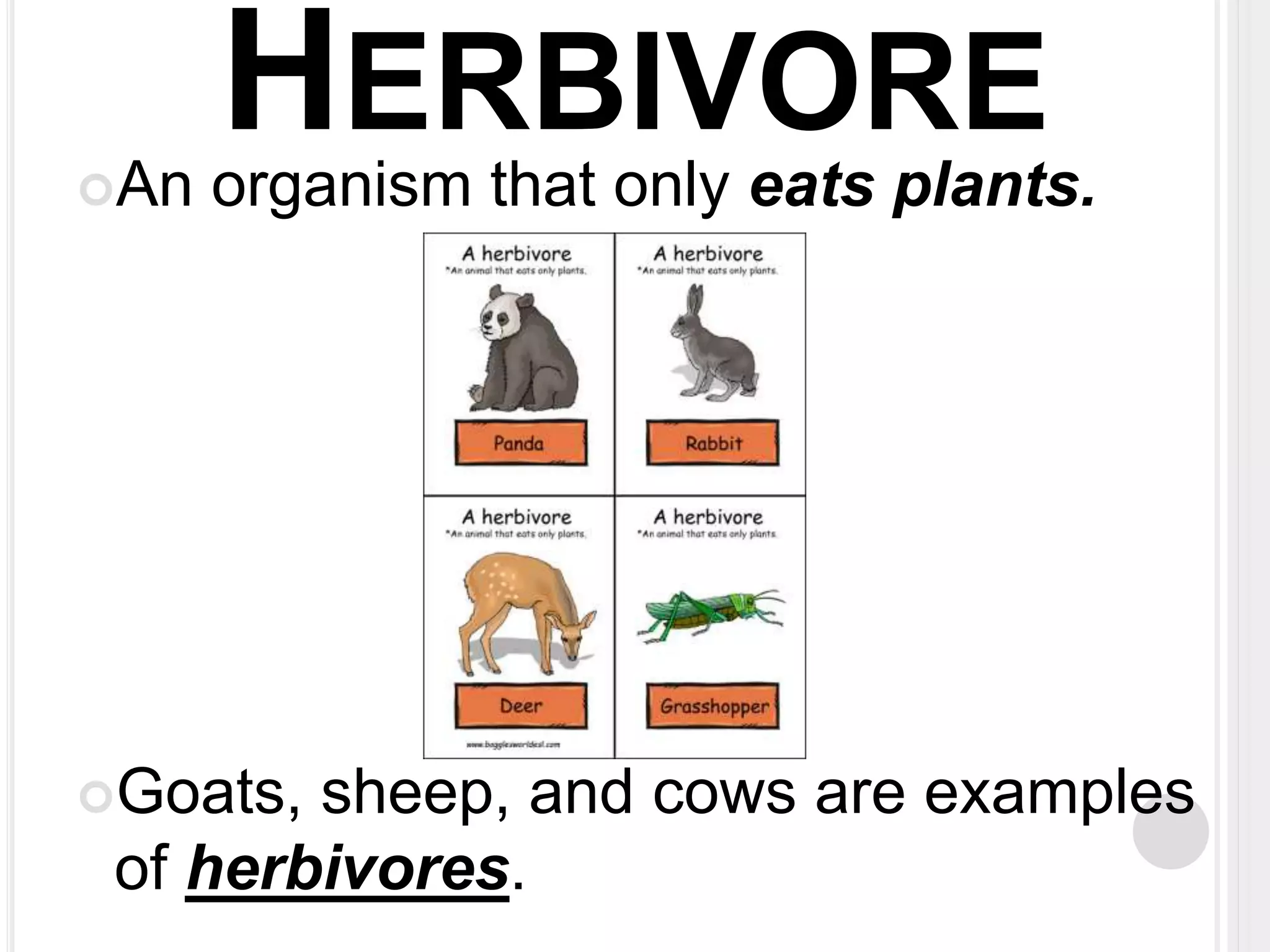
HERBIVORE 
An organism that only eats plants. 
Goats, sheep, and cows are examples 
of herbivores.
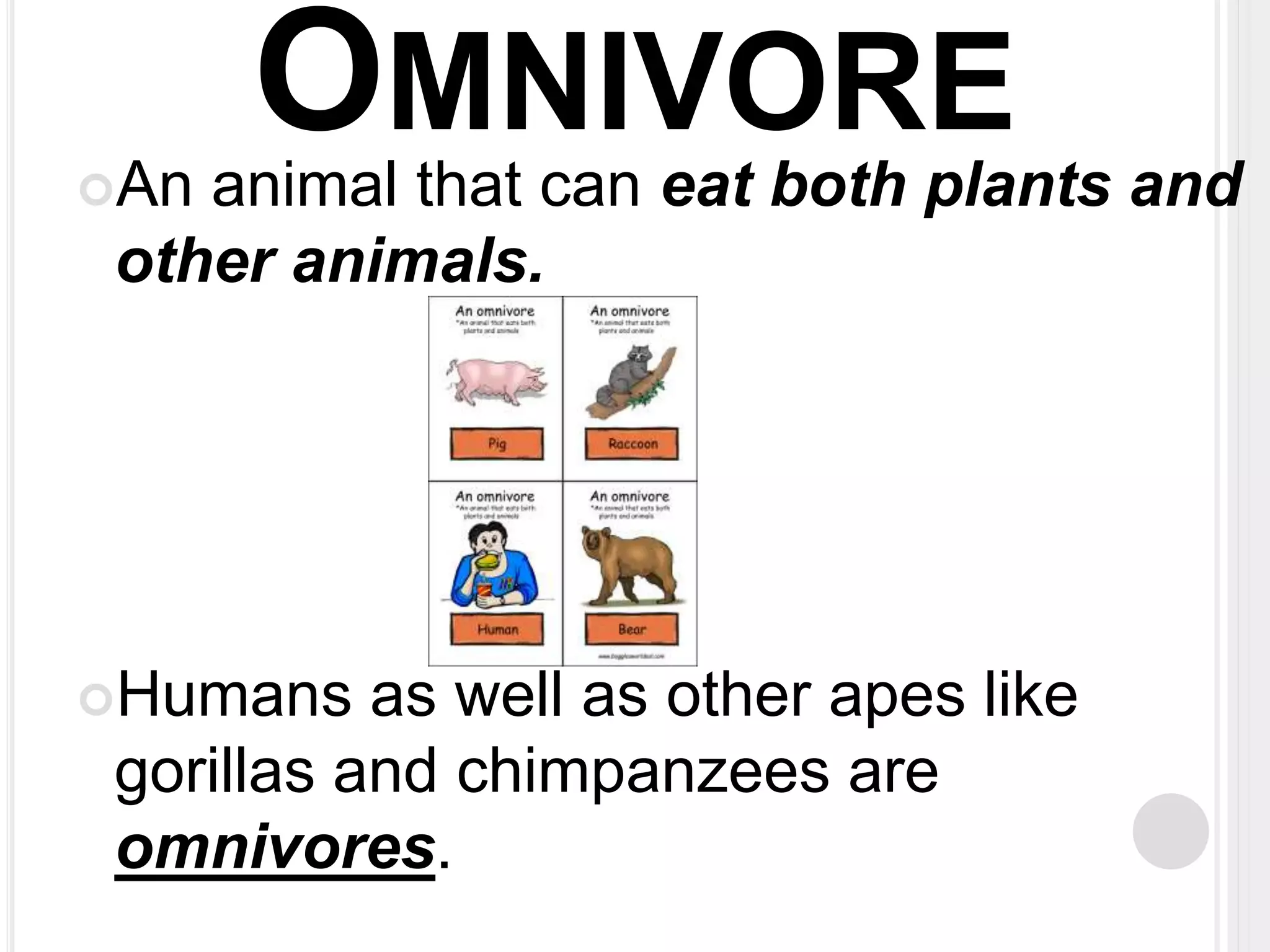
OMNIVORE 
An animal that can eat both plants and 
other animals. 
Humans as well as other apes like 
gorillas and chimpanzees are 
omnivores.
COMMUNITY 
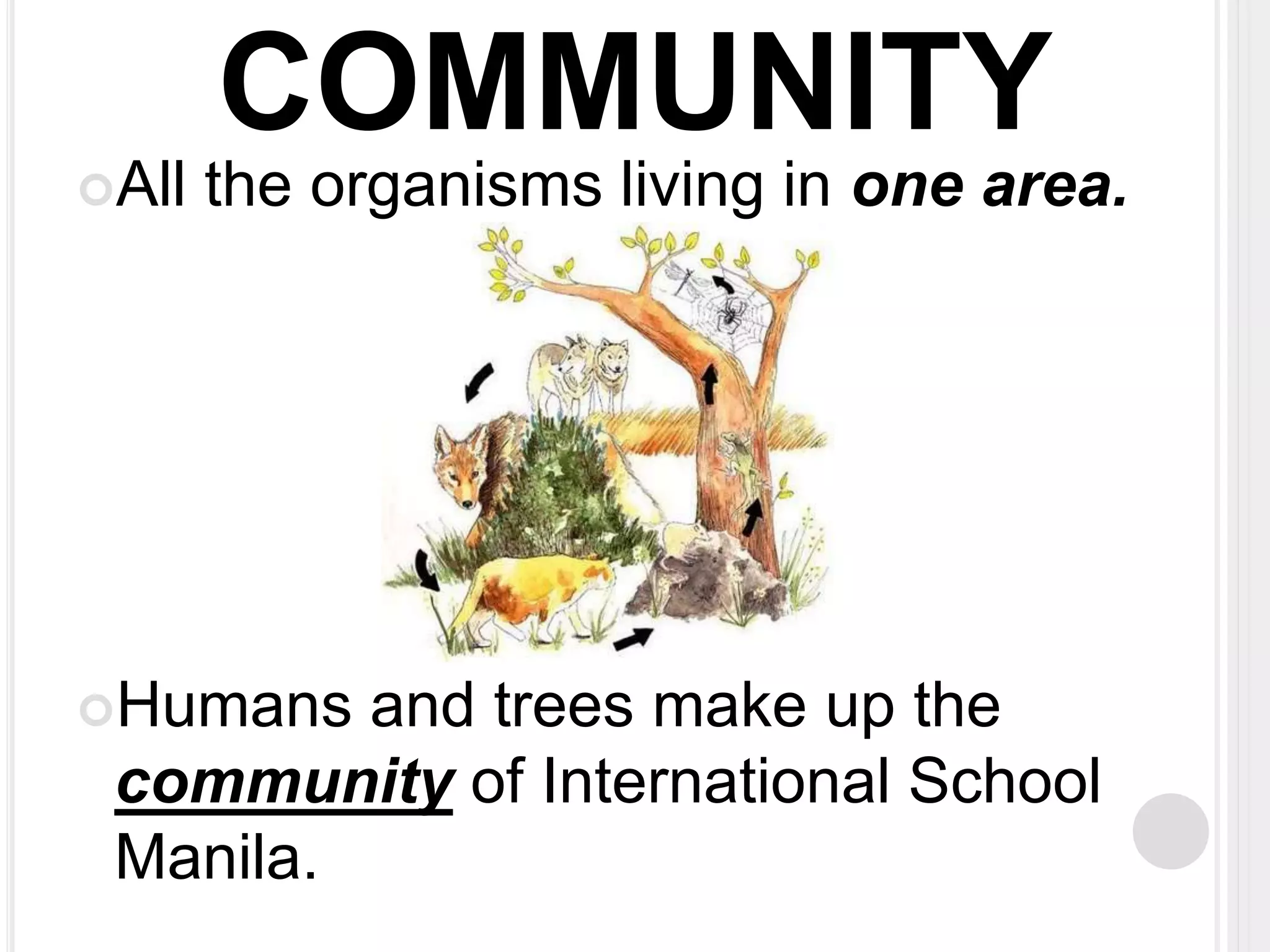
All the organisms living in one area. 
Humans and trees make up the 
community of International School 
Manila.
POPULATION 
One type of organism living in an 
Ecosystem 
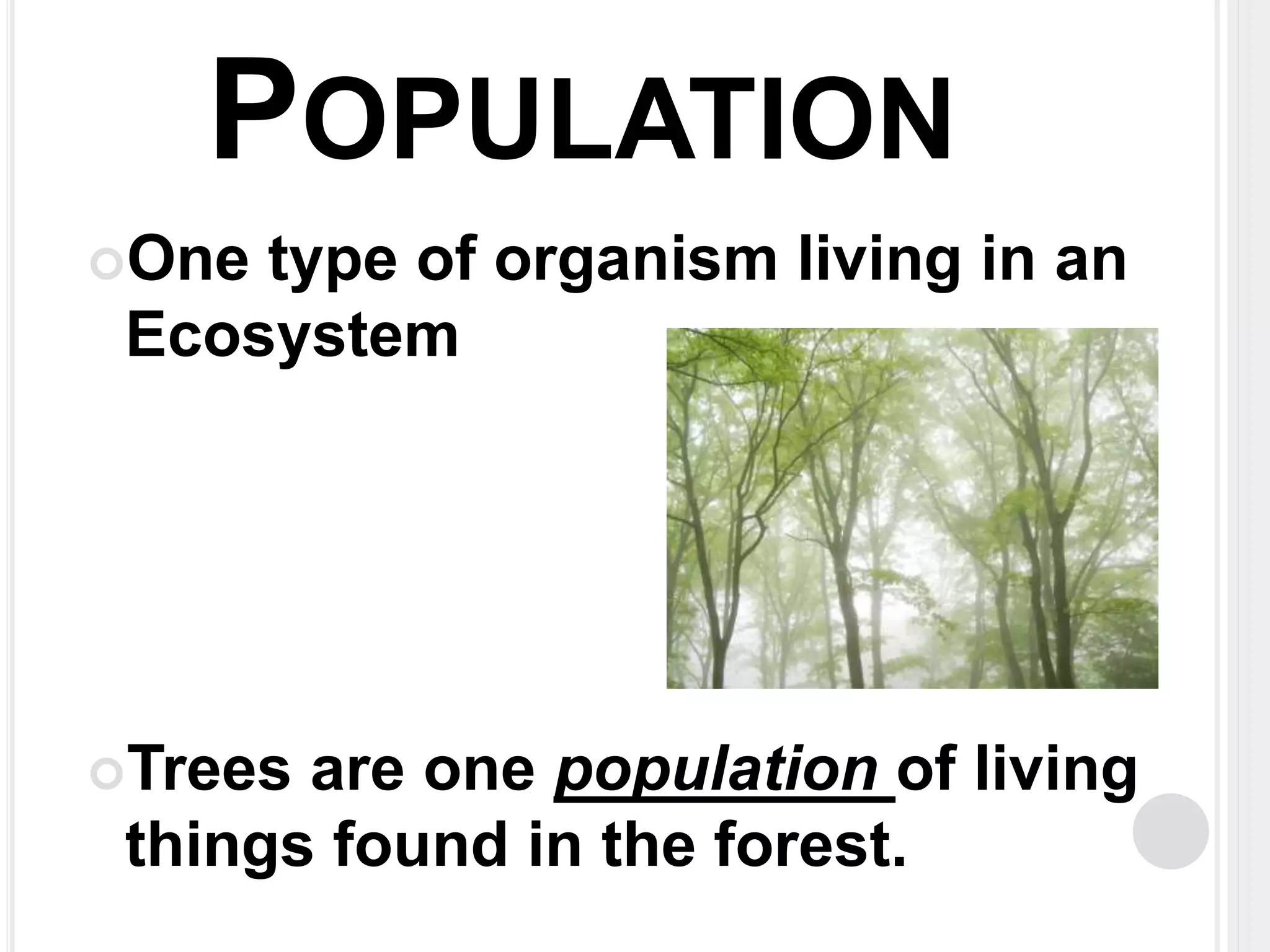
Trees are one population of living 
things found in the forest.
AFFECT (VERB) / EFFECT (NOUN) 
Affect: To produce a change in 
something or someone. 
Effect: The change brought about by a 
force. 
Eating a lot of meat affects your 
cardiovascular system and the effect is 
that your blood vessels harden.
FOOD CHAIN 
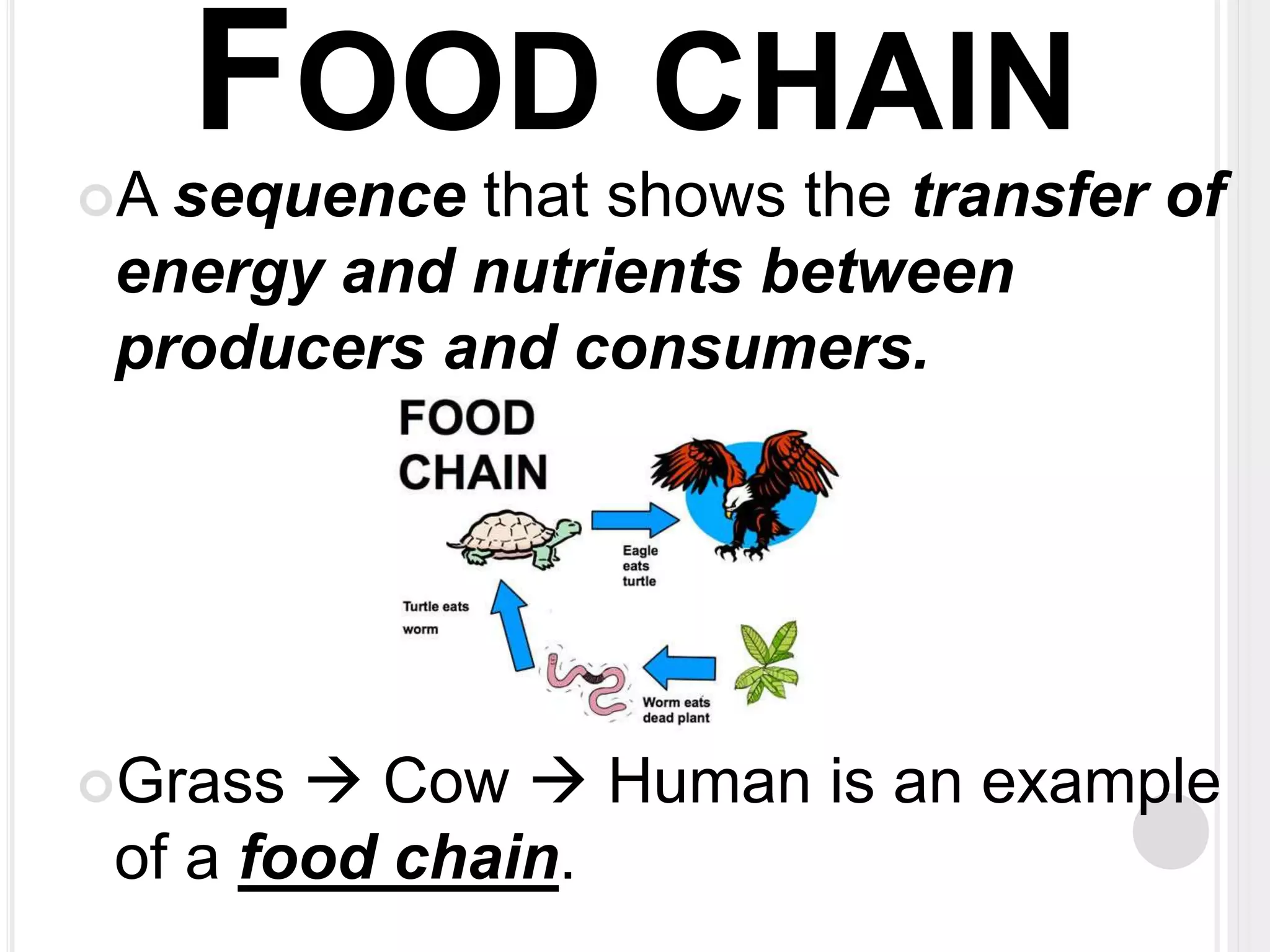
A sequence that shows the transfer of 
energy and nutrients between 
producers and consumers. 
Grass  Cow  Human is an example 
of a food chain.
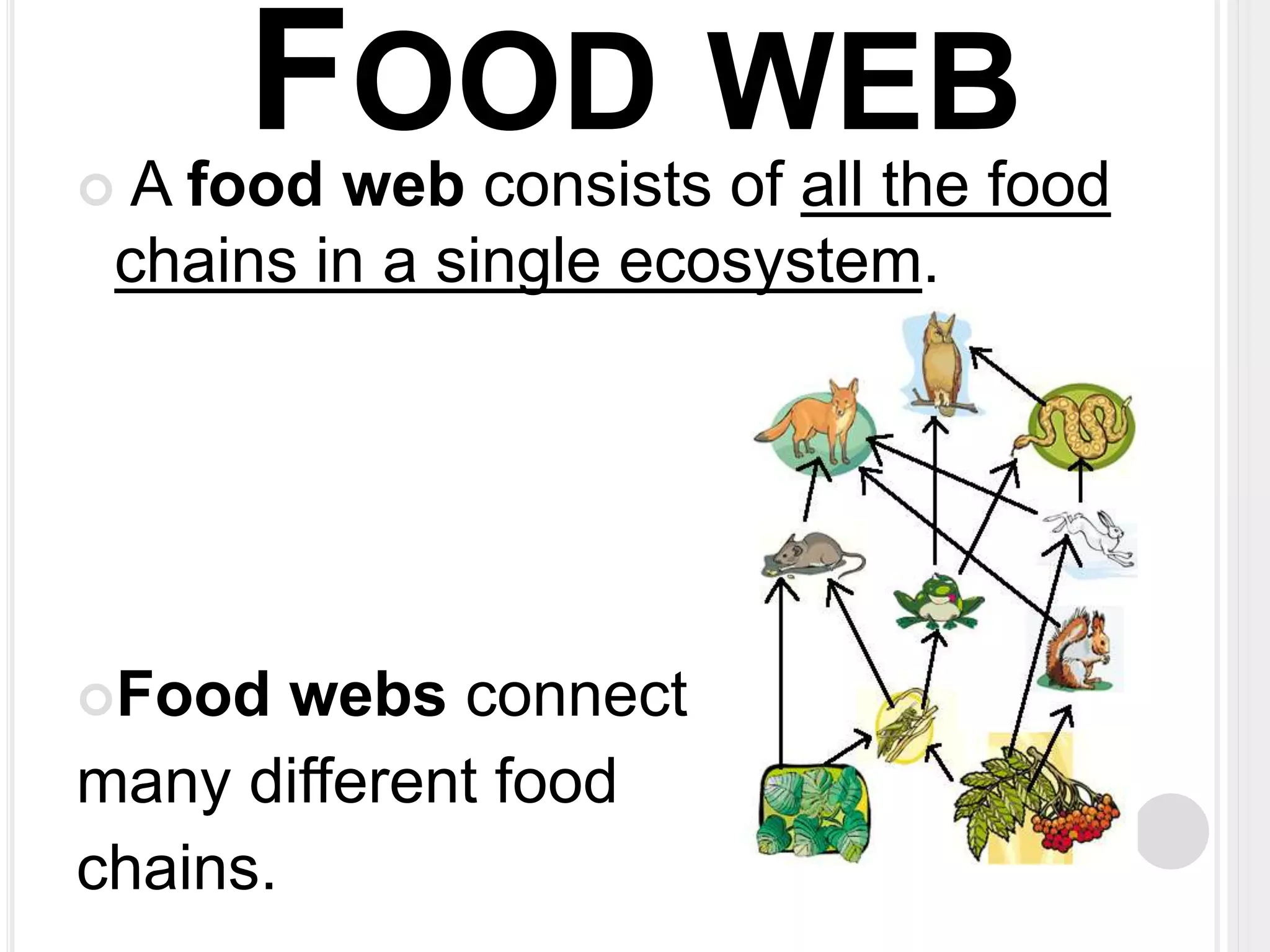
FOOD WEB 
 A food web consists of all the food 
chains in a single ecosystem. 
Food webs connect 
many different food 
chains.
BIOACCUMULATION 
When substances build up in an 
organism faster than they can be 
released. 
Eating and drinking contaminated food 
and water can result in fatal 
bioaccumulation.

Science Ecosystem Relationships Vocabulary Cards

  • 1.
    ORGANISM A livingthing. Bacteria, plants, animals, and insects are all organisms.
  • 2.
    PRODUCER Organisms thatare able to make their own food. Plants are producers because they use photosynthesis to make sugar as their food.
  • 3.
    DECOMPOSER Organisms thatprocess dead organisms and release nutrients into the environment. Fungi and bacteria are decomposers because they process dead plants and animals.
  • 4.
    CONSUMER Organisms thatcannot make their own food and must eat other organisms. All organisms that are not producers and decomposers are consumers.
  • 5.
    SCAVENGER An organismthat eats only dead or rotting organisms. Vultures, flies, and raccoons are commonly classified as scavengers.
  • 6.
    CARNIVORE An animalthat only eats other animals. Dogs, cats, spiders, and birds are carnivores.
  • 7.
    HERBIVORE An organismthat only eats plants. Goats, sheep, and cows are examples of herbivores.
  • 8.
    OMNIVORE An animalthat can eat both plants and other animals. Humans as well as other apes like gorillas and chimpanzees are omnivores.
  • 9.
    COMMUNITY All theorganisms living in one area. Humans and trees make up the community of International School Manila.
  • 10.
    POPULATION One typeof organism living in an Ecosystem Trees are one population of living things found in the forest.
  • 11.
    AFFECT (VERB) /EFFECT (NOUN) Affect: To produce a change in something or someone. Effect: The change brought about by a force. Eating a lot of meat affects your cardiovascular system and the effect is that your blood vessels harden.
  • 12.
    FOOD CHAIN Asequence that shows the transfer of energy and nutrients between producers and consumers. Grass  Cow  Human is an example of a food chain.
  • 13.
    FOOD WEB A food web consists of all the food chains in a single ecosystem. Food webs connect many different food chains.
  • 14.
    BIOACCUMULATION When substancesbuild up in an organism faster than they can be released. Eating and drinking contaminated food and water can result in fatal bioaccumulation.