
Supply Chain
      Risk Management


             PRESENTED BY

            YONUS A. SIDDIQUI
    VP E2E SUPPLY CHAIN MANAGEMENT
VP SUPPLY CHAIN ASSOCIATION OF PAKISTAN
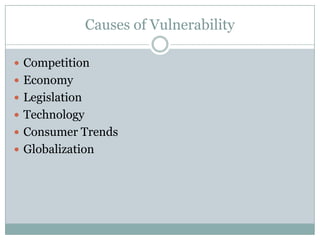
Causes of Vulnerability

 Competition
 Economy
 Legislation
 Technology
 Consumer Trends
 Globalization
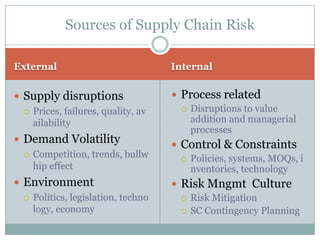
Sources of Supply Chain Risk

External                            Internal


 Supply disruptions                 Process related
   Prices, failures, quality, av      Disruptions to value

    ailability                          addition and managerial
                                        processes
 Demand Volatility
                                     Control & Constraints
   Competition, trends, bullw
                                       Policies, systems, MOQs, i
    hip effect                          nventories, technology
 Environment                        Risk Mngmt Culture
   Politics, legislation, techno      Risk Mitigation
    logy, economy                      SC Contingency Planning
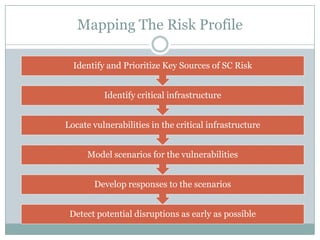
Mapping The Risk Profile

  Identify and Prioritize Key Sources of SC Risk


          Identify critical infrastructure


Locate vulnerabilities in the critical infrastructure


      Model scenarios for the vulnerabilities


       Develop responses to the scenarios


 Detect potential disruptions as early as possible
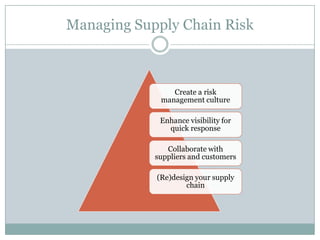
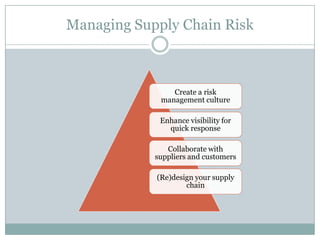
Managing Supply Chain Risk


                Create a risk
             management culture

             Enhance visibility for
               quick response

               Collaborate with
            suppliers and customers

            (Re)design your supply
                    chain
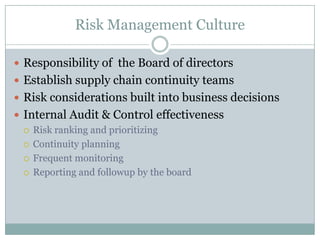
Risk Management Culture

 Responsibility of the Board of directors
 Establish supply chain continuity teams
 Risk considerations built into business decisions
 Internal Audit & Control effectiveness
   Risk ranking and prioritizing

   Continuity planning

   Frequent monitoring

   Reporting and followup by the board
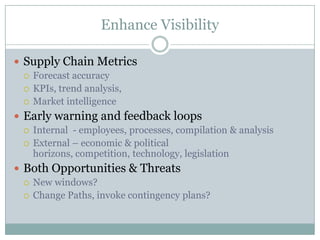
Enhance Visibility

 Supply Chain Metrics
   Forecast accuracy
   KPIs, trend analysis,
   Market intelligence

 Early warning and feedback loops
   Internal - employees, processes, compilation & analysis
   External – economic & political
    horizons, competition, technology, legislation
 Both Opportunities & Threats
   New windows?
   Change Paths, invoke contingency plans?
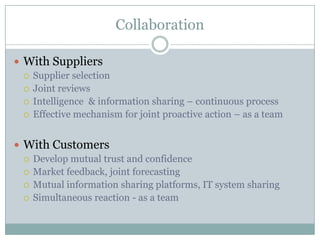
Collaboration

 With Suppliers
   Supplier selection
   Joint reviews
   Intelligence & information sharing – continuous process
   Effective mechanism for joint proactive action – as a team


 With Customers
   Develop mutual trust and confidence
   Market feedback, joint forecasting
   Mutual information sharing platforms, IT system sharing
   Simultaneous reaction - as a team
Redesign Supply Chain

 Fully understand your supply chain
   Mapping

   Risk identification

 Revisit SC design principles
   Efficiency vs resilience

   Fundamental thinking on options

 Supply base strategy
   Sourcing decisions and criteria

   Vendor development
Managing Supply Chain Risk


                Create a risk
             management culture

             Enhance visibility for
               quick response

               Collaborate with
            suppliers and customers

            (Re)design your supply
                    chain
 http://www.youtube.com/watch?v=QlZ6TyUaYpw

Sc risk mgmt

  • 1.
    Supply Chain Risk Management PRESENTED BY YONUS A. SIDDIQUI VP E2E SUPPLY CHAIN MANAGEMENT VP SUPPLY CHAIN ASSOCIATION OF PAKISTAN
  • 2.
    Causes of Vulnerability Competition  Economy  Legislation  Technology  Consumer Trends  Globalization
  • 3.
    Sources of SupplyChain Risk External Internal  Supply disruptions  Process related  Prices, failures, quality, av  Disruptions to value ailability addition and managerial processes  Demand Volatility  Control & Constraints  Competition, trends, bullw  Policies, systems, MOQs, i hip effect nventories, technology  Environment  Risk Mngmt Culture  Politics, legislation, techno  Risk Mitigation logy, economy  SC Contingency Planning
  • 4.
    Mapping The RiskProfile Identify and Prioritize Key Sources of SC Risk Identify critical infrastructure Locate vulnerabilities in the critical infrastructure Model scenarios for the vulnerabilities Develop responses to the scenarios Detect potential disruptions as early as possible
  • 5.
    Managing Supply ChainRisk Create a risk management culture Enhance visibility for quick response Collaborate with suppliers and customers (Re)design your supply chain
  • 6.
    Risk Management Culture Responsibility of the Board of directors  Establish supply chain continuity teams  Risk considerations built into business decisions  Internal Audit & Control effectiveness  Risk ranking and prioritizing  Continuity planning  Frequent monitoring  Reporting and followup by the board
  • 7.
    Enhance Visibility  SupplyChain Metrics  Forecast accuracy  KPIs, trend analysis,  Market intelligence  Early warning and feedback loops  Internal - employees, processes, compilation & analysis  External – economic & political horizons, competition, technology, legislation  Both Opportunities & Threats  New windows?  Change Paths, invoke contingency plans?
  • 8.
    Collaboration  With Suppliers  Supplier selection  Joint reviews  Intelligence & information sharing – continuous process  Effective mechanism for joint proactive action – as a team  With Customers  Develop mutual trust and confidence  Market feedback, joint forecasting  Mutual information sharing platforms, IT system sharing  Simultaneous reaction - as a team
  • 9.
    Redesign Supply Chain Fully understand your supply chain  Mapping  Risk identification  Revisit SC design principles  Efficiency vs resilience  Fundamental thinking on options  Supply base strategy  Sourcing decisions and criteria  Vendor development
  • 10.
    Managing Supply ChainRisk Create a risk management culture Enhance visibility for quick response Collaborate with suppliers and customers (Re)design your supply chain
  • 11.