PWC RISK MANAGEMENT REPORT
Presented By
LAVANYA NADIPENA
PARAG PALLE
AJAY PADHI
HARSHITA SINGH
ABHISHEK NAIR
INTRODUCTION
 Supply chain risk management is a critical aspect of modern business operations.
As global supply chain have become more complex and interconnected, they have
also become more vulnerable to disruption from a wide range of risks, including
natural disasters, geopolitical events, and more.
 To help organizations mitigate these risks. PWC has developed a comprehensive
approach to supply chain risk management.
 PWC approach to supply chain risk management is designed to help organizations
build more resilient supply chain that can withstand a wide range of potential
disruption.
Monday, February 1,
20XX
2
EXPLANATION OF REPORT
PwC's supply chain risk management report provides insights into the current state of supply chain risk
management, the challenges that organizations face, and the steps they can take to improve their risk
management capabilities. The report highlights the following key points:
 Increasing Supply Chain Complexity: The
global pandemic has highlighted the
complexities and vulnerabilities of supply
chains.
 Emerging Risks: Organizations need to be
aware of emerging risks such as geopolitical
risks, cybersecurity risks, and climate change
risks that can have a significant impact on their
supply chains.
 Resilience as a Competitive Advantage:
Companies that can build resilience into their
supply chains will be better able to adapt to
disruptions and gain a competitive advantage.
 Data and Analytics: Advanced data analytics can
help companies identify and manage risks in their
supply chains more effectively.
 Collaboration and Transparency: Collaboration
and transparency with suppliers and other
stakeholders are essential to managing risks
effectively.
 Building a Resilient Supply Chain: Organizations
should focus on building a resilient supply chain
by adopting a risk management framework,
developing risk mitigation strategies, and testing
their resilience through scenario planning and
stress testing.
Monday, February 1,
20XX
3
THE SUPPLY CHAIN AND RISK MANAGEMENT MATURITY
FRAMEWORK
Risk governance Flexibility and
redundancy in
product, network and
process architectures
Alignment between
partners in the
supply chain
Upstream and
downstream
supply chain
integration
4
THE SUPPLY CHAIN AND RISK MANAGEMENT MATURITY
FRAMEWORK
Sample Footer Text
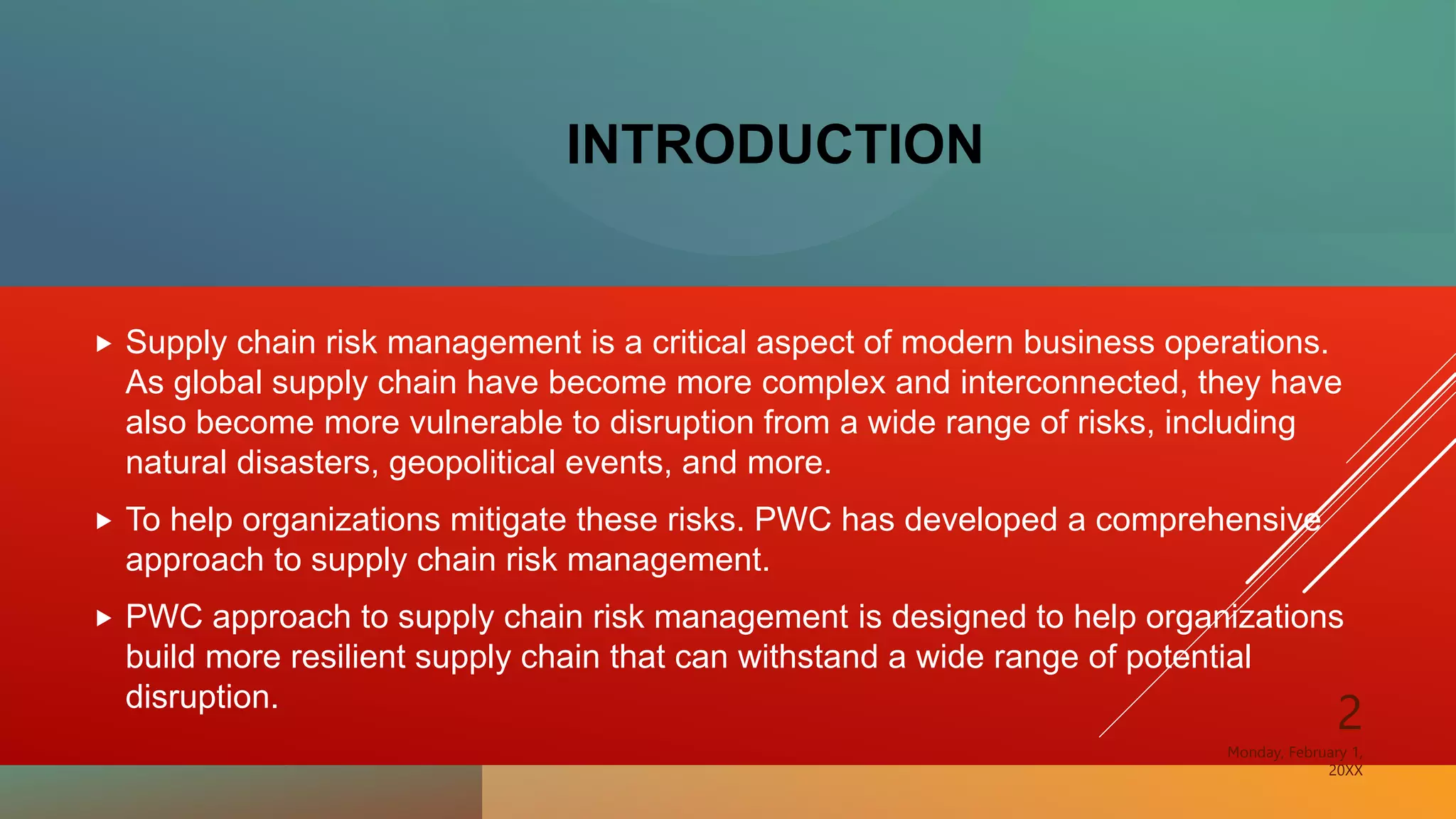
Alignment and
integration
between internal
business
functions
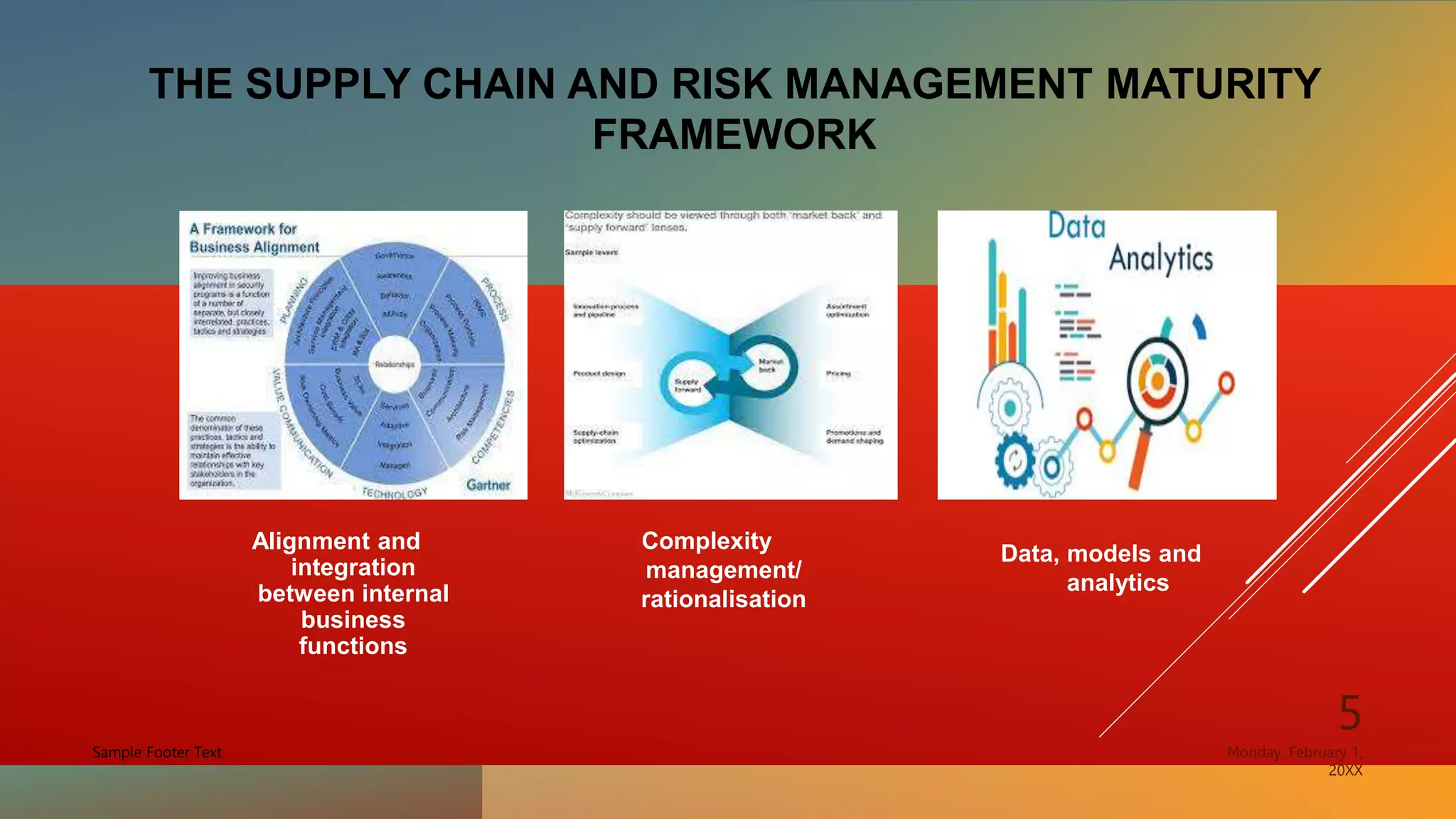
Complexity
management/
rationalisation
Data, models and
analytics
Monday, February 1,
20XX
5
FOUR LEVELS IN SUPPLY CHAIN OPERATIONS AND RISK
MANAGEMENT OF PWC
LEVEL 1
Functional supply
chain management
and ad-hoc
management of risk
LEVEL 2
Internal supply chain
integration and
positioning of
planned buffers to
absorb disruptions
LEVEL 3
External supply chain
collaboration and
proactive risk
response.
LEVEL 4
Dynamic supply
chain adaptation
and fully flexible
response to risk
6
CAPABILITY MATURITY CLASSIFICATION MODEL
Monday, February 1,
20XX
7
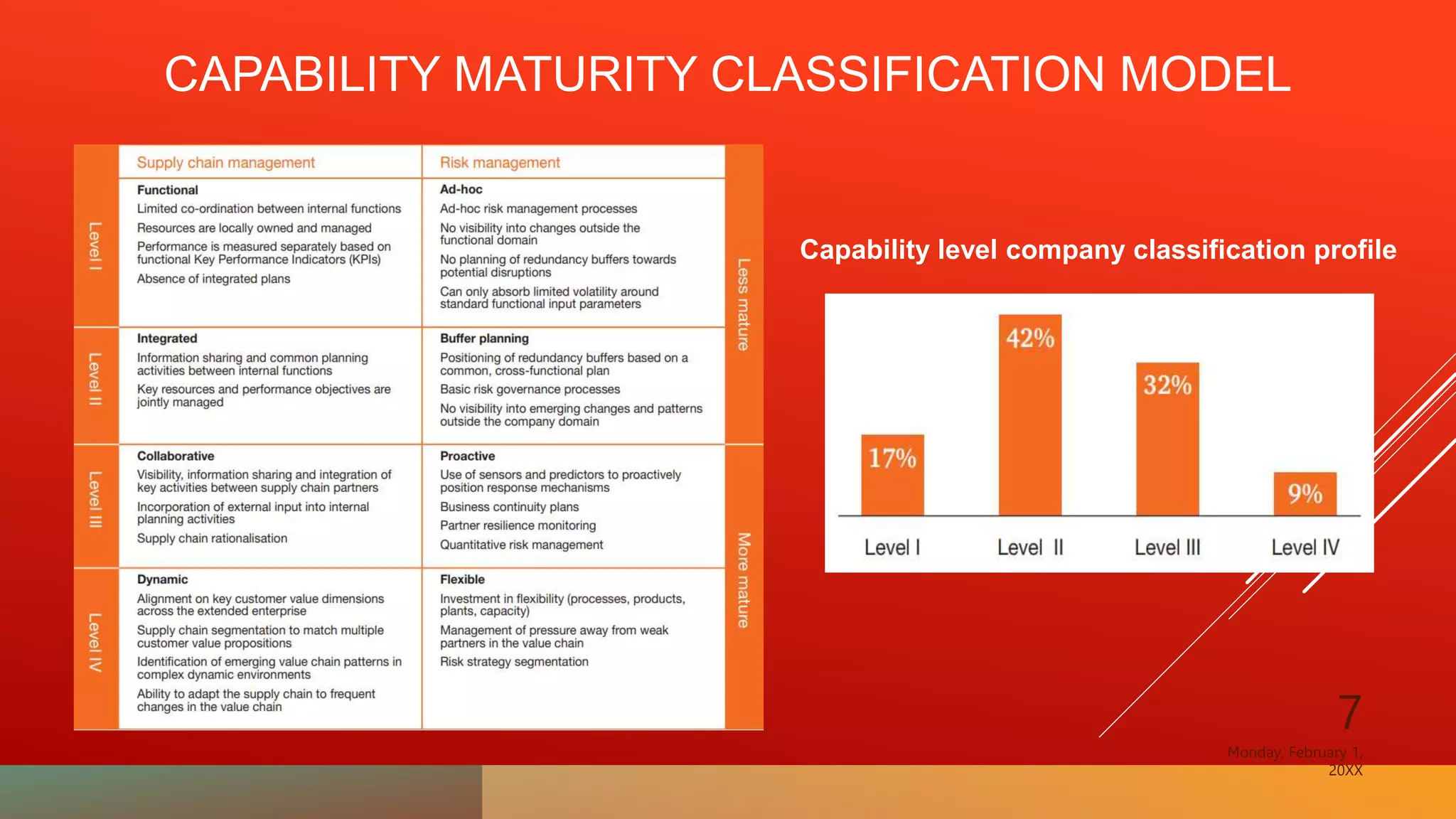
Capability level company classification profile
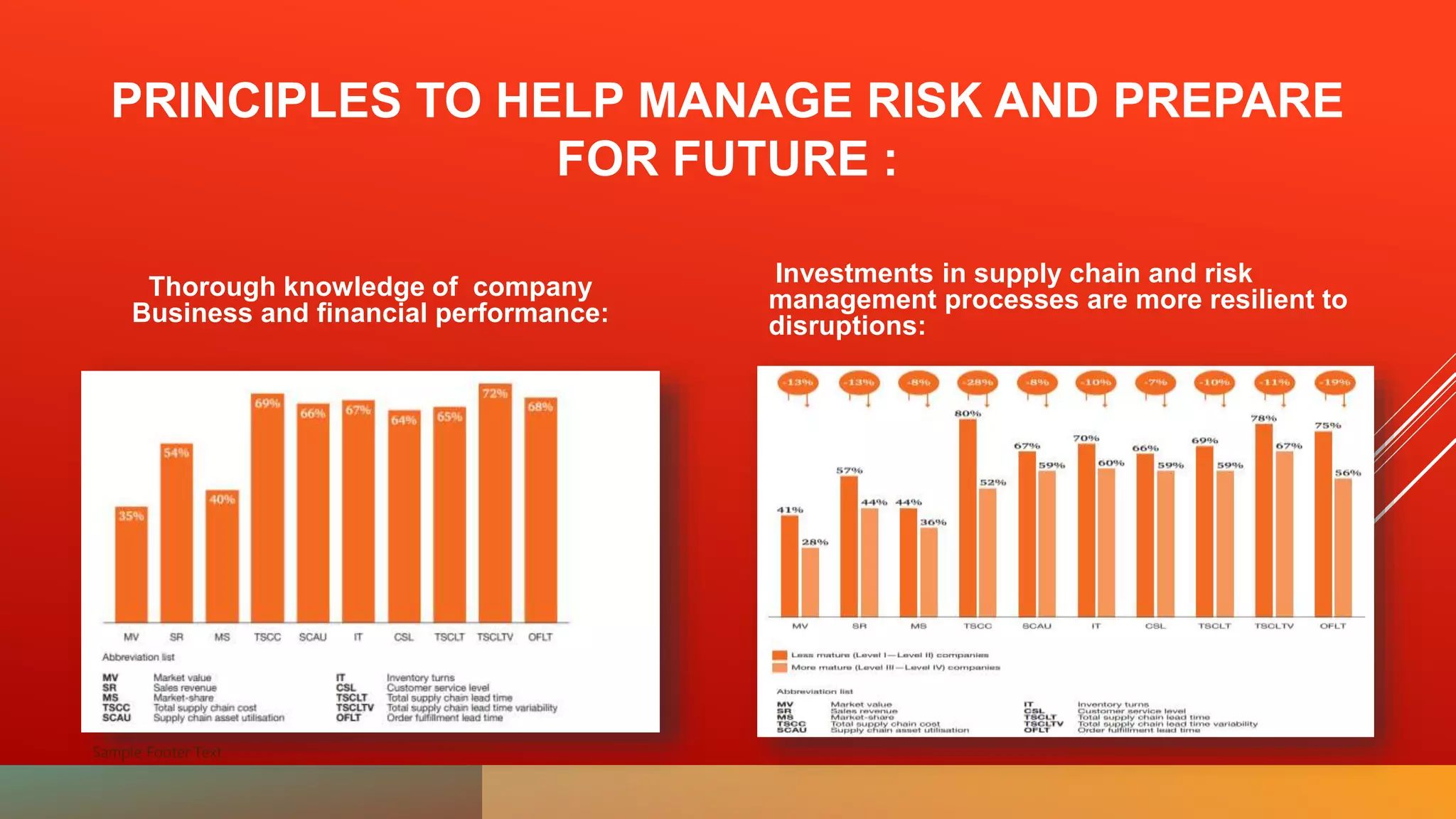
PRINCIPLES TO HELP MANAGE RISK AND PREPARE
FOR FUTURE :
Sample Footer Text
Thorough knowledge of company
Business and financial performance:
Investments in supply chain and risk
management processes are more resilient to
disruptions:
8
PRINCIPLES TO HELP MANAGE RISK AND PREPARE
FOR FUTURE :
Investment in risk segmentation are
more resilient to disruptions:
Make supply chain management
capabilities a priority for better
performance:
9
ASK THESE QUESTIONS TO MANAGE FUTURE RISK
AND OPPORTUNITIES
 How have changes in the business environment and in your company's strategy
and operations increased the complexity in the various elements of your supply
chain?
 Which parameters is your supply chain most sensitive to?
 Do you regularly involve your risk management specialists?
 Do you segment and mitigate risks in your supply chain?
 Do you have sufficient insight into your supply chain partners’ operations?
10
CONCLUSION
 Supply chain risk management continue to draw attention of companies and other practitioners. This is
due to its role in the performance of the companies and the economy.
 With globalization increasing competition and business functions becoming more complex, the supply
chain is becoming more vulnerable to unexpected disruption.
 Effective reduction of the impacts of the dynamic environment on supply chain call for efficient supply
chain management and supply chain risk management.
 There are different risk management tools that organizations should use to tailor their risk management
strategies towards effective mitigation of risk.
 Overall, the PwC report on risk management can be a valuable resource for supply chain companies
looking to manage their risk. By providing insights into emerging risks, best practices, and case
studies, the report can help companies develop more effective risk management strategies and
improve their overall resilience
11

PWC.pptx

  • 1.
    PWC RISK MANAGEMENTREPORT Presented By LAVANYA NADIPENA PARAG PALLE AJAY PADHI HARSHITA SINGH ABHISHEK NAIR
  • 2.
    INTRODUCTION  Supply chainrisk management is a critical aspect of modern business operations. As global supply chain have become more complex and interconnected, they have also become more vulnerable to disruption from a wide range of risks, including natural disasters, geopolitical events, and more.  To help organizations mitigate these risks. PWC has developed a comprehensive approach to supply chain risk management.  PWC approach to supply chain risk management is designed to help organizations build more resilient supply chain that can withstand a wide range of potential disruption. Monday, February 1, 20XX 2
  • 3.
    EXPLANATION OF REPORT PwC'ssupply chain risk management report provides insights into the current state of supply chain risk management, the challenges that organizations face, and the steps they can take to improve their risk management capabilities. The report highlights the following key points:  Increasing Supply Chain Complexity: The global pandemic has highlighted the complexities and vulnerabilities of supply chains.  Emerging Risks: Organizations need to be aware of emerging risks such as geopolitical risks, cybersecurity risks, and climate change risks that can have a significant impact on their supply chains.  Resilience as a Competitive Advantage: Companies that can build resilience into their supply chains will be better able to adapt to disruptions and gain a competitive advantage.  Data and Analytics: Advanced data analytics can help companies identify and manage risks in their supply chains more effectively.  Collaboration and Transparency: Collaboration and transparency with suppliers and other stakeholders are essential to managing risks effectively.  Building a Resilient Supply Chain: Organizations should focus on building a resilient supply chain by adopting a risk management framework, developing risk mitigation strategies, and testing their resilience through scenario planning and stress testing. Monday, February 1, 20XX 3
  • 4.
    THE SUPPLY CHAINAND RISK MANAGEMENT MATURITY FRAMEWORK Risk governance Flexibility and redundancy in product, network and process architectures Alignment between partners in the supply chain Upstream and downstream supply chain integration 4
  • 5.
    THE SUPPLY CHAINAND RISK MANAGEMENT MATURITY FRAMEWORK Sample Footer Text Alignment and integration between internal business functions Complexity management/ rationalisation Data, models and analytics Monday, February 1, 20XX 5
  • 6.
    FOUR LEVELS INSUPPLY CHAIN OPERATIONS AND RISK MANAGEMENT OF PWC LEVEL 1 Functional supply chain management and ad-hoc management of risk LEVEL 2 Internal supply chain integration and positioning of planned buffers to absorb disruptions LEVEL 3 External supply chain collaboration and proactive risk response. LEVEL 4 Dynamic supply chain adaptation and fully flexible response to risk 6
  • 7.
    CAPABILITY MATURITY CLASSIFICATIONMODEL Monday, February 1, 20XX 7 Capability level company classification profile
  • 8.
    PRINCIPLES TO HELPMANAGE RISK AND PREPARE FOR FUTURE : Sample Footer Text Thorough knowledge of company Business and financial performance: Investments in supply chain and risk management processes are more resilient to disruptions: 8
  • 9.
    PRINCIPLES TO HELPMANAGE RISK AND PREPARE FOR FUTURE : Investment in risk segmentation are more resilient to disruptions: Make supply chain management capabilities a priority for better performance: 9
  • 10.
    ASK THESE QUESTIONSTO MANAGE FUTURE RISK AND OPPORTUNITIES  How have changes in the business environment and in your company's strategy and operations increased the complexity in the various elements of your supply chain?  Which parameters is your supply chain most sensitive to?  Do you regularly involve your risk management specialists?  Do you segment and mitigate risks in your supply chain?  Do you have sufficient insight into your supply chain partners’ operations? 10
  • 11.
    CONCLUSION  Supply chainrisk management continue to draw attention of companies and other practitioners. This is due to its role in the performance of the companies and the economy.  With globalization increasing competition and business functions becoming more complex, the supply chain is becoming more vulnerable to unexpected disruption.  Effective reduction of the impacts of the dynamic environment on supply chain call for efficient supply chain management and supply chain risk management.  There are different risk management tools that organizations should use to tailor their risk management strategies towards effective mitigation of risk.  Overall, the PwC report on risk management can be a valuable resource for supply chain companies looking to manage their risk. By providing insights into emerging risks, best practices, and case studies, the report can help companies develop more effective risk management strategies and improve their overall resilience 11