Activity
Food-contact Surface
or Not?
Cleaning and Sanitizing 2
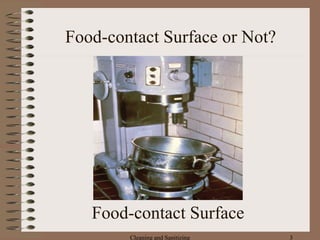
Food-contact Surface or Not?
Food-contact Surface
Cleaning and Sanitizing 3
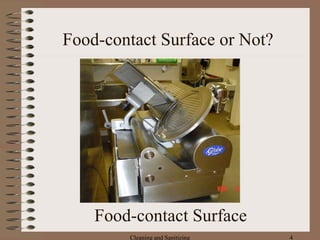
Food-contact Surface or Not?
Food-contact Surface
Cleaning and Sanitizing 4
Food-contact Surface or Not?
Food-contact Surface
Cleaning and Sanitizing 5
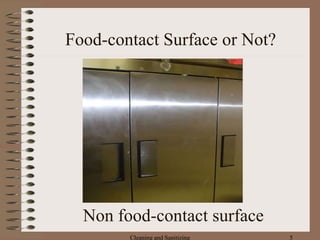
Food-contact Surface or Not?
Non food-contact surface
1. What is a food contact surface?
2. Is cleaning enough to be sure of free
germs and bacteria among the food contact
surface?
3. What process should be done in order
make food contact surface safe?
Cleaning and Sanitizing 7
Food-Contact Surface
A food-contact surface is:
– a surface that food normally touches or
– a surface where food might drain, drip, or splash
into a food or onto a surface that normally
touches food
Examples:
– Utensils, cutting boards, slicers, countertops,
storage bins, baking sheets, refrigerator shelves
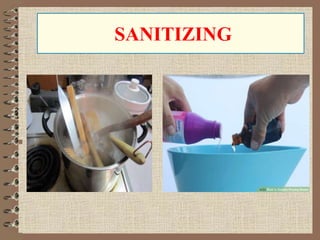
SANITIZING
Sanitizing
• Is done using heat, radiation, or
chemicals. Heat and chemicals are
commonly used as a method for
sanitizing in a restaurant; radiation
rarely is.
Sanitizing Methods
A. Thermal Sanitizing/ Heat
1. Hot water
2. Steam
3. Hot air
B. Chemicals
1. chlorine
2. iodine
3. quaternary ammonium
Heat
• There are three methods of using heat to sanitize
surfaces – steam, hot water, and hot air.
• Hot water is the most common method used in
restaurants. If hot water is used in the third
compartment of a three-compartment sink, it must be at
least 171oF (77oC).
Chemicals
• Chemicals that are approved
sanitizers are chlorine, iodine,
and quaternary ammonium.
Characteristics of ideal
chemical sanitizer
1. Approved for food contact surface application
2. Have a wide range or scope of activity
3. Destroy microorganisms rapidly
4. Be stable under all types of conditions
5. Tolerate a broad range of environmental
conditions
6. Readily solubilized and possess some
detergency
7. Low in toxicity and corrosivity
8. Inexpensive
• Don’t you know that heat sanitizing has several
advantages over chemical sanitizing agents? It’s
because it:
1. can penetrate small cracks and crevices;
2. is non-corrosive to metal surfaces;
3. is non-selective to microbial groups;
4. leaves no residues; and
5. is easily measurable.
Concentration
• The presence of too little sanitizer will
result in an inadequate reduction of
harmful microorganisms. Too much can be
toxic.
• Different factors influence the
effectiveness of chemical sanitizers.
• The three factors that must be considered
are: concentration, temperature, contact
time.
Temperature
• Generally chemical sanitizers work best in
water that is between 55oF(13oC) and
120oF (49oC).
Contact time
• In order for the sanitizer to kill harmful
microorganisms, the cleaned item must
be in contact with the sanitizer (either
heat or approved chemical) for the
recommended length of time.
Sanitizer Testing
• Every restaurant must have the appropriate
testing kit to measure chemical sanitizer
concentrations. To accurately test the strength of
a sanitizing solution, one must first determine
which chemical is being used --- chlorine, iodine,
or quaternary ammonium. Test kits are not
interchangeable so check with your chemical
supplier to be certain that you are using the
correct kit. The appropriate test kit must then be
used throughout the day to measure chemical
sanitizer concentrations.
•How Much Have You Learned?
Quiz:
Put a check (√) mark if the statement is correct and an(X) mark if incorrect.
Write your answer on a separate sheet of paper.
1. The presence of too much sanitizer willresult in an inadequate reduction of
harmful microorganisms.
2. Follow the instructions on the sanitizer’s container carefully.
3. There aretwomethods ofusing heat tosanitize surfaces
4. Cleaning will remove most of the dangerous bacteria present in the utensils.
5. Chemical sanitizer or very hot water was used in dishwashing.

Sanitizing

  • 1.
  • 2.
    Cleaning and Sanitizing2 Food-contact Surface or Not? Food-contact Surface
  • 3.
    Cleaning and Sanitizing3 Food-contact Surface or Not? Food-contact Surface
  • 4.
    Cleaning and Sanitizing4 Food-contact Surface or Not? Food-contact Surface
  • 5.
    Cleaning and Sanitizing5 Food-contact Surface or Not? Non food-contact surface
  • 6.
    1. What isa food contact surface? 2. Is cleaning enough to be sure of free germs and bacteria among the food contact surface? 3. What process should be done in order make food contact surface safe?
  • 7.
    Cleaning and Sanitizing7 Food-Contact Surface A food-contact surface is: – a surface that food normally touches or – a surface where food might drain, drip, or splash into a food or onto a surface that normally touches food Examples: – Utensils, cutting boards, slicers, countertops, storage bins, baking sheets, refrigerator shelves
  • 8.
  • 9.
    Sanitizing • Is doneusing heat, radiation, or chemicals. Heat and chemicals are commonly used as a method for sanitizing in a restaurant; radiation rarely is.
  • 10.
    Sanitizing Methods A. ThermalSanitizing/ Heat 1. Hot water 2. Steam 3. Hot air B. Chemicals 1. chlorine 2. iodine 3. quaternary ammonium
  • 11.
    Heat • There arethree methods of using heat to sanitize surfaces – steam, hot water, and hot air. • Hot water is the most common method used in restaurants. If hot water is used in the third compartment of a three-compartment sink, it must be at least 171oF (77oC).
  • 12.
    Chemicals • Chemicals thatare approved sanitizers are chlorine, iodine, and quaternary ammonium.
  • 13.
    Characteristics of ideal chemicalsanitizer 1. Approved for food contact surface application 2. Have a wide range or scope of activity 3. Destroy microorganisms rapidly 4. Be stable under all types of conditions 5. Tolerate a broad range of environmental conditions 6. Readily solubilized and possess some detergency 7. Low in toxicity and corrosivity 8. Inexpensive
  • 14.
    • Don’t youknow that heat sanitizing has several advantages over chemical sanitizing agents? It’s because it: 1. can penetrate small cracks and crevices; 2. is non-corrosive to metal surfaces; 3. is non-selective to microbial groups; 4. leaves no residues; and 5. is easily measurable.
  • 15.
    Concentration • The presenceof too little sanitizer will result in an inadequate reduction of harmful microorganisms. Too much can be toxic.
  • 16.
    • Different factorsinfluence the effectiveness of chemical sanitizers. • The three factors that must be considered are: concentration, temperature, contact time.
  • 17.
    Temperature • Generally chemicalsanitizers work best in water that is between 55oF(13oC) and 120oF (49oC).
  • 18.
    Contact time • Inorder for the sanitizer to kill harmful microorganisms, the cleaned item must be in contact with the sanitizer (either heat or approved chemical) for the recommended length of time.
  • 19.
    Sanitizer Testing • Everyrestaurant must have the appropriate testing kit to measure chemical sanitizer concentrations. To accurately test the strength of a sanitizing solution, one must first determine which chemical is being used --- chlorine, iodine, or quaternary ammonium. Test kits are not interchangeable so check with your chemical supplier to be certain that you are using the correct kit. The appropriate test kit must then be used throughout the day to measure chemical sanitizer concentrations.
  • 20.
    •How Much HaveYou Learned? Quiz: Put a check (√) mark if the statement is correct and an(X) mark if incorrect. Write your answer on a separate sheet of paper. 1. The presence of too much sanitizer willresult in an inadequate reduction of harmful microorganisms. 2. Follow the instructions on the sanitizer’s container carefully. 3. There aretwomethods ofusing heat tosanitize surfaces 4. Cleaning will remove most of the dangerous bacteria present in the utensils. 5. Chemical sanitizer or very hot water was used in dishwashing.