What is Food
Preservation?Food preservation is the process
of preventing food spoilage by
creating conditions under
which microorganisms cannot
multiply and grow.
WHAT ARE IT’S
ADVANTAGES?
 prevent spoilage of food
 retain the nutritive value and texture of food
 maintain the good and sanitary quality of the
product
 increase family income by the sale of the
preserved food
 help in the economic development of the country
 make food readily available throughout the year
1. Freezing
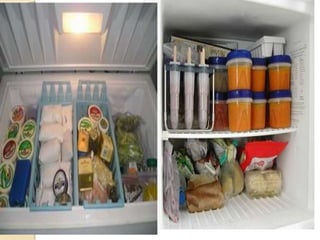
Method of preserving food by lowering the
temperature
( 0°F) to inhibit microorganism growth.
Cold storage is considered a modern
discovery but it really started as
1626 when Lord Bacon pioneered the
investigation of cold storage for food.
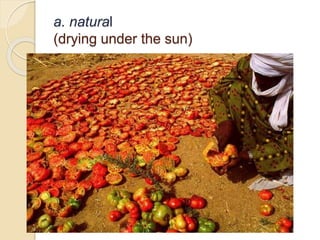
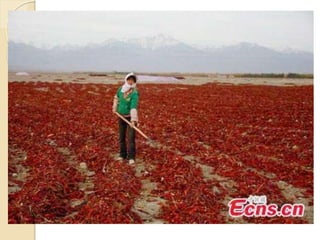
2. Drying
It is the removal of moisture or
water in food. It is the most
ancient method of food
preservation known to humans.
This method goes back to the
Egyptians.
Moisture content of food
is reduced either :
a. natural
(drying under the sun)
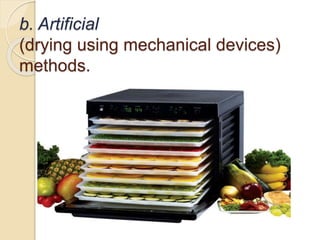
b. Artificial
(drying using mechanical devices)
methods.
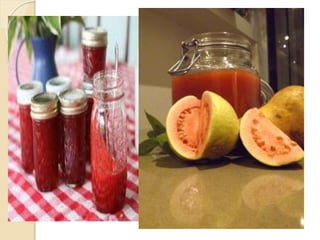
3. Sugar Preservation
It is cooking fruits and
vegetables in saturated
sugar to extend their shelf
life.
4. Pickling
It is preserving fruits and
vegetables in particular
using vinegar or brine
mixture of salt and water.
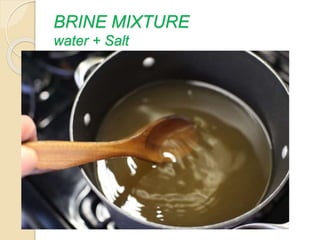
BRINE MIXTURE
water + Salt
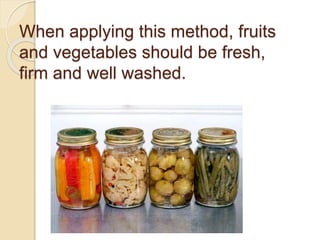
When applying this method, fruits
and vegetables should be fresh,
firm and well washed.
Vinegar preserves make the product
crisp.
It should be of good quality, clear with
4-5 % acetic acid.
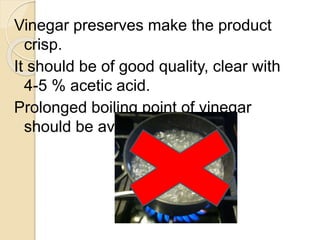
Prolonged boiling point of vinegar
should be avoided.
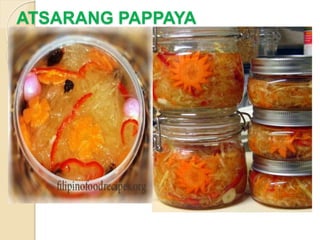
ATSARANG PAPPAYA
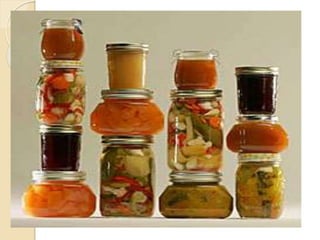
5. Canning
It is the preservation of foods in
hermetically sealed (airtight)
containers through the
application of heat.
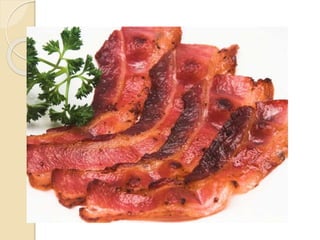
6. Smoking
(Pinausukan).
Fresh fish and other meats
that are smoked are produced
by the burning of wood or
barks of trees.
Like drying, this type of
curing also reduces
moisture. The resulting
product has a distinctive
taste, a good appearance,
and an attractive color.
Two types of Smoking:
a. Hot Smoking.
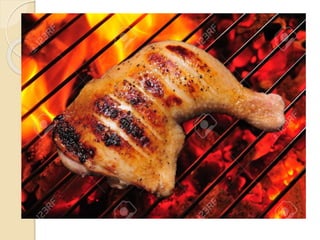
This is a slow type of broiling
where the product is put very
near the fire just like in
barbecued pork or chicken.
Temperature: 150°F to 190°F
b. Cold Smoking.
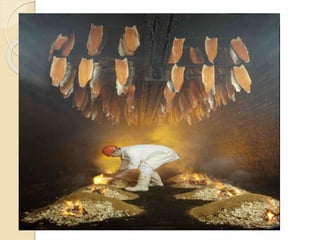
As the name implies, preservation is
done using a lower temperature of
90°F to 110°F, in contrast to the
150°F to 190°F in hot smoking. But
food preserved in this way has a
shorter life storage.
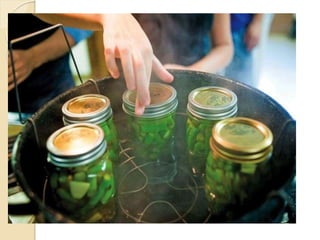
7. Sterilization.
It involves heating the product
for a longer time and at a
higher temperature.
The heat boils the food,
changes the flavor, and often,
the appearance. It destroys
part or all of the
microorganisms in the food.
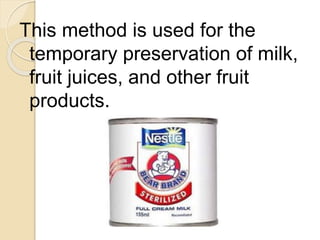
This method is used for the
temporary preservation of milk,
fruit juices, and other fruit
products.
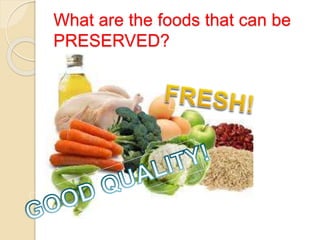
What are the foods that can be
PRESERVED?
Atsarang
Papaya
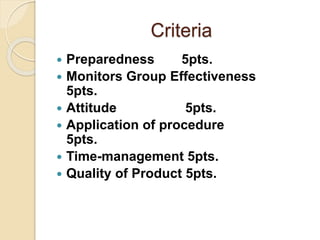
Criteria
 Preparedness 5pts.
 Monitors Group Effectiveness
5pts.
 Attitude 5pts.
 Application of procedure
5pts.
 Time-management 5pts.
 Quality of Product 5pts.
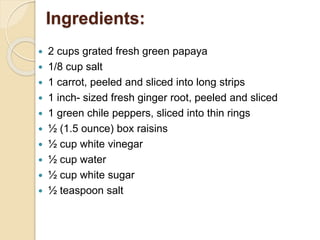
Ingredients:
 2 cups grated fresh green papaya
 1/8 cup salt
 1 carrot, peeled and sliced into long strips
 1 inch- sized fresh ginger root, peeled and sliced
 1 green chile peppers, sliced into thin rings
 ½ (1.5 ounce) box raisins
 ½ cup white vinegar
 ½ cup water
 ½ cup white sugar
 ½ teaspoon salt

Food preservation

  • 2.
    What is Food Preservation?Foodpreservation is the process of preventing food spoilage by creating conditions under which microorganisms cannot multiply and grow.
  • 4.
    WHAT ARE IT’S ADVANTAGES? prevent spoilage of food  retain the nutritive value and texture of food  maintain the good and sanitary quality of the product  increase family income by the sale of the preserved food  help in the economic development of the country  make food readily available throughout the year
  • 5.
    1. Freezing Method ofpreserving food by lowering the temperature ( 0°F) to inhibit microorganism growth. Cold storage is considered a modern discovery but it really started as 1626 when Lord Bacon pioneered the investigation of cold storage for food.
  • 7.
    2. Drying It isthe removal of moisture or water in food. It is the most ancient method of food preservation known to humans. This method goes back to the Egyptians.
  • 8.
    Moisture content offood is reduced either :
  • 9.
  • 11.
    b. Artificial (drying usingmechanical devices) methods.
  • 12.
    3. Sugar Preservation Itis cooking fruits and vegetables in saturated sugar to extend their shelf life.
  • 14.
    4. Pickling It ispreserving fruits and vegetables in particular using vinegar or brine mixture of salt and water.
  • 15.
  • 16.
    When applying thismethod, fruits and vegetables should be fresh, firm and well washed.
  • 17.
    Vinegar preserves makethe product crisp. It should be of good quality, clear with 4-5 % acetic acid. Prolonged boiling point of vinegar should be avoided.
  • 18.
  • 19.
    5. Canning It isthe preservation of foods in hermetically sealed (airtight) containers through the application of heat.
  • 21.
    6. Smoking (Pinausukan). Fresh fishand other meats that are smoked are produced by the burning of wood or barks of trees.
  • 22.
    Like drying, thistype of curing also reduces moisture. The resulting product has a distinctive taste, a good appearance, and an attractive color.
  • 24.
    Two types ofSmoking:
  • 25.
    a. Hot Smoking. Thisis a slow type of broiling where the product is put very near the fire just like in barbecued pork or chicken. Temperature: 150°F to 190°F
  • 27.
    b. Cold Smoking. Asthe name implies, preservation is done using a lower temperature of 90°F to 110°F, in contrast to the 150°F to 190°F in hot smoking. But food preserved in this way has a shorter life storage.
  • 29.
    7. Sterilization. It involvesheating the product for a longer time and at a higher temperature. The heat boils the food, changes the flavor, and often, the appearance. It destroys part or all of the microorganisms in the food.
  • 31.
    This method isused for the temporary preservation of milk, fruit juices, and other fruit products.
  • 32.
    What are thefoods that can be PRESERVED?
  • 33.
  • 34.
    Criteria  Preparedness 5pts. Monitors Group Effectiveness 5pts.  Attitude 5pts.  Application of procedure 5pts.  Time-management 5pts.  Quality of Product 5pts.
  • 35.
    Ingredients:  2 cupsgrated fresh green papaya  1/8 cup salt  1 carrot, peeled and sliced into long strips  1 inch- sized fresh ginger root, peeled and sliced  1 green chile peppers, sliced into thin rings  ½ (1.5 ounce) box raisins  ½ cup white vinegar  ½ cup water  ½ cup white sugar  ½ teaspoon salt