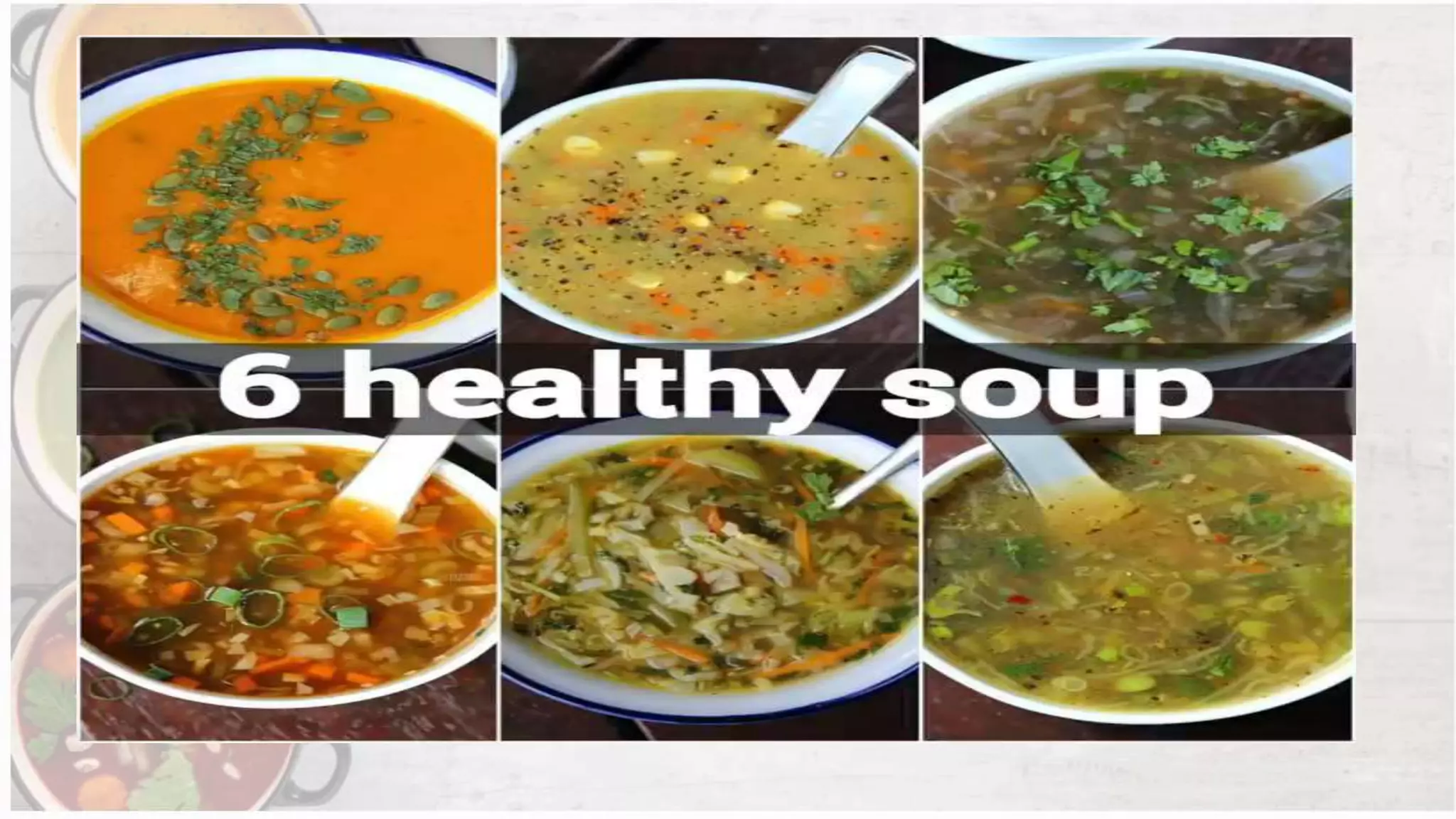
Prepare Soups Required
For Menu Items
What is their favorite
soup and why?”
SOUPS
Soups are based on
stocks added with other
ingredients for variety of
flavor, consistency,
appearance and aroma.
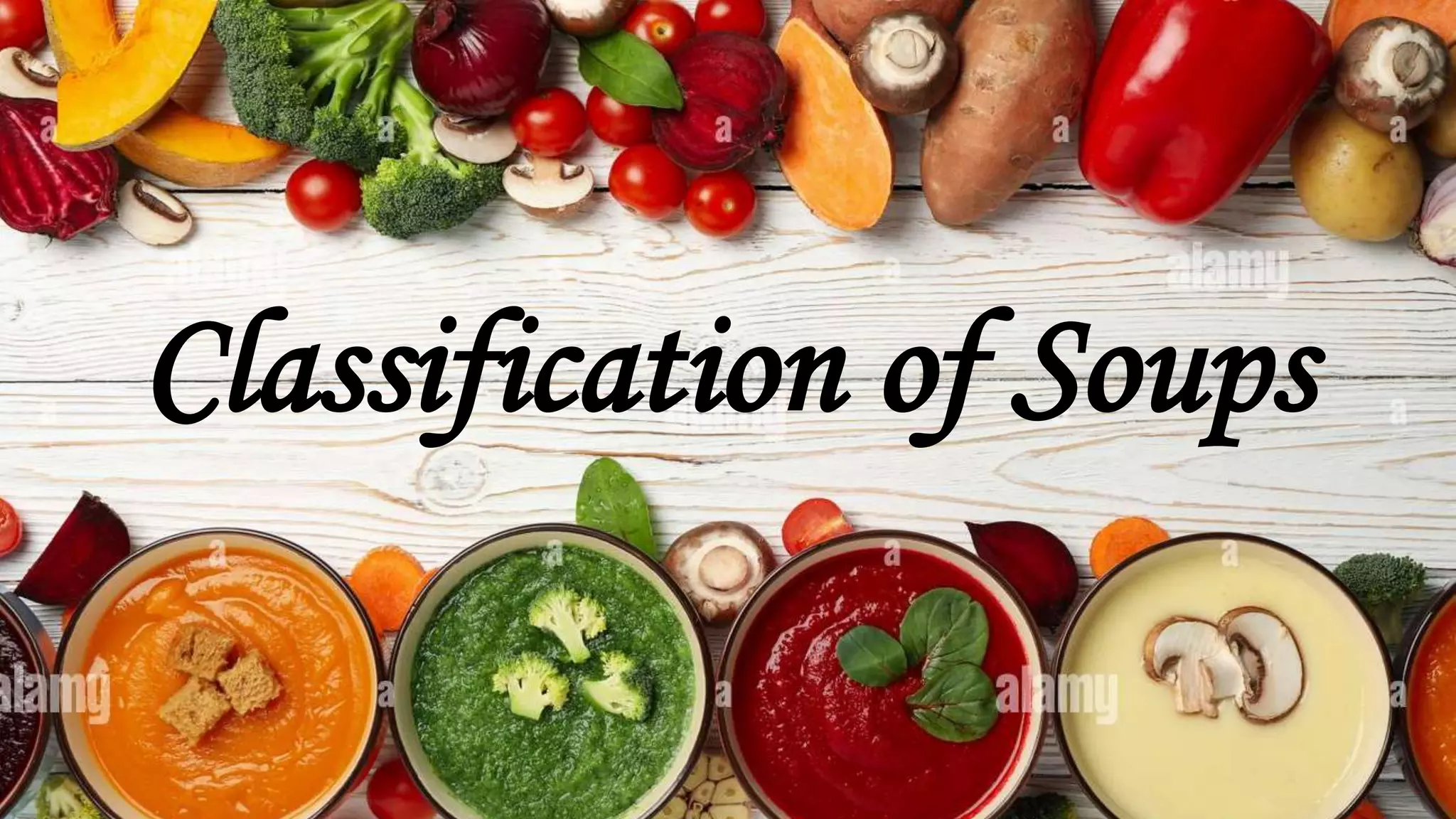
Classification of Soups
Clear Soup
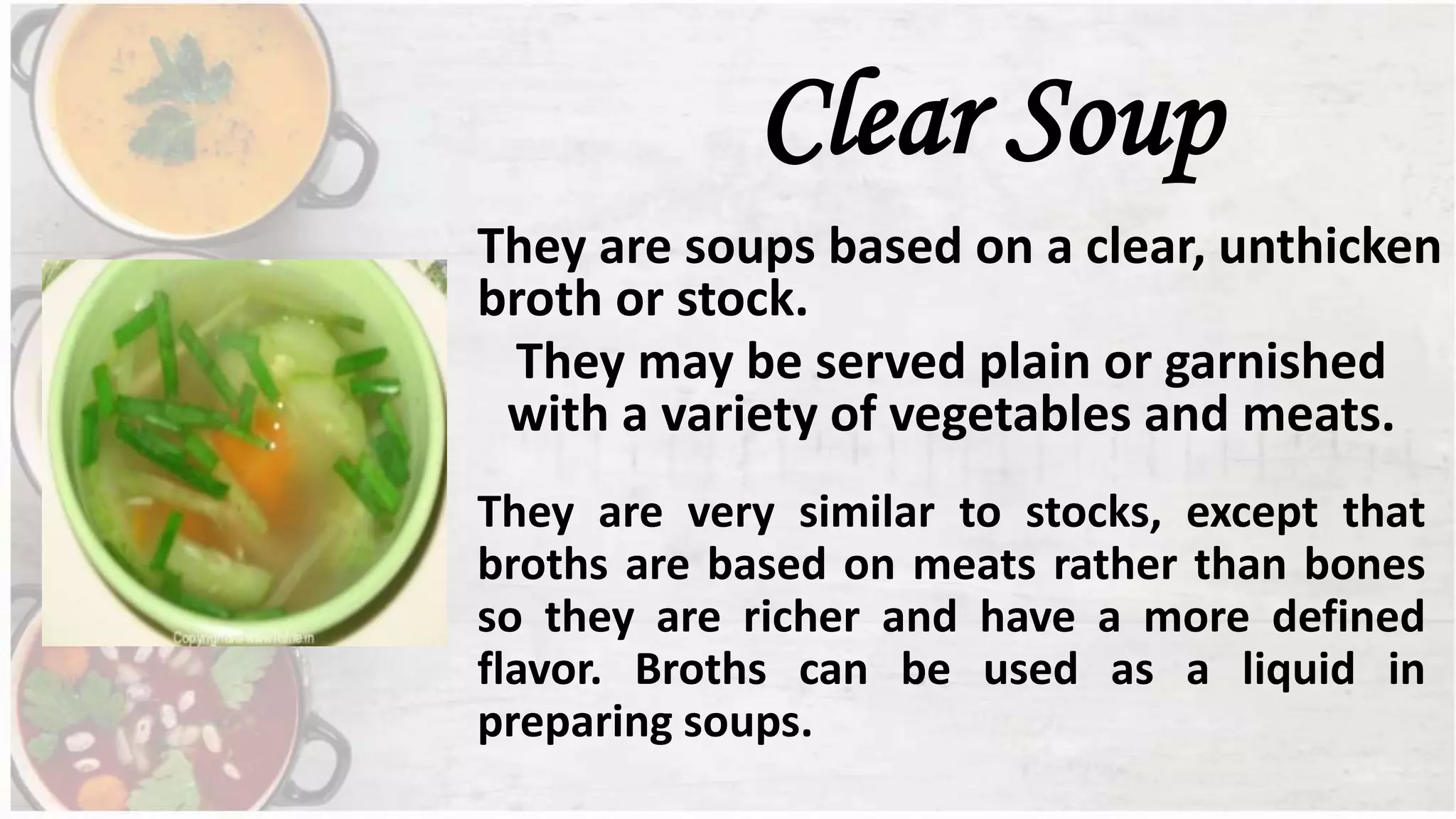
They are soups based on a clear, unthicken
broth or stock.
They may be served plain or garnished
with a variety of vegetables and meats.
They are very similar to stocks, except that
broths are based on meats rather than bones
so they are richer and have a more defined
flavor. Broths can be used as a liquid in
preparing soups.
Clear Soup
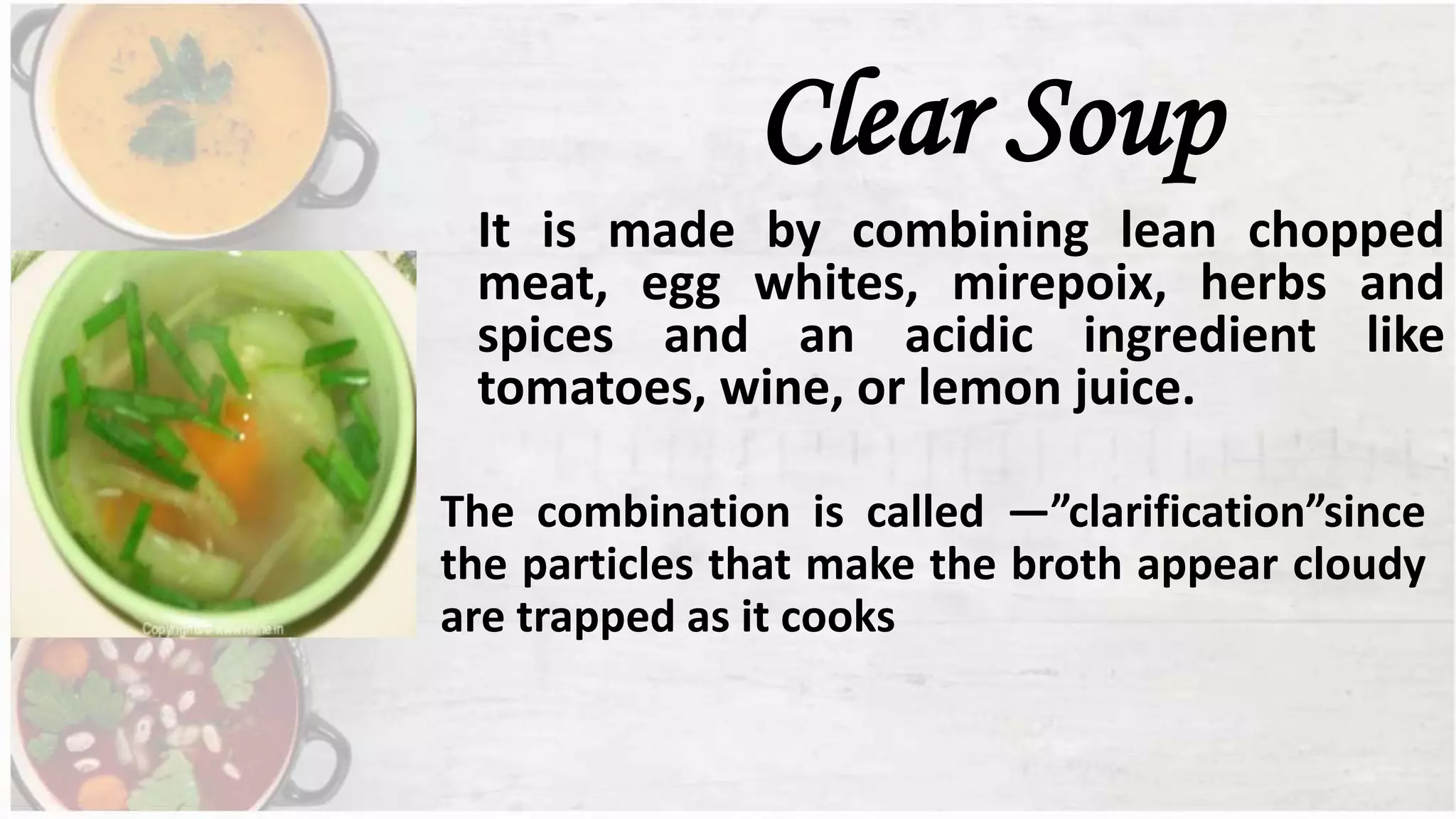
It is made by combining lean chopped
meat, egg whites, mirepoix, herbs and
spices and an acidic ingredient like
tomatoes, wine, or lemon juice.
The combination is called ―”clarification”since
the particles that make the broth appear cloudy
are trapped as it cooks
Examples of Clear Soups
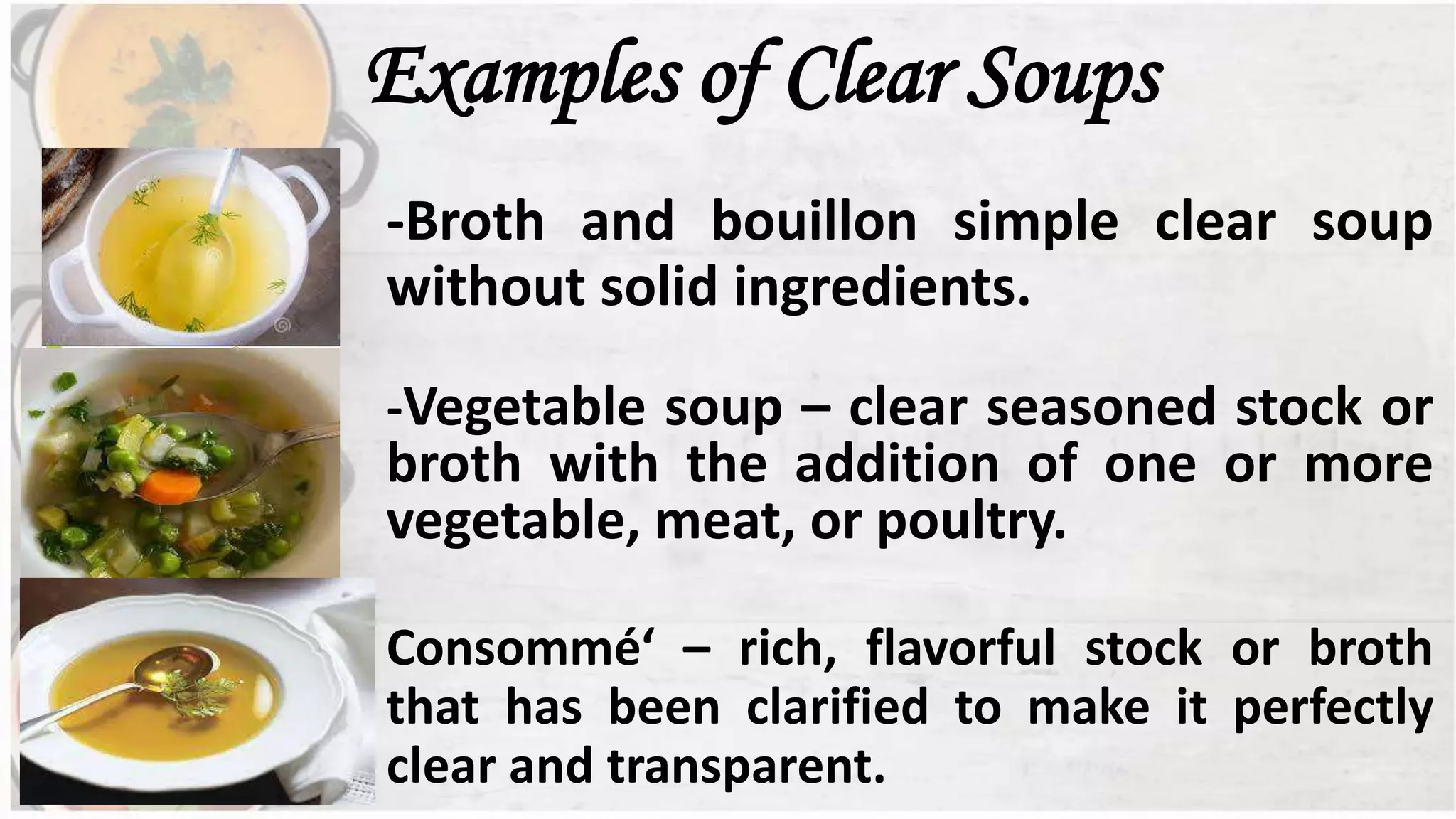
-Broth and bouillon simple clear soup
without solid ingredients.
-Vegetable soup – clear seasoned stock or
broth with the addition of one or more
vegetable, meat, or poultry.
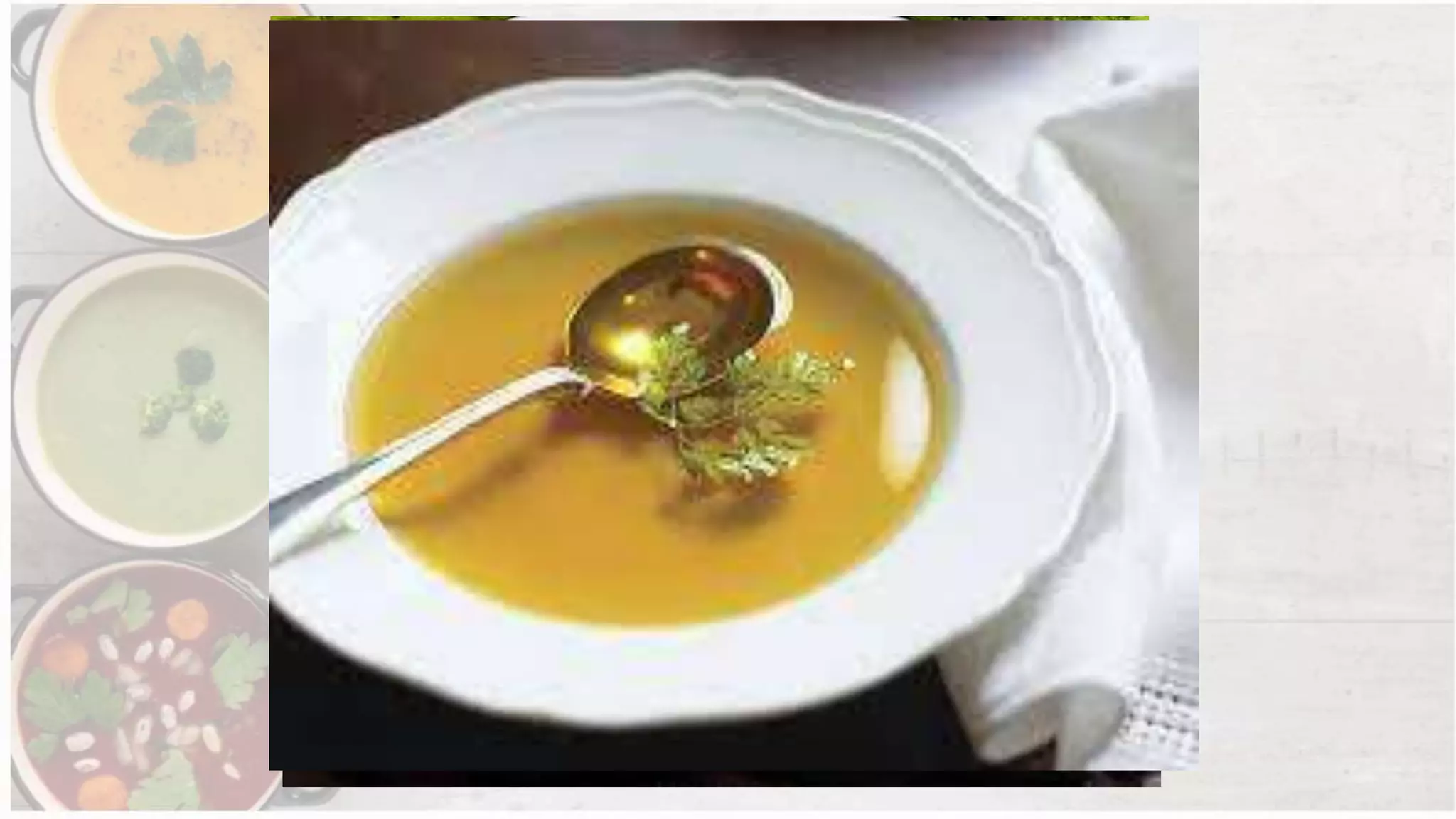
Consommé‘ – rich, flavorful stock or broth
that has been clarified to make it perfectly
clear and transparent.
Examples of Clear Soups
-Broth and bouillon simple clear soup
without solid ingredients.
-Vegetable soup – clear seasoned stock or
broth with the addition of one or more
vegetable, meat, or poultry.
Consommé‘ – rich, flavorful stock or broth
that has been clarified to make it perfectly
clear and transparent.
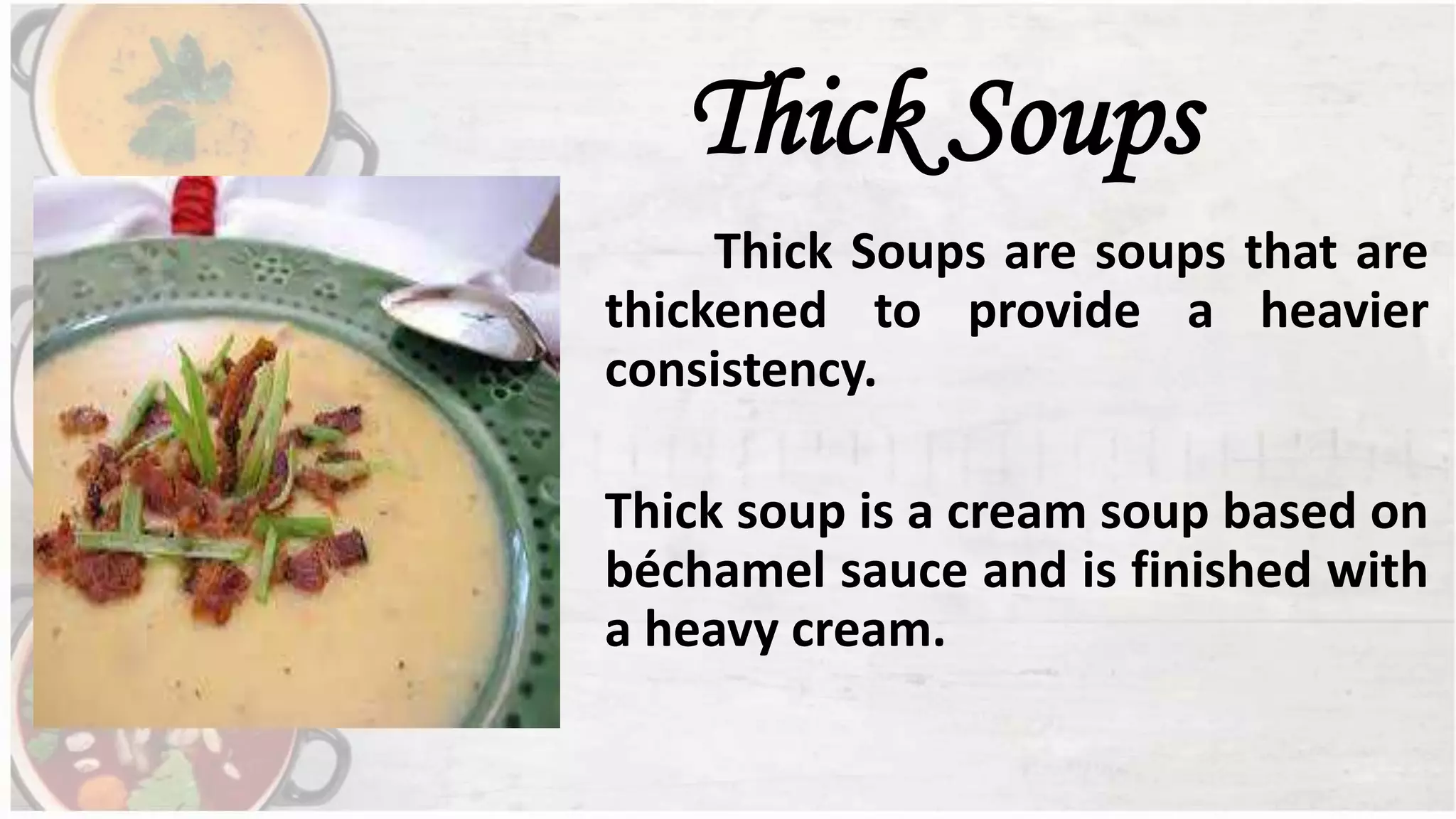
Thick Soups
Thick Soups are soups that are
thickened to provide a heavier
consistency.
Thick soup is a cream soup based on
béchamel sauce and is finished with
a heavy cream.
Examples of Clear Soups
-Cream soups – are soups
thickened with roux, beurre
Manie, liaison or other thickening
agents, plus milk, or cream.
Purees – vegetable soup
thickened with starch
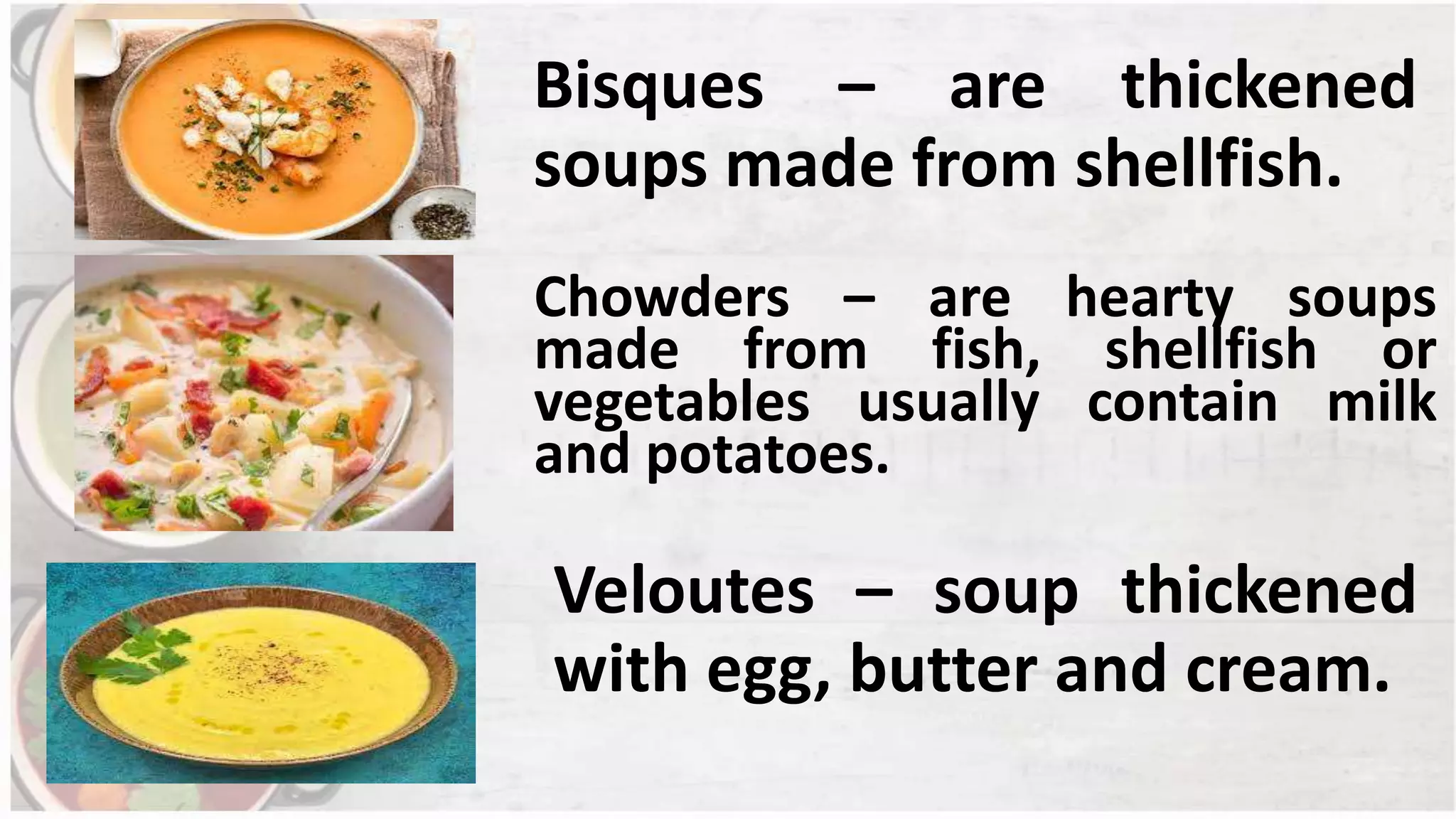
Bisques – are thickened
soups made from shellfish.
Chowders – are hearty soups
made from fish, shellfish or
vegetables usually contain milk
and potatoes.
Veloutes – soup thickened
with egg, butter and cream.
Other Types of Soups
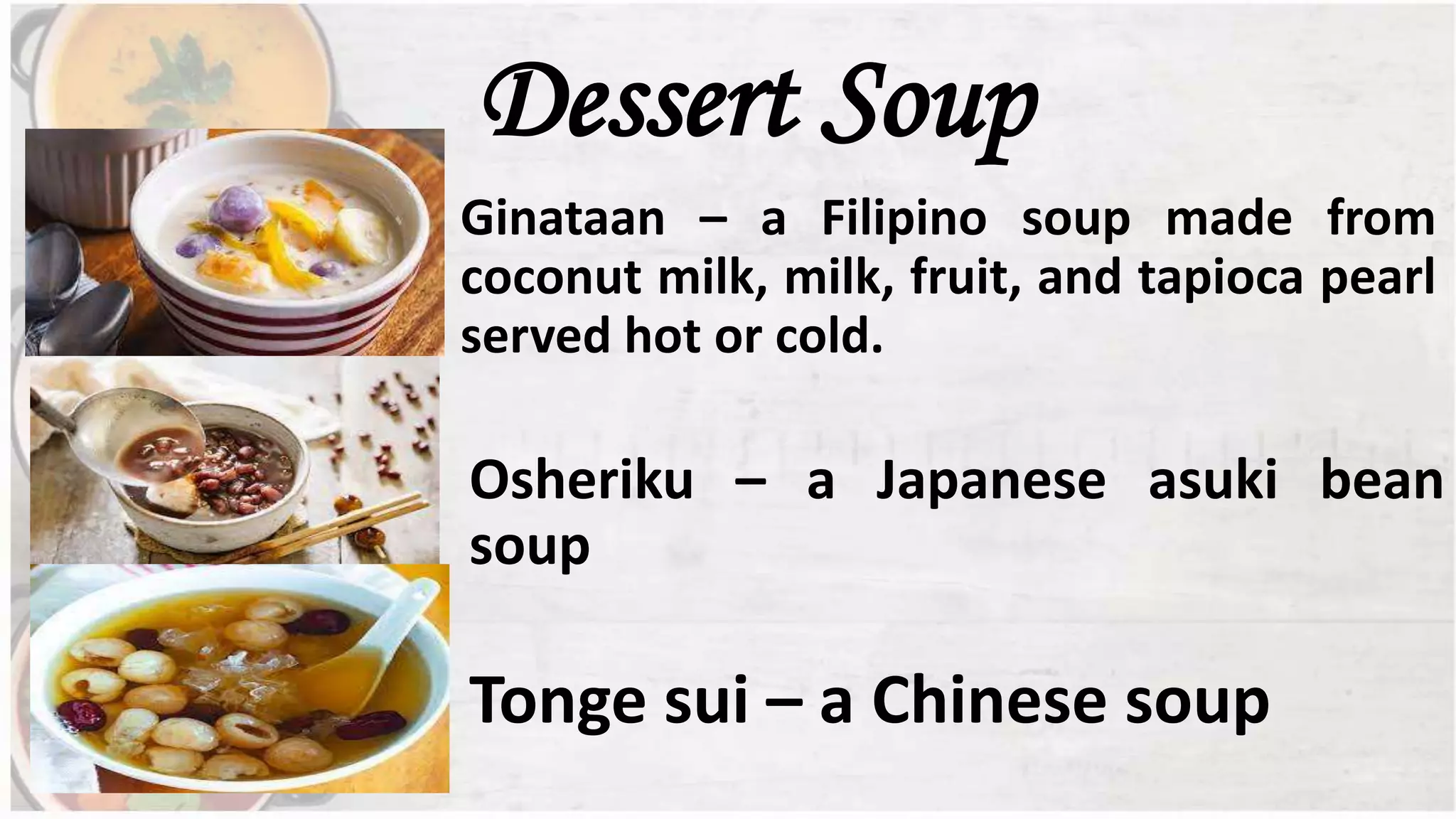
Dessert Soup
Ginataan – a Filipino soup made from
coconut milk, milk, fruit, and tapioca pearl
served hot or cold.
Osheriku – a Japanese asuki bean
soup
Tonge sui – a Chinese soup
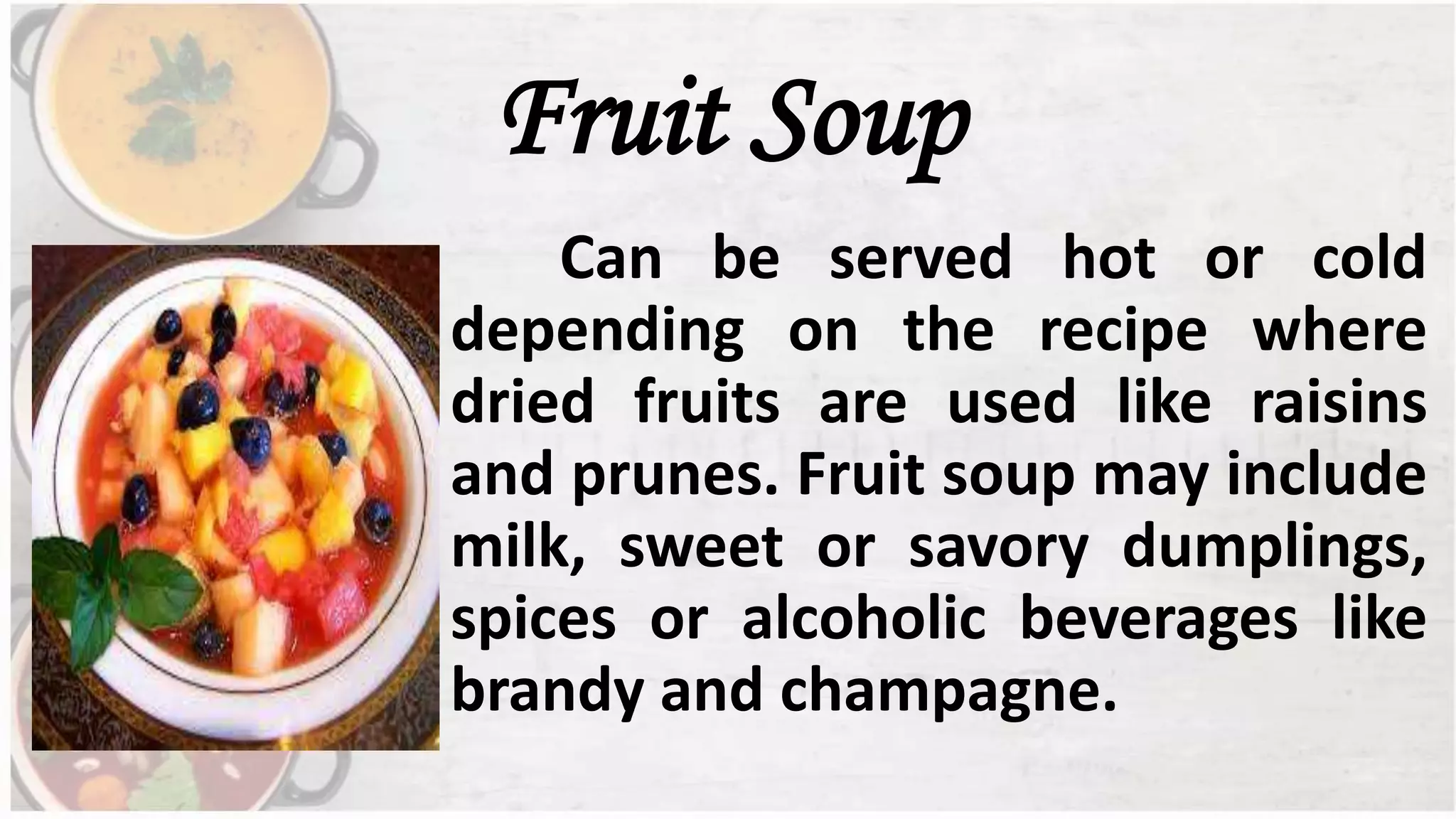
Fruit Soup
Can be served hot or cold
depending on the recipe where
dried fruits are used like raisins
and prunes. Fruit soup may include
milk, sweet or savory dumplings,
spices or alcoholic beverages like
brandy and champagne.
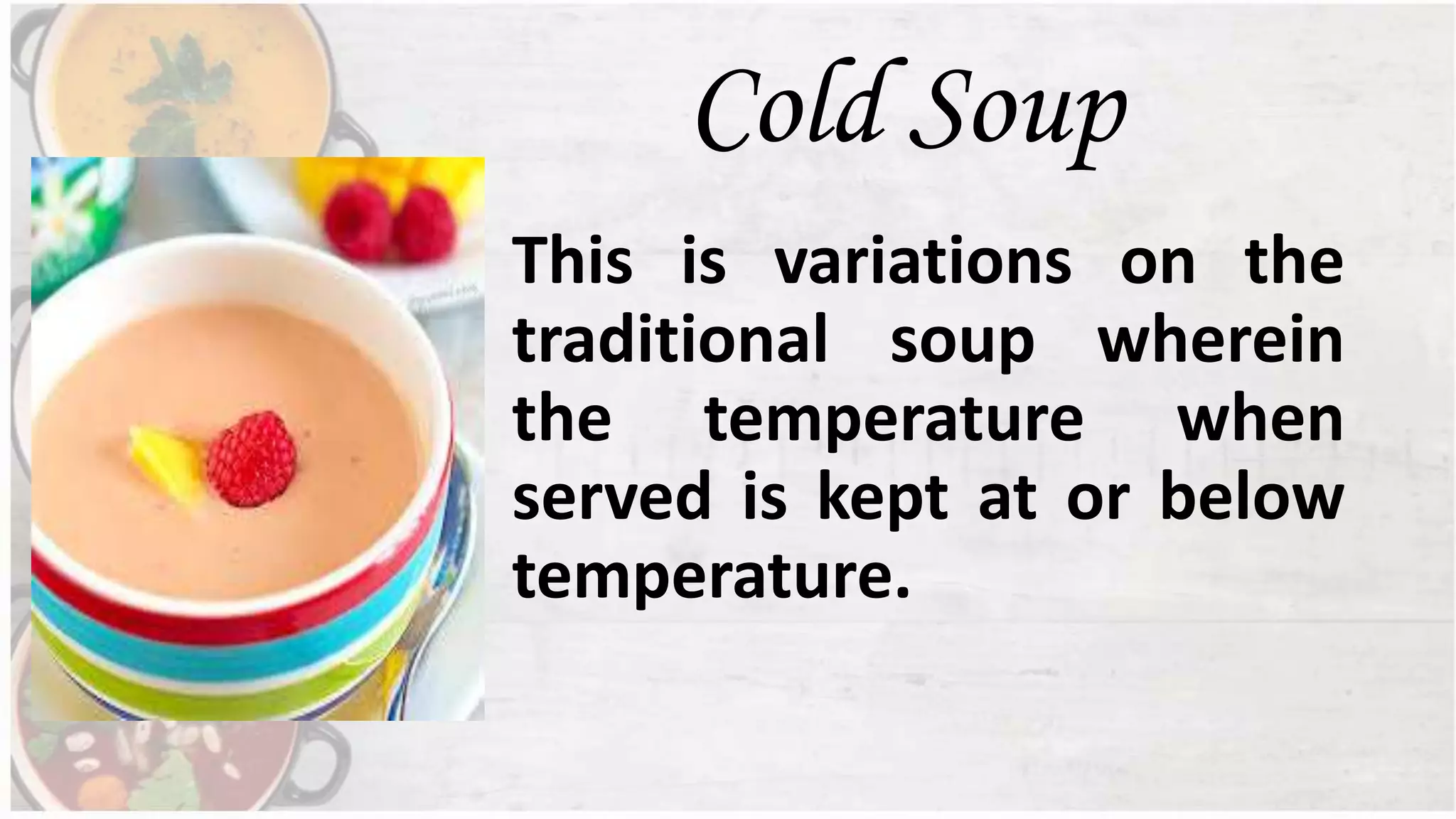
Cold Soup
This is variations on the
traditional soup wherein
the temperature when
served is kept at or below
temperature.
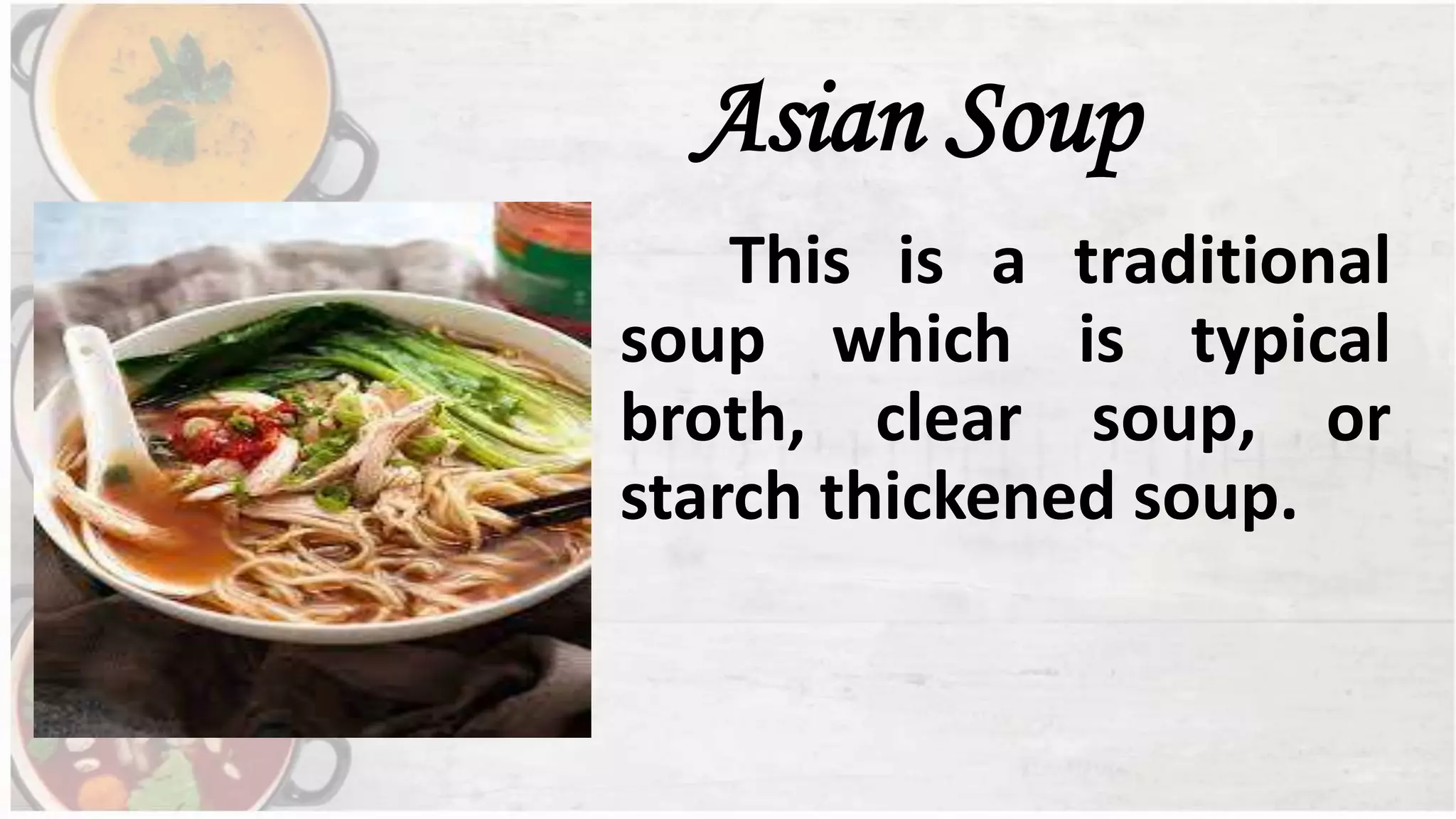
Asian Soup
This is a traditional
soup which is typical
broth, clear soup, or
starch thickened soup.
Other Thickening Agents for Soup
Rice
Flour
Grain
Corn starch
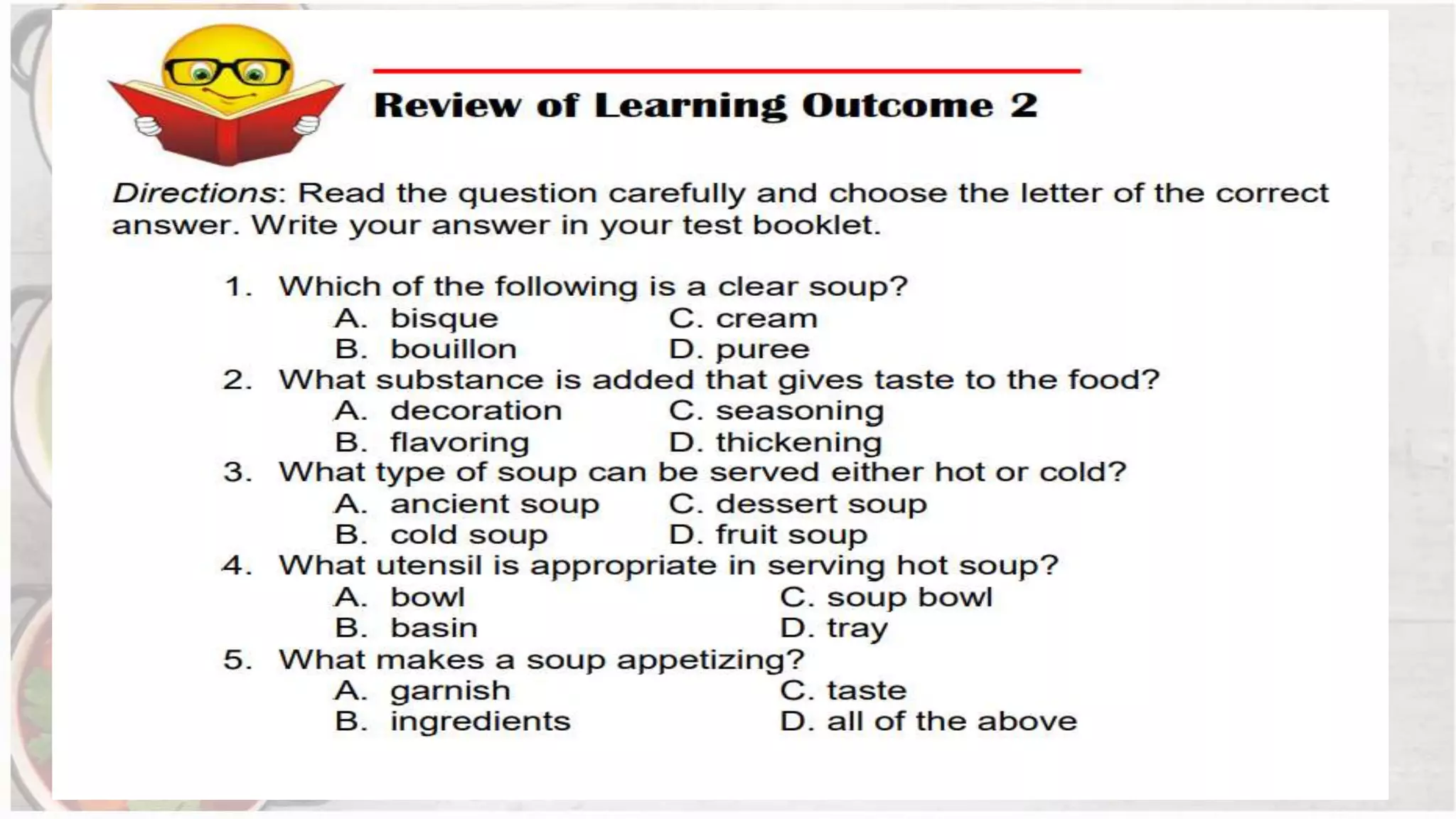
ACTIVITY
Thick and Clear
Classify the soups where they belong.
Have an advance
reading about the
Principles in Preparing
Soup.
Enhancement Activity
Basic Principles of Preparing Soup
•“WHAT DO YOU THINK ARE THE
FACTORS THAT MAKES SOUP
PRESENTABLE?”
1stPrinciple. Starting with Cold Water
Why cold water? Most
protein, vitamins and minerals
dissolve in cold water. Part of
the flavor comes from these
components. Using hot water
would lessen the flavor and
nutritive content of stoc
2ndPrinciple.
Cutting vegetable to appropriate size for the type of
stock.
The size of cut helps the maximum flavor to
be extracted.
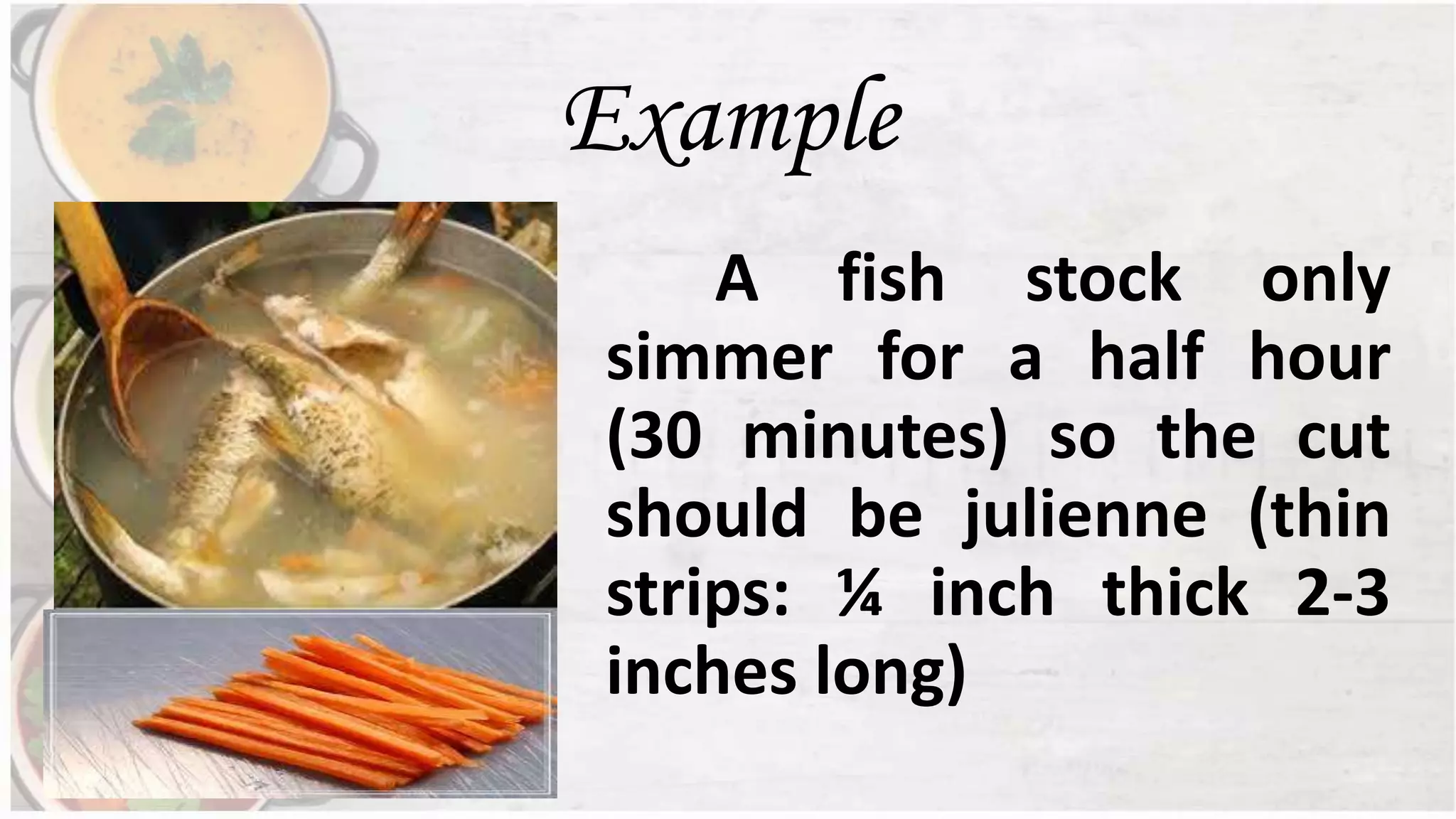
Example
A fish stock only
simmer for a half hour
(30 minutes) so the cut
should be julienne (thin
strips: ¼ inch thick 2-3
inches long)
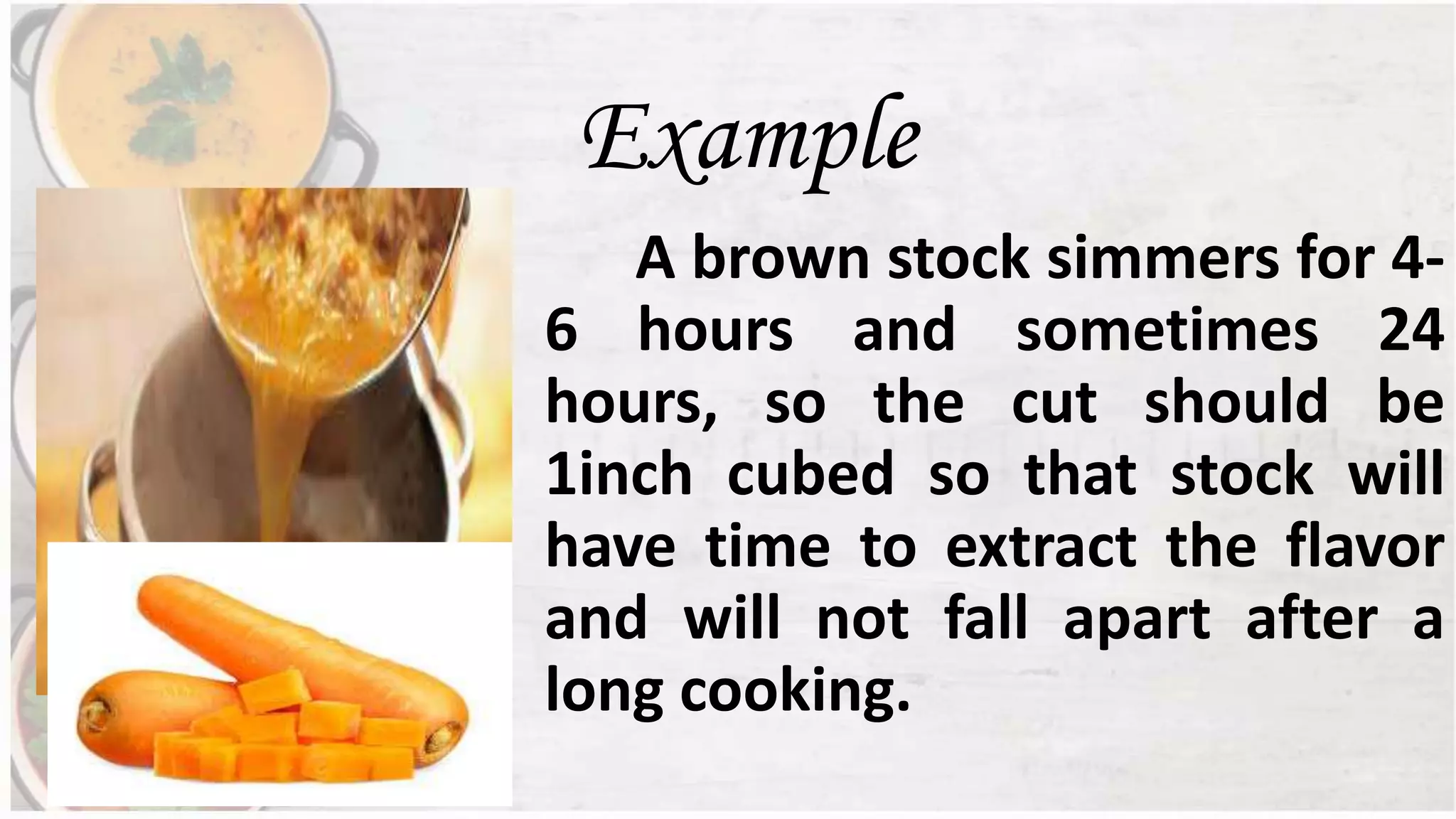
A brown stock simmers for 4-
6 hours and sometimes 24
hours, so the cut should be
1inch cubed so that stock will
have time to extract the flavor
and will not fall apart after a
long cooking.
Example
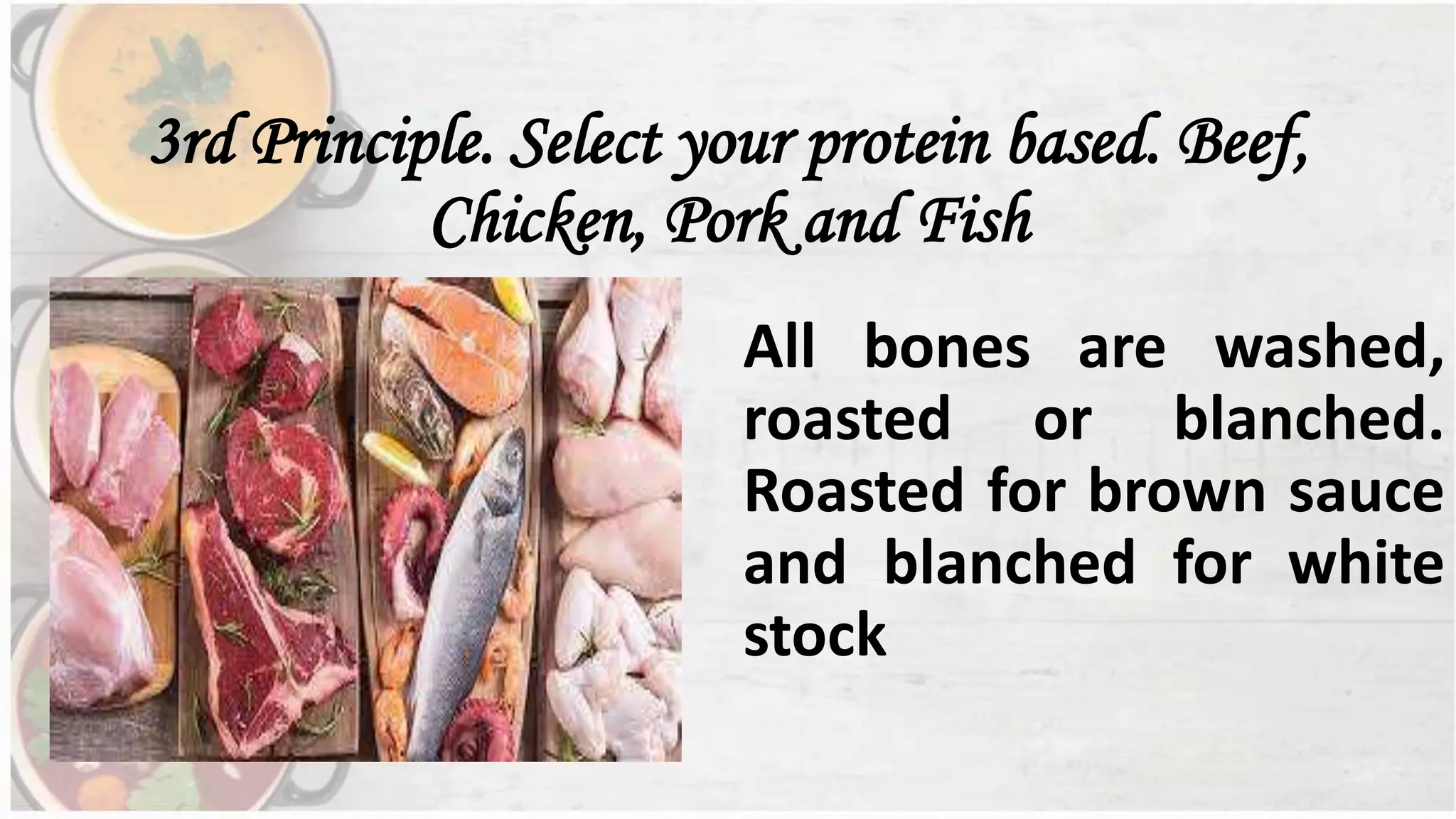
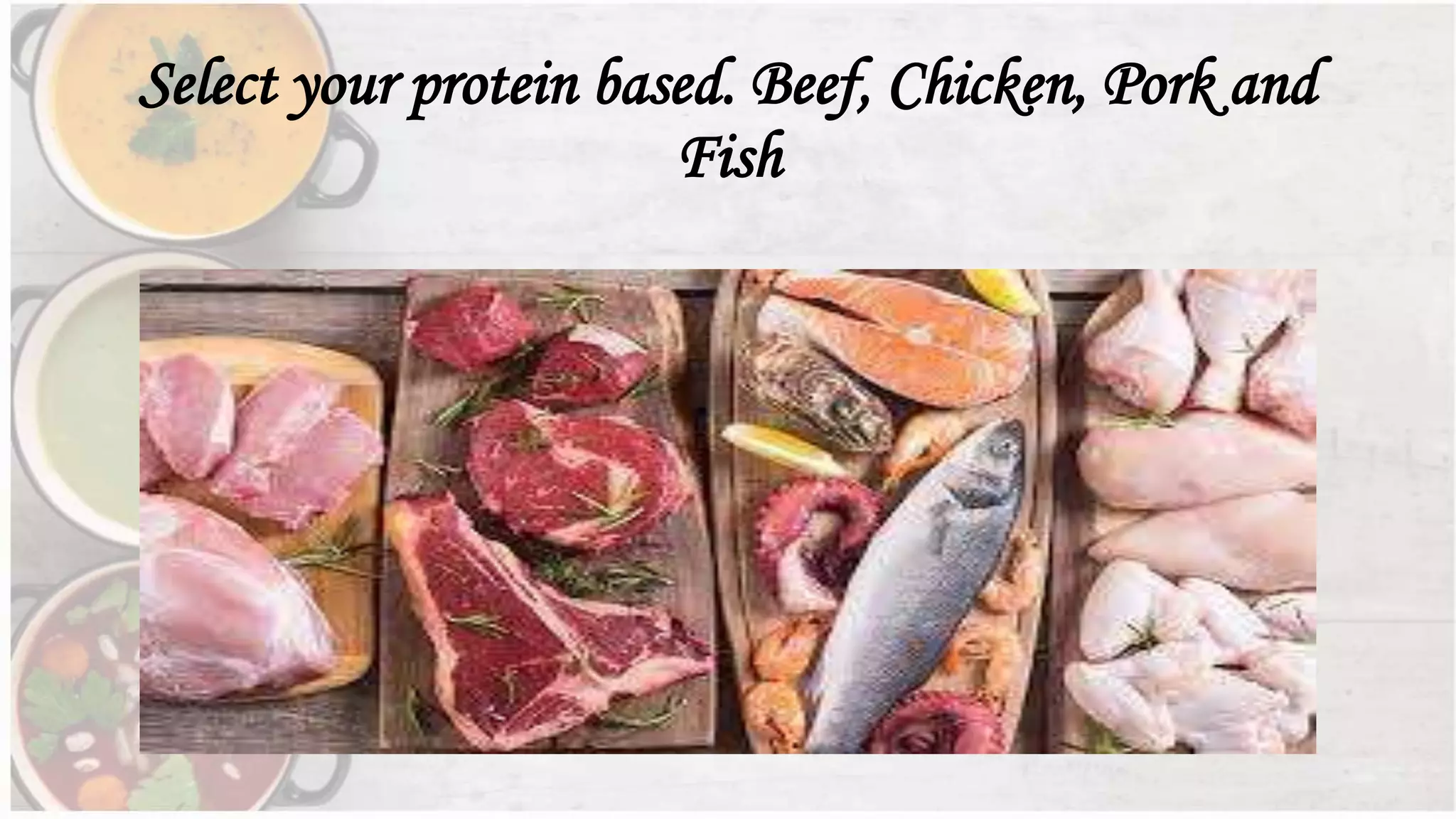
3rd Principle. Select your protein based. Beef,
Chicken, Pork and Fish
All bones are washed,
roasted or blanched.
Roasted for brown sauce
and blanched for white
stock
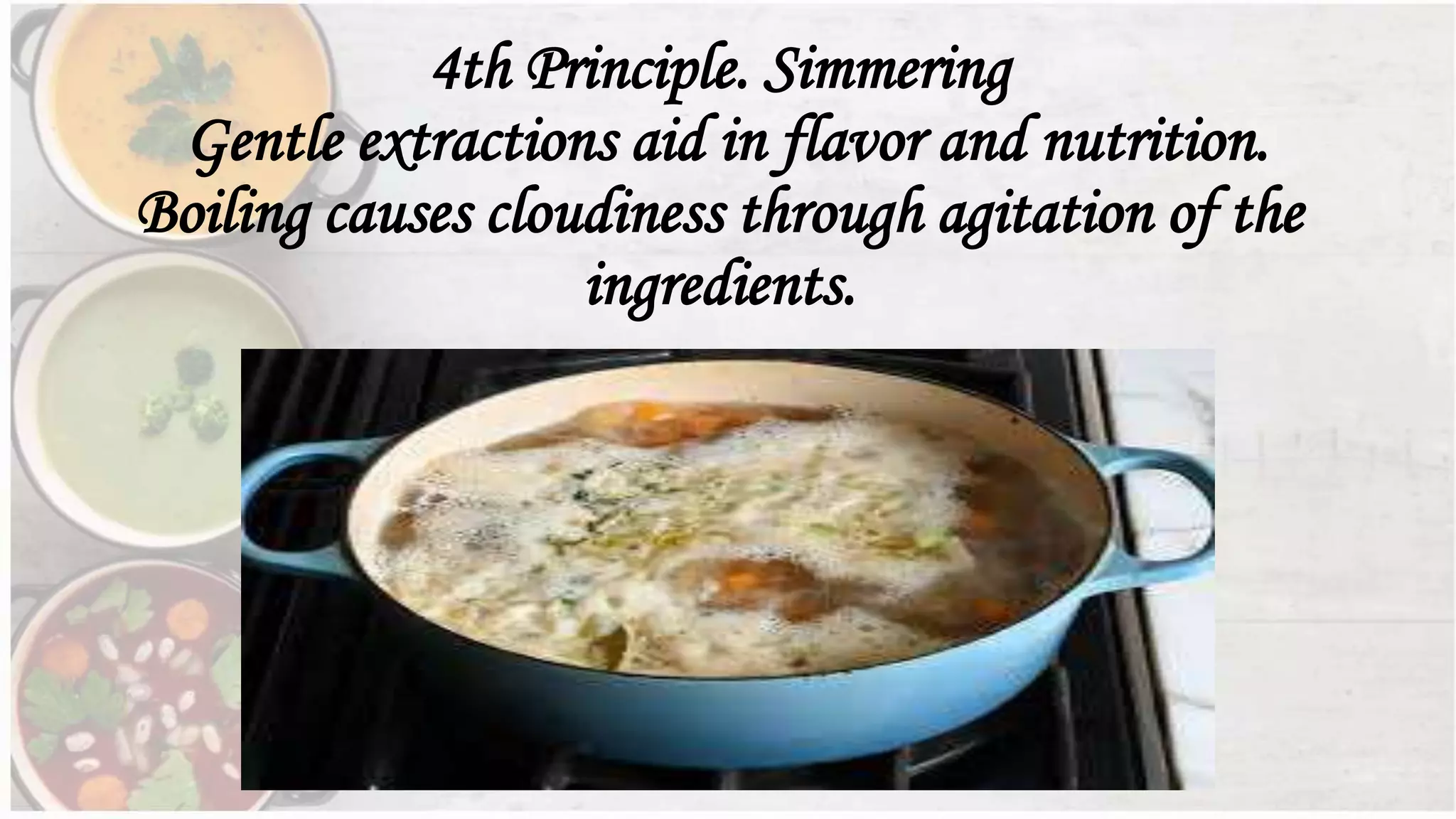
4th Principle. Simmering
Gentle extractions aid in flavor and nutrition.
Boiling causes cloudiness through agitation of the
ingredients.
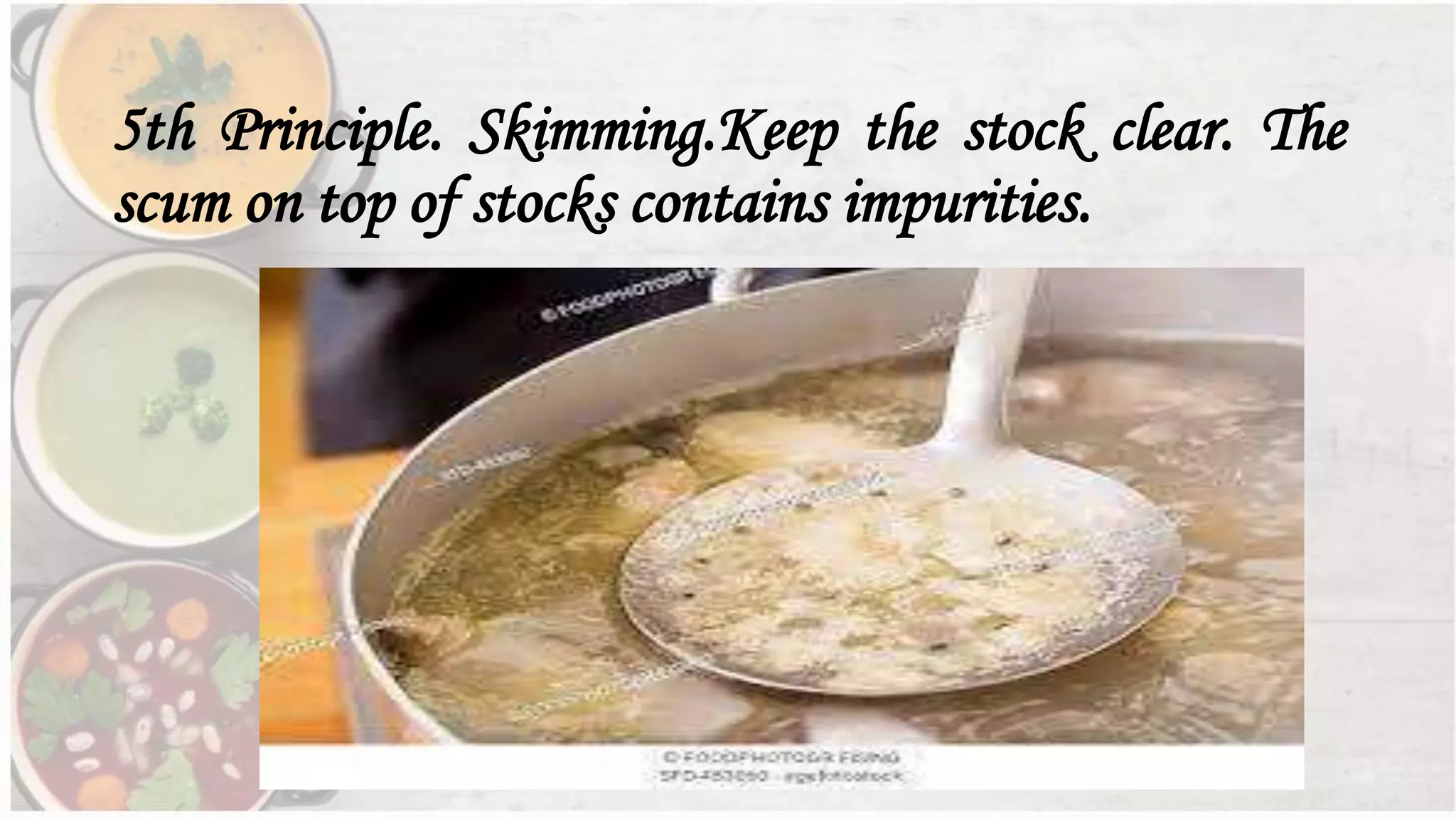
5th Principle. Skimming.Keep the stock clear. The
scum on top of stocks contains impurities.
Cooking Soups
Meats, Poultry and Fish
•Cuts of meat that are less tender
should be added early in the cooking
process .
•Poultry needs to be added early
enough so that it cooks thoroughly .
• Add fish closed to the end of the
cooking process to keep it from
overcooking.
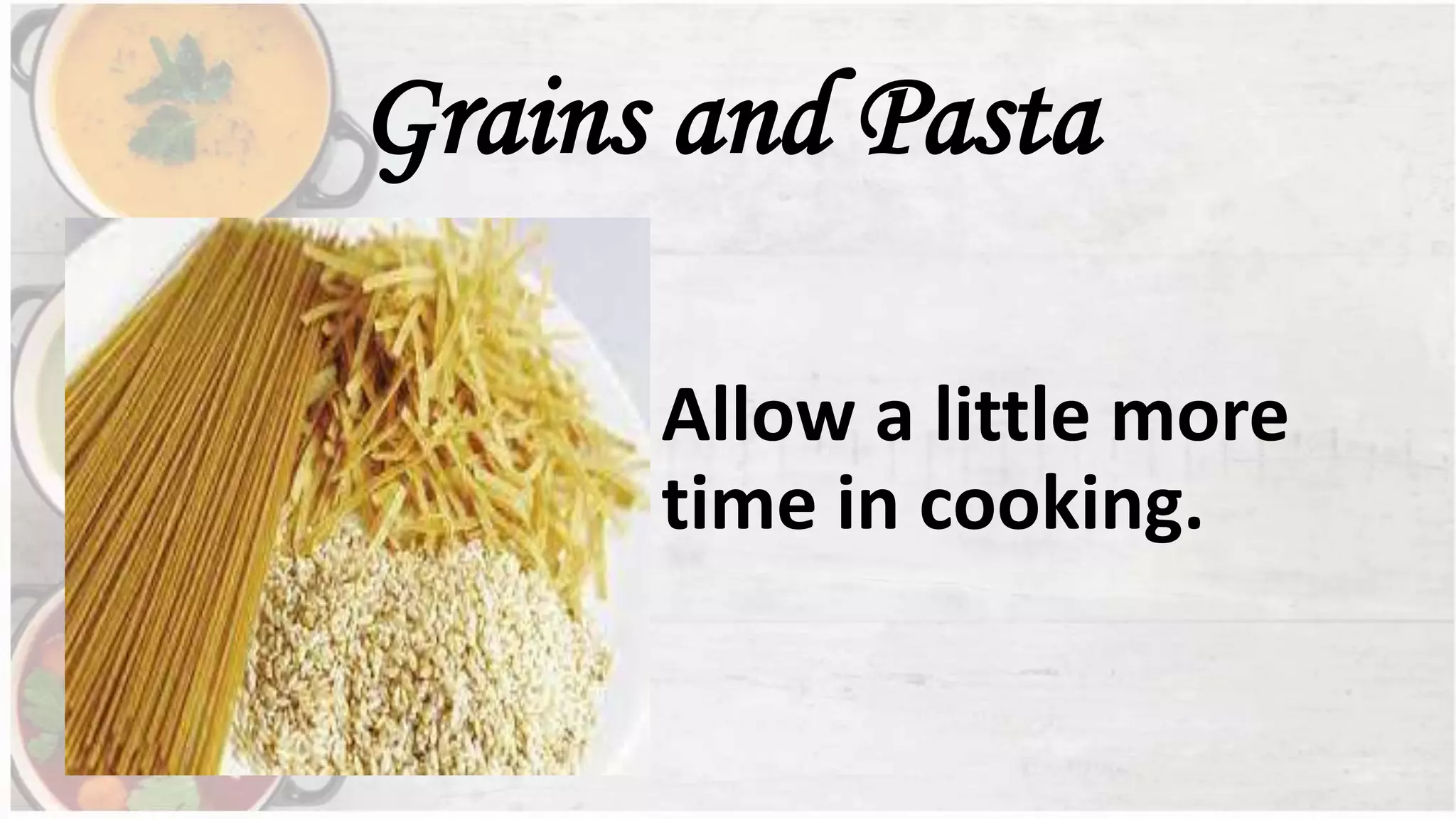
Grains and Pasta
Allow a little more
time in cooking.
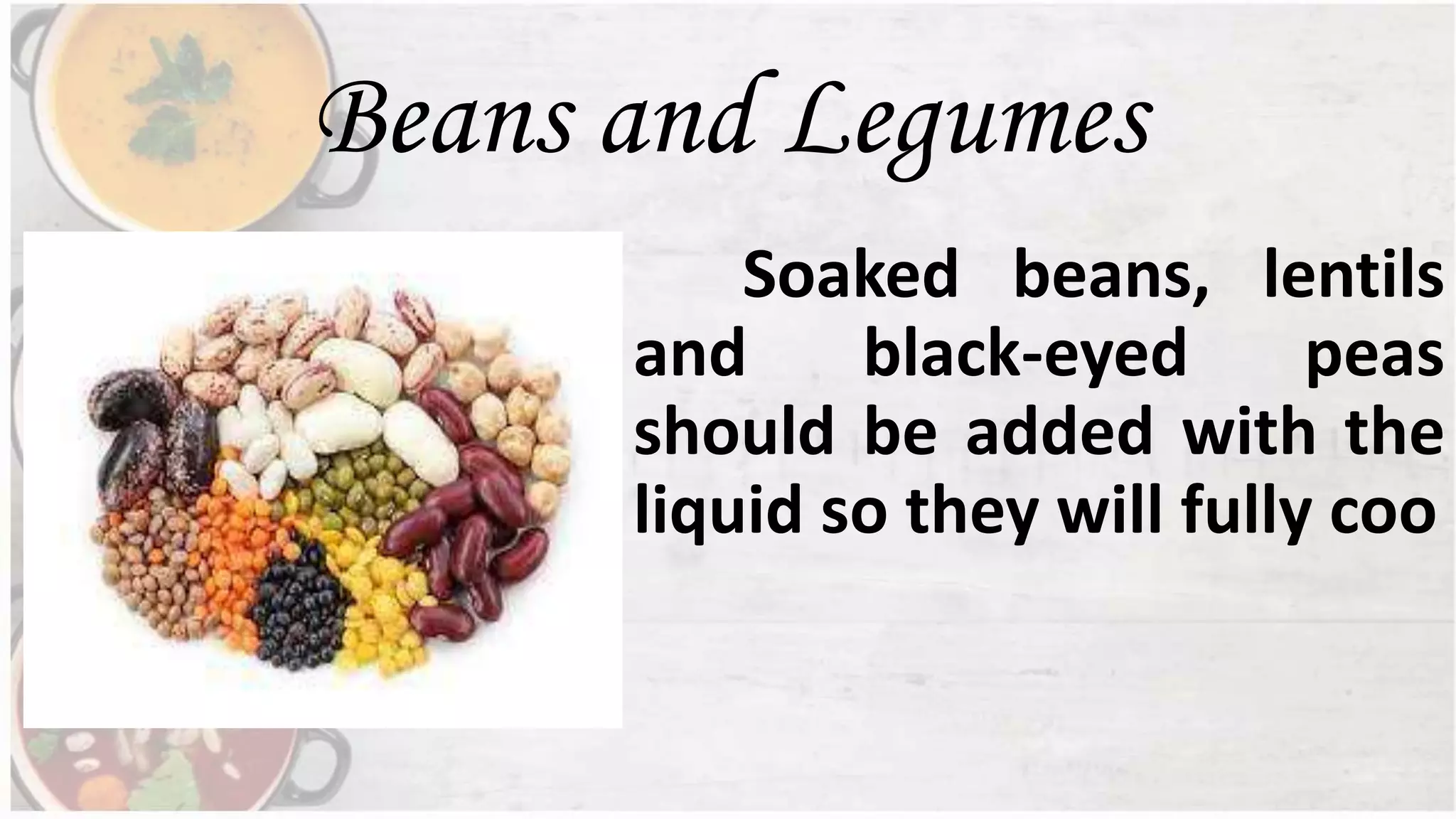
Beans and Legumes
Soaked beans, lentils
and black-eyed peas
should be added with the
liquid so they will fully coo
Dense or Starchy Vegetables
A small-diced cut of
potatoes, carrots, and
winter squashes will
require 30–45 minutes
to cook
Green Vegetables
These vegetables should be added
during the final 15–20 minutes of
cooking the soup.
Adjusting Consistency
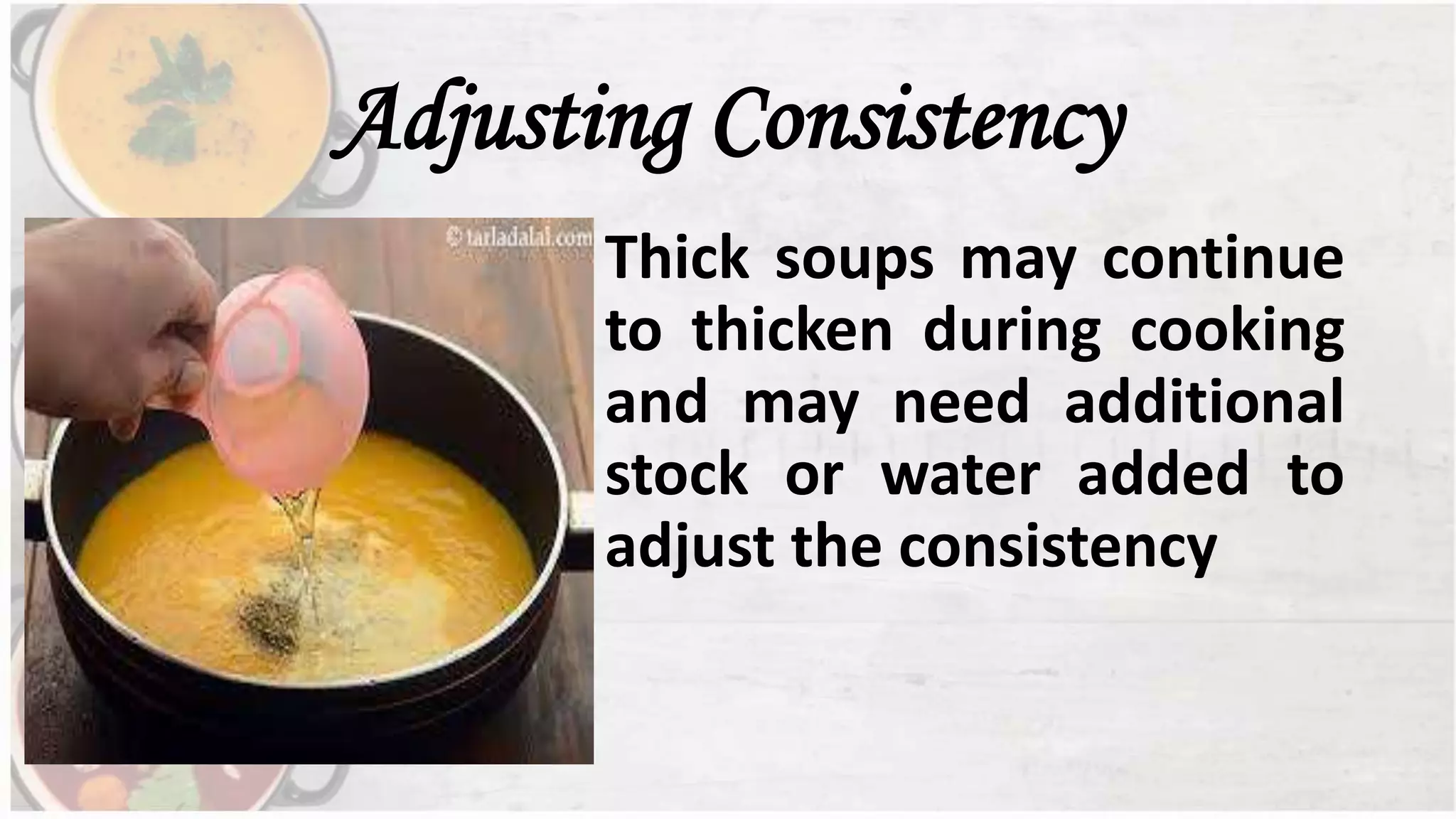
Thick soups may continue
to thicken during cooking
and may need additional
stock or water added to
adjust the consistency
Degreasing
Broth-based soups maybe
prepared in advance, cooled
and refrigerated. This
facilitates removing of
congealed fat from the
surface. Skim the top layer of
fat from a hot soup with a
ladle, alternately.
Identify what principle of
preparing soups it belongs.
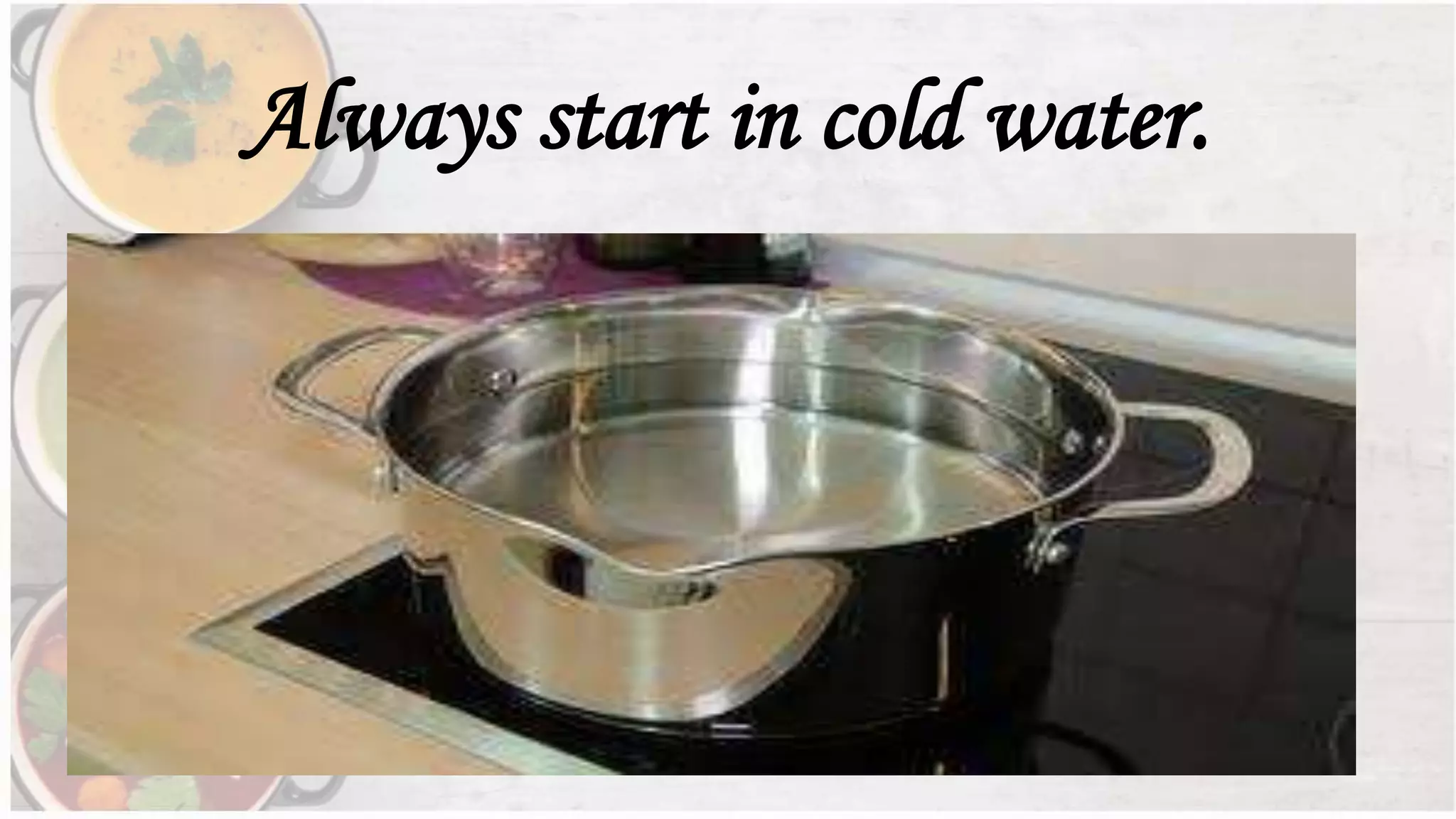
Always start in cold water.
Select your protein based. Beef, Chicken, Pork and
Fish
Simmering
Skimming
ACTIVITY
Answer the following questions, write your
answer in ¼ sheet of paper.
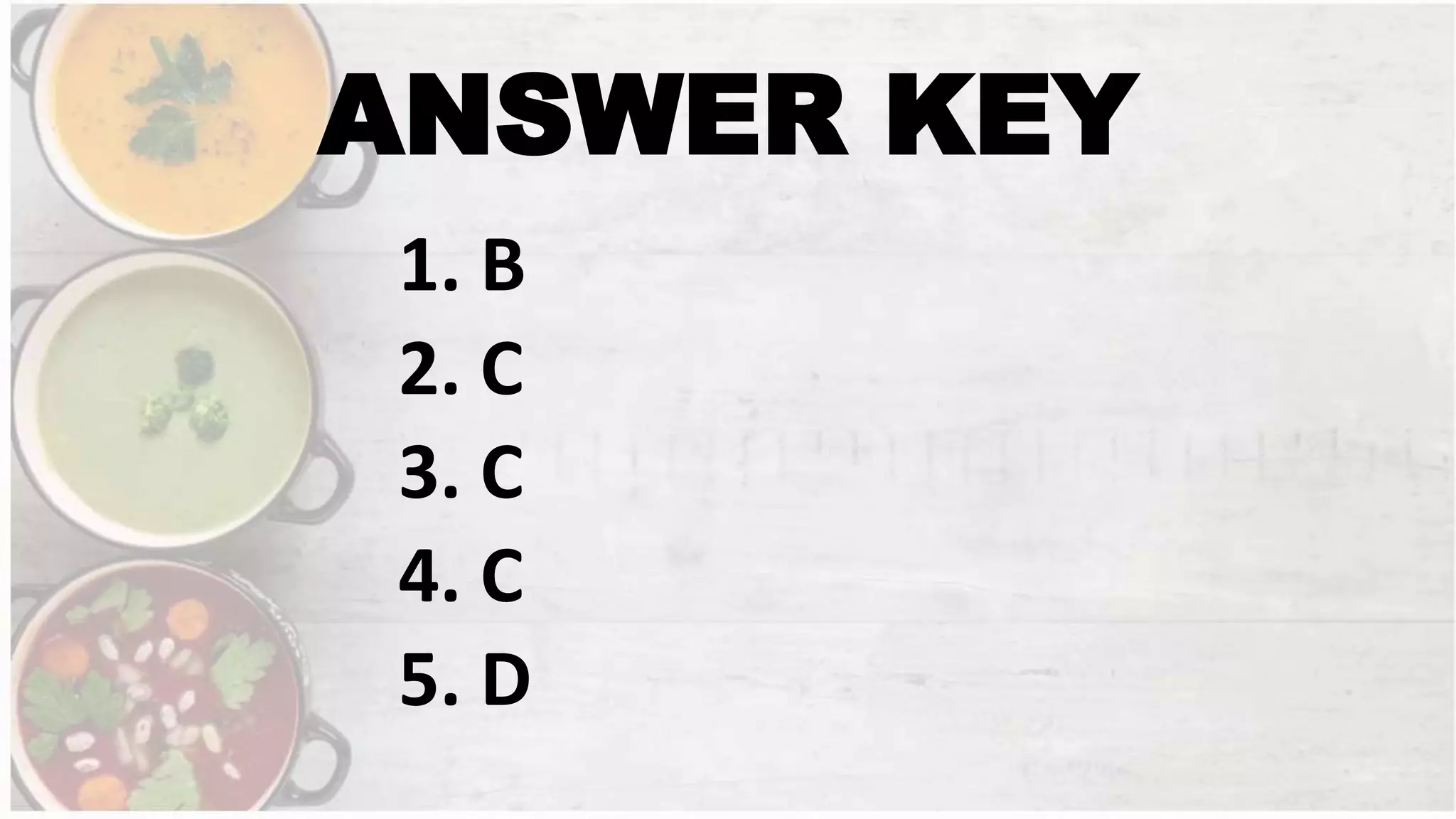
ANSWER KEY
1. B
2. C
3. C
4. C
5. D
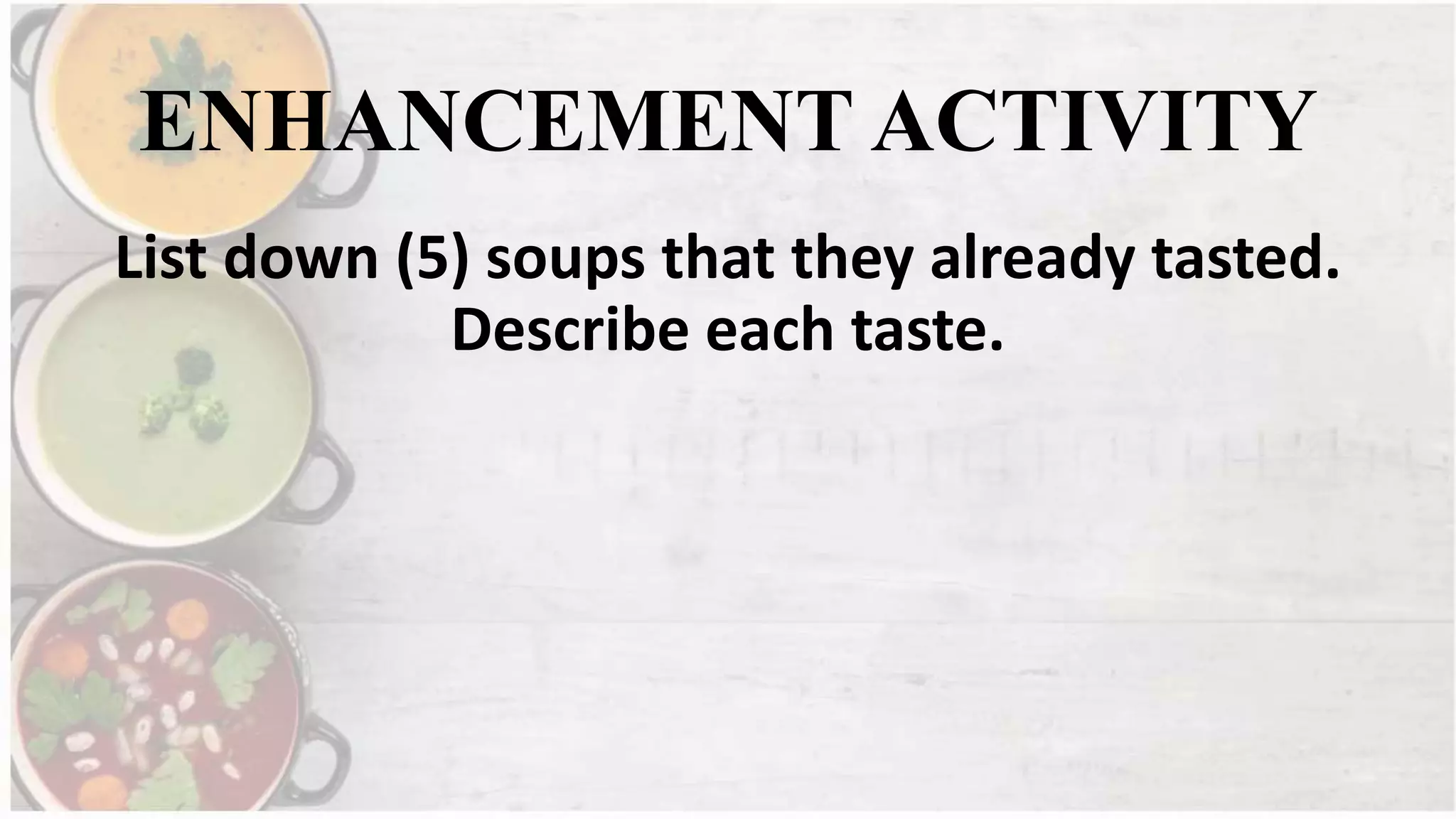
ENHANCEMENT ACTIVITY
List down (5) soups that they already tasted.
Describe each taste.
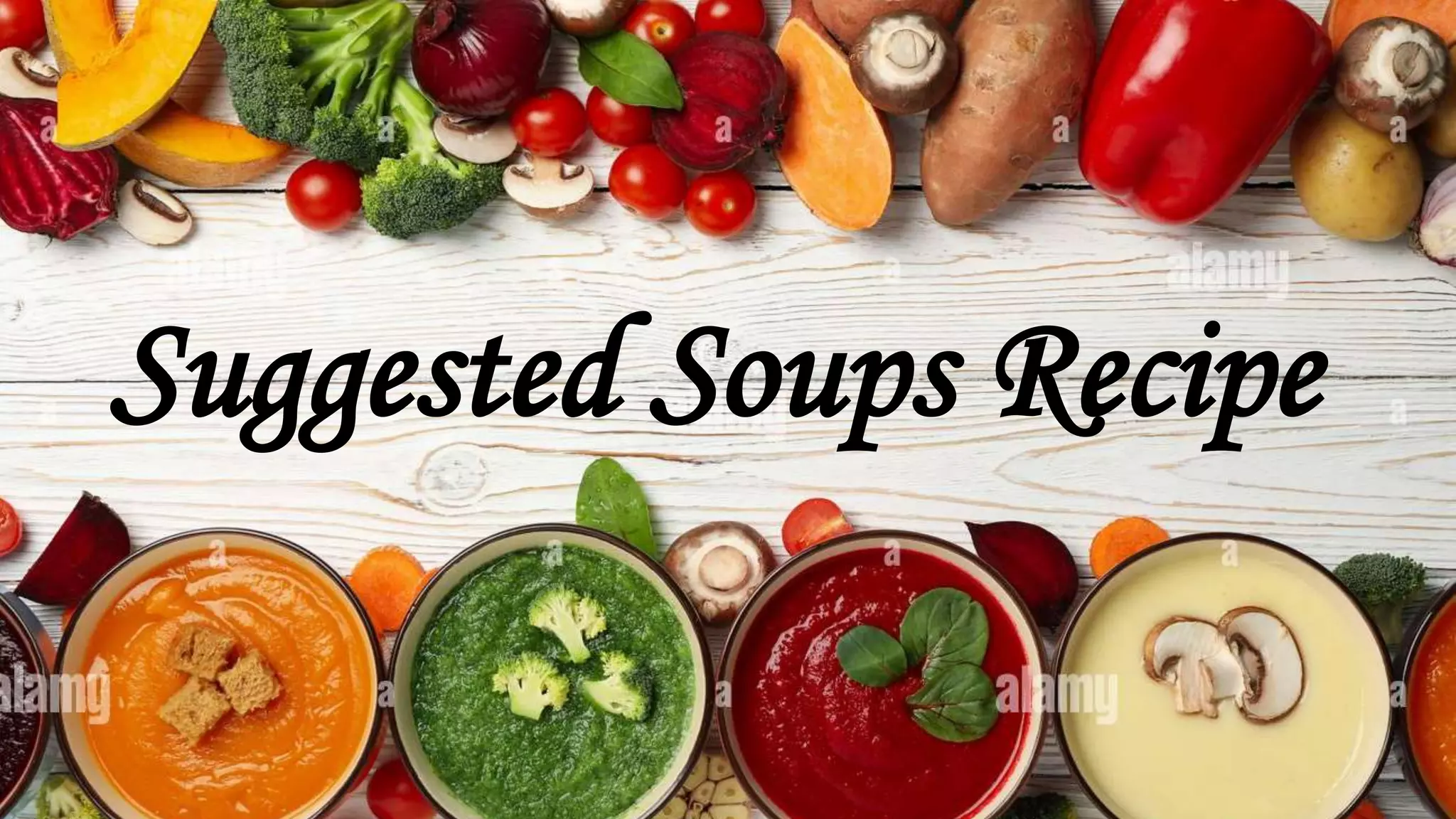
Suggested Soups Recipe
The teacher will give instructions
for the coming Performance Task.
Group the learners into 5 and Prepare
the learners for the next performance
task.
WEEK 2 PREPARE SOUPS REQUIRED FOR MENU ITEMS.pptx

WEEK 2 PREPARE SOUPS REQUIRED FOR MENU ITEMS.pptx

  • 1.
  • 2.
    What is theirfavorite soup and why?”
  • 3.
    SOUPS Soups are basedon stocks added with other ingredients for variety of flavor, consistency, appearance and aroma.
  • 4.
  • 5.
    Clear Soup They aresoups based on a clear, unthicken broth or stock. They may be served plain or garnished with a variety of vegetables and meats. They are very similar to stocks, except that broths are based on meats rather than bones so they are richer and have a more defined flavor. Broths can be used as a liquid in preparing soups.
  • 6.
    Clear Soup It ismade by combining lean chopped meat, egg whites, mirepoix, herbs and spices and an acidic ingredient like tomatoes, wine, or lemon juice. The combination is called ―”clarification”since the particles that make the broth appear cloudy are trapped as it cooks
  • 7.
    Examples of ClearSoups -Broth and bouillon simple clear soup without solid ingredients. -Vegetable soup – clear seasoned stock or broth with the addition of one or more vegetable, meat, or poultry. Consommé‘ – rich, flavorful stock or broth that has been clarified to make it perfectly clear and transparent.
  • 8.
    Examples of ClearSoups -Broth and bouillon simple clear soup without solid ingredients. -Vegetable soup – clear seasoned stock or broth with the addition of one or more vegetable, meat, or poultry. Consommé‘ – rich, flavorful stock or broth that has been clarified to make it perfectly clear and transparent.
  • 9.
    Thick Soups Thick Soupsare soups that are thickened to provide a heavier consistency. Thick soup is a cream soup based on béchamel sauce and is finished with a heavy cream.
  • 10.
    Examples of ClearSoups -Cream soups – are soups thickened with roux, beurre Manie, liaison or other thickening agents, plus milk, or cream. Purees – vegetable soup thickened with starch
  • 11.
    Bisques – arethickened soups made from shellfish. Chowders – are hearty soups made from fish, shellfish or vegetables usually contain milk and potatoes. Veloutes – soup thickened with egg, butter and cream.
  • 12.
  • 13.
    Dessert Soup Ginataan –a Filipino soup made from coconut milk, milk, fruit, and tapioca pearl served hot or cold. Osheriku – a Japanese asuki bean soup Tonge sui – a Chinese soup
  • 14.
    Fruit Soup Can beserved hot or cold depending on the recipe where dried fruits are used like raisins and prunes. Fruit soup may include milk, sweet or savory dumplings, spices or alcoholic beverages like brandy and champagne.
  • 15.
    Cold Soup This isvariations on the traditional soup wherein the temperature when served is kept at or below temperature.
  • 16.
    Asian Soup This isa traditional soup which is typical broth, clear soup, or starch thickened soup.
  • 17.
    Other Thickening Agentsfor Soup Rice Flour Grain Corn starch
  • 18.
  • 19.
    Thick and Clear Classifythe soups where they belong.
  • 21.
    Have an advance readingabout the Principles in Preparing Soup. Enhancement Activity
  • 22.
    Basic Principles ofPreparing Soup
  • 23.
    •“WHAT DO YOUTHINK ARE THE FACTORS THAT MAKES SOUP PRESENTABLE?”
  • 24.
    1stPrinciple. Starting withCold Water Why cold water? Most protein, vitamins and minerals dissolve in cold water. Part of the flavor comes from these components. Using hot water would lessen the flavor and nutritive content of stoc
  • 25.
    2ndPrinciple. Cutting vegetable toappropriate size for the type of stock. The size of cut helps the maximum flavor to be extracted.
  • 26.
    Example A fish stockonly simmer for a half hour (30 minutes) so the cut should be julienne (thin strips: ¼ inch thick 2-3 inches long)
  • 27.
    A brown stocksimmers for 4- 6 hours and sometimes 24 hours, so the cut should be 1inch cubed so that stock will have time to extract the flavor and will not fall apart after a long cooking. Example
  • 28.
    3rd Principle. Selectyour protein based. Beef, Chicken, Pork and Fish All bones are washed, roasted or blanched. Roasted for brown sauce and blanched for white stock
  • 29.
    4th Principle. Simmering Gentleextractions aid in flavor and nutrition. Boiling causes cloudiness through agitation of the ingredients.
  • 30.
    5th Principle. Skimming.Keepthe stock clear. The scum on top of stocks contains impurities.
  • 31.
  • 32.
    Meats, Poultry andFish •Cuts of meat that are less tender should be added early in the cooking process . •Poultry needs to be added early enough so that it cooks thoroughly . • Add fish closed to the end of the cooking process to keep it from overcooking.
  • 33.
    Grains and Pasta Allowa little more time in cooking.
  • 34.
    Beans and Legumes Soakedbeans, lentils and black-eyed peas should be added with the liquid so they will fully coo
  • 35.
    Dense or StarchyVegetables A small-diced cut of potatoes, carrots, and winter squashes will require 30–45 minutes to cook
  • 36.
    Green Vegetables These vegetablesshould be added during the final 15–20 minutes of cooking the soup.
  • 37.
    Adjusting Consistency Thick soupsmay continue to thicken during cooking and may need additional stock or water added to adjust the consistency
  • 38.
    Degreasing Broth-based soups maybe preparedin advance, cooled and refrigerated. This facilitates removing of congealed fat from the surface. Skim the top layer of fat from a hot soup with a ladle, alternately.
  • 39.
    Identify what principleof preparing soups it belongs.
  • 40.
    Always start incold water.
  • 41.
    Select your proteinbased. Beef, Chicken, Pork and Fish
  • 42.
  • 43.
  • 44.
    ACTIVITY Answer the followingquestions, write your answer in ¼ sheet of paper.
  • 46.
    ANSWER KEY 1. B 2.C 3. C 4. C 5. D
  • 47.
    ENHANCEMENT ACTIVITY List down(5) soups that they already tasted. Describe each taste.
  • 48.
  • 50.
    The teacher willgive instructions for the coming Performance Task.
  • 51.
    Group the learnersinto 5 and Prepare the learners for the next performance task.