QUARTER II
PREPARE SALAD
AND DRESSING
Salad is a combination of
vegetables, fruits and other
ingredients served with a
dressing. Salad are easy to make
and require little, in any special
equipment.
Tools, Equipment, Utensils Needed
in Preparing Salads.
1. KNIVES – GOOD
QUALITY KNIVES WITH
SHARP, STURDY
STAINLESS STEEL
BLADES AND WITH
HANDLES THAT ARE
SECURELY ATTACHED
AND THAT FEEL
PERFECTLY
COMFORTABLE IN
YOUR HAND.
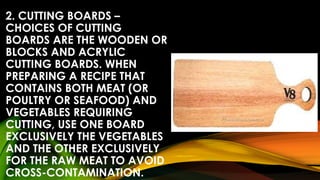
2. CUTTING BOARDS –
CHOICES OF CUTTING
BOARDS ARE THE WOODEN OR
BLOCKS AND ACRYLIC
CUTTING BOARDS. WHEN
PREPARING A RECIPE THAT
CONTAINS BOTH MEAT (OR
POULTRY OR SEAFOOD) AND
VEGETABLES REQUIRING
CUTTING, USE ONE BOARD
EXCLUSIVELY THE VEGETABLES
AND THE OTHER EXCLUSIVELY
FOR THE RAW MEAT TO AVOID
CROSS-CONTAMINATION.
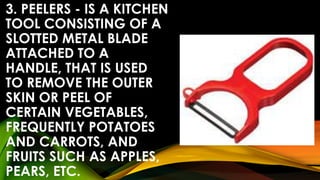
3. PEELERS - IS A KITCHEN
TOOL CONSISTING OF A
SLOTTED METAL BLADE
ATTACHED TO A
HANDLE, THAT IS USED
TO REMOVE THE OUTER
SKIN OR PEEL OF
CERTAIN VEGETABLES,
FREQUENTLY POTATOES
AND CARROTS, AND
FRUITS SUCH AS APPLES,
PEARS, ETC.
4. CITRUS ZESTERS -
TO OPERATE, THE
ZESTER IS PRESSED
WITH MODERATE
FORCE AGAINST THE
FRUIT AND DRAWN
ACROSS ITS PEEL. THE
RIMS CUT THE ZEST
FROM THE PITH
UNDERNEATH.
5. GRATER/SHREDDER -
A GRATER (ALSO
KNOWN AS A
SHREDDER) IS A
KITCHEN UTENSIL USED
TO GRATE FOODS INTO
FINE PIECES. IT WAS
INVENTED BY
FRANÇOIS BOULLIER IN
1540S.
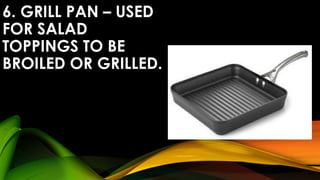
6. GRILL PAN – USED
FOR SALAD
TOPPINGS TO BE
BROILED OR GRILLED.
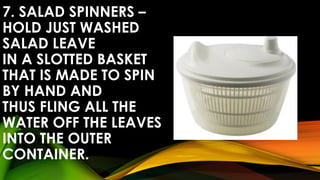
7. SALAD SPINNERS –
HOLD JUST WASHED
SALAD LEAVE
IN A SLOTTED BASKET
THAT IS MADE TO SPIN
BY HAND AND
THUS FLING ALL THE
WATER OFF THE LEAVES
INTO THE OUTER
CONTAINER.
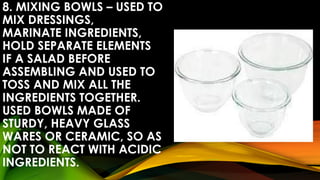
8. MIXING BOWLS – USED TO
MIX DRESSINGS,
MARINATE INGREDIENTS,
HOLD SEPARATE ELEMENTS
IF A SALAD BEFORE
ASSEMBLING AND USED TO
TOSS AND MIX ALL THE
INGREDIENTS TOGETHER.
USED BOWLS MADE OF
STURDY, HEAVY GLASS
WARES OR CERAMIC, SO AS
NOT TO REACT WITH ACIDIC
INGREDIENTS.
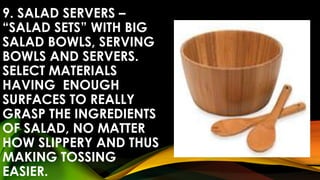
9. SALAD SERVERS –
“SALAD SETS” WITH BIG
SALAD BOWLS, SERVING
BOWLS AND SERVERS.
SELECT MATERIALS
HAVING ENOUGH
SURFACES TO REALLY
GRASP THE INGREDIENTS
OF SALAD, NO MATTER
HOW SLIPPERY AND THUS
MAKING TOSSING
EASIER.
CLASSIFICATION OF SALADS
ACCORDING TO THEIR
FUNCTIONS IN THE MEAL.
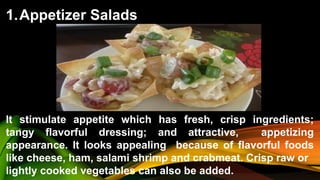
1.Appetizer Salads
It stimulate appetite which has fresh, crisp ingredients;
tangy flavorful dressing; and attractive, appetizing
appearance. It looks appealing because of flavorful foods
like cheese, ham, salami shrimp and crabmeat. Crisp raw or
lightly cooked vegetables can also be added.
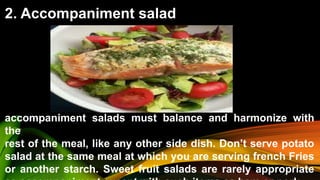
2. Accompaniment salad
accompaniment salads must balance and harmonize with
the
rest of the meal, like any other side dish. Don’t serve potato
salad at the same meal at which you are serving french Fries
or another starch. Sweet fruit salads are rarely appropriate
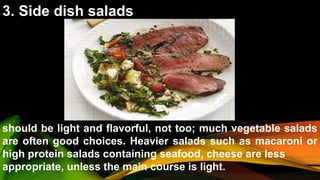
3. Side dish salads
should be light and flavorful, not too; much vegetable salads
are often good choices. Heavier salads such as macaroni or
high protein salads containing seafood, cheese are less
appropriate, unless the main course is light.
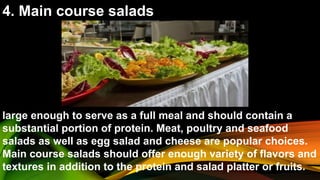
4. Main course salads
large enough to serve as a full meal and should contain a
substantial portion of protein. Meat, poultry and seafood
salads as well as egg salad and cheese are popular choices.
Main course salads should offer enough variety of flavors and
textures in addition to the protein and salad platter or fruits.
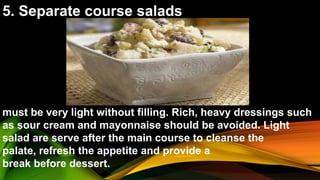
5. Separate course salads
must be very light without filling. Rich, heavy dressings such
as sour cream and mayonnaise should be avoided. Light
salad are serve after the main course to cleanse the
palate, refresh the appetite and provide a
break before dessert.
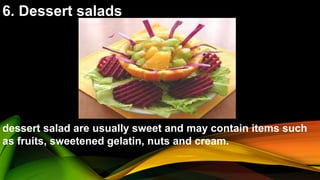
6. Dessert salads
dessert salad are usually sweet and may contain items such
as fruits, sweetened gelatin, nuts and cream.
CLASSIFICATION OF
SALADS ACCORDING TO
INGREDIENTS USED
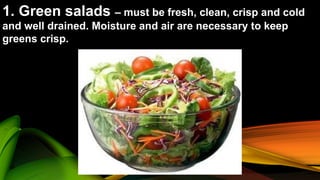
1. Green salads – must be fresh, clean, crisp and cold
and well drained. Moisture and air are necessary to keep
greens crisp.
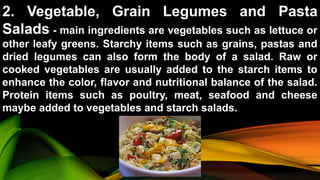
2. Vegetable, Grain Legumes and Pasta
Salads - main ingredients are vegetables such as lettuce or
other leafy greens. Starchy items such as grains, pastas and
dried legumes can also form the body of a salad. Raw or
cooked vegetables are usually added to the starch items to
enhance the color, flavor and nutritional balance of the salad.
Protein items such as poultry, meat, seafood and cheese
maybe added to vegetables and starch salads.
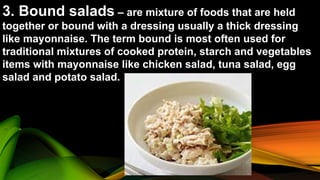
3. Bound salads – are mixture of foods that are held
together or bound with a dressing usually a thick dressing
like mayonnaise. The term bound is most often used for
traditional mixtures of cooked protein, starch and vegetables
items with mayonnaise like chicken salad, tuna salad, egg
salad and potato salad.
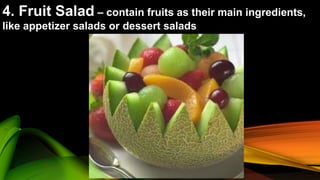
4. Fruit Salad – contain fruits as their main ingredients,
like appetizer salads or dessert salads
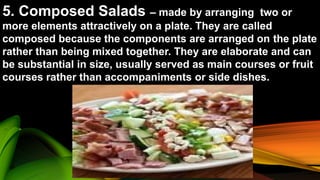
5. Composed Salads – made by arranging two or
more elements attractively on a plate. They are called
composed because the components are arranged on the plate
rather than being mixed together. They are elaborate and can
be substantial in size, usually served as main courses or fruit
courses rather than accompaniments or side dishes.
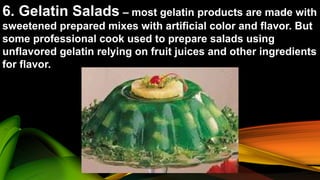
6. Gelatin Salads – most gelatin products are made with
sweetened prepared mixes with artificial color and flavor. But
some professional cook used to prepare salads using
unflavored gelatin relying on fruit juices and other ingredients
for flavor.
INGREDIENTS OF SALADS
Freshness and variety
of ingredients are
essential for high
quality salads.
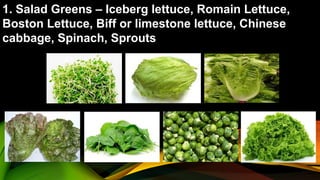
1. Salad Greens – Iceberg lettuce, Romain Lettuce,
Boston Lettuce, Biff or limestone lettuce, Chinese
cabbage, Spinach, Sprouts
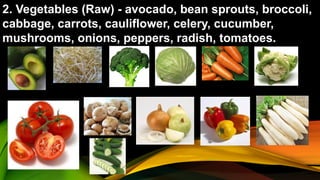
2. Vegetables (Raw) - avocado, bean sprouts, broccoli,
cabbage, carrots, cauliflower, celery, cucumber,
mushrooms, onions, peppers, radish, tomatoes.
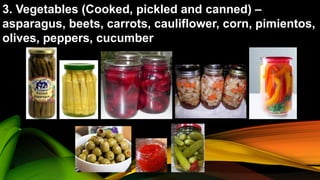
3. Vegetables (Cooked, pickled and canned) –
asparagus, beets, carrots, cauliflower, corn, pimientos,
olives, peppers, cucumber
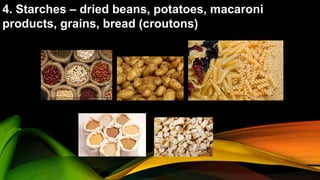
4. Starches – dried beans, potatoes, macaroni
products, grains, bread (croutons)
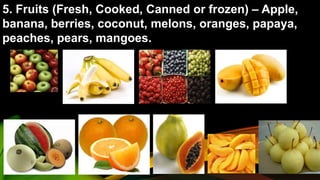
5. Fruits (Fresh, Cooked, Canned or frozen) – Apple,
banana, berries, coconut, melons, oranges, papaya,
peaches, pears, mangoes.
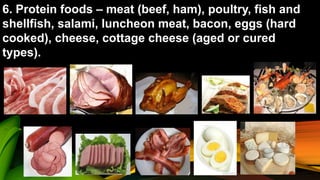
6. Protein foods – meat (beef, ham), poultry, fish and
shellfish, salami, luncheon meat, bacon, eggs (hard
cooked), cheese, cottage cheese (aged or cured
types).
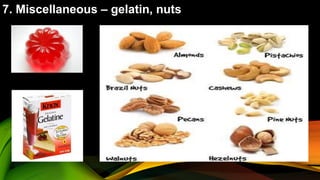
7. Miscellaneous – gelatin, nuts
Important Factors to consider in Salad Preparation
1. Quality of ingredients. Salad is as good as the
quality of its ingredients, so you have to use
ingredients that are fresh, ripe and in season.
2. Eye Appeal. It should be attractive,
appetizing, creatively presented.
3. Simplicity. Make it simple not overcrowded.
4. Neatness. Keep salad neatly placed in a
plate.
Important Factors to consider in Salad Preparation
5. Contrast and Harmony of colors. Contrast in
color for your garnishing can accentuate the
appearance of the salad.
6. Proper Food combinations. Choose
combination of ingredients carefully. Pineapples
and coconut go well with chicken but not
compatible with tuna.
Important Factors to consider in Salad Preparation
7. Foods should be recognizable. Taste of the
food that you are using as a base should be
identifiable when you taste the salad. The
dressing should dominates the taste.
8. Keep foods properly chilled but not ice-cold.
9. Serve hot foods while hot and cold foods
cold.
Important Factors to consider in Salad Preparation
10. Keep it clean and crispy. This is done by
washing greens in large quantity of water and
drain well and removing the green from the
water to allow the dirt to settle to the bottom of
the container.
11. Flavorful. Tempting and stimulating if
prepared and presented properly.
Important Factors to consider in Salad Preparation
12. Drain all the ingredients well. Water or
excess juices will weaken dressings and will
make your salad look messy.
13. Do not overcook food. Food and ingredients
when overcooked eliminates the color and its
vitamins and minerals as well.
SAMPLE SALAD
RECIPES
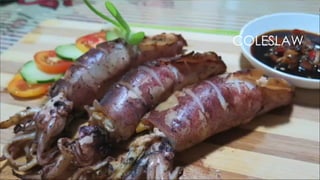
COLESLAW
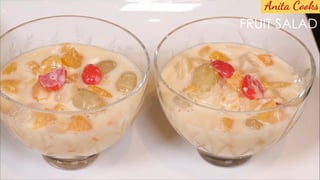
FRUIT SALAD
POTATO SALAD
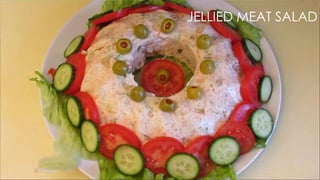
JELLIED MEAT SALAD

SALAD AND DRESSING PREPARATION GUIDE BOOK.pptx

  • 1.
  • 2.
    Salad is acombination of vegetables, fruits and other ingredients served with a dressing. Salad are easy to make and require little, in any special equipment.
  • 3.
    Tools, Equipment, UtensilsNeeded in Preparing Salads.
  • 4.
    1. KNIVES –GOOD QUALITY KNIVES WITH SHARP, STURDY STAINLESS STEEL BLADES AND WITH HANDLES THAT ARE SECURELY ATTACHED AND THAT FEEL PERFECTLY COMFORTABLE IN YOUR HAND.
  • 5.
    2. CUTTING BOARDS– CHOICES OF CUTTING BOARDS ARE THE WOODEN OR BLOCKS AND ACRYLIC CUTTING BOARDS. WHEN PREPARING A RECIPE THAT CONTAINS BOTH MEAT (OR POULTRY OR SEAFOOD) AND VEGETABLES REQUIRING CUTTING, USE ONE BOARD EXCLUSIVELY THE VEGETABLES AND THE OTHER EXCLUSIVELY FOR THE RAW MEAT TO AVOID CROSS-CONTAMINATION.
  • 6.
    3. PEELERS -IS A KITCHEN TOOL CONSISTING OF A SLOTTED METAL BLADE ATTACHED TO A HANDLE, THAT IS USED TO REMOVE THE OUTER SKIN OR PEEL OF CERTAIN VEGETABLES, FREQUENTLY POTATOES AND CARROTS, AND FRUITS SUCH AS APPLES, PEARS, ETC.
  • 7.
    4. CITRUS ZESTERS- TO OPERATE, THE ZESTER IS PRESSED WITH MODERATE FORCE AGAINST THE FRUIT AND DRAWN ACROSS ITS PEEL. THE RIMS CUT THE ZEST FROM THE PITH UNDERNEATH.
  • 8.
    5. GRATER/SHREDDER - AGRATER (ALSO KNOWN AS A SHREDDER) IS A KITCHEN UTENSIL USED TO GRATE FOODS INTO FINE PIECES. IT WAS INVENTED BY FRANÇOIS BOULLIER IN 1540S.
  • 9.
    6. GRILL PAN– USED FOR SALAD TOPPINGS TO BE BROILED OR GRILLED.
  • 10.
    7. SALAD SPINNERS– HOLD JUST WASHED SALAD LEAVE IN A SLOTTED BASKET THAT IS MADE TO SPIN BY HAND AND THUS FLING ALL THE WATER OFF THE LEAVES INTO THE OUTER CONTAINER.
  • 11.
    8. MIXING BOWLS– USED TO MIX DRESSINGS, MARINATE INGREDIENTS, HOLD SEPARATE ELEMENTS IF A SALAD BEFORE ASSEMBLING AND USED TO TOSS AND MIX ALL THE INGREDIENTS TOGETHER. USED BOWLS MADE OF STURDY, HEAVY GLASS WARES OR CERAMIC, SO AS NOT TO REACT WITH ACIDIC INGREDIENTS.
  • 12.
    9. SALAD SERVERS– “SALAD SETS” WITH BIG SALAD BOWLS, SERVING BOWLS AND SERVERS. SELECT MATERIALS HAVING ENOUGH SURFACES TO REALLY GRASP THE INGREDIENTS OF SALAD, NO MATTER HOW SLIPPERY AND THUS MAKING TOSSING EASIER.
  • 13.
    CLASSIFICATION OF SALADS ACCORDINGTO THEIR FUNCTIONS IN THE MEAL.
  • 14.
    1.Appetizer Salads It stimulateappetite which has fresh, crisp ingredients; tangy flavorful dressing; and attractive, appetizing appearance. It looks appealing because of flavorful foods like cheese, ham, salami shrimp and crabmeat. Crisp raw or lightly cooked vegetables can also be added.
  • 15.
    2. Accompaniment salad accompanimentsalads must balance and harmonize with the rest of the meal, like any other side dish. Don’t serve potato salad at the same meal at which you are serving french Fries or another starch. Sweet fruit salads are rarely appropriate
  • 16.
    3. Side dishsalads should be light and flavorful, not too; much vegetable salads are often good choices. Heavier salads such as macaroni or high protein salads containing seafood, cheese are less appropriate, unless the main course is light.
  • 17.
    4. Main coursesalads large enough to serve as a full meal and should contain a substantial portion of protein. Meat, poultry and seafood salads as well as egg salad and cheese are popular choices. Main course salads should offer enough variety of flavors and textures in addition to the protein and salad platter or fruits.
  • 18.
    5. Separate coursesalads must be very light without filling. Rich, heavy dressings such as sour cream and mayonnaise should be avoided. Light salad are serve after the main course to cleanse the palate, refresh the appetite and provide a break before dessert.
  • 19.
    6. Dessert salads dessertsalad are usually sweet and may contain items such as fruits, sweetened gelatin, nuts and cream.
  • 20.
  • 21.
    1. Green salads– must be fresh, clean, crisp and cold and well drained. Moisture and air are necessary to keep greens crisp.
  • 22.
    2. Vegetable, GrainLegumes and Pasta Salads - main ingredients are vegetables such as lettuce or other leafy greens. Starchy items such as grains, pastas and dried legumes can also form the body of a salad. Raw or cooked vegetables are usually added to the starch items to enhance the color, flavor and nutritional balance of the salad. Protein items such as poultry, meat, seafood and cheese maybe added to vegetables and starch salads.
  • 23.
    3. Bound salads– are mixture of foods that are held together or bound with a dressing usually a thick dressing like mayonnaise. The term bound is most often used for traditional mixtures of cooked protein, starch and vegetables items with mayonnaise like chicken salad, tuna salad, egg salad and potato salad.
  • 24.
    4. Fruit Salad– contain fruits as their main ingredients, like appetizer salads or dessert salads
  • 25.
    5. Composed Salads– made by arranging two or more elements attractively on a plate. They are called composed because the components are arranged on the plate rather than being mixed together. They are elaborate and can be substantial in size, usually served as main courses or fruit courses rather than accompaniments or side dishes.
  • 26.
    6. Gelatin Salads– most gelatin products are made with sweetened prepared mixes with artificial color and flavor. But some professional cook used to prepare salads using unflavored gelatin relying on fruit juices and other ingredients for flavor.
  • 27.
  • 28.
    Freshness and variety ofingredients are essential for high quality salads.
  • 29.
    1. Salad Greens– Iceberg lettuce, Romain Lettuce, Boston Lettuce, Biff or limestone lettuce, Chinese cabbage, Spinach, Sprouts
  • 30.
    2. Vegetables (Raw)- avocado, bean sprouts, broccoli, cabbage, carrots, cauliflower, celery, cucumber, mushrooms, onions, peppers, radish, tomatoes.
  • 31.
    3. Vegetables (Cooked,pickled and canned) – asparagus, beets, carrots, cauliflower, corn, pimientos, olives, peppers, cucumber
  • 32.
    4. Starches –dried beans, potatoes, macaroni products, grains, bread (croutons)
  • 33.
    5. Fruits (Fresh,Cooked, Canned or frozen) – Apple, banana, berries, coconut, melons, oranges, papaya, peaches, pears, mangoes.
  • 34.
    6. Protein foods– meat (beef, ham), poultry, fish and shellfish, salami, luncheon meat, bacon, eggs (hard cooked), cheese, cottage cheese (aged or cured types).
  • 35.
    7. Miscellaneous –gelatin, nuts
  • 36.
    Important Factors toconsider in Salad Preparation 1. Quality of ingredients. Salad is as good as the quality of its ingredients, so you have to use ingredients that are fresh, ripe and in season. 2. Eye Appeal. It should be attractive, appetizing, creatively presented. 3. Simplicity. Make it simple not overcrowded. 4. Neatness. Keep salad neatly placed in a plate.
  • 37.
    Important Factors toconsider in Salad Preparation 5. Contrast and Harmony of colors. Contrast in color for your garnishing can accentuate the appearance of the salad. 6. Proper Food combinations. Choose combination of ingredients carefully. Pineapples and coconut go well with chicken but not compatible with tuna.
  • 38.
    Important Factors toconsider in Salad Preparation 7. Foods should be recognizable. Taste of the food that you are using as a base should be identifiable when you taste the salad. The dressing should dominates the taste. 8. Keep foods properly chilled but not ice-cold. 9. Serve hot foods while hot and cold foods cold.
  • 39.
    Important Factors toconsider in Salad Preparation 10. Keep it clean and crispy. This is done by washing greens in large quantity of water and drain well and removing the green from the water to allow the dirt to settle to the bottom of the container. 11. Flavorful. Tempting and stimulating if prepared and presented properly.
  • 40.
    Important Factors toconsider in Salad Preparation 12. Drain all the ingredients well. Water or excess juices will weaken dressings and will make your salad look messy. 13. Do not overcook food. Food and ingredients when overcooked eliminates the color and its vitamins and minerals as well.
  • 41.
  • 42.
  • 43.
  • 44.
  • 45.