Safety Moment
Pressure release when
breaking containment
Disclaimer: this safety moment is designed to prevent similar incidents. All guidance herein is provided in good faith and
Step Change in Safety nor its member companies accept responsibility for any inaccuracies or omissions contained within this
Safety Moment.
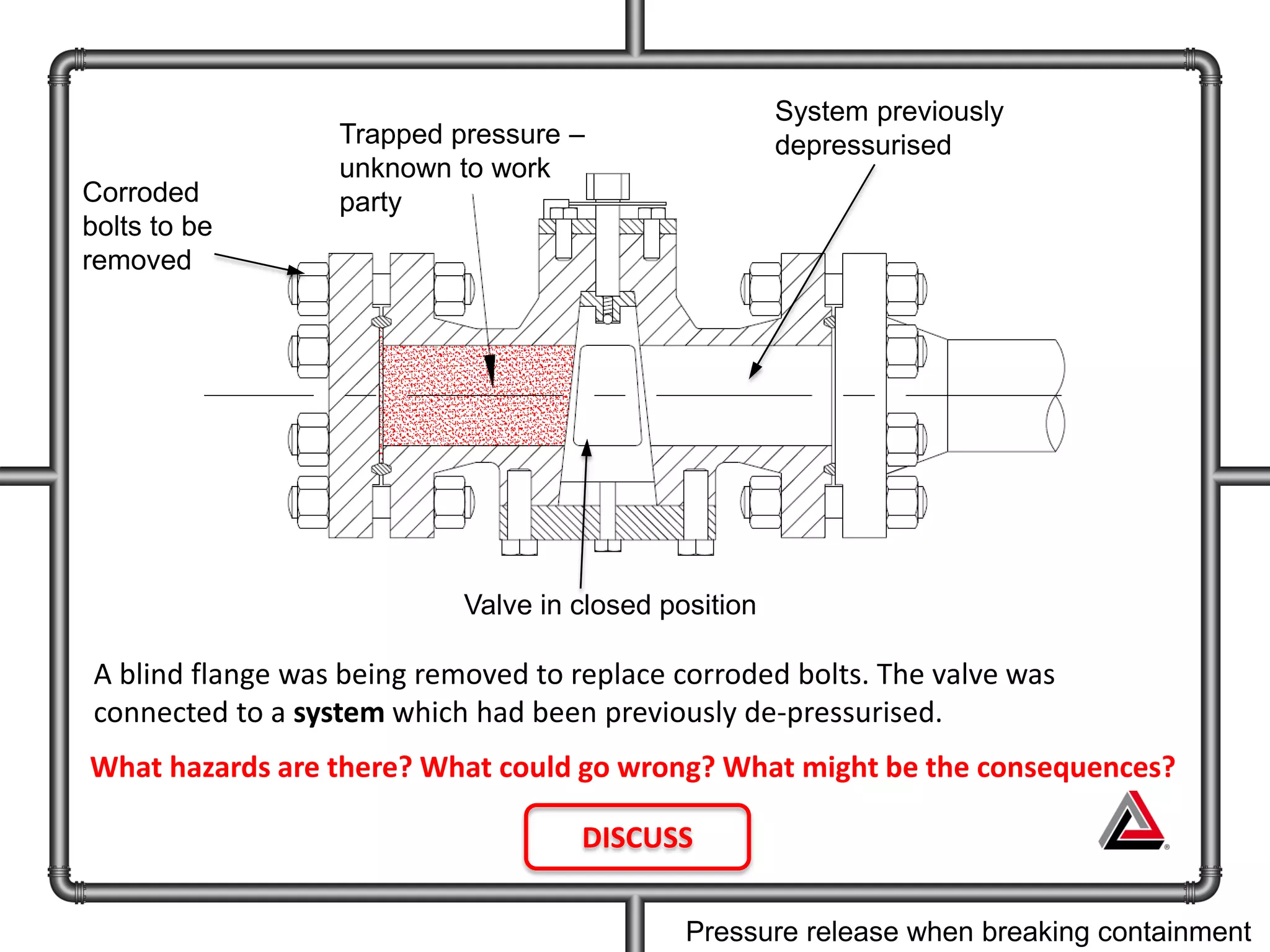
What hazards are there? What could go wrong? What might be the consequences?
A blind flange was being removed to replace corroded bolts. The valve was
connected to a system which had been previously de-pressurised.
DISCUSS
Pressure release when breaking containment
Corroded
bolts to be
removed
Trapped pressure –
unknown to work
party
Valve in closed position
System previously
depressurised
Why it happened:
• The system had been depressurised, vented and drained during initial breaking of
containment, and blank ends had been removed from the vessel with no
indication of any pressure. Work had been on-going for two days and there was
an assumption that there was no longer any pressure in the system.
• However, there was trapped pressure between the flange and a closed valve.
Pressure release when breaking containment
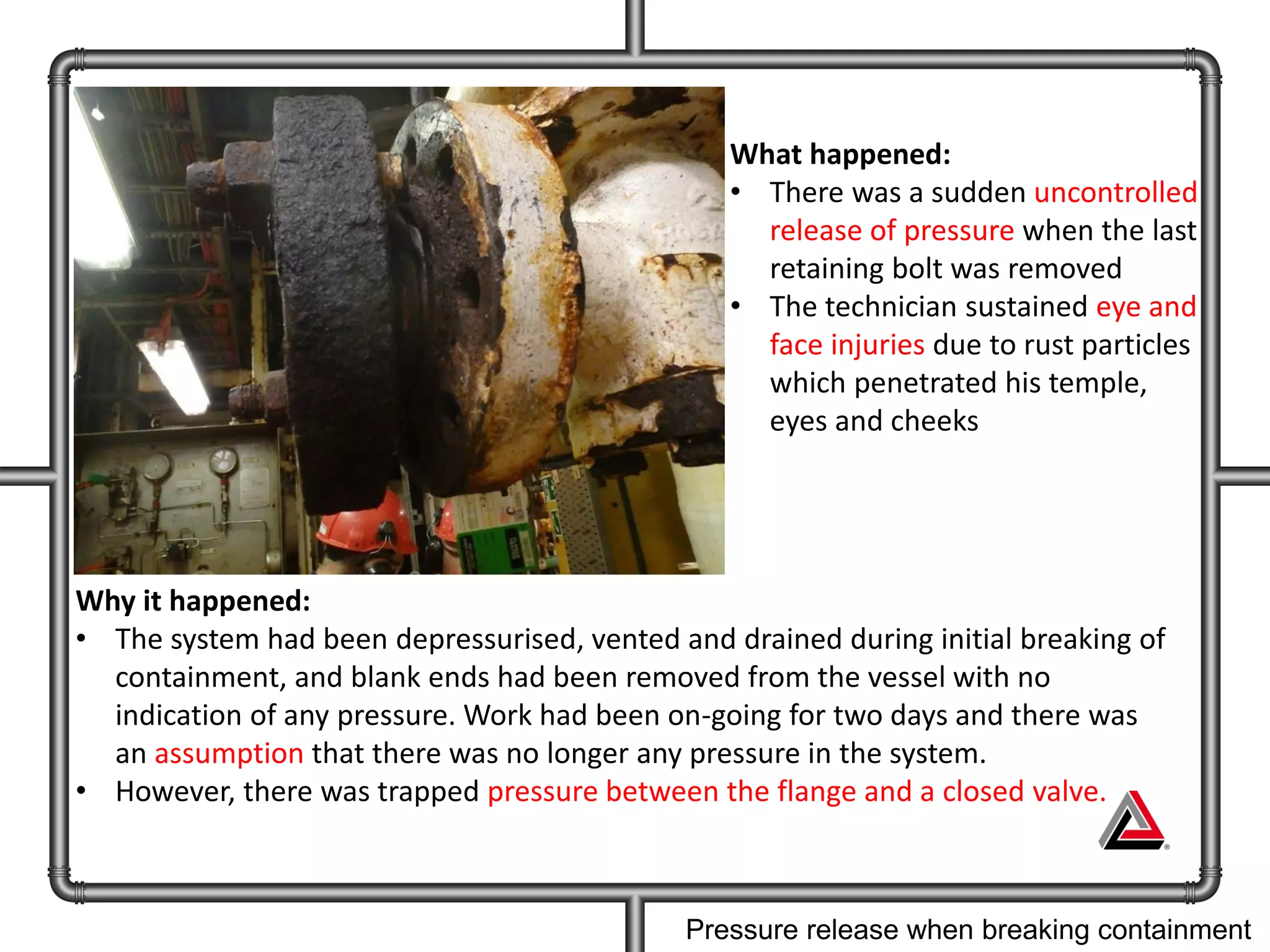
What happened:
• There was a sudden uncontrolled
release of pressure when the last
retaining bolt was removed
• The technician sustained eye and
face injuries due to rust particles
which penetrated his temple,
eyes and cheeks
What behaviours and steps could prevent this from occurring?
What might you do differently today in your work?
DISCUSS
Pressure release when breaking containment
Help and advice
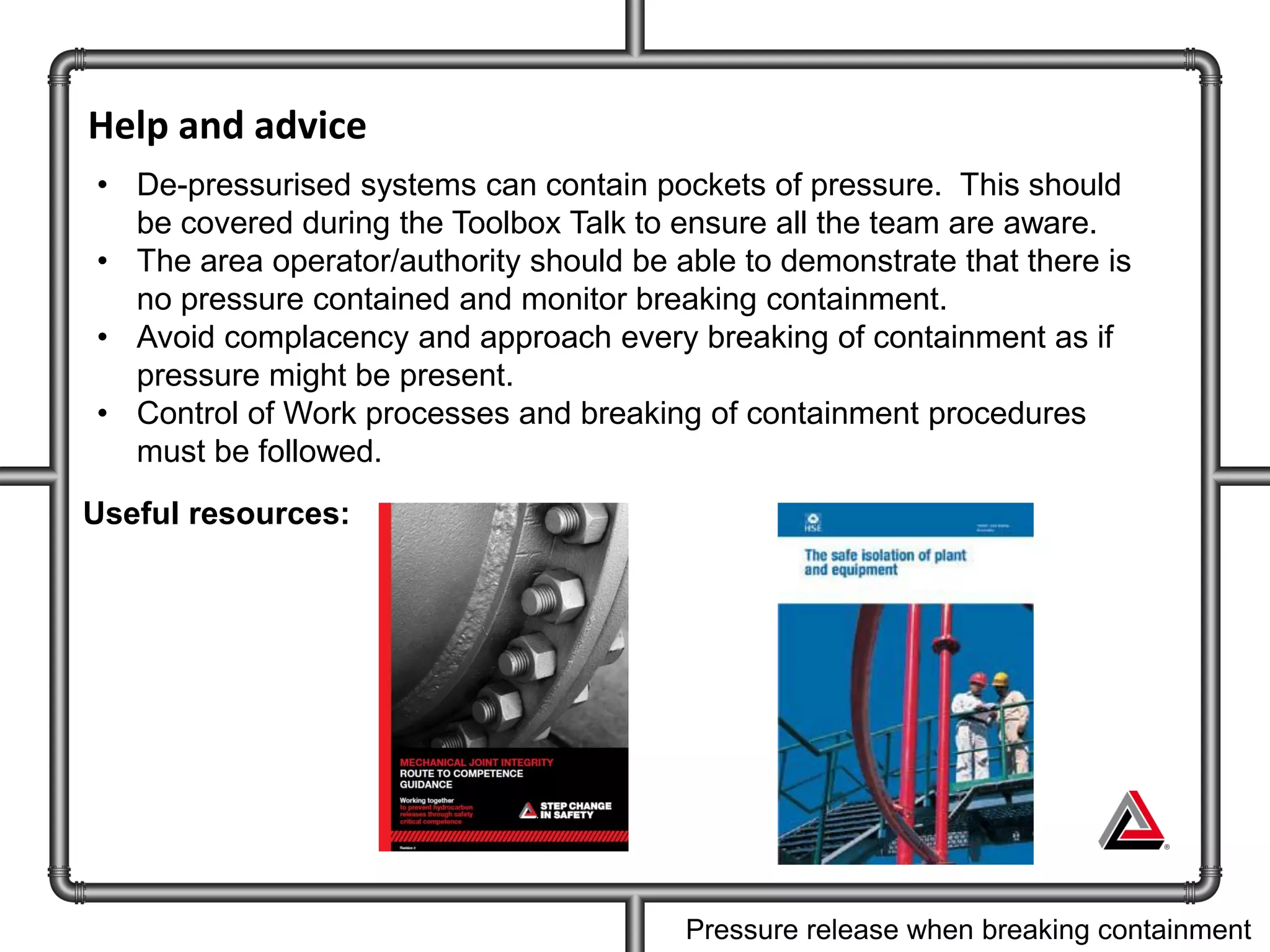
Useful resources:
Pressure release when breaking containment
• De-pressurised systems can contain pockets of pressure. This should
be covered during the Toolbox Talk to ensure all the team are aware.
• The area operator/authority should be able to demonstrate that there is
no pressure contained and monitor breaking containment.
• Avoid complacency and approach every breaking of containment as if
pressure might be present.
• Control of Work processes and breaking of containment procedures
must be followed.
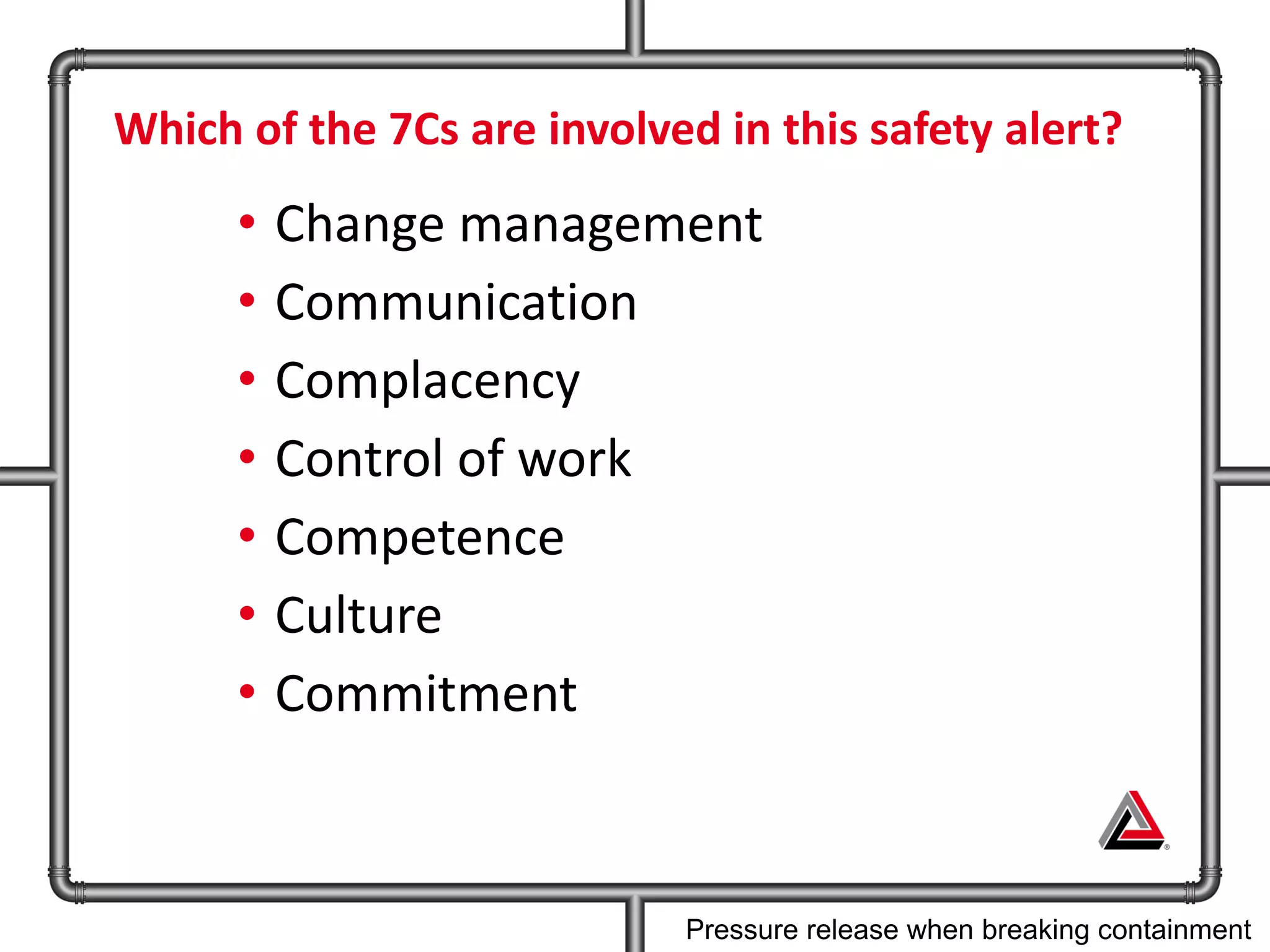
Which of the 7Cs are involved in this safety alert?
• Change management
• Communication
• Complacency
• Control of work
• Competence
• Culture
• Commitment
Pressure release when breaking containment

Safety Moment | Pressure release when breaking containment

  • 1.
    Safety Moment Pressure releasewhen breaking containment Disclaimer: this safety moment is designed to prevent similar incidents. All guidance herein is provided in good faith and Step Change in Safety nor its member companies accept responsibility for any inaccuracies or omissions contained within this Safety Moment.
  • 2.
    What hazards arethere? What could go wrong? What might be the consequences? A blind flange was being removed to replace corroded bolts. The valve was connected to a system which had been previously de-pressurised. DISCUSS Pressure release when breaking containment Corroded bolts to be removed Trapped pressure – unknown to work party Valve in closed position System previously depressurised
  • 3.
    Why it happened: •The system had been depressurised, vented and drained during initial breaking of containment, and blank ends had been removed from the vessel with no indication of any pressure. Work had been on-going for two days and there was an assumption that there was no longer any pressure in the system. • However, there was trapped pressure between the flange and a closed valve. Pressure release when breaking containment What happened: • There was a sudden uncontrolled release of pressure when the last retaining bolt was removed • The technician sustained eye and face injuries due to rust particles which penetrated his temple, eyes and cheeks
  • 4.
    What behaviours andsteps could prevent this from occurring? What might you do differently today in your work? DISCUSS Pressure release when breaking containment
  • 5.
    Help and advice Usefulresources: Pressure release when breaking containment • De-pressurised systems can contain pockets of pressure. This should be covered during the Toolbox Talk to ensure all the team are aware. • The area operator/authority should be able to demonstrate that there is no pressure contained and monitor breaking containment. • Avoid complacency and approach every breaking of containment as if pressure might be present. • Control of Work processes and breaking of containment procedures must be followed.
  • 6.
    Which of the7Cs are involved in this safety alert? • Change management • Communication • Complacency • Control of work • Competence • Culture • Commitment Pressure release when breaking containment