1
Difference Between Hand Tools
And Power Tools
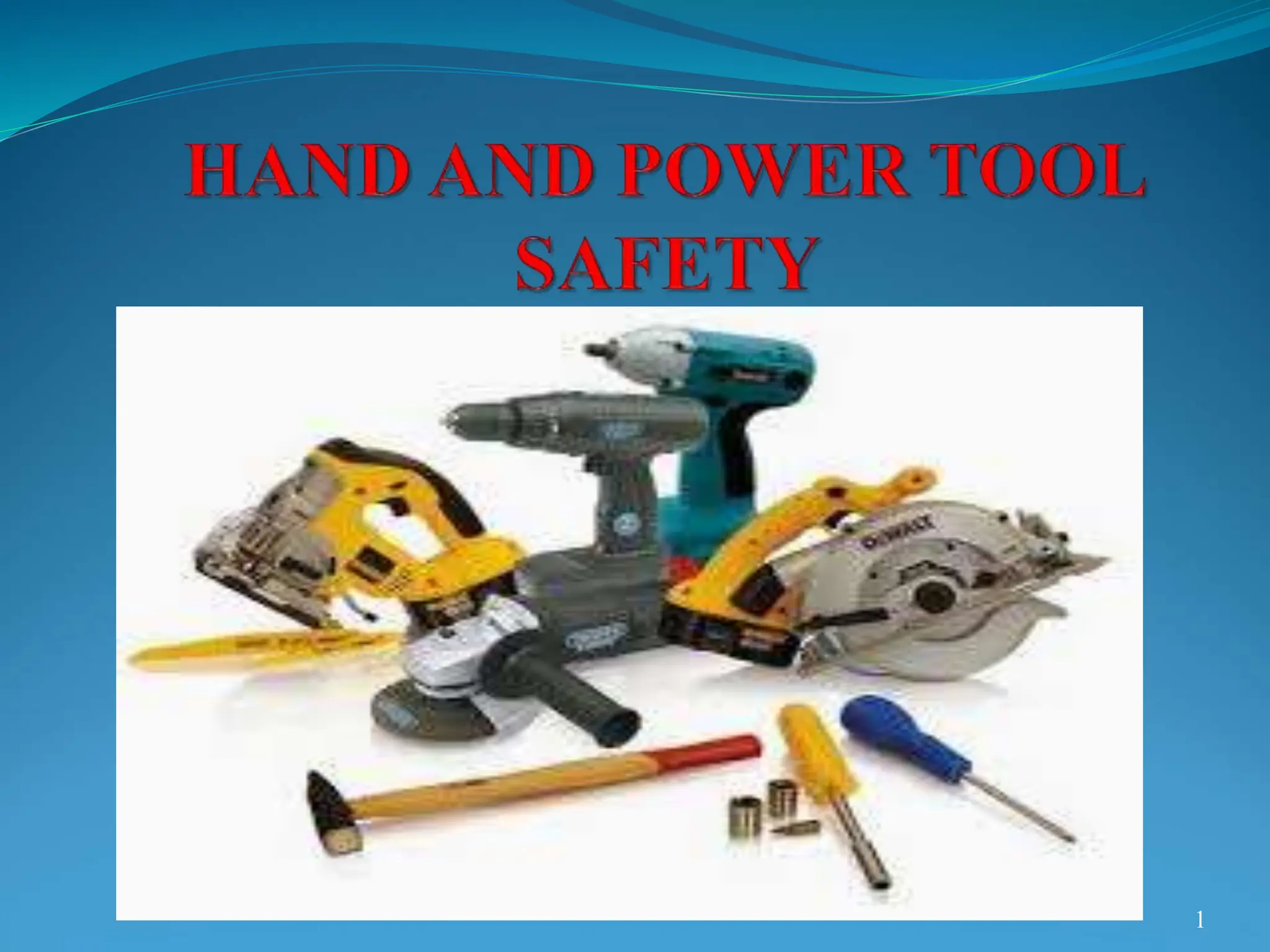
1.Hand tools
Have no power source, other than the physical force
applied by the user. Hand- tools include anything from axes to
hammers, and screwdrivers to wrenches.
2
2.Power Tools
Require a non-human power source to function properly
External (electricity, compressed air, etc.) or Internal (battery pack,
internal combustion engine, etc.).
Both kinds of tools require specific safety precautions or rules
to be followed; yet some rules will apply to both.
3
There are five basic rules that apply to all tools
used either hand or power.
5 Basic Rules
 Always wear the appropriate PPE when operating any tool
 Keep all tools in good working order
 Always follow the manufacturer’s instructions when operating any
tool
 Examine the tool for damage before each use
 Use the tool only for what it is designed to do
General “Hand Tool” Safety Rules
4
 Carry all sharp tools in a holster or sheath
 Tag worn, damaged or defective tools and do not use them
 Do not perform “makeshift” repairs to tools
 Do not use cheater bars
 Do not throw tools from one location to another or from one
employee to another
 When working on a ladder or scaffolding be sure you and your
tools are secure
 Do not carry tools in your hand while climbing, use a tool belt or
host the tools by using a hand line
The Greatest Hazards Of Hand Tools:
Misuse/Improper Maintenance
1. Using a screwdriver as a chisel Could cause the tip to break and
fly, hitting either the operator or bystanders
2. A wooden handle on tool such as a hammer or an axe is loose,
splintered or cracked The tool head could fly off and strike the
operator or bystanders
3. Impact tools, e.g. chisels and wedges, are unsafe if their heads
are “mushroomed” The heads might shatter on impact sending
sharp fragments flying
4. Wrenches must not be used if the jaws are sprung, cracked or
twisted The wrench could slip off
5
SAFETY RULES For Specific Hand Tools
HAMMERS
6
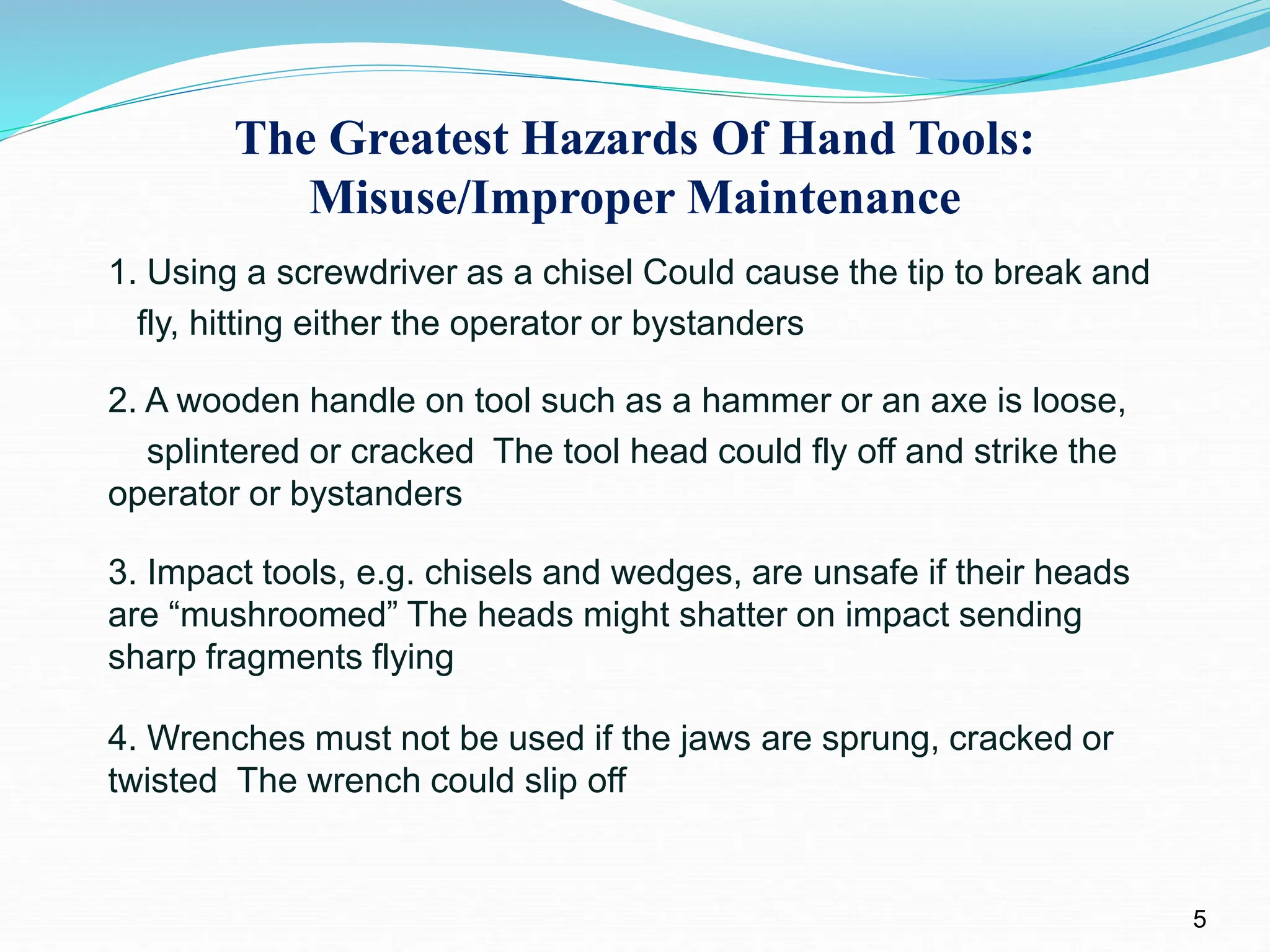
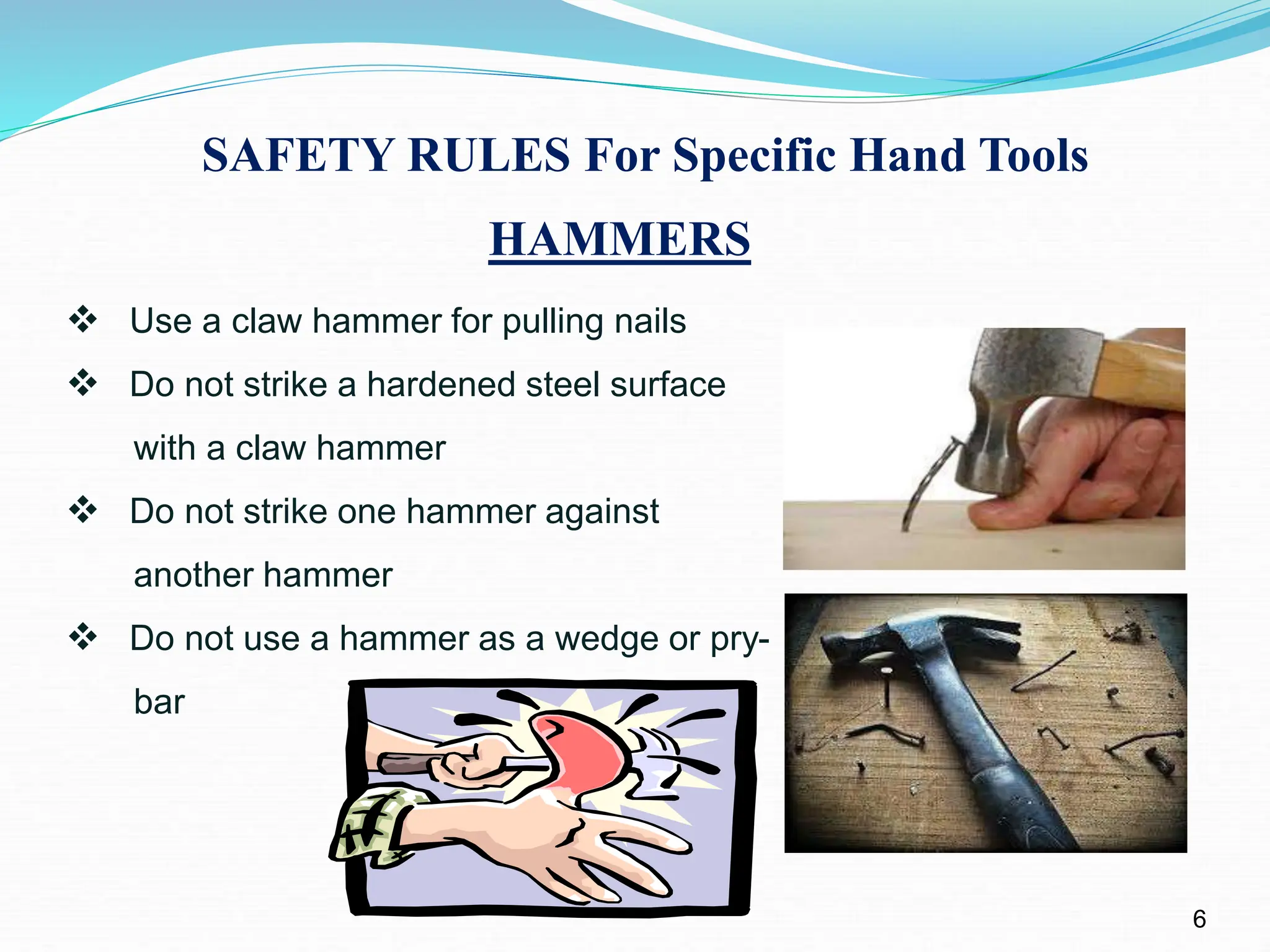
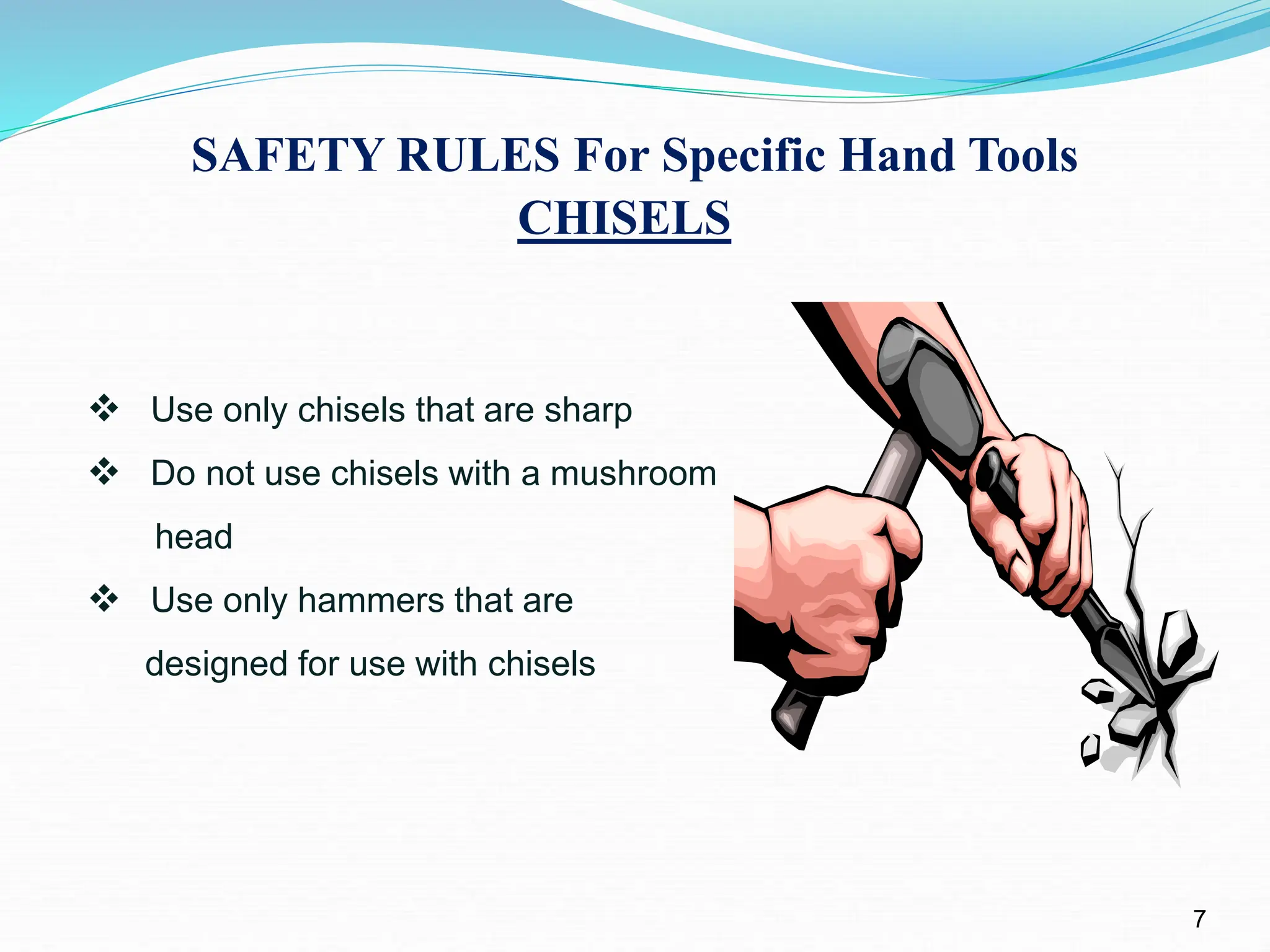
 Use a claw hammer for pulling nails
 Do not strike a hardened steel surface
with a claw hammer
 Do not strike one hammer against
another hammer
 Do not use a hammer as a wedge or pry-
bar
SAFETY RULES For Specific Hand Tools
CHISELS
7
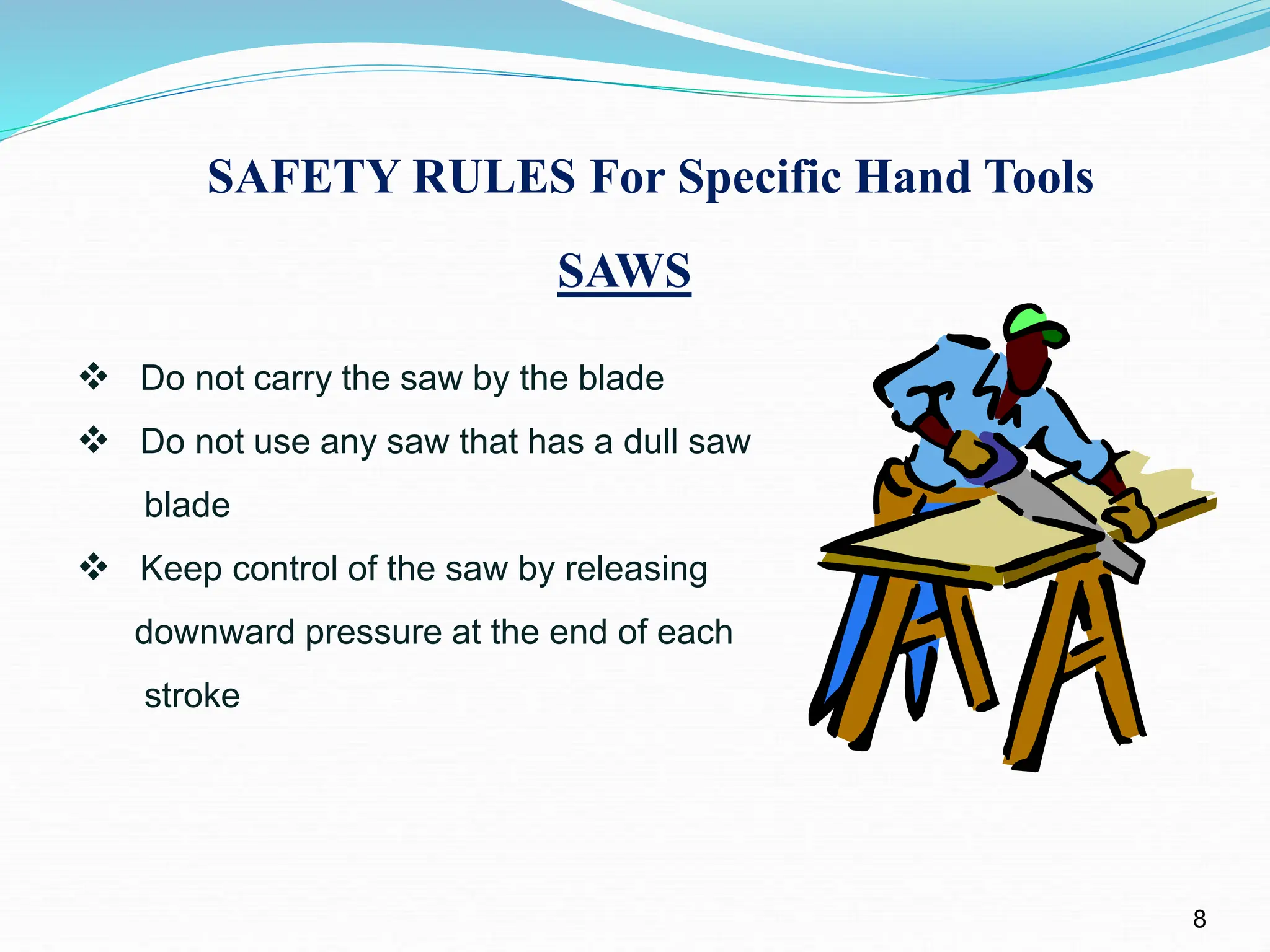
 Use only chisels that are sharp
 Do not use chisels with a mushroom
head
 Use only hammers that are
designed for use with chisels
SAFETY RULES For Specific Hand Tools
SAWS
8
 Do not carry the saw by the blade
 Do not use any saw that has a dull saw
blade
 Keep control of the saw by releasing
downward pressure at the end of each
stroke
SAFETY RULES For Specific Hand Tools
9
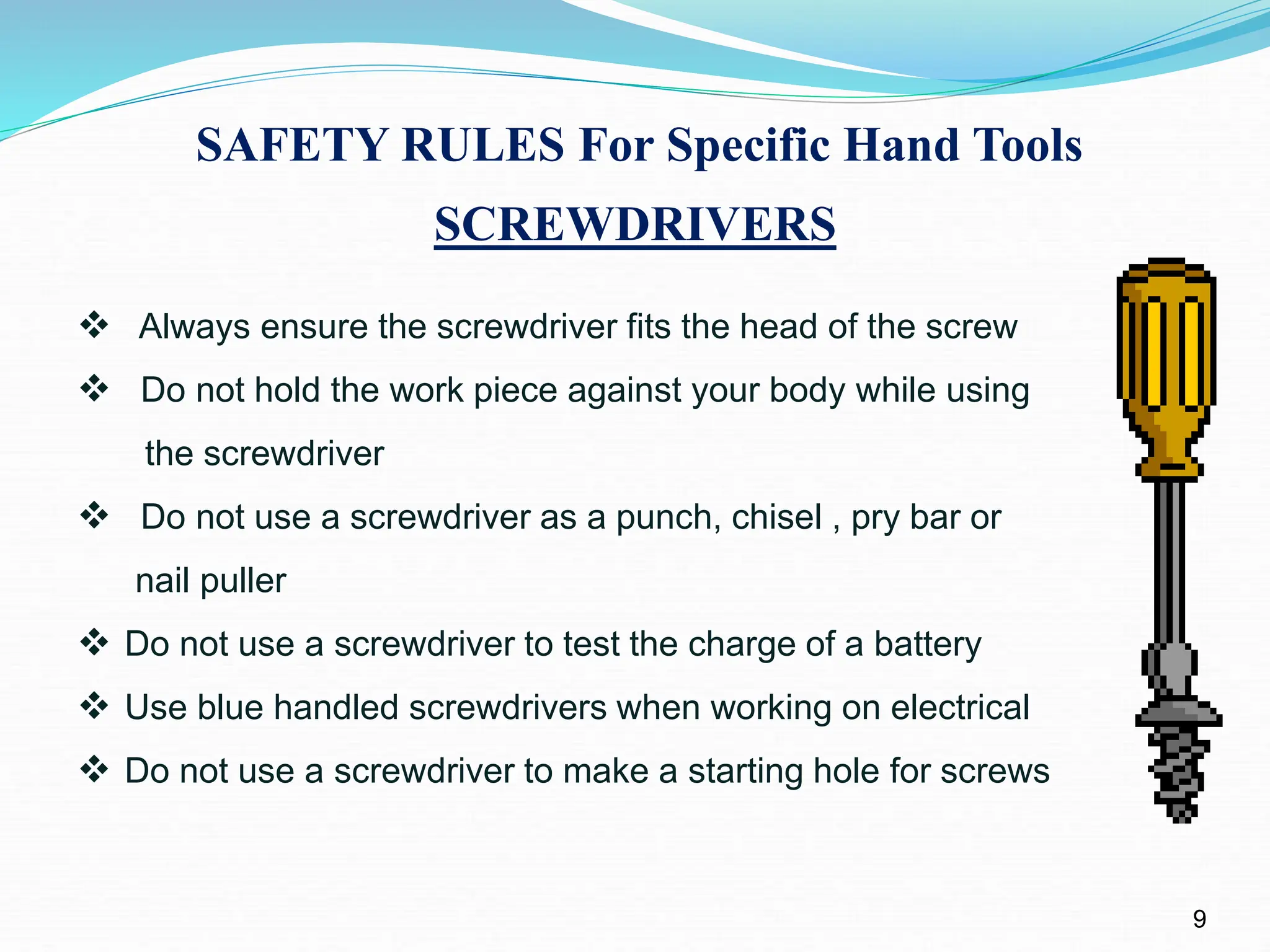
SCREWDRIVERS
 Always ensure the screwdriver fits the head of the screw
 Do not hold the work piece against your body while using
the screwdriver
 Do not use a screwdriver as a punch, chisel , pry bar or
nail puller
 Do not use a screwdriver to test the charge of a battery
 Use blue handled screwdrivers when working on electrical
 Do not use a screwdriver to make a starting hole for screws
SAFETY RULES For Specific Hand Tools
10
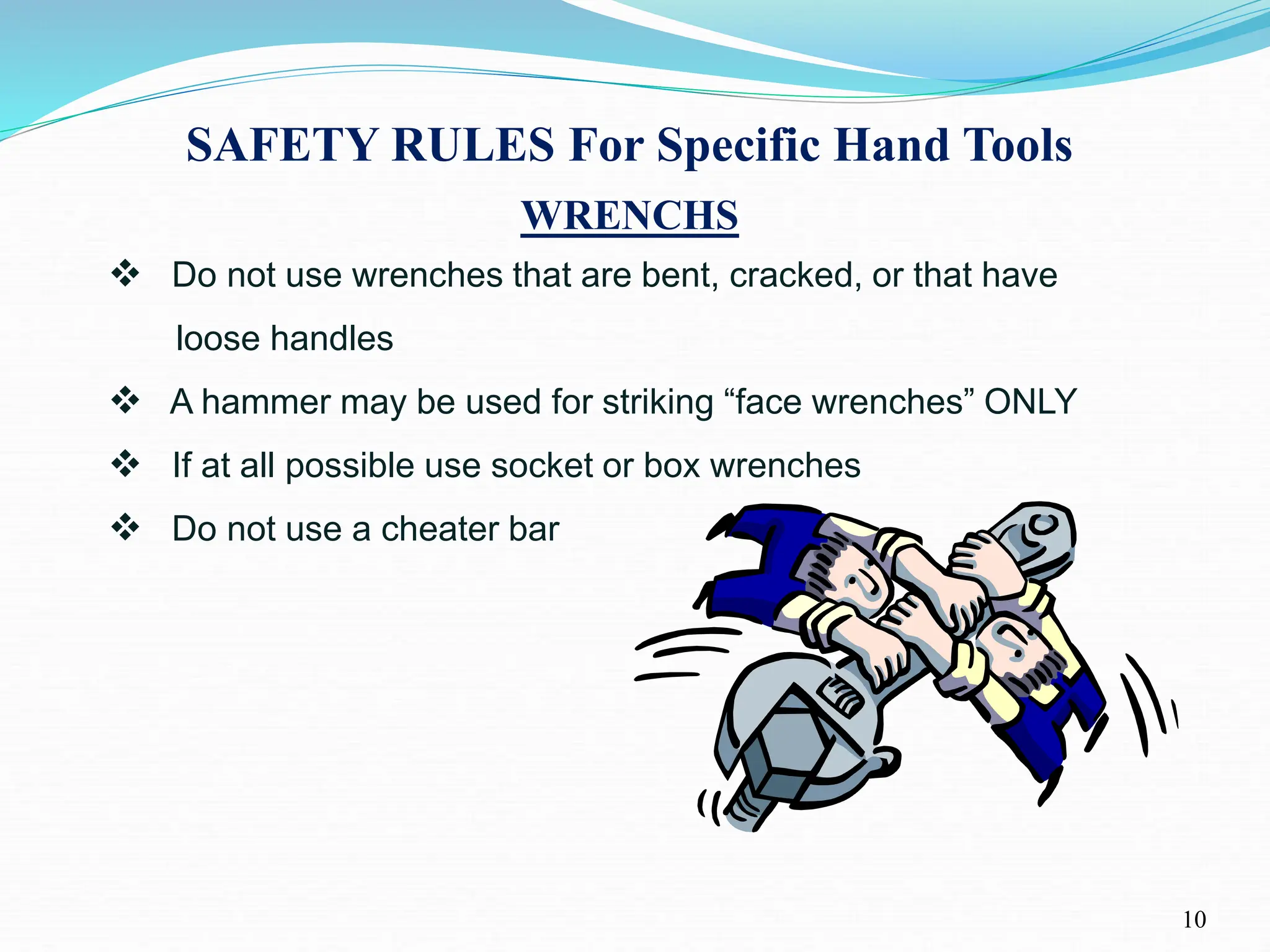
WRENCHS
 Do not use wrenches that are bent, cracked, or that have
loose handles
 A hammer may be used for striking “face wrenches” ONLY
 If at all possible use socket or box wrenches
 Do not use a cheater bar
SAFETY RULES For Specific Hand Tools
11
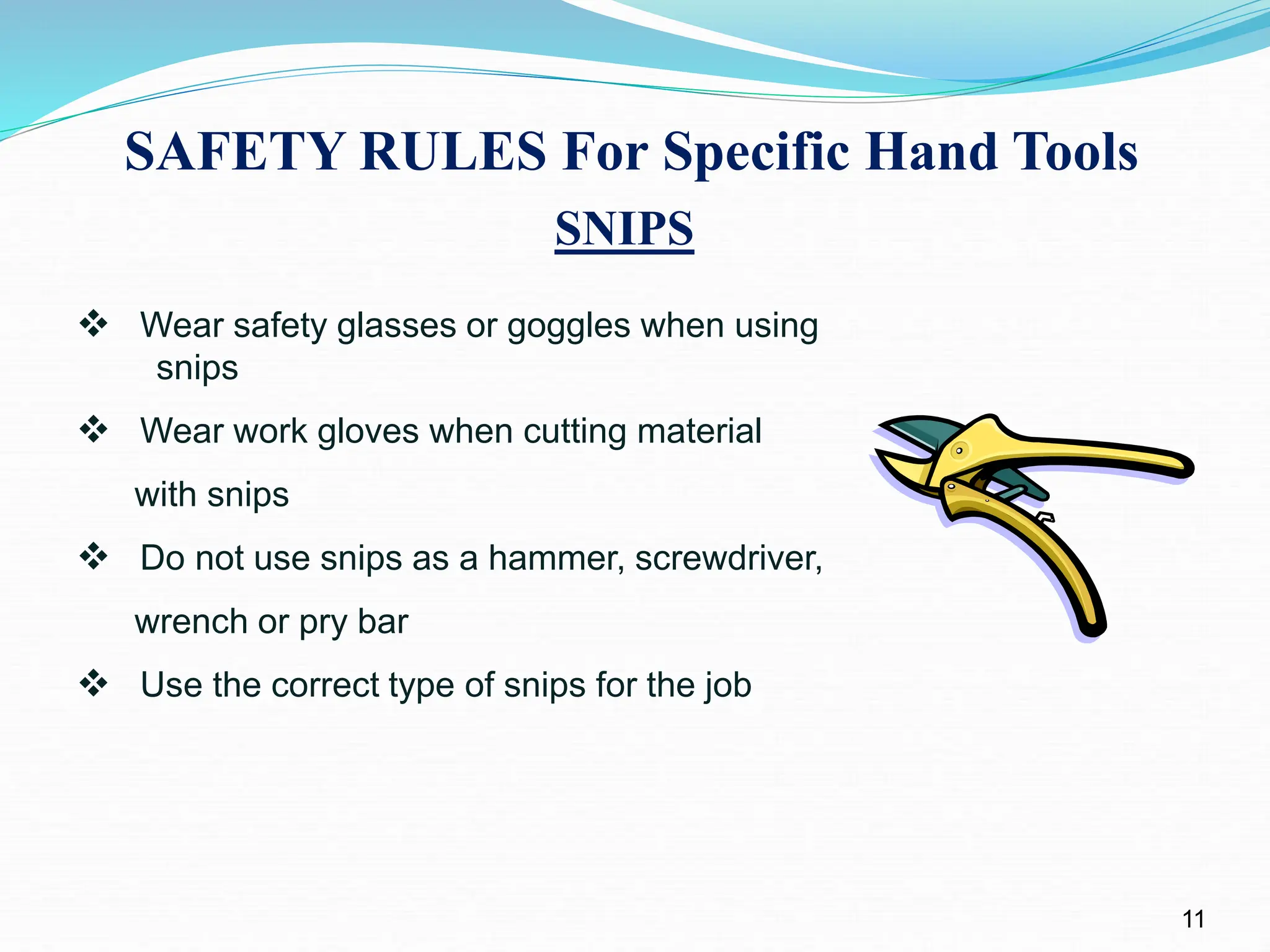
SNIPS
 Wear safety glasses or goggles when using
snips
 Wear work gloves when cutting material
with snips
 Do not use snips as a hammer, screwdriver,
wrench or pry bar
 Use the correct type of snips for the job
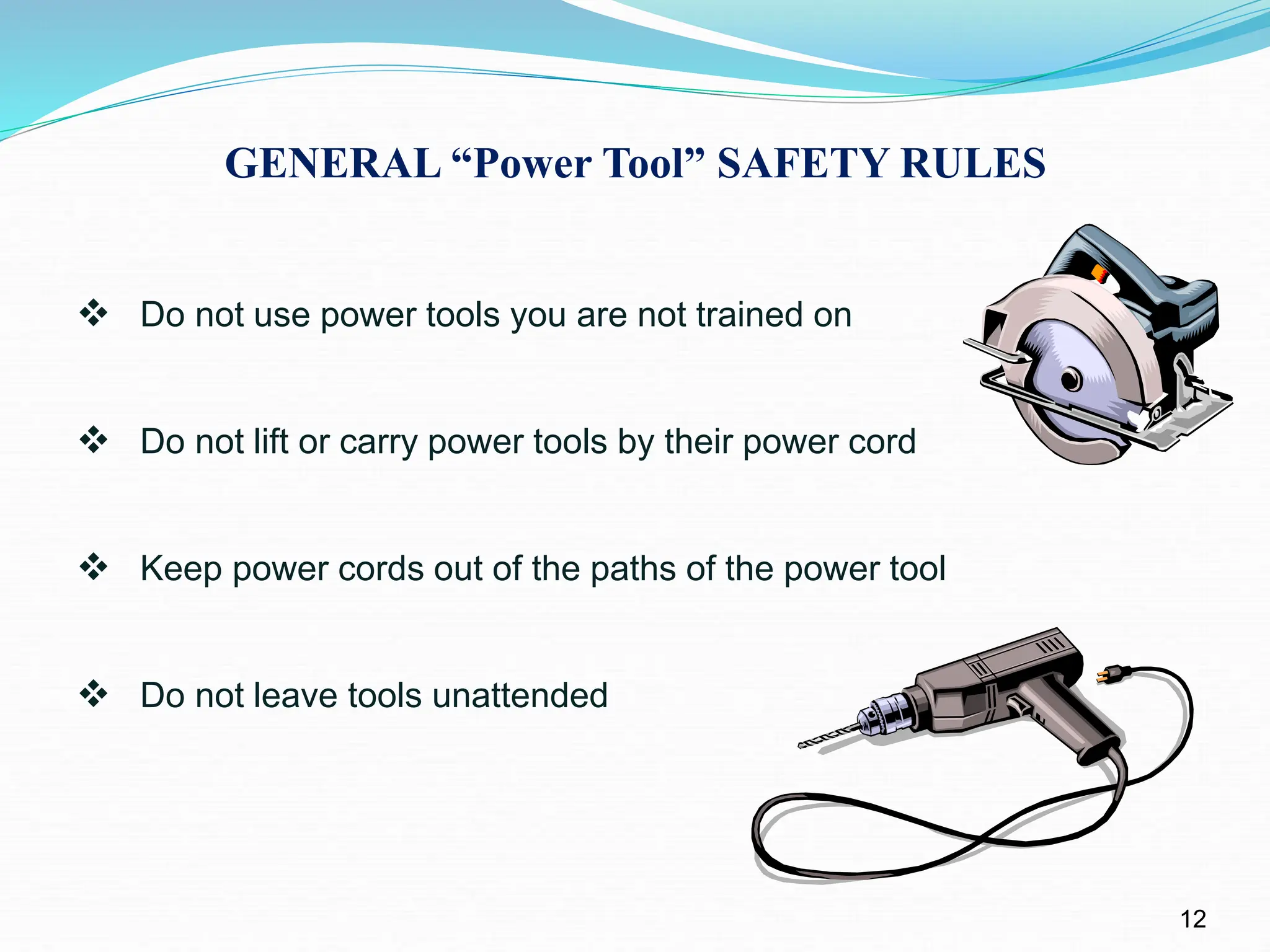
GENERAL “Power Tool” SAFETY RULES
12
 Do not use power tools you are not trained on
 Do not lift or carry power tools by their power cord
 Keep power cords out of the paths of the power tool
 Do not leave tools unattended
GENERAL “Power Tool” SAFETY RULES
13
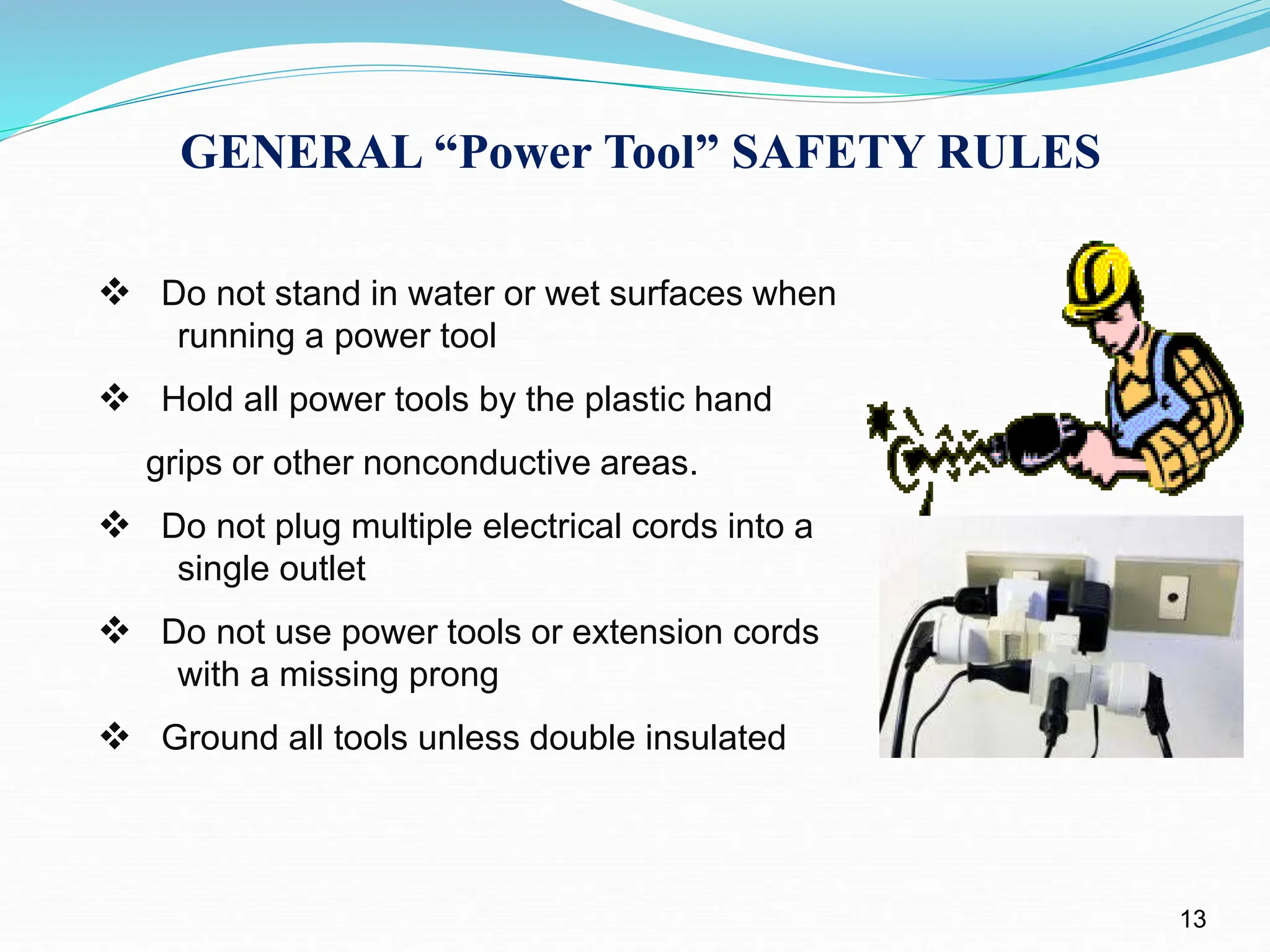
 Do not stand in water or wet surfaces when
running a power tool
 Hold all power tools by the plastic hand
grips or other nonconductive areas.
 Do not plug multiple electrical cords into a
single outlet
 Do not use power tools or extension cords
with a missing prong
 Ground all tools unless double insulated
GENERAL “Power Tool” SAFETY RULES
14
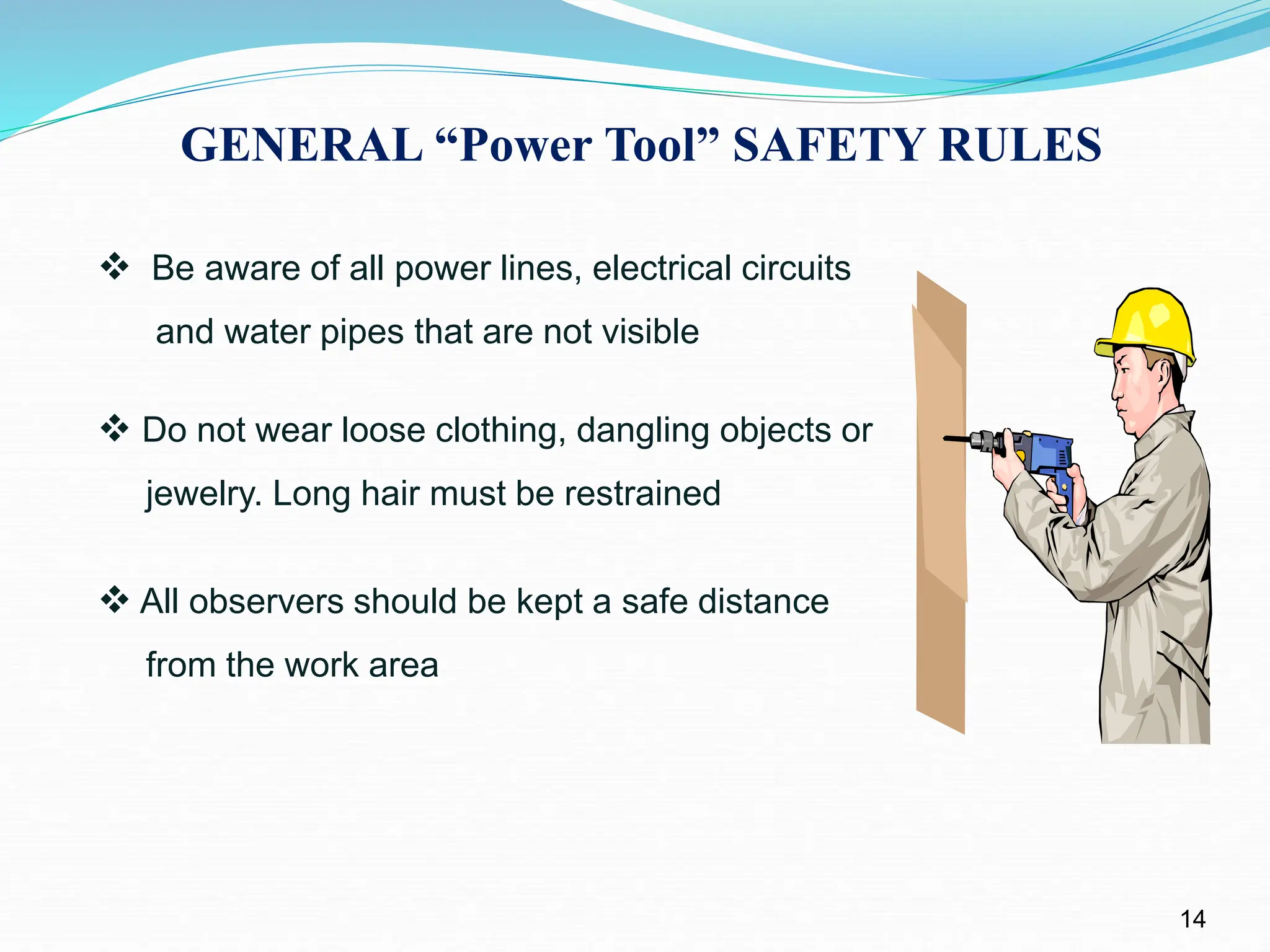
 Be aware of all power lines, electrical circuits
and water pipes that are not visible
 Do not wear loose clothing, dangling objects or
jewelry. Long hair must be restrained
 All observers should be kept a safe distance
from the work area
Abrasive-Wheel Tools
15
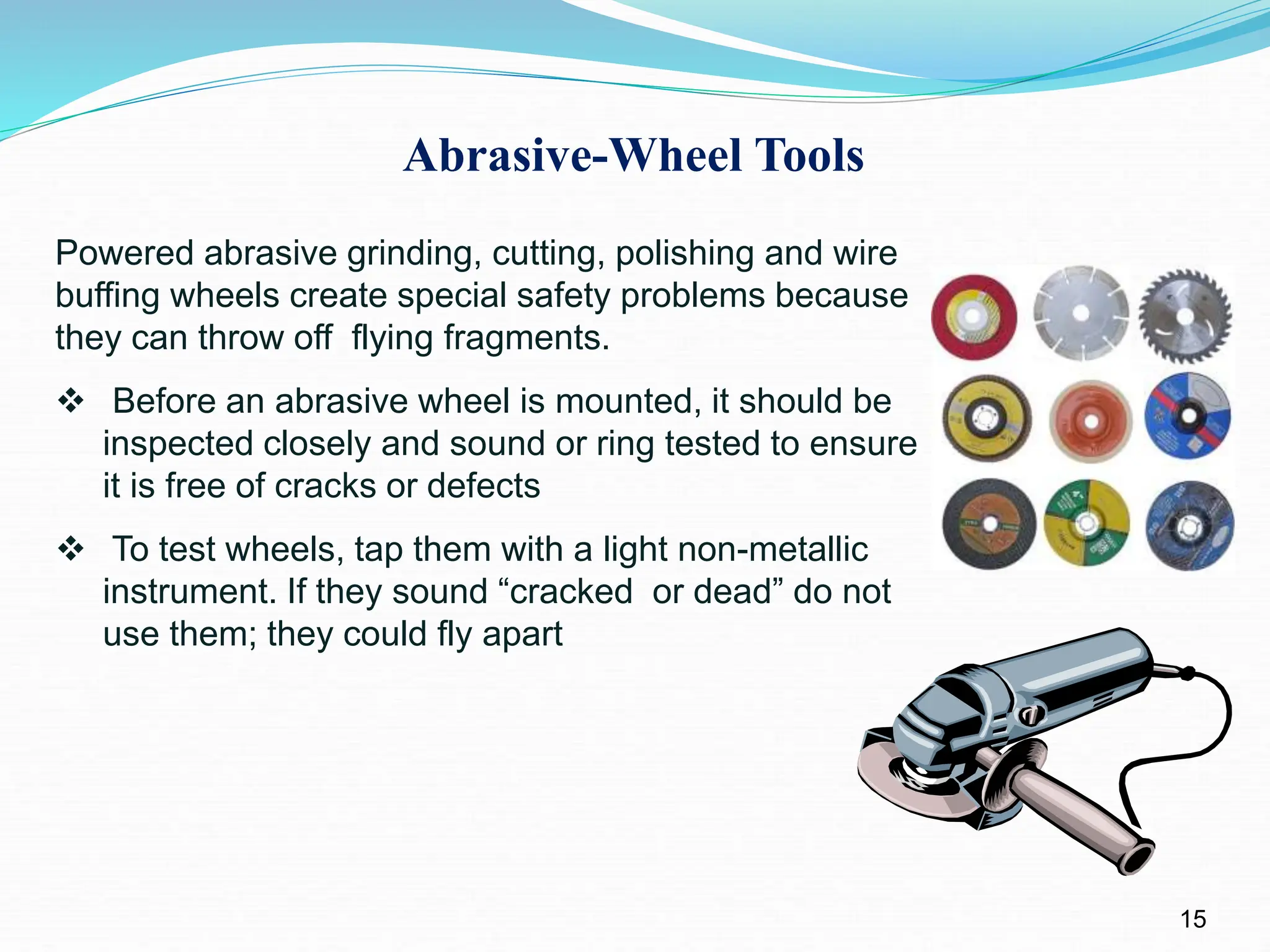
Powered abrasive grinding, cutting, polishing and wire
buffing wheels create special safety problems because
they can throw off flying fragments.
 Before an abrasive wheel is mounted, it should be
inspected closely and sound or ring tested to ensure
it is free of cracks or defects
 To test wheels, tap them with a light non-metallic
instrument. If they sound “cracked or dead” do not
use them; they could fly apart
Abrasive-Wheel Tools
16
 Always use the right wheel or cup for
the job you are performing. Be sure to
match the “RPM Rating” with the tool.
Finally, pay close attention any “special
warnings,” that the manufacturer may
offer, such as “do not use in wet or high-
moisture conditions.”
Circular Saws
17
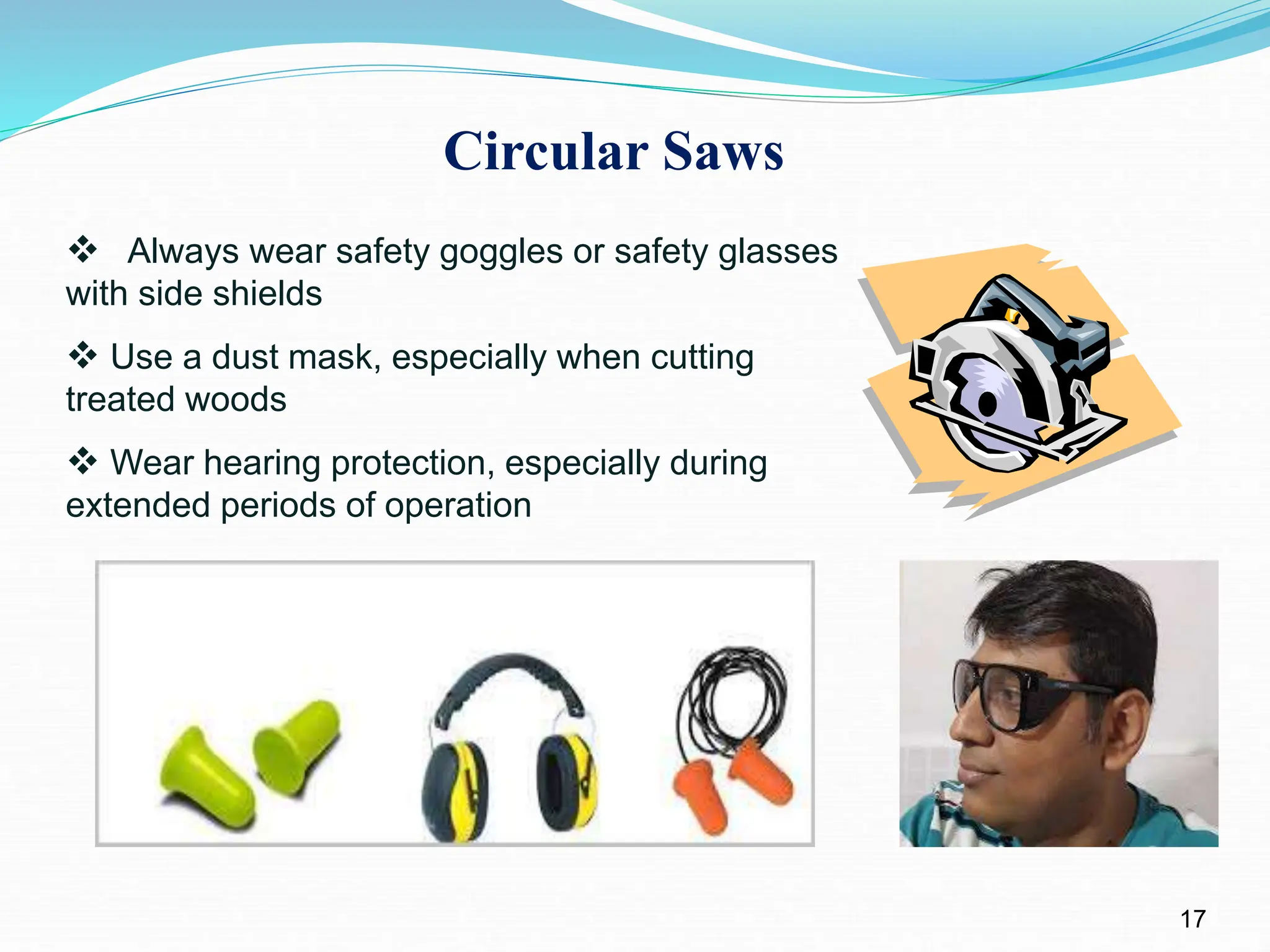
 Always wear safety goggles or safety glasses
with side shields
 Use a dust mask, especially when cutting
treated woods
 Wear hearing protection, especially during
extended periods of operation
Circular Saws
18
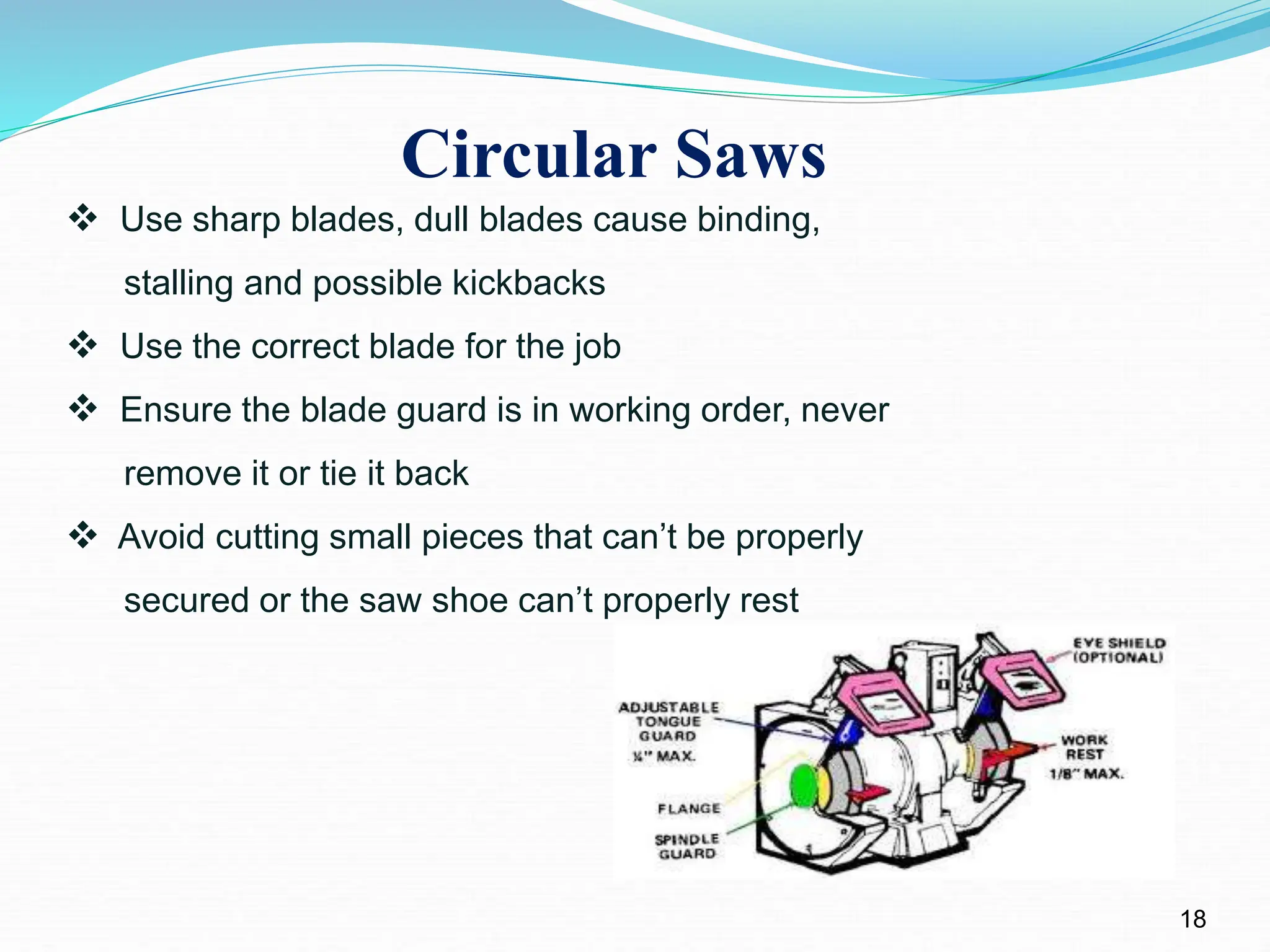
 Use sharp blades, dull blades cause binding,
stalling and possible kickbacks
 Use the correct blade for the job
 Ensure the blade guard is in working order, never
remove it or tie it back
 Avoid cutting small pieces that can’t be properly
secured or the saw shoe can’t properly rest
Drills
19
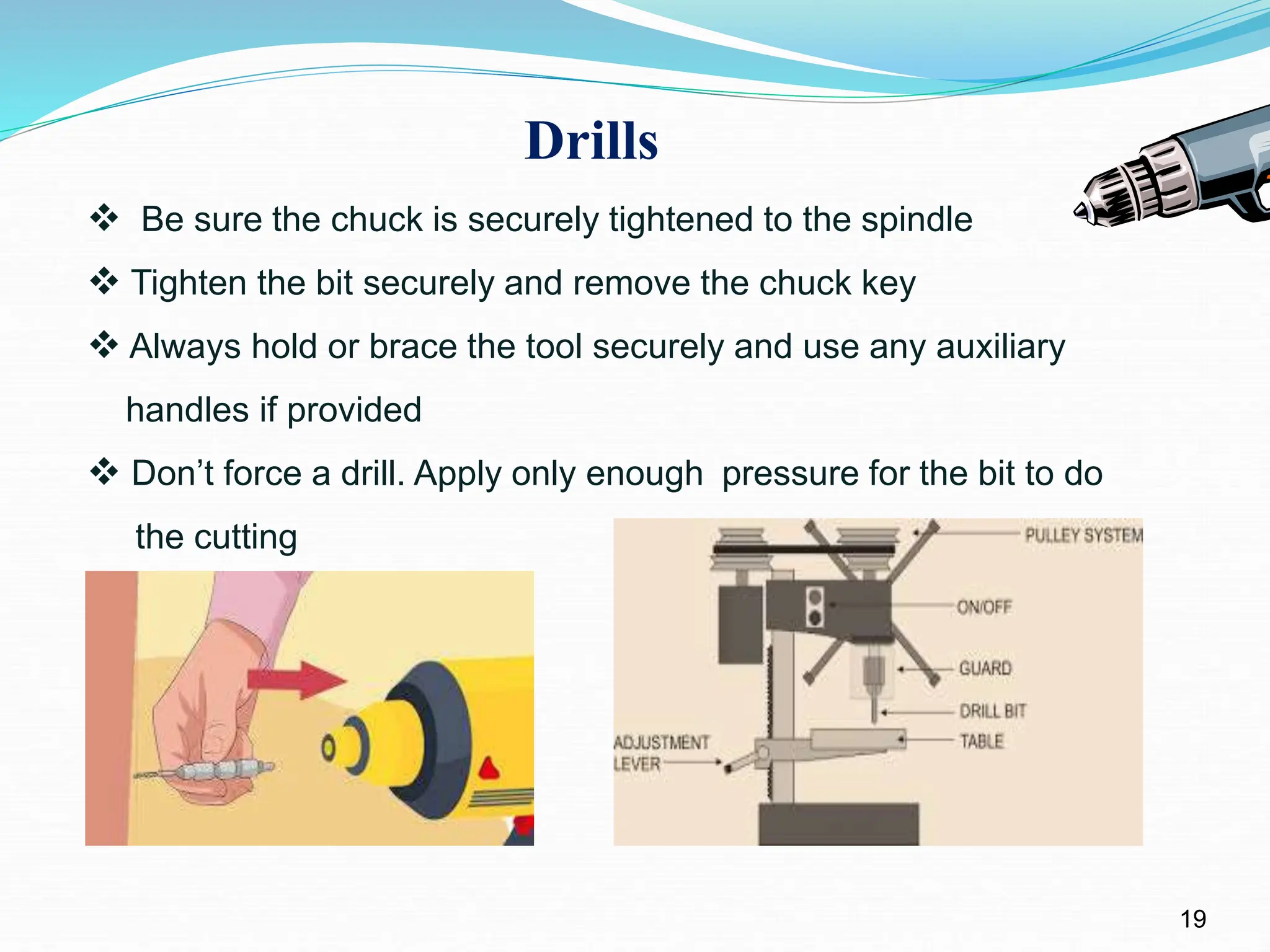
 Be sure the chuck is securely tightened to the spindle
 Tighten the bit securely and remove the chuck key
 Always hold or brace the tool securely and use any auxiliary
handles if provided
 Don’t force a drill. Apply only enough pressure for the bit to do
the cutting
Summary
20
Hazards are usually the result of improper tool use or not following one or
more of these protection techniques:
 Inspecting the tool before use
 Using PPE (Personal Protective Equipment)
 Using protective guards
 Properly storing the tool
 Using safe handling techniques

Safety Awareness Program HAND & POWER TOOLS SAFETY.ppt

  • 1.
  • 2.
    Difference Between HandTools And Power Tools 1.Hand tools Have no power source, other than the physical force applied by the user. Hand- tools include anything from axes to hammers, and screwdrivers to wrenches. 2 2.Power Tools Require a non-human power source to function properly External (electricity, compressed air, etc.) or Internal (battery pack, internal combustion engine, etc.). Both kinds of tools require specific safety precautions or rules to be followed; yet some rules will apply to both.
  • 3.
    3 There are fivebasic rules that apply to all tools used either hand or power. 5 Basic Rules  Always wear the appropriate PPE when operating any tool  Keep all tools in good working order  Always follow the manufacturer’s instructions when operating any tool  Examine the tool for damage before each use  Use the tool only for what it is designed to do
  • 4.
    General “Hand Tool”Safety Rules 4  Carry all sharp tools in a holster or sheath  Tag worn, damaged or defective tools and do not use them  Do not perform “makeshift” repairs to tools  Do not use cheater bars  Do not throw tools from one location to another or from one employee to another  When working on a ladder or scaffolding be sure you and your tools are secure  Do not carry tools in your hand while climbing, use a tool belt or host the tools by using a hand line
  • 5.
    The Greatest HazardsOf Hand Tools: Misuse/Improper Maintenance 1. Using a screwdriver as a chisel Could cause the tip to break and fly, hitting either the operator or bystanders 2. A wooden handle on tool such as a hammer or an axe is loose, splintered or cracked The tool head could fly off and strike the operator or bystanders 3. Impact tools, e.g. chisels and wedges, are unsafe if their heads are “mushroomed” The heads might shatter on impact sending sharp fragments flying 4. Wrenches must not be used if the jaws are sprung, cracked or twisted The wrench could slip off 5
  • 6.
    SAFETY RULES ForSpecific Hand Tools HAMMERS 6  Use a claw hammer for pulling nails  Do not strike a hardened steel surface with a claw hammer  Do not strike one hammer against another hammer  Do not use a hammer as a wedge or pry- bar
  • 7.
    SAFETY RULES ForSpecific Hand Tools CHISELS 7  Use only chisels that are sharp  Do not use chisels with a mushroom head  Use only hammers that are designed for use with chisels
  • 8.
    SAFETY RULES ForSpecific Hand Tools SAWS 8  Do not carry the saw by the blade  Do not use any saw that has a dull saw blade  Keep control of the saw by releasing downward pressure at the end of each stroke
  • 9.
    SAFETY RULES ForSpecific Hand Tools 9 SCREWDRIVERS  Always ensure the screwdriver fits the head of the screw  Do not hold the work piece against your body while using the screwdriver  Do not use a screwdriver as a punch, chisel , pry bar or nail puller  Do not use a screwdriver to test the charge of a battery  Use blue handled screwdrivers when working on electrical  Do not use a screwdriver to make a starting hole for screws
  • 10.
    SAFETY RULES ForSpecific Hand Tools 10 WRENCHS  Do not use wrenches that are bent, cracked, or that have loose handles  A hammer may be used for striking “face wrenches” ONLY  If at all possible use socket or box wrenches  Do not use a cheater bar
  • 11.
    SAFETY RULES ForSpecific Hand Tools 11 SNIPS  Wear safety glasses or goggles when using snips  Wear work gloves when cutting material with snips  Do not use snips as a hammer, screwdriver, wrench or pry bar  Use the correct type of snips for the job
  • 12.
    GENERAL “Power Tool”SAFETY RULES 12  Do not use power tools you are not trained on  Do not lift or carry power tools by their power cord  Keep power cords out of the paths of the power tool  Do not leave tools unattended
  • 13.
    GENERAL “Power Tool”SAFETY RULES 13  Do not stand in water or wet surfaces when running a power tool  Hold all power tools by the plastic hand grips or other nonconductive areas.  Do not plug multiple electrical cords into a single outlet  Do not use power tools or extension cords with a missing prong  Ground all tools unless double insulated
  • 14.
    GENERAL “Power Tool”SAFETY RULES 14  Be aware of all power lines, electrical circuits and water pipes that are not visible  Do not wear loose clothing, dangling objects or jewelry. Long hair must be restrained  All observers should be kept a safe distance from the work area
  • 15.
    Abrasive-Wheel Tools 15 Powered abrasivegrinding, cutting, polishing and wire buffing wheels create special safety problems because they can throw off flying fragments.  Before an abrasive wheel is mounted, it should be inspected closely and sound or ring tested to ensure it is free of cracks or defects  To test wheels, tap them with a light non-metallic instrument. If they sound “cracked or dead” do not use them; they could fly apart
  • 16.
    Abrasive-Wheel Tools 16  Alwaysuse the right wheel or cup for the job you are performing. Be sure to match the “RPM Rating” with the tool. Finally, pay close attention any “special warnings,” that the manufacturer may offer, such as “do not use in wet or high- moisture conditions.”
  • 17.
    Circular Saws 17  Alwayswear safety goggles or safety glasses with side shields  Use a dust mask, especially when cutting treated woods  Wear hearing protection, especially during extended periods of operation
  • 18.
    Circular Saws 18  Usesharp blades, dull blades cause binding, stalling and possible kickbacks  Use the correct blade for the job  Ensure the blade guard is in working order, never remove it or tie it back  Avoid cutting small pieces that can’t be properly secured or the saw shoe can’t properly rest
  • 19.
    Drills 19  Be surethe chuck is securely tightened to the spindle  Tighten the bit securely and remove the chuck key  Always hold or brace the tool securely and use any auxiliary handles if provided  Don’t force a drill. Apply only enough pressure for the bit to do the cutting
  • 20.
    Summary 20 Hazards are usuallythe result of improper tool use or not following one or more of these protection techniques:  Inspecting the tool before use  Using PPE (Personal Protective Equipment)  Using protective guards  Properly storing the tool  Using safe handling techniques