Falling/Flying
{ Object Safety
Am I In Danger?


You are at risk from falling objects when
you are beneath
cranes, scaffolds, etc., or where
overhead work is being performed.
There is a danger from flying objects
when power tools, or activities like
pushing, pulling, or prying, may cause
objects to become airborne. Injuries can
range from minor abrasions to
concussions, blindness, or death.
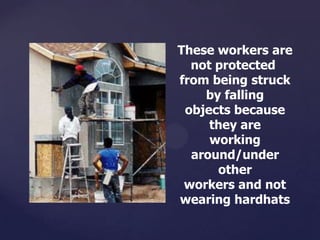
These workers are
not protected
from being struck
by falling
objects because
they are
working
around/under
other
workers and not
wearing hardhats
How Do I Avoid Hazards?
• Wear hardhats.
• Stack materials to prevent sliding, falling, or
collapsing.
• Use protective measures such as toeboards and
debris nets.
• Secure tools and equipment and be aware of their
location to prevent dropping items underneath your
work area.
Power Tools, Machines, etc.
• Use safety glasses, goggles, face
shields, etc., where machines or tools may
cause flying particles.
• Inspect tools, such as saws and lathes, to
insure that protective guards are in good
condition.
• Make sure you are trained in the proper
operation of powder actuated tools.
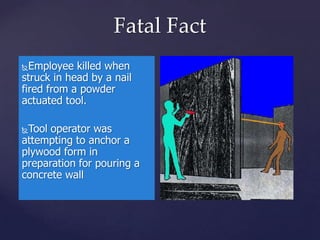
Fatal Fact
Employee killed when
struck in head by a nail
fired from a powder
actuated tool.


Tool operator was
attempting to anchor a
plywood form in
preparation for pouring a
concrete wall

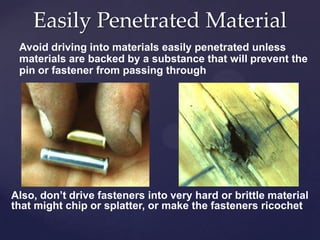
Easily Penetrated Material
Avoid driving into materials easily penetrated unless
materials are backed by a substance that will prevent the
pin or fastener from passing through

Also, don’t drive fasteners into very hard or brittle material
that might chip or splatter, or make the fasteners ricochet
Cranes and Hoists
• Avoid working underneath loads being
moved.

• Barricade hazard areas and post warning
signs.
• Inspect cranes and hoists to see that all
components, such as wire rope, lifting
hooks, chains, etc., are in good condition.

• Do not exceed lifting capacity of cranes and
hoists
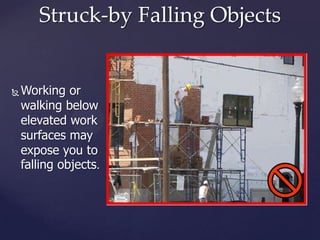
Struck-by Falling Objects



Working or
walking below
elevated work
surfaces may
expose you to
falling objects.
Struck-by Falling Objects


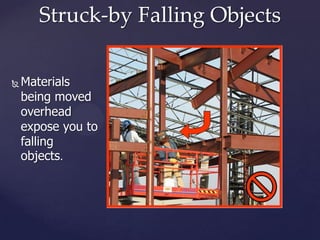
Materials
being moved
overhead
expose you to
falling
objects.
Overhead Work
• Secure tools and materials to prevent them
from falling on people below.
• Barricade hazard areas and post warning
signs.

• Use toeboards, screens, or guardrails on
scaffolds to prevent falling objects, or,
• Use debris nets, catch platforms, or
canopies to catch or deflect falling objects.
Accident Prevention


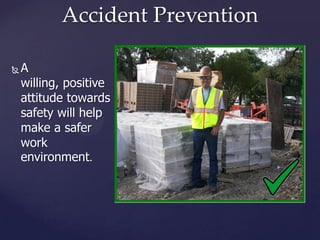
A
willing, positive
attitude towards
safety will help
make a safer
work
environment.
Accident Prevention




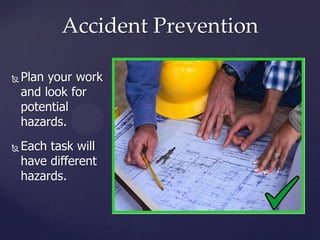
Plan your work
and look for
potential
hazards.
Each task will
have different
hazards.
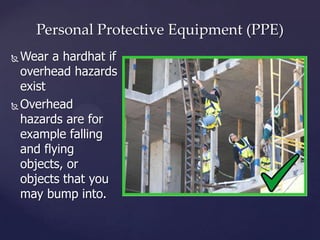
Personal Protective Equipment (PPE)
Wear a hardhat if
overhead hazards
exist
 Overhead
hazards are for
example falling
and flying
objects, or
objects that you
may bump into.

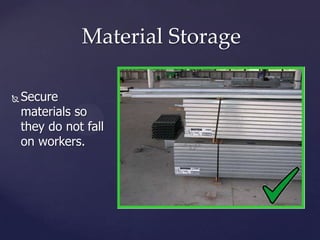
Material Storage


Secure
materials so
they do not fall
on workers.
Falling flying object safety

Falling flying object safety

  • 1.
  • 2.
    Am I InDanger?  You are at risk from falling objects when you are beneath cranes, scaffolds, etc., or where overhead work is being performed. There is a danger from flying objects when power tools, or activities like pushing, pulling, or prying, may cause objects to become airborne. Injuries can range from minor abrasions to concussions, blindness, or death.
  • 3.
    These workers are notprotected from being struck by falling objects because they are working around/under other workers and not wearing hardhats
  • 4.
    How Do IAvoid Hazards? • Wear hardhats. • Stack materials to prevent sliding, falling, or collapsing. • Use protective measures such as toeboards and debris nets. • Secure tools and equipment and be aware of their location to prevent dropping items underneath your work area.
  • 5.
    Power Tools, Machines,etc. • Use safety glasses, goggles, face shields, etc., where machines or tools may cause flying particles. • Inspect tools, such as saws and lathes, to insure that protective guards are in good condition. • Make sure you are trained in the proper operation of powder actuated tools.
  • 6.
    Fatal Fact Employee killedwhen struck in head by a nail fired from a powder actuated tool.  Tool operator was attempting to anchor a plywood form in preparation for pouring a concrete wall 
  • 7.
    Easily Penetrated Material Avoiddriving into materials easily penetrated unless materials are backed by a substance that will prevent the pin or fastener from passing through Also, don’t drive fasteners into very hard or brittle material that might chip or splatter, or make the fasteners ricochet
  • 8.
    Cranes and Hoists •Avoid working underneath loads being moved. • Barricade hazard areas and post warning signs. • Inspect cranes and hoists to see that all components, such as wire rope, lifting hooks, chains, etc., are in good condition. • Do not exceed lifting capacity of cranes and hoists
  • 9.
    Struck-by Falling Objects  Workingor walking below elevated work surfaces may expose you to falling objects.
  • 10.
    Struck-by Falling Objects  Materials beingmoved overhead expose you to falling objects.
  • 11.
    Overhead Work • Securetools and materials to prevent them from falling on people below. • Barricade hazard areas and post warning signs. • Use toeboards, screens, or guardrails on scaffolds to prevent falling objects, or, • Use debris nets, catch platforms, or canopies to catch or deflect falling objects.
  • 12.
    Accident Prevention  A willing, positive attitudetowards safety will help make a safer work environment.
  • 13.
    Accident Prevention   Plan yourwork and look for potential hazards. Each task will have different hazards.
  • 14.
    Personal Protective Equipment(PPE) Wear a hardhat if overhead hazards exist  Overhead hazards are for example falling and flying objects, or objects that you may bump into. 
  • 15.