Theory of Change Mapping using a Youth
               Development Example

              Kimberly Snodgrass

                   June 27, 2012


A Service
   Of:                        Sponsored by:
INTEGRATED PLANNING
            Advising nonprofits in:        www.synthesispartnership.com
            • Strategy
            • Planning                                    (617) 969-1881
            • Organizational Development   info@synthesispartnership.com


A Service
   Of:                                            Sponsored by:
www.mission.do


A Service
   Of:                  Sponsored by:
Today’s Speaker


                                    Kimberly Snodgrass
                                            Associate
                                     Olive Grove Consulting                           Hosting:
Assisting with chat questions:
Jamie Maloney, Nonprofit Webinars                             Sam Frank, Synthesis Partnership

A Service
   Of:                                                  Sponsored by:
Theory of Change
 Mapping using a Youth
 Development Example

            Kim Snodgrass
        Olive Grove Consulting

@kimsnodgrass, @og_consult, @reachforu
Agenda
About
Overview of TOC
Why we use one & the value one brings
Example
Q&A
Background @kimsnodgrass
Recent consulting work includes: strategic business planning
  design and implementation; organizational chart design;
  online market research; qualitative interview assessments;
  online marketing strategies; philanthropic investment
  research; executive search assistance; digital design; youth
  and families research, youth development design and
  programming, and event planning.

Kimberly Snodgrass graduated from the University of California,
  Irvine, majoring in Honors Social Science, Public and
  Community Service and earned a minor in Education. With
  her commitment to serving at-risk youth, Kimberly earned her
  Masters, from the Harvard Graduate School of Education in
  2010 with a concentration in Risk and Prevention.
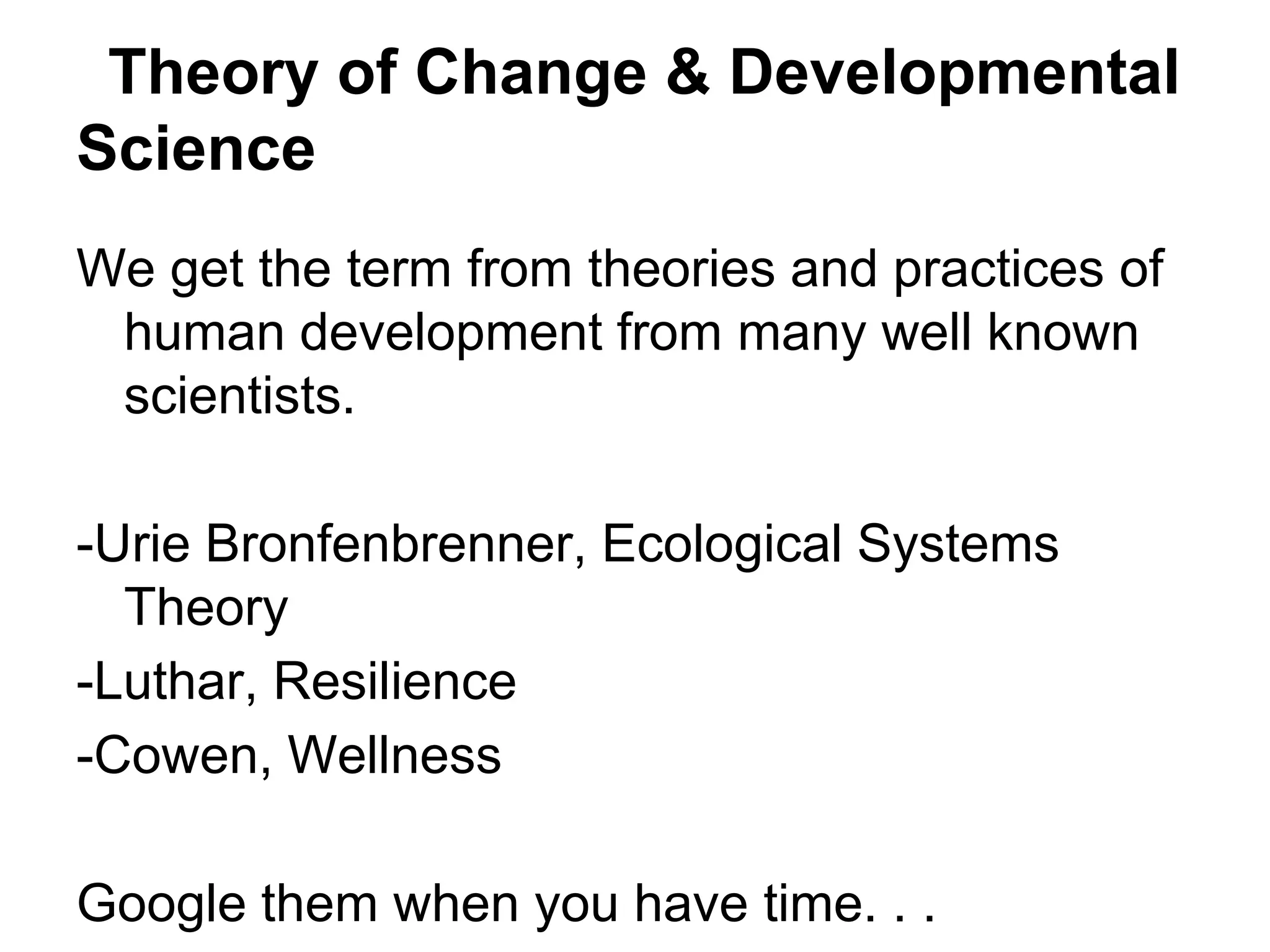
Theory of Change & Developmental
Science
We get the term from theories and practices of
 human development from many well known
 scientists.

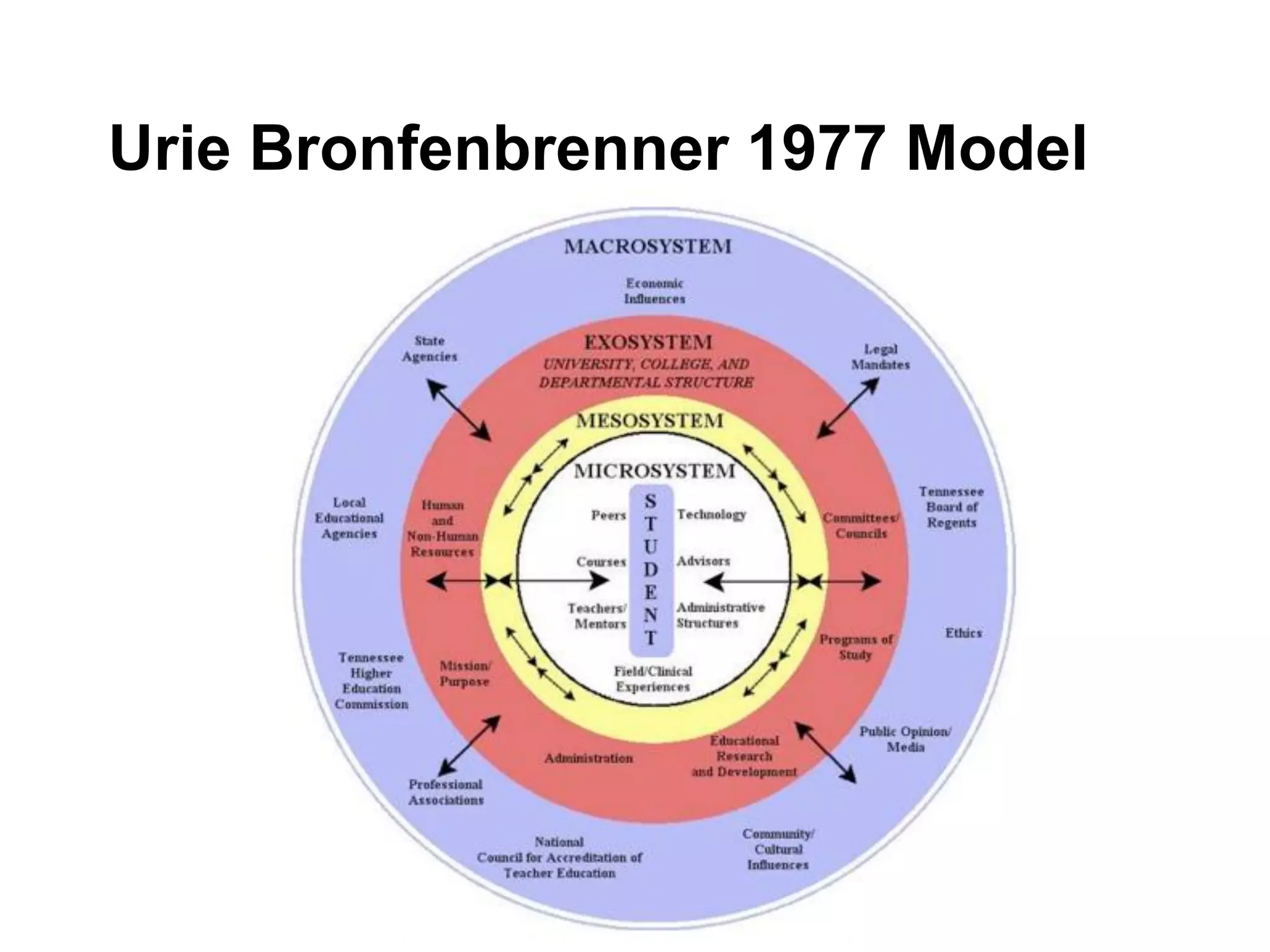
-Urie Bronfenbrenner, Ecological Systems
  Theory
-Luthar, Resilience
-Cowen, Wellness

Google them when you have time. . .
Urie Bronfenbrenner 1977 Model
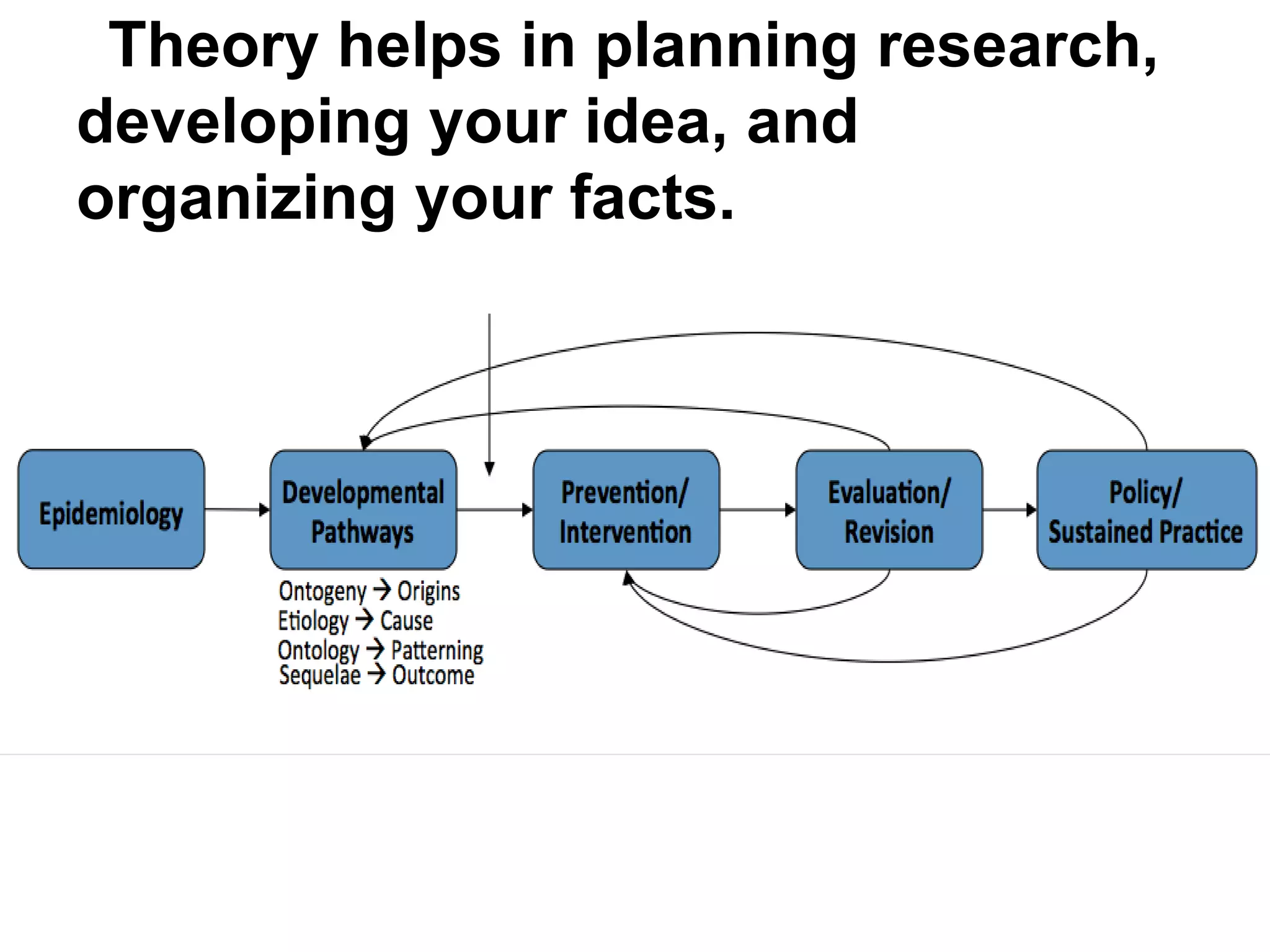
Theory helps in planning research,
developing your idea, and
organizing your facts.
Key Tips to Remember in Theory
•   Intersection of research and practice

•   The power of relationships
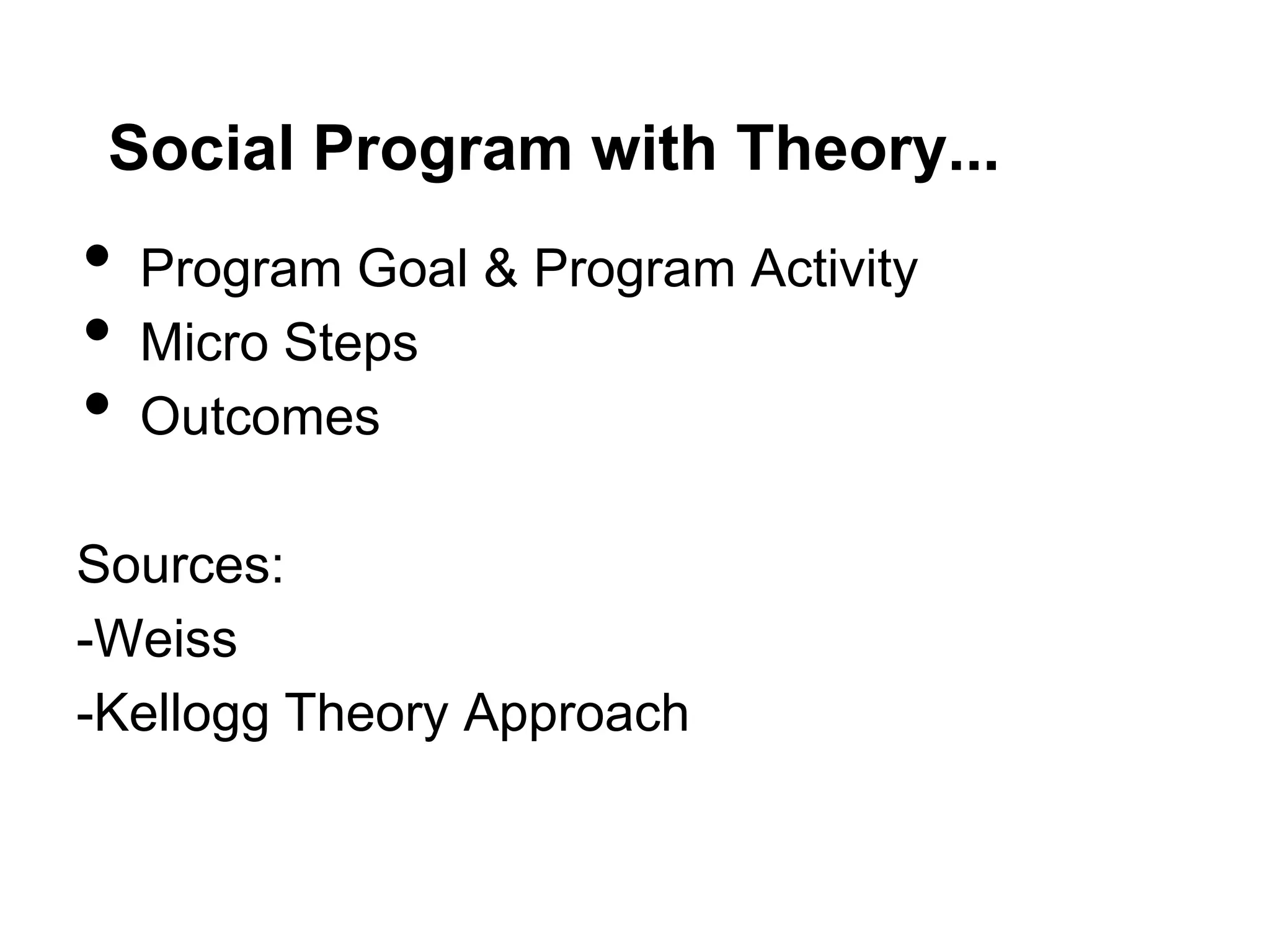
Social Program with Theory...
•   Program Goal & Program Activity
•   Micro Steps
•   Outcomes

Sources:
-Weiss
-Kellogg Theory Approach
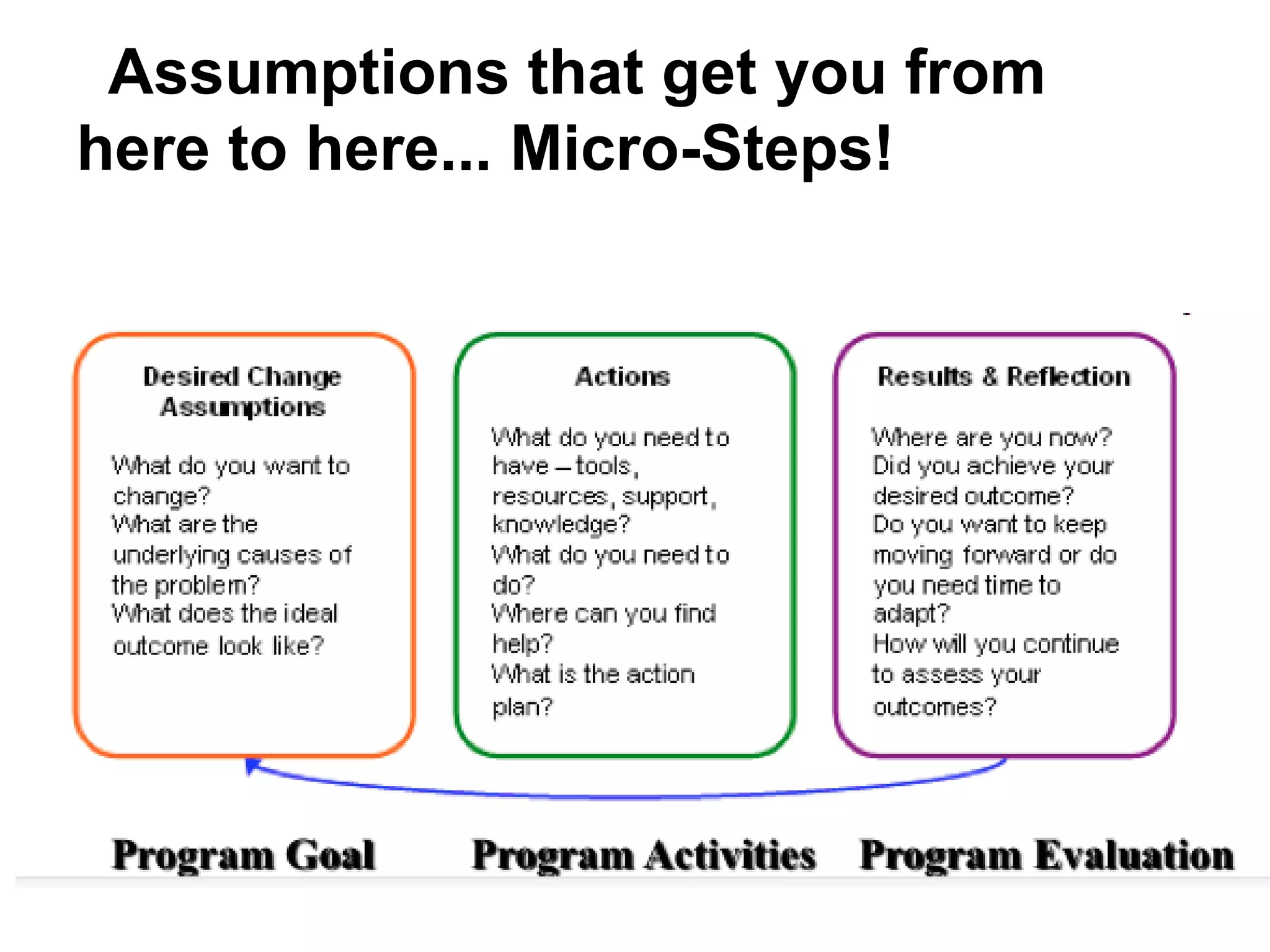
Assumptions that get you from
here to here... Micro-Steps!
Why the Theory of Change (TOC)?
•   Outcomes based approach
•   Document activities
•   Document inputs (which will design a budget
    usually)
•   Specific in detail (great for grants)

Helpful note: Draw it out! Use paper. Use pen.
Example: State the Problem
Currently, there are 542,000 children residing in
 foster care within the United States that are
 subjected to many forms of mistreatment
 (U.S. Department of Health and Human
 Services, 2007). When children are taken
 away from their biological families, many
 have histories of significant maltreatment and
 trauma (Bruskas, 2008). Adolescent foster
 youth, for example, have a higher tendency
 to have difficulties in life.
Example: State the Solution
Purpose: REACH offers school and community
 based programs to create equal opportunities
 in education for foster youth. Breaking the
 cycle of homelessness and increasing the 50
 % graduation rate. Peer leaders and staff
 create stable, strong support systems that
 predict positive outcomes.

Make sure mission is MEASURABLE.
Theory Approach Logic Model
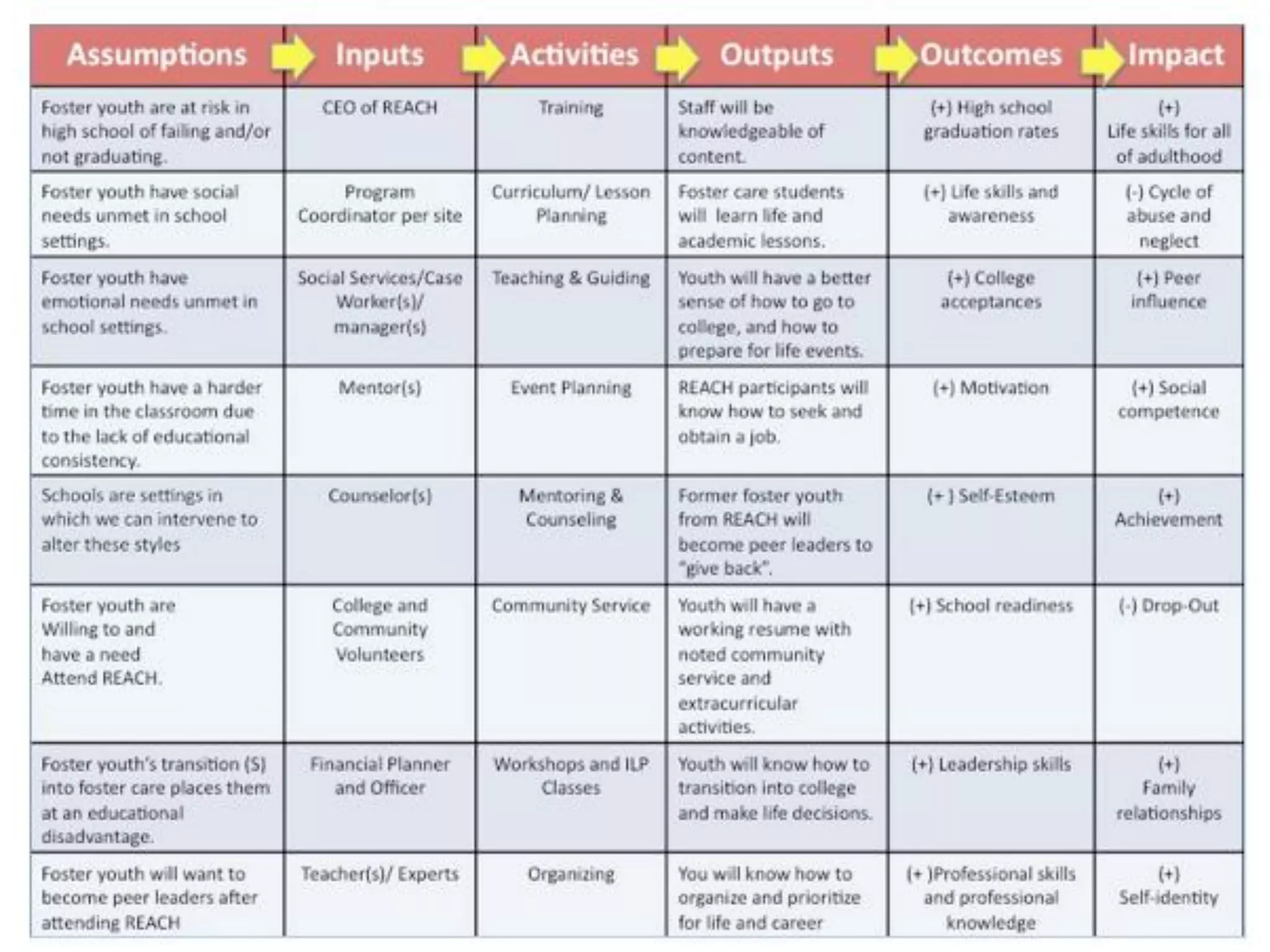
•   Inputs: Who is going to participate?
•   Activities: What will happen?
•   Outputs: What are the actions? Results?
•   Outcomes: What are the short-term
    outcomes?
•   Impact: What will we see in the longer term
    from your program?


•   Let's see REACHforyou.org's example...
Sources
-Bronfenbrenner, U. (1977). Toward an
  experimental ecology of human development.
  American Psychologist. 32, 513-531.
-Weiss, C.H. (1995). Nothing as practical as
  good theory: Exploring theory-based
  evaluation for comprehensive community
  initiatives for children and families.
-W. K. Kellogg Foundation (2004). Logic model
  development guide. Retrieved online.
  http://www.wkkf.org/Pubs/Tools/Evaluation/P
  ub3669.pdf.
Olive Grove Consulting
 San Francisco, CA
We work with philanthropists, nonprofits,
 industry associations, government entities,
 and businesses who are intent on building a
 vibrant and just society. By delivering flexible,
 customized services and access to an
 extensive network of leading consultants and
 firms, we help our clients break through
 obstacles and make the most of opportunities
 to create the change they want to see.
Contact information:
kim@olivegroveconsulting.com
650-591-4155 x102

Twitter:
@kimsnodgrass
@og_consult
@reachforu
Find listings for our current season
          of webinars and register at:

            NonprofitWebinars.com


A Service
   Of:                     Sponsored by:

Theory of Change Mapping using a Youth Development Example

  • 1.
    Theory of ChangeMapping using a Youth Development Example Kimberly Snodgrass June 27, 2012 A Service Of: Sponsored by:
  • 2.
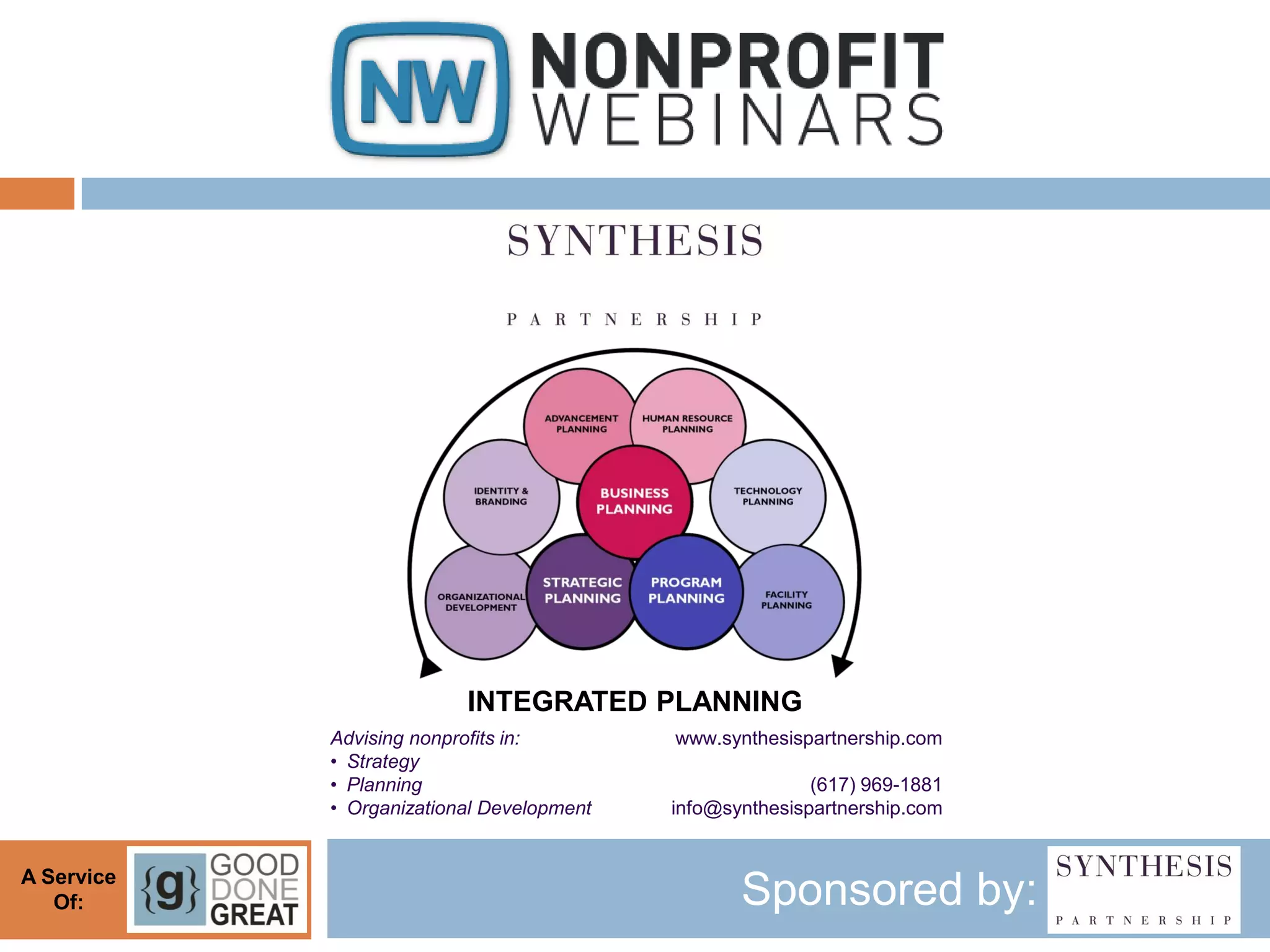
    INTEGRATED PLANNING Advising nonprofits in: www.synthesispartnership.com • Strategy • Planning (617) 969-1881 • Organizational Development info@synthesispartnership.com A Service Of: Sponsored by:
  • 3.
    www.mission.do A Service Of: Sponsored by:
  • 4.
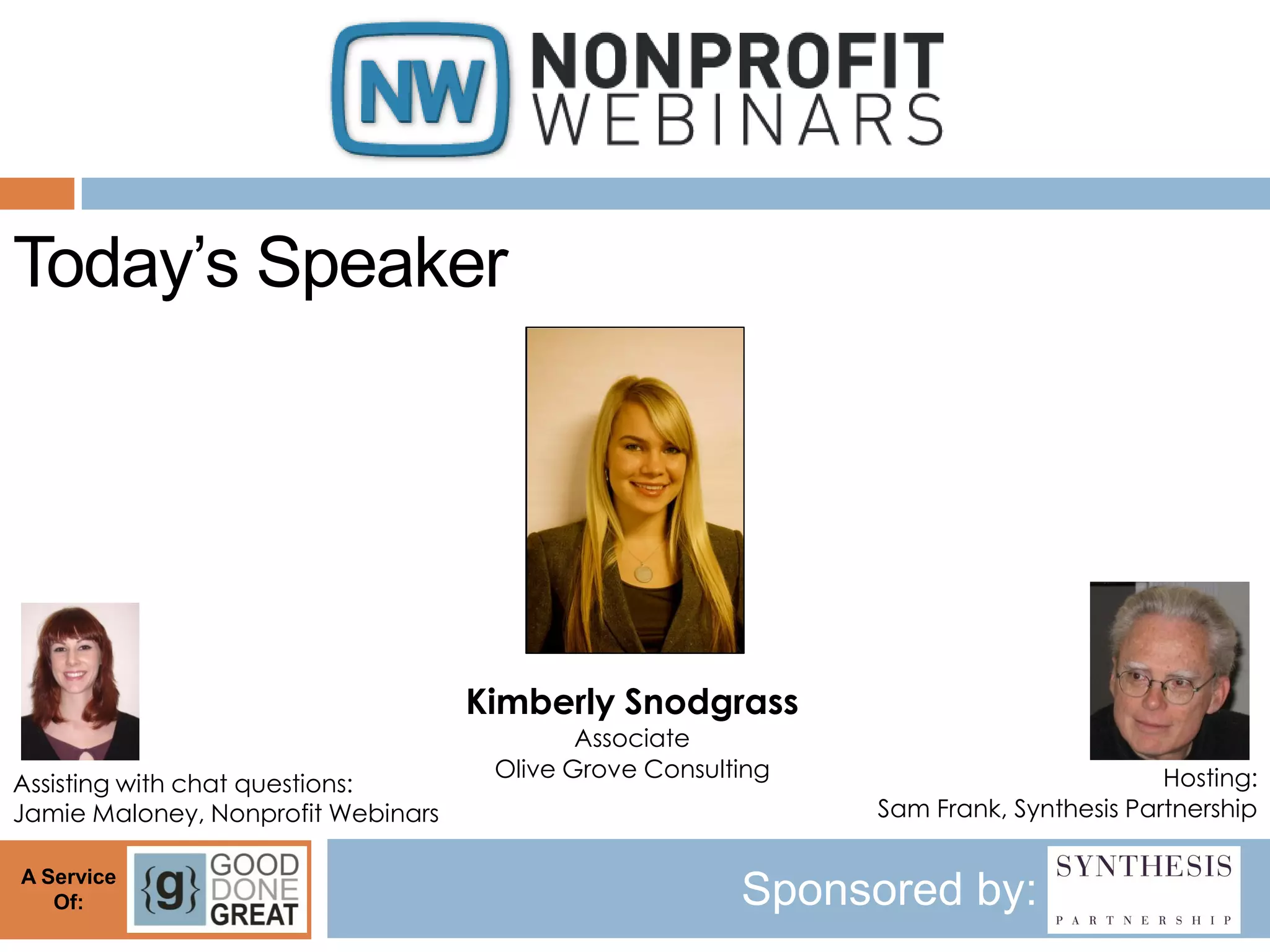
    Today’s Speaker Kimberly Snodgrass Associate Olive Grove Consulting Hosting: Assisting with chat questions: Jamie Maloney, Nonprofit Webinars Sam Frank, Synthesis Partnership A Service Of: Sponsored by:
  • 5.
    Theory of Change Mapping using a Youth Development Example Kim Snodgrass Olive Grove Consulting @kimsnodgrass, @og_consult, @reachforu
  • 6.
    Agenda About Overview of TOC Whywe use one & the value one brings Example Q&A
  • 7.
    Background @kimsnodgrass Recent consultingwork includes: strategic business planning design and implementation; organizational chart design; online market research; qualitative interview assessments; online marketing strategies; philanthropic investment research; executive search assistance; digital design; youth and families research, youth development design and programming, and event planning. Kimberly Snodgrass graduated from the University of California, Irvine, majoring in Honors Social Science, Public and Community Service and earned a minor in Education. With her commitment to serving at-risk youth, Kimberly earned her Masters, from the Harvard Graduate School of Education in 2010 with a concentration in Risk and Prevention.
  • 8.
    Theory of Change& Developmental Science We get the term from theories and practices of human development from many well known scientists. -Urie Bronfenbrenner, Ecological Systems Theory -Luthar, Resilience -Cowen, Wellness Google them when you have time. . .
  • 9.
  • 10.
    Theory helps inplanning research, developing your idea, and organizing your facts.
  • 11.
    Key Tips toRemember in Theory • Intersection of research and practice • The power of relationships
  • 12.
    Social Program withTheory... • Program Goal & Program Activity • Micro Steps • Outcomes Sources: -Weiss -Kellogg Theory Approach
  • 13.
    Assumptions that getyou from here to here... Micro-Steps!
  • 14.
    Why the Theoryof Change (TOC)? • Outcomes based approach • Document activities • Document inputs (which will design a budget usually) • Specific in detail (great for grants) Helpful note: Draw it out! Use paper. Use pen.
  • 15.
    Example: State theProblem Currently, there are 542,000 children residing in foster care within the United States that are subjected to many forms of mistreatment (U.S. Department of Health and Human Services, 2007). When children are taken away from their biological families, many have histories of significant maltreatment and trauma (Bruskas, 2008). Adolescent foster youth, for example, have a higher tendency to have difficulties in life.
  • 16.
    Example: State theSolution Purpose: REACH offers school and community based programs to create equal opportunities in education for foster youth. Breaking the cycle of homelessness and increasing the 50 % graduation rate. Peer leaders and staff create stable, strong support systems that predict positive outcomes. Make sure mission is MEASURABLE.
  • 17.
    Theory Approach LogicModel • Inputs: Who is going to participate? • Activities: What will happen? • Outputs: What are the actions? Results? • Outcomes: What are the short-term outcomes? • Impact: What will we see in the longer term from your program? • Let's see REACHforyou.org's example...
  • 19.
    Sources -Bronfenbrenner, U. (1977).Toward an experimental ecology of human development. American Psychologist. 32, 513-531. -Weiss, C.H. (1995). Nothing as practical as good theory: Exploring theory-based evaluation for comprehensive community initiatives for children and families. -W. K. Kellogg Foundation (2004). Logic model development guide. Retrieved online. http://www.wkkf.org/Pubs/Tools/Evaluation/P ub3669.pdf.
  • 20.
    Olive Grove Consulting San Francisco, CA We work with philanthropists, nonprofits, industry associations, government entities, and businesses who are intent on building a vibrant and just society. By delivering flexible, customized services and access to an extensive network of leading consultants and firms, we help our clients break through obstacles and make the most of opportunities to create the change they want to see.
  • 21.
  • 22.
    Find listings forour current season of webinars and register at: NonprofitWebinars.com A Service Of: Sponsored by: