Achieving Collective Impact
                       Tshikululu – GIBS
      Serious Social Investing workshop
                           18 March 2011
A story…
US education in crisis
 1950s – highest high school graduation
  rates in the world
 2010 – 18th among 24 industrialised
  countries.

   Billions of dollars and heroic efforts of
    teachers and NGOs:
     May have improved individual schools
     No system-wide progress.
Bringing people together to
improve results for every
child, every step of the way,
from cradle to career, in
Cincinnati, Newport and
Covington.

          In 4 years
     significant system-
     wide improvements
       across 34 of 53
        indicators of
           success
Why has strive made progress
where so many have failed?
 300 leaders of diverse initiatives
 Government, schools, business, CSOs
 Realised fixing one point on the continuum
  would make little difference unless all parts
  improved.
 And no single org. could do this alone.

   Did NOT create a new program, or try to
    raise more money.
The Strive Partnership unites providers
around shared issues, goals, measurements and results
…then supports and strengthens strategies that work.

    Focused the entire educational community on
     A  single set of goals
      Progress measured in the same way.


    15 different Student Success Networks
      Develop   success indicators
      Discuss strategies
      Learn from each other
      Align efforts
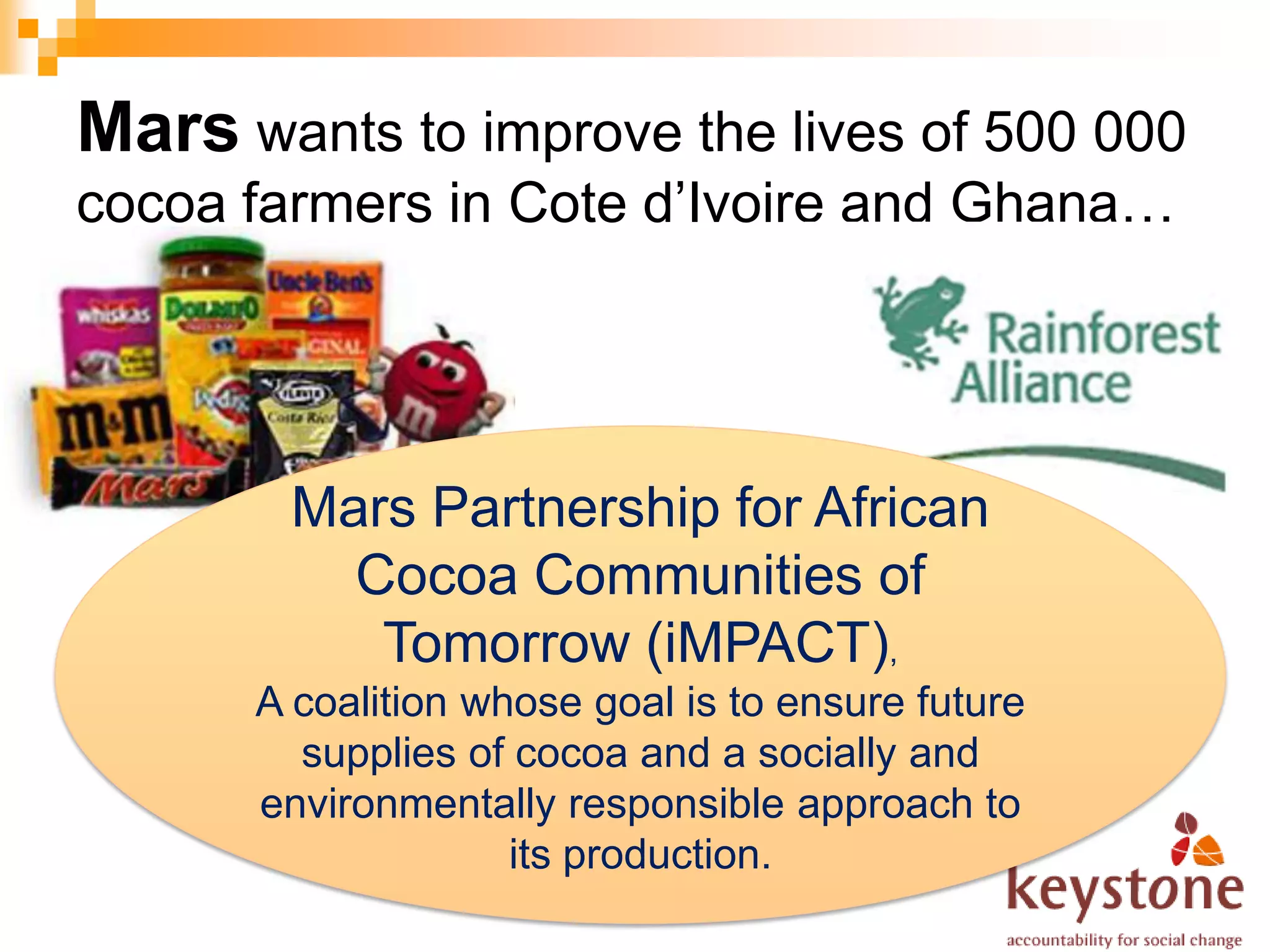
Mars wants to improve the lives of 500 000
cocoa farmers in Cote d’Ivoire and Ghana…


        Mars Partnership for African
          Cocoa Communities of
           Tomorrow (iMPACT),
      A coalition whose goal is to ensure future
        supplies of cocoa and a socially and
      environmentally responsible approach to
                    its production.
Collective Impact
…the long term commitment of a group of
important actors from different sectors to a
common agenda for solving a specific social
problem.
   More than just collaboration…
    A  centralised infrastructure, a dedicated staff,
      structured relationships…
     Common agenda, shared measurement,
      continuous communication, aligned activities.
Large scale social change
comes from better cross-
sector coordination rather
than from the isolated
interventions of individual
organisations.
Isolated Impact
 1.4 million CSOs and funders trying to invent
  independent solutions to complex social
  problems.
 Individual successes but little system change.
 Technical approaches – one day we’ll
  ‘discover the cure’.
 Our tools do not help us.
 Our habits do not help us.
 Our systems do not help us.
Are we willing to do what's necessary
 to give every child in South Africa a
         chance to succeed?
… but perhaps its not a question of will, but a
question of how.


  “Collaboration is where we fail. Despite
   our best intentions, the improvements
      needed … remain out of reach.”
Five conditions of
     collective success
1. A common agenda – and theory of change
    Shared vision of success
    …and what is needed to achieve & sustain it.
2. Shared measurement systems
    Gather data and measure results against a few agreed
     indicators of success.
    Keeps work aligned, allows comparison, learning and
     mutual accountability.
    Feedback: Quality of relationships as performance
     management and predictor of success.
…continued
 3. Mutually reinforcing activities
    Each actor does what it excels at in a way that
     supports the actions of others.
    Fit into overall theory of change and strategy


 4. Continuous communication
      Developing trust a challenge
      Regular meetings… takes time and care
      Web tools
…continued
5. A backbone support organisation
    Separate organization and staff
    Backbone roles: Project manager, data manager and
     facilitator

                The expectation that
               collaboration can occur
                without a supporting
                 infrastructure is the
                most common reason
                      why it fails
Going local…
Our current reality
   Many excellent individual initiatives, but…
     Competition   among service providers - discourages
      alignment, sharing and learning.
     Fragmentary short-term ‘project’ interventions – rather than
      holistic longer term developmental processes owned and
      managed by schools themselves.
     Success is measured in terms of outputs (e.g. number of
      training workshops), rather than outcomes (real changes in
      attitudes, behaviour, relationships, capabilities, conditions).
     Difficult to match resources to needs: what’s available, what
      quality etc.
     More??
Imagine if, in each district, we had a
backbone organisation that…
   For Schools:
    Supports schools to plan and manage a holistic and integrated
    long-term development strategy.
    Provides access to resources and service providers.
    Manages data collection – including comparative feedback on
    service providers.
    Facilitates long term relationships for sustainability.
    Provides a framework for comparative, outcome-based monitoring
    and evaluation – against their own benchmarks and against other
    similar schools.
…a backbone organisation that…
   For Service Providers:
    Facilitates communication, alignment and mutually reinforcing
    interventions leading to more effective impact.
    Promotes and supports shared impact and performance
    measurement and reporting.
    Provides access to resources and work opportunities.
    Provides lower transaction costs for funding i.e. less time-
    consuming fundraising and reporting to multiple donors; also long-
    term engagements.
    Facilitates sharing of resources, experience, learning and practice.
…a backbone organisation that…
   For Funders:
    Maximises return on investment by enabling long term systemic
    impact.
    Manages impact and performance monitoring, assures the
    alignment and quality of the interventions and reduces risk.
    Facilitates long-term relationships with beneficiaries including
    opportunities for staff volunteering, public reputation etc.
   For Government:
    Facilitates effective cross-sector partnerships.
    Provides information on what works that can inform policy.
    Provides access to skills and services to support schools.
Some new approaches,
methods and tools to foster
systemic and collective impact…
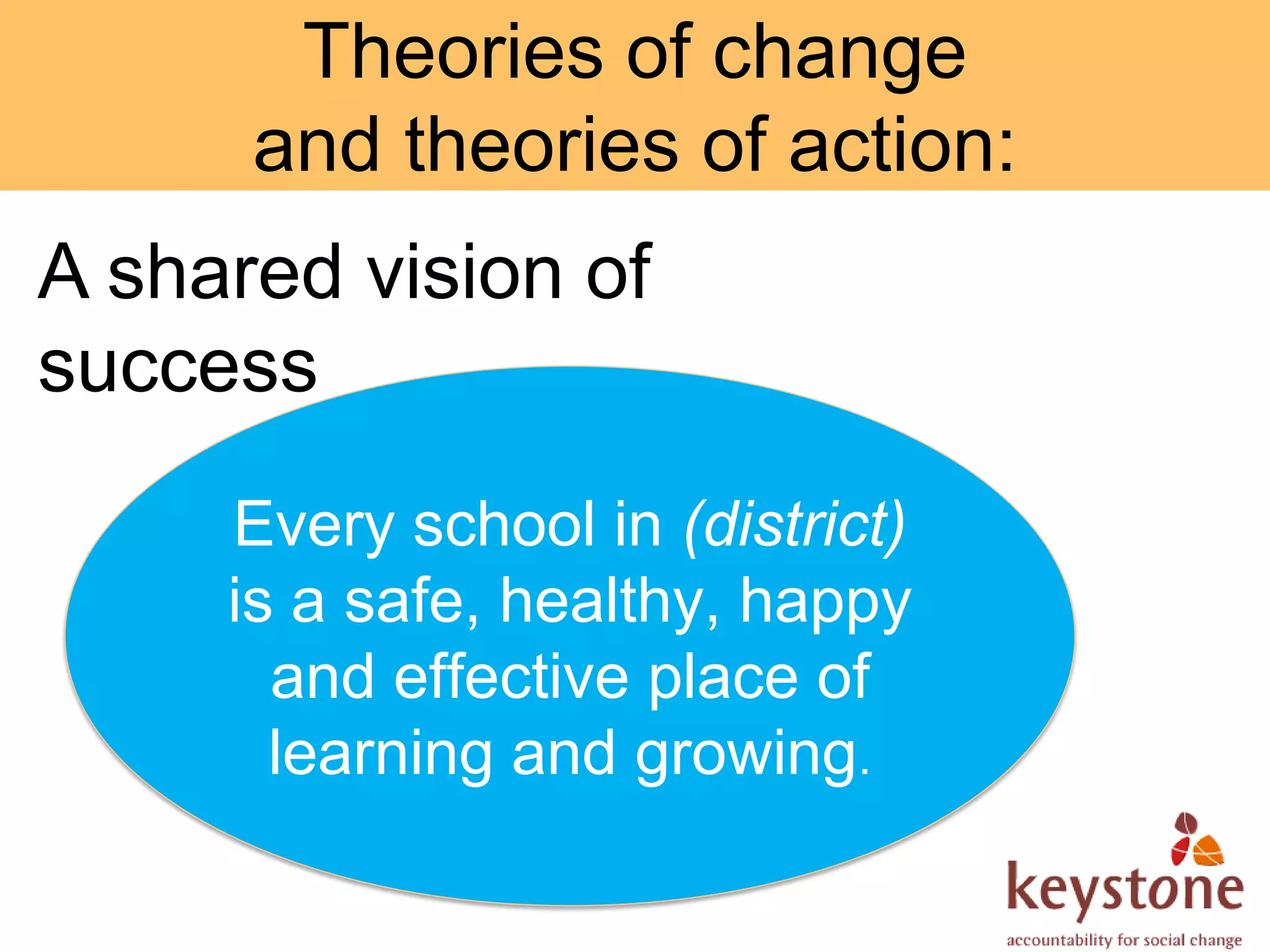
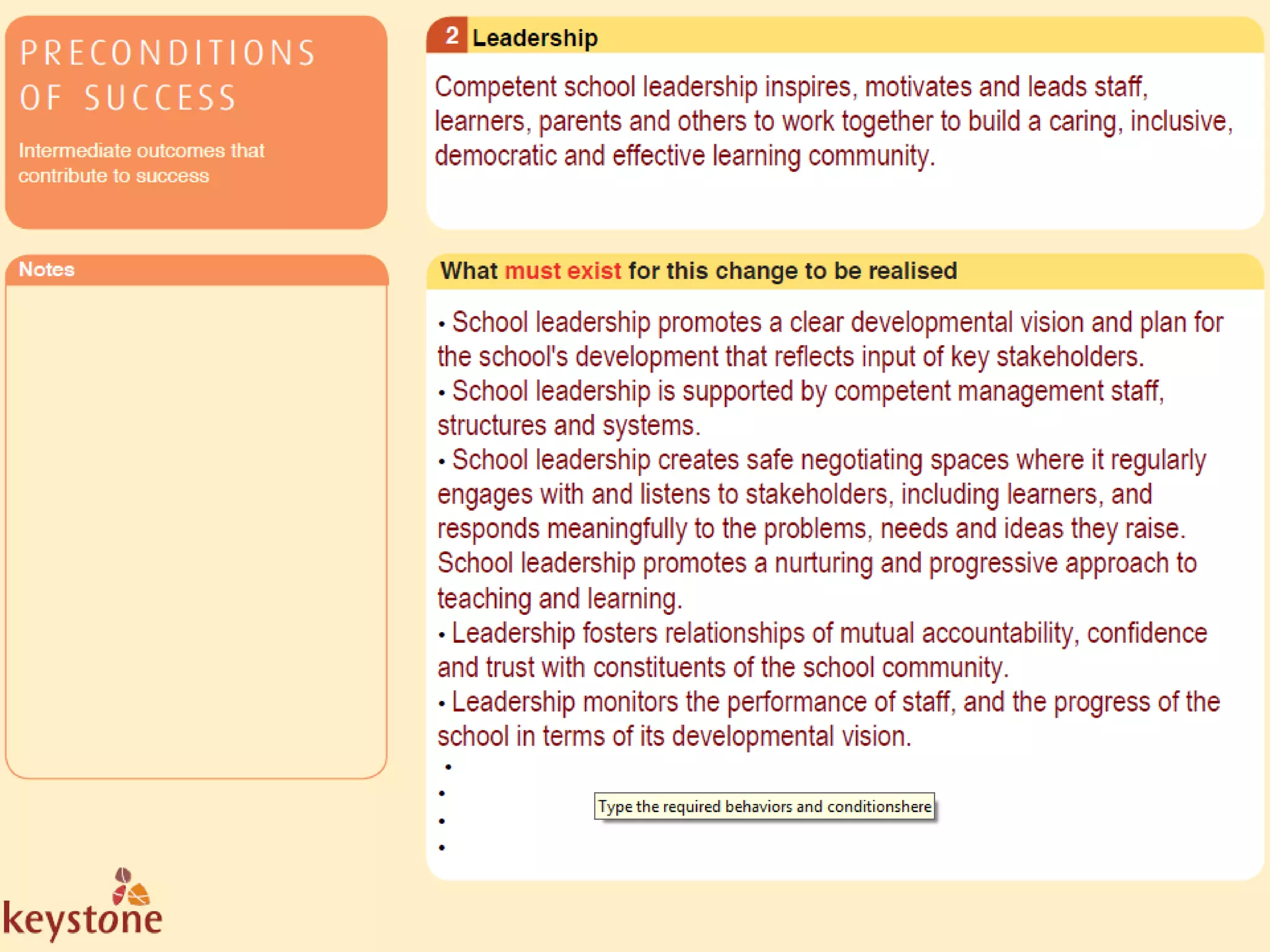
Theories of change
      and theories of action:
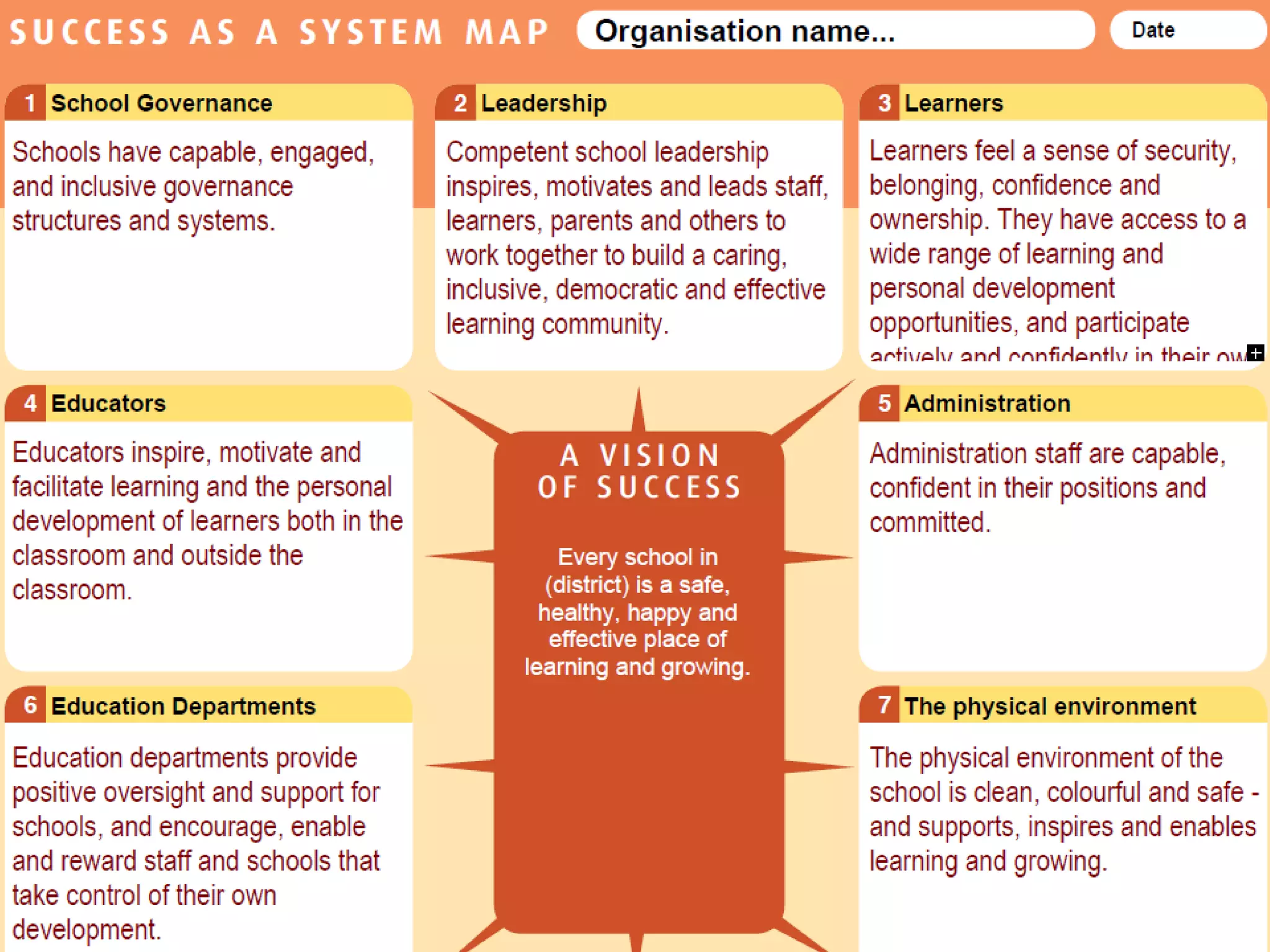
A shared vision of
success
     Every school in (district)
     is a safe, healthy, happy
       and effective place of
       learning and growing.
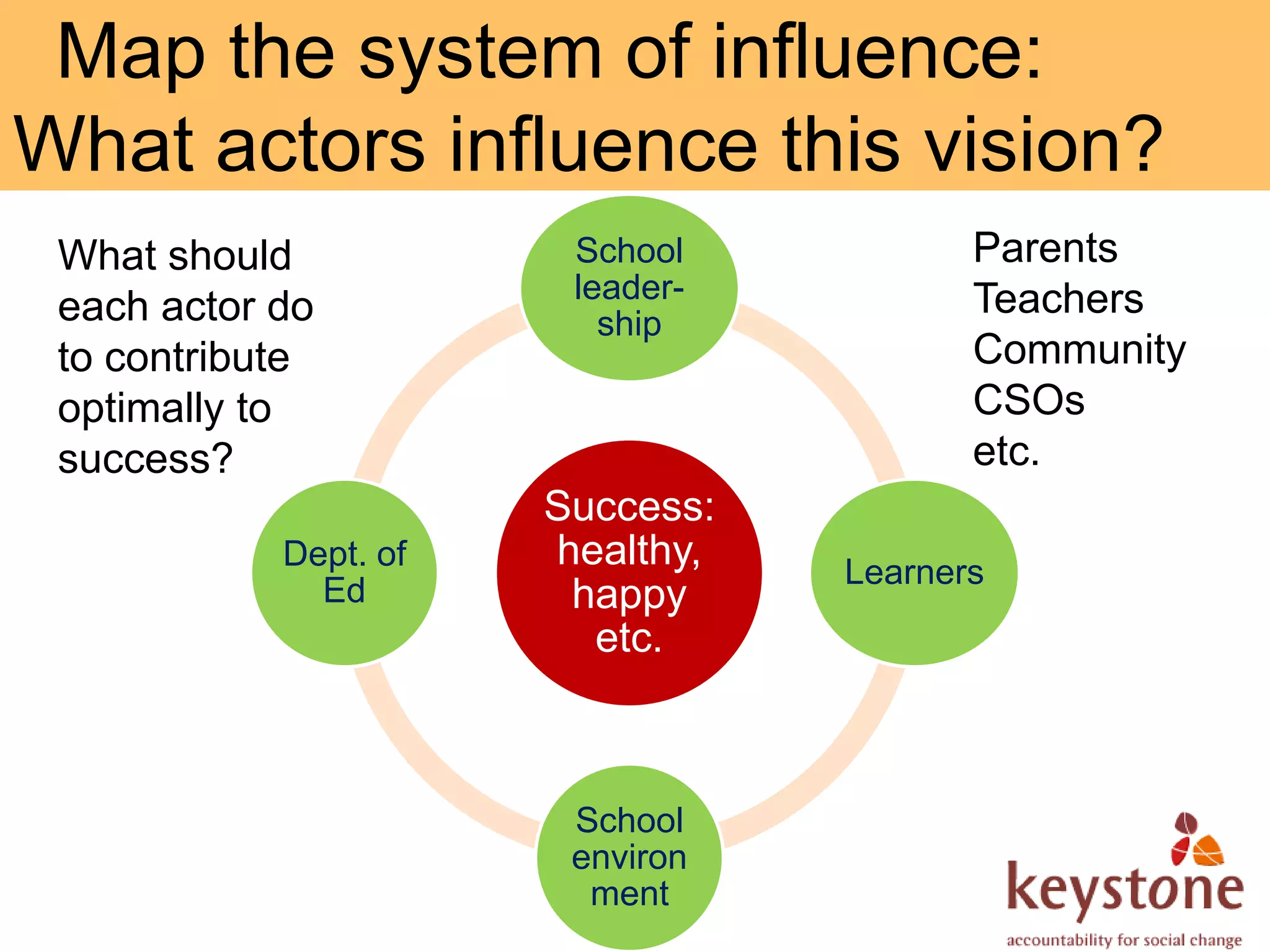
Map the system of influence:
What actors influence this vision?
 What should            School           Parents
                        leader-          Teachers
 each actor do            ship
 to contribute                           Community
 optimally to                            CSOs
 success?                                etc.
                       Success:
            Dept. of   healthy,   Learners
              Ed        happy
                         etc.


                        School
                        environ
                         ment
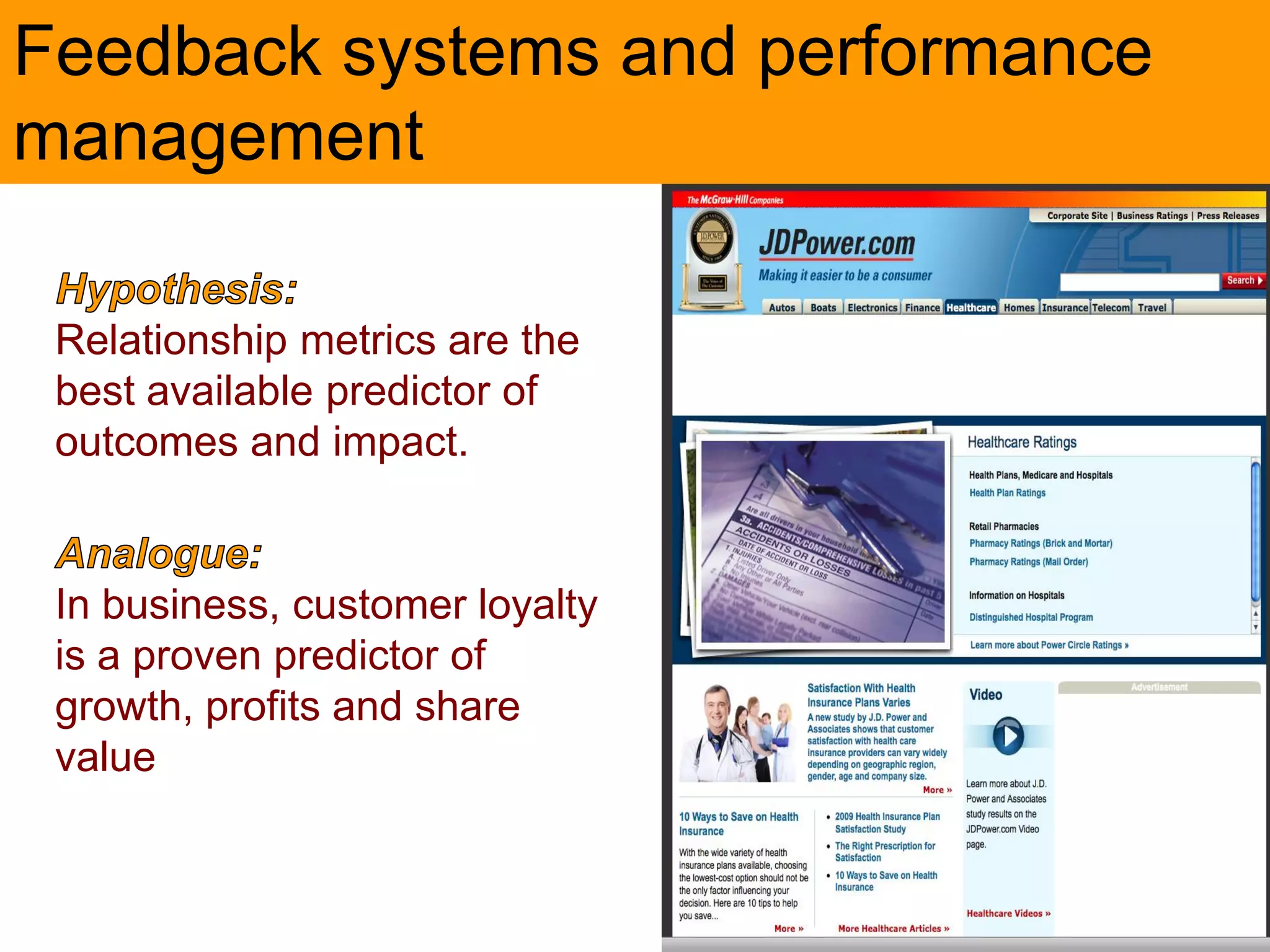
Feedback systems and performance
management

 Relationship metrics are the
 best available predictor of
 outcomes and impact.


 In business, customer loyalty
 is a proven predictor of
 growth, profits and share
 value
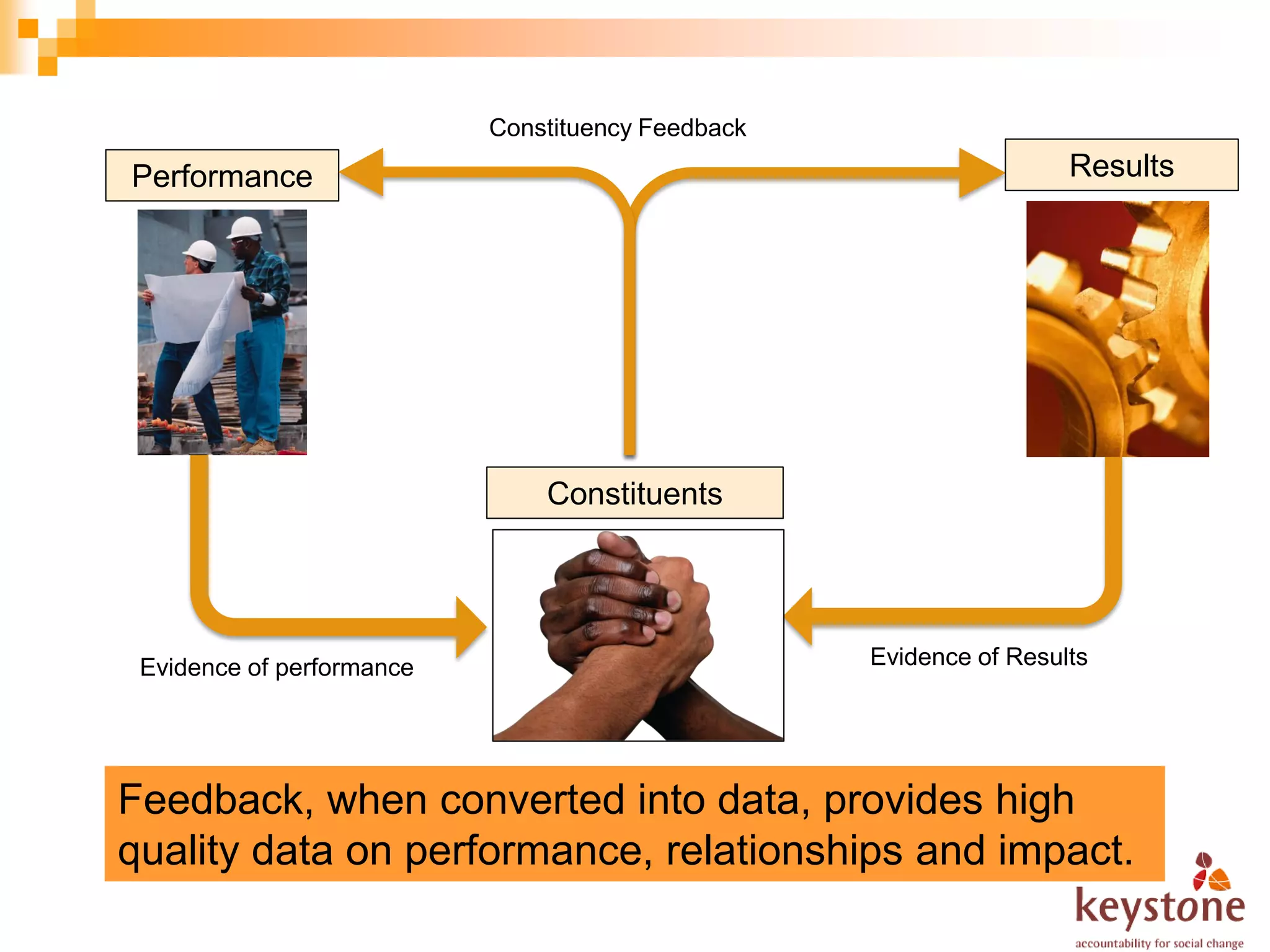
Constituency Feedback

Performance                                                         Results


                               Constituents


 Evidence of performance                           Evidence of Results


Feedback, when converted into data, provides high
quality data on performance, relationships and impact.
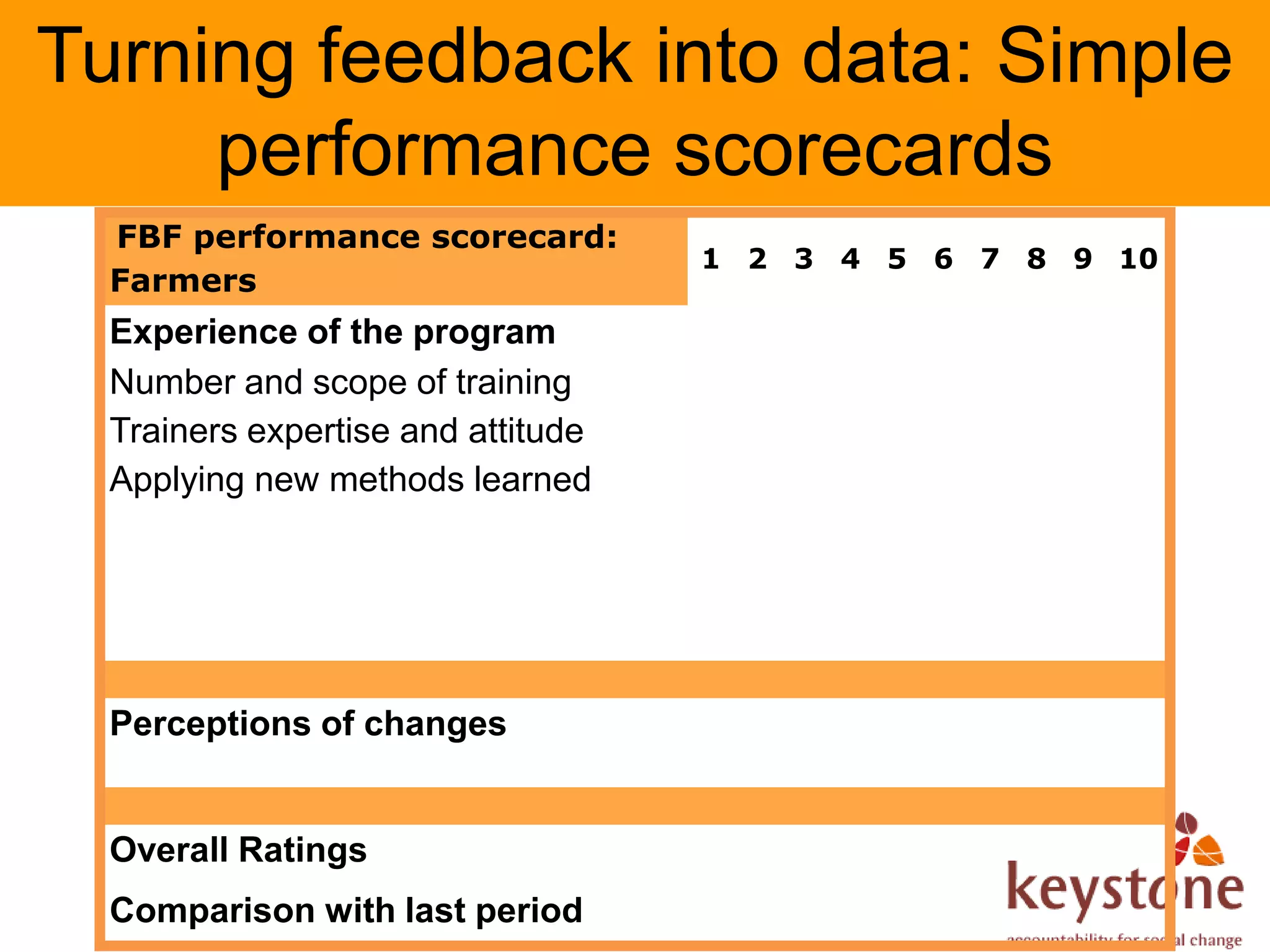
Turning feedback into data: Simple
     performance scorecards
  FBF performance scorecard:
                                    1 2 3 4 5 6 7 8 9 10
  Farmers
  Experience of the program
  Number and scope of training
  Trainers expertise and attitude
  Applying new methods learned


  Perceptions of changes


  Overall Ratings
  Comparison with last period
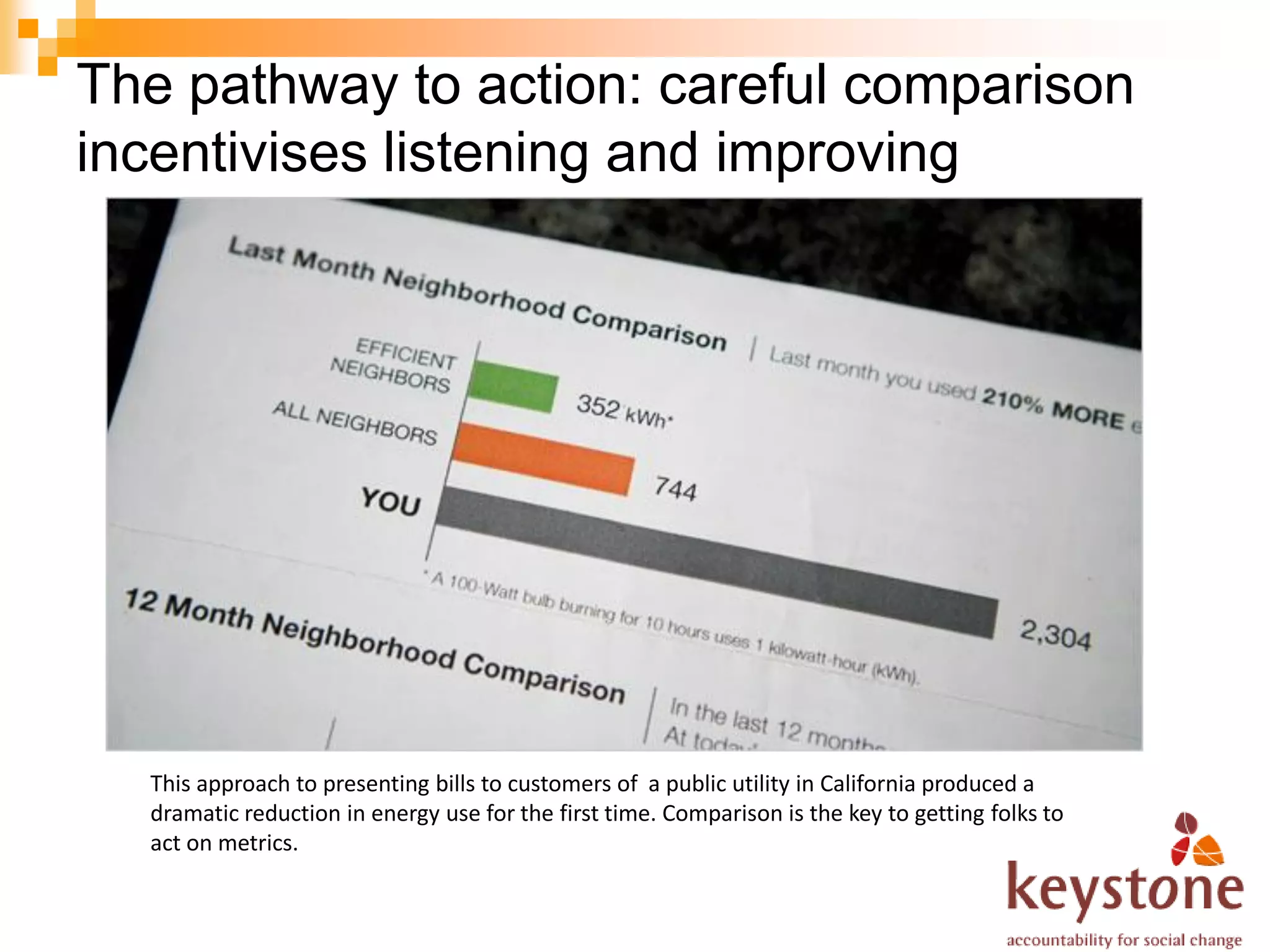
The pathway to action: careful comparison
incentivises listening and improving


  This approach to presenting bills to customers of a public utility in California produced a
  dramatic reduction in energy use for the first time. Comparison is the key to getting folks to
  act on metrics.
Thank you!


                     Andre@
             KeystoneAccountability.org

Achieving collective impact - Serious Social Investing 2011

  • 1.
    Achieving Collective Impact Tshikululu – GIBS Serious Social Investing workshop 18 March 2011
  • 2.
  • 3.
    US education incrisis  1950s – highest high school graduation rates in the world  2010 – 18th among 24 industrialised countries.  Billions of dollars and heroic efforts of teachers and NGOs:  May have improved individual schools  No system-wide progress.
  • 4.
    Bringing people togetherto improve results for every child, every step of the way, from cradle to career, in Cincinnati, Newport and Covington. In 4 years significant system- wide improvements across 34 of 53 indicators of success
  • 5.
    Why has strivemade progress where so many have failed?  300 leaders of diverse initiatives  Government, schools, business, CSOs  Realised fixing one point on the continuum would make little difference unless all parts improved.  And no single org. could do this alone.  Did NOT create a new program, or try to raise more money.
  • 6.
    The Strive Partnershipunites providers around shared issues, goals, measurements and results …then supports and strengthens strategies that work.  Focused the entire educational community on A single set of goals  Progress measured in the same way.  15 different Student Success Networks  Develop success indicators  Discuss strategies  Learn from each other  Align efforts
  • 7.
    Mars wants toimprove the lives of 500 000 cocoa farmers in Cote d’Ivoire and Ghana… Mars Partnership for African Cocoa Communities of Tomorrow (iMPACT), A coalition whose goal is to ensure future supplies of cocoa and a socially and environmentally responsible approach to its production.
  • 8.
    Collective Impact …the longterm commitment of a group of important actors from different sectors to a common agenda for solving a specific social problem.  More than just collaboration… A centralised infrastructure, a dedicated staff, structured relationships…  Common agenda, shared measurement, continuous communication, aligned activities.
  • 9.
    Large scale socialchange comes from better cross- sector coordination rather than from the isolated interventions of individual organisations.
  • 10.
    Isolated Impact  1.4million CSOs and funders trying to invent independent solutions to complex social problems.  Individual successes but little system change.  Technical approaches – one day we’ll ‘discover the cure’.  Our tools do not help us.  Our habits do not help us.  Our systems do not help us.
  • 11.
    Are we willingto do what's necessary to give every child in South Africa a chance to succeed? … but perhaps its not a question of will, but a question of how. “Collaboration is where we fail. Despite our best intentions, the improvements needed … remain out of reach.”
  • 12.
    Five conditions of collective success 1. A common agenda – and theory of change  Shared vision of success  …and what is needed to achieve & sustain it. 2. Shared measurement systems  Gather data and measure results against a few agreed indicators of success.  Keeps work aligned, allows comparison, learning and mutual accountability.  Feedback: Quality of relationships as performance management and predictor of success.
  • 13.
    …continued 3. Mutuallyreinforcing activities  Each actor does what it excels at in a way that supports the actions of others.  Fit into overall theory of change and strategy 4. Continuous communication  Developing trust a challenge  Regular meetings… takes time and care  Web tools
  • 14.
    …continued 5. A backbonesupport organisation  Separate organization and staff  Backbone roles: Project manager, data manager and facilitator The expectation that collaboration can occur without a supporting infrastructure is the most common reason why it fails
  • 15.
    Going local… Our currentreality  Many excellent individual initiatives, but…  Competition among service providers - discourages alignment, sharing and learning.  Fragmentary short-term ‘project’ interventions – rather than holistic longer term developmental processes owned and managed by schools themselves.  Success is measured in terms of outputs (e.g. number of training workshops), rather than outcomes (real changes in attitudes, behaviour, relationships, capabilities, conditions).  Difficult to match resources to needs: what’s available, what quality etc.  More??
  • 16.
    Imagine if, ineach district, we had a backbone organisation that…  For Schools: Supports schools to plan and manage a holistic and integrated long-term development strategy. Provides access to resources and service providers. Manages data collection – including comparative feedback on service providers. Facilitates long term relationships for sustainability. Provides a framework for comparative, outcome-based monitoring and evaluation – against their own benchmarks and against other similar schools.
  • 17.
    …a backbone organisationthat…  For Service Providers: Facilitates communication, alignment and mutually reinforcing interventions leading to more effective impact. Promotes and supports shared impact and performance measurement and reporting. Provides access to resources and work opportunities. Provides lower transaction costs for funding i.e. less time- consuming fundraising and reporting to multiple donors; also long- term engagements. Facilitates sharing of resources, experience, learning and practice.
  • 18.
    …a backbone organisationthat…  For Funders: Maximises return on investment by enabling long term systemic impact. Manages impact and performance monitoring, assures the alignment and quality of the interventions and reduces risk. Facilitates long-term relationships with beneficiaries including opportunities for staff volunteering, public reputation etc.  For Government: Facilitates effective cross-sector partnerships. Provides information on what works that can inform policy. Provides access to skills and services to support schools.
  • 19.
    Some new approaches, methodsand tools to foster systemic and collective impact…
  • 20.
    Theories of change and theories of action: A shared vision of success Every school in (district) is a safe, healthy, happy and effective place of learning and growing.
  • 21.
    Map the systemof influence: What actors influence this vision? What should School Parents leader- Teachers each actor do ship to contribute Community optimally to CSOs success? etc. Success: Dept. of healthy, Learners Ed happy etc. School environ ment
  • 24.
    Feedback systems andperformance management Relationship metrics are the best available predictor of outcomes and impact. In business, customer loyalty is a proven predictor of growth, profits and share value
  • 25.
    Constituency Feedback Performance Results Constituents Evidence of performance Evidence of Results Feedback, when converted into data, provides high quality data on performance, relationships and impact.
  • 26.
    Turning feedback intodata: Simple performance scorecards FBF performance scorecard: 1 2 3 4 5 6 7 8 9 10 Farmers Experience of the program Number and scope of training Trainers expertise and attitude Applying new methods learned Perceptions of changes Overall Ratings Comparison with last period
  • 27.
    The pathway toaction: careful comparison incentivises listening and improving This approach to presenting bills to customers of a public utility in California produced a dramatic reduction in energy use for the first time. Comparison is the key to getting folks to act on metrics.
  • 29.
    Thank you! Andre@ KeystoneAccountability.org