Rosa Parks
Civil Rights Pioneer
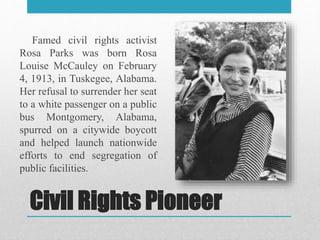
Famed civil rights activist
Rosa Parks was born Rosa
Louise McCauley on February
4, 1913, in Tuskegee, Alabama.
Her refusal to surrender her seat
to a white passenger on a public
bus Montgomery, Alabama,
spurred on a citywide boycott
and helped launch nationwide
efforts to end segregation of
public facilities.
Segregation
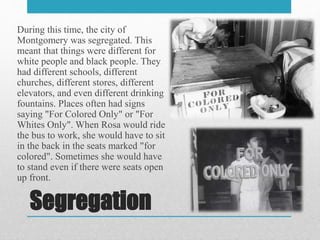
During this time, the city of
Montgomery was segregated. This
meant that things were different for
white people and black people. They
had different schools, different
churches, different stores, different
elevators, and even different drinking
fountains. Places often had signs
saying "For Colored Only" or "For
Whites Only". When Rosa would ride
the bus to work, she would have to sit
in the back in the seats marked "for
colored". Sometimes she would have
to stand even if there were seats open
up front.
Fighting for Equal Rights
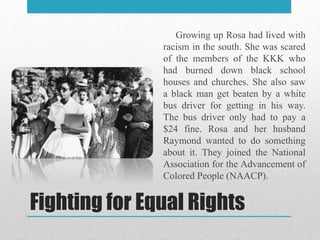
Growing up Rosa had lived with
racism in the south. She was scared
of the members of the KKK who
had burned down black school
houses and churches. She also saw
a black man get beaten by a white
bus driver for getting in his way.
The bus driver only had to pay a
$24 fine. Rosa and her husband
Raymond wanted to do something
about it. They joined the National
Association for the Advancement of
Colored People (NAACP).
Sitting on the Bus
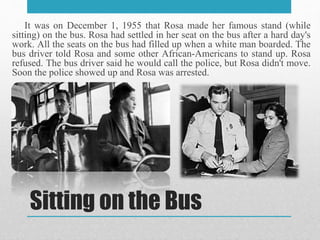
It was on December 1, 1955 that Rosa made her famous stand (while
sitting) on the bus. Rosa had settled in her seat on the bus after a hard day's
work. All the seats on the bus had filled up when a white man boarded. The
bus driver told Rosa and some other African-Americans to stand up. Rosa
refused. The bus driver said he would call the police, but Rosa didn't move.
Soon the police showed up and Rosa was arrested.
Montgomery Bus Boycott
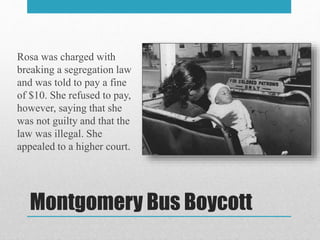
Rosa was charged with
breaking a segregation law
and was told to pay a fine
of $10. She refused to pay,
however, saying that she
was not guilty and that the
law was illegal. She
appealed to a higher court.
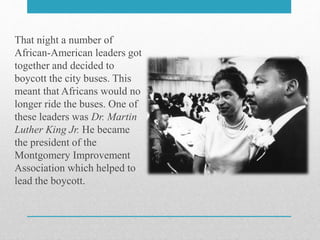
That night a number of
African-American leaders got
together and decided to
boycott the city buses. This
meant that Africans would no
longer ride the buses. One of
these leaders was Dr. Martin
Luther King Jr. He became
the president of the
Montgomery Improvement
Association which helped to
lead the boycott.
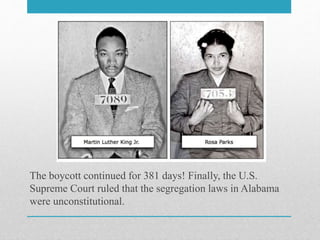
The boycott continued for 381 days! Finally, the U.S.
Supreme Court ruled that the segregation laws in Alabama
were unconstitutional.
After the Boycott
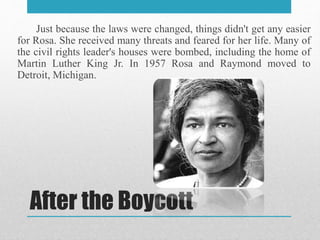
Just because the laws were changed, things didn't get any easier
for Rosa. She received many threats and feared for her life. Many of
the civil rights leader's houses were bombed, including the home of
Martin Luther King Jr. In 1957 Rosa and Raymond moved to
Detroit, Michigan.
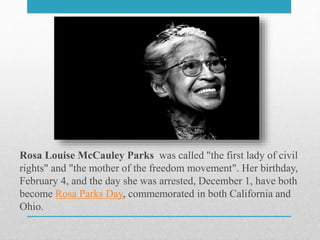
Rosa Louise McCauley Parks was called "the first lady of civil
rights" and "the mother of the freedom movement". Her birthday,
February 4, and the day she was arrested, December 1, have both
become Rosa Parks Day, commemorated in both California and
Ohio.

Rosa Parks

  • 1.
  • 2.
    Civil Rights Pioneer Famedcivil rights activist Rosa Parks was born Rosa Louise McCauley on February 4, 1913, in Tuskegee, Alabama. Her refusal to surrender her seat to a white passenger on a public bus Montgomery, Alabama, spurred on a citywide boycott and helped launch nationwide efforts to end segregation of public facilities.
  • 3.
    Segregation During this time,the city of Montgomery was segregated. This meant that things were different for white people and black people. They had different schools, different churches, different stores, different elevators, and even different drinking fountains. Places often had signs saying "For Colored Only" or "For Whites Only". When Rosa would ride the bus to work, she would have to sit in the back in the seats marked "for colored". Sometimes she would have to stand even if there were seats open up front.
  • 4.
    Fighting for EqualRights Growing up Rosa had lived with racism in the south. She was scared of the members of the KKK who had burned down black school houses and churches. She also saw a black man get beaten by a white bus driver for getting in his way. The bus driver only had to pay a $24 fine. Rosa and her husband Raymond wanted to do something about it. They joined the National Association for the Advancement of Colored People (NAACP).
  • 5.
    Sitting on theBus It was on December 1, 1955 that Rosa made her famous stand (while sitting) on the bus. Rosa had settled in her seat on the bus after a hard day's work. All the seats on the bus had filled up when a white man boarded. The bus driver told Rosa and some other African-Americans to stand up. Rosa refused. The bus driver said he would call the police, but Rosa didn't move. Soon the police showed up and Rosa was arrested.
  • 8.
    Montgomery Bus Boycott Rosawas charged with breaking a segregation law and was told to pay a fine of $10. She refused to pay, however, saying that she was not guilty and that the law was illegal. She appealed to a higher court.
  • 9.
    That night anumber of African-American leaders got together and decided to boycott the city buses. This meant that Africans would no longer ride the buses. One of these leaders was Dr. Martin Luther King Jr. He became the president of the Montgomery Improvement Association which helped to lead the boycott.
  • 10.
    The boycott continuedfor 381 days! Finally, the U.S. Supreme Court ruled that the segregation laws in Alabama were unconstitutional.
  • 11.
    After the Boycott Justbecause the laws were changed, things didn't get any easier for Rosa. She received many threats and feared for her life. Many of the civil rights leader's houses were bombed, including the home of Martin Luther King Jr. In 1957 Rosa and Raymond moved to Detroit, Michigan.
  • 12.
    Rosa Louise McCauleyParks was called "the first lady of civil rights" and "the mother of the freedom movement". Her birthday, February 4, and the day she was arrested, December 1, have both become Rosa Parks Day, commemorated in both California and Ohio.