Rosa Parks
AN INSPIRATIONAL BLACK
WOMEN
Who is Rosa Parks?
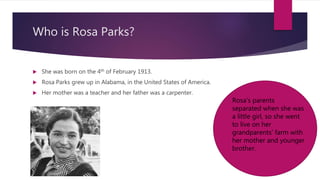
 She was born on the 4th of February 1913.
 Rosa Parks grew up in Alabama, in the United States of America.
 Her mother was a teacher and her father was a carpenter.
Rosa’s parents
separated when she was
a little girl, so she went
to live on her
grandparents’ farm with
her mother and younger
brother.
History of Black Segregation
 As a child, Rosa experienced a lot of
(unfortunate) racism and saw how not working
together by law in American society.
 Rosa attended a secondary school for coloured
children, who all had to walk to school, while the
white children had their own school and got a
bus to get there.
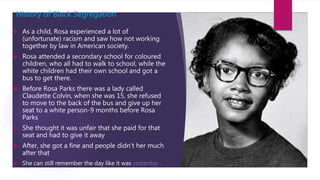
 Before Rosa Parks there was a lady called
Claudette Colvin, when she was 15, she refused
to move to the back of the bus and give up her
seat to a white person-9 months before Rosa
Parks
 She thought it was unfair that she paid for that
seat and had to give it away
 After, she got a fine and people didn’t her much
after that
 She can still remember the day like it was yesterday .
Segregation on
buses
 Back in 1955, white people had to sit down and
black had to sit at the back.
 If they sat down first, they had to give up their
seat and let the white person sit down.
 They also had separated a queue for the white
skinned and black.
 At the 1st of December 1955 after, a long day after
work, Rosa got on the bus and sat on the first-row
seat meant for black people.
 At the third stop, all the white seats where full
Rosa and three other black people were sitting in
the recommended seats.
 So, the white bus driver told Rosa and three other
black people to give up their seat to the white
person.
Rosa Refused
AFTER, BEING ASKED TO MOVE
THE OTHER THREE MOVED BUT
ROSA MOVED TO THE SIDE,
NOT BACK.
THE BUS DRIVER SAID ’I WILL
CALL THE POLICE IF YOU DON’T
MOVE BACK’ AND ROSA
REPLIED ‘DO JUST THAT ‘ SO
THE BUS DRIVER DID.
In my opinion
I think she didn’t want to give up her seat just because of her skin tone and she
paid for that ticket, so she deserves to sit on the seat she paid to sit on. Also
there is nothing wrong about siting next to a black person. She thought it was
unfair that black people were treated differently than white people in
situations.
Rosa in
jail !
The bus driver did call the police and Rosa got
arrested.
Three of her friends bailed her out and started a club
called ‘bus boycott’. They made a deal that they will
not use busses until they changed their mind.
On 5th of December 1955, Rosa was charged with
breaking the rules and causing trouble.
She was found guilty and got a fine.
Bus Boycott
The bus boycott is supported by other black
community’s and some white people, who were also
tired of the unfairness of black people.
For 381 days, 40 000 black and some white people did
not use busses they found other ways of
transportation.
There were so many people included that this could
not be noticed; it was that can not be unnoticed by the
newspapers and the rest of America.
Victory of Rosa!
 Eventually, the government noticed and finally laws were going to be removed the
different queues from busses.
 The boycott officially ended on 20th December 1956.
 Even though segregation was still in some places such as public buildings and
toilets, this was a victory for equality, and it made a good start to improving the
rights of black people in society.
Aftermath
 Not everybody in the society accepted the government’s changes after the laws
changed.
 Some people killed on busses and bombed churches and homes and some bus
services had to be suspended.
 Eventually things changed and calmed down. However there was still a long way
to change some people minds.

Neve - Rosa Parks

  • 1.
  • 2.
    Who is RosaParks?  She was born on the 4th of February 1913.  Rosa Parks grew up in Alabama, in the United States of America.  Her mother was a teacher and her father was a carpenter. Rosa’s parents separated when she was a little girl, so she went to live on her grandparents’ farm with her mother and younger brother.
  • 3.
    History of BlackSegregation  As a child, Rosa experienced a lot of (unfortunate) racism and saw how not working together by law in American society.  Rosa attended a secondary school for coloured children, who all had to walk to school, while the white children had their own school and got a bus to get there.  Before Rosa Parks there was a lady called Claudette Colvin, when she was 15, she refused to move to the back of the bus and give up her seat to a white person-9 months before Rosa Parks  She thought it was unfair that she paid for that seat and had to give it away  After, she got a fine and people didn’t her much after that  She can still remember the day like it was yesterday .
  • 4.
    Segregation on buses  Backin 1955, white people had to sit down and black had to sit at the back.  If they sat down first, they had to give up their seat and let the white person sit down.  They also had separated a queue for the white skinned and black.  At the 1st of December 1955 after, a long day after work, Rosa got on the bus and sat on the first-row seat meant for black people.  At the third stop, all the white seats where full Rosa and three other black people were sitting in the recommended seats.  So, the white bus driver told Rosa and three other black people to give up their seat to the white person.
  • 5.
    Rosa Refused AFTER, BEINGASKED TO MOVE THE OTHER THREE MOVED BUT ROSA MOVED TO THE SIDE, NOT BACK. THE BUS DRIVER SAID ’I WILL CALL THE POLICE IF YOU DON’T MOVE BACK’ AND ROSA REPLIED ‘DO JUST THAT ‘ SO THE BUS DRIVER DID.
  • 6.
    In my opinion Ithink she didn’t want to give up her seat just because of her skin tone and she paid for that ticket, so she deserves to sit on the seat she paid to sit on. Also there is nothing wrong about siting next to a black person. She thought it was unfair that black people were treated differently than white people in situations.
  • 7.
    Rosa in jail ! Thebus driver did call the police and Rosa got arrested. Three of her friends bailed her out and started a club called ‘bus boycott’. They made a deal that they will not use busses until they changed their mind. On 5th of December 1955, Rosa was charged with breaking the rules and causing trouble. She was found guilty and got a fine.
  • 8.
    Bus Boycott The busboycott is supported by other black community’s and some white people, who were also tired of the unfairness of black people. For 381 days, 40 000 black and some white people did not use busses they found other ways of transportation. There were so many people included that this could not be noticed; it was that can not be unnoticed by the newspapers and the rest of America.
  • 9.
    Victory of Rosa! Eventually, the government noticed and finally laws were going to be removed the different queues from busses.  The boycott officially ended on 20th December 1956.  Even though segregation was still in some places such as public buildings and toilets, this was a victory for equality, and it made a good start to improving the rights of black people in society.
  • 10.
    Aftermath  Not everybodyin the society accepted the government’s changes after the laws changed.  Some people killed on busses and bombed churches and homes and some bus services had to be suspended.  Eventually things changed and calmed down. However there was still a long way to change some people minds.