Why Road Safety Important
 Road safety is of prime
importance as road accidents
are among the biggest causes
of deaths in the country.
With the number of vehicles on
our roads increasing with every
passing hour, it's of vital
importance for everyone to
have traffic awareness and
understand and respect all the
road safety rules in India
TRAFFIC SIGNALS
Stop
Ready
Go
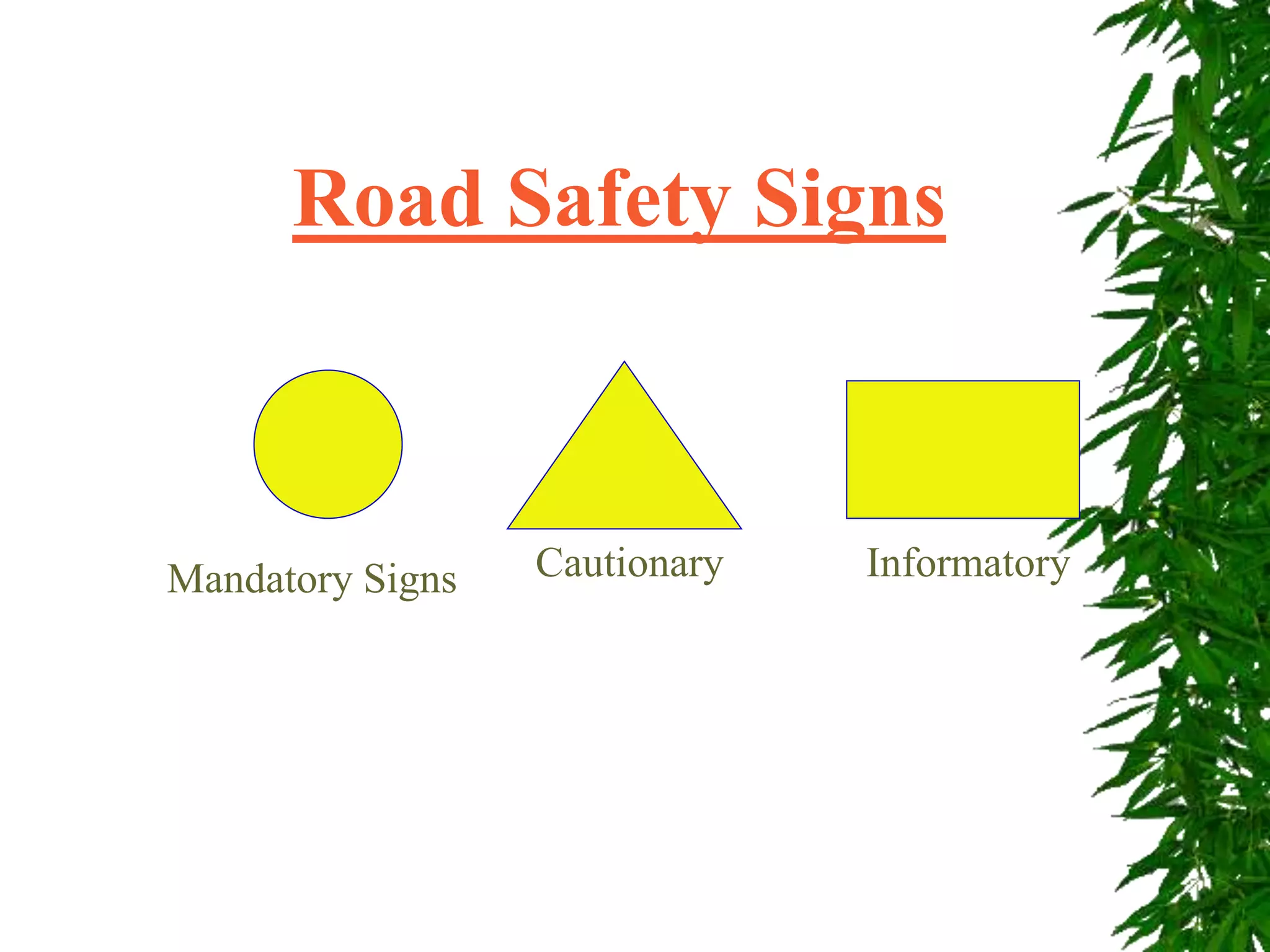
Road Safety Signs
Mandatory Signs Cautionary Informatory
Mandatory Sign
Warning Sign
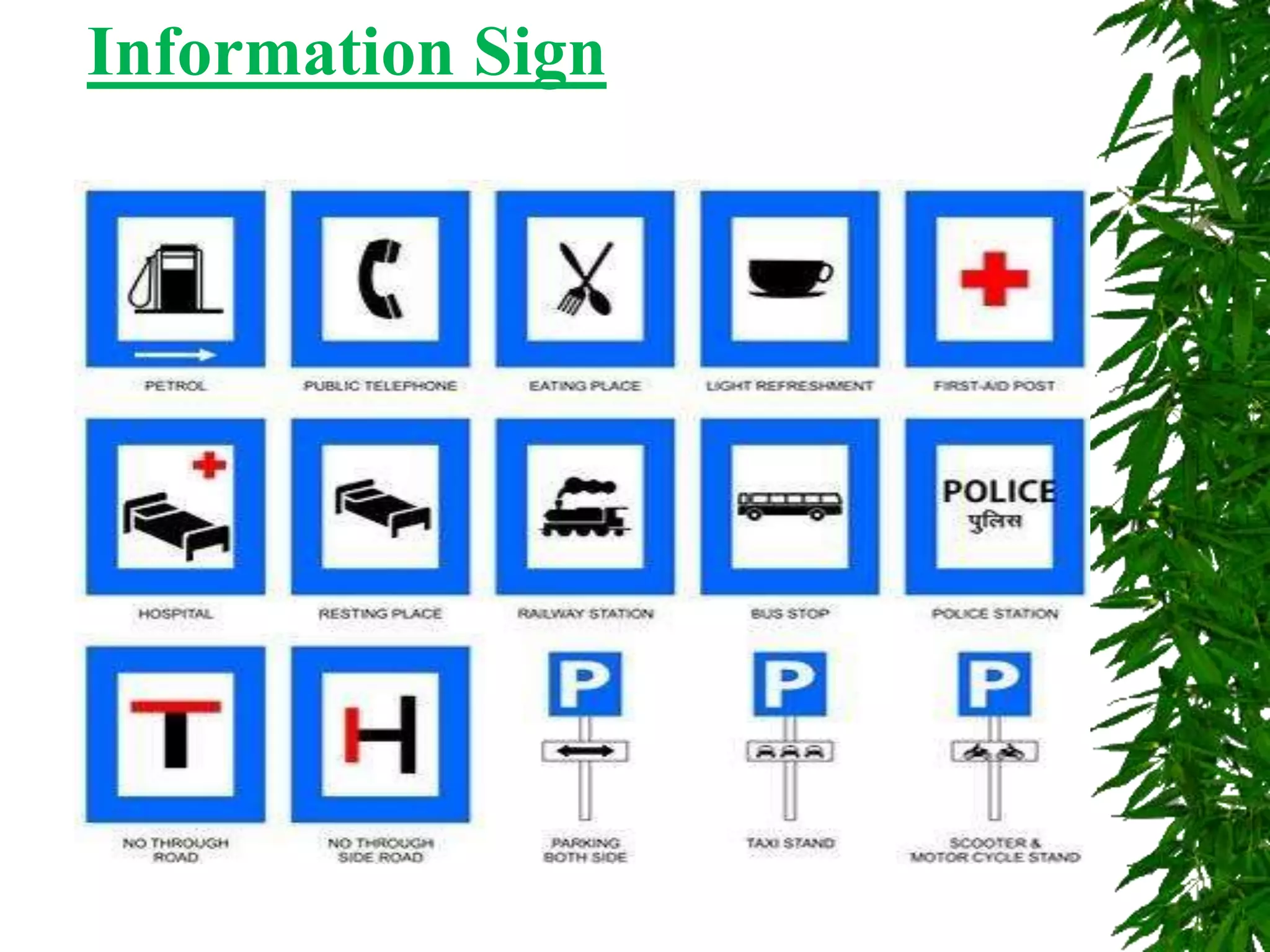
Information Sign
Traffic Control Devices
 Road Signs
 Delineators
 Barricades
 Cones
 Flashing lights
 Reflectors etc.
Delineators
 Delineators shall
 Include Guideposts, Safety Cones, Drums, etc.
 Delineate and guide the driver to and along a safe
path
 Move traffic from one lane to another
 Be used in or adjacent to the roadway to control
the flow of traffic.
 Not be regarded as a substitute for warning signs
or barriers for out-of-control vehicles.
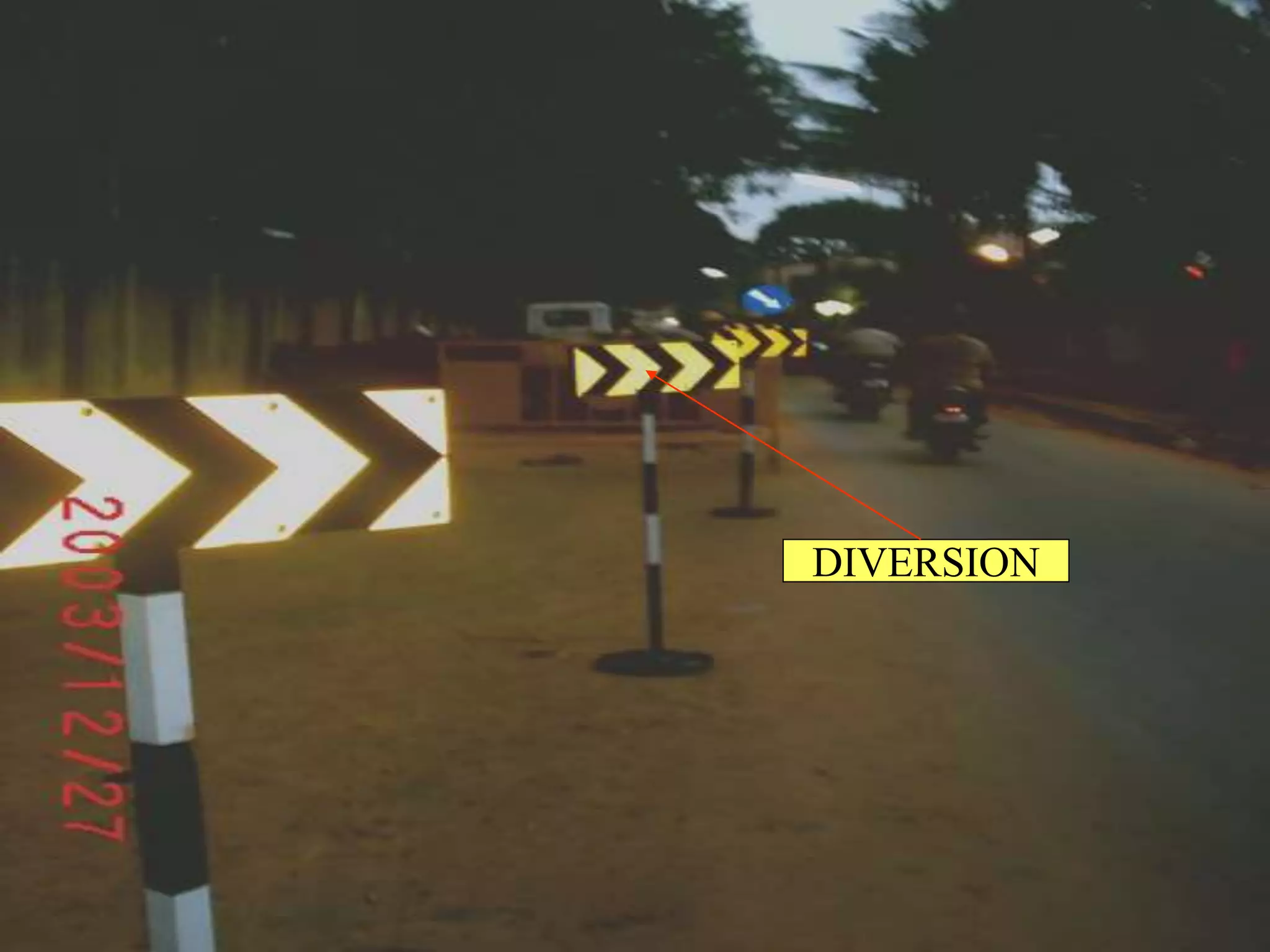
DIVERSION
SOME CAUTION SIGNS ASPER THE INDIAN ROADCONGRESS
SPECIFICATIONS BEING FOLLOWED
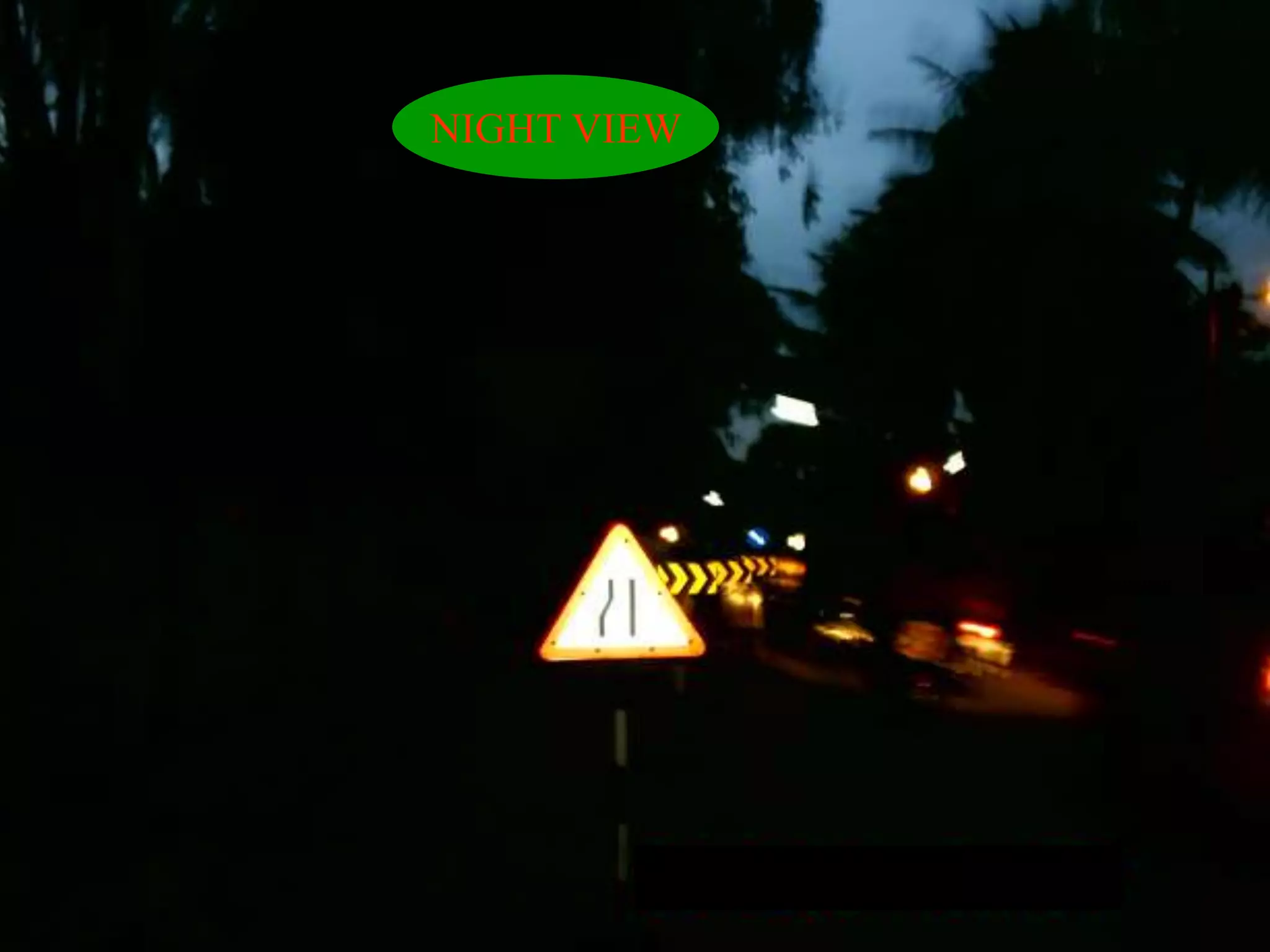
NARROW ROAD AHEAD
Barricades
PARABOLIC CRASH BARRIERS
Reflectors
NIGHT VIEW
NIGHT VIEW
DIVERSION SIGNS AT THE SIDES OF BARRICATION
CLAMPING SYSTEM AT TOP AND BOTTOM
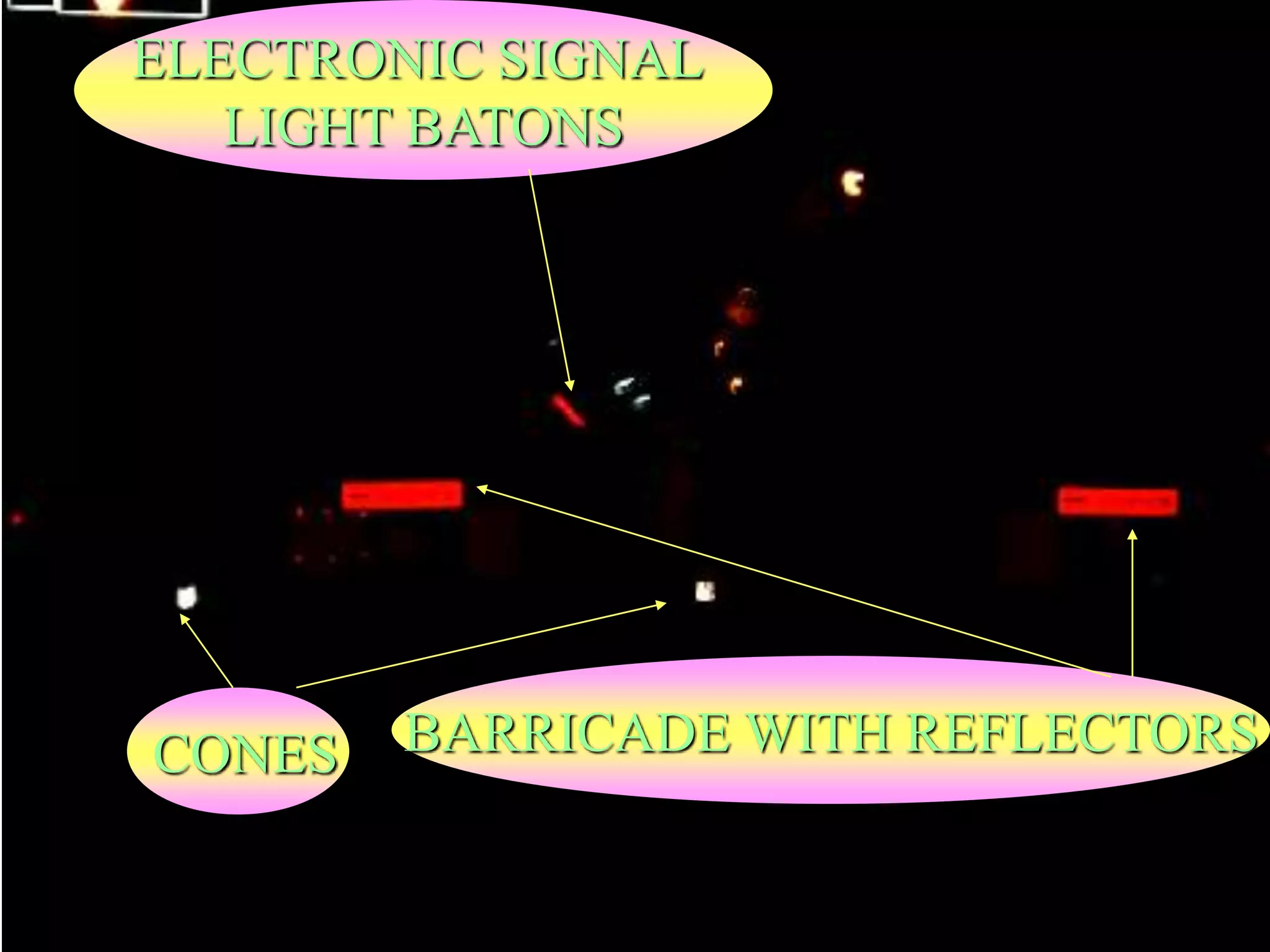
CONES
ELECTRONIC SIGNAL
LIGHT BATONS
BARRICADE WITH
REFLECTORS
CONES BARRICADE WITH REFLECTORS
ELECTRONIC SIGNAL
LIGHT BATONS
TRAFFIC ACCIDENTS:
• Every 8th minute, there is 01 road casualty in India.
• There are 11 accidents for every 1000 vehicles.
• Every year out of 01 lacs unnatural deaths in India,
nearly 68000 (more than 34%) are due to road
accidents.
• Mostly males, who are earning members in the
family, die.
SPOTS OF ACCIDENTS:
Narrow Roads 385 15.26
%
Turns 414 16.38
%
Slopes & climbs 296 11.71%
Straight Roads 1431 56.65
%
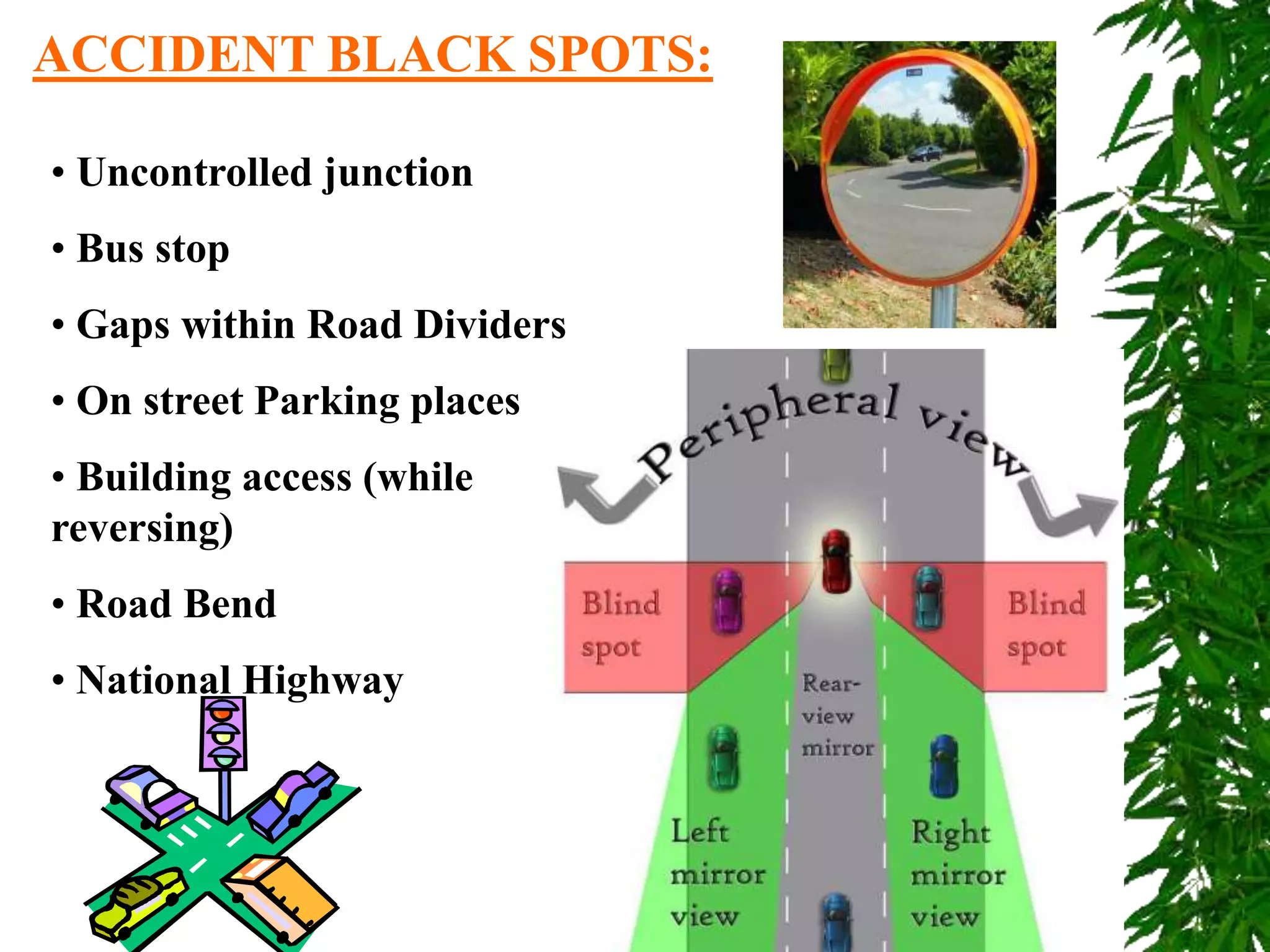
ACCIDENT BLACK SPOTS:
• Uncontrolled junction
• Bus stop
• Gaps within Road Dividers
• On street Parking places
• Building access (while
reversing)
• Road Bend
• National Highway
Defensive
Driving
Vehicle
Light
Factors involved for causing road
accidents
DRIVER
• Inadequate training
• Easily obtained License
• Lack of knowledge of rules &
regulations
• Long working hours fatigue
• Health fitness is poor
DRIVER
• Drinking habits
• Emotional stress
• Over confidence in driving
• Seeing Ability:
-Colour blindness
-40% elderly drivers can not see road signs
at night.
-10 to 30 times more illumination level is
required to see at night.
DRIVER
• Physical stress
• Illumination
• Knowledge and skill
• Attitude
Defensive Driving: ?
It is the driving to save lives, time & money in-
spite of the conditions around you and the actions
of others.
Conditions: Roads, weather, traffic, light etc.
Actions of others: Violations, discourtesy, lack of
knowledge of other Drivers etc.
DEFENSIVE DRIVING
Factors affecting driving skills
• Fatigue (overworking hours)
Stop when you feel tired/ sleepy, take rest, tea
& arrange other driver to drive.
• Medicine (calmpose, avil, benadryl)
• Disturb mind
• Distraction (pet, children at back seat, loud
music, etc.)
• Drunken driving
DEFENSIVE DRIVING
ALCOHOL & DRIVING
Effects of alcohol;
• Promotes risk taking
• Lower reflexes
• Vision and hearing capacity diminishes
• Reaction time increases
• No control over controlling devices
ALCOHOL & DRIVING
Driving errors:
• Fast & slow
• Wrong lane
• Running over the footpath
• Not signaling
• Quick & jerky start
• Changing lanes frequently
EMERGENCIES
• Bursting of tyres
• Accelerator sticks
• Skidding
• Brake failure
• Bonnet flies up
• Vehicle stalls
• Running off the road
• Fire
BREAKDOWN
• Inform supervisor
• Switch on warning lights
• Keep vehicle away from movement of traffic
• Display warning triangle
• Apply hand brake
• Convoy supervisor will inform to the control room
• Control room will inform emergency breakdown
control point.
MECHANICAL FAILURE
• Brake failure
What to do?
• Tyre burst
What to do?
• Sudden loss of acceleration
What to do?
Disconnect the battery.
what to do?
COLLISION
• Electrical poles/ walls etc.
• Many while reversing
OVERTAKING
• Most accidents happen while overtaking/ being
overtaken.
• You may have head on collision & a side sweep or run
off the road.
• On a marked NO OVERTAKING ZONE.
• On curves
• On hills
• 100 meters before & at railway crossing or cross
roads.
• A vehicle, slowing down to give way to pedestrians
DO NOT OVERTAKE
Avoid following too closely
• Reaction time: 3/4th of a second
• Gap between the vehicles: keep one
vehicle distance for every 10 kmph
speed.
DAILY INSPECTIONS:
• Leakage of Oil, hydraulic oil & fuel
• Oil, hydraulic oils & water levels
• Lights & indicators
• Horn
• Reverse horn & lights
• Wipers
• Tyre pressure
• Jack, wooden plate & spare parts
DAILY INSPECTIONS:
• Presence of safety equipments
• Brakes
• Tyres
• Fire extinguishers
• Rear view mirrors

Roadworks safety.ppt

  • 2.
    Why Road SafetyImportant  Road safety is of prime importance as road accidents are among the biggest causes of deaths in the country. With the number of vehicles on our roads increasing with every passing hour, it's of vital importance for everyone to have traffic awareness and understand and respect all the road safety rules in India
  • 3.
  • 4.
    Road Safety Signs MandatorySigns Cautionary Informatory
  • 5.
  • 6.
  • 7.
  • 8.
    Traffic Control Devices Road Signs  Delineators  Barricades  Cones  Flashing lights  Reflectors etc.
  • 9.
    Delineators  Delineators shall Include Guideposts, Safety Cones, Drums, etc.  Delineate and guide the driver to and along a safe path  Move traffic from one lane to another  Be used in or adjacent to the roadway to control the flow of traffic.  Not be regarded as a substitute for warning signs or barriers for out-of-control vehicles.
  • 10.
  • 11.
    SOME CAUTION SIGNSASPER THE INDIAN ROADCONGRESS SPECIFICATIONS BEING FOLLOWED
  • 12.
  • 13.
  • 14.
  • 15.
  • 16.
  • 17.
  • 18.
    DIVERSION SIGNS ATTHE SIDES OF BARRICATION CLAMPING SYSTEM AT TOP AND BOTTOM
  • 20.
  • 21.
    CONES BARRICADE WITHREFLECTORS ELECTRONIC SIGNAL LIGHT BATONS
  • 23.
    TRAFFIC ACCIDENTS: • Every8th minute, there is 01 road casualty in India. • There are 11 accidents for every 1000 vehicles. • Every year out of 01 lacs unnatural deaths in India, nearly 68000 (more than 34%) are due to road accidents. • Mostly males, who are earning members in the family, die.
  • 24.
    SPOTS OF ACCIDENTS: NarrowRoads 385 15.26 % Turns 414 16.38 % Slopes & climbs 296 11.71% Straight Roads 1431 56.65 %
  • 25.
    ACCIDENT BLACK SPOTS: •Uncontrolled junction • Bus stop • Gaps within Road Dividers • On street Parking places • Building access (while reversing) • Road Bend • National Highway
  • 26.
  • 27.
    DRIVER • Inadequate training •Easily obtained License • Lack of knowledge of rules & regulations • Long working hours fatigue • Health fitness is poor
  • 28.
    DRIVER • Drinking habits •Emotional stress • Over confidence in driving • Seeing Ability: -Colour blindness -40% elderly drivers can not see road signs at night. -10 to 30 times more illumination level is required to see at night.
  • 29.
    DRIVER • Physical stress •Illumination • Knowledge and skill • Attitude
  • 30.
    Defensive Driving: ? Itis the driving to save lives, time & money in- spite of the conditions around you and the actions of others. Conditions: Roads, weather, traffic, light etc. Actions of others: Violations, discourtesy, lack of knowledge of other Drivers etc. DEFENSIVE DRIVING
  • 31.
    Factors affecting drivingskills • Fatigue (overworking hours) Stop when you feel tired/ sleepy, take rest, tea & arrange other driver to drive. • Medicine (calmpose, avil, benadryl) • Disturb mind • Distraction (pet, children at back seat, loud music, etc.) • Drunken driving DEFENSIVE DRIVING
  • 32.
    ALCOHOL & DRIVING Effectsof alcohol; • Promotes risk taking • Lower reflexes • Vision and hearing capacity diminishes • Reaction time increases • No control over controlling devices
  • 33.
    ALCOHOL & DRIVING Drivingerrors: • Fast & slow • Wrong lane • Running over the footpath • Not signaling • Quick & jerky start • Changing lanes frequently
  • 34.
    EMERGENCIES • Bursting oftyres • Accelerator sticks • Skidding • Brake failure • Bonnet flies up • Vehicle stalls • Running off the road • Fire
  • 35.
    BREAKDOWN • Inform supervisor •Switch on warning lights • Keep vehicle away from movement of traffic • Display warning triangle • Apply hand brake • Convoy supervisor will inform to the control room • Control room will inform emergency breakdown control point.
  • 36.
    MECHANICAL FAILURE • Brakefailure What to do? • Tyre burst What to do? • Sudden loss of acceleration What to do? Disconnect the battery. what to do?
  • 37.
    COLLISION • Electrical poles/walls etc. • Many while reversing
  • 39.
    OVERTAKING • Most accidentshappen while overtaking/ being overtaken. • You may have head on collision & a side sweep or run off the road. • On a marked NO OVERTAKING ZONE. • On curves • On hills • 100 meters before & at railway crossing or cross roads. • A vehicle, slowing down to give way to pedestrians DO NOT OVERTAKE
  • 40.
    Avoid following tooclosely • Reaction time: 3/4th of a second • Gap between the vehicles: keep one vehicle distance for every 10 kmph speed.
  • 41.
    DAILY INSPECTIONS: • Leakageof Oil, hydraulic oil & fuel • Oil, hydraulic oils & water levels • Lights & indicators • Horn • Reverse horn & lights • Wipers • Tyre pressure • Jack, wooden plate & spare parts
  • 42.
    DAILY INSPECTIONS: • Presenceof safety equipments • Brakes • Tyres • Fire extinguishers • Rear view mirrors