Rural Marketing
      Module 1
Prof. Raghavendran Venugopal
RM
ď‚— Learning Objectives:-
    Definition
    Scope of rural marketing
    Components of Rural Marketing
    Classification of Rural Marketing
    Concepts & difference between
 Urban & Rural Markets
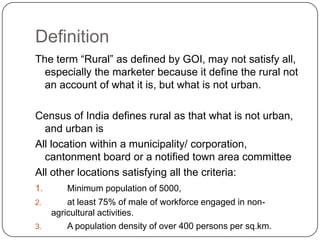
Definition
The term “Rural” as defined by GOI, may not satisfy all,
  especially the marketer because it define the rural not
  an account of what it is, but what is not urban.

Census of India defines rural as that what is not urban,
  and urban is
All location within a municipality/ corporation,
  cantonment board or a notified town area committee
All other locations satisfying all the criteria:
1.      Minimum population of 5000,
2.       at least 75% of male of workforce engaged in non-
     agricultural activities.
3.       A population density of over 400 persons per sq.km.
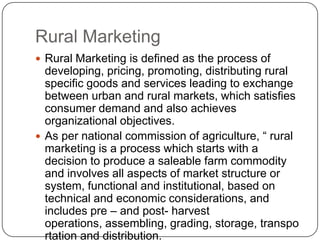
Rural Marketing
ď‚— Rural Marketing is defined as the process of
  developing, pricing, promoting, distributing rural
  specific goods and services leading to exchange
  between urban and rural markets, which satisfies
  consumer demand and also achieves
  organizational objectives.
 As per national commission of agriculture, “ rural
  marketing is a process which starts with a
  decision to produce a saleable farm commodity
  and involves all aspects of market structure or
  system, functional and institutional, based on
  technical and economic considerations, and
  includes pre – and post- harvest
  operations, assembling, grading, storage, transpo
  rtation and distribution.
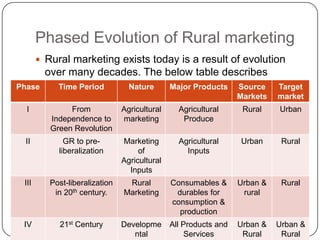
Phased Evolution of Rural marketing
       ď‚— Rural marketing exists today is a result of evolution
         over many decades. The below table describes
Phase    evolution of rural marketing.
           Time Period      Nature  Major Products Source                   Target
                                                                  Markets   market
  I            From             Agricultural     Agricultural      Rural    Urban
          Independence to       marketing         Produce
          Green Revolution
  II          GR to pre-        Marketing        Agricultural     Urban      Rural
            liberalization           of            Inputs
                                Agricultural
                                  Inputs
 III      Post-liberalization    Rural         Consumables &      Urban &    Rural
           in 20th century.     Marketing       durables for       rural
                                               consumption &
                                                 production
 IV          21st Century       Developme      All Products and   Urban &   Urban &
                                   ntal             Services       Rural     Rural
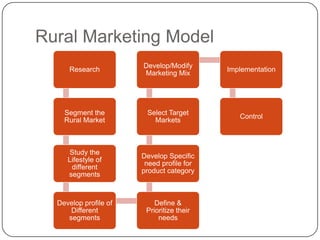
Rural Marketing Model
                       Develop/Modify
      Research                             Implementation
                       Marketing Mix


    Segment the         Select Target
                                              Control
    Rural Market          Markets


      Study the
                       Develop Specific
     Lifestyle of
                        need profile for
      different
                       product category
     segments


  Develop profile of       Define &
      Different         Prioritize their
     segments               needs
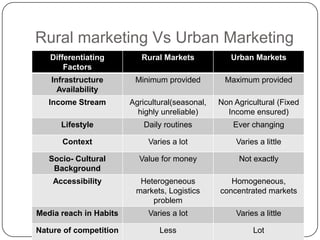
Rural marketing Vs Urban Marketing
   Differentiating         Rural Markets            Urban Markets
       Factors
   Infrastructure        Minimum provided         Maximum provided
     Availability
   Income Stream        Agricultural(seasonal,   Non Agricultural (Fixed
                          highly unreliable)       Income ensured)
      Lifestyle             Daily routines           Ever changing

      Context                Varies a lot             Varies a little

   Socio- Cultural        Value for money             Not exactly
    Background
    Accessibility         Heterogeneous             Homogeneous,
                         markets, Logistics      concentrated markets
                             problem
Media reach in Habits        Varies a lot             Varies a little

Nature of competition           Less                       Lot
Module 1 completed

Prof. Raghavendran Venugopal

Rural Marketing, VTU Syllabus Module 1

  • 1.
    Rural Marketing Module 1 Prof. Raghavendran Venugopal
  • 2.
    RM ď‚— Learning Objectives:- Definition Scope of rural marketing Components of Rural Marketing Classification of Rural Marketing Concepts & difference between Urban & Rural Markets
  • 3.
    Definition The term “Rural”as defined by GOI, may not satisfy all, especially the marketer because it define the rural not an account of what it is, but what is not urban. Census of India defines rural as that what is not urban, and urban is All location within a municipality/ corporation, cantonment board or a notified town area committee All other locations satisfying all the criteria: 1. Minimum population of 5000, 2. at least 75% of male of workforce engaged in non- agricultural activities. 3. A population density of over 400 persons per sq.km.
  • 4.
    Rural Marketing  RuralMarketing is defined as the process of developing, pricing, promoting, distributing rural specific goods and services leading to exchange between urban and rural markets, which satisfies consumer demand and also achieves organizational objectives.  As per national commission of agriculture, “ rural marketing is a process which starts with a decision to produce a saleable farm commodity and involves all aspects of market structure or system, functional and institutional, based on technical and economic considerations, and includes pre – and post- harvest operations, assembling, grading, storage, transpo rtation and distribution.
  • 5.
    Phased Evolution ofRural marketing ď‚— Rural marketing exists today is a result of evolution over many decades. The below table describes Phase evolution of rural marketing. Time Period Nature Major Products Source Target Markets market I From Agricultural Agricultural Rural Urban Independence to marketing Produce Green Revolution II GR to pre- Marketing Agricultural Urban Rural liberalization of Inputs Agricultural Inputs III Post-liberalization Rural Consumables & Urban & Rural in 20th century. Marketing durables for rural consumption & production IV 21st Century Developme All Products and Urban & Urban & ntal Services Rural Rural
  • 6.
    Rural Marketing Model Develop/Modify Research Implementation Marketing Mix Segment the Select Target Control Rural Market Markets Study the Develop Specific Lifestyle of need profile for different product category segments Develop profile of Define & Different Prioritize their segments needs
  • 7.
    Rural marketing VsUrban Marketing Differentiating Rural Markets Urban Markets Factors Infrastructure Minimum provided Maximum provided Availability Income Stream Agricultural(seasonal, Non Agricultural (Fixed highly unreliable) Income ensured) Lifestyle Daily routines Ever changing Context Varies a lot Varies a little Socio- Cultural Value for money Not exactly Background Accessibility Heterogeneous Homogeneous, markets, Logistics concentrated markets problem Media reach in Habits Varies a lot Varies a little Nature of competition Less Lot
  • 8.
    Module 1 completed Prof.Raghavendran Venugopal